We have selected the best wireless headphones of 2026. The models are divided into categories: budget, earbuds, best noise cancellation, over-ear headphones, and headphones with a microphone. Only the most popular models, their pros, cons, and specifications.
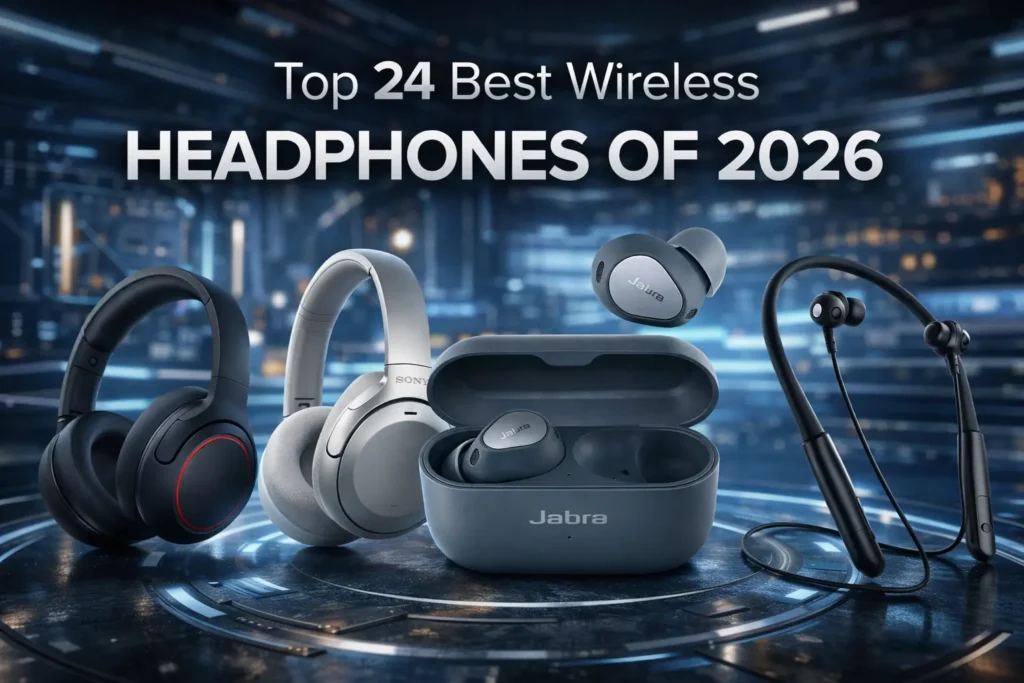
For our list of the best wireless headphones of 2026, we selected only TWS (True Wireless) models. In addition, we considered only certain headphone form factors: in-ear, earbuds, and on-ear.
Over-ear headphones and headsets with external microphones are not included in the ranking. One of the main selection criteria was the availability of headphones in American retail stores (mainly in large chain stores, not marketplaces; please note that availability and prices may change over time).
Selection criteria
We selected models for the rating based on several key criteria:
- Technical characteristics — frequency range, sensitivity, impedance, support for major codecs, and noise cancellation.
- Protection — dust and moisture protection standard, case availability, and durability of the headphones themselves.
- Battery life and charging time — the longer the headphones work and the faster they charge, the more convenient they are to use;
- Ergonomics — headphones should be comfortable to wear and should fulfill their function, whether they are full-size, sports, or on-ear headphones;
- User reviews.
Rating of the best inexpensive wireless headphones for phones
Low-end gadgets are highly popular despite the lack of advanced features such as active noise cancellation. Inexpensive models are especially in demand in developing markets and are well known among fans in Europe & USA: Xiaomi, QCY, Skullcandy.
On the other hand, these headphones cannot boast high-quality components and assembly, and therefore their reliability often leaves much to be desired.
Realme Buds T100
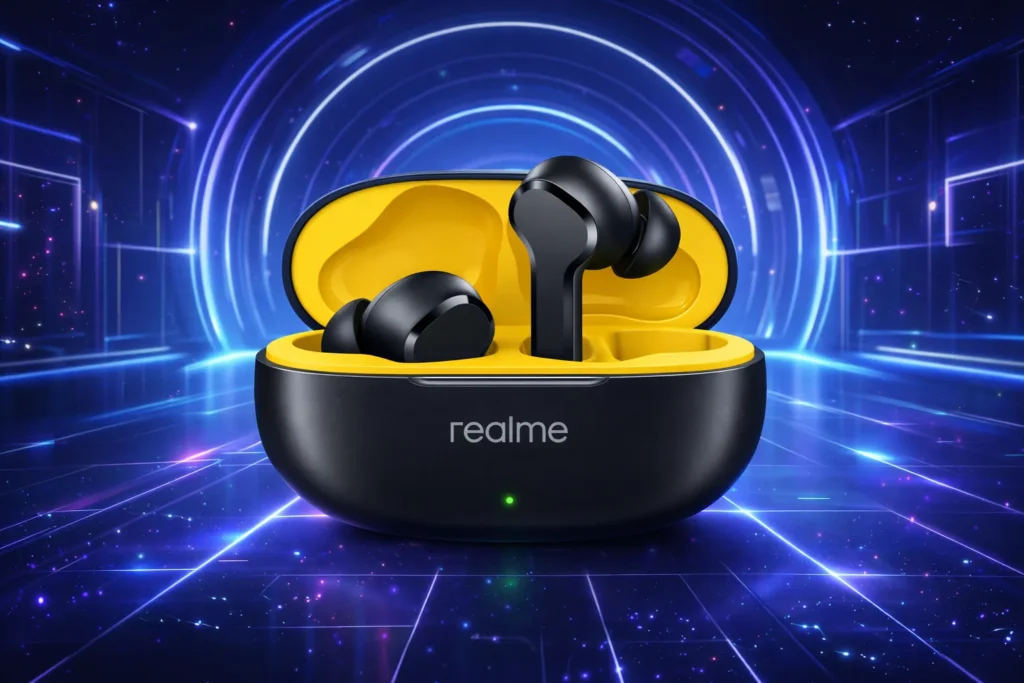
The Buds T110 from realme feature a 10mm dynamic driver and a titanium-coated PEEK + TPU composite dome diaphragm. Together, this delivers high-quality sound and fairly deep bass, which is considered a rarity in the budget segment of TWS earbuds. There is also AI call noise cancellation technology, which minimizes background noise during phone calls.
The Buds T110 offer a low latency mode of 88 ms, which means they can be used safely while gaming. The device supports fast charging and binaural simultaneous transmission technology. This provides independent audio transmission to each earbud for improved sound synchronization. The Buds T110 are available in four colors: black, white, green, and blue.
Specifications
Drivers – 10 mm
Wireless connectivity – Bluetooth 5.4
Active noise cancellation (ANC) – No
Noise cancellation during phone calls (ENC) – Yes
Moisture protection – IPX5
Codec support – SBC, AAC
Battery life – up to 6 hours (up to 28 hours with charging case)
Pros and cons of Realme Buds T100
Pros:
- Long battery life;
- Bluetooth 5.4 support;
- Affordable price.
Cons:
- No active noise cancellation;
- Not very good speech quality in very noisy environments.
Xiaomi Buds 5
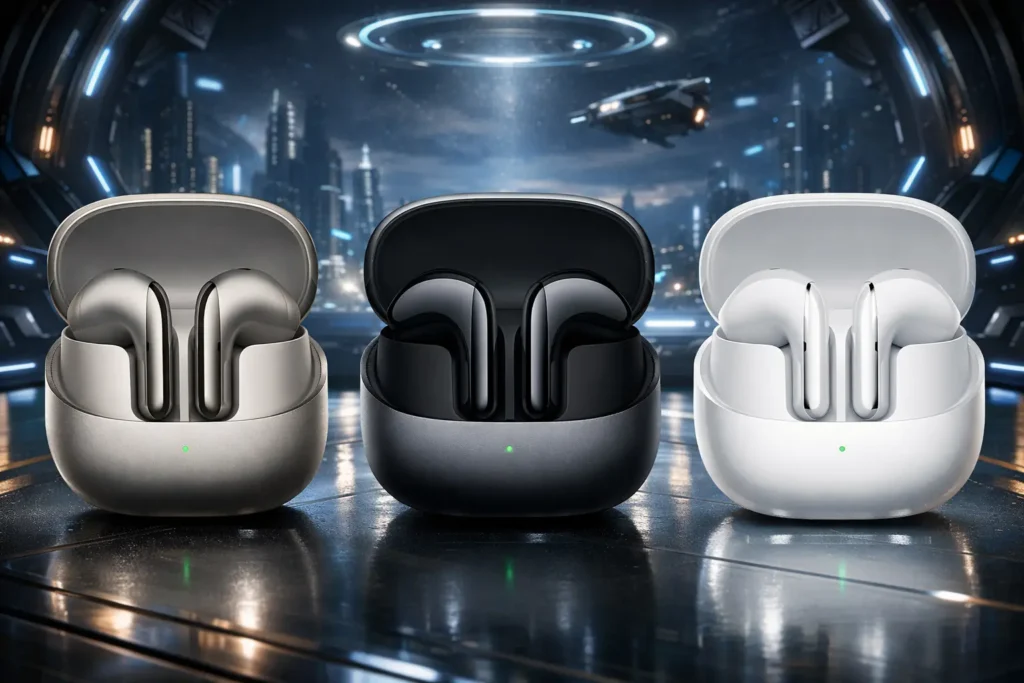
These youth-oriented headphones are available in a variety of colors: frosty blue, titanium gold, moon black, and snow white. The headphones hold a charge for 6.5 hours without the case and 39 hours with it. They are also IP54-rated for water and dust resistance. This means that drops can only hit the device at an angle of 60 degrees or more. They support spatial sound and SBC, aptX Lossless, Adaptive, AAC, and LC3 codecs. Active noise cancellation works in the range up to 56.7 dB, with a sampling rate of up to 48 kHz. They support Bluetooth 5.4.
Specifications
Drivers – 11 mm
Wireless connectivity – Bluetooth 5.4
Active noise cancellation (ANC) – Yes
Noise cancellation during phone calls (ENC) – Yes
Moisture protection – IP54
Codec support – SBC, aptX Lossless, Adaptive, AAC, LC3
Battery life – up to 6.5 hours (up to 39 hours with charging case)
Pros and cons of Xiaomi Buds 5
Pros:
- Compact design;
- Good sound quality;
- Support for aptX Lossless and LC3 codecs.
Cons:
- Not very long battery life;
- Made in an in-ear form factor and without silicone ear tips.
Skullcandy JIB True 2 Wireless
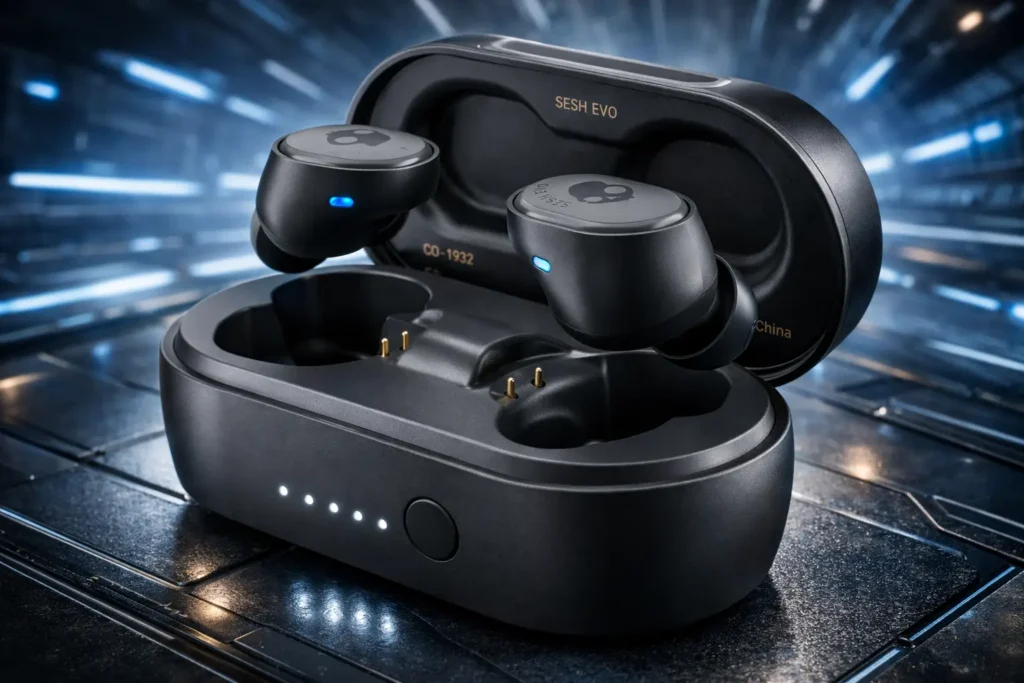
The second version of Skullcandy’s compact headphones stands out with its striking, memorable design. In addition to black and gray versions, a bright blue option is also available. Skullcandy JIB True 2 headphones are ideal for active young users and extreme sports enthusiasts.
The frequency response ranges from 20 Hz to 20 kHz. Using the buttons on the earbuds, you can answer calls, switch tracks, or activate the voice assistant. A 10-minute charge in the case is enough for several hours of music listening.
Specifications
Drivers – 6 mm
Wireless connectivity – Bluetooth 5.2
Active noise cancellation (ANC) – No
Noise cancellation during phone calls (ENC) – Yes
Moisture protection – IPX4
Codec support – SBC
Battery life – Up to 9 hours (up to 24 hours with charging case)
Pros and cons of Skullcandy JIB True 2 Wireless
Pros:
- Compact design;
- Long battery life;
- Fast charging.
Cons:
- No noise cancellation;
- Micro-USB port;
- Average sound quality.
TECNO Buds 4
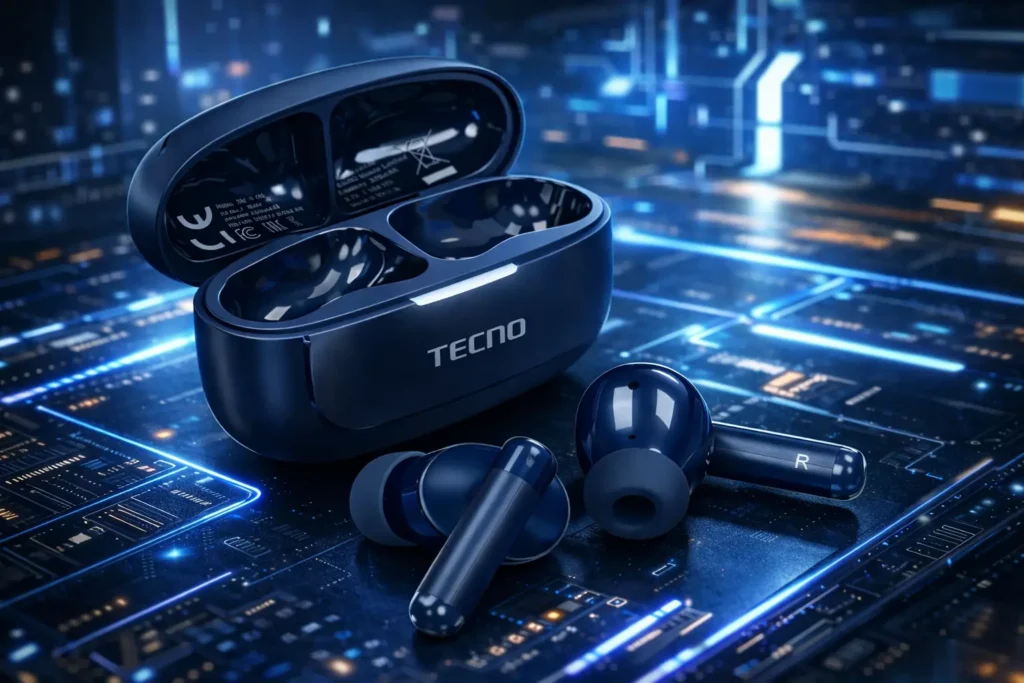
The headphones feature a stylish design and touch controls for volume and playback. Thanks to 10 mm drivers and bass boost technology, TECNO Buds 4 deliver deep and clear sound. Bluetooth 5.4 support allows for a stable connection at a distance of up to 20 meters. Sensitivity is 107 dB. The headphones are available in white, black, and rich blue.
Specifications
Drivers – 10 mm
Wireless connectivity – Bluetooth 5.4
Active noise cancellation (ANC) – Yes
Noise cancellation during phone calls (ENC) – Dual noise-canceling microphones
Moisture protection – IPX5
Codec support – SBC
Battery life – Up to 5 hours (up to 28 hours with charging case)
Pros and cons of TECNO Buds 4
Pros:
- active noise cancellation;
- Bluetooth 5.4 support;
- powerful bass.
Cons:
- short battery life;
- unresponsive touch controls.
Rating of the best wireless earbuds
Earbuds do not have silicone ear tips, so they do not stay in the ears as well and do not provide good sound insulation, but they may be more comfortable for long-term wear.
JBL Tune FLEX 2 2
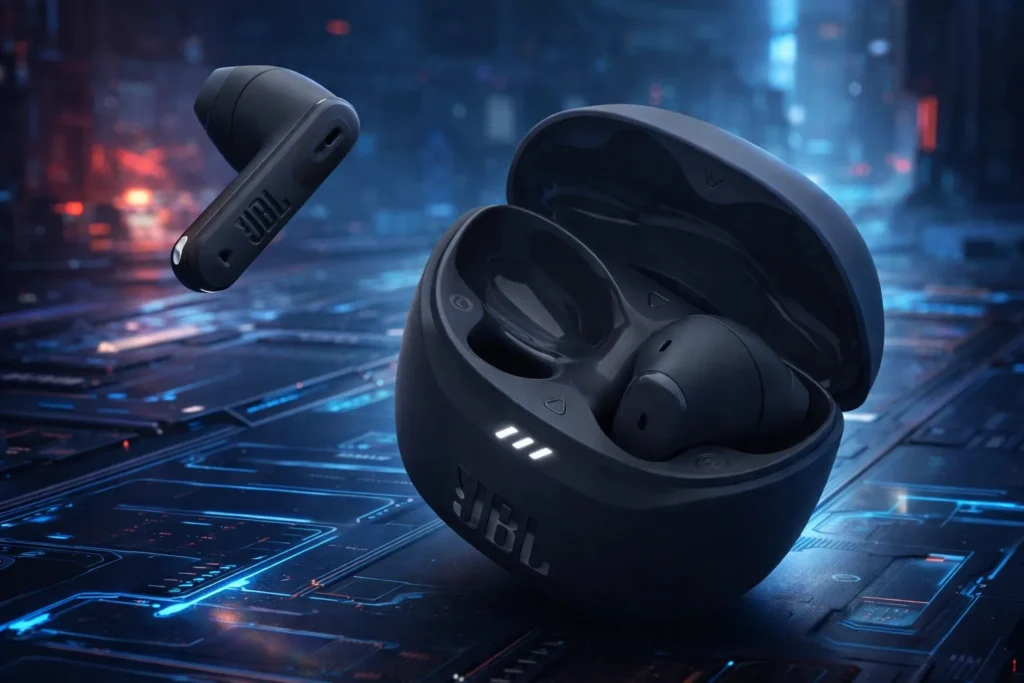
The headphones stand out for their balanced sound and long battery life. They also feature active noise cancellation. One interesting feature worth mentioning is the replaceable ear pads that come with the headphones.
Thanks to them, you can convert the earbuds into earplugs when needed. For example, if you are going outside or visiting another noisy place. Through the app, you can adjust the sound settings to match the current format of the headphones. If you haven’t decided which type of headphones to choose, then you should take a look at the JBL Tune FLEX 2 2.
Specifications
Drivers – 12 mm
Wireless connectivity – Bluetooth 5.3
Active noise cancellation (ANC) – Yes
Moisture protection – IP54
Codec support – SBC
Battery life – Up to 12 hours (up to 48 hours with charging case)
Pros and cons of JBL Tune FLEX 2 2
Pros:
- active noise cancellation;
- good battery life;
- replaceable ear pads included.
Cons:
- No possibility of connecting to multiple devices simultaneously;
- Not the best sound insulation and voice recording.
Samsung Galaxy Buds 3 Pro
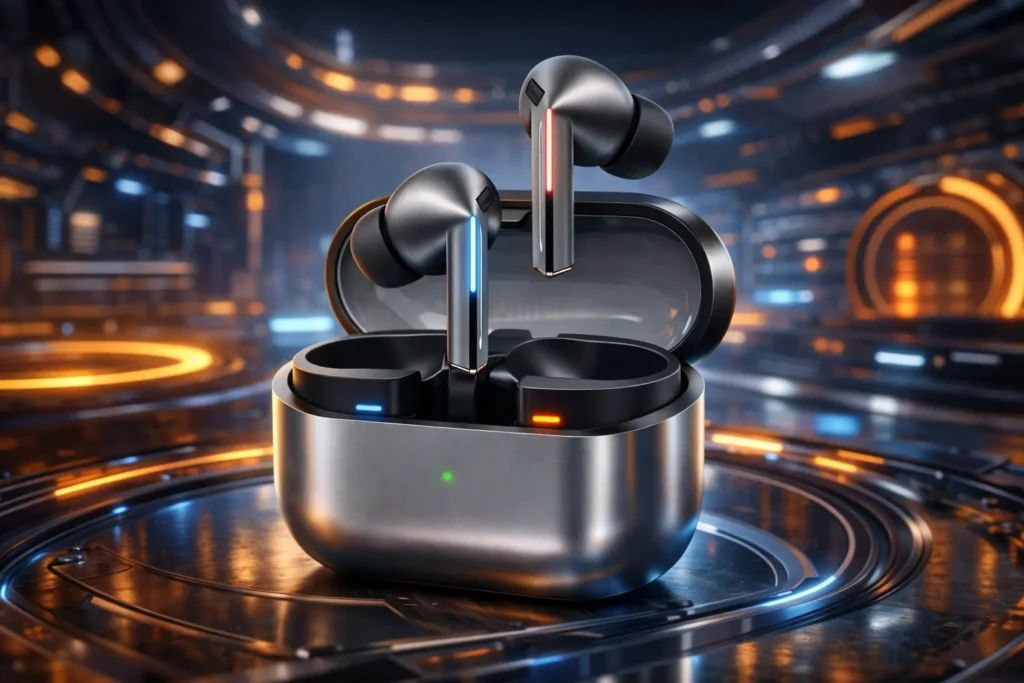
Galaxy Buds 3 Pro feature an improved dual driver with 10.5 mm bass and 6.1 mm treble paired with a dual-channel amplifier. With an IP57 rating, they can be submerged in water for a short time. The model features SmartThings Find, Audio 360, and active noise cancellation (ANC) with AI algorithm support, as well as ultra-high sound quality: 24-bit at 96 kHz.
The headphones have excellent sound and an enhanced transparency mode. Inside, there are three microphones and a VPU bone conduction sensor for sound amplification. The headset supports Bluetooth 5.4 and AAC and SBC codecs. These “ears” work for up to 6 hours on a single charge.
https://www.samsung.com
Specifications
Drivers – 10.5 mm
Wireless connectivity – Bluetooth 5.4
Active noise cancellation (ANC) – Yes
Moisture protection – IP57
Codec support – SBC, AAC
Battery life – Up to 7 hours (up to 30 hours with charging case)
Pros and cons of Samsung Galaxy Buds 3 Pro
Pros:
- noise cancellation;
- IP57 dust and moisture protection rating;
- unique design;
- fast charging.
Cons:
- The case scratches easily;
- The earbuds may cause discomfort during prolonged use;
- ANC may not be sufficient in noisy environments.
Huawei Freebuds 6i
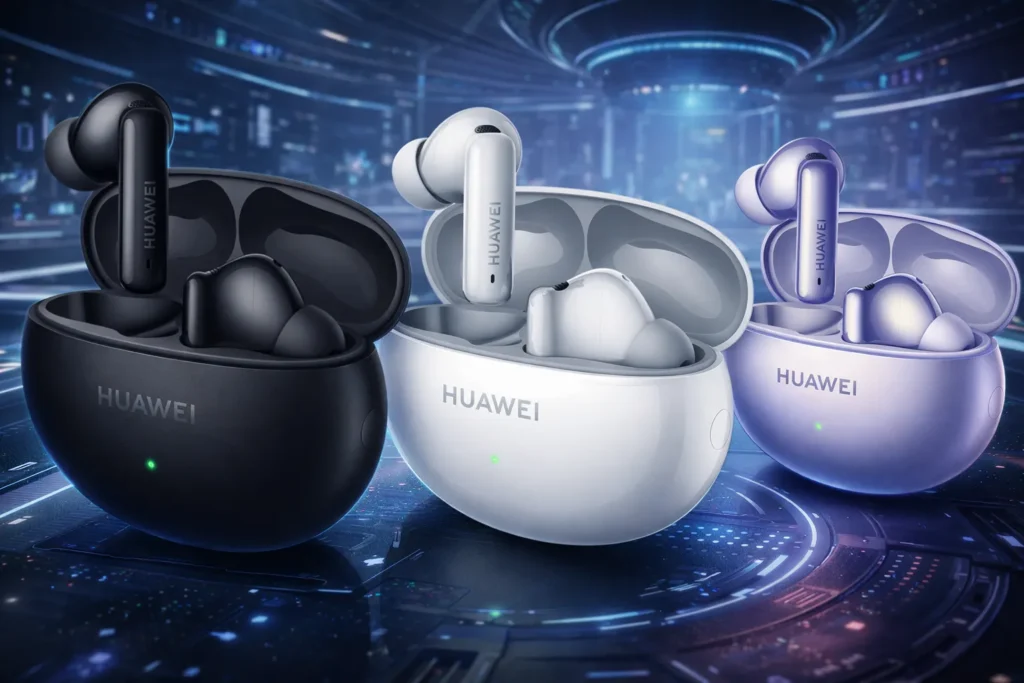
Like previous models, the Huawei FreeBuds 6i comes in standard black and white colors, as well as an unusual soft purple. It has IP54 dust and moisture protection and can be paired with two devices at once. The new FreeBuds 6i feature active noise cancellation that blocks out even loud extraneous sounds. Perfect for commuting to and from work.
The sound quality of the new model has also been improved. The FreeBuds 6i feature 11 mm dynamic drivers (compared to 10 mm in the previous generation). These drivers also support quad magnet technology: they have four magnets each, which doubles their power. As a result, the headphones have received Hi-Res certification.
Specifications
Drivers – 11 mm
Wireless connectivity – Bluetooth 5.3
Active noise cancellation (ANC) – Yes
Noise cancellation during phone calls (ENC) – Yes
Moisture protection – IP54
Codec support – SBC, AAC, LDAC, L2HC
Battery life – up to 8 hours (up to 35 hours with charging case)
Pros and cons of Huawei Freebuds 6i
Pros:
- Support for high-quality codecs;
- Sound quality;
- Attractive and unusual design.
Cons:
- simple and boring case design;
- not the most effective noise cancellation.
Apple Airpods 4 ANC
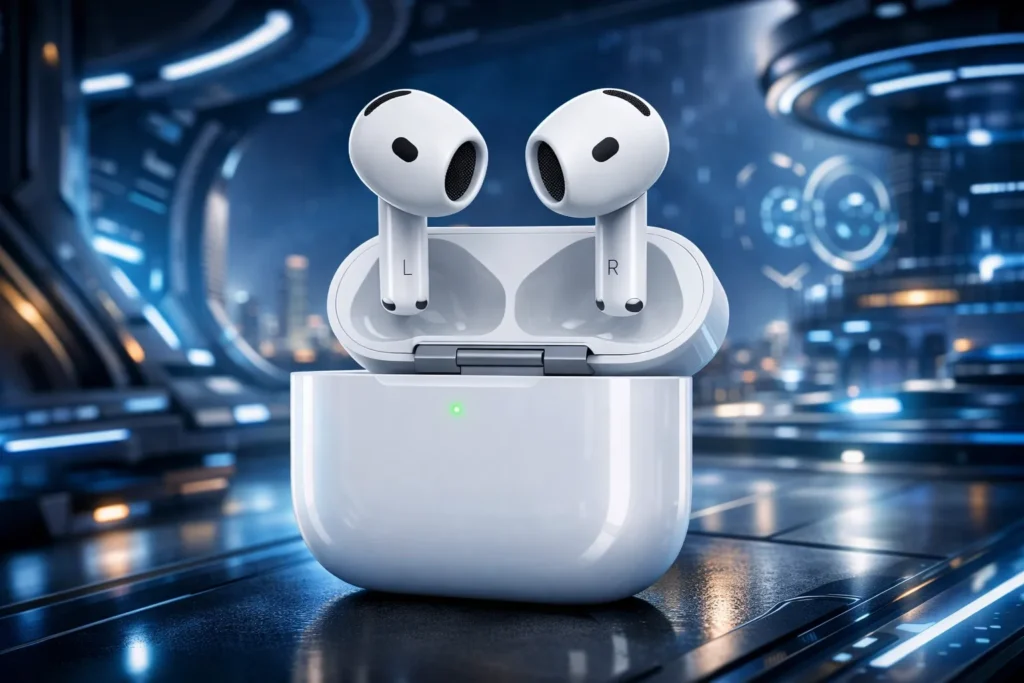
For iPhone owners, these are the best in-ear headphones. AirPods 4 come in two versions: with noise cancellation (ANC) and without. The more expensive ANC version reflects Apple’s fundamentally new approach to its oldest line of wireless headphones. They feature an H2 chip, which means they support lossless audio. This means that the headphones are now capable of playing compressed files without any loss of quality. The new H2 processor works great with noise cancellation and delivers high-quality three-dimensional sound.
Compared to the previous generation, Apple Airpods 4 ANC has improved sound quality and battery life. Speakers have been added to the bottom of the case, which are needed for the “Locator” feature. Now you can ask lost headphones to emit a signal. On iOS devices, you can also enable spatial audio playback, which simulates the effect of surround sound, as if you were in a concert hall, as well as other features.
Specifications
Drivers – 11 mm
Wireless connectivity – Bluetooth 5.3
Active noise cancellation (ANC) – Yes
Noise cancellation during phone calls (ENC) – Yes
Moisture protection – IP54
Codec support – SBC, AAC
Battery life – up to 4 hours (up to 30 hours with charging case)
Pros and cons of Apple Airpods 4 ANC
Pros:
- integration with the Apple ecosystem;
- moisture protection;
- active noise cancellation;
- comfortable form factor.
Cons:
- low battery life;
- full functionality is only available on iOS devices;
- high price.
Rating of the best wireless noise-canceling headphones
Active noise cancellation is even found in budget headphones, but its quality is often much worse than in expensive models. If good noise cancellation is important to you, then it’s worth looking at models in the upper price range. As a bonus, you’ll get other advantages: high sound quality, good battery life, support for sophisticated codecs, and much more.
Nothing Ear (3)

These earbuds stand out from the crowd of TWS devices with their unusual translucent design, which has become a trademark feature of Nothing devices. The technical specifications are also impressive: wireless charging, Bluetooth 5.3 support, IP54 protection, and other cool features. There is also support for high-quality codecs and Hi-Res Audio certification, so the sound is top-notch — well-balanced, clear, and detailed.
Compared to the first generation, the noise cancellation has gotten way better—Nothing Ear (3) blocks out more outside noise. The only thing that’s a bit annoying is the transparency mode—it doesn’t let sound through very well, so you’ll have to take the earbuds out to have a proper conversation.
Specifications
Drivers – 11 mm
Wireless connectivity – Bluetooth 5.4
Active noise cancellation (ANC) – Yes
Noise cancellation during phone calls (ENC) – Yes
Moisture protection – IP54
Codec support – AAC, SBC, LDAC, LHDC 5.0
Battery life – up to 7.5 hours (up to 33 hours with charging case)
Pros and cons of Nothing Ear (3)
Pros:
- Lightweight (earbuds weigh 4.6 g);
- Wireless charging;
- Water and dust resistance;
- High-quality codecs.
Cons:
- Not the longest battery life with ANC turned on;
- Mediocre transparency mode.
Huawei FreeBuds Pro 4
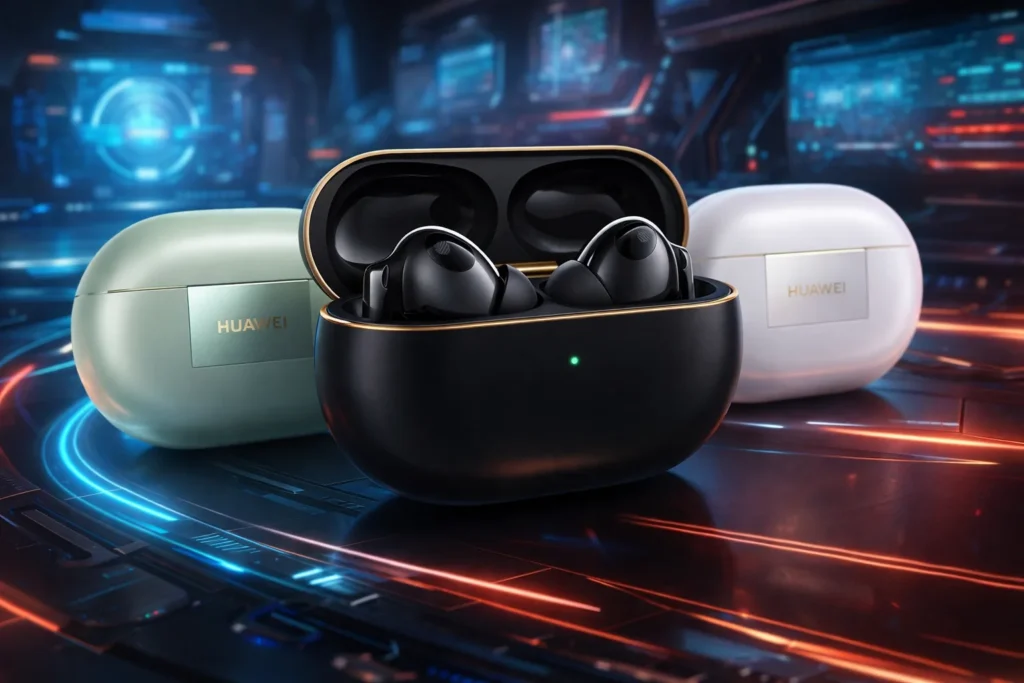
FreeBuds Pro 4 are powered by the proprietary Kirin A2 chip. Together with the Bluetooth 5.2 module, the headphones are capable of playing audio with 24-bit and 48 kHz parameters, and the data transfer rate reaches 2.3 Mbps. Support for SBC, AAC, LDAC, and L2HC 4.0 codecs is claimed. They operate in the 14 Hz to 48 kHz frequency range.
The headphones use ultra-sensitive dual drivers, the main ones being 11 mm speakers with four magnets. They are complemented by microplanar high-frequency drivers, which provide maximum sound quality. There is an active noise cancellation system, and a single battery charge is enough for 5 hours of music playback.
Specifications
Drivers – 11 mm
Wireless connectivity – Bluetooth 5.2
Active noise cancellation (ANC) – Yes
Noise cancellation during phone calls (ENC) – Clear Voice 2.0 technology
Moisture protection – IPX54
Codec support – L2HC 4.0, LDAC, AAC, SBC
Battery life – up to 6.5 hours (up to 33 hours with charging case)
Pros and cons of Huawei FreeBuds Pro 4
Pros:
- Extended frequency range (from 14 Hz to 48 kHz);
- L2HC and LDAC codecs;
- Wireless charging support;
- High sound quality.
Cons:
- Not the best battery life;
- The glossy design may not appeal to everyone;
- High price.
Apple AirPods Pro 2 (USB-C)
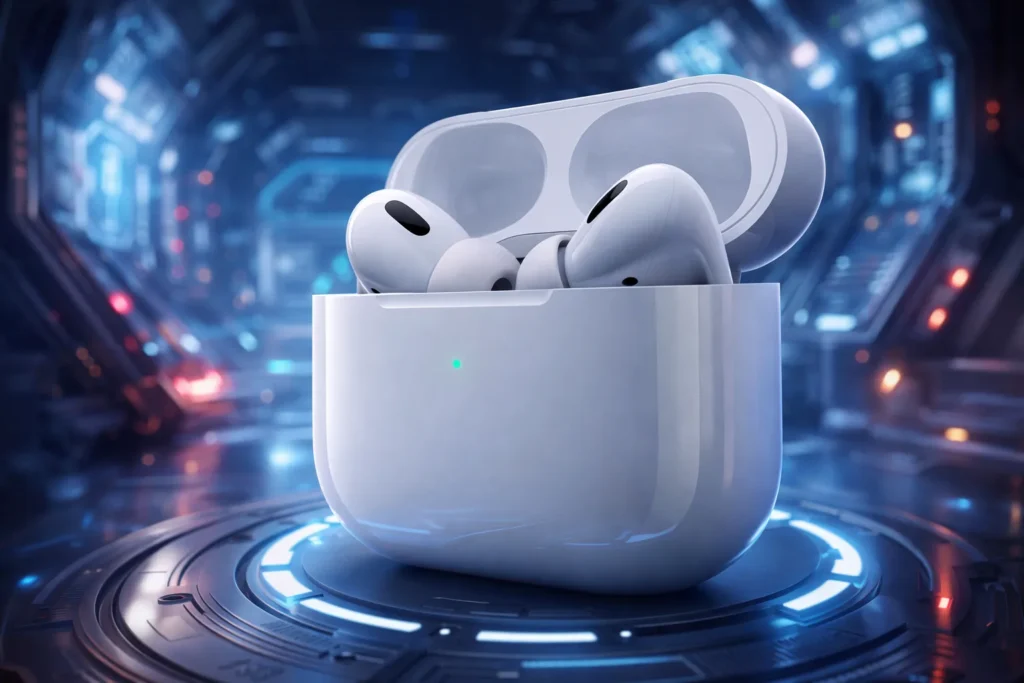
Compared to the standard Apple AirPods Pro 2 (with Lightning connector), there is no noticeable difference in sound quality with the new model. Noise cancellation, transparency mode, and voice quality during phone calls are also flawless.
The second-generation AirPods Pro with a USB-C connector support lossless audio with a sampling rate of 20 bits/48 kHz. The headphones have four features: adaptive mode, individual volume, voice recognition, and microphone muting.
Specifications
Drivers – Custom driver developed by Apple
Wireless connectivity – Bluetooth 5.3
Active noise cancellation (ANC) – Yes
Noise cancellation during phone calls (ENC) – Yes
Moisture protection – IPX4
Codec support – SBC, AAC
Battery life – up to 6 hours (up to 30 hours with charging case)
Pros and cons of Apple AirPods Pro 2 (USB-C)
Pros:
- High-quality sound;
- Highly effective noise cancellation;
- Fast charging (five minutes is enough for an hour of use);
- Spatial audio.
Cons:
- high price;
- lossless audio support only for Apple Vision Pro headphones.
Sony WF-1000XM5
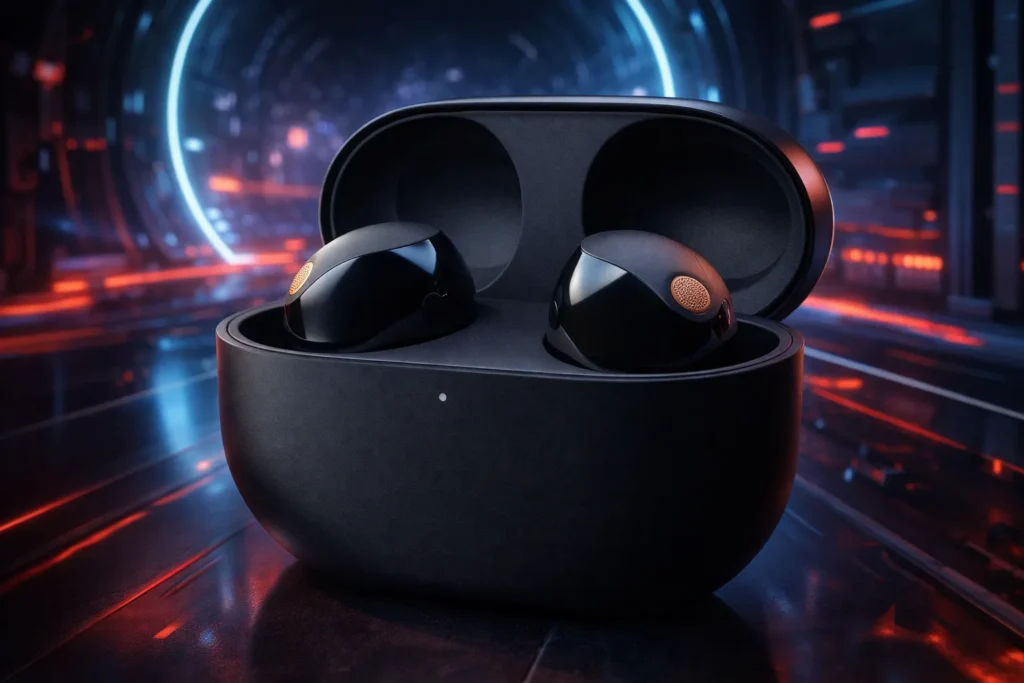
One of the best wireless headphones for Android with excellent active noise cancellation, decent battery life, and support for high-quality codecs. The sound quality is top-notch — thanks to LDAC, you can play music files without any loss of quality, but compared to the previous generation, there is a noticeable lack of low frequencies. On the other hand, the Sony WF-1000XM5 are lighter and more compact than their predecessor.
One of the controversial aspects of the Sony WF-1000XM5 is the foam earbuds, which do an excellent job of isolating outside noise but are not suitable for everyone as they can put pressure on the ears.
Specifications
Drivers – 8.4 mm
Wireless connectivity – Bluetooth 5.3
Active noise cancellation (ANC) – Yes
Noise cancellation during phone calls (ENC) – Yes
Moisture protection – IPX4
Codec support – AAC, LC3, LDAC, SBC
Battery life – up to 8 hours (up to 24 hours with charging case)
Pros and cons of Sony WF-1000XM5
Pros:
- High-quality sound;
- Support for high-quality codecs;
- Excellent noise cancellation;
- Long battery life.
Cons:
- high price;
- foam ear pads may not suit everyone;
- not the most convenient volume control.
Rating of the best over-ear wireless headphones
Unlike in-ear headphones, on-ear headphones usually have better sound quality and longer battery life because they are larger in size. However, compared to full-size models, the ear cups of on-ear headphones do not cover the entire ear, but rest on it — hence the name. On the other hand, on-ear headphones are lighter and more compact than full-size ones.
Sennheiser Momentum 3 Wireless
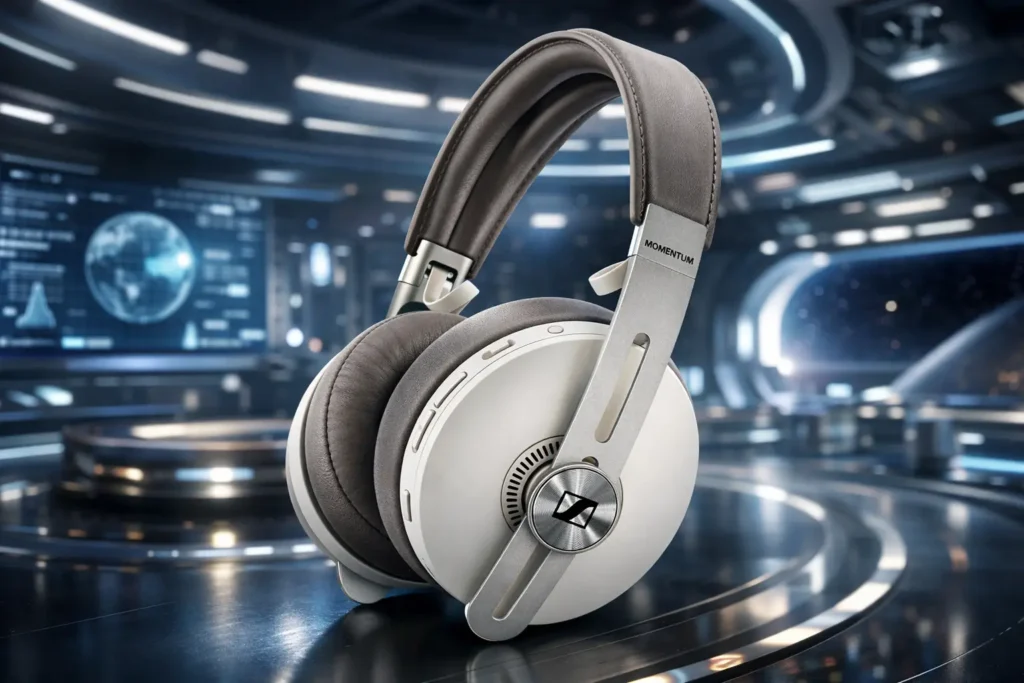
The updated version of Sennheiser’s wireless headphones features 42 mm dynamic drivers. They deliver high-quality sound with deep, rich bass. The model supports high-quality SBC, AAC, aptX, and aptX-LL codecs. In addition, you can install the proprietary Sennheiser Smart Control app on your smartphone, which allows you to personalize the sound using an equalizer.
The adaptive active noise cancellation system and audio transparency mode make listening as comfortable as possible, even outdoors and on public transport. The Sennheiser Momentum 3 headphones do not impress with their battery life: a full charge is only enough for 17 hours of listening. The speaker’s frequency range is from 6 Hz to 22 kHz.
Specifications
Drivers – 42 mm
Wireless connectivity – Bluetooth 5.0
Active noise cancellation (ANC) – Yes
Moisture protection – No
Codec support – aptX, AAC, aptX-LL, SBC
Battery life – Up to 17 hours
Pros and cons of Sennheiser Momentum 3 Wireless
Pros:
- High-quality sound;
- Durable construction;
- Support for high-quality codecs;
- Phenomenal battery life.
Cons:
- short battery life;
- quite heavy;
- may produce crackling noises at low frequencies.
Sony WH-CH720N
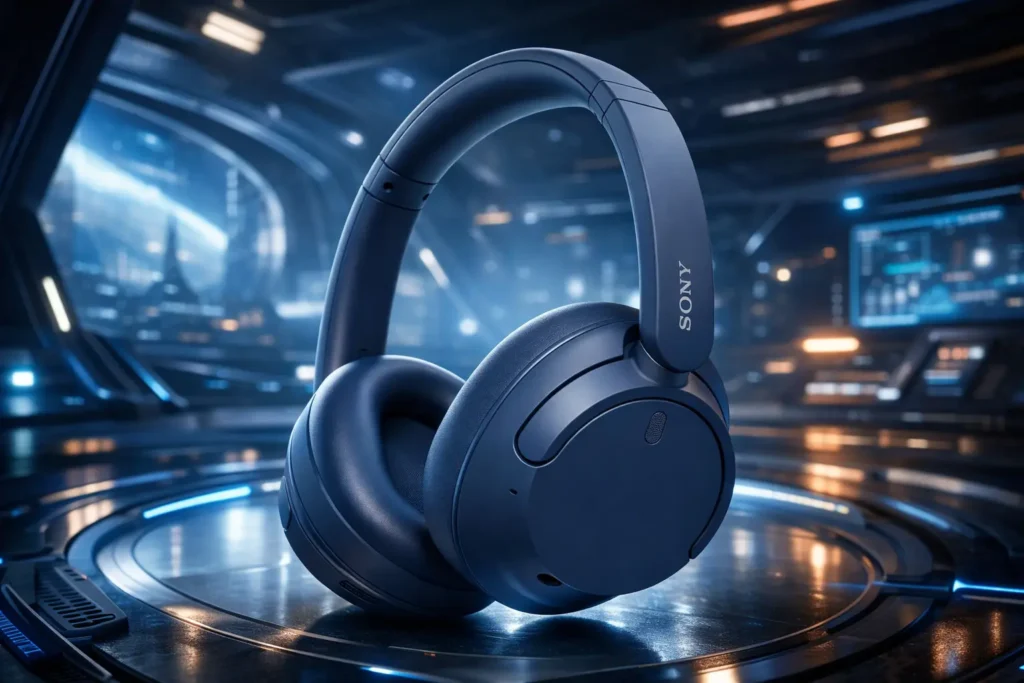
The Sony WH-CH720N headphones deliver high-quality, balanced sound, which can be customized using the Sony Headphones Connect app. They support simultaneous connection to two Bluetooth devices and feature quick pairing. The headphones are suitable for listening to music while traveling or outdoors, as they feature active noise cancellation and a transparency mode. Noise cancellation is provided by the V1 processor, which is also found in the flagship WH-1000XM5 headphones.
Specifications
Drivers – 30 mm
Wireless connectivity – Bluetooth 5.2
Active noise cancellation (ANC) – Yes
Moisture protection – No
Codec support – AAC, SBC
Battery life – Up to 50 hours
Pros and cons of Sony WH-CH720N
Pros:
- Good battery life;
- High-quality sound;
- Comfortable design;
- Transparency mode.
Cons:
- Not the best microphone quality;
- Boring design.
JBL Tune 670NC
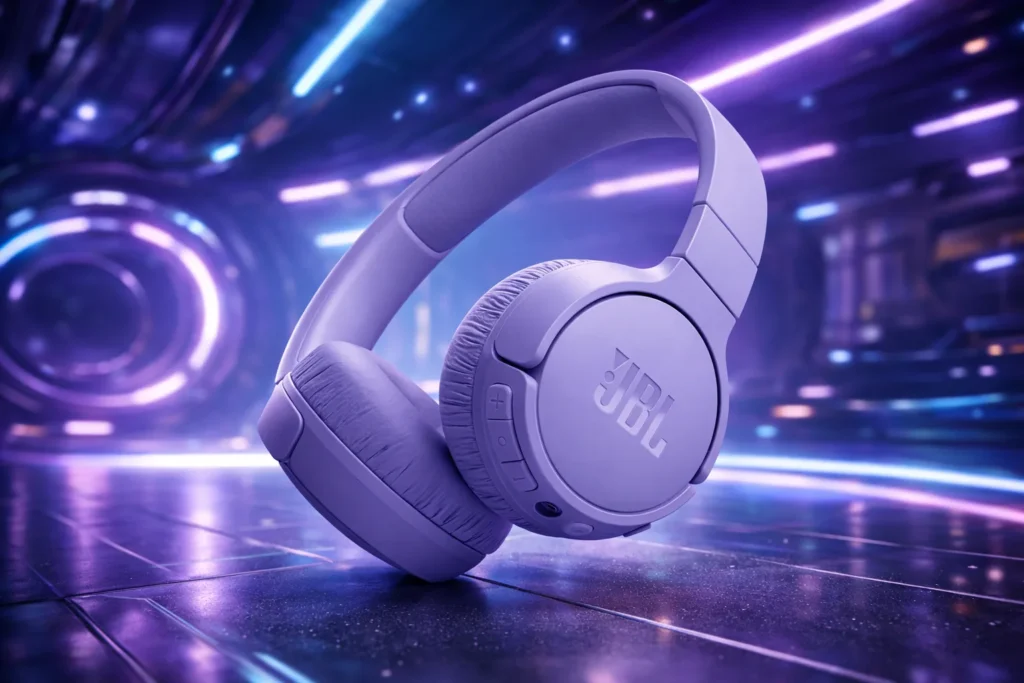
The JBL Tune 670NC offers impressive battery life and active noise cancellation. It stands out with its decent sound quality, pronounced low frequencies, and a good microphone, which comes in handy during conversations. There is also a wired connection option, which may be useful for gaming consoles or PCs, for example. JBL’s proprietary Pure Bass technology delivers rich, deep bass. The headset will last an impressive 70 hours on a single charge.
Add Your Heading Text Here
Specifications
Drivers – 32 mm
Wireless connectivity – Bluetooth 5.3
Active noise cancellation (ANC) – Yes
Moisture protection – No
Codec support – AAC, SBC
Battery life – Up to 70 hours
Pros and cons of JBL Tune 670NC
Pros:
- excellent battery life;
- high-quality sound;
- easy to use.
Cons:
- questions about the strength of the structure;
- few additional features;
- no app.
Marshall Major V
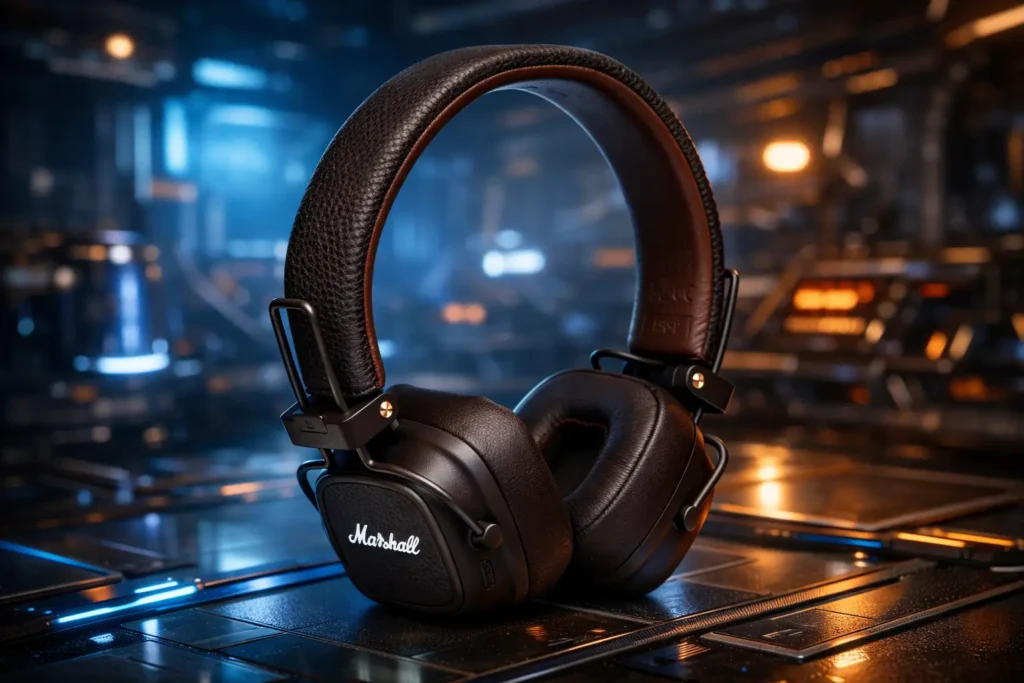
These over-ear headphones from the legendary brand feature signature sound, a lightweight and durable design, a high-quality microphone, and wireless charging support. The Marshall Major V can be confidently recommended to those who appreciate dynamic and bass-heavy sound. A pleasant bonus is the addition of AAC and LC3 codec support in addition to the basic SBC.
If necessary, you can also connect via a wired connection — the 3.5 mm mini-jack connector is still there. The headphones surprise with their battery life: 100 hours on a single charge. This makes the model one of the best on the market in terms of this indicator.
Specifications
Drivers – 40 mm
Wireless connectivity – Bluetooth 5.3
Active noise cancellation (ANC) – No
Moisture protection – No
Codec support – AAC, LC3, SBC
Battery life – Up to 100 hours
Pros and cons of Marshall Major V
Pros:
- Flawless autonomy;
- High-quality sound;
- Wireless charging.
Cons:
- Not the best passive sound insulation;
- High price.
Rating of the best full-size over-ear headphones
Full-size over-ear headphones offer the best sound and noise cancellation due to their design. They do not put pressure on the ears, as they cover the user’s ears without creating excessive pressure. The downside is that they are heavier and larger, making them more suitable for home use than for walking or traveling.
Soundcore Space One
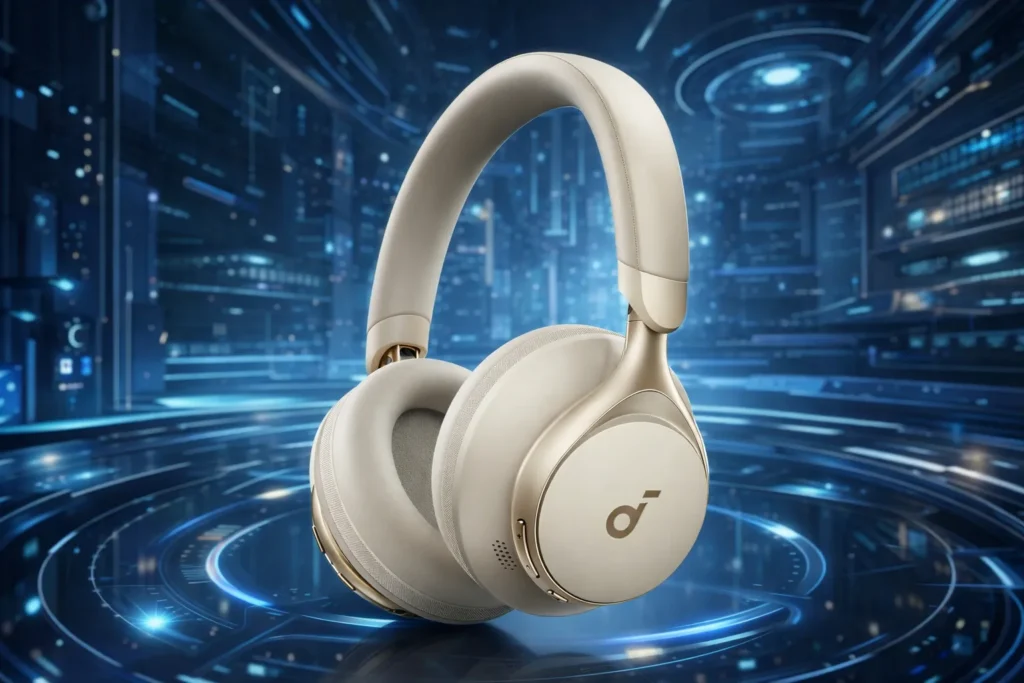
Affordable full-size headphones with active noise cancellation and LDAC codec support. The sound quality of the Soundcore Space One is high, but it doesn’t quite match that of flagship models, and the soundstage lacks depth, but considering the price, this is forgivable. The sound can be adjusted to your preferences using the proprietary app.
The noise canceller copes with typical office or street noise, but really loud sounds like the clatter of subway cars will still come through. The headphones are also suitable for calls, but preferably at home or in the office.
Specifications
Drivers – 40 mm
Wireless connectivity – Bluetooth 5.3
Active noise cancellation (ANC) – Yes
Moisture protection – No
Codec support – AAC, LDAC, SBC
Battery life – Up to 55 hours
Pros and cons of Soundcore Space One
Pros:
- active noise cancellation system;
- LDAC support;
- affordable price.
Cons:
- Sound quality is below average;
- No carrying case or storage case included.
Sony WH-1000XM5
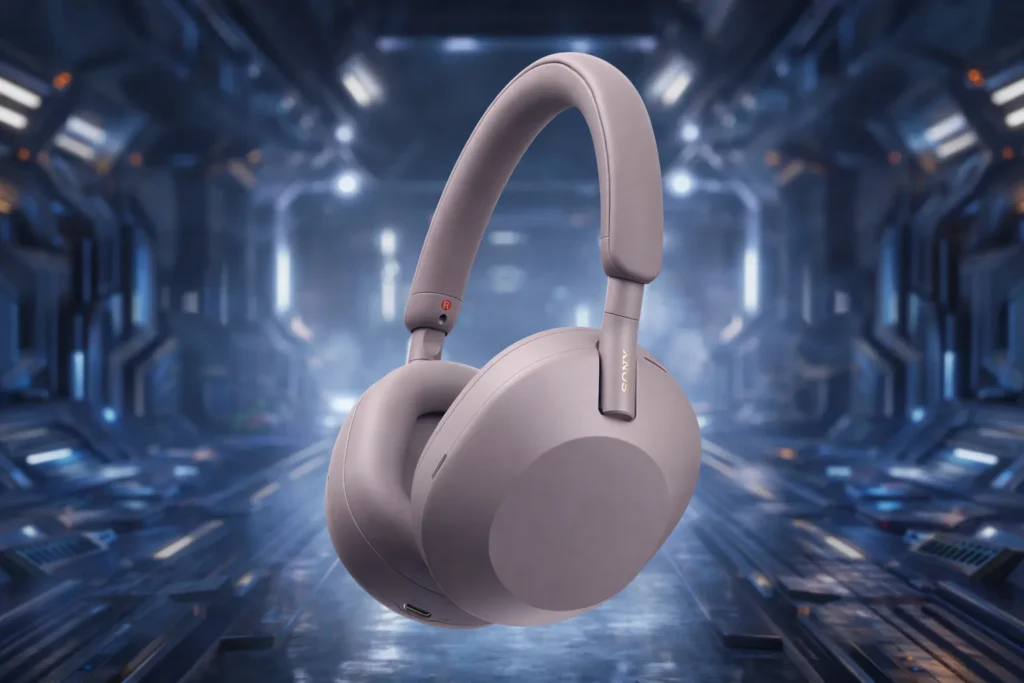
The fifth generation of Sony’s iconic full-size WH-1000XM5 headphones has received mixed reviews. In some respects, the headphones have improved, but Sony has cut back on other features. For example, the headphones now have a non-foldable design, a rather large storage case, no NFC, and the sound is not as bass-heavy.
On the other hand, the new model has been upgraded with new technology, so the already excellent noise cancellation has become even better, and with it, the transparency mode. Sound is a subjective matter. Some users like the sound of the Sony WH-1000XM5 even more, and you can customize it to your liking using the equalizer in the Sony Headphones Connect app.
Specifications
Drivers – 30 mm
Wireless connectivity – Bluetooth 5.2
Active noise cancellation (ANC) – Yes
Moisture protection – No
Codec support – AAC, LDAC, SBC
Battery life – Up to 40 hours
Pros and cons of Sony WH-1000XM5
Pros:
- Excellent noise reduction;
- High-quality sound;
- Case included.
Cons:
- clumsy design;
- no aptX and aptX HD support;
- no moisture protection.
Bose QuietComfort Ultra
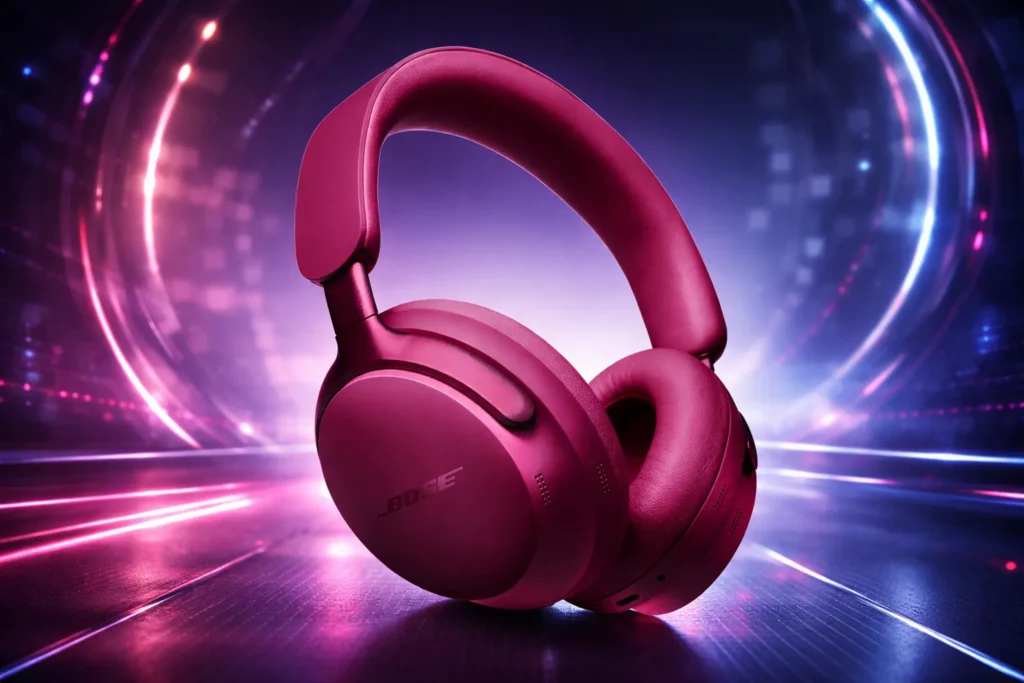
Bose QuietComfort Ultra can be considered a direct competitor to Apple Airpods Max — they are cheaper (if we consider the official recommended price), lighter, and offer comparable sound quality and noise cancellation. They offer additional features for Android users. First and foremost is support for Snapdragon Sound technology. On compatible devices, this allows the use of the adaptive AptX codec, which adjusts the sound quality depending on the incoming signal and provides a stable connection and maximum quality.
Specifications
Wireless connectivity – Bluetooth 5.3
Active noise cancellation (ANC) – Yes
Moisture protection – No
Codec support – AAC, SBC, AptX Adaptive
Battery life – Up to 24 hours
Pros and cons of Bose QuietComfort Ultra
Pros:
- Snapdragon Sound;
- superior noise cancellation and transparency mode;
- premium design.
Cons:
- high price;
- no moisture protection;
- no LDAC support.
The previous version, the Bose QuietComfort 45, is still available and can be purchased for as low as $270.
Apple Airpods Max 2024
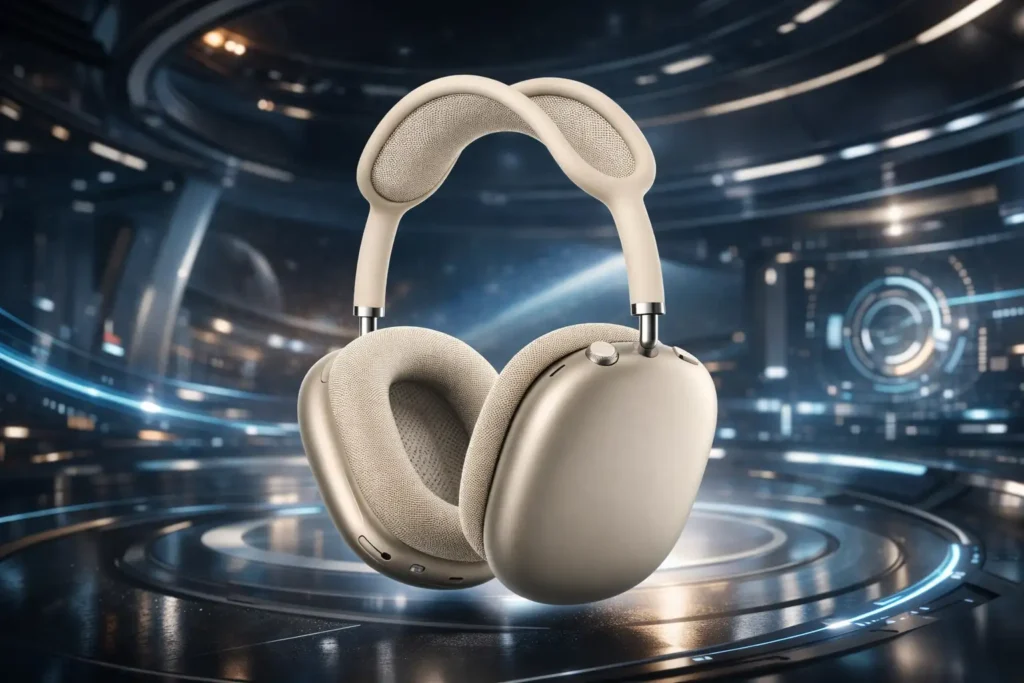
This fall, Apple updated its full-size headphones for the first time since 2020. They offer a new USB-C port, which has replaced Lightning. Engineers have upgraded ANC and added adaptive audio. AirPods Max 2024 can also automatically determine when to turn noise cancellation on and off. Lossless audio support has not been added.
Otherwise, they are the same Apple Airpods Max from 2020: they have the same Apple H1 chip inside, and their appearance has not changed. They are a great match for the iPhone, but for Android owners, they are not the most advantageous purchase. It’s also difficult to recommend them to audiophiles, as you can buy headphones with a completely different sound quality for this price. Nevertheless, the Airpods Max 2024 are strong in terms of technical features — the active noise cancellation system and transparency mode are considered among the best in their class. With such technologies, even the hum of an airplane is no match for you.
Specifications
Wireless connectivity – Bluetooth 5.0
Active noise cancellation (ANC) – Yes
Moisture protection – No
Codec support – AAC, SBC
Battery life – Up to 20 hours
Pros and cons of Apple Airpods Max 2024
Pros:
- Excellent noise cancellation and transparency mode;
- Premium design;
- High-quality sound.
Cons:
- high price;
- heavy construction;
- limited set of codecs (when connected to Android);
- flimsy storage case.
Rating of the best wireless headphones with a microphone
Almost all TWS earbuds (which is why it is more accurate to call them headsets) have a built-in microphone, but the sound recording quality can vary greatly. In addition, more expensive models usually have additional features such as echo cancellation, which are useful for calls and video conferences.
In this category, we have collected wireless headphones that are perfect for communication or voice recording. However, keep in mind that a full-size headset with a remote microphone is preferable if you need higher-quality voice transmission.
Sony WF-C500
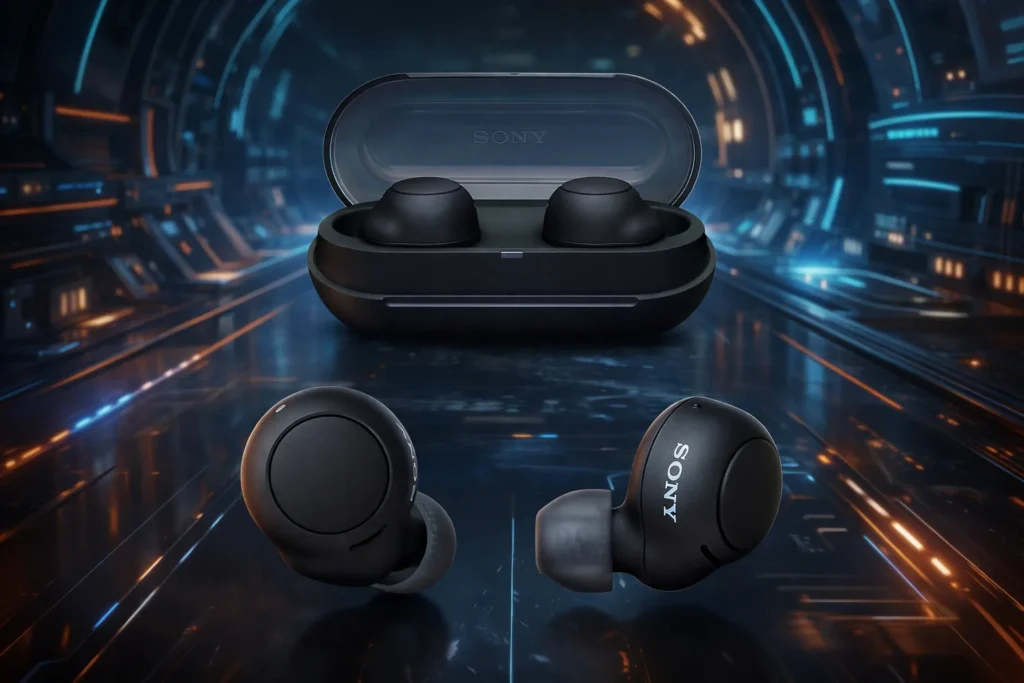
The headphones feature Digital Sound Enhancement Engine (DSEE) technology, which restores details to deliver high-quality sound that is close to the original recording. There is an equalizer with preset modes and manual adjustment options. The Sony WF-C500 has very good voice transmission quality, but due to the lack of noise cancellation, they are better suited for office or home calls.
Thanks to their compact size, these earbuds fit securely and comfortably in the ears, and their rounded shape without sharp edges does not cause discomfort. In addition, the modules have a stylish, youthful design: you can choose between four colors: white, black, light green, and orange-pink.
Specifications
Drivers – 5.8 mm
Wireless connectivity – Bluetooth 5.0
Active noise cancellation (ANC) – No
Moisture protection – IPX4
Codec support – AAC, SBC
Battery life – Up to 10 hours (up to 20 hours with charging case)
Pros and cons of Sony WF-C500
Pros:
- ergonomic design;
- customizable equalizer;
- fast charging.
Cons:
- No noise cancellation;
- Button controls, which not all users find convenient.
Realme Buds Air 6 Pro
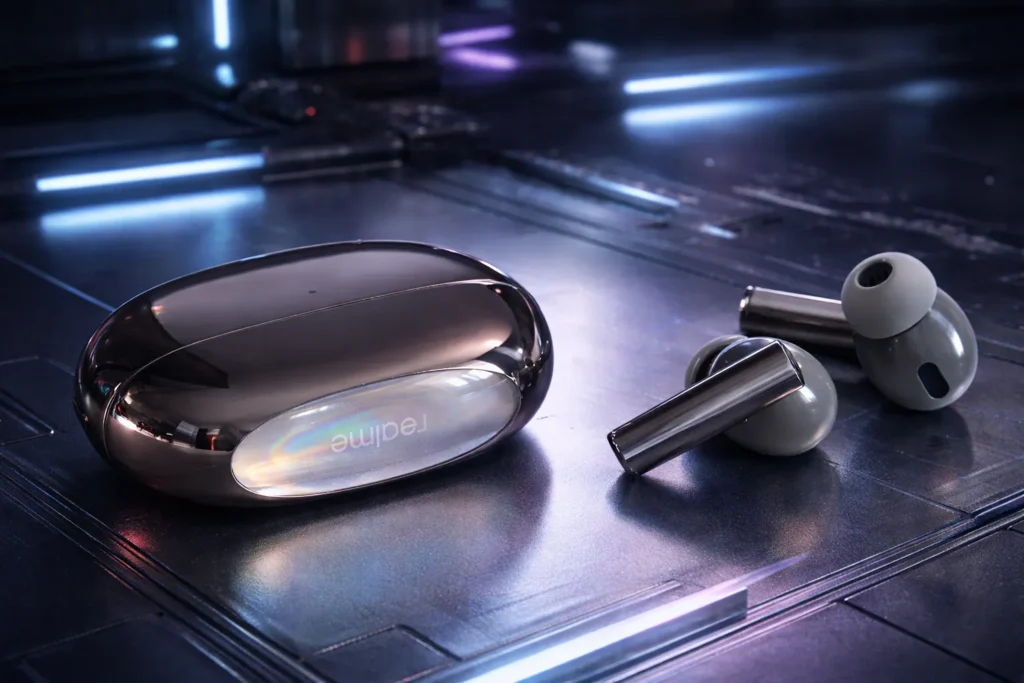
The Buds Air 6 Pro feature 11mm low-frequency drivers and 6mm high-frequency tweeters. The headphones are Hi-Res certified with LDAC audio codec support. The headphones also boast an advanced 6-microphone system with AI noise cancellation for clearer conversations. Voice quality is excellent — speech is clear and intelligible.
The Pro version features “3D spatial sound effects” that enhance the listening experience by creating a more immersive sound environment. The device is available in Galaxy Titanium and Glacier Silver colors.
Specifications
Drivers – 11 mm
Wireless connectivity – Bluetooth 5.3
Active noise cancellation (ANC) – Yes
Noise cancellation during phone calls (ENC) – Yes
Moisture protection – IP55
Codec support – AAC, LDAC, SBC
Battery life – up to 7.5 hours (up to 40 hours with charging case)
Pros and cons of Realme Buds Air 6 Pro
Pros:
- Excellent noise isolation;
- Comfortable design;
- Hi-Res certification and LDAC audio codec support.
Cons:
- Active noise cancellation may cause headaches for the user;
- The glossy case quickly accumulates scratches and scuffs.
Razer Hammerhead Pro HyperSpeed
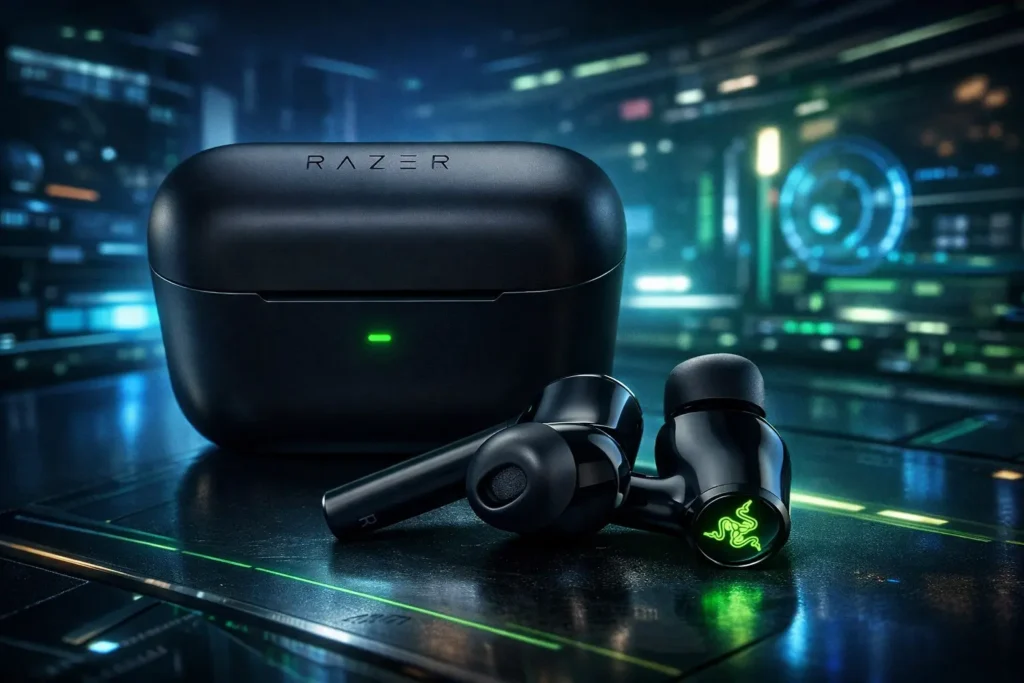
The Razer Hammerhead Pro HyperSpeed is primarily a gaming headset, so it provides excellent voice transmission quality. The microphone filters out background noise during voice communication, and the active noise cancellation system allows you to hear your conversation partner clearly. Thanks to the USB-C dongle, you can connect the headphones to PlayStation 5 and Nintendo Switch game consoles, as well as to a PC for communicating with teammates during gaming sessions.
Specifications
Drivers – 10 mm
Wireless connectivity – Bluetooth 5.3
Active noise cancellation (ANC) – Yes
Noise cancellation during phone calls (ENC) – Yes
Moisture protection – IPX4
Codec support – AAC, SBC
Battery life – up to 6.5 hours (up to 24 hours with charging case)
Pros and cons Razer Hammerhead Pro HyperSpeed
Pros:
- RGB backlighting;
- low-latency dongle for connecting to game consoles;
- convenient design.
Cons:
- poor battery life;
- no option to connect to multiple devices simultaneously;
- not the highest sound quality;
- high price.
Jabra Elite 10 Gen 2
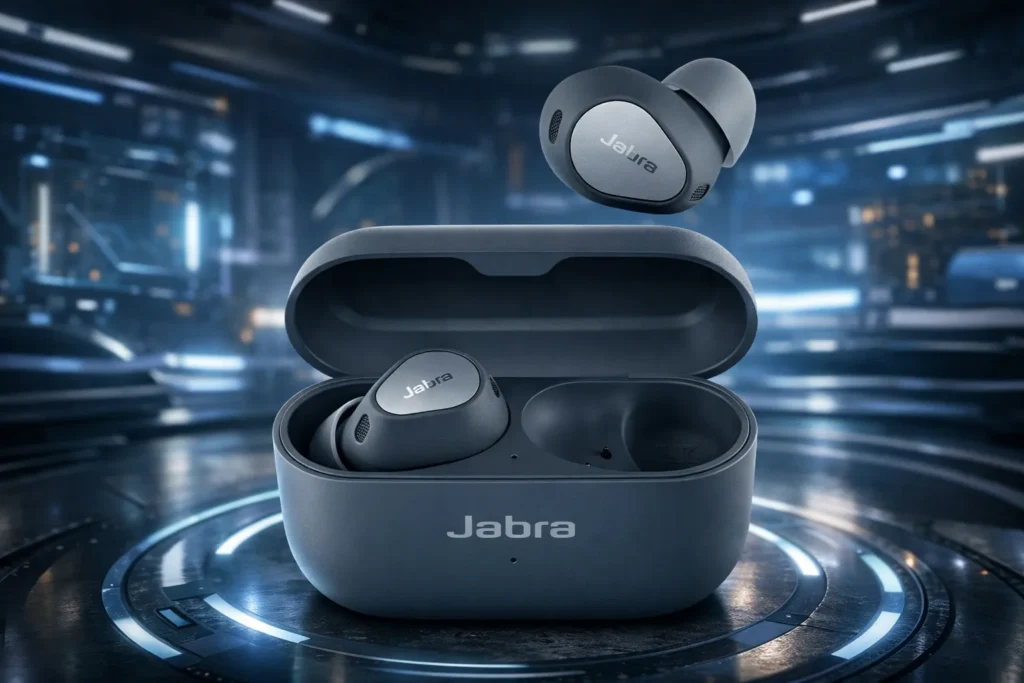
Jabra headsets have been well known in Europe since the days when they were sold alongside Nokia phones, so it makes sense that high-quality devices are still being produced under this brand. The second-generation Jabra Elite 10 is the company’s flagship product with a corresponding price tag. The headphones have top-of-the-line features: Dolby Atmos technology, IP57 protection, Bluetooth 5.3, six microphones, and active noise cancellation. This allows the headset to cope well with challenging conditions such as strong winds or noisy offices. Your speech will always remain clearly audible. In addition, the headset has convenient controls that allow you to easily answer and reject calls, as well as mute the microphone.
Specifications
Drivers – 10 mm
Wireless connectivity – Bluetooth 5.3
Active noise cancellation (ANC) – Yes
Moisture protection – IP57
Codec support – AAC, SBC
Battery life – Up to 7 hours (up to 28 hours with charging case)
Pros and cons of Jabra Elite 10 Gen 2
Pros:
- Excellent protection against water and dust;
- Long battery life;
- 6 equalizer modes, Dolby Atmos support.
Cons:
- Not the longest battery life;
- Only supports AAC and SBC codecs;
- Does not have a neodymium magnet in the speaker.
How to choose the right wireless headphones
When choosing headphones, it is highly recommended to listen to them yourself before buying. If you like the sound, the other characteristics will not be as important. However, you should not focus solely on sound. There are several factors to consider.
Price
It is not worth focusing solely on price when choosing headphones, although it is still possible to indirectly assess quality and functionality. For example, headphones costing $90–$130 and above can be expected to offer higher build quality, balanced sound, and improved voice clarity during calls.
Premium models with the highest sound quality and the richest functionality start at $190-$300 dollars. These devices have a well-thought-out design and provide effective noise cancellation.
Reviews
When choosing headphones, reviews may not be helpful to everyone, as sound perception is individual. There are completely opposite opinions about the same model of headphones. It is also worth being cautious about reviews on the comfort of wearing headphones for the same reasons.
But what you should pay attention to are the additional features: how noise cancellation works, how well you will be heard during calls, whether the headphones lose signal, and so on.
Codecs and Bluetooth version
It is preferable if, in addition to the standard SBC, the headphones also support other types of codecs, such as aptX or LDAC. These codecs provide better sound quality, but support must also be implemented on the device that transmits the sound. Currently, AAC is the only high-quality codec available for the iPhone.
At the same time, don’t ignore headphones that only support SBC, as they can also deliver high-quality sound.
It is also worth paying attention to the Bluetooth version (although this should not be a decisive factor). The higher it is, the better — higher data transfer speed, lower power consumption, etc.
Noise cancellation and sound insulation
In-ear headphones provide the best passive sound insulation, as they completely cover the ear canal (hence their other name, “earbuds”). Earbuds have the worst sound insulation, so they are worth considering if this parameter is not particularly important to you.
For best results, choose models with active noise cancellation. However, on inexpensive headphones, it usually does not work very well.
Expert opinion
When choosing headphones, it is important to consider the scenario in which they will be used, the desired sound quality, and comfort. Form factor plays a key role in choosing headphones. Earbuds (in-ear) are compact and convenient for everyday use, while on-ear models provide a more immersive sound. Full-size headphones guarantee maximum noise isolation and are suitable for home use or studio work.
The type of connection determines ease of use. Wired models provide stable sound without delays, which is important for gamers and professionals working with sound. Wireless headphones offer freedom of movement and are equipped with additional technologies such as active noise cancellation and transparency mode.
Sound quality depends on technical characteristics. The optimal frequency range (20 Hz to 20,000 Hz) allows you to enjoy all the nuances of sound, and high sensitivity (95-100 dB) ensures sufficient volume. Models with an impedance of 16-32 ohms are suitable for connecting to smartphones and laptops.
Additional features significantly improve usability. Active noise cancellation allows you to focus on music or work, the microphone ensures clear voice calls, and moisture protection is useful for sports or walks in any weather.
Comfort and ergonomics are crucial, especially during prolonged use. Headphones should fit securely without causing discomfort. The lightweight design and soft ear cushions significantly improve wearing comfort.
FAQ questions and answers
When choosing wireless headphones, other questions may arise. Below are answers to popular questions from users regarding the selection of headphones.
What should you look for when buying wireless headphones for sports?
The main criterion here is comfort. It is important that the headphones do not get in the way or fall out of your ears during sports. For example, the Sony WF-1000XM5 has foam earbuds, so they don’t slip off due to sweat or fall out when you shake your head. In addition, it is worth considering models with water and dust protection. The higher the protection standard, the better. Even the most basic protection, such as IPX4, is sufficient for rain drops, splashes, and sweat.
What are TWS earphones?
TWS stands for True Wireless Stereo. This means that both earphones are not connected to each other by a wire or headband, if we are talking about full-size wireless earphones.
What are “wired” wireless headphones? How are they convenient?
The term “wired” can have different meanings when applied to Bluetooth headphones. First, these can be headphones that, unlike TWS, are connected by a wire. Such headphones are harder to lose, more compact, and may have longer battery life.
Second, they can be wireless headphones with the ability to connect to an audio source via a wire. This is typical for on-ear and over-ear models. The advantages of this connection method are sound quality, no dependence on a battery, and the ability to connect to older devices without Bluetooth.
Discover more from Maxi Journal
Subscribe to get the latest posts sent to your email.