The world of travel blogging is vast and varied, ranging from simple digital journals to full-fledged media businesses. But what truly sets the most successful travel blog websites apart? It’s more than just beautiful photos and exotic destinations; it’s a masterful blend of strategic content, smart monetization, and a deep understanding of their audience. This article dissects seven exemplary platforms and blogs, revealing the specific strategies that power their success and influence. We move beyond surface-level admiration to provide a tactical breakdown of their design, content strategy, and business models.
Whether you’re an aspiring travel writer seeking the right platform, a seasoned blogger looking to refine your approach, or simply a reader searching for your next great travel story, this analysis is for you. We’ll explore the DNA of top-tier travel blog websites like Nomadic Matt, while also examining the platforms like WordPress.com and Substack that enable their creation. Each entry includes direct links and screenshots to illustrate the key takeaways. You’ll discover actionable insights to help you find the best websites for your needs or elevate your own travel blog from a simple hobby into a thriving online presence.
1. WordPress.com
WordPress.com is arguably one of the most popular travel blog websites and platforms for both beginners and seasoned professionals. It offers a hosted, all-in-one solution that removes the technical hurdles of server management, letting you focus purely on creating content. This managed approach means your site’s hosting, security, and basic maintenance are handled for you, making it an excellent entry point into the world of travel blogging.
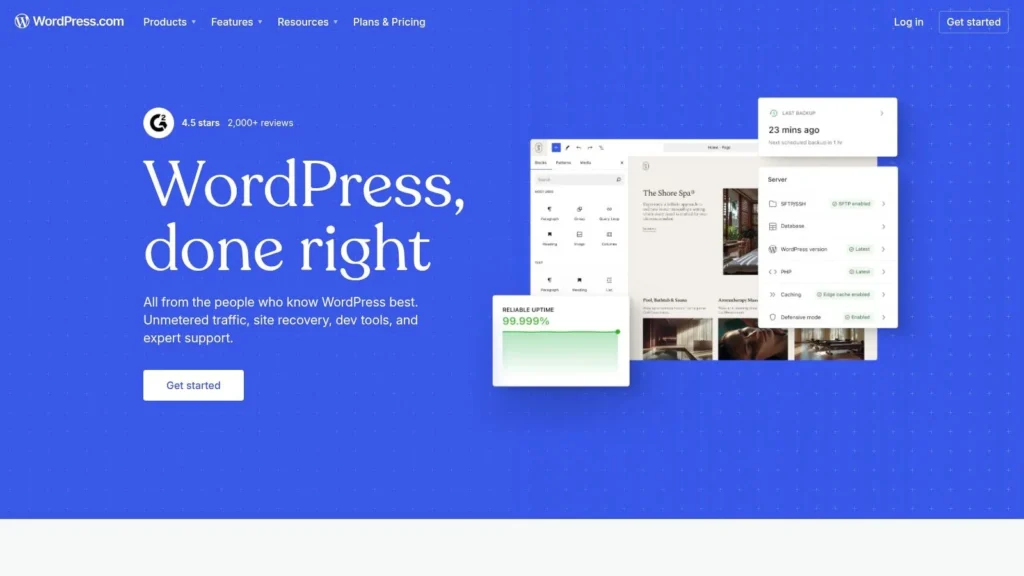
The platform is built on the same familiar software as its self-hosted counterpart, WordPress.org, providing an intuitive block editor and a straightforward content management system. This makes publishing stories, embedding photo galleries, and managing your posts simple. For those just starting out, the free plan offers a solid foundation to test your ideas without any financial commitment.
Strategic Breakdown
WordPress.com’s key strength lies in its scalability. You can start with a free subdomain and basic features, then upgrade as your blog grows. Paid plans unlock powerful capabilities like custom domains, expanded storage, monetization tools, and crucial plugin support on higher tiers.
Key Takeaway: WordPress.com is a launchpad, not just a platform. It provides a structured growth path, allowing your blog to evolve from a personal hobby into a professional, revenue-generating travel brand without needing to migrate to a new system. This tiered structure is ideal for managing initial costs while keeping future growth possibilities open.
Pricing and Features
The platform operates on a freemium model. While the free plan is great for beginners, serious bloggers will likely need to upgrade to access essential features for a professional site.
| Plan Tier | Key Features | Best For |
|---|---|---|
| Free | wordpress.com subdomain, basic themes | Hobbyists and testing blog ideas |
| Personal | Custom domain name, ad removal | Aspiring bloggers needing a professional URL |
| Premium | Monetization tools (ads), premium themes | Bloggers looking to earn their first income |
| Business/Commerce | Plugin installation, advanced SEO tools | Serious travel bloggers building a brand |
Actionable Tip: If you’re serious about building a travel blog, start with at least the Personal plan to secure your own domain name. This is a critical first step for brand building and SEO. For those who want to fully understand the setup process, a comprehensive guide on how to start a travel blog can provide a step-by-step walkthrough.
2. ThemeForest (Envato Market)
ThemeForest is the world’s largest marketplace for website themes, making it one of the most valuable resources for bloggers using self-hosted platforms like WordPress.org. Instead of building a design from scratch, you can purchase a professionally designed, feature-rich theme tailored specifically for travel blog websites. This approach significantly cuts down development time and costs, offering a polished look straight out of the box.
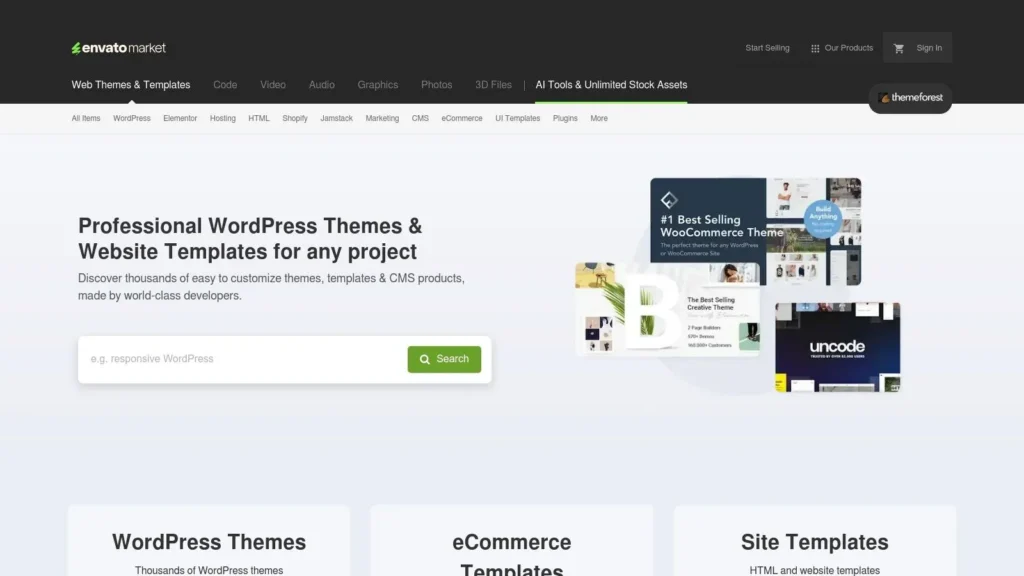
The platform allows you to browse thousands of options from independent creators, complete with live demos, user reviews, and sales data. This transparency helps you gauge a theme’s quality, support level, and suitability for your content before making a purchase. Whether you need a photo-centric layout, an interactive map feature, or a minimalist design, ThemeForest provides a competitive and diverse selection.
Strategic Breakdown
ThemeForest’s primary advantage is providing access to premium design and functionality at a fraction of the cost of custom development. A well-chosen theme can provide a unique brand identity and user experience that sets your blog apart. However, the responsibility for setup, updates, and maintenance falls on you, requiring a more hands-on approach than all-in-one platforms.
Key Takeaway: ThemeForest empowers you to achieve a high-end, custom look on a budget. The key is to select a well-supported, highly-rated theme from a reputable author. This balances the one-time cost against the long-term value of a powerful and visually stunning travel blog.
Pricing and Features
Themes on ThemeForest are typically sold with a one-time license fee, which often includes six months of support from the author. Prices are competitive, but it’s important to read the license terms and check for any additional costs.
| Feature | Description | Typical Cost |
|---|---|---|
| One-Time Purchase | A single payment for a lifetime license for one website. | ~$39 – $69 |
| Included Support | 6 months of technical support from the theme author. | Included |
| Extended Support | Optional 12-month extension for author support. | ~$10 – $25 |
| Live Previews | Interactive demos to test the theme before buying. | Free |
Actionable Tip: Before purchasing, always check the theme’s “last updated” date and read recent comments. A theme that is frequently updated and has positive recent reviews is a strong indicator of a reliable author who provides good support, which is crucial for long-term site health.
3. Substack
Substack has emerged as a powerful, writer-first platform that is increasingly popular among travel writers and journalists. It uniquely combines a simple blog format with a robust email newsletter system, allowing creators to publish directly to an audience of subscribers. This model makes it one of the most direct travel blog websites for building a loyal, engaged readership.
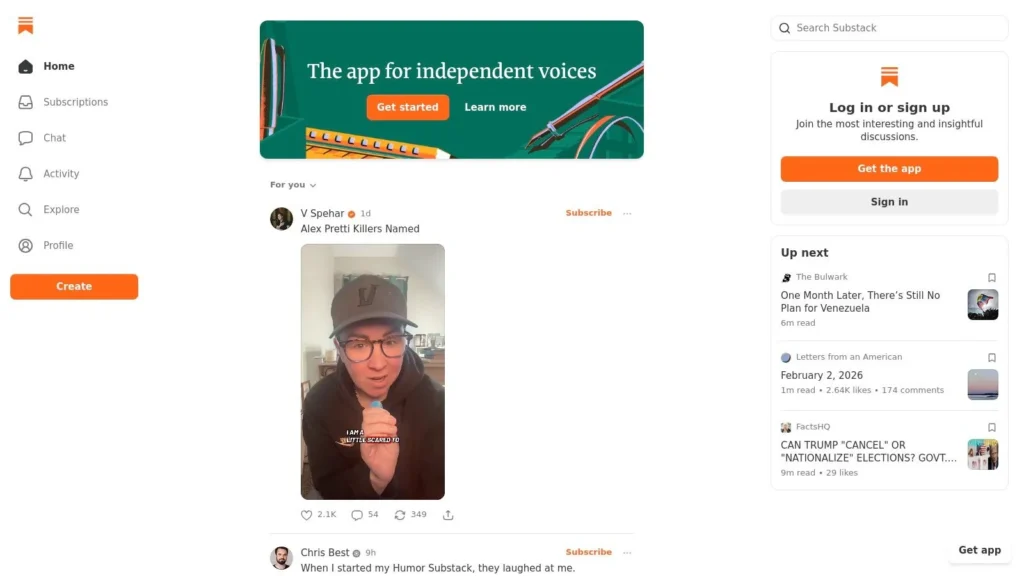
The platform strips away the complexities of web design and hosting, offering a minimalist editor focused entirely on content creation. Travel writers can share stories, photo essays, and even podcasts or videos with ease. Its built-in monetization through paid subscriptions provides a clear path to generating revenue directly from your most dedicated readers, a feature that sets it apart from traditional blogs.
Strategic Breakdown
Substack’s core strength is its integrated system for publishing and monetization. It’s not just a blog; it’s a direct-to-consumer media business in a box. The platform handles payments, email delivery, and provides a simple web archive for your content, allowing you to focus on producing high-quality travel narratives. This simplicity is its most significant strategic advantage.
Key Takeaway: Substack thrives on the creator-audience relationship. It is the ideal platform for travel writers with a strong voice who want to build a community and monetize through premium, exclusive content. The built-in network and discovery features also help new writers find an audience more quickly than starting a traditional blog from scratch.
Pricing and Features
Substack is free to publish on, with the company only taking a percentage of revenue from paid subscriptions. This makes it an incredibly low-risk option for new and established travel writers alike.
| Plan Tier | Key Features | Best For |
|---|---|---|
| Free Publisher | Publish free posts, build an email list | Anyone wanting to start a travel newsletter without cost |
| Paid Publisher | Paid subscriptions, 10% platform fee | Writers ready to monetize their content directly |
Actionable Tip: Start by publishing for free to build a consistent readership and prove your value. Once you have an engaged audience, introduce a paid tier with exclusive travel guides, behind-the-scenes content, or personalized travel tips. This strategy is central to understanding how to build an email list that is willing to support your work financially.
4. Medium
Medium is less a dedicated blogging platform and more of a massive online publication where travel writers can find a built-in audience. It stands out among travel blog websites by offering a frictionless publishing experience combined with a powerful distribution engine. Instead of building a site from scratch, you can simply write and publish, letting Medium’s algorithm and user base handle the initial discovery.
The platform is renowned for its clean, ad-free reading experience, which puts your travel stories front and center without distraction. Writers can publish articles under relevant tags like “Travel” or “Backpacking” or submit them to larger, travel-focused “Publications” on the site to reach an even wider, more engaged readership. This makes it an ideal place to syndicate content or build a writing portfolio.
Strategic Breakdown
Medium’s core strength is its built-in network effect. By publishing here, you tap into an existing ecosystem of readers actively looking for high-quality content. The platform’s recommendation engine can give a well-written travel story viral potential that would be nearly impossible to achieve on a brand-new, standalone blog.
Key Takeaway: Use Medium as a content distribution channel, not just a primary blog. It’s perfect for syndicating your best articles from your main travel blog to reach a new audience or for testing new content ideas to see what resonates before committing them to your own site. The trade-off for this reach is a lack of control over branding and audience ownership.
Pricing and Features
Medium is free for writers to publish, but its monetization and reader access are based on a membership model. Writers can place their stories behind a “metered paywall,” earning money based on member reading time.
| Plan Tier | Key Features | Best For |
|---|---|---|
| Free Writer Account | Unlimited publishing, access to stats | Writers building a portfolio or syndicating content |
| Member Subscription | Unlimited access to paywalled stories | Readers who want to access all content on the platform |
| Partner Program | Monetize stories based on member engagement | Travel writers looking to earn direct income from their articles |
Actionable Tip: To maximize exposure, submit your travel stories to established publications on Medium like “The Post-Grad Survival Guide” or “World Travelers Blog.” Getting accepted exposes your work to thousands of followers instantly, providing a significant boost in readership and potential earnings through the Partner Program.
5. TravelBlog.org
TravelBlog.org is one of the original community-driven travel blog websites, offering a free and straightforward platform designed specifically for trip journaling. Unlike robust content management systems, its focus is less on brand building and more on chronicling adventures. It provides a simple space for travelers to document their journeys with text, photos, and interactive maps, all within a supportive community of fellow explorers.
The platform strips away the complexities of web hosting, themes, and plugins, allowing you to sign up and start writing in minutes. Its key features include trip mapping, which visually plots your journey on a map, and active community forums. This makes it an ideal choice for travelers who want to share updates with friends and family or connect with other nomads without the overhead of managing a full-fledged website.
Strategic Breakdown
The core strength of TravelBlog.org is its unwavering focus on community and simplicity. It’s not trying to compete with polished, monetized blogs; instead, it provides a functional, no-frills digital scrapbook for travelers. The platform’s longevity has cultivated a vast archive of travelogues, creating a rich resource for aspiring travelers looking for authentic, on-the-ground stories.
Key Takeaway: TravelBlog.org excels as a pure journaling tool. Its value lies in its dedicated travel-specific features like trip maps and its built-in audience of explorers, making it perfect for documenting a specific trip rather than building a long-term, professional blogging career.
Pricing and Features
TravelBlog.org is completely free to use, making it an accessible option for any traveler. The features are standardized across all users and tailored for logging trips.
| Feature Set | Details | Best For |
|---|---|---|
| Free Account | Create unlimited blogs, upload photos, embed videos, utilize interactive trip maps, participate in community forums. | Travelers on a specific journey (e.g., a gap year or backpacking trip) who want to document their experiences without any cost or technical setup. |
| Community | Access to active forums, ability to follow other travelers, comment on blog entries. | Individuals seeking connection and advice from a global community of travelers. |
Actionable Tip: Use TravelBlog.org to document a single, significant journey. Create a dedicated blog for your “Southeast Asia Backpacking Trip” or “European Road Trip.” This approach leverages the platform’s journal-like structure and makes it easy for friends, family, and other community members to follow your specific adventure from start to finish.
6. Nomadic Matt
Nomadic Matt stands as a titan among independent travel blog websites, built on a foundation of practical, budget-focused advice. Unlike a platform, this is a content-first destination where travelers find extensive free guides, planning resources, and cost-saving tips. It’s the go-to resource for those who want to learn how to travel smarter and cheaper from a veteran who has been doing it for over a decade.
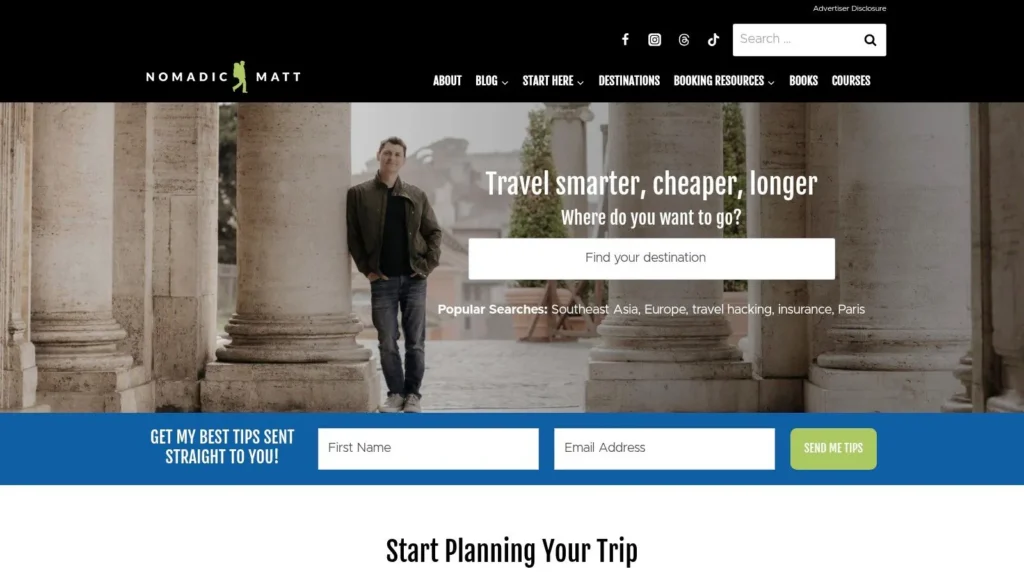
The site’s success is a testament to building authority and trust over time. While the core offering is free, well-researched content, it strategically monetizes through digital products like guidebooks and its popular “Superstar Blogging” masterclass. This dual approach provides value to casual readers while offering a clear pathway for aspiring bloggers to learn the business side of travel content creation.
Strategic Breakdown
Nomadic Matt’s strategy is a masterclass in content marketing and authority building. By consistently providing high-value, actionable advice for free, the site has cultivated a massive, loyal audience. This audience trusts the brand’s recommendations, making them receptive to paid products like detailed guidebooks and comprehensive blogging courses that promise a deeper level of expertise.
Key Takeaway: Nomadic Matt exemplifies the “freemium” content model. It proves that you can build a highly profitable travel brand by giving away your best advice, which in turn builds the trust necessary to sell premium products and educational courses. The website isn’t just a blog; it’s an educational ecosystem.
Pricing and Features
The platform offers a mix of free resources and paid products. Access to the blog and its extensive library of travel guides is completely free, while educational materials and detailed guides are premium offerings.
| Product/Service | Key Features | Best For |
|---|---|---|
| Free Blog Content | Extensive destination guides, budget travel tips | Travelers planning trips and seeking free advice |
| Paid Guidebooks | In-depth, downloadable guides for specific locations | Travelers wanting detailed, offline-accessible itineraries |
| Superstar Blogging Course | Blogging and monetization training, expert interviews | Aspiring travel bloggers looking to build a business |
| The Nomadic Network | Community events, meetups, and travel resources | Travelers wanting to connect with a community |
Actionable Tip: Before considering paid courses, spend time absorbing the free content on Nomadic Matt. Analyze how articles are structured, the topics covered, and the writing tone. This provides invaluable insight into successful travel content strategy, which you can apply to your own blog.
7. Lonely Planet Shop
While not a traditional blogging platform, the Lonely Planet Shop is an essential resource for serious travel bloggers who prioritize accuracy and depth. It serves as an authoritative library for guidebooks, maps, and reference materials, providing the foundational research needed to create trustworthy and comprehensive content. For bloggers, this platform is less about publishing and more about preparation, ensuring their posts are built on reliable, professionally vetted information.
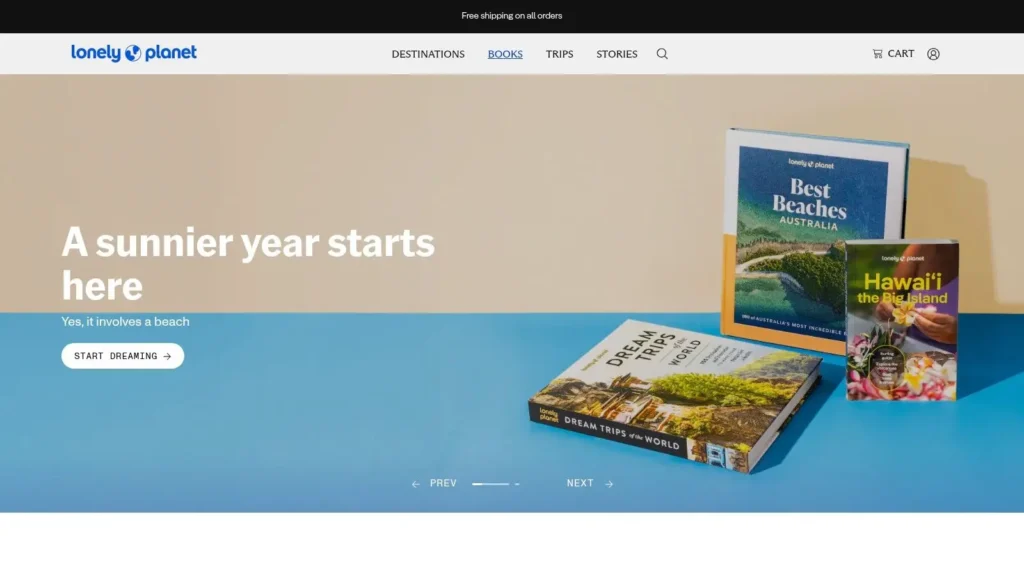
The e-store offers a vast catalog covering nearly every destination imaginable, with options for both print books and instant-access ebooks. This flexibility allows for pre-trip planning with physical copies and on-the-go fact-checking with digital versions. The clear US pricing, frequent promotions, and Insider membership program make it a go-to for bloggers looking to invest in quality research materials.
Strategic Breakdown
The core value of the Lonely Planet Shop for a travel blogger is credibility. By referencing information from their regularly updated guides, you can add a layer of authority to your content that is difficult to achieve with online-only sources. This is crucial for building reader trust, especially when providing practical advice on logistics, safety, and must-see attractions.
Key Takeaway: Use Lonely Planet guides not just for travel planning but as a content-enrichment tool. Citing their research or using their maps as a reference can elevate your blog from a simple travelogue to a dependable resource, setting you apart from other travel blog websites.
Pricing and Features
The platform is a retail shop, so all products are individual purchases. The value comes from the quality of the information and the resources available to supplement your blog’s content.
| Product/Service | Key Features | Best For |
|---|---|---|
| Print & Ebooks | Wide catalog, updated destination guides | Bloggers needing in-depth research for specific trips |
| Insider Membership | Free guidebook per year, ebooks, discounts | Frequent travelers and bloggers covering multiple destinations |
| Maps & Guides | City guides, National Parks books, maps | Creating detailed itineraries and visual content for posts |
Actionable Tip: Before a big trip, purchase the corresponding Lonely Planet ebook. Use it to cross-reference your own experiences and fill in any informational gaps in your blog posts. This ensures your advice is both personal and factually sound. This level of preparation is just as important as securing the best travel insurance for international trips to ensure you’re covered from all angles.
Top 7 Travel Blog Platforms Comparison
| Option | Implementation complexity | Resource requirements | Expected outcomes | Ideal use cases | Key advantages |
|---|---|---|---|---|---|
| WordPress.com | Low — hosted platform, fast launch | Free tier; paid plans for custom domain/plugins; minimal server management | Scalable blog with CMS features and custom domain (on paid plans) | Bloggers who want managed hosting and growth without server admin | Managed hosting, large theme library, built‑in tools and support |
| ThemeForest (Envato Market) | Medium — purchase, install and configure themes | One‑time theme fees (~$39–$69); possible developer/time for setup | Polished, professional layout quickly | Users needing ready‑made designs without hiring a designer | Huge selection, demos, reviews, cost‑effective templates |
| Substack | Very low — simple publisher and email distribution | Free to start; platform takes 10% of paid revenue + Stripe fees | Rapid audience building and paid subscriptions | Writers focused on newsletters and subscription monetization | Built‑in payments, email delivery, low upfront cost |
| Medium | Very low — publish with minimal setup | Free publishing; membership model for readers affects earnings | Broad exposure via recommendation engine and built‑in audience | Writers seeking reach and simple publishing or syndication | Large audience, discovery tools, ad‑free reading experience |
| TravelBlog.org | Very low — community blog creation | Free to join; basic media uploads and forum use | Community engagement and trip‑focused journaling | Casual travelers wanting free, community‑oriented travel logs | Free, traveler‑focused features, active community and maps |
| Nomadic Matt | Low to use resources; medium to implement learned strategies | Free guides; paid books and paid “Superstar Blogging” course | Actionable travel advice and monetization training | Aspiring travel bloggers seeking practical tips and courses | Trusted, experience‑based guidance and structured training |
| Lonely Planet Shop | Low — purchase and use reference materials | Purchases for guidebooks/ebooks; optional membership benefits | Up‑to‑date destination research to enrich content | Bloggers needing authoritative research and maps | Authoritative, regularly updated guides; print and ebook options |
Building Your Blueprint for a Successful Travel Blog
As we have journeyed through this curated showcase of top-tier travel blog websites, a clear pattern has emerged. Success is not a matter of chance; it is a product of deliberate strategy, thoughtful tool selection, and a deep understanding of a target audience. The most impactful blogs are not mere digital diaries but are sophisticated platforms built with purpose.
We analyzed the comprehensive ecosystem of WordPress paired with powerful themes from ThemeForest, highlighting its unparalleled scalability for ambitious content creators. We also saw how platforms like Substack and Medium offer a lower barrier to entry, allowing writers to focus purely on content and community building, leveraging existing networks to gain traction quickly. Each model presents a distinct pathway to success.
Synthesizing Your Strategic Framework
The key takeaway is not to replicate a single blog’s formula but to synthesize the most effective strategies for your unique vision. The examples of Nomadic Matt and Lonely Planet demonstrate the power of establishing authority, whether through personal expertise or a globally recognized brand. They prove that a well-defined niche and consistent, high-quality content are the cornerstones of a lasting digital presence.
Consider these critical questions as you forge your own path:
- Your Primary Goal: Are you aiming to build a tight-knit community, establish yourself as a niche expert, or create a broad, monetized content empire? Your answer will heavily influence your choice of platform.
- Technical Proficiency: Be realistic about your technical skills. A self-hosted WordPress site offers ultimate control, but platforms like TravelBlog.org or Substack handle the technical heavy lifting for you.
- Content and Monetization Alignment: Your content strategy should directly inform your monetization plan. A blog focused on in-depth gear reviews is well-suited for affiliate marketing, while one centered on personal narrative might thrive on a subscription model.
Actionable Next Steps for Your Journey
Building one of the great travel blog websites is a marathon, not a sprint. The insights gathered here provide a strategic map, but the journey is yours to take. Start by defining your “why,” then select the tools and platforms that best serve that purpose.
Focus on creating a minimum viable product: a clean design, a clear content focus, and a handful of high-value articles. From there, iterate and adapt based on audience feedback and performance data. Remember that authenticity is your greatest asset. Let your unique voice and passion for travel shine through, and you will build a loyal following that is eager to join you on your adventures. With these strategic frameworks and actionable takeaways, you are now well-equipped to begin.
Ready to put these strategies into action and find your voice? Explore maxijournal.com, a platform where creators from all walks of life share their stories and insights. It is the perfect place to contribute your unique travel experiences and connect with a diverse, engaged readership. Start sharing your journey today!
Discover more from Maxi Journal
Subscribe to get the latest posts sent to your email.