Traveling alone offers an unparalleled sense of freedom, personal growth, and self-discovery. It’s an opportunity to connect with the world-and yourself-on your own terms. However, navigating new environments solo also requires a heightened sense of awareness and strategic preparation. While the prospect of venturing out alone can seem daunting, transforming potential anxiety into empowering confidence is achievable with the right toolkit of knowledge. This is where a proactive approach to personal security becomes your most valuable travel companion.
This guide is designed to move beyond generic advice like “be careful” to provide a comprehensive and actionable collection of solo travel safety tips for the modern explorer. We understand that effective preparation is about specifics, not just platitudes. Therefore, we’ve structured this listicle to cover every phase of your journey, ensuring you have a clear, step-by-step framework for staying safe. You’ll find practical advice organized by key stages:
- Pre-Departure Planning: Laying a solid foundation before you even pack your bags.
- Transit & Accommodation: Navigating airports, public transport, and securing safe lodging.
- On-the-Ground Smarts: Daily habits and behaviors to minimize risk.
- Essential Preparations: Managing health, technology, money, and emergency protocols.
We will also provide tailored notes for different traveler profiles, including women, older travelers, and those seeking adventure. Whether you are a seasoned globetrotter or embarking on your very first independent trip, these ten detailed tips will equip you with the practical strategies needed to travel smarter, safer, and with complete peace of mind. Let’s dive into the essential practices that will help you explore the world with confidence.
1. Share Your Itinerary with Trusted Contacts
One of the most foundational solo travel safety tips is establishing a reliable communication and location-sharing plan. Before you even leave home, you must ensure that at least one or two trusted individuals, whether family or close friends, have a detailed copy of your complete itinerary. This isn’t just about sharing your flight number; it’s about creating a comprehensive safety net. Should you miss a scheduled check-in or encounter an emergency, this document becomes an invaluable resource for them to assist you or contact the appropriate authorities.
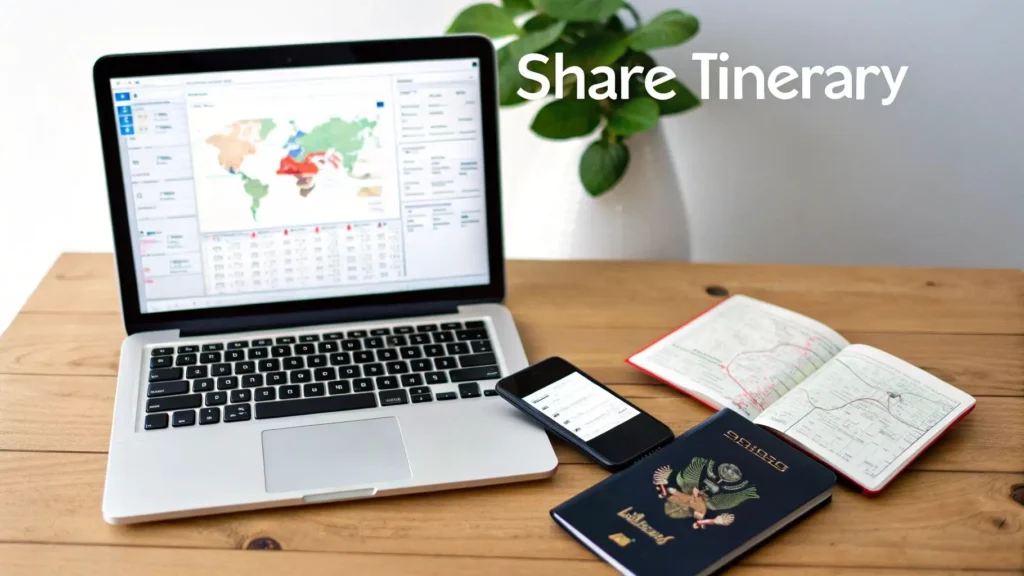
This practice is your first line of defense. Without a travel companion to notice if you’ve gone off-grid, your pre-shared itinerary empowers your contacts back home to act as your remote support system.
How to Create an Effective Shared Itinerary
A truly useful itinerary goes beyond a simple list of cities. Your goal is to provide actionable information that someone could use in a crisis.
- Use a Dynamic Format: A shared Google Doc, Google Calendar, or a dedicated travel app allows you to make real-time updates. If your train is delayed or you switch hostels, you can modify the document instantly.
- Include Critical Details: For each stop, list the full address of your accommodation, the landline phone number, and your reservation confirmation number.
- Add Transportation Information: Log flight numbers, train and bus ticket details, and car rental agreements. Include departure and arrival times.
- Establish Check-in Protocols: Don’t rely on vague promises to “message later.” Agree on specific check-in times, such as a quick text every morning or a call every 48 hours. If you miss a check-in, your contact knows to initiate the pre-agreed-upon follow-up procedure.
Pro Tip: Consider granting a trusted contact temporary access to travel booking accounts or using a password manager like LastPass to securely share credentials for emergency use only. This allows them to access flight or hotel information directly if you are unreachable.
2. Research Your Destination Thoroughly Before Arrival
Arriving in a new country without any context is a significant gamble, especially when traveling alone. Thorough pre-travel research transforms you from a vulnerable tourist into an informed visitor, equipping you with the knowledge to navigate confidently, respect local culture, and avoid common pitfalls. This step is about more than just identifying landmarks; it’s a critical safety measure that provides a deep understanding of your destination’s social fabric, potential risks, and logistical realities.
This foundational research is your proactive defense against uncertainty. For a solo traveler, knowing which neighborhoods are safe after dark, understanding local scams, or being aware of current political tensions can mean the difference between a minor inconvenience and a serious emergency.
How to Conduct Effective Destination Research
A comprehensive research strategy involves consulting a mix of official sources, recent traveler experiences, and local insights. Your objective is to build a well-rounded and up-to-date picture of the location.
- Consult Official Government Advisories: Start with reliable sources like the U.S. State Department’s Travel Advisories or the UK Foreign Office. These provide objective information on safety levels, health risks, and entry/exit requirements.
- Dive into Recent Traveler Reports: While official sources are great, they can lack on-the-ground nuance. Read recent blog posts on sites like Nomadic Matt or browse forums like Reddit’s r/travel to get current insights from other solo travelers who have just been there.
- Analyze Your Neighborhood: Don’t just research the city; research the specific street or district where your accommodation is located. Use Google Street View to get a feel for the area and read reviews that mention safety and accessibility.
- Learn Cultural Norms and Basic Phrases: Understanding local customs for dress, greetings, and tipping shows respect and helps you blend in. Learning key phrases like “hello,” “thank you,” “help,” and “how much does this cost?” is invaluable for daily interactions and emergencies.
Pro Tip: Join a destination-specific Facebook group or online forum a few weeks before your trip. You can ask timely questions about current conditions, transportation strikes, or safety concerns directly to locals and expats who live there.
3. Keep Emergency Contacts and Important Documents Accessible
When you’re traveling alone, you are your own primary point of contact and record-keeper. Losing your passport, phone, or wallet can escalate from a major inconvenience to a serious crisis in moments. One of the most critical solo travel safety tips is to create a redundant system for your vital information, ensuring you can access it even if your physical belongings are lost or stolen. This involves creating both digital and physical copies of everything from your passport to your travel insurance policy.
This multi-format approach acts as your personal contingency plan. If your phone battery dies, you have a physical copy. If your backpack is stolen with the physical copies inside, you have secure digital backups. This strategy ensures that a single point of failure never leaves you completely stranded without the necessary documentation to get help.
How to Create a Resilient Document System
Building an effective document backup system is about layering access and security. Your goal is to make information readily available to you in an emergency, but difficult for others to compromise.
- Go Digital and Encrypt: Use a secure cloud storage service like Google Drive or Dropbox to store scanned copies of your passport, visas, driver’s license, and travel insurance policy. For an extra layer of security, place these files in a password-protected or encrypted folder.
- Email a Secure Bundle: Send an email to yourself containing photos or scans of all important documents, flight confirmations, and hotel reservations. Use a subject line that is easy to search for, like “Emergency Travel Docs – [Your Name] – [Destination].”
- Keep Physical Photocopies: Never underestimate the value of hard copies. Keep a set of photocopies separate from the original documents. For example, store the originals in your money belt or hotel safe and the photocopies in your main luggage.
- Create a Contact Cheat Sheet: Compile a physical and digital list of critical phone numbers. This should include your bank’s fraud department, your country’s local embassy or consulate, your travel insurance provider’s 24/7 emergency line, and your primary emergency contacts back home.
Pro Tip: Take screenshots of your hotel address (in the local language), your digital boarding pass, and any important reservation numbers. Store them in your phone’s photo gallery so you can access them instantly, even without an internet connection.
4. Use Reliable Transportation and Avoid Late-Night Travel
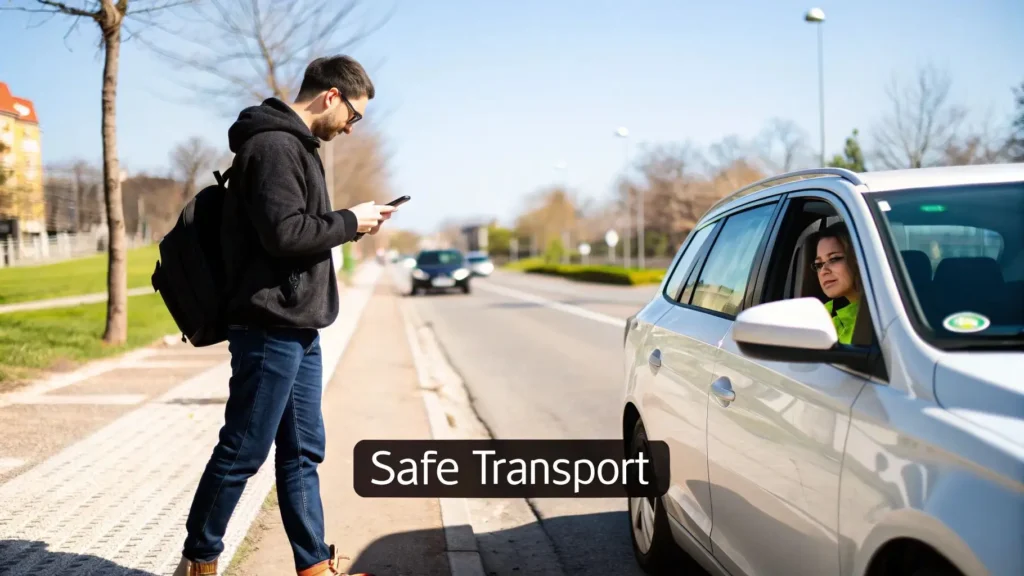
How you get from point A to point B is one of the most critical safety decisions you’ll make as a solo traveler. Opting for established, reputable transportation services over unmarked vehicles or risky options like hitchhiking significantly reduces your vulnerability. This principle extends to timing; traveling during daylight hours is inherently safer than navigating unfamiliar areas after dark when streets are emptier and help is harder to find.
This safety practice is crucial because you are most exposed when in transit. Without a travel partner to help watch your back or your belongings, your choice of vehicle and travel time becomes your primary defense against potential theft, scams, or more serious dangers.
How to Implement Safe Transportation Habits
Making smart transit choices is about preparation and vigilance. Your goal is to minimize risk by using trusted services and planning your movements strategically.
- Pre-Book and Pre-Plan: Before you even arrive, research and download the dominant local rideshare apps, such as Uber, Lyft, or Grab in Southeast Asia. For airport arrivals, pre-booking a shuttle or transfer directly through your hotel is one of the safest options.
- Verify Before You Enter: Always match the car’s license plate, make, and model with the information in your app. Confirm the driver’s name and photo. Never get into a vehicle that doesn’t match the details provided.
- Share Your Ride Details: Use the built-in “Share Trip Status” feature in rideshare apps to send your live location and ETA to a friend or family member. This creates an immediate digital safety net.
- Plan for Daylight: Schedule your major travel between cities and your primary sightseeing activities for daylight hours. Aim to be back in your accommodation or a well-populated, familiar area by nightfall.
Pro Tip: When using a taxi, either have your hotel call a reputable company for you or go to an official, marked taxi stand. Avoid hailing unmarked cabs on the street, especially late at night. If you must, discreetly take a photo of the license plate and driver ID before you start the journey.
5. Stay Aware of Your Surroundings and Trust Your Instincts
One of the most powerful yet intangible solo travel safety tips is honing your situational awareness and learning to trust your intuition. Without a travel partner to provide a second opinion or watch your back, your ability to read an environment and listen to your gut feelings becomes your primary defense mechanism. This skill isn’t about paranoia; it’s about calmly observing and processing your surroundings to proactively identify and avoid potential risks.
This psychological safety net allows you to detect subtle cues that something is amiss long before a situation escalates. Your intuition often registers non-verbal signals and environmental inconsistencies that your conscious mind might initially dismiss, making it an invaluable tool for any solo adventurer.
How to Cultivate Awareness and Listen to Your Gut
Developing this sense requires conscious practice. Your goal is to remain present and engaged with your environment, which empowers you to make smarter, safer decisions on the fly.
- Practice Active Observation: Before you even travel, spend time people-watching in a local cafe to understand baseline behaviors. When you arrive at your destination, do the same. Notice how locals interact, dress, and carry themselves.
- Limit Distractions: A key element of situational awareness is being able to hear what’s happening around you. Keep your music volume low, or better yet, only wear one earbud. Avoid burying your face in your phone while walking, especially in crowded areas or at night.
- Scan Your Environment: Whenever you enter a new space, like a restaurant, train station, or lobby, make a mental note of the exits. This simple habit keeps you from feeling trapped if a situation turns uncomfortable.
- Trust That Feeling: If a person, street, or situation feels “off,” trust that feeling without needing to logically justify it. Remove yourself from the situation immediately. Cross the street, enter a well-lit shop, or turn back the way you came. That feeling is your internal alarm system working correctly.
Pro Tip: Project confidence through your body language. Walk with purpose, keep your head up, and make brief eye contact with people you pass. Appearing lost or vulnerable can make you a target, whereas looking like you know where you’re going acts as a deterrent. If you do feel anxious, it can be helpful to learn how to calm anxiety naturally to regain your composure.
6. Avoid Displaying Valuables and Secure Your Belongings
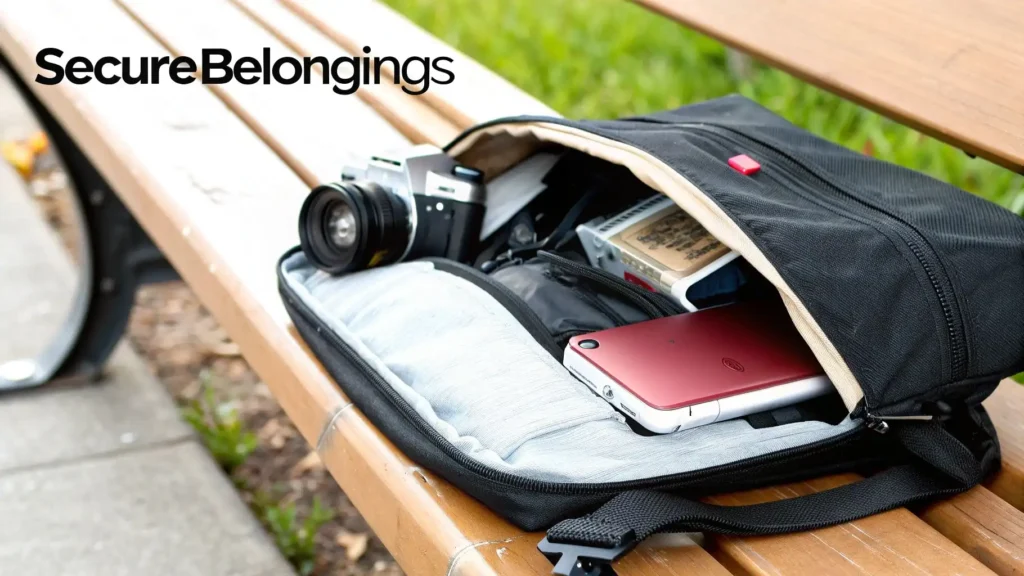
One of the most effective solo travel safety tips is to make yourself a less appealing target for opportunistic theft. Solo travelers can be perceived as more vulnerable because they lack a companion to watch their belongings. By consciously avoiding the display of expensive items and actively securing your possessions, you significantly reduce the risk of pickpocketing, bag snatching, and other common travel-related crimes.
This proactive strategy is about blending in and being discreet. A flashy watch, dangling camera, or visible wad of cash can instantly mark you as a profitable target. Securing your valuables is not just about locking them up; it’s about a mindset of constant, low-level vigilance that protects your irreplaceable items and prevents trip-ruining disruptions.
How to Effectively Secure Your Belongings
Implementing a multi-layered security approach ensures that even if one method fails, another is in place to protect your valuables. Your goal is to make theft as difficult and inconvenient as possible.
- Use Anti-Theft Gear: Invest in gear designed for security. Brands like Pacsafe and Travelon offer bags with slash-proof straps, locking zippers, and RFID-blocking pockets that protect passports and credit cards from electronic skimming.
- Divide and Conquer: Never keep all your valuables in one place. Distribute cash and cards between a money belt worn under your clothes, a secure pocket in your daypack, and a separate wallet.
- Practice Situational Awareness: Keep your phone and camera stowed away when not in active use, especially in crowded markets, public transport, or busy tourist areas. Use a crossbody bag worn in front of your body instead of a shoulder bag or backpack.
- Secure Your Accommodation: Whether in a hostel or hotel, always use the provided locker or in-room safe. Lock your main luggage with TSA-approved locks, even when it is left in your room.
Pro Tip: Before you leave, photograph your passport, credit cards (front and back), and the serial numbers of your electronics. Save these images to a secure cloud service like Google Drive or Dropbox. If your items are stolen, having this information readily accessible will be crucial for filing police reports and insurance claims.
7. Use Accommodation Booking Services with Safety Features and Reviews
Your choice of accommodation is one of the most significant safety decisions you’ll make as a solo traveler. This is your home base, your sanctuary, and where you’ll spend your most vulnerable hours. Opting for reputable booking platforms like Airbnb, Booking.com, or Hostelworld provides a crucial layer of security through verified reviews, secure payment systems, and established host standards, helping you avoid scams and unsafe environments.
These platforms act as a trusted intermediary, offering recourse and support if something goes wrong. Relying on their built-in safety features and the collective wisdom of past travelers is a non-negotiable step in ensuring you have a secure place to rest and recharge.
How to Select Safe Accommodations Effectively
Vetting potential stays requires more than a glance at the star rating. A strategic approach to reading reviews and analyzing listings can reveal critical safety information.
- Filter and Scrutinize Reviews: Don’t just read the top reviews. Filter specifically for comments from other solo travelers or women. Look for keywords like “safe,” “secure,” “neighborhood,” “location,” and “host.” Read at least 10-15 recent reviews to get a current picture of the property.
- Prioritize Verified Hosts: On platforms like Airbnb, look for “Superhost” status. On hotel sites, favor properties with a long history of positive, verified guest reviews. These designations indicate reliability and a commitment to quality service.
- Communicate Before Booking: A key solo travel safety tip is to message the host or property manager with specific questions about security. Ask about locks on the doors (both main and bedroom), the safety of the neighborhood at night, and building access. Their responsiveness and transparency are telling.
- Analyze the Listing Details: Look for properties with 24-hour reception, well-lit entrances, and positive mentions of staff helpfulness. For rentals, self-check-in with a keypad can be safer than coordinating a key exchange with a stranger.
Pro Tip: Cross-reference your potential accommodation’s location on Google Maps. Use Street View to virtually “walk” around the neighborhood. Check for proximity to public transport, well-lit main roads, and nearby businesses that are open late, like restaurants or convenience stores.
8. Maintain Appropriate Financial Security and Backup Payment Methods
One of the most critical solo travel safety tips involves diversifying your access to funds. Relying on a single card or carrying all your cash in one place is a significant risk. If that one source is lost, stolen, or compromised, you could be left stranded without financial resources. A robust financial strategy involves using multiple payment methods and practicing smart security habits to ensure you always have a backup plan. This approach prevents a minor inconvenience, like a lost wallet, from escalating into a major travel emergency.
This practice is your financial lifeline. Without a travel partner to lend you cash in a pinch, having a layered payment system ensures you remain self-sufficient and in control, no matter what financial hiccups occur on the road.
How to Build a Resilient Travel Wallet
A smart financial plan for solo travel is about redundancy and awareness. Your goal is to minimize risk while maximizing access to your money.
- Diversify Your Payment Methods: Never travel with just one card. Carry at least one credit card and one debit card, preferably from different banking institutions (e.g., Visa and Mastercard). This protects you if one network experiences an outage or a card is blocked.
- Notify Your Banks: Before you depart, inform your bank and credit card companies of your travel dates and destinations. This simple step prevents their fraud detection systems from flagging legitimate overseas transactions and freezing your accounts.
- Separate Your Funds: Don’t keep all your cards and cash in the same wallet or bag. Store a backup credit card, a debit card, and some emergency cash in a separate, secure location, such as a hotel safe or a hidden pocket in your luggage.
- Understand ATM Safety: Research which ATM networks (like Cirrus or Plus) are common in your destination. When withdrawing cash, choose ATMs in well-lit, public areas like inside a bank lobby. Withdraw larger sums less frequently to minimize fees and reduce exposure.
Pro Tip: Open a bank account specifically for travel, like one with Charles Schwab, which offers no foreign transaction fees and reimburses all ATM fees worldwide. This isolates your main funds from potential travel-related fraud and can save you a significant amount of money. Combining this with the right travel insurance policy provides a comprehensive financial safety net.
9. Maintain Regular Communication and Establish Safety Protocols
While sharing your itinerary is a crucial first step, maintaining a consistent communication rhythm throughout your trip is what makes that plan effective. For solo travelers, establishing a predictable check-in schedule transforms a passive document into an active safety system. This practice isn’t about constant monitoring; it’s about creating a pattern where any deviation immediately and clearly signals a potential issue, allowing your contacts to act swiftly and decisively.
This structured contact is one of the most vital solo travel safety tips because it creates a reliable external check on your well-being. It provides peace of mind for both you and your loved ones, ensuring that even if you’re thousands of miles away, someone always has a baseline for your status.
How to Create an Effective Communication Protocol
A strong protocol is clear, consistent, and has pre-defined actions for missed check-ins. It empowers your contacts by removing guesswork.
- Set Realistic Check-in Times: Don’t promise to message every morning if you’ll be on an overnight trek with no service. Agree to a schedule you can realistically keep, such as a quick text every 24-48 hours.
- Establish Escalation Procedures: Clearly define what happens if you miss a check-in. For example: “If you don’t hear from me for 24 hours past our scheduled time, try calling my phone. If no answer after another 6 hours, call my hostel.”
- Use Multiple Platforms: Relying solely on one app can be risky if there are service outages. Have a primary (e.g., WhatsApp) and a backup (e.g., email or Facebook Messenger) method.
- Create Simple Codes: If you’re in an area with poor connectivity, agree on a simple “all is well” code word or emoji. This allows you to confirm your safety quickly without needing to type a long message. For adventure travelers in remote areas, a device like a Garmin inReach for satellite messaging is an invaluable tool.
Pro Tip: Define what constitutes an “emergency.” Let your contacts know under what specific circumstances they should contact local authorities or your embassy versus simply trying your hotel. This clarity prevents panic and ensures the right level of response.
10. Develop Cultural Sensitivity and Follow Local Social Norms
A crucial yet often overlooked aspect of solo travel safety is your ability to blend in and show respect for the local culture. Understanding and adhering to local social norms, dress codes, and customs is more than just polite; it’s a powerful safety strategy. When you demonstrate cultural awareness, you are less likely to attract unwanted attention, offend locals, or inadvertently place yourself in a vulnerable or dangerous situation.
This practice is about minimizing your visibility as an outsider. By adapting your behavior, you reduce the chances of being targeted by those who prey on tourists and show that you are a respectful, informed visitor, which often leads to more positive and authentic interactions.
How to Practice Cultural Respect
Effective cultural integration involves proactive research and mindful observation. Your goal is to navigate a new environment with grace and respect, which builds goodwill and enhances your personal security.
- Research Dress Codes Before You Go: Many countries and virtually all religious sites have specific expectations for attire. For example, pack a scarf to cover your head and long pants or a skirt for visiting temples in Southeast Asia or mosques in the Middle East.
- Observe and Adapt: Watch how locals interact, greet each other, and behave in public spaces. Mirror their general conduct. For instance, notice the volume at which people speak in restaurants or on public transport and adjust accordingly.
- Learn Basic Courtesies: Mastering a few key phrases like “hello,” “please,” and “thank you” in the local language shows immense respect. For those looking to go further, resources on how to learn a new language can be incredibly helpful.
- Be Mindful with Photography: Always ask for permission before taking photos of people, especially children, or during religious ceremonies. Respect signs that prohibit photography in certain areas, such as inside Buddhist monasteries or near military installations.
Pro Tip: Avoid engaging in sensitive discussions about local politics, religion, or historical conflicts. As a visitor, your role is to observe and learn, not to judge or debate. Maintaining a neutral, respectful stance on complex local issues is the safest approach.
10-Point Solo Travel Safety Comparison
| Safety Strategy | Implementation Complexity | Resource Requirements | Expected Outcomes | Ideal Use Cases | Key Advantages |
|---|---|---|---|---|---|
| Share Your Itinerary with Trusted Contacts | Low | Phone, messaging apps, shared docs | Faster emergency response; accountability | Solo travelers, long trips, remote excursions | Low cost; peace of mind |
| Research Your Destination Thoroughly Before Arrival | Medium | Government advisories, guides, local news | Informed decisions; reduced risk exposure | First-time visitors, high-risk destinations, business trips | Avoids hazards; cultural preparedness |
| Keep Emergency Contacts and Important Documents Accessible | Low–Medium | Cloud storage, physical copies, secure apps | Quick access to IDs/insurance; faster assistance | Any traveler, business trips, bureaucratic destinations | Speeds recovery; prevents panic |
| Use Reliable Transportation and Avoid Late-Night Travel | Low | Rideshare/taxi apps, budget for fares, pre-booking | Reduced transit risk; documented trips | Airport transfers, unfamiliar cities, night-avoidance | Accountability via tracking; safer transit |
| Stay Aware of Your Surroundings and Trust Your Instincts | Medium | Attention, situational practice, basic training | Early threat detection; ability to disengage | Crowded areas, solo outings, urban exploration | Adaptable defense; psychological safety |
| Avoid Displaying Valuables and Secure Your Belongings | Low | Anti-theft bags, money belts, lockers | Lower theft likelihood; protected items | Tourist hotspots, public transit, markets | Tangible theft reduction; affordable measures |
| Use Accommodation Booking Services with Safety Features and Reviews | Medium | Booking platforms, time to vet reviews | Safer stays; fewer surprises | Solo stays, short-term rentals, new cities | Verified reviews; payment/dispute protection |
| Maintain Appropriate Financial Security and Backup Payment Methods | Medium | Multiple cards, cash reserves, bank notifications | Continued access to funds; fraud mitigation | International travel, remote areas, long trips | Reduces risk of being stranded; fraud protection |
| Maintain Regular Communication and Establish Safety Protocols | Low–Medium | Messaging apps, scheduled check-ins, escalation plan | Faster escalation; clear emergency triggers | Solo travelers, remote/expedition travel, long trips | Balances autonomy with oversight |
| Develop Cultural Sensitivity and Follow Local Social Norms | Medium | Guides, language basics, appropriate clothing | Fewer conflicts; better local acceptance | Conservative regions, religious sites, immersive travel | Blends in; prevents offense and legal issues |
Your Adventure Awaits – Travel Smart and Safe
Embarking on a solo journey is one of the most transformative experiences a person can have. It’s a path to self-discovery, resilience, and a profound connection with the world. Navigating this path safely doesn’t mean building walls around your adventure; it means building a foundation of confidence and awareness from which your journey can truly flourish. The extensive list of solo travel safety tips we’ve explored is not a rulebook designed to instill fear, but rather a toolkit designed to empower you.
By integrating these practices into your travel routine, you shift your mindset from one of worry to one of proactive control. This is the core principle of smart solo travel: preparation frees you to be present. When you’ve done your due diligence, you are no longer consumed by the “what-ifs.” Instead, you can fully immerse yourself in the vibrant chaos of a new city, the serene beauty of a remote landscape, or the simple joy of a conversation with a stranger, knowing you have a plan for nearly any contingency.
Recapping Your Safety Toolkit
Let’s distill the most critical takeaways from our guide. Think of these not as individual tasks, but as interconnected layers of a comprehensive safety strategy:
- Proactive Planning is Paramount: Your safety journey begins long before you board a plane. Thoroughly researching your destination, understanding local customs, and sharing a detailed itinerary are non-negotiable steps. This foresight arms you with knowledge, which is your most powerful defense against uncertainty.
- Situational Awareness is Your Constant Companion: From the moment you leave home, staying attuned to your surroundings is crucial. This means actively observing, trusting your intuition when something feels off, and projecting an air of confidence, even when you’re lost. It’s about being an engaged participant in your environment, not a passive observer.
- Secure Your Essentials, Secure Your Peace of Mind: Your physical and digital security are intertwined. Safeguarding your documents, having multiple payment options, using secure accommodations, and protecting your digital footprint are practical actions that prevent minor inconveniences from escalating into major crises.
Turning Knowledge into Action
The ultimate goal of mastering these solo travel safety tips is to make them second nature. At first, it might feel like a checklist of chores, but with practice, these actions become an organic part of how you travel. You’ll automatically glance around before pulling out your phone, instinctively choose well-lit streets, and seamlessly back up your important documents to the cloud.
This practiced awareness is what truly unlocks the freedom of solo travel. It allows you to push your boundaries and step outside your comfort zone with a safety net of your own creation. You can say “yes” to a spontaneous invitation for a cooking class or a guided hike because you’ve already established your communication protocols and assessed the situation with a trained eye. Safety isn’t the opposite of adventure; it is the enabler of it.
Ultimately, traveling solo is an act of courage and trust in yourself and the world. By embracing these strategies, you are honoring that courage. You are equipping yourself to handle challenges, navigate the unknown, and write a travel story that is not just exciting, but also smart, secure, and deeply fulfilling. The world is vast, and its wonders are waiting for you. Go forth with preparation, proceed with awareness, and create memories that will last a lifetime.
Ready to put these plans into action? A dedicated travel journal is the perfect place to organize your itinerary, emergency contacts, and pre-trip research. Check out maxijournal.com to find a durable and thoughtfully designed journal that can serve as your all-in-one safety command center on the road. A well-kept journal from maxijournal.com ensures your most critical information is always at your fingertips.
Discover more from Maxi Journal
Subscribe to get the latest posts sent to your email.