In the fast-evolving digital landscape of 2026, the social media marketing playbook is being rewritten daily. What worked last year, or even last month, can quickly become obsolete as algorithms shift, new platforms emerge, and audience behaviors change. Sticking to outdated methods means falling behind, losing engagement, and missing out on crucial growth opportunities. To truly connect with audiences and drive meaningful results, brands must move beyond generic advice and embrace a more agile, authentic, and data-informed approach.
This guide cuts through the noise to deliver 10 essential social media marketing best practices that are not just current but are designed to give you a competitive edge. We will provide actionable strategies that you can implement immediately to refine your social media presence. You will learn how to master everything from strategic content repurposing that maximizes your ROI to building genuine communities that foster lasting loyalty.
We will cover specific, practical techniques for:
- Content Repurposing: Turning one asset into multiple posts across different platforms.
- Data-Driven Optimization: Using analytics to inform your content and strategy.
- Community Building: Fostering authentic engagement beyond simple likes and shares.
- Video Content Prioritization: Leveraging short-form and long-form video to capture attention.
Each point is structured to provide clear, step-by-step guidance, helping you navigate the complexities of modern social media. The following best practices will help you transform your channels from simple broadcasting tools into powerful engines for sustainable business growth. Let’s dive into the strategies that will define success this year and beyond.
1. Content Repurposing Across Multiple Platforms
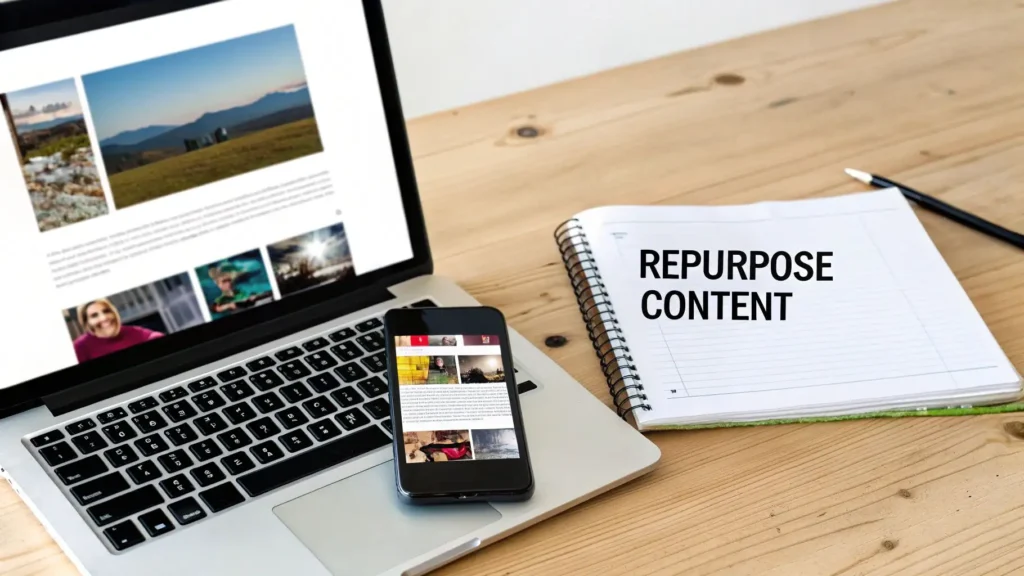
One of the most effective and efficient social media marketing best practices is content repurposing. This strategy involves taking a single, substantial piece of content, often called “cornerstone content,” and breaking it down into smaller, native formats tailored for different social media platforms. Instead of creating unique content from scratch for every channel, you strategically adapt one idea to fit the distinct audience and format of each.
This approach maximizes the return on your initial content investment, ensures brand message consistency, and broadens your reach. For example, a comprehensive blog post on a topic like space exploration can be transformed into a visually engaging Instagram carousel, a short and punchy TikTok video explaining a key concept, a professional discussion starter on LinkedIn, and a bite-sized, informative thread on X (formerly Twitter).
Why It’s a Best Practice
Content repurposing saves significant time and resources while amplifying your core message. It allows your brand to maintain an active presence across multiple channels without the burnout that comes from constant content creation. By tailoring the repurposed content to each platform’s native features, you respect user expectations and increase the likelihood of engagement. Media giants like The New York Times and tech publications like Wired excel at this, turning a single in-depth report into a podcast segment, an Instagram Story, and a viral video clip.
Actionable Implementation Tips
To effectively repurpose your content, follow a structured process:
- Start with Cornerstone Content: Identify your most valuable, long-form assets, such as blog posts, white papers, webinars, or video interviews. These are your raw materials.
- Deconstruct and Extract: Break down the cornerstone piece into its core components: key statistics, impactful quotes, main arguments, and compelling visuals.
- Map to Platform Formats: Assign each component to the social media platform where it will perform best. For instance:
- Quotes/Stats: Become image posts for Instagram or text-based updates for X.
- Key Sections: Transform into a LinkedIn article or a carousel post.
- Visuals/Data: Adapt into an infographic for Pinterest or Instagram.
- Video Clips: Edit into short-form videos for TikTok, Reels, or Shorts.
- Use a Content Calendar: Plan and schedule the release of your repurposed assets. Staggering their publication prevents audience fatigue and creates a sustained promotional campaign around your original content piece. This systematic approach is a cornerstone of modern social media marketing best practices.
2. Strategic Hashtag Research and Implementation
Beyond simply adding a hash symbol to a keyword, strategic hashtag research is a core discipline in modern social media marketing best practices. It’s the process of systematically identifying, analyzing, and using relevant hashtags to significantly increase your content’s visibility and connect it with interested audiences. This practice transforms hashtags from a decorative afterthought into a powerful tool for organic reach and community engagement.
The goal is to go beyond generic, oversaturated tags and find a balanced mix that places your content in front of both broad and niche audiences. For a diverse publisher like maxijournal.com, this means developing distinct hashtag sets for different content verticals. For instance, a travel article might use a combination like #ExploreMore (broad), #WanderlustAdventures (community-focused), and #VisitTuscany (location-specific) to maximize its discoverability among travel enthusiasts.
Why It’s a Best Practice
A well-researched hashtag strategy acts as a signpost, guiding users actively searching for your topic directly to your content. It sorts your posts into relevant discovery feeds, expanding your reach far beyond your existing followers. This is particularly crucial for audience growth and brand awareness. Companies like Hootsuite and Later have built entire platforms around optimizing this process, proving its value in achieving measurable social media goals. It’s the difference between shouting into the void and joining a targeted, high-value conversation.
Actionable Implementation Tips
To implement a strategic hashtag plan, focus on data-driven research and organization:
- Create Category-Specific Sets: For a multi-topic publication, develop unique hashtag lists for each category (e.g., #IndieGames for gaming, #HealthTech for health). Store these in a spreadsheet for easy access and consistency.
- Mix Hashtag Volumes: A balanced strategy includes a mix of hashtag types:
- High-Volume (1M+ posts): Broad reach, high competition (e.g., #Marketing, #Travel).
- Medium-Volume (100K-900K posts): Strong community, better chance to trend (e.g., #DigitalMarketingTips).
- Niche/Micro (10K-100K posts): Highly engaged, targeted audience (e.g., #ContentStrategyForB2B).
- Follow Platform Nuances: Adapt your quantity for each platform. Instagram performs well with a higher volume (up to 30), while X (formerly Twitter) and LinkedIn are more effective with 1-3 highly relevant tags.
- Analyze and Adjust: Use social media analytics tools to track which hashtags drive the most engagement and impressions. Review this data monthly to refine your lists, removing underperformers and incorporating new trending or community tags you discover from competitors and industry leaders.
3. Authentic Engagement and Community Building
True social media success isn’t just about broadcasting content; it’s about building a thriving community. This best practice involves moving beyond vanity metrics like follower counts and creating genuine, two-way conversations. Authentic engagement means actively participating in your community, responding thoughtfully to comments, asking questions, and fostering an environment where your audience feels seen, heard, and valued.
Instead of simply posting and leaving, this strategy requires a commitment to nurturing relationships. It transforms your social media pages from a digital billboard into a dynamic community hub. By consistently interacting with your audience, you build trust, loyalty, and a base of brand advocates who are genuinely invested in your success. This approach is fundamental to long-term growth and a core component of modern social media marketing best practices.

Why It’s a Best Practice
Authentic engagement directly impacts brand perception and customer loyalty. When followers see a brand actively responding and participating, it humanizes the business and shows that you care about more than just making a sale. This deepens the connection with your audience, leading to higher retention rates and more meaningful interactions. Brands like TED-Ed excel at this by asking followers what topics they want to see explained, then creating content based on those responses, closing the loop between community feedback and content strategy.
Actionable Implementation Tips
To cultivate a genuinely engaged community, integrate these habits into your daily workflow:
- Dedicate Daily Time: Set aside 20-30 minutes each day specifically for engagement. This isn’t for scheduling posts; it’s for thoughtfully replying to comments, answering direct messages, and participating in relevant conversations.
- Ask Open-Ended Questions: End your captions with genuine questions that invite more than a one-word answer. Instead of “Do you like this?” ask “What’s one feature you’d love to see in our next product and why?”
- Feature User-Generated Content (UGC): Create monthly reader or customer spotlights. Highlighting content from your community not only provides social proof but also encourages more people to share their experiences with your brand.
- Respond Promptly and Thoughtfully: Aim to respond to comments and questions within 24 hours. Acknowledge different viewpoints, thank users for their input, and show that a real person is managing the account.
- Host Live Interactions: Schedule monthly live Q&A sessions with team members, authors, or industry experts. This provides a direct, unscripted channel for your community to connect with your brand in real time.
4. Influencer and Creator Partnerships for Content Amplification
Authentic collaboration with influencers and creators is a powerful method for amplifying your content and tapping into pre-built, engaged communities. This practice moves beyond celebrity endorsements to focus on partnerships with micro-influencers, niche creators, and industry experts who have cultivated trust and authority within specific audiences. By aligning with creators whose values and audience demographics match your brand, you can expand your reach in a way that feels organic and credible.
This strategy leverages the creator’s unique voice and connection with their followers to introduce your brand or message. For instance, a travel magazine might partner with a micro-travel blogger (under 50k followers) for an authentic destination feature, or a science publication could collaborate with a popular TikTok science communicator for an interview series. The key is that the partnership provides genuine value to the creator’s audience, making it a win-win for all parties.

Why It’s a Best Practice
Creator partnerships build social proof and bypass the audience’s natural skepticism towards traditional advertising. A recommendation from a trusted creator is often perceived as a genuine endorsement from a friend, leading to higher engagement and conversion rates. This approach allows brands to access highly targeted niches, such as sustainable fashion enthusiasts or indie game communities, that would be difficult to penetrate through conventional ads. It’s a cornerstone of modern social media marketing best practices because it prioritizes authenticity and relationship-building over broad, impersonal campaigns.
Actionable Implementation Tips
To effectively leverage creator partnerships, you need a strategic approach:
- Identify Aligned Creators: Look for micro-influencers (10k-100k followers) whose content niche and audience align perfectly with your brand. For example, a music blog should seek out emerging artists, while a gaming site could collaborate with streamers.
- Prioritize Engagement Over Followers: A high follower count means little without an active, engaged community. Analyze a creator’s engagement rate (likes, comments, shares relative to follower size) to gauge their true influence.
- Start with Mutual Value: Begin with smaller, mutually beneficial collaborations, like content swaps or product features, to build a relationship before committing to larger, paid campaigns.
- Build Long-Term Relationships: Focus on creating a network of brand ambassadors through long-term partnerships rather than one-off transactional posts. This fosters deeper loyalty and more authentic content over time.
- Track Your ROI: Use unique affiliate links, promo codes, or dedicated landing pages to measure the direct impact of each collaboration on your marketing goals.
5. Data-Driven Content Optimization and Analytics
One of the most critical social media marketing best practices is to move beyond guesswork and embrace data-driven decision-making. This approach involves systematically using social media analytics, audience insights, and performance data to inform every aspect of your content strategy. Instead of creating content based on assumptions, you analyze what truly resonates with your audience to refine your topics, formats, and posting schedule for maximum impact.
By leveraging data, you transform your social media presence from a creative exercise into a predictable, results-oriented engine. For instance, a media outlet like BuzzFeed can analyze which article categories generate the most social shares and then commission more content on those winning topics. This ensures resources are invested where they yield the highest engagement and return.

Why It’s a Best Practice
A data-driven strategy eliminates wasteful spending on content that falls flat and provides clear justification for your marketing efforts. It empowers you to understand your audience on a deeper level, discovering not just what they like, but why. This insight is invaluable for building community and driving conversions. Brands like The Dodo have perfected this by meticulously analyzing which types of pet content receive the highest engagement, allowing them to fine-tune their editorial calendar to consistently deliver viral hits.
Actionable Implementation Tips
To effectively implement data-driven optimization, integrate analytics into your regular workflow:
- Establish Key Metrics: Define what success looks like. Track not just vanity metrics, but business-oriented goals like website clicks, newsletter sign-ups, or leads generated.
- Use UTM Parameters: Consistently use UTM codes in your social media links. This allows you to precisely track which platforms, campaigns, and individual posts are driving the most traffic and conversions in tools like Google Analytics.
- Conduct Regular Audits: Set aside time weekly or monthly to review your performance data. Look for trends, identify top-performing content pillars, and note which formats (e.g., video, carousels, text posts) work best on each platform.
- Test and Iterate: Use your data to form hypotheses and test them. Experiment with different posting times, content formats, and messaging, then measure the results. This continuous loop of analysis and adjustment is fundamental to advanced social media marketing best practices.
6. Video and Short-Form Content Prioritization
In today’s digital landscape, prioritizing video and short-form content is no longer optional; it’s essential. This best practice involves creating and distributing platform-optimized videos, particularly for formats like TikTok, Instagram Reels, and YouTube Shorts, which are heavily favored by algorithms. The goal is to capture attention quickly in crowded feeds with dynamic, engaging visual storytelling.
For a content-rich site like maxijournal.com, this means transforming insightful articles into digestible 15-60 second videos. This could involve animated explainers, behind-the-scenes clips of the writing process, or author interviews. By converting static text into motion, you make complex topics more accessible and shareable, tapping into audience preferences for passive content consumption.
Why It’s a Best Practice
Platforms like TikTok and Instagram have fundamentally shifted user behavior towards rapid-fire video consumption. Their algorithms are designed to reward creators who consistently produce engaging short-form content with increased reach and visibility. Brands that adapt capitalize on this massive organic potential. Educational channels like Kurzgesagt and TED-Ed masterfully turn complex subjects into viral animated videos, proving that even dense information can thrive in a short-form format. This strategy is a cornerstone of modern social media marketing best practices because it aligns directly with platform priorities and user habits.
Actionable Implementation Tips
To effectively integrate video into your strategy, follow these steps:
- Hook Viewers Immediately: The first three seconds are critical. Start with a bold statement, a compelling question, or a visually striking shot to prevent users from scrolling past.
- Design for Sound-Off Viewing: Since many users watch videos without audio, use bold text overlays and clear captions to convey your message effectively.
- Repurpose Existing Content: Don’t start from scratch. Convert your most popular articles into video scripts. Extract key points, statistics, and quotes to form the narrative for a Reel or TikTok.
- Leverage Trending Audio: Use trending sounds and music relevant to your content categories (e.g., epic gaming music for a tech review, ambient travel songs for a destination piece). This helps the algorithm categorize and push your content to new audiences.
- Maintain Consistency: Publish short-form videos consistently, aiming for 3-5 times per week on platforms like TikTok and Reels to stay relevant and favored by the algorithm.
7. Email List Building and Newsletter Integration
A crucial social media marketing best practice is to leverage your platforms to build an owned audience through email list building. This strategy involves directing followers from algorithm-dependent social channels to a platform you control: your newsletter. By doing so, you create a direct line of communication with your most engaged audience members, insulating your brand from the unpredictability of social media reach and algorithm changes.
This approach transforms transient followers into a loyal community. Instead of just hoping your content appears in their feed, you deliver value directly to their inbox. Media outlets like The Verge and Axios master this by using social media to drive signups for their curated newsletters, which then become a primary channel for reader engagement and traffic. For a diverse content hub like Maxijournal.com, this means converting a follower interested in gaming into a subscriber for a weekly gaming digest.
Why It’s a Best Practice
Building an email list provides long-term stability and a higher return on investment than relying solely on social media. Email marketing consistently delivers one of the highest ROIs in digital marketing because you are communicating with an audience that has explicitly opted in. This direct relationship allows for deeper nurturing, personalized content delivery, and more effective conversion funnels. Companies like Morning Brew and The Athletic have built entire media empires on the back of a strong newsletter-first strategy, proving its power as a core business driver.
Actionable Implementation Tips
To effectively integrate your social media and email strategies, follow these steps:
- Create Compelling Lead Magnets: Offer something of value in exchange for an email address. This could be a “2024 Indie Game Guide,” an exclusive e-book of “Pet Health Tips from Veterinarians,” or early access to a trending article.
- Craft Benefit-Driven CTAs: Use clear, enticing calls-to-action in your social posts and bios. Instead of “Sign up for our newsletter,” try “Get exclusive interviews and curated content delivered to your inbox.”
- Segment Your Audience: Allow subscribers to choose their interests. For a site like Maxijournal, this means offering separate newsletters for categories like gaming, travel, science, or music. Segmentation leads to higher open rates and lower unsubscribe rates.
- Promote Consistently: Regularly promote your newsletter across all social channels. Pin a signup link to your X profile, use the link sticker in Instagram Stories, and create dedicated posts highlighting the exclusive content subscribers receive. Implementing these email-focused social media marketing best practices is key to building a resilient, owned audience.
8. Niche Community Participation and Platform Diversification
Beyond the mainstream platforms, one of the most powerful social media marketing best practices is to engage deeply within niche communities. This strategy involves moving beyond broad-stroke marketing on major networks and actively participating in specialized forums, groups, and emerging platforms where dedicated enthusiasts gather. Instead of just broadcasting your message, you become a valued member of a focused conversation.
This approach means shifting focus from sheer audience size to audience relevance. For a diverse publication like maxijournal.com, it could involve a gaming editor participating in a specific game’s Discord server, a health writer answering questions in a science-focused Reddit community, or a travel blogger sharing insights in a dedicated travel forum. The goal is to build credibility and relationships organically, which leads to more loyal and engaged followers than a surface-level mass-market campaign.
Why It’s a Best Practice
Engaging in niche communities allows you to connect with a highly qualified and passionate audience. These users are often more receptive to genuine expertise and less tolerant of overt advertising, making authentic participation crucial. By providing value first, you build trust that cannot be replicated with paid ads. This is a core tenet of community-led growth, popularized by platforms like Reddit and Discord, where authentic contributors gain influence and drive meaningful traffic. It also positions your brand as an early adopter on emerging platforms, capturing attention before the space becomes saturated.
Actionable Implementation Tips
To effectively integrate into niche communities, adopt a value-first mindset:
- Identify and Join Relevant Hubs: For each of your content categories, find 3-5 active niche communities. This could be gaming Discord servers, travel Substack networks, or specific subreddits like r/science.
- Observe and Participate Genuinely: Before sharing any content, spend 2-4 weeks understanding the community’s culture and rules. Participate in discussions, answer questions, and offer expertise without any links to your work.
- Share Content When It Adds Value: Only post a link to your content when it directly and helpfully answers a question or contributes to an ongoing conversation. Frame it as a resource, not a promotion.
- Build Relationships: Connect with community moderators and influential members. They can become powerful advocates for your brand when they see your genuine contributions.
- Monitor Emerging Platforms: Keep an eye on new social networks like Bluesky or Threads. Being an early, active participant on a rising platform can establish your brand as a foundational voice in that new ecosystem, a key component of modern social media marketing best practices.
9. Storytelling and Personal Narrative in Content Strategy
Moving beyond purely informational content to incorporate storytelling is a powerful way to forge a genuine emotional connection with your audience. This best practice involves weaving personal narratives and human experiences into your content strategy, transforming abstract topics into relatable, memorable stories. Instead of just presenting facts, you frame them within a compelling narrative that resonates on a human level.
This approach builds brand affinity, trust, and a loyal community. A personal essay on overcoming a challenge, a behind-the-scenes look at your team’s creative process, or a customer success story can be far more impactful than a simple product announcement. It shifts the focus from what you sell to the values you represent and the people you impact.
Why It’s a Best Practice
Stories are how humans have shared information for millennia; they are hardwired into our brains to capture attention and build empathy. In a crowded digital landscape, storytelling makes your brand stand out and feel more authentic. It fosters a deep connection that transactional content cannot achieve. Media outlets like This American Life and viral projects like Humans of New York have built massive followings almost entirely on the power of personal narrative, proving its effectiveness in capturing and holding audience attention.
Actionable Implementation Tips
To integrate storytelling into your strategy, focus on the human element:
- Feature Your People: Create a “Contributor Spotlight” or “Meet the Team” series. Share personal stories about why your team members or authors are passionate about their work.
- Showcase Reader Stories: Actively solicit and share testimonials or experiences from your audience. Ask how your content or product has impacted their lives and feature the most compelling responses.
- Go Behind the Scenes: Create content that pulls back the curtain on your brand’s journey, editorial process, or growth. Transparency builds trust and makes your audience feel like insiders.
- Frame Data with Narrative: When presenting data or complex information, use a personal story as an anchor. For instance, explain the impact of a scientific breakthrough through the eyes of a researcher or a beneficiary. This approach is a key element of modern social media marketing best practices.
10. Paid Social Advertising and Trend-Jacking for Timely Amplification
One of the most powerful social media marketing best practices involves a two-pronged approach: combining strategic paid advertising with the agile practice of “trend-jacking.” This hybrid strategy uses paid social campaigns to guarantee reach to highly specific audiences while simultaneously leveraging trending topics and cultural moments to generate rapid, organic visibility. Your paid ads provide consistent, targeted traffic, while trend-jacking offers opportunities for explosive, cost-effective growth.
This dual strategy allows brands to achieve both predictable results and viral potential. For instance, a publication like Maxijournal.com can run targeted ads promoting its gaming articles directly to users interested in gaming, while also publishing a quick, insightful article on a newly trending video game controversy. The paid ad drives steady conversions, and the trending content rides an algorithmic wave, amplifying brand awareness far beyond its typical audience.
Why It’s a Best Practice
This combined approach mitigates the risks of relying solely on one tactic. Organic reach is unpredictable, while paid advertising costs can escalate. By blending them, you create a resilient strategy. Paid ads ensure your most important content reaches qualified leads, while trend-jacking provides bursts of high-volume engagement that can significantly lower your overall customer acquisition cost. Media outlets like ESPN excel at this, running targeted campaigns for major sporting events while instantly creating content around unexpected game highlights or controversies to dominate social conversations.
Actionable Implementation Tips
To effectively blend paid ads and trend-jacking, integrate these steps into your workflow:
- Start Small with Paid Ads: Begin by boosting your top-performing organic posts with a small budget, like $10-$20 per day. Focus on a clear conversion goal, such as newsletter signups, to prove ROI before scaling.
- Leverage Advanced Targeting: Use lookalike audiences based on your existing email subscribers or website visitors for efficient growth. Also, implement retargeting campaigns to reach warm audiences who have already interacted with your brand, as they convert at a much higher rate.
- Establish a Trend Monitoring System: Set up Google Alerts and monitor trending topics on platforms like X and TikTok daily. Identify conversations that align with your brand’s expertise and voice.
- Develop a Fast-Track Publishing Process: Create a shortened editorial and approval cycle for timely content. This agility is crucial. Don’t just report on a trend; bring a unique angle, such as a tech perspective on a health trend, to add value and stand out. This ensures your content is a core part of your social media marketing best practices, not just a reactive afterthought.
Top 10 Social Media Marketing Best Practices Comparison
| Strategy | Implementation Complexity | Resource Requirements | Expected Outcomes | Ideal Use Cases | Key Advantages |
|---|---|---|---|---|---|
| Content Repurposing Across Multiple Platforms | Medium — requires workflows and platform-specific formatting | Moderate time and skills (design, video, copy); low ad spend | Broader reach; higher content ROI; consistent cross-platform presence | Long-form/cornerstone articles; multi-category publishers | Scales output cost-effectively; improves SEO and testing |
| Strategic Hashtag Research and Implementation | Low–Medium — ongoing research and optimization | Low time; hashtag tools/subscriptions; periodic monitoring | Improved organic discoverability and niche reach | Platform-native posts (Instagram, X); category segmentation | Low-cost reach boost; connects to active communities |
| Authentic Engagement and Community Building | Medium–High — continuous two-way interaction and moderation | High time commitment; trained community managers; moderation tools | Strong loyalty, sustained engagement, improved retention | Retention-focused strategies; niche community growth | Builds trust and brand advocates; boosts algorithmic signals |
| Influencer & Creator Partnerships for Amplification | Medium — research, negotiation, and coordination | Moderate budget; outreach tools; partnership management time | Targeted audience growth; credibility via creators | Niche category campaigns; product/features amplification | Authentic reach; high engagement per follower; cost-efficient vs. celebrities |
| Data-Driven Content Optimization & Analytics | Medium — setup, tracking, and interpretation | Analytics tools, analyst time, tracking/UTM setup | Better-performing content, optimized schedule, measurable ROI | Scaling editorial strategy; resource allocation decisions | Removes guesswork; enables continuous improvement and reporting |
| Video & Short-Form Content Prioritization | High — production, editing, and trend adaptation | High time, equipment, editing skills; potential production costs | Significantly higher engagement and shareability | Visual categories (gaming, travel, fashion, pets); audience growth | Algorithm-favored format; stronger recall and monetization paths |
| Email List Building & Newsletter Integration | Medium — funnel and automation setup | Email platform costs; content for lead magnets; segmentation work | Owned audience with higher LTV and conversion rates | Subscriber monetization; retention and direct outreach | Reduces platform dependence; direct, measurable conversions |
| Niche Community Participation & Platform Diversification | High — cultural learning and authentic long-term participation | Significant time; community-savvy managers; low ad spend | Deep engagement with passionate niche audiences | Discord, Reddit, Twitch, specialized forums; early adopters | Access to engaged niches; lower competition; credibility advantage |
| Storytelling & Personal Narrative in Content Strategy | Medium — requires skilled writers and editorial time | Editorial resources; experienced contributors; longer production cycles | Strong emotional connection, loyalty, and shareability | Brand differentiation; long-term audience building | Higher engagement and memorability; builds author identity |
| Paid Social Advertising & Trend-Jacking for Amplification | Medium–High — rapid campaign setup and editorial speed | Budget for ads; ad specialists; fast creative production | Quick audience growth, measurable conversions, timely spikes | Timely campaigns; testing formats; conversion-focused pushes | Scales reach quickly; precise targeting and measurable ROI |
Putting These Practices Into Action for Lasting Growth
Navigating the dynamic landscape of social media can feel like trying to hit a moving target. Trends shift, algorithms evolve, and audience expectations change. However, as we’ve explored through these ten foundational principles, true success isn’t about perfectly predicting every change. It’s about building a resilient, adaptable, and authentic marketing system that can weather these shifts and consistently deliver value. The collection of social media marketing best practices detailed in this article provides the blueprint for that very system.
The core message is one of integration and synergy. These are not ten separate, isolated tactics to be checked off a list. Instead, think of them as interconnected gears in a powerful engine. Your data-driven analytics (Practice #5) should directly inform your video content strategy (Practice #6). The authentic community you build (Practice #3) becomes the perfect audience for your email list integration (Practice #7). The powerful stories you tell (Practice #9) are amplified and validated through strategic creator partnerships (Practice #4). When these elements work in concert, the result is far greater than the sum of its parts. You move beyond simply posting content and begin cultivating a thriving digital ecosystem around your brand.
From Theory to Tangible Results
The temptation can be to try and implement everything at once, which often leads to burnout and inconsistent execution. The most effective approach is incremental and iterative. Start by conducting a small audit of your current efforts. Where are the biggest gaps? Where are the easiest wins?
- If you’re creating great content but struggling with reach: Focus on mastering strategic hashtag research (#2) and consider a small, targeted paid advertising campaign (#10) to amplify your best-performing posts.
- If your engagement feels shallow or transactional: Dedicate the next month to authentic community building (#3). Spend 30 minutes each day responding to comments, engaging with follower content, and participating in niche communities (#8).
- If you feel like you’re on a content treadmill: Prioritize a content repurposing workflow (#1). Take one pillar piece of content, like a blog post or a long-form video, and break it down into a week’s worth of platform-specific assets.
This methodical approach allows you to master one practice, measure its impact, and then build upon that success. The goal is to create a sustainable feedback loop: you post, you listen to the data and the community, you refine your approach, and you repeat. This is the essence of modern social media mastery.
Building Your Legacy, One Post at a Time
Ultimately, mastering these social media marketing best practices is about more than just gaining followers or increasing engagement metrics. It’s about building a meaningful connection with your audience and creating a brand that has a lasting impact. It’s the difference between being a fleeting trend and a trusted voice in your industry. By prioritizing storytelling, fostering genuine community, and making data-informed decisions, you are investing in the long-term health and growth of your brand’s digital presence.
The journey is ongoing, and perfection is an illusion. But with a commitment to these core principles, a willingness to adapt, and a focus on providing genuine value, you can build a powerful social media presence that not only captures attention but also cultivates loyalty and drives sustainable growth for years to come.
Ready to see these principles in action or looking for a platform to share your own expert voice? At maxijournal.com, we champion diverse content and empower creators to build their audience by publishing high-quality, insightful articles. Explore maxijournal.com to discover content that excels at these practices and learn how you can contribute your own unique perspective.
Discover more from Maxi Journal
Subscribe to get the latest posts sent to your email.