Losing your hair can feel like a lonely, uphill battle, but a wave of scientific progress is bringing new hope to the fight. A new treatment for hair growth is no longer a far-off dream. It’s a field buzzing with innovation, with powerful new options emerging from years of dedicated research. These breakthroughs are tackling hair loss from every angle, from smarter topical serums to ways of unlocking your body’s own regenerative power.
The Evolving Science of Hair Regrowth

For decades, the hair loss toolkit was pretty limited, mostly relying on just a couple of well-known drugs and surgical procedures. But our understanding of the hair follicle—that tiny, dynamic organ that builds every single strand of hair—has exploded. This new knowledge is what’s fueling the development of more targeted, effective treatments.
Think of it this way: old treatments were like trying to fix a complex engine with just a hammer and a wrench. Now, scientists have the full diagnostic setup. They can pinpoint the exact biological signals that go haywire when hair starts to thin, from hormonal shifts to inflammation and cellular aging.
Why New Treatments Are Emerging Now
This burst of progress in hair restoration science is no accident. It’s the result of several different fields of study finally coming together. Major strides in cellular biology, genetics, and biotechnology have given researchers an unprecedented window into the hair growth cycle. This allows them to design solutions that work with your body’s natural processes, not against them.
This progress has kicked off a massive industry response. The global market for hair loss treatments is booming, projected to climb to around $15.5 billion by 2030. This growth is driven by the urgent demand for better answers for conditions like androgenetic alopecia and telogen effluvium that affect millions of people worldwide. You can dig into these market trends in this detailed report on hair loss treatments.
To give you an idea of just how deep the science goes, many of these discoveries rely on the complex data analysis covered in fields like bioinformatics. For a primer on this topic, you can check out our guide on what is bioinformatics.
Quick Overview of Emerging Hair Growth Treatments
To help you get a bird’s-eye view, we’ve put together a quick summary of the main categories of new treatments we’ll be discussing. Think of this as your cheat sheet for what’s new and who it’s for.
| Treatment Category | How It Works | Best For |
|---|---|---|
| Next-Gen Topical Serums | Uses peptides, growth factors, and other advanced compounds to directly stimulate dormant hair follicles. | Individuals with early-stage hair thinning or those looking for non-invasive, targeted support. |
| Regenerative Medicine | Leverages the body’s own healing components (like platelets in PRP) to repair and rejuvenate follicles. | People seeking a more natural approach or those with thinning caused by inflammation or reduced blood flow. |
| Pharmaceuticals | Targets specific hormonal or biological pathways involved in hair loss with new, more precise medications. | Patients with diagnosed conditions like androgenetic alopecia who respond well to systemic treatments. |
This table is just the starting point. Let’s dive deeper into each of these exciting areas.
What This Guide Will Cover
Our goal is to give you a clear, evidence-based roadmap to these exciting new options. We’re going to break down the science behind the most promising treatments available today and those just over the horizon. Throughout this guide, we’ll explore:
- Next-Generation Topical Serums: We’ll look at the active ingredients that go way beyond the basics to awaken sleepy follicles.
- Regenerative Medicine: You’ll learn how treatments like Platelet-Rich Plasma (PRP) use your body’s own healing power to get results.
- Pharmaceutical Breakthroughs: We’ll unpack the latest medications that target specific pathways responsible for hair loss.
By the end, you’ll have a solid, practical understanding of how each new treatment for hair growth works, who it’s best for, and how to talk about these options confidently with your doctor.
Next-Generation Topical Serums and How They Work
While a lot of hair loss treatments work from the inside out, the new wave of topical serums takes a completely different, highly targeted approach. Think of your scalp as a garden. These advanced formulas are like specialized bio-fertilizers, designed to enrich the soil and nourish the roots directly, creating the perfect environment for healthy growth.
They’re packed with much more than just basic moisturizers, delivering a potent cocktail of active ingredients right to the hair follicles. This direct application is their biggest strength, concentrating the treatment exactly where you need it without impacting the rest of your body.
And the demand for these kinds of products is blowing up. New hair growth serums are driving a market that’s expected to jump from $1.98 billion in 2026 to $2.69 billion by 2030. This isn’t just hype; it reflects a real need from the estimated 8 million women and 6.5 million men in the UK alone who are dealing with thinning hair. You can dig into the numbers yourself in this report on the hair growth serum market.
Understanding the Key Active Ingredients
The magic behind these serums is all in the ingredients, which are carefully selected to tackle hair loss at a cellular level. Forget one-size-fits-all solutions. Modern formulas combine several types of actives to fight hair thinning from multiple angles.
Let’s break down the three main categories of ingredients you’ll find in a high-quality new treatment for hair growth serum:
- Peptides: These are short chains of amino acids—the fundamental building blocks of protein. In serums, certain peptides act like little messengers, signaling your follicles to either enter the anagen (growth) phase or stay in it longer.
- Growth Factors: These are naturally occurring proteins that kickstart cell growth and regeneration. When you apply them topically, they can help wake up dormant follicles and support the production of a thicker, stronger hair shaft.
- Clinically-Studied Botanicals: We’re not talking about old folk remedies here. These are plant-derived extracts like saw palmetto, red clover, and pea sprout that have been scientifically researched for their ability to block DHT (a hormone that’s a major culprit in hair loss) or boost scalp circulation.
Think of these ingredients working together like a specialized construction crew for your hair. Peptides are the foremen shouting out orders, growth factors are the skilled laborers rebuilding the follicle, and botanicals are the support team making sure the site has all the resources and protection it needs to get the job done right.
How to Decode a Product Label
With a sea of options out there, reading a product label can feel like trying to decipher a foreign language. But once you know what to look for, you can easily separate the good stuff from the snake oil. Always focus on the first five to seven ingredients, as they make up the vast majority of the formula.
You want to see specific names, not just vague categories. For instance, instead of just “peptides,” a powerful formula might list Copper Tripeptide-1 (GHK-Cu), an ingredient well-known for its regenerative properties.
Here’s a quick checklist to help you size up a serum’s potential:
- Check for Key Actives: Does the label list specific, recognizable peptides, growth factors, or well-researched botanical extracts near the top?
- Avoid Simple Fillers: Be skeptical of serums where the first few ingredients are just water, alcohol, and basic moisturizers with not much else to show.
- Look for Delivery Systems: Some of the more sophisticated serums use things like liposomes or other nano-technologies to help the active ingredients actually penetrate the scalp and get to where they need to go.
By learning to read a label like a formulator, you can make a much more informed choice. You’ll be able to find a product with a scientifically sound formula that’s built to deliver real, visible results. Just remember that consistency is absolutely essential—most topicals need at least three to six months of daily use before you’ll start to see a noticeable difference.
Using Your Own Body to Regrow Hair
Some of the most exciting developments in hair restoration aren’t coming from a pharmacy—they’re coming from inside you. It’s a field called regenerative medicine, and it’s all about tapping into your body’s built-in repair systems to wake up dormant hair follicles.
This approach flips the script on traditional treatments. Instead of relying on outside chemicals, we’re kickstarting the body’s own powerful healing mechanisms. The star player in this field right now is Platelet-Rich Plasma, or PRP therapy.
How PRP Therapy Actually Works
At its core, PRP is about concentrating the good stuff already in your blood and putting it exactly where your scalp needs it most. The whole process is surprisingly straightforward.
It starts with a simple blood draw, just like you’d get at any routine doctor’s visit. That blood is then spun in a special machine called a centrifuge, which separates it into different layers based on density.
This spinning isolates a golden-hued plasma that’s jam-packed with platelets—the “liquid gold” of the treatment. These platelets are loaded with growth factors, the proteins that act like little generals, ordering your cells to repair and regenerate. A clinician then carefully injects this super-concentrated solution directly into the thinning areas of your scalp.
The idea is to boost blood flow to the follicles, give them a jolt of nutrients, and nudge them back into a healthier, more productive growth cycle. For many, it’s a compelling new treatment for hair growth precisely because it uses your own biology, avoiding synthetic drugs or foreign substances.
What to Expect from a PRP Treatment Plan
PRP isn’t a one-and-done miracle cure. Think of it more like a dedicated workout plan for your follicles; consistency is what gets you results. A typical plan involves an initial “loading phase” to get things going, followed by maintenance sessions to keep up the momentum.
- The Initial Push: Most people begin with a series of 4 to 6 sessions, spaced about four to six weeks apart. This repeated stimulation is what really wakes up those sleepy follicles.
- Seeing Results: The first thing people usually notice is less hair shedding, sometimes after just a session or two. More visible improvements, like thicker strands and new growth, tend to show up after the third session.
- Keeping It Going: Once you’ve completed the initial series, maintenance treatments are usually recommended every six months to a year. This helps keep the follicles healthy and active.
“Think of PRP as a personal training program for your hair follicles. The initial sessions are like an intense boot camp to get them back in shape, while the maintenance treatments are like regular gym visits to ensure they stay strong and productive for the long term.”
This phased approach allows the growth factors to work their magic gradually, leading to natural-looking results over time. Patience is part of the process, as you’re working with your body’s natural hair growth cycle, which is a slow and steady marathon, not a sprint.
The Next Frontier: Stem Cells and Exosomes
Building on the same principles as PRP, researchers are now digging into even more advanced regenerative therapies. These options aim to send even more powerful and targeted signals to the follicles.
Stem Cell Therapy: This approach often involves taking stem cells from your own body fat. These are “master cells” that can develop into many different cell types. When injected into the scalp, the theory is they can help regenerate and repair damaged follicles at a much deeper level.
Exosome Therapy: This is even more granular. Exosomes are tiny messenger bubbles released by stem cells, carrying proteins and genetic instructions. Instead of injecting whole cells, this therapy delivers just these powerful message packets directly to the scalp, telling follicle cells to get back to the business of growing hair.
While PRP is widely available, both stem cell and exosome therapies are still considered investigational for hair loss by the FDA. They hold incredible promise, but more research is needed to nail down the best protocols and confirm their long-term effectiveness. They truly represent the exciting future of regenerative medicine and could become the new treatment for hair growth we’ve been waiting for.
Dealing with the stress of hair loss is also a huge piece of the puzzle. To learn more about that, check out our guide on how to calm anxiety naturally.
New Pharmaceutical Breakthroughs for Hair Loss
Beyond the world of topical serums and regenerative therapies, pharmaceuticals are opening up a powerful new front in the fight against hair loss. While the old guard of medications mostly focused on brute-force blocking the hormone DHT, a new generation of drugs is targeting the problem with incredible precision, creating new possibilities for people with different kinds of alopecia.
These newer medications are the direct result of a much deeper understanding of the specific biological signals that tell a hair follicle to thrive or to shut down. Think of it like this: if older drugs were a sledgehammer, these new ones are more like a scalpel, designed to interact with the exact cellular pathways that lead to thinning. This targeted approach is a huge leap forward.
The market is definitely taking notice. As more people look for real, effective options, the hair loss treatment industry is set to grow by a staggering USD 2.84 billion between 2026 and 2030. A huge part of that growth is coming from new treatments that actually strengthen the hair shaft itself. You can read the full research about hair loss treatment products to see the market dynamics in detail.
A New Class of Drugs for Alopecia Areata
One of the most exciting developments is the arrival of Janus kinase (JAK) inhibitors. These drugs are a massive breakthrough, especially for people dealing with alopecia areata—an autoimmune condition where the body’s own defenses mistakenly attack the hair follicles.
Imagine your immune system is an overzealous security team that starts attacking the hair follicles by mistake. JAK inhibitors step in as mediators, dialing down the specific inflammatory signals that give the “attack” order. This gives the follicles a chance to recover and get back to the business of growing hair.
By interrupting this faulty communication, JAK inhibitors don’t just paper over the symptoms; they get to the root of the autoimmune response causing the hair loss. This is a game-changer for a condition that, until recently, had very few reliable, approved treatments.
A great example is Baricitinib (brand name Olumiant), which is now FDA-approved for severe alopecia areata. Clinical trials have shown it can bring about significant regrowth of scalp hair for many patients, offering genuine hope where there used to be mainly frustration.
Medications for Hereditary Hair Loss
When it comes to androgenetic alopecia (the common hereditary hair loss we all know), research is also moving way past the old standards. Scientists are deep into testing new compounds that influence the hair growth cycle in entirely new ways. Many are still working their way through clinical trials, but they give us a clear look at the future of hair loss medication.
Here are a few of the most promising areas of investigation:
- KROX20 Protein Agonists: Researchers have identified a protein in the skin, KROX20, that acts as a key “on” switch for hair follicle stem cells. The goal now is to develop drugs that can stimulate this protein and tell dormant follicles to start growing.
- Prostaglandin Modulators: Certain lipid compounds called prostaglandins are known to either help or hinder hair growth. New drugs are being designed to selectively block the “bad” prostaglandins and boost the “good” ones, keeping follicles in their growth phase for longer.
- Wnt Pathway Activators: The Wnt signaling pathway is absolutely vital for hair follicle development and regeneration. New molecules are being created to activate this pathway, basically giving dormant follicles a wake-up call.
Some of these future treatments might even borrow concepts from other fields of medicine, like gene therapy. If you’re curious about how that works, you can check out our guide explaining gene therapy and its mechanisms.
Important Considerations for Pharmaceutical Treatments
These powerful new drugs hold incredible promise, but they aren’t something to take lightly. They require careful medical supervision. These are not over-the-counter solutions, and they often come with potential side effects that a doctor needs to monitor closely.
Before even considering a pharmaceutical new treatment for hair growth, a detailed consultation with a board-certified dermatologist is an absolute must. They are the only ones who can give you an accurate diagnosis, figure out if you’re a good candidate, and walk you through all the potential benefits and risks. This is the only way to ensure you’re on the safest, most effective path for your hair health.
Choosing the Right Hair Growth Treatment for You
With so many treatments out there, each one promising incredible results, it’s easy to feel lost. The goal isn’t to find the one-size-fits-all “best” treatment—it’s to find the best new treatment for hair growth that makes sense for you. That means taking a hard, honest look at your specific type of hair loss, what you hope to achieve, your lifestyle, and of course, your budget.
Think of it like getting in shape. You wouldn’t give a marathon runner the same training program as a powerlifter, right? Both are chasing peak fitness, but their paths are completely different. In the same way, the best approach for someone with gradual, genetic thinning is going to be worlds apart from a strategy for someone dealing with sudden shedding from stress or an autoimmune issue.
A personalized strategy is everything. Trying to self-diagnose often leads to a dead end of wasted time and money on treatments that don’t address the real problem. That’s why your first move—before anything else—should be to get a professional diagnosis.
Start with an Accurate Diagnosis
Before you even think about buying a product or booking a procedure, you absolutely must understand why you’re losing hair. A board-certified dermatologist or a trichologist (a specialist focused on the hair and scalp) can give you a definitive diagnosis, which is the bedrock of any successful treatment plan.
They have the right tools and tests to get to the root of the issue. A consultation might involve a close-up look at your scalp with a dermatoscope, a series of blood tests to hunt for hormonal imbalances or nutritional gaps, or in some cases, a tiny scalp biopsy.
This step is non-negotiable. Without it, you’re just guessing, and that can be an incredibly frustrating and expensive game to play.
The journey to a solution always begins with pinpointing the problem. This decision tree lays out the logical steps, from that first moment of concern to consulting a professional and building a personalized plan.
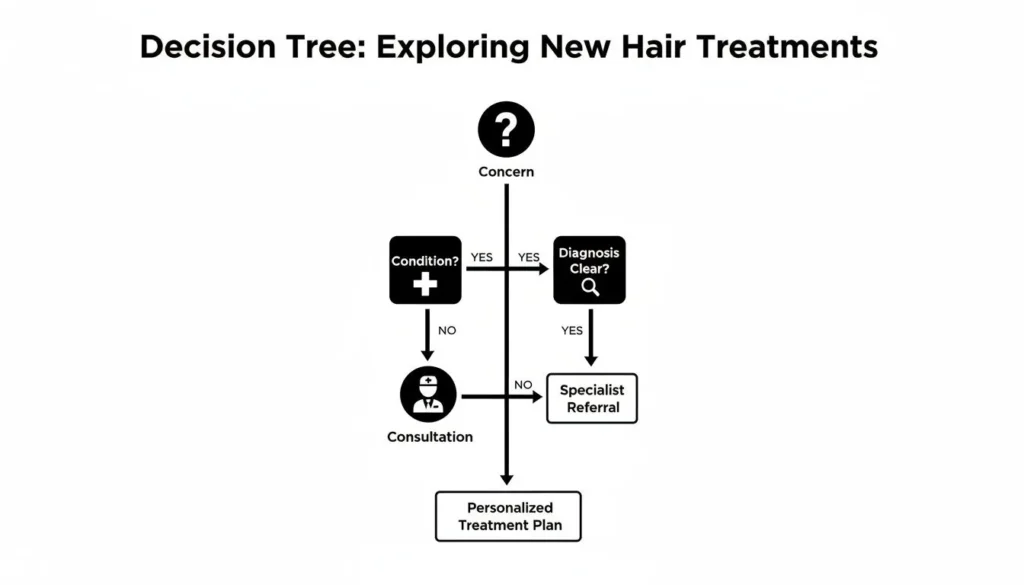
As this guide shows, a medical consultation is the crucial link between noticing a problem and picking a treatment that actually works.
Key Questions to Ask Your Specialist
Remember, your consultation is a conversation, not a lecture. To make the most of it, walk in with a list of questions. This way, you’ll leave with total clarity and a solid action plan that’s built just for you.
Here are the essential questions you should be asking:
- What is the specific cause of my hair loss? (Is it androgenetic alopecia, telogen effluvium, alopecia areata, or something else?)
- What is the current stage of my hair loss, and what can I expect down the road?
- Based on my diagnosis, which treatments do you think will give me the best shot at success?
- Realistically, what kind of results can I expect, and how long will it take to see them?
- What are the potential side effects or risks I need to be aware of with this recommendation?
- What’s the total estimated cost for the plan you’re suggesting, including any follow-ups or long-term maintenance?
Having these questions ready turns your appointment from a simple diagnosis into a strategic planning session. It empowers you to be an active partner in your own hair restoration journey, ensuring the plan you build is one you feel confident in and can commit to for the long haul. Your doctor is your best resource for navigating the options.
Your Questions About New Hair Treatments, Answered
Jumping into the world of hair restoration can feel overwhelming, and it’s totally normal to have a ton of questions. When you’re thinking about a new treatment for hair growth, practical things like safety, cost, and how long it’ll take to see results are top of mind. This is your quick-reference guide to get you those answers.
We’ll cut through the noise and give you clear, direct information on the most common questions we hear. The goal is to help you feel confident as you figure out the next steps on your hair health journey.
Are These New Hair Growth Treatments Safe?
Safety is non-negotiable, and the short answer is: it completely depends on the treatment. Each approach has a very different safety profile, so let’s break them down.
Advanced topical serums, particularly those using well-studied botanicals and peptides, are generally very safe for long-term use. The biggest risk is usually some minor scalp irritation, which tends to clear up on its own. Since they work on the surface of the skin, there’s little to no risk of them affecting the rest of your body.
Regenerative therapies like PRP also have a strong safety track record. Because the treatment is made from your own blood, the chance of an allergic reaction is basically zero. The main risks are tied to the injections themselves—things like temporary soreness or a small risk of infection at the injection site. Choosing a skilled, reputable clinician makes these risks minimal.
Newer prescription drugs, like JAK inhibitors for alopecia areata, are in a different league entirely. These are potent, systemic medications that work throughout your body, not just on your scalp. As a result, they come with a higher risk of side effects and demand close medical supervision, often including regular check-ups and blood work to keep an eye on your overall health.
The single best way to ensure safety is to start with a professional consultation. A board-certified dermatologist will go over your full medical history, helping you properly weigh the pros and cons of any treatment you’re considering.
How Do I Know if I Am a Good Candidate?
Figuring this out isn’t a DIY project—it all starts with a professional diagnosis. A specialist needs to pinpoint the actual cause of your hair loss, because that’s the single most important piece of the puzzle.
As a general rule, people in the earlier stages of hair thinning see the best results from almost any treatment. It’s simply easier to wake up a struggling follicle than it is to bring one back that’s been dormant for years.
The type of hair loss you have is also crucial. Here’s a quick look at who might be a good fit for what:
- Androgenetic Alopecia: If you have classic hereditary hair loss, you’ll likely respond well to topicals, PRP, and certain oral medications that target the hormonal side of things.
- Alopecia Areata: This autoimmune condition is the specific target for newer drugs like JAK inhibitors. They aren’t meant for common pattern baldness.
- Telogen Effluvium: For hair loss triggered by stress or illness, treatments that support the hair cycle—like nutrient-packed serums and sometimes PRP to jump-start growth—are often the most helpful.
A dermatologist will use tools like a trichoscope to get a magnified look at your scalp and might run some blood work to get the full picture. This thorough diagnostic process is what allows them to recommend a plan that will actually work for you.
How Much Do New Hair Growth Treatments Typically Cost?
The price tag on new hair treatments can vary wildly, from a manageable monthly expense to a pretty significant investment. It’s smart to get a handle on the costs before you commit.
Here’s a look at the typical price spectrum:
- Advanced Topical Serums: These are usually the most budget-friendly starting point, typically running between $30 to $150 per month, depending on the brand and ingredients.
- In-Office Regenerative Procedures: Treatments like PRP are a much bigger financial commitment. A single session can cost anywhere from $500 to $2,000, and a proper initial series usually involves four to six sessions.
- New Pharmaceutical Drugs: The cost of new, patented medications can also be steep and will depend heavily on your insurance coverage and pharmacy.
One critical thing to know is that most insurance plans will not cover treatments for androgenetic alopecia (hereditary hair loss) because it’s considered cosmetic. However, if your hair loss is a documented symptom of another medical condition, you might have a shot at getting some coverage. Always call your insurance provider directly to find out what your plan covers.
When Can I Realistically Expect to See Results?
Patience is the name of the game with any hair growth treatment. The hair growth cycle is a slow, methodical process, so you won’t see changes overnight. Keeping your expectations in check is the key to sticking with it.
The timeline really depends on the treatment. For topicals and oral meds, you should be prepared to wait at least three to six months before noticing the first subtle signs, like less shedding or some new, baby-fine hairs. More noticeable improvements in density usually take closer to a year of consistent use.
With cellular therapies like PRP, some people notice a drop in shedding within the first three months. Visible thickening and new growth often appear after the initial series of treatments is complete. The most important thing is to follow the recommended protocol, as results vary based on your age, genetics, and how advanced your hair loss is.
At maxijournal.com, we are dedicated to bringing you clear, well-researched information at the intersection of health, science, and technology. Explore more of our articles to stay informed on the topics that matter most to you. Visit us at https://maxijournal.com.
Discover more from Maxi Journal
Subscribe to get the latest posts sent to your email.