When it comes to probiotics, one of the most common questions I hear is, “When is the absolute best time to take them?”
For most standard probiotics, the sweet spot is about 30 minutes before a meal or alongside a light meal that includes some fat. But here’s the real secret: consistency is far more important than nailing the perfect time. Taking your probiotic every single day is what truly moves the needle. For some of the newer, tougher, specially-coated probiotics, timing is much less of a concern.
Your Quick Guide to Probiotic Timing
Figuring out when to take your probiotic can feel overly complicated, but it really boils down to the specific type you’re using.
Think of standard probiotics as delicate travelers. They’re vulnerable, and their biggest obstacle is the intensely acidic environment of an empty stomach. Taking them just before or with a small meal acts as a protective buffer, helping more of these beneficial bacteria survive the harsh journey to your gut where they can get to work. It’s a “safety in numbers” (and food) strategy. The food helps temporarily lower your stomach’s acidity, paving a friendlier path.
Below is a simple table to break down the best timing based on your supplement type and situation.
Quick Guide to Probiotic Timing
| Probiotic Type | Best Time to Take | The ‘Why’ Behind It |
|---|---|---|
| Standard Capsules | 15-30 mins before a meal, or with a light meal containing some fat. | Food provides a buffer against harsh stomach acid, increasing the survival rate of the bacteria. |
| Coated or Spore-Based | Any time of day, with or without food. | These are designed with a protective shell or are naturally resilient, so they can survive stomach acid on their own. |
| General Rule | The same time every day. | Consistency is what allows the bacteria to colonize your gut and provide lasting benefits. |
This table makes it clear: the type of probiotic you have dictates the timing strategy. Standard probiotics need a little help, while the “armored” versions are much more self-sufficient.
Understanding Your Probiotic Type
Not all probiotics are created equal. As supplement technology has gotten more sophisticated, we’ve seen the rise of more resilient formulas that give you a lot more flexibility.
- Standard Probiotics: These are the most common kind on the shelf. For these, timing is important. Your best bet is 15-30 minutes before you eat, or with a light meal.
- Enteric-Coated or Spore-Based Probiotics: Think of these as the armored vehicles of the probiotic world. They either have a special protective shell (an enteric coating) or are naturally tough (like spore-based strains), which lets them cruise right through stomach acid. With these, timing with food isn’t a big deal.
This graphic sums up the main strategies perfectly.
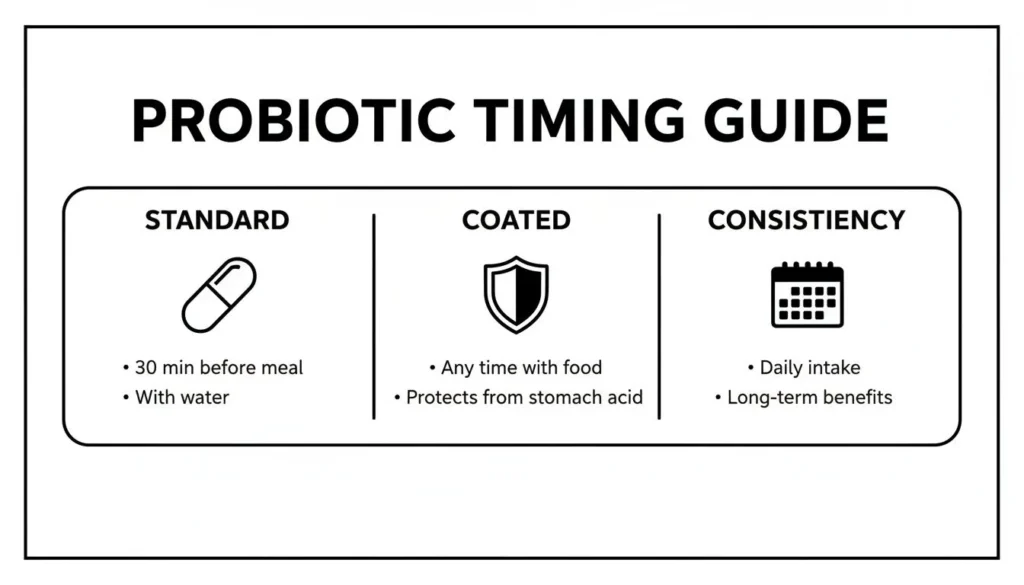
As you can see, while standard capsules get a boost from food, the coated ones are built to last, and the ultimate goal for any type is just to take it every day.
The Golden Rule: No matter when you take them, the most significant benefits come from consistent, daily use. Building a healthy gut microbiome isn’t a sprint; it’s a long-term project.
Your main goal should be to find a routine that you can stick to without a second thought. Whether that’s first thing in the morning with a piece of toast or with your dinner every night, that daily habit is what allows these beneficial microbes to settle in and deliver real health benefits.
Always check the product’s label for any specific instructions from the manufacturer. But if there aren’t any, pairing your dose with a meal is a solid, reliable plan. This simple habit ensures you’re not just taking probiotics, but taking them in a way that gives them the best possible chance to succeed.
Why Probiotic Timing Matters for Gut Survival
Picture your probiotic supplement as a crew of tiny, beneficial astronauts. Their mission? Journey to your large intestine and set up a healthy colony that bolsters your overall wellness. But first, they have to survive a treacherous voyage through your stomach, an environment as harsh and acidic as an alien planet. This is the heart of why timing matters—it’s all about making sure these microbial travelers survive the trip.
The biggest hurdle for any standard probiotic is stomach acid. On an empty stomach, the pH is incredibly acidic, typically ranging from 1.5 to 3.5. To put that in perspective, it’s about as acidic as battery acid. This intense environment is your body’s natural sterilizer, meant to obliterate harmful pathogens and break down food. The problem is, it can also wipe out the delicate, living bacteria in your supplement long before they reach their destination.
The Food Buffer Effect
This is where a meal can act as a temporary shield. Eating triggers your digestive system, and the food itself raises the stomach’s pH, making it significantly less acidic. Food essentially serves as a buffer, creating a safer, more hospitable passage for your probiotic astronauts.
But not just any meal will do. A small meal or even a snack with a bit of fat is often perfect. Fat slows down what’s called gastric emptying—the speed at which food exits the stomach—giving the probiotics more time to travel safely with the food. This timing gives the bacteria a much better shot at arriving in the intestines alive and ready to get to work. It’s a simple but powerful adjustment for anyone starting their wellness journey. If you’re building healthy habits, our guide on fitness tips for beginners might also be helpful.
The Astronaut Analogy: Think of an unprotected probiotic on an empty stomach like an astronaut stepping onto a hostile planet without a spacesuit. Introducing food is like giving them a protective vehicle, buffering them from the harsh atmosphere and ensuring they reach their base safely.
Built-in Spacesuits for Probiotics
Thankfully, supplement makers have gotten pretty clever. Recognizing this survival challenge, many have developed innovative delivery systems that are like armored spaceships for these good microbes. These technologies are total game-changers because they make the timing of your dose far less critical.
You’ll typically find two main kinds of “armored” probiotics:
- Enteric-Coated Capsules: These capsules feature a special polymer barrier built to withstand stomach acid. This coating won’t dissolve until it reaches the much more neutral pH of the small intestine, releasing the probiotics exactly where they need to be.
- Spore-Based Strains: Some bacteria, particularly from the Bacillus genus, naturally form a tough, protective shell called an endospore. This spore keeps the bacteria dormant and makes them incredibly resilient to acid, heat, and pressure. They only “wake up” and become active once they land in the favorable environment of your gut.
Because these advanced probiotics come pre-equipped for the journey, you have much more flexibility. You can take them with or without food, morning or night, without stressing about stomach acid destroying them. The key is to know what kind of probiotic you’re taking—a standard “unprotected” crew or an “armored” one. That single piece of information dictates your entire timing strategy.
Morning Versus Night for Taking Probiotics
When it comes to probiotics, one of the most common questions I get is about timing. Should you take them in the morning or at night? It’s a simple question, but the answer isn’t just about what’s convenient. The time you choose can actually influence how well these friendly bacteria do their job. Both morning and evening have their own set of advantages, and the best fit often comes down to your body, your routine, and what you’re trying to achieve.
Taking your probiotic in the morning is a popular strategy, and for good reason. It’s an easy habit to tack onto your existing routine, like making coffee or eating breakfast. When you take it with a light meal, you’re essentially preparing your digestive system for the day, sending in beneficial microbes to help manage the foods you’re about to eat.
The Case for a Morning Dose
A morning routine is all about consistency. For most of us, it’s far easier to remember a pill first thing than it is at the end of a long day when all you can think about is bed. Since consistency is the name of the game for building a healthy microbiome, this is a huge plus.
A morning dose can be especially helpful if you’re dealing with acute digestive issues like diarrhea. Probiotics can start providing relief in just a few days, and taking them with breakfast puts them in sync with your body’s natural rhythms. The digestive enzymes and bile released during your meal can even help chaperone the bacteria safely to your colon. This timing is particularly useful for the 10-15% of U.S. adults with IBS and the millions of travelers trying to avoid digestive upset.
The Night Shift Advantage
On the flip side, taking probiotics at night is like sending in a restoration crew while your gut is “closed for construction.” As you sleep, your digestive system naturally slows down. This lower gut motility means there’s less movement and turbulence in your intestines.
This calmer environment gives probiotics a clearer path to the large intestine. With less traffic, they have more time to find a good spot, settle in, and begin to colonize without getting rushed through the system.
An evening dose can also deliver some targeted benefits. If you often deal with nighttime gas or wake up feeling bloated and uncomfortable, taking your probiotic before bed might help you wake up feeling much better.
There’s also a fascinating connection between gut health and sleep. Your gut is a major player in producing neurotransmitters like serotonin, which is a precursor to the sleep hormone melatonin. While we need more research here, many people report that supporting their gut at night helps them get more restful sleep. It can be a real struggle to juggle wellness and a packed schedule; our guide on how to improve work-life balance offers some great tips that can complement these efforts.
Which Timing Is Right for You?
So, what’s the verdict? The truth is, there’s no single right answer that works for everyone. The absolute best time to take your probiotic is the time you’ll actually remember to take it, day in and day out.
To figure out your personal “sweet spot,” consider your main goals and daily habits.
- For Habit-Building: If you’re a creature of habit who thrives on a morning routine, take your probiotic with breakfast.
- For Overnight Support: If you want to give the bacteria a quiet environment to get established, or if you’re targeting issues like bloating, try taking them before you go to sleep.
- For Acute Issues: If you’re tackling a specific, short-term digestive problem, a morning dose with a little food is often the best bet for faster support.
My advice? Run a little experiment. Try taking your probiotic in the morning for a week or two, then switch to the evening. Pay close attention to how you feel—your body is the best expert you’ve got. Ultimately, the key is to pick a time, stick with it, and let consistency do the heavy lifting.
How to Take Probiotics with Antibiotics
Taking antibiotics is sometimes a necessary evil, but it can be really tough on your gut. Think of an antibiotic as a broad-spectrum weed killer for the garden of your microbiome—it’s designed to wipe out harmful bacteria, but it often takes out a lot of the good guys along the way. This collateral damage can lead to nasty side effects like diarrhea and gives less-friendly microbes a chance to move in.
This is where probiotics come in as your gut’s “reforestation crew.” By strategically reintroducing beneficial bacteria, you can help shield your digestive system from the onslaught and kickstart its recovery. But timing is everything. You can’t just pop both pills at the same time and hope for the best.
The Crucial 2-Hour Rule
When you’re on a course of antibiotics, the single most important rule is to space out your doses. The antibiotic is designed to kill bacteria, and it can’t tell the difference between the nasty bug causing your infection and the helpful ones in your probiotic supplement. If you take them together, the antibiotic will simply wipe out the probiotic, making it totally useless.
To make sure this doesn’t happen, you need to create a time buffer.
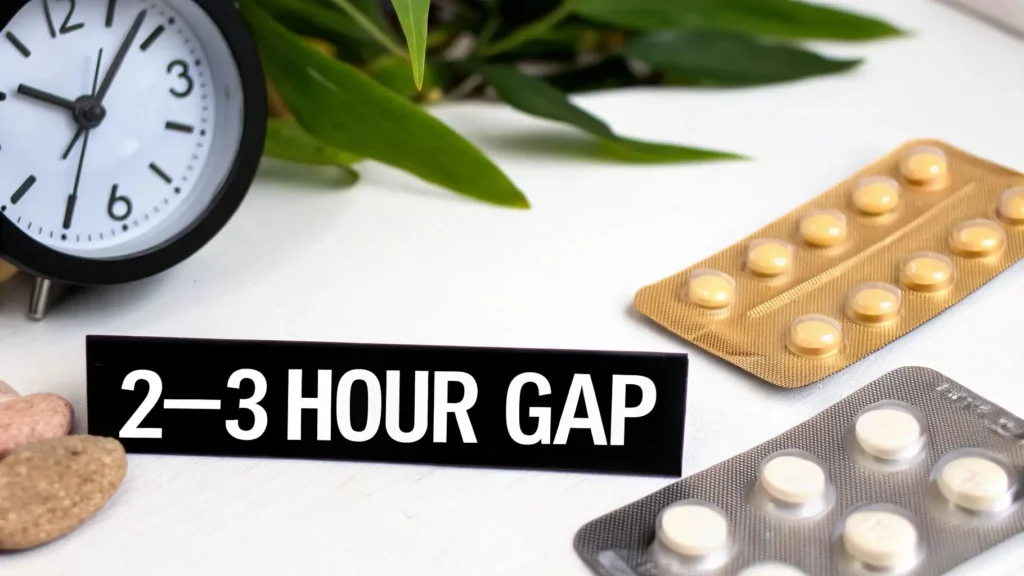
The Golden Rule for Antibiotics: Always take your probiotic at least two to three hours apart from your antibiotic dose. This gap gives the antibiotic time to get absorbed and start working, creating a much safer window for the probiotic to pass through your stomach and reach your intestines intact.
For instance, if you take your antibiotic at 8 AM and 8 PM, a good time to take your probiotic would be around 11 AM or in the mid-afternoon. It’s a simple strategy, but it ensures your “reforestation crew” doesn’t get taken out the second it arrives on the scene.
To make it even easier, here’s a simple protocol to follow.
Probiotic and Antibiotic Dosing Protocol
| Step | Action | Why It’s Important |
|---|---|---|
| 1 | Take your antibiotic dose as prescribed. | This is non-negotiable for treating your infection. |
| 2 | Wait at least 2 hours. | This creates a safe window for the probiotic to bypass the antibiotic’s peak killing power in the GI tract. |
| 3 | Take your probiotic supplement. | This replenishes your gut with beneficial microbes to help maintain balance. |
| 4 | Continue this cycle for every antibiotic dose. | Consistency is key to protecting your gut throughout the entire treatment course. |
Following this simple schedule is the best way to get the full protective benefits from your probiotic.
Why You Should Start Probiotics Immediately
Spacing your doses is one half of the equation; the other is starting as soon as you can. Don’t wait until your antibiotic course is over to start the repair process. The research is pretty clear on this: acting fast is crucial for preventing one of the most common side effects—antibiotic-associated diarrhea (AAD).
In fact, studies show that taking probiotics within the first 48 hours of starting antibiotics dramatically cuts the risk of AAD. For example, a major analysis found that the specific strain Lactobacillus rhamnosus GG (LGG) slashed this risk by 45% in adults. It was even more effective in children, where a daily dose of 10 to 20 billion CFUs of LGG lowered the risk of AAD by a whopping 71%. If you want to dig into the data, you can explore the research about probiotic effectiveness.
Starting later is much less effective. It’s like fighting a fire—it’s far easier to stamp out a few sparks than it is to battle a full-blown forest fire. By introducing good bacteria early, you help keep your gut ecosystem stable from the get-go.
The Best Probiotic Strains for the Job
Not all probiotics are created equal, especially for this job. When your gut is under attack from antibiotics, you need to call in the heavy hitters—strains that are well-researched and proven to be tough enough for this specific scenario.
Two strains consistently shine in scientific studies:
- Lactobacillus rhamnosus GG (LGG): This is one of the most studied probiotic strains on the planet. It’s famous for its ability to stick to the intestinal wall and crowd out harmful pathogens. Its power to prevent AAD is backed by a huge body of scientific evidence.
- Saccharomyces boulardii: This one is actually a beneficial yeast, not a bacterium. And that’s its superpower—because it’s a yeast, it’s naturally immune to antibacterial medications. It works by protecting the gut lining and has been shown to cut the duration of acute diarrhea by about a full day.
When you’re picking a supplement, flip it over and look for these specific strain names on the label. That’s a great sign that the product is formulated with ingredients that have been proven to deliver robust gut support.
Tailoring Probiotic Timing to Specific Health Goals
Just as you wouldn’t use a screwdriver to hammer a nail, you can’t expect a single probiotic strategy to work for every health concern. The “best” time to take probiotics isn’t some universal rule. Instead, it’s a personalized approach that really hinges on what you’re trying to achieve for your wellness.
By matching your probiotic timing and strain selection to your specific goal, you can shift from general gut support to targeted, effective action. Think of your gut microbiome as a bustling city. Different probiotic strains are like specialized workers, each with a unique job. Timing your dose correctly is like making sure these workers show up for their shift under the best possible conditions to get the job done right. This is how you unlock more precise benefits, whether you’re focused on digestion, immunity, or even your mood.
For Digestive Regularity and Comfort
If your main goal is to improve digestion, cut down on bloating, or just stay regular, taking your probiotic with a meal is usually the way to go. This simple step helps the good bacteria survive the harsh environment of your stomach and travel alongside the very food they’re meant to help you process.
Strains like Bifidobacterium lactis are true workhorses for digestive health. Taking a supplement with this strain during a light meal offers two key advantages:
- Buffering Effect: Food helps to neutralize stomach acid, acting like a protective shield for the delicate bacteria on their journey to your intestines.
- Transit Assistance: Moving with the meal ensures the probiotics actually reach the colon, where they can get to work supporting healthy bowel function and easing discomfort.
For this purpose, a consistent morning dose with breakfast is an excellent routine. It sets your digestive system up for the day and is pretty easy to remember.
For Immune System Support
Your gut is basically the command center for your immune system, home to over 70% of your body’s immune cells. Supporting this connection is a powerful way to bolster your natural defenses. When it comes to immune health, consistency is far more important than exact meal timing.
The real key to immune support is maintaining a stable, diverse population of beneficial bacteria over the long haul. A consistent daily dose, like first thing in the morning, helps establish and maintain this microbial balance, which in turn helps regulate your immune responses.
Strains such as Lactobacillus rhamnosus GG (LGG) and Lactobacillus plantarum have been well-studied for their ability to interact with immune cells right in the gut lining. A regular morning habit ensures these strains are always on duty, helping to fortify your gut barrier and keep your immune system in a state of healthy readiness.
For Mood, Stress, and Brain Health
The gut-brain axis is a fascinating two-way street connecting your digestive system and your mental well-being. It’s now clear that certain probiotic strains can influence the production of neurotransmitters like serotonin and GABA, which are crucial for regulating mood and stress. This is a huge reason why many people are looking into how to calm anxiety naturally by focusing on gut health.
For goals related to mood and stress, taking your probiotic in the evening might be especially helpful.
- Overnight Colonization: Taking probiotics before bed gives them a long, quiet period with less digestive activity. This gives strains like Lactobacillus helveticus and Bifidobacterium longum an undisturbed environment to settle in and colonize.
- Neurotransmitter Support: This overnight timing may sync up nicely with your body’s natural sleep and repair cycles, potentially boosting the production of calming neurotransmitters while you rest.
For Vaginal Health
Just like your gut, the vaginal microbiome depends on a delicate balance of good bacteria—mostly from the Lactobacillus family. When that balance is thrown off, it can lead to common and uncomfortable issues. Probiotics can help restore and maintain a healthy, acidic environment that discourages the overgrowth of troublesome microbes.
For this specific goal, you can find both oral and vaginal probiotic supplements. If you’re using an oral probiotic for vaginal health—like one containing Lactobacillus crispatus or Lactobacillus rhamnosus—the exact timing is less important than just being consistent. Taking them daily, whether in the morning or at night, helps these strains first colonize the gut and then migrate to support the vaginal flora. The most important factor is simply consistent, daily use to maintain a healthy population of these protective bacteria.
Common Questions About Taking Probiotics
Even with the best-laid plans for probiotic timing, questions are bound to pop up. Life happens, routines get messy, and it’s easy to wonder if you’re still on the right track. This section is all about tackling those common, real-world concerns with direct, actionable answers.
Think of this as your go-to troubleshooting guide. We’ll clear up any confusion about missed doses, empty stomachs, and how to tell if your efforts are even paying off. With these insights, you’ll be ready to manage your probiotic routine like a pro.
What Should I Do If I Miss a Dose?
Forgetting to take your probiotic is completely normal. The most important thing is not to stress about it. One missed dose won’t derail your progress—the goal is to build and maintain a healthy colony of good bacteria over time.
Here’s a simple rule of thumb:
- If you remember within a few hours: Go ahead and take it. If you normally take it with breakfast but forget until lunchtime, just take it with your lunch.
- If it’s almost time for your next dose: Just skip the missed one and get back on schedule. Don’t double up. Taking two at once won’t deliver extra benefits and might just cause some temporary gas or bloating.
The bottom line? Just resume your normal schedule the next day. Consistency over weeks and months is what matters, not daily perfection.
Is It Ever Okay to Take Probiotics on an Empty Stomach?
This is a common point of confusion, and the answer hinges entirely on the type of probiotic you’re using. For many standard, unprotected capsules, an empty stomach is not your friend. The harsh, acidic environment can wipe out a large number of the delicate bacteria before they ever reach your intestines.
However, there are two key exceptions where an empty stomach is perfectly fine:
- Enteric-Coated or Delayed-Release Capsules: Think of these as tiny armored vehicles. They have a special protective shell designed to withstand stomach acid and only dissolve once they reach the friendlier, more neutral environment of your small intestine. With these, timing around food doesn’t matter.
- Spore-Based Probiotics: Strains like Bacillus coagulans or Bacillus subtilis are naturally tough. They exist in a dormant spore form, which acts as a natural shield against acid and heat. They only “wake up” and get to work once they arrive safely in your gut.
So, if your probiotic is an “armored” type (coated or spore-based), take it whenever is most convenient. If it’s a standard formula, it’s much safer to pair it with a light meal or snack.
How Do I Know If My Probiotics Are Working?
Spotting the effects of a probiotic isn’t usually a dramatic, overnight event. It’s more of a gradual process of noticing small but positive shifts. The signs depend on your starting point, but here are some common indicators that your gut is responding well:
- Better Digestion: This is often the first thing people notice. You might experience less bloating, gas, or discomfort after eating.
- Improved Regularity: More predictable and consistent bowel movements are a strong sign that your gut flora is finding its balance.
- More Energy: A healthier gut absorbs nutrients better and can lower low-grade inflammation, which many people experience as a subtle lift in their daily energy.
- Clearer Skin: The gut-skin axis is a real thing. For some, balancing the microbiome can lead to fewer breakouts and a healthier complexion.
- Fewer Colds: Since over 70% of your immune system is in your gut, you might find you’re not getting sick as often or you bounce back faster.
Patience is key. Some people feel digestive improvements in a few days, but for others, it might take a few weeks of consistent use to see real benefits. Try keeping a small journal to track how you feel—it can help you connect the dots.
Can I Take Different Probiotics at the Same Time?
Yes, you can, but it pays to be strategic. Your gut is home to hundreds of different bacterial species, and sometimes combining products can help you introduce a wider variety of beneficial strains.
For example, you could take a multi-strain formula for general gut health in the morning and a specific strain known for immune support, like Lactobacillus rhamnosus GG, at night. Or, if you’re on antibiotics, you might pair a powerful yeast-based probiotic like Saccharomyces boulardii with a bacterial blend to cover all your bases.
Just remember, more isn’t automatically better. If you decide to combine supplements, introduce one new product at a time. Give your body a week or two to adjust before adding another. This helps you monitor for any side effects and figure out what combination actually works for you. When in doubt, a quick chat with your healthcare provider can help you build a safe and effective routine.
At maxijournal.com, we are dedicated to providing clear, evidence-based insights to help you navigate your wellness journey. For more daily writing on health, science, and a variety of other topics, explore our curated articles at https://maxijournal.com.
Discover more from Maxi Journal
Subscribe to get the latest posts sent to your email.