Growing your own tomatoes from seed is one of the most satisfying things you can do in a garden. The whole journey, from a tiny seed to a basket full of ripe, juicy fruit, starts with a few key decisions. If you get the early steps right—choosing your variety, starting them indoors 6-8 weeks before your last frost date, giving them enough light and warmth, and then slowly introducing them to the great outdoors—you’re setting yourself up for an amazing summer harvest.
Your Foundation for a Thriving Tomato Harvest
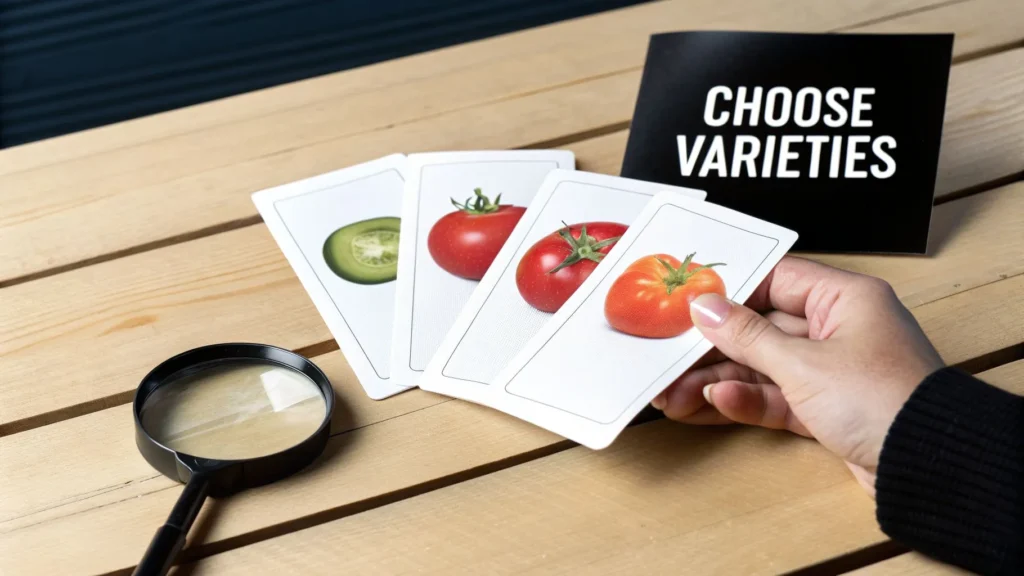
Before you even touch a bag of soil, the most critical step is picking your seeds. This one choice dictates so much about your gardening season, from how big your plants will get to what your final harvest will taste like. It’s not just about finding a picture of a tasty-looking tomato; it’s about matching a plant to your garden, your climate, and what you actually want to do with all those tomatoes.
Choosing Your Tomato Variety: Determinate vs. Indeterminate
The first big fork in the road is deciding between determinate and indeterminate tomatoes. The easiest way to think about it is “bush” versus “vine.”
This quick table breaks down the main differences to help you decide what’s right for your garden.
Choosing Your Tomato Variety: Determinate vs Indeterminate
| Characteristic | Determinate (Bush) Tomatoes | Indeterminate (Vining) Tomatoes |
|---|---|---|
| Growth Habit | Grow to a fixed, compact size (usually 3-4 ft). No pruning needed. | Keep growing and vining all season, can reach 6-10 ft or more. |
| Support Needed | A simple cage or short stake is usually enough. Great for pots. | Require tall, very sturdy staking or caging to support their weight. |
| Harvest Time | Produce their fruit all at once in a concentrated 2-3 week period. | Produce fruit steadily throughout the season until the first frost. |
| Best For | Gardeners in small spaces, containers, or those wanting a large harvest at one time for canning or making sauce. | Gardeners with more space who want a continuous supply of fresh tomatoes for salads and slicing all summer long. |
| Common Examples | Roma, Celebrity, Rutgers, Patio | Brandywine, Cherokee Purple, Sun Gold, Early Girl, most heirloom types. |
Ultimately, the choice depends on your space and your goals. Determinate types are fantastic for their manageability, while indeterminate varieties give you that classic, summer-long tomato experience.
Gardener’s Tip: If you have the room, why not plant both? I always grow a few ‘Roma’ plants (determinate) for my big batch of sauce at the end of summer. At the same time, I’ll have heirlooms like ‘Brandywine’ or ‘Cherokee Purple’ (indeterminate) giving me a steady supply for sandwiches and salads all season. It’s the best of both worlds.
Understanding Seed Packet Lingo
That little paper packet is your instruction manual, and it’s full of clues. The most important number to find is the “days to maturity.” This tells you roughly how long it will take from the day you plant your seedling in the garden to your first ripe tomato. If you live somewhere with a short growing season, this is critical. Look for varieties with a shorter window, maybe in the 55-70 day range.
You’ll also run into terms like “heirloom” and “hybrid.” Heirlooms are old-time varieties, open-pollinated and passed down for their incredible flavor, though sometimes they can be a bit more susceptible to disease. Hybrids are intentionally cross-bred from two different parent plants to highlight specific traits, like high yields or rock-solid disease resistance. For a beginner, a reliable and disease-resistant hybrid like the ‘Juliet’ grape tomato is a fantastic, almost foolproof choice.
And remember, great plants start with great soil. You can give any variety a huge head start with rich, homemade compost. For a deep dive, check out our guide on how to compost at home.
Sourcing High-Quality Seeds
Finally, where you buy your seeds makes a huge difference. Fresh seeds from a trusted supplier are your best bet for a high germination rate, which just means more of your seeds will actually sprout. Trying to save a few bucks on old or poorly stored seeds is often a recipe for disappointment.
A good germination rate is a hallmark of quality. While industry standards might consider 80% to be acceptable, many serious gardeners won’t settle for less. In fact, some germination tests on ‘Big Zac’ tomato seeds from different years showed success rates varying from 86% to an amazing 99%. This really shows how much of an impact seed age and quality can have.
When you choose a reputable seed company, you’re not just buying seeds—you’re buying good genetics. You’re giving your future plants the strongest possible start before they even break ground.
Gearing Up: What You’ll Actually Need for Seed Starting
Getting the right gear together is like the secret handshake for tomato growers. It’s what separates a hopeful gamble from a reliable system, giving your tiny seeds the solid start they’re counting on. This isn’t about spending a ton of money on fancy gadgets; it’s about understanding why certain tools are non-negotiable for getting healthy tomatoes from seed.
Your first big decision is what to plant them in. While it’s tempting to grab old yogurt cups, dedicated seed starting trays or pots are designed for one thing that yogurt cups aren’t: drainage. And believe me, proper drainage is the number one thing that will save you from heartache later on.
Picking the Perfect Containers
The container aisle can feel overwhelming, but your choices really boil down to two main camps: biodegradable pots and reusable plastic trays.
Biodegradable pots—the kind made from peat or even cow manure—have a cool gimmick: you can plant the whole thing right in the garden. This definitely cuts down on transplant shock. The downside? They can wick moisture away from the soil like a sponge, meaning you have to be extra vigilant with your watering can.
I’m a big fan of reusable plastic cell trays. They’re a great investment over time, they’re a cinch to clean, and they create a nice, uniform environment for all your seedlings. A standard 72-cell tray is a workhorse, letting you start a ton of plants without taking over your living room. Just give them a quick bath in a 10% bleach solution before you use them each season to kill off any lingering diseases.
One simple piece of gear that makes a world of difference is a humidity dome. This clear plastic lid fits right over your tray, trapping warmth and moisture. It creates a tiny greenhouse that can seriously speed up germination. For a few bucks, you get pro-level results.
Why Your Soil Mix Matters
Whatever you do, don’t scoop up soil from your garden to start seeds. It’s just too heavy, it’s full of mystery pathogens and weed seeds, and it compacts like crazy, choking out delicate new roots. You absolutely need a dedicated seed starting mix.
Look for a bag specifically labeled for starting seeds. These mixes are engineered to be:
- Sterile: This is your best defense against fungal diseases like “damping-off,” a nasty problem that can wipe out a whole tray of seedlings overnight.
- Fine-textured: This fine crumb ensures your seeds make good contact with the soil, which is a must for them to sprout.
- Light and Airy: Good mixes have stuff like perlite or vermiculite blended in. This keeps the soil from getting waterlogged and gives tiny roots room to stretch and grow.
Think of this special soil as the perfect nursery for your baby tomatoes. It’s a clean, supportive, and fluffy bed for them to develop a killer root system.
The Two Most Important Tools: Light and Warmth
Once your seeds are sown, the game shifts to managing their environment. The two biggest players here are light and warmth. I have to be blunt: for most of us, a sunny windowsill just won’t cut it. Tomato seedlings are hungry for 14-16 hours of intense, direct light every day. Without it, they get weak and “leggy”—stretching desperately for the sun and ending up all stem and no substance.
A simple shop light with either fluorescent or LED bulbs is a total game-changer. The trick is to keep the lights positioned just 2-3 inches above the tops of your seedlings. Any higher and you lose all the benefit.
To really kick germination into high gear, a seedling heat mat is worth its weight in gold. These mats gently warm the soil from underneath, keeping it in that perfect 75-85°F (24-29°C) range that tomato seeds love. With a heat mat, you can see sprouts in as little as 5-7 days, instead of waiting for two weeks. If you’re going to invest in any gear, these two items will give you the most bang for your buck, hands down.
The Art and Science of Sowing Tomato Seeds
This is where the magic begins. Sowing tomato seeds is pretty straightforward, but a few little tricks I’ve learned over the years can make a huge difference in how many of your seeds actually sprout and thrive. It’s all about nailing the timing and creating a cozy little nursery for them.
Pinpointing the Perfect Sowing Time
The number one question I get is, “When should I start my seeds?” The golden rule is to sow tomato seeds indoors 6 to 8 weeks before your average last frost date. I know it’s tempting to start earlier, but trust me on this—it almost always leads to leggy, stretched-out seedlings that have a tough time adjusting to the real world. Start too late, and you’re just pushing back your harvest.
Your local climate is everything. A gardener in Zone 8 is on a completely different schedule than someone in Zone 5. The easiest way to figure this out is to Google “[Your Zip Code] last frost date.” Once you have that date, just count backward on a calendar. So, if your last frost is typically May 15th, you’ll want to get those seeds in soil somewhere between late March and early April.
This timeline gives you a great visual for what you’ll need and when.
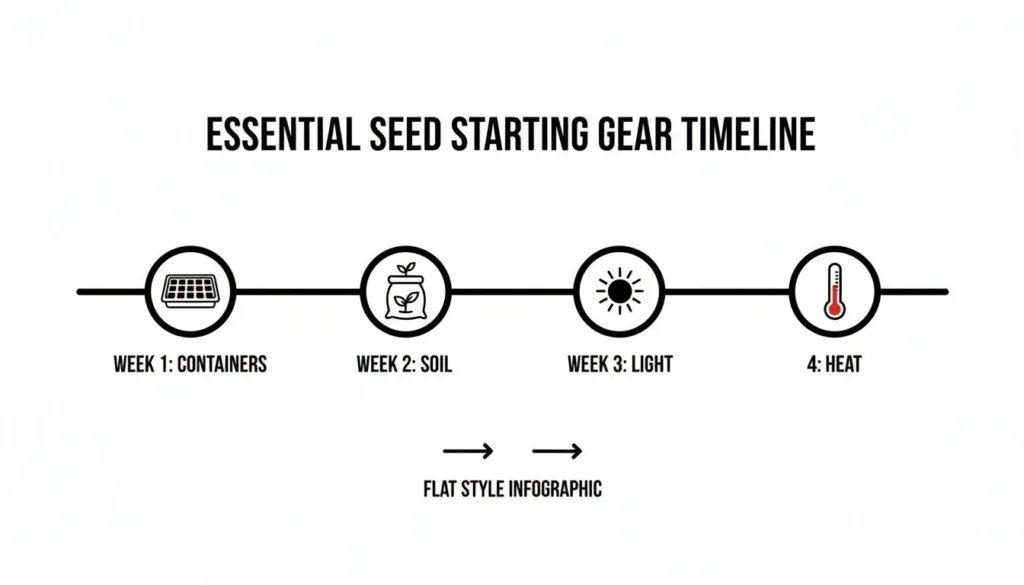
As you can see, you start with the basics, but your focus quickly shifts to managing light and heat as those little seedlings grow.
Getting Your Soil and Trays Ready
Before you tear open a single seed packet, let’s talk about soil. My best advice is to pre-moisten your seed starting mix in a separate bucket or tub. Just add a little water at a time, mixing with your hands until it feels like a damp, wrung-out sponge.
Don’t skip this part! Dry mix is notoriously hydrophobic, meaning it repels water. If you try to water it in the tray, your tiny seeds can get washed around or float to the surface. Getting it damp first ensures perfect, even moisture from day one. Once it’s ready, fill your cell trays, lightly patting the mix down to get rid of air pockets without making it a solid brick.
Sowing Seeds for Maximum Success
Alright, it’s go-time. Sowing depth is one of those tiny details that has a massive impact. You want to plant your tomato seeds about ¼ inch deep. A good rule of thumb is to plant a seed about twice as deep as it is wide. I find the eraser end of a pencil or even a chopstick works perfectly for making a small, consistent divot in each cell.
I always plant two seeds per cell. Think of it as cheap insurance. Not every seed is a winner, and this doubles your chances of getting a sprout in every single cell. If both pop up, you’ll just snip the weaker-looking one at the soil line in a couple of weeks. This way, you don’t disturb the roots of the one you’re keeping.
It’s also fascinating how much genetics influences germination. Scientists have found that a whole suite of genetic markers—they call them quantitative trait loci (QTL)—dictate how fast seeds sprout under different kinds of stress. One study on tomato genetics pinpointed between 6 and 9 of these QTLs for various conditions, totaling 14 distinct genetic regions that control the whole process. It explains why some of my heirloom varieties seem to take their sweet time while a hybrid might pop up in just a few days.
Creating the Perfect Germination Getaway
To wake up from their slumber, tomato seeds crave two things: consistent warmth and humidity. After you’ve dropped your seeds in, lightly sprinkle some soil mix over them and give the surface a gentle misting with a spray bottle.
To trap that precious moisture, cover your seed tray with a clear plastic humidity dome. It acts like a mini-greenhouse, keeping things warm and humid right where the seeds need it.
Place your covered tray on a seedling heat mat set to keep the soil between 75-85°F (24-29°C). This is my secret weapon. Consistent bottom heat can easily cut germination time in half, often down to just 5-7 days.
Now, all you have to do is wait. Check your trays every day. The moment you see the first hint of green breaking through the soil, it’s time to take off the humidity dome and switch on your grow lights. The next phase has begun
From Tiny Sprout to Garden-Ready Plant
Seeing those first little green loops break through the soil is one of the best moments for any gardener. It’s pure magic. But now, the real work begins. The next phase is all about giving them exactly what they need—the right light, water, and air—to turn them from delicate sprouts into tough little plants ready for the garden.
From this moment on, your seedlings have one mission: photosynthesis. And to do that job well, they need a ton of good, strong light. I’m talking way more than what they’ll get from a sunny windowsill. Without it, they’ll stretch themselves thin trying to reach the sun, getting weak and “leggy” in the process.
Light Is Everything
The second you see that first sprout, get it under a light. Seriously, don’t wait. Even a single day without proper light can cause them to stretch, and you can’t undo that. The trick is to keep your light source incredibly close—just 2-3 inches above the tops of the seedlings.
You’ll have to keep raising the lights as the plants get taller to maintain that perfect distance. I run my lights on a timer for a steady 14 to 16 hours a day. After that, they get 8 to 10 hours of total darkness. Just like us, plants need to rest and process all the energy they soaked up during the day.
The goal here is short, stocky seedlings with thick stems and rich, green leaves. If your lights are too far away, you’ll get the exact opposite: tall, pale, weak plants that will have a hard time surviving the move outdoors.
Watering and Building Strong Stems
Consistent moisture is key, but it’s so easy to overdo it. In fact, overwatering is probably the number one mistake I see new seed-starters make. A good rule of thumb is to let the very top of the soil dry out just a little bit before watering again. This makes the roots work for it, growing deeper to find moisture, and it also helps keep nasty fungal diseases away.
When it’s time to water, always do it from the bottom. Just pour water into the tray holding your cell packs and let the soil soak it up from the drainage holes for about a half-hour. This keeps water off the leaves and stems, which is your best defense against “damping-off,” a fungus that rots seedlings right at the soil line. After they’ve had a good drink, pour out any water left in the tray.
Here’s another pro-tip: get a fan. A small, cheap fan on its lowest setting, pointed at your seedlings for a few hours each day, makes a huge difference. The gentle breeze does two important things:
- Strengthens Stems: The constant, gentle swaying forces the seedlings to grow thicker, stronger stems to withstand it.
- Boosts Airflow: It helps the soil surface dry out faster and keeps fungal spores from finding a damp place to land.
Potting Up for Bigger, Better Roots
About 2-3 weeks after sprouting, your seedlings will grow their first “true leaves.” These are the second set of leaves they’ll get, and they’ll look like tiny versions of the adult plant’s leaves. Once these true leaves are about an inch across, it’s time to “pot up.”
“Potting up” is just a fancy term for moving each seedling from its tiny starting cell into a slightly bigger pot, usually something around 3-4 inches wide. This step is a game-changer because it gives the roots room to spread out. A plant stuck in a small pot will become root-bound, which stunts its growth for good.
When you’re moving a tomato seedling, don’t be afraid to bury a good chunk of its stem. Tomatoes are amazing—they can sprout new roots (called adventitious roots) all along any part of the stem that’s underground. Planting them deep like this gives them a massive, robust root system, which is the foundation for a healthy and productive plant.
When to Start Feeding Your Seedlings
For the first couple of weeks, a seedling has all the food it needs packed inside its seed and from the starter mix. But once you’ve potted them up and they’re really starting to grow, they’ll get hungry.
Start feeding them with a liquid fertilizer, but—and this is important—dilute it to quarter-strength. Full-strength fertilizer is way too harsh and will burn their delicate new roots. A light feeding with this weak solution once a week is all they need to fuel their growth.
By sticking to this routine of intense light, careful watering, and light feeding, you’ll watch your sprouts transform into strong young plants. Mastering these skills is a huge part of gardening success, especially if you’re interested in different organic gardening methods to grow amazing, chemical-free food. Each step builds on the last, getting your plants perfectly prepared for their final move into the great outdoors.
Preparing Your Plants for the Great Outdoors
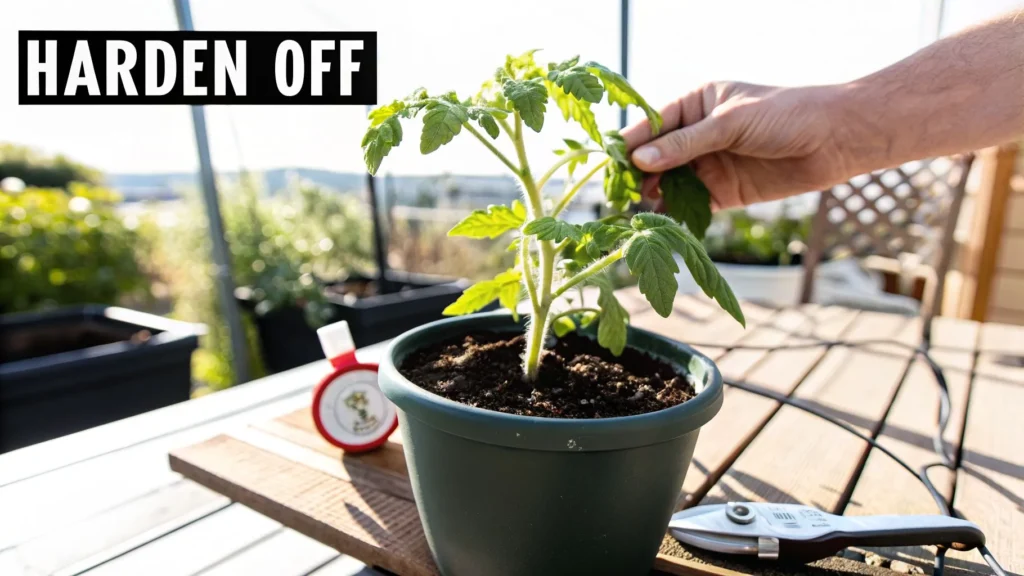
After weeks of coddling your seedlings indoors, they look tough and ready for the garden. But hold on. This is where many gardeners make a critical mistake. Just plopping them straight into the ground would be a massive shock to their system, like sending a pampered house cat into the wild.
They’ve only ever known filtered light, calm air, and steady temperatures. The unfiltered sun, whipping wind, and day-to-night temperature swings outside are a different world entirely.
This is where hardening off comes in. Think of it as bootcamp for your plants. It’s a non-negotiable step that gradually toughens them up, ensuring they not only survive but thrive. The process is slow and steady, usually taking about 7 to 14 days, but your patience now will be rewarded with healthy, productive plants all season long.
Your 10-Day Hardening-Off Schedule
The whole point is to introduce your plants to the great outdoors a little at a time. I usually start by finding a sheltered spot that gets some gentle morning sun but is protected from harsh winds—a covered porch or the shady side of the house works perfectly.
Here’s a general schedule I follow. The most important thing is to watch your plants and adjust based on how they’re reacting.
- Days 1-2: Set the plants outside in a shady, protected spot for just 1-2 hours. That’s it. Then bring them back in.
- Days 3-4: Find a spot with some dappled sunlight and leave them for 3-4 hours.
- Days 5-6: Now you can increase their time outside to 5-6 hours, letting them get an hour or two of direct morning sun.
- Days 7-8: Leave them out for most of the day, around 7-8 hours, gradually increasing their exposure to direct sun. Just make sure to shield them from that intense afternoon heat.
- Days 9-10: At this point, they can stay outside all day. If the nighttime temperatures are reliably above 50°F (10°C), you can let them spend their first night outdoors.
Keep an Eye on the Weather: A sudden cold snap or a blustery, rainy day can really set your plants back. On days like that, don’t feel bad about skipping the routine and keeping them inside. It’s far better to add an extra day to the schedule than to risk undoing all your hard work.
Reading the Signs of Stress
Your plants will tell you if you’re pushing them too hard. Sunburn is a common one, showing up as white or yellow patches on the leaves. If you see this, pull them back into the shade immediately and dial back the sun exposure for the next couple of days.
Wilting is another classic sign of stress. A little drooping in the heat of the afternoon is pretty normal, but if they look completely limp, they’re screaming for a break. Give them a good drink and move them somewhere more protected.
The Final Step: Transplanting into the Garden
Once your plants have made it through a full 24-hour cycle outside without any signs of stress, they’re ready for their permanent home. The best time to plant is on a calm, overcast day or in the late afternoon. This gives them time to settle in before getting blasted by the sun, which really helps minimize transplant shock.
Spacing is key for good airflow, which helps prevent diseases. For determinate (bush) varieties, aim for about 2 feet between plants. Indeterminate (vining) types need more room to sprawl, so give them at least 3 feet.
Here’s a trick I swear by for creating an incredibly strong, drought-resistant tomato plant:
- Dig a hole that’s deeper than the seedling’s current pot.
- Gently slide the plant out of its container. Pinch off the lowest two or three sets of leaves from the stem.
- Place the plant in the hole so it’s buried deep—right up to the first set of remaining leaves.
Tomatoes have this amazing ability to sprout new roots all along the buried part of the stem. This “trenching” or deep-planting method gives you a massive, robust root system that’s better at finding water and anchoring the plant as it grows heavy with fruit.
After planting, give each tomato a deep, slow soak right at its base to settle the soil and get rid of any air pockets around the roots. All your careful prep has set the stage for a fantastic harvest. If you’re looking to take your gardening skills even further, exploring concepts in cross-pollination guides can be a great next step to boost your garden’s diversity.
Of course. Here is the rewritten section, crafted to sound like it was written by an experienced gardener, following all the provided guidelines.
Troubleshooting Common Seed Starting Problems
Even with the best intentions, things can go sideways when you’re starting seeds. It’s frustrating to see your little seedlings struggle, but don’t throw in the towel just yet. Most of the classic problems are surprisingly easy to diagnose and fix once you know what to look for.
Learning to spot the early warning signs is half the battle. Let’s walk through the most common issues you might face and how to get your tiny tomato plants thriving again.
Why Are My Tomato Seedlings So Tall and Skinny?
Ah, the classic “leggy” seedling. If your plants are looking tall, pale, and a bit wobbly, they’re sending you a very clear signal: they need more light, and they need it now. The seedling is literally stretching itself thin, desperately reaching for a light source that’s either too dim or too far away.
Despite what you might think, a sunny windowsill just doesn’t cut it. It rarely provides the 14-16 hours of direct, overhead light that tomato seedlings need for strong, compact growth. The good news is, this is an easy fix.
- Get Your Light Closer: Your grow light needs to be just 2-3 inches above the tops of your seedlings. This feels shockingly close, but it’s what they need. As they grow taller, you’ll have to keep raising the light to maintain that perfect distance.
- Create a Breeze: A small fan oscillating over your seedlings for a couple of hours a day works wonders. It mimics a natural breeze, forcing the stems to grow thicker and sturdier to withstand the movement. You’ll be amazed at the difference this makes.
What Causes Seedlings to Wilt and Collapse?
It’s a heartbreaking sight: one day your seedling is fine, and the next it has flopped over, looking like it’s been pinched right at the soil line. This is a telltale sign of damping-off, a fungal disease that absolutely loves cool, overly wet soil and stagnant air.
Unfortunately, there’s no saving a seedling once damping-off has taken hold. This is one of those problems where prevention is everything, which is why your setup is so critical.
The only cure for damping-off is preventing it in the first place. This means always starting with a fresh, sterile seed-starting mix, using containers with excellent drainage, and resisting the urge to overwater. Good air circulation from that little fan helps too, as it dries the soil surface and makes it a less friendly place for fungus to grow.
When Should I Start Fertilizing My Seedlings?
It feels natural to want to feed your new plant babies, but you need to hold off for a bit. A seed is a perfect little package containing all the energy the plant needs to sprout and push out its first set of leaves (these are called cotyledons). Your seed mix also has a small amount of nutrients to get things started.
The signal to start feeding is when the seedlings develop their first set of “true leaves.” These are the second set of leaves that appear, and they’ll look like tiny versions of a mature tomato leaf. Once you see these, the plant has used up its packed lunch and is ready for outside nutrition.
Start with a balanced, all-purpose liquid fertilizer, but—and this is important—dilute it to quarter-strength. A weak feeding once a week is more than enough. It’s always easier to give a hungry plant a little more food than it is to fix a plant you’ve burned with too much fertilizer.
Can I Reuse My Seed Starting Mix From Last Year?
I know it’s tempting to be frugal and reuse last year’s mix, but please don’t. It’s a gamble that almost never pays off and can lead to a lot of headaches.
Old soil can harbor a whole host of problems. It’s a potential hotbed for disease pathogens that have overwintered, like the fungi that cause damping-off. On top of that, the physical structure of the mix breaks down over time, becoming compacted and dense. New roots need a light, airy environment to grow strong, not a heavy, compacted one.
Think of a new bag of sterile mix as the cheapest insurance policy you can buy for your garden. For just a few dollars, you’re giving your seedlings a clean, healthy start, which is one of the biggest keys to success when you grow tomatoes from seed. You’re eliminating a whole category of potential problems before they even have a chance to start.
At maxijournal.com, we’re passionate about sharing practical knowledge that helps you succeed. Whether you’re a first-time gardener or a seasoned pro, you’ll find fresh insights and clear guidance on everything from science and health to gardening and games. Dive into our diverse collection of articles at https://maxijournal.com and discover your next favorite topic.
Discover more from Maxi Journal
Subscribe to get the latest posts sent to your email.