More than just a warming spice for your lattes and cinnamon rolls, cinnamon actually packs some surprising benefits for your skin. Its powerful antimicrobial, antioxidant, and anti-inflammatory properties make it a natural ally in the quest for a clearer, more radiant complexion. This isn’t some new fad; it’s an ancient remedy that’s finally getting the modern-day attention it deserves for tackling everything from acne to signs of aging.
From Spice Rack To Skincare Staple
It’s easy to look at cinnamon and see just another kitchen ingredient, but its history as a medicinal and beauty treatment goes back thousands of years. The very same compounds that give it that unmistakable aroma and flavor are exactly what deliver its remarkable effects on the skin. You have to start thinking of it less as a simple spice and more as a concentrated shot of botanical power.
The secret sauce is a compound called cinnamaldehyde. This is the star player, the organic compound responsible for the vast majority of the therapeutic effects that make cinnamon a worthy addition to your skincare routine. It’s what gives cinnamon its potent ability to fight off nasty bacteria and calm down angry, irritated skin.
The Core Skin Benefits Unpacked
At its heart, cinnamon works on three main fronts to boost your skin’s health. Getting a handle on these three pillars is the key to understanding how this single ingredient can take on multiple issues all at once.
- Antimicrobial Action: Cinnamon is a natural fighter against bacteria, including the specific strains often responsible for acne breakouts. It helps to purify the skin’s surface, creating an environment where blemishes just can’t thrive.
- Anti-inflammatory Properties: Redness, swelling, and general irritation are all signs of inflammation. Cinnamon helps to soothe this response, which is incredibly useful for calming down angry pimples and reducing that overall “angry skin” feeling.
- Antioxidant Defense: Our skin is under constant attack from environmental stressors that cause cellular damage and lead to what we call premature aging. Cinnamon is loaded with antioxidants that neutralize these harmful free radicals, helping to protect your skin’s youthful structure and bounce.
Cinnamon’s power isn’t just folklore; it’s a multi-pronged attack on common skin problems. It doesn’t just cover up issues—it gets to the root of what causes acne, inflammation, and aging on a deeper level.
A Natural Path to Better Skin
In this guide, we’re going to walk you through exactly how to use this common spice safely and effectively. We’ll dive into the science behind its benefits, from boosting collagen to fighting off those stubborn breakouts. If you’re new to making spices a part of your daily life, you might find some general cooking tips for beginners helpful for getting more comfortable.
By the end, you’ll see cinnamon not just as something to sprinkle on your oatmeal, but as a potent, natural tool for achieving the clear, glowing skin you’re after. We’ll cover everything from its traditional roots to practical, modern ways you can use it, giving you a complete roadmap.
How Cinnamon Actually Fights Acne Breakouts
Acne can feel like an unpredictable enemy, showing up uninvited and leaving frustrating reminders behind. While there are countless treatments out there, cinnamon offers a compelling natural approach. It works by tackling several root causes of a breakout at once, from bacteria to inflammation, not just what you see on the surface.
The secret weapon here is cinnamaldehyde, the main active compound in cinnamon. Think of it as your skin’s own special agent, sent in to restore order. Its mission is to neutralize threats, calm the chaos, and help your skin get back to a state of balance. This is what sets cinnamon apart—it’s not a one-trick pony.
Instead, it wages a three-pronged attack on acne. It directly confronts the bacteria causing pimples, helps dial back your skin’s oil production, and soothes the redness and swelling that make blemishes so obvious.
A Powerful Antibacterial Agent
Breakouts are often triggered when a specific bacterium, Propionibacterium acnes (or P. acnes), gets out of control. These bacteria are a normal part of your skin’s ecosystem, but they start to multiply rapidly when pores get clogged with oil and dead skin cells. This bacterial overgrowth is what leads to that classic inflammation and those painful red pimples.
Cinnamaldehyde has strong antimicrobial properties that go right after these acne-causing bacteria. It essentially disrupts their cellular processes, stopping them from spreading and causing more irritation. By helping to purify the pores, cinnamon creates an environment where it’s much harder for new breakouts to even get started.
This direct action against bacteria is a cornerstone of why cinnamon can be so effective for acne-prone skin. It’s not just masking the problem; it’s addressing one of the primary triggers.
Understanding The Evidence
To see how this plays out, it helps to know the two main types of acne lesions. Think of your skin like a garden; sometimes you have minor weeds, and other times you’re dealing with deep, stubborn roots.
- Non-inflammatory lesions: These are your “minor weeds,” like blackheads and whiteheads. They’re clogged pores that aren’t red or swollen yet.
- Inflammatory lesions: These are the “stubborn roots”—the red, tender, and sometimes painful pimples (pustules and papules) that pop up once bacteria have triggered an immune response.
A significant 2010 pilot study put a topical cinnamon gel to the test on people with mild-to-moderate acne. The results after just eight weeks were pretty striking. Participants saw a 47% reduction in their total lesion count. Non-inflammatory lesions dropped by 48%, and the more severe inflammatory pimples decreased by 42%. You can dig into the complete findings of this compelling study to learn more about cinnamon’s effects on acne.
This study really showcases cinnamon’s dual-action power. It not only helps clear existing clogged pores but also actively calms the redness and irritation tied to more severe breakouts.
Regulating Oil And Reducing Redness
Beyond its antibacterial strength, cinnamon also helps manage two other major players in acne: excess oil (sebum) and inflammation. Overactive oil glands produce too much sebum, which clogs pores and becomes a food source for acne bacteria. Cinnamaldehyde has an astringent quality that can help temporarily tighten pores and cut down on the amount of oil sitting on your skin’s surface.
This effect helps create a less greasy complexion while taking away the primary fuel for P. acnes.
On top of that, the anti-inflammatory properties we’ve mentioned are key for reducing the visual signs of a breakout. When a pimple forms, the skin around it gets red and swollen. Cinnamon helps calm that inflammatory response, making blemishes look less angry and noticeable. This supports a quicker healing process and can even help prevent those lingering post-breakout marks.
Boosting Collagen For Firmer Youthful Skin
While cinnamon is a superstar for battling acne, its skin benefits don’t stop there. It turns out this humble spice has some pretty impressive anti-aging tricks up its sleeve, especially when it comes to collagen.
Collagen is the most abundant protein in our bodies and the literal foundation holding our skin together. Think of it as the scaffolding that keeps your skin firm, smooth, and bouncy. When we’re young, this internal framework is dense and strong, giving us that plump, youthful look.
But as the years go by, our bodies naturally slow down collagen production. The existing scaffolding starts to weaken, which is what leads to those familiar signs of aging—fine lines, wrinkles, and skin that just doesn’t snap back like it used to. This is where cinnamon can make a real difference.
Building The Skin’s Foundation
Cinnamon seems to work by gently nudging our skin cells to ramp up collagen synthesis. Certain compounds in the spice essentially send a signal to the fibroblast cells—the little factories that create collagen—encouraging them to get back to work.
By promoting new collagen, cinnamon helps to fortify the skin’s structure from the inside out. It’s like helping your skin rebuild its own support system, leading to a smoother, firmer surface over time.
This isn’t just wishful thinking. A 2012 test-tube study showed that Ceylon cinnamon extract could significantly boost collagen synthesis—a big deal when you consider we lose about 1% of our collagen every year after age 20. Other research points to cinnamaldehyde, cinnamon’s main active compound, as the key player in this process. This also helps explain why the extract can speed up wound healing, which relies on new collagen deposits. You can find more details on how cinnamon supports skin structure in various scientific studies.
Protecting The Collagen You Have
Making new collagen is only half the job. You also have to protect what you’ve already got, and this is where cinnamon’s antioxidant power comes into play.
Every day, our skin is under attack from things like UV rays and pollution. These environmental stressors create nasty little molecules called free radicals, which act like tiny wrecking balls, chipping away at our skin’s collagen and elastin fibers. This process, called oxidative stress, is a major driver of premature aging.
The potent antioxidants in cinnamon, like polyphenols and flavonoids, are the perfect defense force. They swoop in and neutralize these free radicals before they can do any lasting damage to your skin’s support structure.
By shielding existing collagen from this daily onslaught, cinnamon helps preserve your skin’s firmness and elasticity. This protective action is just as vital as building new collagen for maintaining a youthful appearance long-term.
This two-pronged approach—building and protecting—is what makes cinnamon such a compelling natural ingredient for an anti-aging routine. It works to strengthen the skin from multiple angles, helping your complexion not only look plumper but also become more resilient against the things that accelerate aging.
Calming Inflammation and Reducing Redness
Think of inflammation as your skin’s emergency response team. When it senses a threat—like bacteria, an injury, or an irritating product—it rushes to the scene, causing redness, swelling, and heat. But sometimes, that emergency signal gets stuck in the “on” position. This creates a state of chronic, low-grade inflammation that constantly fuels problems like acne, sensitivity, and even premature aging.
It’s like a faulty fire alarm that won’t stop blaring, even when there’s no smoke. This constant state of alert leaves your skin stressed out, reactive, and visibly irritated. One of the most impressive benefits of cinnamon is its uncanny ability to act as a natural firefighter, quietly shutting off these false alarms and bringing a sense of calm back to your skin.
Silencing The Inflammatory Signals
Cinnamon is packed with powerful compounds that get right to the source of the problem by interfering with the body’s inflammatory pathways. On a cellular level, they work to block the production of pro-inflammatory molecules, essentially turning down the volume on your skin’s distress signals. This targeted action is key to breaking the cycle of irritation that makes so many skin conditions feel relentless.
And this isn’t just a surface-level fix. Cinnamon’s compounds can actually penetrate the skin to tackle inflammation where it starts. For anyone who’s dealt with the frustration of red, angry blemishes or just general skin sensitivity, this soothing quality can bring some much-needed relief and a more even, balanced complexion. Of course, managing internal stress is a huge piece of the puzzle, too; you can explore our guide on how to meditate for stress relief for more strategies.
A fascinating 2017 study really put this spice to the test. Researchers discovered that cinnamon bark essential oil (CBEO) is a potent anti-inflammatory agent. In a lab setting with human skin cells, CBEO was shown to block all 17 key protein biomarkers tied to chronic inflammation and swelling by significantly reducing inflammatory messengers called cytokines. The results point to its potential as a natural powerhouse for calming irritated skin. You can read the full research about these anti-inflammatory effects to dive into the data yourself.
From Soothing Redness To Preventing Scars
Putting out that internal “fire” is what gives you the visible results you’re after. By dialing down inflammation, cinnamon helps minimize the redness and swelling that come with acne, rosacea, and other sensitive skin flare-ups. This leads to a smoother, more uniform look and makes active blemishes far less obvious.
But the benefits go deeper than just immediate relief. One of the most annoying parts of a breakout is the aftermath: post-inflammatory hyperpigmentation (PIH). Those are the stubborn dark spots or red marks that stick around long after the pimple itself is gone. These marks are a direct result of the skin’s inflammatory freak-out during the breakout.
By getting inflammation under control quickly, cinnamon helps prevent the skin from going into overdrive and producing the excess melanin that causes these lasting discolorations. This makes it a proactive tool not just for treating current breakouts, but for preventing the evidence they leave behind.
This two-pronged approach gives you a much more complete strategy for clear, even-toned skin. Cinnamon works to:
- Reduce immediate redness and swelling from active blemishes or irritation.
- Soothe the underlying inflammatory response to create a calmer skin environment.
- Minimize the risk of post-inflammatory hyperpigmentation for a more even skin tone down the road.
Bringing cinnamon’s anti-inflammatory power into your routine helps you shift from constantly reacting to flare-ups to proactively keeping your skin in a state of calm balance. It’s all about addressing the root cause of the irritation, which leads to healthier, more resilient skin in the long run.
How To Safely Use Cinnamon In Your Skincare Routine
It’s easy to get excited about cinnamon’s skin benefits, but this is one spice that demands respect. If you jump into a DIY treatment without the right approach, you can easily end up with redness, irritation, or even a minor burn.
The secret is to treat cinnamon like any other powerful active ingredient. Start slow, dilute it properly, and always, always listen to your skin.
The Non-Negotiable Patch Test
Before you even think about putting a cinnamon mask on your face, you absolutely must do a patch test. This is the single most important step to make sure your skin is on board with the idea. Think of it as a dress rehearsal, performed somewhere discreet before the main event.
A patch test flags any potential allergic reactions or sensitivities before they turn into a full-face disaster. It’s a simple check that can save you from days of dealing with an angry, inflamed complexion.
Here’s how to do it right:
- Mix a tiny batch of the exact recipe you plan to use.
- Dab a small amount onto a hidden patch of skin—the inside of your wrist or just behind your ear are perfect spots.
- Wait for 24 hours. A very mild, brief tingle might be okay, but if you feel any real burning, itching, or see intense redness or hives, wash it off immediately. That’s your skin telling you this isn’t for you.
- Check the results. If the spot looks and feels totally normal after a full day, you can move forward—but with caution.
Never skip this step, no matter how eager you are to try a new recipe. It’s your first and best line of defense.
Powder Vs. Essential Oil: A Critical Distinction
When you start looking at DIY recipes, you’ll see two forms of cinnamon: the ground powder from your spice rack and the concentrated essential oil. They are not the same, and you can’t swap them. Using them correctly is crucial for safety.
Cinnamon Powder is the milder of the two and generally the safer bet for face masks. Because it’s less concentrated, it’s far less likely to cause a bad reaction. Even so, a little goes a long way. Stick to no more than half a teaspoon in a full mask recipe.
Cinnamon Essential Oil is a whole different ballgame. It is incredibly potent, packed with a high concentration of cinnamaldehyde, the compound that gives cinnamon its kick.
Never, ever apply cinnamon essential oil directly to your skin. It’s far too strong and will almost certainly cause a reaction. It must always be heavily diluted in a carrier oil first.
For your face, a safe dilution ratio is a tiny 0.5% to 1%. That works out to just 1-2 drops of cinnamon essential oil for every tablespoon of a carrier oil like jojoba, almond, or coconut oil. If you’re just making a spot treatment, one single drop in a teaspoon of carrier oil is plenty.
This infographic helps visualize how cinnamon can work at a cellular level, helping to calm down angry, inflamed skin.
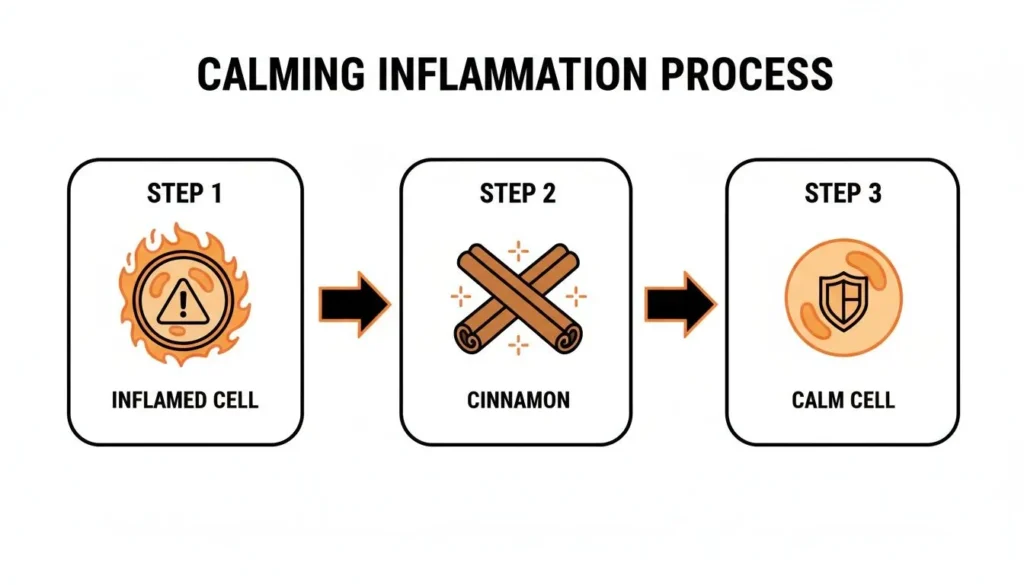
The journey from an “alert” inflamed cell to a “protected” calm one shows just how soothing this spice can be when used correctly.
Choosing Your Cinnamon Carrier Oil
When you’re diluting cinnamon essential oil, the carrier oil you pick can add its own unique benefits. This table will help you choose the best one for your skin type.
| Carrier Oil | Best For Skin Type | Key Benefits |
|---|---|---|
| Jojoba Oil | Oily, Acne-Prone | Closely mimics skin’s natural sebum, non-comedogenic, balancing. |
| Sweet Almond Oil | Normal, Dry, Sensitive | Rich in Vitamin E, very gentle, excellent for soothing irritation. |
| Coconut Oil (Fractionated) | Normal, Dry | Lightweight and non-greasy, provides good hydration without clogging pores. |
| Rosehip Seed Oil | Mature, Scarred, Dry | High in fatty acids and Vitamin A, helps with cell regeneration and scarring. |
Choosing a carrier oil that already works for your skin gives your DIY treatment an extra boost and helps ensure a good experience.
Simple And Safe DIY Recipes
Once you’ve passed your patch test with flying colors, you can start exploring some simple, effective recipes. These two are great starting points that let you enjoy cinnamon’s benefits without taking unnecessary risks.
1. Soothing Cinnamon and Honey Mask
This is a classic for a reason. It’s fantastic for calming down mild breakouts and reducing redness. The honey’s natural anti-inflammatory and hydrating properties perfectly complement cinnamon’s antimicrobial muscle.
- Ingredients: 2 tablespoons of raw honey, ½ teaspoon of Ceylon cinnamon powder.
- Instructions: In a small bowl, mix the honey and cinnamon until you have a smooth, consistent paste. Apply a thin layer to a clean face, making sure to avoid your eyes. Let it sit for 10-15 minutes, then rinse it off with warm water.
- Best for: Oily and acne-prone skin. Honey is incredibly gentle and acts as a buffer for the cinnamon, making this the perfect introductory mask.
2. Calming Jojoba and Cinnamon Spot Treatment
This blend is specifically for zapping individual blemishes, not for all-over application. We use jojoba oil because its structure is almost identical to our skin’s natural oils, meaning it’s less likely to clog pores.
- Ingredients: 1 teaspoon of jojoba oil, 1 drop of cinnamon leaf essential oil (it’s gentler than the bark oil).
- Instructions: Carefully mix the single drop of essential oil into the jojoba oil. Using a clean cotton swab, dab a tiny amount directly onto the pimple.
- Best for: Targeting specific pimples on combination or oily skin. Use it sparingly and only on active breakouts.
Understanding The Potential Risks And Side Effects
While cinnamon sounds like a fantastic natural remedy, its strength is exactly why you need to handle it with care. The very compound that makes it so effective against bacteria and inflammation, cinnamaldehyde, is also a known skin irritant. Using it the wrong way is like cranking up the volume on your speakers—instead of clear music, you just get painful, distorted static.
For some people, especially when cinnamon is applied straight-up or in a high concentration, this can lead to some pretty uncomfortable side effects. It’s not a true allergy for most; it’s more like a contact dermatitis. The skin simply gets overwhelmed by the spice’s sheer power.
Who Should Be Extra Cautious
Certain skin types are just naturally more likely to react. If your skin already tends to be fussy, it’s critical to be extremely careful or even skip topical cinnamon altogether. Think of it like a potent “active” ingredient—it’s just not going to work for everyone’s skin.
You should be especially careful if you have:
- Sensitive Skin: Your skin gets red, itchy, or blotchy at the drop of a hat when you try new products.
- Rosacea: Cinnamon is a known trigger for flushing and can make the redness and inflammation of rosacea much worse.
- Known Spice Allergies: If you already know you react to other spices, there’s a good chance your skin won’t be happy with cinnamon either.
Rushing into a cinnamon treatment without understanding your skin’s limits can turn a good intention into a full-blown irritation. The whole point is to calm your skin down, not send it into defense mode.
Cassia vs. Ceylon: The Safer Choice For Skin
Here’s something you absolutely need to know: not all cinnamon is created equal. The difference is a huge deal when it comes to skincare. The two main types you’ll find are Cassia and Ceylon, and one is a much, much smarter choice for your face.
Cassia cinnamon is what you probably have in your spice rack right now. It’s that dark, reddish-brown, intensely fragrant stuff common in supermarkets. It’s so bold because it’s packed with cinnamaldehyde, which makes it far more likely to cause a reaction.
On the other hand, Ceylon cinnamon, often called “true cinnamon,” is lighter in color with a more delicate, nuanced flavor. Most importantly, it contains way less cinnamaldehyde. This makes it the gentler and safer option by a long shot for anything you put on your skin. When shopping for your DIY recipes, always look for high-quality, organic Ceylon powder or oil to minimize risk and actually enjoy the benefits.
Frequently Asked Questions About Cinnamon For Skin
When you start exploring a new skincare ingredient, you’re bound to have a few questions. Let’s clear up some of the most common ones about using cinnamon so you can feel confident and get the best results.
Can I Apply Cinnamon Directly to a Pimple Overnight?
I would strongly advise against putting pure cinnamon powder or undiluted essential oil straight onto a pimple. This is a common mistake. Cinnamon is incredibly potent, and using it raw like that is a fast track to chemical burns, blisters, or some pretty severe irritation.
The key is to always use a buffer. Mix a tiny pinch of cinnamon powder into a gentle base like raw honey or pure aloe vera gel. If you’re using the essential oil, it must be diluted in a carrier oil (like jojoba or sweet almond) before it ever touches your skin. And please, always do a patch test first.
Which Type of Cinnamon Is Best for Skin: Cassia or Ceylon?
For anything you’re putting on your face, Ceylon cinnamon is the only way to go. It’s often called “true cinnamon” for a reason. Its main advantage is that it contains much lower levels of coumarin, a natural compound that can be a major skin irritant for many people.
Cassia is the more common, cheaper variety you’ll find in most grocery stores. While it has a stronger, spicier kick that’s great for baking, that potency makes it too aggressive for skincare. It carries a much higher risk of causing redness and sensitivity. Stick with high-quality, organic Ceylon cinnamon to get all the benefits with minimal risk.
Choosing Ceylon over Cassia is a critical step for safety. While Cassia is great for baking, its potency makes it too aggressive for direct skin contact in most DIY recipes.
Taking simple steps like this can be a form of self-care. For more ideas on how to look after your wellbeing, explore our mental health and self-care tips.
How Often Can I Use a Cinnamon Face Mask?
Because it’s such a powerful, stimulating ingredient, a cinnamon face mask is definitely not a daily treatment. Think of it as a special boost for your skin. For most people, using a gentle, well-formulated cinnamon mask once a week is plenty.
If your skin is on the sensitive side, you might want to pull that back to once every two weeks. The most important thing is to listen to your skin. If you notice any lingering redness or discomfort after using a mask, reduce how often you use it or take a break altogether.
Discover more from Maxi Journal
Subscribe to get the latest posts sent to your email.