Picking a new hair color is about more than just keeping up with trends—it’s one of the most powerful ways to express yourself. This guide is here to be your personal color consultant, cutting through the noise of the dye aisle to help you land on a shade that feels like you.
Your Guide To The Perfect Hair Color
Welcome. Think of this as your complete roadmap to finding your ideal hair color. This isn’t just about grabbing a box off the shelf or pointing to a picture in a salon book. It’s about really understanding the what and why behind the colors that will make you shine. Forget the guesswork and feeling overwhelmed; we’re laying out a clear, simple path to the look you want.
The world of hair color is bigger and more exciting than ever, and that’s not just a feeling. The global hair color market is seeing explosive growth, expected to jump from roughly USD 26 billion in 2024 to USD 47 billion by 2034. What’s driving this? A massive cultural shift toward personal grooming and self-expression, especially among younger generations. You can dig deeper into these industry trends on IntelMarketResearch.com.
What You Will Learn
We’re going to build your color confidence from the ground up, starting with the basics of color theory so you can figure out your skin’s unique undertones. You’ll learn a few simple, real-world tests to see if your skin is warm, cool, or neutral—the single most important step to picking a flattering shade.
From there, we’ll get into the fun stuff: which colors make your best features pop and what trends are currently taking over the beauty world. We’ll cover it all, from dye techniques to keeping your color fresh, ensuring your new look stays vibrant and healthy.
Think of this process like becoming your own stylist. Instead of just chasing trends, you’ll gain the know-how to pick colors that enhance your natural beauty, match your lifestyle, and show off your personality.
This guide is built to give you practical knowledge you can actually use. Here’s a quick look at what’s coming up:
- Matching Color to Skin Tone: Finally understand the secrets of warm, cool, and neutral undertones.
- The Hottest Trends: A lookbook of the most in-demand colors right now and why they’re so popular.
- Dyes and Techniques: Clear explanations of balayage, highlights, permanent vs. semi-permanent dye, and everything in between.
- DIY vs. Salon: A straightforward guide to help you decide which route is best for your goals and budget.
- Color Aftercare: The must-know tips for protecting your investment and keeping your hair healthy and looking great.
By the end of this, you’ll be ready to turn your hair color journey from a source of stress into a fun adventure. Let’s get started.
Matching Hair Color to Your Skin Tone
Ever wonder why a certain hair color looks absolutely electric on your friend but falls flat on you? The secret isn’t just picking a pretty shade. It’s all about how that color plays with your skin tone.
Think of your skin as the canvas and your hair as the frame. When they work together, the whole picture just pops. The most important piece of this puzzle isn’t your surface skin color (like fair, medium, or deep), but its undertone—that subtle, built-in tint just beneath the surface.
Figuring out your undertone is the first real step to navigating the endless world of hair colors. We basically group them into three camps: cool, warm, and neutral. An easy way to think about it is jewelry. Does silver or gold make your skin light up? That one simple question tells you a lot.
Discovering Your Skin’s Undertone
You don’t need a professional colorist to decode your undertone. A few quick tricks you can do at home will tell you everything you need to know.
The Jewelry Test: This is the classic for a reason. If silver, platinum, or even rose gold jewelry makes your skin look radiant, you likely have cool undertones. If gold and copper feel more like “you,” your undertones are probably warm. And if you can pull off both without a second thought? You’re one of the lucky neutrals.
The Vein Test: Take a peek at the veins on the inside of your wrist in natural sunlight. If they look distinctly blue or purple, you’re cool-toned. If they appear more greenish or olive, you’ve got warm undertones. If you’re squinting and seeing a bit of both, that’s a classic sign of a neutral undertone.
The White T-Shirt Test: Grab a plain white t-shirt or even a piece of printer paper and hold it up to your bare, makeup-free face. Does your skin look a little pinkish or rosy in comparison? That points to cool. If you see more of a yellow, golden, or peachy cast, you’re warm-toned.
Once you’ve got your undertone pinned down, you’ve unlocked the key to finding hair colors that look like they were made just for you.
This visual map shows how all these ideas—skin tone, current trends, and different techniques—all come together around the core concept of hair color as a form of self-expression.
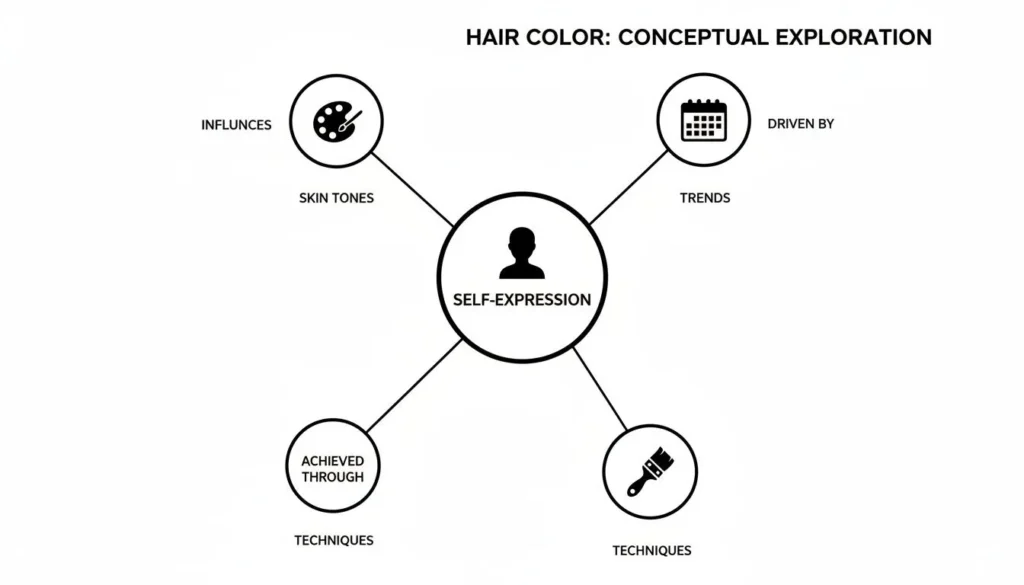
It’s a good reminder that choosing a color is a personal journey with a lot of moving parts, not just a single, isolated decision.
Best Hair Colors for Cool Undertones
If you’re in the cool-toned club, your skin has subtle hints of pink, red, or blue. Your mission is to find a hair color that vibes with that coolness instead of fighting against it. Ashy, icy, and violet-based shades will be your new best friends.
These tones are designed to brighten up your complexion and keep any unwanted redness at bay.
Key Insight: The biggest thing for cool-toned skin is to steer clear of anything overly golden, brassy, or orange. A warm honey blonde can accidentally highlight redness in the skin, while an icy platinum blonde will create a stunning, harmonious look.
Here are some fantastic options to consider:
- Blondes: Platinum, ice blonde, ash blonde, or a cool beige.
- Brunettes: Ash brown, rich espresso, dark chocolate, or any brown without red highlights.
- Reds: Burgundy, deep cherry, or a true red that leans more toward purple than orange.
- Fun Colors: Deep blue, lavender, pastel pink, or a metallic silver.
Best Hair Colors for Warm Undertones
For those with warm undertones, your skin has a natural golden, peachy, or even slightly yellow glow. Your goal is to find colors that amplify that gorgeous warmth. Anything with a golden, copper, or rich red base will make your skin look absolutely radiant.
You’re looking for those rich, earthy tones that seem to glow from within.
Give these beautiful choices a look:
- Blondes: Golden blonde, rich honey, caramel, or a classic strawberry blonde.
- Brunettes: Golden brown, mahogany, warm chestnut, or a buttery toffee.
- Reds: Bright copper, warm auburn, and fiery ginger shades.
- Fun Colors: Peach, coral, or warm magenta.
And if you discovered you have neutral undertones? Congratulations! You’ve won the hair color lottery. You can pull off almost any shade from both the cool and warm palettes, giving you total freedom to experiment.
The Hottest Hair Color Trends For 2026
As we look toward 2026, hair color is all about embracing two distinct vibes. On one side, we’re seeing a big comeback of softer, nature-inspired shades that give you that effortlessly chic, lived-in look. On the other, bold and expressive colors are still going strong for anyone wanting to make a statement.
The demand for fresh hair color isn’t slowing down. The global industry hit a value of USD 28.09 billion in 2025 and is on track to reach USD 47.38 billion by 2034. A lot of that growth is thanks to younger people wanting to experiment with new and temporary shades as a form of self-expression.
This year’s biggest trends aren’t just about picking a shade from a chart. It’s more about capturing a feeling—finding a color that feels genuinely you and complements your personal style.
Golden Hour Brunette
Picture that perfect, warm glow just before sunset—that’s the essence of Golden Hour Brunette. This look takes a classic rich brown base and weaves in super-fine, warm-toned highlights. It’s a beautiful way to add dimension and movement to your hair without committing to a high-maintenance routine.
While it looks fantastic on a wide variety of skin tones, this trend is especially flattering for those with warm or neutral undertones.
- How It’s Done: Your stylist will probably use a balayage or foilyage technique, hand-painting delicate golden, caramel, or honey accents from the mid-lengths to the ends.
- Maintenance Level: Low to medium. The highlights are so well-blended that they grow out seamlessly, letting you go longer between salon appointments. A quick gloss every 6-8 weeks is all you need to keep those golden tones fresh.
Digital Lavender
On the bolder end of the color spectrum, we have Digital Lavender. Don’t think pastel purple—this is a cooler, more subdued shade with a hint of silver that gives it an almost futuristic feel. It’s an ethereal, modern color that definitely gets you noticed without being too loud.
This cool-toned shade looks incredible on people with cool or neutral skin undertones, as it really complements a pink or rosy complexion.
Stylist Tip: If you have dark hair, getting to Digital Lavender will require some serious pre-lightening, so it’s a real commitment. To keep that unique silvery-purple tone from turning brassy, you’ll need to be diligent with purple-toned shampoos and regular deep conditioning treatments.
Spiced Copper Red
Red hair is definitely having its moment, and Spiced Copper is the star of the show. This shade is a rich, vibrant mix of copper, cinnamon, and warm amber. It’s fiery but still feels earthy and natural, bringing an amazing warmth and brightness to your whole face.
Spiced Copper is a dream for anyone with warm undertones because it makes the golden or peachy tones in your skin pop. It also creates a stunning contrast against fair, neutral skin tones. Seeing how the latest fashion trends for women are evolving can give you great ideas for styling this head-turning color. Just know it takes a bit more upkeep to stay vibrant, but the result is absolutely worth it.
2026 Hair Color Trend Breakdown
To help you decide which trend might be right for you, we’ve broken down the top looks by how they match different skin undertones and how much work they are to maintain.
| Trend Name | Best for Undertone (Warm/Cool/Neutral) | Maintenance Level (Low/Medium/High) | Description |
|---|---|---|---|
| Golden Hour Brunette | Warm, Neutral | Low | Rich brown base with subtle, hand-painted golden highlights for a sun-kissed look. |
| Digital Lavender | Cool, Neutral | High | A muted, silvery-purple shade with a cool, futuristic feel. Requires pre-lightening on dark hair. |
| Spiced Copper Red | Warm, Neutral | Medium | A vibrant blend of copper, cinnamon, and amber tones that brings warmth and brightness. |
Ultimately, choosing a new color is a personal journey. Whether you’re drawn to the soft glow of a brunette or the modern edge of a lavender, the goal is to find a shade that makes you feel confident and authentic.
Understanding Hair Dyes and Application Techniques
Walking into a salon can feel like you’re trying to decode a secret language. Stylists throw around words like semi-permanent, balayage, and all-over color, but what does that actually mean for your hair, your wallet, and your daily routine?
Getting a handle on these basics is the secret to having a productive chat with your stylist and walking out with the exact color you were dreaming of.
Your first big decision is picking the right kind of dye. This isn’t just about the color itself; it’s about how long that color will stick around and how it will treat your hair in the process.
The Different Types of Hair Dye
Think of hair dyes like different types of paint for an artist. Some are like a light watercolor wash that sits on the surface, while others are more like a rich oil paint, becoming a permanent part of the canvas. Each one comes with a different level of commitment.
Temporary Color: This is your zero-commitment, weekend-fun option. You’ll find it in sprays, chalks, and gels that just coat the outside of your hair. It all comes out in the next wash, making it perfect for a festival or just to see how you feel in a wild shade for a day.
Semi-Permanent Dye: A small step up in staying power, semi-permanent color deposits pigment on the hair’s outer layer (the cuticle) without harsh developers like ammonia. It’s more of a stain that will last for about 4-12 washes. It’s fantastic for adding a pop of color or refreshing your current shade, but it won’t lighten your hair or do much for stubborn grays.
Permanent Dye: This is the industry workhorse and the go-to for making a lasting change or covering grays completely. Permanent color uses a developer to gently open up the hair cuticle and place the color deep inside the hair shaft, changing its structure for good. The color doesn’t wash out—it only grows out from the root.
The demand for these long-lasting colors is massive. Projections show the global hair color market is on track to hit around USD 29-31 billion by 2026. And while at-home kits are everywhere, professional salons still command a 63% market share of the industry. You can dig deeper into these market dynamics on Technavio.com.
Popular Hair Color Application Techniques
Once you know the type of dye you want, it’s time to think about how it’s going to be applied. The technique is just as crucial as the shade itself—it determines the final look, from subtle dimension to a dramatic statement.
Key Takeaway: The application method is directly tied to your maintenance plan. A soft, blended technique like balayage lets you go longer between appointments, while something with a sharp root line, like traditional highlights, needs more frequent touch-ups.
Here are the most common services you’ll see on a salon menu:
All-Over Color
This one is pretty straightforward. Your stylist applies a single shade of permanent or semi-permanent dye from your roots all the way to the ends. It creates a solid, uniform look and is the best choice for a total color change or for getting 100% gray coverage.
Traditional Highlights
For this classic look, your stylist will use foil packets to isolate and lighten specific strands of hair from the root down to the tip. This creates a defined, striped pattern of brightness that contrasts with your base color. Foils allow the lightener to work more powerfully, so this is a great route for anyone wanting distinct, noticeably lighter pieces.
Balayage
“Balayage” is a French word that means “to sweep.” That’s a perfect description of what your colorist does. They hand-paint lightener onto the surface of your hair, creating a soft, sun-kissed look that’s darker at the roots and gets brighter toward the ends. The result is incredibly natural with a super low-maintenance grow-out because there are no harsh lines.
Ombré
Ombré creates a much more dramatic, two-toned style. Your hair will transition from a dark shade at the roots to a significantly lighter one at the ends. While balayage has soft, vertically-painted pieces, ombré has a more obvious horizontal shift from dark to light.
DIY Hair Color vs. a Professional Stylist
So, you’re ready for a change. The big question is: should you grab a box of dye from the store or book an appointment with your stylist? There’s no single right answer. It really comes down to your budget, how much time you have, and—most importantly—how complex your dream color is.
I like to think of it this way: doing your own color is like painting a wall in your house a new, solid color. Seeing a professional is like hiring an artist to paint a custom mural. One is perfect for a simple, straightforward job, but you absolutely need the artist for anything intricate or corrective.
When DIY Box Dye Is a Great Choice
At-home hair color has improved a lot over the years. For certain simple goals, it’s a fantastic and wallet-friendly way to go. You can feel pretty confident grabbing a box if your plans look something like this.
A box dye is your best friend for:
- Subtle Shifts: Going just one or two shades darker than your natural color is the perfect at-home project.
- Refreshing Your Current Shade: Has your all-over color started to look a little dull? A box dye in a similar tone can bring it right back to life.
- Root Touch-Ups: Covering grays or new growth between salon visits is exactly what most at-home kits are made for.
But you have to know the single most important rule of hair color: color cannot lift color. This means you can’t use a lighter box dye on hair that’s already been colored and expect it to get lighter. You’ll just end up with “hot roots”—where your new, natural hair at the scalp lightens up, but the rest of your hair stays the same dark shade.
When to See a Professional Stylist
As convenient as DIY color is, some jobs just aren’t meant for the bathroom sink. These require the skill, professional-grade products, and trained eye of a stylist. They do way more than just slap on some color; they’re chemists, mixing custom formulas and using advanced techniques to get the look you want without wrecking your hair.
Booking a salon appointment is a must for these situations:
- Major Color Changes: Going from dark to light (think brunette to blonde) isn’t a one-step process. It takes controlled bleaching, often in multiple sessions, to lift the color safely.
- Color Correction: If your last color job went sideways, a stylist has the know-how to neutralize weird tones (like green or orange) and get you back to a color you actually like.
- Complex Techniques: Those gorgeous, blended looks like balayage, ombré, or intricate highlights need a professional’s hand-painting skills to look seamless and natural.
- First-Time Bleaching: Trying to bleach your hair for the first time by yourself is a huge risk. A pro knows exactly how to lighten your hair to the right level without causing major breakage.
Expert Insight: If you’ve been coloring your hair at home for years and it feels like it just won’t grow past your shoulders, that might be a sign of cumulative damage. A stylist can work with you to create a healthier color plan that helps you finally reach your length goals.
In the end, it’s your call. For a quick and simple refresh, a DIY kit can work wonders. But for any big transformation or specialized look, investing in a professional is the smartest way to protect your hair and guarantee you walk out loving your new color.
Keeping Your Hair Color Vibrant and Healthy
So you’ve finally got the hair color of your dreams. Awesome. Now comes the hard part: keeping it that way. Protecting your new color is all about smart aftercare, but with the right habits, you can keep those colors for hair looking salon-fresh while making sure your strands stay healthy.
Think of each hair strand like a tiny pinecone. When you color or heat-style your hair, the outer layer—the cuticle—lifts up. This lets the little color molecules wash right out, which is exactly why color fades. The name of the game is keeping that cuticle sealed shut.
The Foundation of Color Care
Your wash routine is your first and most important line of defense. Washing your hair too often is a fast track to dull, dry color because it strips away the natural oils that protect it. Try to go three or four days between washes to hang onto your shade and your hair’s natural moisture.
When you do lather up, the water temperature makes a huge difference.
Key Insight: Hot water blasts open the hair’s cuticle, basically rolling out the red carpet for color molecules to escape. By washing and rinsing with cool or lukewarm water, you’re helping to slam that door shut. This locks in color and moisture, giving you shinier, more vibrant hair.
Another thing to get right is your shampoo. Always, always go for formulas labeled sulfate-free. Sulfates are aggressive detergents that act like a scrub brush on your hair, stripping out color and oils with every single wash.
Your Weekly Hair Care Ritual
Keeping your color looking great between appointments doesn’t have to be complicated. A simple weekly routine can make a world of difference.
Deep Condition Weekly: Color-treated hair is naturally more porous and thirsty. A weekly deep conditioning mask is your best friend for putting moisture back in, making hair more elastic, and smoothing down that cuticle. Focus on the mid-lengths and ends to avoid getting greasy roots.
Use Heat Protectant Always: This is non-negotiable. Before a blow dryer or flat iron even gets close to your head, spritz on a heat protectant. It creates a shield that stops heat damage from fading your color and making your hair brittle.
Guard Against Environmental Faders: The sun and the pool are not your color’s friends. UV rays will bleach your hair just like they do a t-shirt left outside, and chlorine will strip the color right out. Wear a hat in the sun or use a UV-blocking spray. After a swim, rinse your hair with clean water immediately. You can even check out other ways of cleaning hair without shampoo in our guide to cut down on product buildup and stripping.
Making these small tweaks will go a long way in extending the life of your hair color and keeping your hair healthy and strong.
Common Questions About Choosing Hair Colors
It’s totally normal to have a million questions swirling around before you commit to a new hair color. Let’s tackle some of the most common ones we hear, so you can walk into your next appointment feeling confident and excited.
How Often Can I Color My Hair?
The sweet spot for a full head of permanent color is waiting four to six weeks between appointments. This gives your hair and scalp a much-needed break to recover, which is key to preventing over-processing and breakage.
Of course, this isn’t a one-size-fits-all rule. If you have a more low-maintenance style like balayage, you can easily stretch that out to 8-12 weeks. Gentler options like a semi-permanent dye or a gloss can be used more frequently since they don’t cause the same level of stress on your hair. If you’re worried about keeping your hair healthy through color changes, you can learn more about how certain therapies can help in our guide on a new treatment for hair growth.
Is Going from Dark to Light Possible in One Visit?
Tempting as it is, going from a deep brunette to a light, bright blonde in a single sitting is almost always a recipe for disaster. This kind of dramatic transformation requires some serious bleaching that strips every last bit of pigment from your hair. The result? You’re looking at major breakage and that dreaded, gummy texture.
The best (and safest) way to go light is to do it gradually over several appointments. This gives your stylist the chance to check in on your hair’s health at every stage, ensuring you get a gorgeous, healthy blonde in the end. Patience really is everything here.
What Is the Best Way to Cover Gray Hairs?
If you want foolproof, long-lasting coverage, permanent hair color is your best friend. For at-home coloring, always grab a box that specifically promises “100% gray coverage.” Gray hair has a uniquely coarse, wiry texture that can be pretty stubborn about taking on dye, so you need a formula designed for the job.
When you’re applying it, don’t be shy! Make sure you completely saturate the roots where the grays are most visible. Leave the dye on for the full processing time recommended in the instructions to give it time to work its magic. For anyone with a lot of grays, a professional colorist can create a custom-mixed formula that will give you a flawless, natural-looking result.
Will My New Hair Color Clash with My Eyebrows?
Think of your eyebrows and hair color as “sisters, not twins.” It’s a classic rule for a reason! For the most natural look, your brows should be about one or two shades darker than your new hair color. The only exception is if you make a huge change, like going from blonde to dark brown—in that case, keeping your brows a shade or two lighter can soften the whole look.
You can always have your brows professionally tinted to match, but it’s just as easy to tweak them yourself. A good brow pencil, powder, or tinted gel can make all the difference and gives you total control day-to-day.
Discover more from Maxi Journal
Subscribe to get the latest posts sent to your email.