Here’s the thing about traveling to Europe: the real secret to a better trip isn’t what you bring, but what you have the courage to leave behind. Learning to pack light is more than just a convenience—it’s a completely different mindset. It means building a versatile capsule wardrobe, using smart techniques like packing cubes, and committing to a carry-on-only approach.
This isn’t just about avoiding baggage fees. It’s about being able to gracefully navigate Europe’s charming but often challenging infrastructure, from ancient cobblestone streets to the impossibly narrow aisles on regional trains.
Why Packing Light for Europe Is a Game Changer
Picture yourself gliding through a chaotic train station in Rome, weaving through the crowds with ease while others are stuck wrestling with massive, unwieldy suitcases. That’s the freedom we’re talking about. Learning how to pack light for Europe goes beyond a few simple tips; it’s a strategic shift that unlocks a more agile, spontaneous, and genuinely stress-free travel experience.
You’ll spend far less time wrangling your stuff and way more time actually soaking in the culture. It fundamentally changes how you interact with every place you visit.
- Mobility and Freedom: With a single carry-on, you can say “yes” to anything. Hop on a last-minute train to a new city, navigate a packed Parisian metro, or climb five flights of stairs to a historic walk-up apartment without even breaking a sweat.
- Time and Money Savings: You will never, ever wait at a baggage carousel again. More importantly, you’ll never pay those infuriating checked bag fees. This is a huge deal on Europe’s budget airlines, where every single kilogram can cost you.
- Enhanced Security: Keeping your bag with you at all times is the simplest way to reduce the risk of lost or stolen luggage. It’s a huge piece of mind, something we talk about more in our guide to solo travel safety tips.
Navigating Europe’s Crowds with Ease
The magic of packing light really clicks during peak season. In 2023 alone, EU residents took a whopping 1.193 billion tourism trips. And get this: a staggering 23% of those trips were crammed into just July and August. That kind of volume transforms popular cities into a sea of people where being nimble is a superpower.
Trying to drag a heavy suitcase through the summer crowds in Florence isn’t just a hassle; it’s a soul-crushing battle you’re guaranteed to lose.
The real luxury of travel isn’t a five-star hotel—it’s the unburdened freedom to say “yes” to any adventure. Packing light is your ticket to that spontaneity.
At the end of the day, packing light isn’t about depriving yourself. It’s about being intentional. It forces you to curate a small collection of items you truly love and need, which leads to a more mindful and liberating journey. This guide will give you the exact strategies to feel stylish and prepared, whether you’re in Paris for a week or backpacking across the continent for a month.
Choosing the Right Bag for European Travel
Let’s talk about the single most important decision you’ll make when packing for Europe: your luggage. This isn’t just about picking a bag; it’s about choosing your travel companion. It’s the foundation of your entire light-packing strategy, dictating not just what you bring, but how you move through a new city.
The right bag makes all the difference. It’s what lets you glide over ancient cobblestone streets, navigate a packed train in Rome, or haul your gear up five flights of narrow stairs to that charming Parisian Airbnb without breaking a sweat.
The big debate usually boils down to two options: a travel backpack or a rolling carry-on suitcase. A sleek hard-shell spinner is a dream in a modern airport terminal, but those same wheels can turn into a nightmare on the uneven, historic pavements you’ll find all over Europe. On the other hand, a backpack keeps your hands free, making it incredibly easy to manage public transport tickets, grab a coffee, or check Google Maps on the go.
This simple diagram breaks down the core choice every traveler faces.
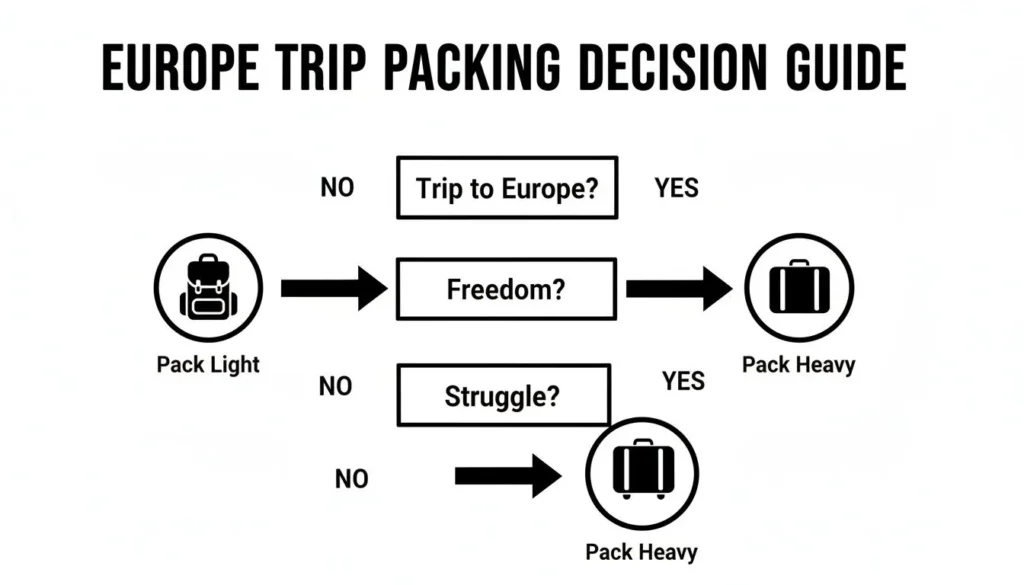
Ultimately, it highlights the trade-off between the perceived convenience of bringing more stuff and the actual freedom that comes from carrying less.
What to Look For in a Carry-On Bag
For most trips, a travel backpack between 35L and 40L is the sweet spot. It’s big enough to hold everything you need for a week or even longer, yet it’s compact enough to meet the notoriously strict carry-on size limits of budget airlines like Ryanair and EasyJet.
My number one tip? Look for a clamshell design. These bags open flat like a suitcase, giving you full access to everything inside without having to dig through from the top.
On a recent trip to Paris, my clamshell backpack was a lifesaver. I could lay it open on the bed in my tiny Airbnb, find exactly what I needed without unpacking everything, and be out the door in minutes.
A quality harness system is absolutely non-negotiable. Don’t even consider a bag without it. Padded shoulder straps and, most importantly, a supportive hip belt are essential for transferring the bag’s weight from your shoulders to your hips. You’ll thank yourself for this after carrying it for more than ten minutes.
The Case for a Suitcase
If you’re set on wheels, look for a lightweight model with durable, high-quality spinners.
- Four-wheeled spinners offer amazing maneuverability in tight airport queues and train aisles.
- Two-wheeled models often have larger, more rugged wheels that can handle rough terrain a bit better.
No matter which you choose, always check the total exterior dimensions—including the wheels and handles—to make sure it fits the airline’s sizer box.
Whether you go for a pack or a roller, prioritize durable, lightweight materials. Every ounce the bag itself weighs is an ounce you can’t use for your own gear. Choose a bag that empowers your journey, not one that holds you back.
I’ve tested dozens of bags over the years, from backpacks to rollers. To make it easier, here’s a quick breakdown of the most common options and where they shine (or don’t) on a typical European trip.
Carry-On Luggage Comparison For Europe Travel
| Bag Type | Best For | Pros | Cons |
|---|---|---|---|
| Travel Backpack | Multi-city trips, public transport, and accommodations with stairs. | Hands-free mobility; navigates cobblestones and stairs easily; forces you to pack light. | Can be heavy on your back; less protection for fragile items; can look out of place in upscale settings. |
| Spinner Suitcase | Single-destination trips, luxury travel, or when staying in modern hotels with elevators. | Effortless to roll in airports/stations; great organization; hard-shell offers protection. | Wheels are a liability on uneven surfaces; one hand is always occupied; cumbersome on public transit. |
| Wheeled Backpack | Travelers who want the flexibility of both a roller and a backpack. | Versatile for mixed terrain; can be carried or rolled. | The wheel/handle system adds significant weight and takes up packing space; often a compromise on both fronts. |
| Duffel Bag | Road trips or travelers who prefer unstructured packing. | Lightweight and flexible; can be squeezed into tight spaces. | Uncomfortable to carry for long distances; lacks internal organization; offers little protection. |
Ultimately, the best bag is the one that fits your specific travel style. If you’re hopping between cities on trains and staying in old-world walk-ups, a backpack is probably your best friend. If you’re flying into one city and staying at a nice hotel, a quality spinner will do just fine.
Crafting Your Perfect European Capsule Wardrobe
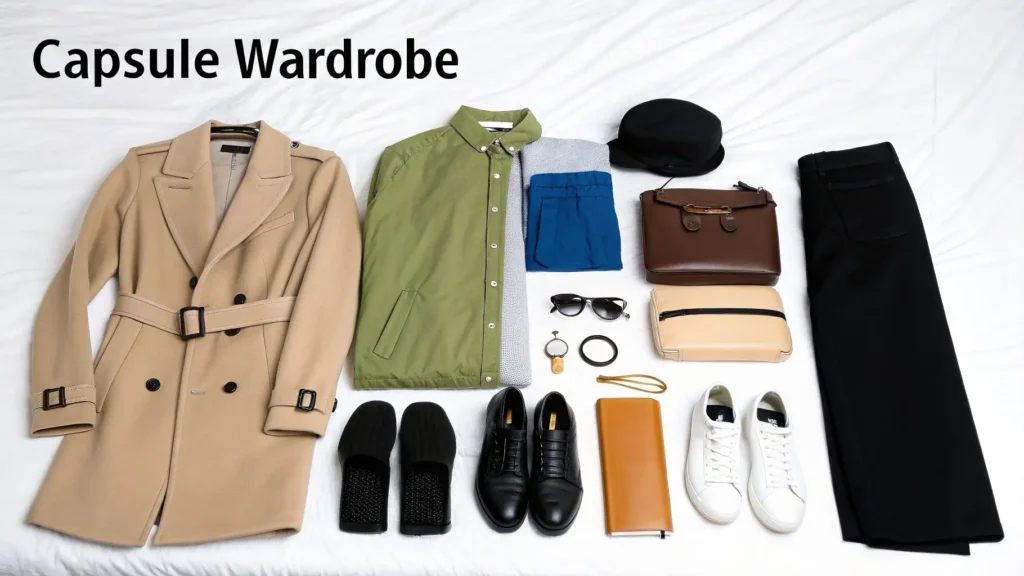
This is where the magic happens. Forget overstuffed suitcases and that morning panic of having “nothing to wear.” We’re going to build you a capsule wardrobe—a small, curated collection of clothes where everything works with everything else.
This isn’t about restriction; it’s about freedom. It’s a smart system that lets you create dozens of stylish, unique outfits from just a handful of pieces. The goal is to walk out of your hotel in Florence ready for the Uffizi Gallery, then head straight to a trattoria for dinner without an ounce of wardrobe anxiety. That’s the power of packing with intention.
Building Your Color Palette
The secret to making a capsule wardrobe click is a simple, strategic color palette. Get this right, and every top will effortlessly pair with every bottom, making you look put-together with zero effort.
Here’s the simple formula I’ve sworn by for years:
- Pick one base color. This is the anchor for your entire travel wardrobe. Think dark, versatile neutrals you love to wear. Black, navy, or charcoal are foolproof choices.
- Add two coordinating neutrals. These should play nicely with your base color and each other. Good options include beige, cream, olive green, or grey.
- Choose one or two accent colors. This is your chance to inject some personality! A pop of burnt orange, deep red, or dusty blue in a scarf, shirt, or accessory brings your outfits to life.
Sticking to this structure is what makes the whole system work. It guarantees that a small collection of just 10-12 core clothing items can easily create 25+ different outfits. Seriously.
Selecting Powerhouse Pieces
Once your colors are locked in, it’s time to choose the actual items. You’re looking for “powerhouse” pieces—high-quality, versatile garments that can handle different situations and climates. Every item needs to earn its spot in your bag by being able to be dressed up or down.
A well-chosen capsule wardrobe frees up your mental energy. Instead of worrying about your luggage, you can focus on the experience in front of you—whether that’s navigating the London Tube or enjoying a sunset in Santorini.
Here are the workhorses that form the core of my travel wardrobe:
- Tops: I can’t recommend merino wool enough. It’s the ultimate travel fabric—it regulates your temperature, wicks away moisture, and miraculously resists odor. You can genuinely wear a merino tee for a few days before it even thinks about needing a wash. I usually pack a mix of short-sleeve, long-sleeve, and maybe one nicer blouse or a classic button-down.
- Bottoms: Start with one pair of perfectly fitting, dark-wash jeans or a high-quality pair of travel pants. Then add a second versatile option, like tailored trousers or a simple skirt that works for both daytime exploring and a nicer dinner out.
- Outerwear: This is non-negotiable. For most seasons, a classic trench coat or a stylish, packable rain jacket is perfect. If you’re heading into the cold, a thin, compressible down jacket is a game-changer—it provides incredible warmth for its weight and squishes down to nothing in your bag.
- The Multi-Tasking Dress or Jumpsuit: A simple, solid-colored dress or jumpsuit in a wrinkle-resistant fabric is a travel secret weapon. I’ll wear mine with sneakers and a crossbody bag for a day of sightseeing, then swap in some flats and a scarf for the evening.
By focusing on these multi-functional staples, you eliminate all those “just in case” items that take up so much space. Every piece has a purpose, ensuring you’re ready for whatever your European adventure has in store.
Mastering Smart Packing and Space Saving Hacks
Alright, you’ve picked out your perfect capsule wardrobe. Now for the fun part: actually making it all fit. This isn’t about brute force; it’s a strategic game of suitcase Tetris where every item has a specific home. The techniques you use here will make the difference between a breezy carry-on and a checked-bag nightmare.
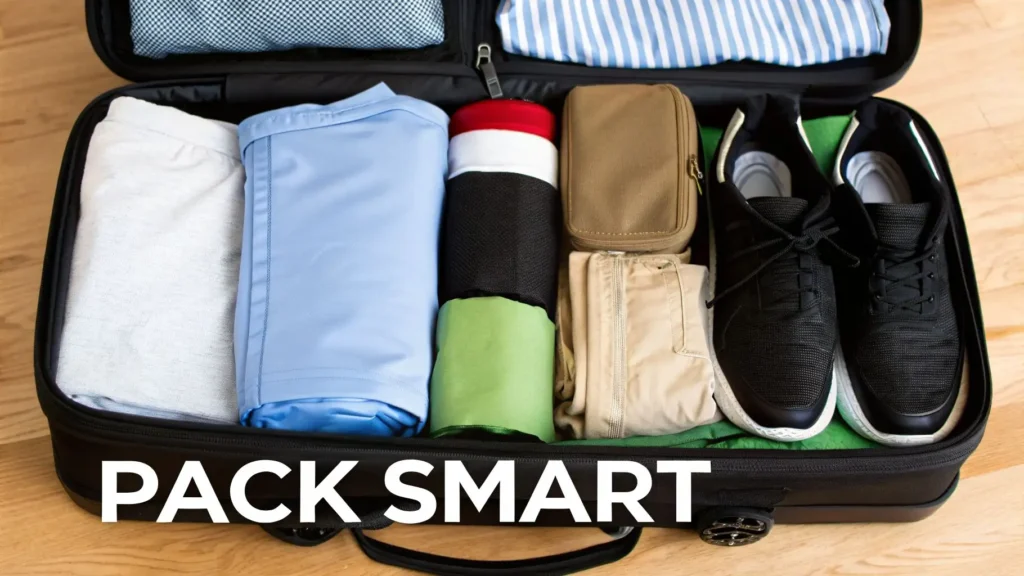
First thing’s first: stop folding everything. While a crisp fold is great for a structured blazer or a linen shirt you want to keep pristine, rolling is your best friend for almost everything else. T-shirts, sweaters, and even jeans can be rolled into tight little logs. This method seriously cuts down on hard creases and lets you pack items snugly together, leaving no empty gaps.
The Power of Packing Cubes
If there’s one piece of gear that completely changed my packing game, it’s packing cubes. These simple zippered pouches are the key to unlocking an organized suitcase. They transform the usual jumble of clothes into a neat, compartmentalized system. No more chaos.
Over the years, I’ve perfected my cube strategy:
- One large cube: This is for the heavy hitters—jeans, sweaters, maybe a light jacket.
- One medium cube: Home to all my tops, from t-shirts to blouses.
- One small cube: Dedicated entirely to socks and underwear.
This system is a lifesaver. When you get to your tiny hotel room in Paris, you don’t have to explode your suitcase just to find a clean pair of socks. You just grab the small cube. It’s like having a portable dresser. If you’re a visual learner, this packing light video is a great demonstration of how to put cubes to work.
Packing cubes do more than just organize; they also compress your clothes, magically creating more space. If you’re serious about one-bag travel, this is the single most important tool you can buy.
Essential Space-Saving Hacks
Beyond the big two—rolling and cubes—a few extra tricks will help you squeeze out every last inch of space. These are the little moves that seasoned pros rely on to make it all work.
My favorite hack? Use your shoes as bonus storage. Don’t let that space go to waste! I always stuff them with socks, charging cables, or any other small, soft items. It’s a double win: you save a surprising amount of room and your shoes keep their shape.
If you’re traveling in a colder season and need a bulky puffer jacket, a compression bag is an absolute game-changer. You simply stuff the jacket inside and roll the bag to squeeze all the air out, shrinking it down to a tiny, manageable package. A word of caution: just because you can fit more doesn’t mean you should. Always keep an eye on your airline’s weight limits, as budget carriers are notoriously strict.
Minimizing Toiletries and Tech Clutter
While we obsess over which pair of shoes to bring, it’s often the little things that weigh us down the most. Toiletries and tech are the silent saboteurs of any light-packing mission. Liquids are heavy, tangled cables are a nightmare, and every extra gadget adds up faster than you’d think.
The strategy here is ruthless consolidation. Every single item you pack needs to earn its spot, either by being absolutely essential or by pulling double (or triple) duty. This is less about packing and more about a mental shift. You’re not trying to bring a miniature version of your bathroom cabinet; you’re just packing what you need to feel clean, comfortable, and presentable.
Embrace Solid Toiletries
If I could give just one piece of advice, this would be it: switch to solid toiletries. This was an absolute game-changer for me. Suddenly, the 100ml liquid limit becomes a non-issue. No more messy spills coating the inside of your bag. No more running out of that tiny, overpriced travel-sized bottle a week into a month-long trip.
Solid versions of almost everything are out there now, and they work brilliantly.
- Shampoo and Conditioner Bars: A single bar can easily last for months of travel, takes up almost no space, and completely eliminates the risk of a gooey explosion in your luggage.
- Solid Perfume or Cologne: These usually come in small, durable tins. They’re super easy to apply, last forever, and won’t add any bulk or liquid weight.
- Soap Bars: The original space-saver. Find a good one that works for both your face and body, and you’ve just replaced two bottles with one small bar.
For any liquids you absolutely can’t part with—maybe a specific face cream or sunscreen—decant them into small, reusable travel containers. Never, ever bring the full-sized product. And for common items like toothpaste? Just buy it when you get there. Every pharmacy in Europe will have it.
Your goal isn’t to replicate your home bathroom in a foreign country. It’s to build a minimalist, efficient kit that covers the absolute essentials and nothing more.
Consolidate Your Tech Gear
The same logic applies to your electronics. It’s time to streamline. Modern tech is your best friend here, with single devices doing the work that used to require five separate gadgets. Your smartphone is now your camera, your map, your translator, your guidebook, and your entertainment.
Unless you’re a professional photographer, leave the bulky DSLR at home. Ditch the separate e-reader and just download books onto your phone or a small tablet. When it comes to power, one high-quality universal travel adapter with multiple USB ports is all you need. This single plug can charge your phone, power bank, and headphones all at once, replacing that tangled rat’s nest of individual chargers.
Speaking of power, a slim power bank is non-negotiable. It’s a lifesaver on long days of sightseeing when you’re relying on your phone for everything. And for those long flights or train rides, a great pair of noise-canceling headphones makes all the difference. We’ve rounded up some fantastic choices in our guide to the best wireless headphones of 2026.
By choosing multi-functional gear, you cut down dramatically on both weight and clutter. This keeps your bag light and your mind focused on the adventure, not on your stuff.
Actionable Packing Lists and Final Pro Tips
Alright, let’s put all this theory into practice. To show you how a lean, mean capsule wardrobe actually looks inside a bag, I’ve put together a couple of real-world packing lists. Think of these as a blueprint you can tweak for your own European adventures.
Both of these lists are designed to fit neatly into a 40L backpack or a standard carry-on suitcase. No checked bags needed.
10-Day Summer Trip in Spain
This one’s all about staying cool and comfortable in the Spanish heat, whether you’re wandering through Barcelona’s Gothic Quarter or soaking up the sun on the Andalusian coast. The key is lightweight, breathable fabrics.
- Tops (5): Grab 2 linen t-shirts, 1 neutral tank top, 1 slightly nicer short-sleeve blouse for evenings, and 1 long-sleeve sun shirt for when you need extra coverage.
- Bottoms (3): A pair of lightweight travel trousers, 1 midi skirt, and 1 pair of tailored shorts will cover all your bases.
- Dress (1): A versatile, solid-color sundress. Find one that can be dressed down for a market visit or dressed up for dinner.
- Outerwear (1): A light denim jacket or an oversized linen shirt is perfect for those surprisingly cool evenings.
- Shoes (3): You only need three: comfortable walking sandals for daytime, a pair of stylish white sneakers, and some espadrilles or flats for a smarter look.
- Swimwear (1): Your favorite swimsuit, of course.
This simple combination gives you dozens of potential outfits. Your bag will be light enough to navigate crowded train stations and cobblestone streets without breaking a sweat.
Two-Week Autumn Trip in Germany and Austria
Fall in Central Europe is all about one thing: layering. One minute the sun is out in Munich, the next a chill is rolling into Vienna. This list is built for warmth and versatility.
- Tops (5): Start with 2 long-sleeve merino wool base layers. Add 2 neutral sweaters (I like one crewneck and one cardigan) and 1 stylish button-down shirt.
- Bottoms (2): That’s it. A good pair of dark-wash jeans and 1 pair of black travel pants are all you need.
- Outerwear (2): A classic trench coat for style and rain protection, plus a packable, thin down jacket to wear underneath when the temperature really drops.
- Shoes (3): A pair of waterproof leather boots is non-negotiable. Add some comfortable fashion sneakers for big walking days and a pair of chic flats or loafers for evenings.
- Accessories: Don’t forget a warm scarf, a beanie, and a pair of gloves. They take up almost no space but make a huge difference.
With this setup, you’re ready for whatever the fickle autumn weather throws at you, all without a monstrously heavy bag.
Final Pro Tips for Smarter Packing
Before you wrestle that zipper closed, here are a few last-minute tricks I’ve picked up over years of travel. These small habits make a world of difference on the road.
Always leave at least 10% of your bag empty. You need this breathing room. It makes repacking every few days way less of a Tetris-like struggle, and more importantly, it leaves space for that bottle of wine or unique souvenir you’ll inevitably want to bring home.
Wear your heaviest, bulkiest items on the plane. Seriously. Those boots and that jacket should be on your body, not in your luggage. This one move can free up several kilograms of weight, which is a lifesaver on budget European airlines with notoriously strict carry-on limits.
Finally, for any trip longer than a week, just plan on doing laundry. My go-to is the “half-and-half” rule: I pack enough clean underwear and socks for half the trip, plus one or two extras. It’s a simple forcing function that makes me do a quick sink wash or find a laundromat midway through. It’s a tiny inconvenience for a massively lighter bag. For more on this, you might be interested in our guide on what to pack for long trips.
At maxijournal.com, we believe smarter travel starts with smarter packing. Explore our articles for more expert tips that help you travel better.
https://maxijournal.com
Discover more from Maxi Journal
Subscribe to get the latest posts sent to your email.