The best way to stay healthy while you’re traveling actually starts long before you ever zip up your suitcase. A little proactive planning is what separates a dream vacation from a trip spent sick in a hotel room. This is your foundation—it involves seeing a doctor, getting the right shots, securing solid travel insurance, and packing a medical kit that’s actually useful for where you’re going.
Building Your Pre-Travel Health Strategy
Let’s be honest, trip planning is exciting. It’s easy to get lost in booking flights and finding the perfect hotel. But taking a bit of time for health prep is what truly lets you relax and enjoy the ride. I’m not just talking about tossing a few bandages in your carry-on; I mean creating a real, personalized health plan.
This prep work needs to happen well in advance. You can’t just get a vaccine the day before you fly and assume you’re protected. Many of these steps require a little bit of a runway.
Consult a Travel Health Professional
Your first move should be to book an appointment with a travel clinic or your doctor, ideally four to eight weeks before your trip. That window is more important than most people think.
- Vaccine Timelines: Some vaccines need a series of doses spaced weeks apart to be effective. Others just need a couple of weeks to kick in and give you full immunity.
- Destination-Specific Risks: A travel health expert can give you the rundown on risks specific to your itinerary, like malaria, dengue, or Zika.
- Prescription Prep: This is the perfect time to get refills on your regular meds and ask for prescriptions for travel-specific issues, like a just-in-case antibiotic for traveler’s diarrhea.
Getting the right shots is a game-changer. The market for travelers’ vaccinations hit USD 7.8 billion in 2023 and is expected to nearly double, which shows you how critical this has become. For some countries, proof of vaccination against diseases like yellow fever is mandatory for entry. It’s a huge reason why seasoned travelers often dodge the bugs that can sideline up to 30% of tourists every year.
Secure the Right Travel Insurance
Not all travel insurance is created equal. That cheap plan might look tempting, but it could leave you facing enormous bills if something actually goes wrong. You need to look past the price tag and read the fine print. Make sure your policy covers emergency medical expenses, medical evacuation, and trip interruption.
Pro Tip: Always, always declare pre-existing medical conditions to your insurer. Hiding something can void your entire policy right when you need it most. Honesty here ensures you’re actually covered.
For a much deeper look at what to look for, our guide on the best travel insurance for international trips breaks down how to pick the right policy.
Pack a Smart and Personalized Medical Kit
Forget those pre-packaged first-aid boxes from the drugstore. Your medical kit should be customized for your destination, your health, and the activities you have planned.
This timeline gives you a great visual for scheduling your health prep, starting a full eight weeks out.
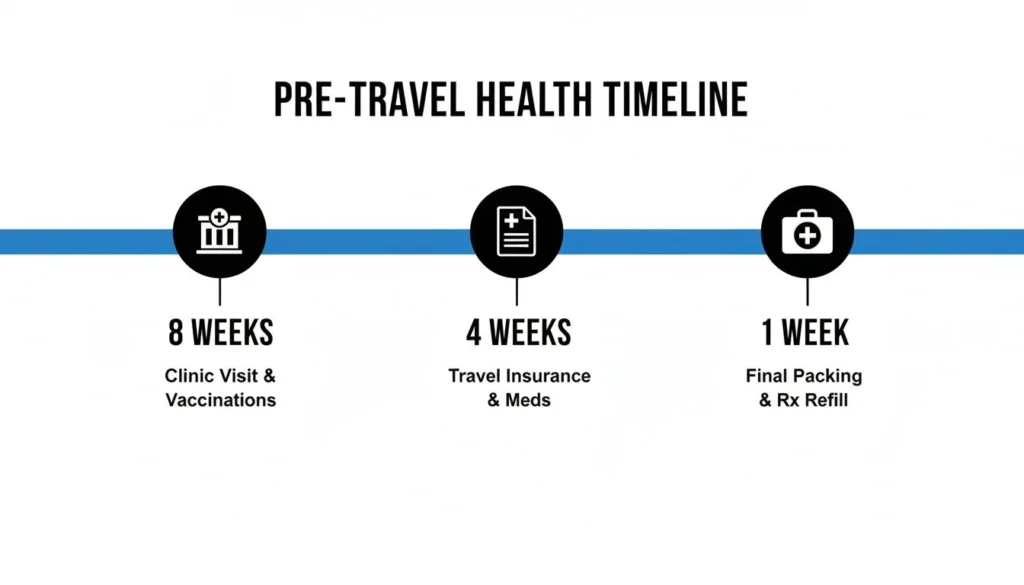
The big takeaway here is that health planning is a process. Getting the big things like clinic visits and insurance sorted early leaves you free to focus on the fun stuff later.
To make it even easier, here’s a quick-reference checklist to follow.
Essential Pre-Travel Health Checklist
This table breaks down the key health tasks and when you should tackle them. Use it to make sure nothing falls through the cracks before you take off.
| Task | Recommended Timeline | Key Action |
|---|---|---|
| Travel Health Consultation | 4–8 weeks before departure | Book an appointment with a travel clinic or your doctor. Discuss your itinerary and health history. |
| Vaccinations | 4–6 weeks before departure | Get any required or recommended vaccines. Allow enough time for them to become effective. |
| Secure Travel Insurance | 4 weeks before departure | Research and purchase a comprehensive policy. Declare all pre-existing conditions. |
| Refill Prescriptions | 2–3 weeks before departure | Get enough of your regular medications for the entire trip, plus a little extra. Get copies of your prescriptions. |
| Assemble Medical Kit | 1 week before departure | Customize a first-aid kit with destination-specific items and personal medications. |
| Final Check | 2–3 days before departure | Pack all medications, prescription copies, and insurance documents in your carry-on bag. |
Following this checklist takes the guesswork out of your prep. Once these tasks are done, you can pack your bags knowing you’ve laid the groundwork for a safe and healthy adventure.
Navigating Food and Water Safety Abroad
Nothing torpedoes a trip faster than a bout of food poisoning. What you eat and drink is supposed to fuel your adventures, not sideline them. The key isn’t about avoiding amazing local food—it’s about knowing how to enjoy it without getting sick.
There’s a simple, time-tested mantra that seasoned travelers live by: “boil it, cook it, peel it, or forget it.” Honestly, this little phrase is your single best defense against the vast majority of foodborne illnesses. If you have any doubt about how something was prepared, it’s just better to pass.
Making Smart Food Choices
Street food can be an incredible highlight of any trip, but you have to be smart about it. My rule? Look for the stalls mobbed with locals. A long line and high turnover mean the ingredients are fresh. I always feel better when I can watch the vendor cook my food to order, especially when it comes to me steaming hot.
The same logic applies to restaurants. A busy, bustling spot is almost always a good sign. On the other hand, be extra cautious with buffets, where food can sit out at lukewarm temperatures for hours—a perfect breeding ground for bacteria.
I tend to be wary of a few specific things, no matter where I am:
- Uncooked Salads: They could have been washed in contaminated tap water.
- Pre-cut Fruit: It’s much safer to stick to fruits you can peel yourself, like bananas, oranges, or mangoes.
- Raw or Undercooked Meat and Seafood: That ceviche might look incredible, but raw seafood is a gamble in regions with less-than-perfect refrigeration.
Even if you’re a pro in your own kitchen, travel throws new variables at you. If you want to brush up on food prep basics, our guide on cooking tips for beginners has solid advice that’s useful at home or on the road.
Staying Hydrated Safely
Staying hydrated is non-negotiable, but where your water comes from is just as critical. In many countries, the tap water simply isn’t safe to drink. The easiest path is to stick with factory-sealed bottled water or invest in a reliable water purifier or filter bottle for your trip.
A rookie mistake is forgetting about the ice. Those cubes are almost always made from local tap water and can easily contaminate a perfectly safe drink. My standard order is any beverage with no ice, unless I’m in a high-end hotel or restaurant where I can be certain they use purified water.
It’s a sobering fact: an estimated 1 in 6 travelers deals with gastrointestinal issues. But simply being smart about food and water can slash that risk by 50-70%. This is especially true in places where up to 88% of diarrheal diseases are tied to unsafe water and poor sanitation.
Putting these habits into practice makes a real difference. In fact, research shows that proactive travelers report up to 90% fewer sick days during their trips. You can dig into the data by checking out the full report on travel industry health and safety trends.
Pack a Secret Weapon
Even if you do everything right, an upset stomach can still happen. This is why one of the most brilliant items you can pack is oral rehydration salts (ORS).
These cheap, lightweight packets are a scientifically proven blend of electrolytes and glucose. They help your body rehydrate far more effectively than plain water ever could. Tossing a few ORS sachets into your bag is a simple, no-brainer precaution. If you start to feel off, mixing a packet with safe, bottled water can stop mild dehydration in its tracks and prevent a minor inconvenience from turning into a trip-ruining ordeal. They are a true game-changer.
Staying Active and Conquering Jet Lag
There’s nothing worse than landing at your destination feeling stiff, exhausted, and completely out of sync before the adventure has even started. The culprit is usually a one-two punch of sitting for too long and the inevitable jet lag. But with a little planning, you can fight off both and arrive ready to explore.
Our bodies just aren’t built to be crammed into a seat for hours. It leads to tight muscles, poor circulation, and that general feeling of being unwell. It can also open the door to more serious health issues.
The Importance of In-Transit Movement
Believe it or not, one of the best things you can do for your health while traveling is simply to keep moving. Even small, subtle movements can have a massive impact on how you feel when you step off that plane. One of the biggest concerns on long-haul flights is Deep Vein Thrombosis (DVT), a dangerous blood clot that can form in your leg from prolonged sitting.
A few simple in-flight exercises are your best weapon against stiffness and DVT. You can do these right in your seat:
- Ankle Rolls: Just lift your feet from the floor and rotate your ankles, first one way and then the other.
- Calf Raises: Whether you’re sitting or standing, press down through the balls of your feet to lift your heels, then reverse it.
- Knee Lifts: While seated, bring one knee up toward your chest, hold it for a moment, and slowly lower it back down. Switch legs and repeat.
Beyond these stretches, try to get up and walk the aisle for a few minutes every hour or so. It’s a simple trick, but it does wonders for your circulation. If you’ve got a layover, use that time to your advantage—walk the terminal instead of planting yourself at the gate.
Staying sedentary on a long trip can increase heart strain by up to 20%. However, countering this with simple, consistent movement can help you join the 80% of travelers who return from their trips feeling energized, not exhausted.
Another pro tip? Pack a pair of compression socks. These specialized socks put gentle pressure on your legs to keep blood flowing, which can slash your risk of DVT by as much as 50%. I consider them essential for any flight longer than four hours.
A Practical Guide to Beating Jet Lag
Jet lag isn’t just about being tired. It’s a genuine, albeit temporary, sleep disorder that happens when your internal body clock gets thrown for a loop by a new time zone. The real secret to beating it is to start managing it before you even take off.
If you’re flying east, start going to bed 30-60 minutes earlier each night for a few days before your trip. Flying west? Do the opposite and stay up a bit later. This gives your body a running start on the adjustment.
Once you arrive, light is your best friend. If you land during the day, get outside into the sunlight as soon as possible. Natural light is the most powerful signal you can send your brain to reset its clock. Arriving at night? Keep your room dark and avoid screens to signal that it’s time to sleep.
For those long eastbound journeys across several time zones, a low dose of melatonin can be a game-changer. Taking it about 30 minutes before your new local bedtime can shorten the effects of jet lag by up to 50%. It’s generally less effective for westbound travel, though. You can dive deeper into these travel wellness findings to see how small tweaks can make a big difference on your trips.
Smart Ways to Prevent Common Infections
Let’s be real: travel throws you into a whole new world of germs. From packed airports to bustling local markets, it’s easy to feel like getting sick is just part of the deal. But it doesn’t have to be.
The secret isn’t locking yourself in your hotel room. It’s about building a few smart, simple habits into your routine that can make a huge difference.
Your number one defense? Good old-fashioned hand hygiene. It sounds basic, but it’s the single most powerful tool you have. Washing with soap and water is always best, especially before you eat or after using a public restroom.
When you can’t find a sink, a good alcohol-based hand sanitizer is your best friend. Look for one with at least 60% alcohol. I use mine constantly—after touching subway handrails, ATM keypads, and especially airplane tray tables. Fun fact: studies have shown those tray tables can be germier than the lavatory buttons. A quick wipe-down before you settle in is always a smart move.
Beyond Hand Sanitizer
A solid health strategy goes beyond just keeping your hands clean. You have to think about the specific environment you’re heading into, especially if you’re traveling to places where insect-borne or water-related illnesses are a risk.
In tropical and subtropical destinations, for instance, mosquitoes are more than just a nuisance. They can carry serious diseases like dengue, Zika, and malaria. Protecting yourself is non-negotiable.
- Use an EPA-registered insect repellent. I always pack a product with DEET or picaridin. Apply it to any exposed skin after you’ve put on your sunscreen.
- Cover up. Long sleeves, pants, and socks are a simple physical barrier, particularly around dawn and dusk when mosquitoes tend to be most active.
- Check your room. Make sure any window or door screens are fully intact. If you’re in a more rustic spot, sleeping under a mosquito net is a must.
This same level of awareness applies to water. Lakes, rivers, and even swimming pools can be home to some nasty parasites and bacteria. A good rule of thumb is to avoid swallowing water when you swim and keep an eye out for any local advisories about water safety.
Thinking ahead about hygiene and environmental risks is what separates seasoned travelers from novices. It’s not about being paranoid; it’s about being prepared. That preparation is what gives you the freedom to truly dive into your destination without worrying.
Considering Masks and Sun Protection
In certain situations, wearing a mask is still a really smart call. If you find yourself in a crowded, stuffy space—like a packed bus or a long train ride—a mask adds a valuable layer of protection. This is especially true if you know you’re more susceptible to respiratory infections.
And don’t forget about your skin. A nasty sunburn doesn’t just hurt; it can actually weaken your immune system, leaving you more vulnerable to other bugs. Slathering on a broad-spectrum sunscreen with an SPF of 30 or higher is an easy win for staying healthy while you enjoy the outdoors.
Protecting Your Mental Health on the Road
A truly healthy trip means looking after your mind just as much as your body. Sure, the thrill of a new place is fantastic, but the real side of travel—missed flights, language mix-ups, or just feeling out of your element—can quietly pile on the stress. If you ignore your mental wellness, you’re setting yourself up to feel drained instead of recharged.
This is about more than just physical health. It’s about building a mental toolkit to handle the unexpected twists and turns that are just part of the adventure. This kind of prep work is what makes a trip a source of joy, not a well of anxiety.
Set Realistic Expectations
One of the biggest culprits behind travel stress is the pressure to have a “perfect” trip. We’ve all seen the flawless photos online and imagined our own highlight reel, but reality usually includes long lines, a day of bad weather, or a meal that just doesn’t live up to the hype. It’s so important to go into your travels with a flexible mindset.
Instead of a packed-to-the-brim itinerary, build some real downtime into your schedule. Don’t try to conquer an entire city in a single day. Giving yourself that unstructured time opens the door for spontaneous discoveries and acts as a buffer when things inevitably don’t go to plan.
A key to protecting your mental health on the road is accepting that not every moment will be magical. When a train is late or a museum is closed, treat it as an opportunity for a different experience, not a catastrophe.
That simple shift in perspective can turn a potential stressor into a memorable part of your story.
Practice Mindfulness and Stay Present
Travel anxiety often comes from worrying about what could go wrong or obsessing over what already has. Mindfulness is a surprisingly powerful tool for pulling yourself back to right here, right now. You don’t need to meditate for an hour, either. Small, simple practices can make a huge difference.
Next time you’re walking through a new city, try this grounding exercise. Take a moment and focus on your senses:
- What are three things you can see? Notice specific colors, shapes, and textures.
- What are two things you can hear? Maybe it’s local chatter, distant music, or just traffic.
- What’s one thing you can smell? Fresh bread from a bakery, maybe, or rain hitting the pavement.
This little exercise is incredibly effective at grounding you in your surroundings and quieting that anxious inner monologue. If you feel overwhelmed, just stepping away for a few deep breaths can do wonders for resetting your nervous system. For more ideas, you might be interested in these mental health and self-care tips that you can easily use anywhere.
Recognize Culture Shock and Stay Connected
Culture shock is very real, and it can be a deeply disorienting feeling. It’s that sense of confusion, anxiety, or frustration that hits when you’re dropped into an environment that’s completely new. The first step is just to recognize that these feelings are normal and, more importantly, temporary.
Staying in touch with friends and family back home can be a great anchor. A quick video call or a few texts can provide a much-needed sense of stability and comfort. Just be careful not to spend your whole trip staring at a screen. The real goal is to strike a healthy balance between staying connected and actually being present on your journey.
Common Questions on Staying Healthy While Traveling
Even the most seasoned traveler has questions about staying healthy on the road. We get it. To help you prepare, we’ve gathered some of the most common questions we hear and provided straightforward, practical answers.
Let’s dive into the details so you can travel with peace of mind.
How Far in Advance Should I See a Doctor Before Traveling
The sweet spot for a pre-travel doctor’s visit is at least 4 to 8 weeks before your departure. This isn’t an arbitrary timeline; it gives any necessary vaccines enough time to reach full effectiveness.
Booking your appointment in this window also leaves a comfortable buffer to fill prescriptions for travel-specific meds, like malaria pills or a “just-in-case” antibiotic for traveler’s diarrhea. Plus, it’s the perfect time to map out a solid plan for managing any existing health conditions while you’re away from your usual routine.
Is Eating Street Food Safe When Traveling Abroad
Absolutely, but you have to be smart about it. Enjoying local street food is one of the best parts of traveling, and it can be done safely. The number one rule is to find vendors who are popular with the locals. A long line and high customer turnover are great signs that the food is fresh and trusted.
To pick the safest and most delicious options, keep these tips in mind:
- Watch the magic happen: Go for stalls where the food is cooked to order, right in front of you.
- Heat is your friend: Always choose food that is served steaming hot. This is the simplest way to ensure harmful bacteria have been killed off.
- Know what to skip: Be cautious with items that have been sitting out. It’s often best to avoid uncooked sauces, pre-cut fruit, and salads that could have been washed in contaminated water.
What Are the Best Ways to Overcome Jet Lag
Tackling jet lag starts before you even board the plane. In the days leading up to your trip, try gradually adjusting your sleep schedule to be closer to your destination’s time zone. Once you’re on the flight, focus on hydration—drink lots of water and steer clear of alcohol and caffeine, which will only make dehydration worse.
The moment you land, sync up with the local clock. If you arrive in the daytime, get outside and soak up some sunlight. This exposure is critical for resetting your body’s internal clock, or circadian rhythm. If it’s nighttime, try to get some sleep. A low dose of melatonin before bed can also be a big help, particularly for eastbound travel.
These simple strategies can make a huge difference, helping you shake off that groggy, out-of-sorts feeling and get your adventure started on the right foot.
At maxijournal.com, we believe that informed travel is the best kind of travel. From health strategies to destination guides, we publish daily articles to help you make the most of every adventure. Explore more expert advice and compelling stories at maxijournal.com.
Discover more from Maxi Journal
Subscribe to get the latest posts sent to your email.