Absolutely. At MaxiJournal, we’re always on the lookout for fresh perspectives from education experts. If you’re an educator, ed-tech innovator, researcher, or policy analyst with a unique take on the future of learning, we want to hear from you.
Share Your Voice in the World of Education

MaxiJournal is where education meets technology, science, and the arts. We believe the most powerful insights come straight from the people on the front lines—those teaching, researching, and building the tools of tomorrow. Our goal is to host the conversations that push modern learning forward.
This guide has everything you need to write for us education content that our audience will love and that meets our editorial standards. We’re not just looking for articles; we’re looking for partners who can bring real, actionable value to our community.
Who We Are Looking For
Our best contributors are living and breathing education every day. We’re most interested in writers who can ground their ideas in firsthand experience, offering practical advice, sharp analysis, and forward-thinking commentary.
We’d love to collaborate with:
- K-12 and Higher Education Educators sharing classroom strategies and pedagogical insights.
- Ed-Tech Innovators and Entrepreneurs detailing new tools and their real-world impact.
- Academic Researchers who can break down complex studies into accessible, practical takeaways.
- Education Policy Analysts commenting on systemic changes and what they mean on the ground.
A Rapidly Expanding Field
There has never been a better time to share your expertise. The global education market is seeing incredible growth, valued at roughly $7.3 trillion in 2025 and projected to hit $10.4 trillion by 2030. This boom is fueled by massive investments in infrastructure and a worldwide demand for quality learning. Learn more about the global education market’s impressive growth.
Your perspective adds the human context behind these massive numbers. We want stories from the field that show how these trends and new ideas actually play out in real classrooms and institutions.
This guide will walk you through everything, from brainstorming topics to hitting ‘send’ on your final draft. We want this to be a smooth, successful collaboration. Even the most experienced writers hit a wall sometimes, so if you’re feeling stuck, our guide on how to overcome writer’s block is a great place to start.
Explore Our Core Education Topics
To successfully write for us education content that resonates, your pitch needs to align with the topics our readers are passionate about. We’re not looking for generic, surface-level articles. We want your unique, expert take on the pressing issues and exciting shifts shaping learning today.
Your expertise is what makes a piece truly stand out. Think of the topics below as a jumping-off point—a way to get your creative gears turning. We want you to go beyond broad categories and pitch a specific, insightful angle that offers real value.
The Intersection of Technology and Pedagogy
Classroom tech is about so much more than shiny new gadgets. It’s about fundamentally changing how we teach and learn. We’re always looking for articles that dig into this dynamic relationship with practical insights and sharp analysis.
Some potential angles to consider:
- AI in Personalized Learning: How are adaptive algorithms creating truly custom learning paths for students? We’d love to see a detailed case study or a “how-to” guide for educators on the ground.
- Gamification Strategies: What are the psychological hooks that make gamification so effective for student engagement? Show us how these principles can be applied in different subjects.
- Data Privacy in Ed-Tech: A deep dive into the ethical tightropes and best practices for protecting student data in our hyper-connected schools.
Your personal experience—a story about using a particular tool or implementing a new tech-driven strategy—is exactly what we’re looking for. We want real stories from the field that show the actual impact of these technologies.
We’re especially interested in pieces that cut through the hype. A strong pitch might critically assess the ROI for expensive ed-tech platforms or even offer a compelling counter-narrative to a popular trend.
Innovations in Curriculum and School Culture
The “what” and “how” of teaching are constantly evolving. Our audience is hungry for content that explores fresh approaches to curriculum design, student well-being, and building inclusive school environments. This is your chance to share your vision for a more effective and equitable education system.
This area is wide open for a guest post. We’re particularly keen on submissions that cover:
- Mental Health Initiatives: A close look at a successful school-wide mental health program. We want the details: implementation, challenges, and measurable outcomes.
- Project-Based Learning (PBL): Share real-world examples of how PBL is being used to teach complex subjects and build critical thinking skills that last.
- Sustainable Education Practices: How are schools weaving environmental literacy and sustainability into their core curriculum and day-to-day operations?
The Business and Policy of Education
Education isn’t just a calling; it’s a massive, complex industry driven by powerful economic and political forces. We welcome articles that dissect the business of education, from the booming ed-tech market to the tangled web of public policy.
Within this realm, the higher education sector is on a remarkable trajectory. Valued at $1,042.31 billion in 2025, it’s projected to skyrocket to $2,557.93 billion by 2034, growing at an impressive 11.62% CAGR. This signals a massive demand for advanced skills and specialized knowledge. You can dig into more insights on the higher education market on Precedence Research.
This explosive growth creates a huge need for sharp analysis on topics like:
- The Future of Higher Education: How are universities adapting to shifting workforce demands and the rise of alternative credentials?
- Public-Private Partnerships: An analysis of successful collaborations between schools and businesses. What are the key lessons learned?
- Equity in School Funding: A data-driven exploration of funding disparities and their impact on student outcomes, maybe with a focus on a specific region.
We’ve put together a table with a few more ideas to help you brainstorm.
Education Topic Ideas for MaxiJournal Contributors
| Topic Category | Specific Article Angles We’re Looking For |
|---|---|
| K-12 Education Trends | The rise of micro-schools, mastery-based grading in practice, trauma-informed teaching strategies. |
| Higher Education & Careers | Are university degrees still worth it? The impact of student debt on the economy, how colleges are using data analytics for student success. |
| Special Education & Inclusivity | Best practices for co-teaching models, the role of assistive technology, creating neurodiverse-friendly classrooms. |
| Teacher Professional Development | Combating teacher burnout, innovative mentorship programs for new educators, the shift to virtual PD. |
Ultimately, we want your authentic voice. Use these ideas as a launchpad to develop a topic you’re truly passionate about—one that showcases your unique expertise. A pitch that radiates deep knowledge and a fresh perspective will always get our attention.
Know What We Look For: Our Editorial & Formatting Guide
To get your article accepted and published quickly, it’s worth taking a few minutes to understand what makes a submission stand out to our editorial team. Think of this as our playbook for creating fantastic, reader-friendly content together.
Our audience trusts us for articles that are insightful, authoritative, and genuinely engaging. Getting the structure and formatting right is just as crucial as the content itself—it ensures your expertise shines through.
Core Editorial Standards
Before you even start writing, let’s talk about the foundational rules. These aren’t just suggestions; they ensure every article we publish is credible, original, and adds real value to the education community.
First and foremost, your submission must be 100% original. We don’t publish anything that has appeared elsewhere, and that includes your own blog. We run every submission through plagiarism checkers, so please send us fresh, new work only.
Next up: evidence. We’re big on data-driven insights. If you make a claim or cite a statistic, you have to back it up with a link to a credible, recent source. Think academic journals, established industry reports, or major news outlets.
Our Quick Credibility Checklist:
- Is the source a well-known, reputable institution or publication?
- Is the data fresh? We prefer sources from the last 2-3 years.
- Does the link go directly to the original data or report?
Steer clear of citing direct competitors or overly promotional sources. The goal here is building reader trust through solid, transparent evidence.
Crafting a Readable and Engaging Structure
An article’s structure is its backbone. A clean, logical layout makes even the most complex topics easy to follow and keeps readers hooked from start to finish. We are sticklers for scannable, well-organized content.
This really just means breaking up your text into digestible chunks. Nobody wants to face a wall of text. It’s the fastest way to make someone click away.
Here are the formatting rules we absolutely live by:
- Short Paragraphs: Keep your paragraphs to a maximum of three sentences. This is non-negotiable and makes a huge difference, especially for our mobile readers.
- Clear Headings: Use H2 headings for your main sections and H3s for the sub-topics within them. Your headings should be descriptive and use Title Case Capitalization.
- Visual Breaks: Make good use of bulleted or numbered lists, blockquotes for key takeaways, and bold text to highlight important terms or stats.
Don’t just think of your article as words on a page; see it as a visual experience. The right formatting guides the reader’s eye and makes the whole piece much more impactful.
Linking and Image Requirements
Smart linking and high-quality visuals can take an article from good to great. We have specific guidelines for both to keep our quality high.
Our Linking Policy
A few well-placed external links are fine, but they must add real value for the reader. They should point to high-authority resources that support your points or offer helpful further reading. We don’t publish articles that are just designed to build backlinks, and any links that feel spammy or overly self-promotional will be removed.
Image Submission Guidelines
We love it when authors include relevant images, charts, or infographics! If you’re submitting visuals, they just need to meet these criteria:
- High Resolution: Make sure any images are sharp and clear, at least 1200px wide.
- Proper Licensing: You must have the rights to use them. This means providing proof of a Creative Commons license, a receipt from a stock photo site, or confirming that you created the visual yourself.
- Relevance: Every single image should have a clear purpose—whether that’s illustrating a tricky concept, breaking down data, or simply adding helpful context.
When you submit an article that already nails these guidelines, it tells us you’re a pro who cares about quality. This attention to detail means we can work together to get your insights published much, much faster.
How to Pitch and Submit Your Article
Getting your ideas from a spark of inspiration to a published article shouldn’t be a complicated mess. We’ve built our submission process to be as clear and collaborative as possible so you can focus on creating great content. This is your road map, covering everything from nailing the initial pitch to seeing your byline on our site.
A great partnership always starts with a great pitch. This is your first impression—your chance to show our editors you get our audience and what we’re all about. A sharp, well-defined proposal doesn’t just get our attention; it fast-tracks the entire process.
Crafting a Compelling Pitch
Your pitch is more than just a topic idea; it’s the blueprint for your article. We see a lot of proposals, and the ones that truly stand out are clear, confident, and show you’ve really thought through the subject matter.
Instead of sending a full draft right away, start by emailing us a focused pitch. Think of it as your elevator pitch. It needs to quickly answer three critical questions for our editors: What’s your main point? Why is this essential for our readers right now? And what makes you the perfect person to write it?
To make sure your pitch lands perfectly, include these key things:
- A Working Title: Give us a headline that’s both catchy and informative. It doesn’t have to be the final version, but it should immediately tell us what the article is about.
- Core Argument: Nail this in one or two sentences. What’s the single most important takeaway for our readers?
- A Brief Outline: Use bullet points to lay out the key sections you’ll cover. This shows us your article’s structure and logical flow from start to finish.
This outline helps our team instantly see your vision and how it fits with what we’re planning. It’s the fastest way to get a “yes.”
Pro Tip: Show us you’re a reader. Mention a recent article of ours that you liked and briefly explain how your piece could offer a fresh angle or build on that conversation. It proves you’ve done your homework.
The Submission and Review Process
Once we give your pitch the green light, it’s time to start writing. We thrive on clear communication and a collaborative spirit during the editing phase. Our goal is to work with you to polish your draft into something our audience will love.
Please submit all drafts as a Google Doc with “Suggesting” access turned on for our editors. This is non-negotiable, as it allows for a smooth feedback loop where we can leave comments and track changes directly. Please don’t send Word files or PDFs.
This infographic gives you a quick visual rundown of our core guidelines for word count, sourcing, and structure.
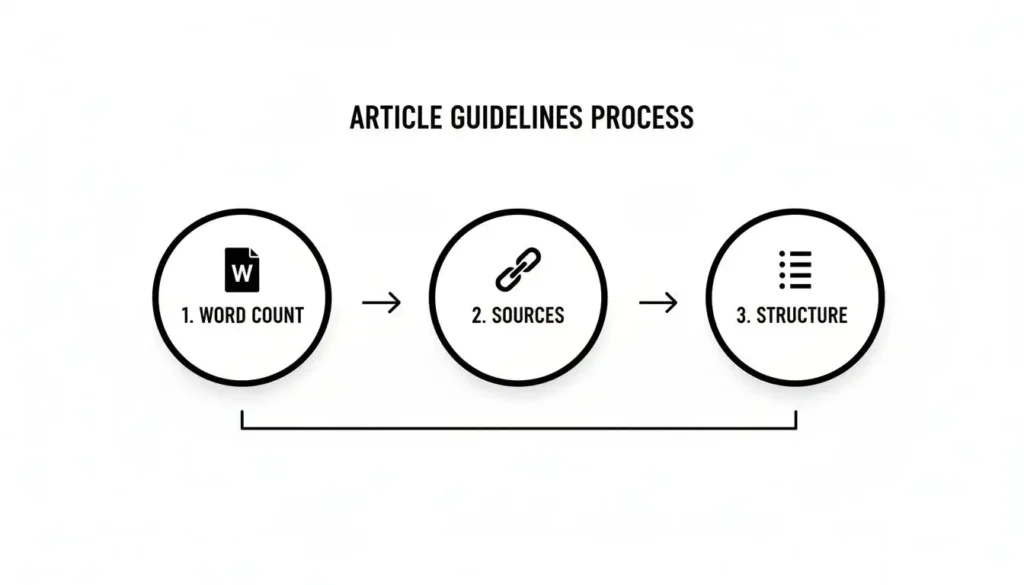
As you can see, a great article hits the sweet spot between in-depth content, solid sourcing, and a clean, easy-to-read layout.
After you send over your first draft, our editorial team will dive in. You can expect to hear back with feedback within 7-10 business days. Our notes might include suggestions for strengthening your argument, clarifying a few points, or tweaking the flow.
We look at editing as a team sport. We welcome an open dialogue and are always happy to discuss our suggestions to make sure the final piece still sounds like you. Most articles go through a round or two of revisions. Authors who are responsive and open to feedback are the ones we love working with again and again. For a wider look at what we accept, check out our main “write for us” page.
A Sample Pitch to Guide You
Sometimes, an example is worth a thousand words. A vague pitch is easy for a busy editor to pass on, but one with this level of clarity and confidence is hard to ignore. Here’s what a winning pitch looks like in action.
Subject: Guest Post Pitch: “Beyond the Screen: How Project-Based Learning is Closing the Digital Divide”
Hi MaxiJournal Team,
My name is [Your Name], and I’m a curriculum designer with over a decade of experience implementing project-based learning (PBL) in under-resourced school districts. I’ve been following your work for a while and especially enjoyed your recent article on AI in the classroom.
I’d love to write a guest post with the working title, “Beyond the Screen: How Project-Based Learning is Closing the Digital Divide.”
Core Argument: While ed-tech is often framed as the key to equity, many schools simply can’t afford a 1:1 device ratio. My article will show how a smart PBL curriculum can build crucial digital literacy and problem-solving skills, even with limited access to technology.
Outline:
- Introduction: The false promise of tech as the ultimate solution for the digital divide.
- Case Study: How a middle school science class used community interviews and basic presentation software to tackle a local environmental issue.
- The “Low-Tech, High-Impact” Framework: Three actionable PBL strategies that don’t require much screen time.
- Measuring What Matters: How to assess digital literacy outcomes without tech-heavy tools.
- Conclusion: Reframing the digital divide as an issue of critical thinking, not just device access.
Thanks for your time and consideration. I look forward to hearing what you think.
Best,
[Your Name]
[Link to Your Portfolio/LinkedIn]
Making Sure Your Article Gets Found (SEO and Visibility)
A brilliant article that no one reads is a missed opportunity. That’s where a little Search Engine Optimization (SEO) comes in. Don’t worry, this isn’t about some technical wizardry or trying to “game” Google. It’s simply about helping the right people—the educators and innovators you’re writing for—find your work when they need it most.
When you write for us education content, thinking about SEO from the start helps connect your valuable insights with a much larger audience. The goal is simple: write for people first, but structure your article in a way that search engines can easily understand what it’s about.
First, Think About Search Intent
Before you even start typing, put yourself in our reader’s shoes. What are they actually looking for when they go to Google? This is called search intent. Are they trying to solve a specific classroom problem? Do they need a step-by-step guide, a list of resources, or a comparison of different teaching methods?
For example, someone searching “PBL in science class” isn’t looking for a history of project-based learning. They want practical, actionable ideas they can use tomorrow. Making sure your article directly answers that underlying question is the key to creating something genuinely useful that will rank well.
SEO is really just about providing the best, most complete answer to a person’s question. Your job is to figure out what our audience is asking and create the definitive resource they’ve been searching for.
Weaving in Keywords Naturally
Keywords are just the words and phrases people type into a search bar. Including them in your article signals to Google what your content is about. The trick is to do it naturally, without sounding like a robot. Your first priority is always clear, engaging writing.
Here’s a simple way to approach it:
- Primary Keyword: This is your main topic, like “trauma-informed teaching.” It should definitely be in your title, your first paragraph, and a couple of your main headings (H2s).
- Secondary Keywords: Think of related terms and phrases, like “classroom emotional safety” or “student mental health support.” Sprinkle these into your subheadings (H3s) and throughout the body of your article. They add important context and depth.
- The “Read Aloud” Test: Read your sentences out loud. If a keyword feels clunky or forced, change it. Good writing always flows smoothly.
Structuring for Both Readers and Search Engines
A well-organized article is a huge win for everyone. It makes your content easy for busy educators to scan, and it gives search engines a clear map of your ideas. Your headings (H2s and H3s) are the signposts that guide both.
Think of H2s as the main chapters and H3s as the key points within each chapter. This simple hierarchy not only breaks up the text but also helps Google understand how all the concepts in your article relate to one another. For a great example of how clear structure helps both people and search engines, take a look at our guide on how to start a blog.
Writing a Meta Description That Gets Clicks
The meta description is that little preview snippet—about 155 characters—that shows up under your title in Google search results. While it doesn’t directly affect your ranking, it has a massive impact on whether someone decides to click on your article instead of someone else’s.
A great meta description does three things well:
- Starts with a verb: Kick it off with an action word like “Learn,” “Discover,” or “Explore” to encourage a click.
- Includes the main keyword: Put your primary keyword near the beginning so people immediately see that your article is relevant to their search.
- Shows the value: Quickly explain what the reader will get out of your post. What problem are you solving for them?
By keeping these simple SEO practices in mind, you give your expertise the best possible chance to be found, read, and make a real difference.
What’s In It For You? Author Benefits and Community Perks

We know you pour a lot of expertise and effort into your writing. That’s why when you write for us education content, we see you as a true partner, not just another contributor. Our goal is to make this a genuine collaboration that gives your professional presence a real boost.
Contributing here is about more than just getting your name on an article. It’s a chance to plant your flag as a thought leader in the ever-evolving world of education.
Build Your Authority and Digital Footprint
Every single article we publish includes a comprehensive author bio. This isn’t some tiny footnote—it’s your personal spotlight, designed to show the world who you are and why your voice matters.
Here’s what your dedicated bio space includes:
- Your Headshot: Let people put a face to your name with a professional photo.
- A Detailed Summary: You get plenty of room to share your credentials, your story, and what you’re passionate about.
- Do-Follow Links: We give you powerful do-follow links back to your personal website, blog, or professional portfolio.
- Social Media Connections: We’ll link directly to your LinkedIn, Twitter, or other professional profiles you want to highlight.
This is all about building out your digital footprint in a meaningful way. These links and your detailed bio are powerful tools for strengthening your online authority, making it easy for peers, employers, and collaborators to find and connect with you.
We’ll Amplify Your Voice Across Our Network
Hitting ‘publish’ is just the beginning. We actively promote your work to make sure it gets in front of thousands of engaged educators, administrators, and ed-tech professionals. Your insights won’t just sit on our blog—we’ll make sure they travel.
Your article gets the full force of our multi-channel promotion strategy.
We share your work with our dedicated email newsletter subscribers—a community hungry for high-quality educational insights. We also blast it across all our social media channels, making sure to tag you to drive traffic and engagement right back to your profiles.
This isn’t just about numbers; it’s about impact. We put this effort in to ensure your hard work sparks conversations and reaches the broad, multi-disciplinary audience it deserves.
Frequently Asked Questions About Contributing
We get a lot of questions from writers eager to contribute, so we’ve put together the answers to the most common ones right here. Think of this as our way of making sure we’re all on the same page before you dive in and write for us education content.
Do You Pay for Articles?
Right now, we don’t offer monetary payment for guest posts. Instead, we view this as a partnership. We give you a powerful platform to showcase your expertise, and in return, you get a detailed author bio with do-follow links back to your site. It’s a fantastic way to build your personal brand and boost your online authority.
Who Owns the Content After Publication?
Once an article goes live on our site, MaxiJournal holds the rights to that content. This just means the full article can’t be republished somewhere else, not even on your own blog. We have this policy to keep Google happy and avoid any duplicate content penalties, which ultimately helps your article rank better and reach more people.
That said, we absolutely want you to share it! Post the link on your social media, send it to your email list, and feature it on your website. We’re proud of your work and you should be too.
What Is the Typical Timeline?
We know you put a lot of time and heart into your writing, and we respect that. Here’s a rough idea of what to expect after you reach out:
- Pitch Review: You’ll typically hear back from us on your initial idea within 3-5 business days.
- Draft Review: Once you send over the full article, our editorial team will get you feedback within 7-10 business days.
- Publication: After the final draft is approved, we usually get it scheduled and published within 1-2 weeks.
Can I Include Affiliate Links?
Sorry, but we don’t allow any affiliate links in guest posts. Any links you include should point to credible, non-promotional resources that genuinely add more value and context for the reader.
Ready to share your expertise? MaxiJournal is the place to get your voice heard in education, technology, and beyond. Learn more at https://maxijournal.com.
Discover more from Maxi Journal
Subscribe to get the latest posts sent to your email.