Starting a travel blog really comes down to three things: finding your unique angle, building a simple website (I always recommend WordPress), and creating genuinely helpful content that answers real questions travelers have. Forget about the perfect logo or a flashy design for now. The real secret is nailing down a specific niche and then just consistently showing up to create great stuff. That’s how successful blogs get built from the ground up.
Laying the Foundation for a Successful Travel Blog
So, you’re ready to start a travel blog. It’s an incredible journey, but it’s also ridiculously easy to get bogged down in the tiny details before you even write a single word. So many new bloggers spend months agonizing over the perfect name or color palette, only to burn out before they even hit “publish.”
The key to a strong start isn’t perfection—it’s clarity. Before you even think about buying a domain name or picking a theme, you need to lay a solid foundation. This is about moving beyond a generic “I love travel” and getting specific about what your blog will be and who you’re creating it for.
Pinpoint Your Unique Niche
The travel blogging world is crowded, and honestly, that’s a good thing. It means there’s an audience for pretty much any interest, no matter how specific. Your goal isn’t to compete with giant sites like TripAdvisor. It’s to become the go-to resource for a smaller, dedicated group of people. Having a niche gives your blog a clear purpose and keeps you focused.
Think about what makes your travel style unique. Here are a few ideas to get the wheels turning:
- Budget Backpacking in South America: You could focus on cheap hostels, navigating local buses, and finding all the best free things to do for young, solo travelers.
- Accessible Travel in Europe: Create detailed guides for travelers with mobility challenges, covering everything from wheelchair-friendly museums to accessible hotels.
- National Parks with a Dog: Share your best tips on dog-friendly trails, where to stay with your pup, and what gear you need for adventures with your four-legged friend.
- Luxury Weekend Getaways for Couples: Review boutique hotels, romantic restaurants, and unique experiences for busy professionals who want to escape for a few days.
Your best niche will live at the intersection of what you’re passionate about, what you actually have experience in, and what people are searching for online.
Understand Your Ideal Reader
Once you’ve got a niche in mind, it’s time to get crystal clear on your target audience. Who, exactly, are you writing for? Sketching out a quick reader persona can make a world of difference in helping your content connect.
Are you talking to college students trying to stretch every dollar, or are you writing for retirees looking for comfortable, well-planned adventures? Knowing this will shape your tone, the topics you cover, and even where you promote your blog.
A well-defined audience is your compass. It guides every single content decision, from the questions you answer in a blog post to the destinations you cover. Without it, you’re just writing for everyone, which means you’re really connecting with no one.
The demand for real, personal travel stories is exploding, especially with the rise of remote work. The global “bleisure” (business + leisure) market was valued at an insane $315.3 billion in 2022 and is expected to hit $731.4 billion by 2032. As you can see in insights from Navan.com, this trend means millions of people are actively looking for the kind of experience-driven advice you can provide.
This simple three-step process is the groundwork you need to do before ever touching the technical side of your site.
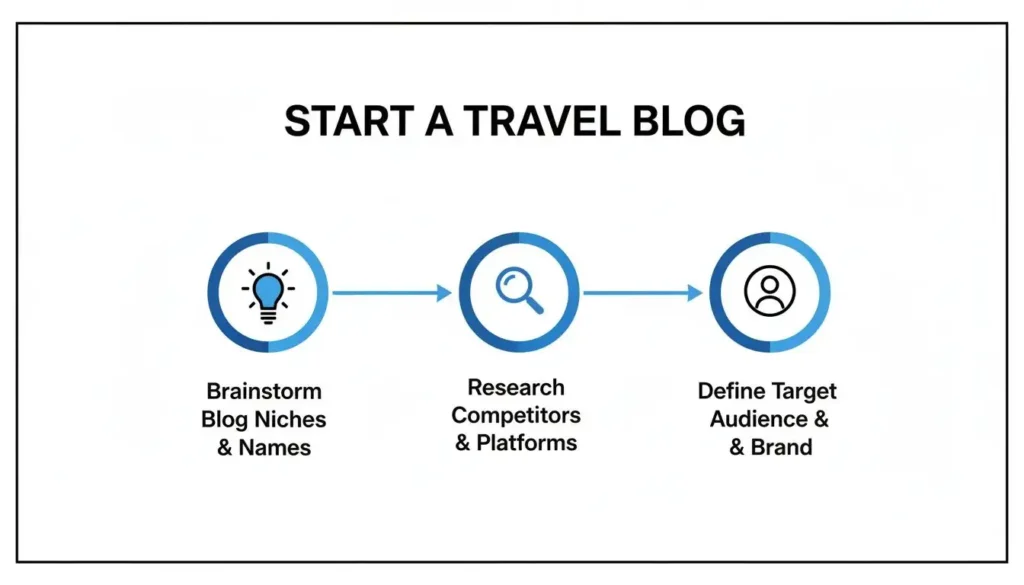
This graphic just reinforces the idea that brainstorming your niche, researching whether it’s a viable idea, and really defining your audience are the first—and most important—steps to success.
Travel Blog Niche Idea Comparison
To help you get a clearer picture, here’s a quick breakdown of how different niche ideas stack up. This isn’t exhaustive, but it shows how you should be thinking about the pros and cons of each path.
| Niche Idea | Target Audience | Monetization Potential | Competition Level |
|---|---|---|---|
| Luxury Family Travel | High-income families (35-55) with kids | High (affiliate links for high-end gear, hotel partnerships, luxury brand deals) | High |
| Solo Female Backpacking | Young women (18-30) on a budget | Medium (hostel affiliates, tour bookings, digital products like safety guides) | Very High |
| Vegan Food Travel | Vegans/vegetarians interested in global cuisine | Medium (cooking class affiliates, restaurant reviews, brand partnerships with vegan products) | Medium |
| RV Travel in North America | Retirees, digital nomads, families (all ages) | High (RV gear affiliates, campground partnerships, sponsored content from RV brands) | Medium |
| Adventure Travel (Hiking/Climbing) | Active individuals/couples (25-45) | Medium-High (specialized gear affiliates, tour operator partnerships, sponsored trips) | High |
Ultimately, the “best” niche is the one you can genuinely commit to. Passion and expertise will always shine through and attract the right audience, no matter the competition level.
Building Your Digital Home Base on WordPress

Okay, you’ve figured out your niche and who you’re talking to. Now it’s time for the fun part: building your actual website. This might sound like a massive technical hurdle, but I promise it’s more straightforward than you think.
Your blog is your digital headquarters. It’s the one piece of the internet you truly own, so getting the foundation right from day one is non-negotiable for long-term success.
We’re going to focus on self-hosted WordPress (WordPress.org, not to be confused with WordPress.com). There’s a reason it powers over 43% of all websites. It gives you total flexibility, control, and the power to scale—making it the gold standard for anyone serious about turning a passion project into something more.
Choosing Your Domain and Hosting
Before you can get WordPress running, you need two things: a domain name and a hosting plan. Think of your domain as your blog’s street address (like yourcooltravelblog.com) and hosting as the plot of land you’re building on.
Your domain name should be catchy, easy to spell, and hint at what you’re all about. My advice? Steer clear of numbers and hyphens. They’re clunky and easy for people to forget. Keep it short and sweet.
For hosting, you need a provider that makes setting up WordPress a breeze. Here are two solid choices I recommend to new bloggers:
- SiteGround: These guys are fantastic for beginners, mainly because of their killer customer support and solid performance. Their managed WordPress plans come with a one-click install, which takes all the guesswork out of the initial setup.
- Kinsta: This is a more premium option, but you get what you pay for: blazing-fast speeds and rock-solid security. It’s built on the Google Cloud Platform, so it can easily handle big traffic spikes when one of your posts goes viral.
Don’t feel pressured to overspend here. A basic plan from a trusted host like SiteGround is more than enough to get your blog off the ground. You can always upgrade as your traffic grows.
Installing WordPress and Picking a Theme
Once you’ve signed up for hosting, installing WordPress is usually just a matter of clicking a button in your control panel. Seriously, the whole thing takes less than five minutes. After that, you’ll log into your WordPress dashboard—this is where the magic happens.
Next up is your theme. This is what controls the look and feel of your blog. You want a theme that is fast, mobile-friendly, and easy to tweak. A clunky, slow-loading theme is a surefire way to annoy your readers and get on Google’s bad side.
Don’t get stuck in a “paralysis by analysis” loop trying to find the perfect theme. A clean, simple, and speedy design will always serve your content better than flashy bells and whistles.
Here are two fantastic free themes that are perfect for a new travel blog:
- Astra: It’s incredibly lightweight and fast. Astra is a crowd favorite because it’s so simple to use and plays nicely with page builder plugins.
- Kadence: Much like Astra, Kadence packs a ton of powerful features into its free version, like a great header and footer builder that makes customization a piece of cake.
Just install one of these directly from your WordPress dashboard, hit “Activate,” and you’re good to go. If you want a more detailed walkthrough of these initial technical steps, our general guide on how to start a blog has you covered.
Setting Up Essential Plugins
Plugins are like apps for your website; they add new features and functionality. The golden rule is to be selective. Too many plugins will slow your site down, so only install what you truly need. Right now, focus on these three critical areas:
- Security (Wordfence): This is your digital bodyguard, protecting your site from hackers and malware. The free version gives you a powerful firewall and security scanner right out of the box.
- SEO (Rank Math or Yoast SEO): These plugins are your personal SEO coaches. They help you optimize your posts for search engines by guiding you on titles, meta descriptions, and creating sitemaps.
- Performance (WP Rocket or a free caching plugin): Caching is a must for site speed. It creates static copies of your pages so they load almost instantly for visitors. WP Rocket is the best premium option, but free alternatives like LiteSpeed Cache do a great job, too.
And just like that—with your domain, hosting, theme, and key plugins installed—your digital home base is built. You’ve laid a secure, fast, and optimized foundation that’s ready for you to start creating amazing travel content.
Crafting Content That Ranks and Resonates

Alright, you’ve got the technical foundation of your blog sorted. Now for the fun part—the part that actually turns a website into a resource people love and trust: your content.
This is the heart and soul of your blog. It’s what solves a traveler’s problem, sparks an idea for their next trip, and ultimately, keeps them coming back for more. Creating stuff that both real people and Google love is a bit of an art form, mixing your unique voice with a smart, deliberate strategy. This is where you graduate from just sharing trip photos to building a real travel authority.
Uncovering What Your Audience Actually Wants
Let’s be real: you could write the most poetic, beautiful story about a sunset in Santorini, but if nobody is searching for it, it won’t get read. This is why every single piece of content should start with keyword research.
Don’t let the term scare you. It’s not about stuffing awkward phrases into your articles. It’s simply about figuring out the exact words and questions your ideal readers are typing into Google.
Think about the problems you’re solving. Are they frantically searching for a “3-day itinerary for Rome” or a “packing list for a safari in Kenya”? Those search terms are pure gold. They’re your roadmap.
Finding these keywords is easier than you think:
- Google’s Autosuggest is your best friend. Start typing “things to do in…” into the search bar and watch what pops up. These are the most common things people are actively looking for.
- Spy on the “People Also Ask” box. When you search for something, Google often shows a box of related questions. This is a goldmine for finding subtopics to cover in your articles.
- Dip your toes into free tools. Something like Google Keyword Planner can give you a rough idea of how many people are searching for a topic and how competitive it is.
When you start with what people are already looking for, you guarantee there’s a built-in audience for every post before you even write a single word.
Don’t view SEO as a technical chore. Think of it as a form of empathy. By understanding what people are searching for, you’re better equipped to create content that genuinely helps them solve a problem or plan their dream trip.
Structuring Your Posts for People and Search Engines
So you’ve got a killer topic. How you present it matters—a lot. A giant wall of text is the fastest way to make someone click the “back” button, no matter how great your info is.
You want your content to be scannable. Easy to digest. That starts with a powerful headline that grabs attention and includes your main keyword.
Then, you break it all up. Use descriptive subheadings (like the ones in this guide!) to create a clear path through the article. This lets readers jump to the exact section they need and helps Google understand what your post is about.
Another sneaky-important piece is the meta description. This is that little snippet of text that shows up under your headline in the Google results. While it doesn’t directly boost your rankings, a compelling one can be the difference between someone clicking on your article or your competitor’s. It’s your 155-character elevator pitch—make it count.
Building Cornerstone Content That Lasts
Not all blog posts are created equal. A quick write-up on a cool coffee shop is great for your archives, but the real power lies in creating cornerstone content.
These are the massive, comprehensive guides that become the pillars of your blog. Think of them as the ultimate resource on a topic. They’re usually long, cover a subject from every possible angle, and are designed to pull in traffic from search engines for years to come.
For travel blogs, these types of posts are absolute winners:
- Ultimate Destination Guides: A true deep dive into a city or country, covering everything from where to stay and eat to hidden gems and local etiquette.
- Detailed Itineraries: Step-by-step plans that take the guesswork out of planning. Think “The Perfect 7-Day Iceland Ring Road Itinerary.”
- In-Depth Gear Reviews: Honest, detailed reviews and comparisons of travel essentials like cameras, backpacks, or hiking boots.
- Practical How-To Guides: Articles that solve a very specific problem for travelers. Our own guide on how to find cheap flights is a perfect example of this.
The travel industry is booming again, and that creates a huge opportunity. U.S. national parks alone saw nearly 33.9 million visits in 2024. People are hungry for reliable travel information, especially for destinations that aren’t the same old tourist traps. As more travelers look to explore unique spots, bloggers who create content about these emerging locations have a massive advantage. You can find more insights on travel industry trends at KeyDataDashboard.com.
By putting in the work upfront—doing your research and building out these big, helpful guides—you create an engine that brings new readers to your blog day after day. It’s this strategic approach that separates the blogs that succeed from the ones that fade away.
Bringing Your Travels to Life with Visuals
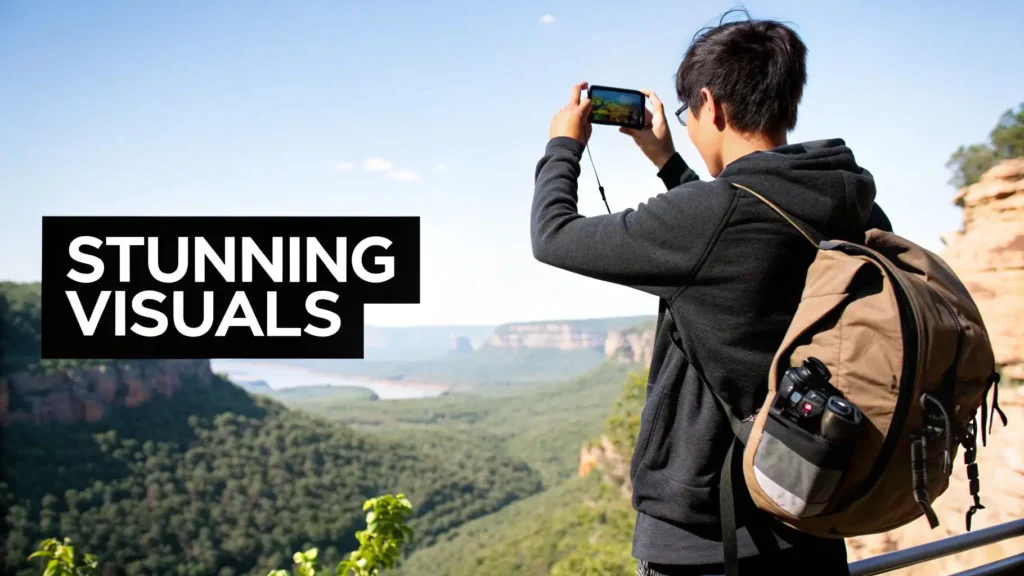
Let’s be honest, words can only take your readers so far. It’s the jaw-dropping visuals that truly transport them to a bustling market in Marrakech or a serene sunrise over the Andes. High-quality images aren’t just blog decorations; they are a core part of your storytelling, breaking up text and making your content infinitely more engaging and shareable.
The great news? You absolutely do not need thousands of dollars in camera gear to get started. Modern smartphones pack incredibly powerful cameras that are more than capable of capturing professional-looking shots for your blog.
Mastering Photography Without the Price Tag
Before you even think about buying a fancy camera, focus on mastering the fundamentals of good photography with the device you already have in your pocket. I can’t stress this enough: understanding composition and lighting will have a much bigger impact on your photos than expensive equipment ever will.
Start with these core principles:
- The Rule of Thirds: Imagine your screen is divided into a 3×3 grid. Instead of sticking your subject smack in the center, position it along one of the lines or where the lines intersect. It’s a simple trick that instantly makes your photos more dynamic and visually interesting.
- Leading Lines: Use natural lines in your environment—a winding road, a fence, a river—to draw the viewer’s eye toward your subject. This technique is a game-changer for adding depth and a sense of journey to your images.
- Golden Hour Light: The hour just after sunrise and the hour right before sunset offer soft, warm, and ridiculously flattering light. Try to avoid shooting in the harsh midday sun; it creates unflattering shadows and washed-out colors.
Once you’re ready to upgrade, an entry-level mirrorless camera from a brand like Sony (their Alpha series is fantastic) or Fujifilm offers a great step up without being overly complicated. But honestly, mastering your phone’s camera first is the best skill you can possibly develop.
Beyond Photos: Other Essential Visuals
While photography is king, the best travel blogs use a mix of visual content to keep things fresh and provide maximum value. Diversifying your visuals makes your posts more engaging and helps you stand out in a crowded space.
Your goal is to create a visually cohesive experience. Every image, graphic, or map should feel like it belongs to your brand and serves a purpose in telling your story or helping your reader.
Think about adding these elements to your content toolkit:
- Simple Graphics: Use a free tool like Canva to create branded graphics for Pinterest, Instagram Stories, or even featured images for your blog posts. You can whip up templates with your brand’s colors and fonts for a consistent, professional look.
- Embedded Maps: For itineraries or destination guides, embedding a custom Google Map is a lifesaver. You can pin key locations like restaurants, hotels, and attractions, giving your readers a practical, interactive tool they can actually use on their own trip.
- Short-Form Video: A quick 15-second clip of a crashing waterfall or a bustling street can add a dynamic, living element to your posts. You don’t need to be a pro videographer; simple, authentic clips add a ton of life and motion to your articles.
By thoughtfully combining strong photography with these other visual aids, you’ll create a professional, immersive experience that captures the true essence of your travels. This approach is absolutely fundamental to learning how to start a travel blog that not only informs but also inspires.
Growing Your Audience Beyond Your Friends and Family
Hitting “publish” feels incredible, doesn’t it? But that amazing feeling is only half the battle. Your content won’t just magically find its way to readers. You need a smart, consistent plan to get your articles in front of the people who are actually searching for them.
Building an audience from scratch is a marathon, not a sprint. The key is to stop treating promotion like a chore and start seeing it as a natural extension of your writing. It’s all about being strategic with your time and zeroing in on the platforms that will actually pay off for your travel blog.
Master the Social Media Platforms That Matter
Let’s be real: not all social media is created equal for travel bloggers. Trying to be everywhere at once is a surefire recipe for burnout. My advice? Pick one or two platforms, go deep, and master them before even thinking about adding another to your plate.
For most new travel blogs, that means prioritizing platforms that are proven to drive traffic and build a genuine community.
- Pinterest is a visual search engine, not a social network. This is a critical distinction. People go to Pinterest to plan and to buy, which makes it an absolute powerhouse for driving traffic to your blog. Use a tool like Canva to create several vertical pin graphics for every single post.
- Instagram is for building your brand and community. While it’s not the best for sending clicks directly to your site, it’s unmatched for connecting with your audience through stunning visuals and authentic stories. Focus on sharing your unique point of view and actually engaging with other creators in your niche.
- TikTok is for discovery and reaching new audiences. Its algorithm can put your content in front of millions of people who have never heard of you. Short-form videos showing off unique travel tips or hidden gems have the potential to go viral, fast.
The way travelers consume content is always changing. Today’s audiences expect a mix of formats. In fact, recent analysis shows TikTok is now the top platform for spotting emerging travel trends, while YouTube remains a powerhouse for deep-dive research. This just proves that blending your blog posts with engaging visuals across different platforms is the way to go. You can discover more about these travel media trends on LemongrassMarketing.com.
Build Your Most Valuable Asset: An Email List
If you take one thing away from this section, let it be this: start an email list from day one. Your social media following is rented land—the platform’s algorithm can change at any moment, and your reach could plummet overnight. Your email list, on the other hand, is an asset you own completely.
It’s your direct line to your most dedicated readers.
To get people to sign up, you need to offer them something genuinely valuable in return. We call this a lead magnet or a freebie.
Your email list is the only audience you will ever truly own. It’s a direct, unfiltered connection to the people who value your work the most. Nurture it, respect it, and it will become the bedrock of your travel blog’s success.
Here are a few simple but effective freebie ideas a travel blogger can whip up in an afternoon:
- A printable packing checklist for a specific destination or type of trip (e.g., “The Ultimate Southeast Asia Backpacking Checklist”).
- A PDF guide to the “Top 10 Free Things to Do in Paris.”
- A pre-made Google Maps itinerary for a popular road trip like the Pacific Coast Highway.
Network with Other Bloggers Genuinely
The travel blogging community is incredibly supportive, more so than you might think. Don’t look at other bloggers as your competition; see them as your colleagues. Building real relationships can open doors to collaborations, guest posting spots, and a ton of shared knowledge.
Start by engaging with their content thoughtfully. Don’t just drop a “great post!” comment. Leave comments on their blogs that actually add to the conversation. Share their articles on your social media channels (and always tag them!), and get active in niche-specific Facebook groups. The goal is to build real connections, not just to ask for favors. Over time, these relationships will become one of your most powerful tools for growth.
Turning Your Passion into Profit
Alright, let’s talk about the fun part: making money from your travel blog. It’s totally possible to turn this passion project into a real source of income, but it requires strategy and, honestly, a good deal of patience.
The key isn’t finding one magic bullet. Instead, think of it like building a diverse investment portfolio. You’re going to build multiple streams of income over time, each one adding to the next.
Most of us start with the low-hanging fruit—methods that don’t require a massive audience right out of the gate. As your blog gains traction, more lucrative opportunities will naturally open up. But everyone has to start somewhere.
A Great First Step: Affiliate Marketing
For brand-new travel bloggers, affiliate marketing is the perfect entry point. The concept is refreshingly simple: you recommend products or services you genuinely use and love. When a reader clicks your unique link and makes a purchase, you earn a small commission. Best of all, it costs them nothing extra.
This method just feels right because you’re sharing what already works for you on the road. Your audience gets a trusted recommendation, and you get rewarded for the referral. It’s a win-win.
Here are a few classic affiliate programs for travel bloggers:
- Booking Platforms: Think of sites like Booking.com, Expedia, and Hostelworld. They all have programs for accommodation referrals.
- Tour Companies: GetYourGuide and Viator are fantastic for earning commissions on tours and activities you’ve personally enjoyed.
- Travel Gear: You can link to the specific backpack, camera, or hiking boots you feature in your packing lists through Amazon Associates.
- Travel Insurance: Companies like SafetyWing offer recurring commissions for referring fellow travelers—a must-have for any digital nomad.
The absolute golden rule here? Only promote things you can personally vouch for. Your audience’s trust is everything. Recommending a shoddy product for a quick buck will destroy your credibility in a heartbeat. Don’t do it.
Level Up with Display Advertising
Once you start seeing a steady stream of traffic, display advertising becomes a real option. This is when you sell space on your site for ads, usually managed through an ad network that handles all the heavy lifting. You get paid based on how many people see or click on the ads.
For brand-new blogs, Google AdSense is the easiest place to get your foot in the door, but the payouts are pretty modest. It’s a starting point.
The real goal is to hit certain traffic milestones—like 25,000 or 50,000 monthly sessions—so you can apply to premium ad networks. Places like Mediavine or Raptive (formerly AdThrive) offer significantly higher earnings and much better ads. This is a major milestone for any blogger.
Evolving into Advanced Monetization
Once your blog is established and you’re seen as an authority in your niche, you can start exploring more direct—and profitable—methods. These require a solid brand and an engaged audience, but they also offer the highest returns.
Sponsored Posts: This is when brands pay you to write a dedicated article about their hotel, tour, or product. An average travel blogger might charge around $200 per sponsored post, but that number climbs fast with your traffic and influence.
Creating Digital Products: This is where you package your own expertise and sell it directly to your audience. You could create a detailed eBook guide to backpacking through Southeast Asia, sell your custom Lightroom photography presets, or even offer a paid course on travel planning. The sky’s the limit.
Learning how to start a travel blog that actually makes money is a marathon, not a sprint. Begin with affiliate links, layer in display ads as your traffic grows, and set your sights on brand partnerships and your own products for the long haul. Diversifying your income is the surest path to turning this passion into a sustainable business.
Common Questions About Starting a Travel Blog
So you’re thinking about diving into the world of travel blogging? Awesome. But before you do, your head is probably swimming with questions. That’s totally normal. Getting the practical stuff sorted out first helps you build a solid plan and know what you’re really getting into.
Let’s clear the air and tackle some of the biggest questions I hear from aspiring bloggers. Figuring this out now will save you a ton of guesswork later on.
How Much Does It Really Cost to Start?
Honestly, you can get a travel blog off the ground for less than you spend on coffee in a month. The initial investment is surprisingly small. You really only need two things to get started: a domain name and web hosting.
- Domain Name: This is your blog’s address, like
yourblog.com. Expect to pay about $10-$20 per year. - Web Hosting: This is like renting a little corner of the internet for your site to live. A solid starter plan from a host like SiteGround will run you anywhere from $3-$15 a month.
That’s it. Seriously. You don’t need a custom logo, expensive themes, or a dozen premium plugins right out of the gate. Keep your costs low at the beginning. Your energy is much better spent creating amazing content, not buying every shiny new tool you see.
How Long Until I Start Seeing Traffic?
This is the million-dollar question, and the honest-to-goodness answer is: it takes time. Getting traffic from Google is a marathon, not a sprint. While you might get lucky and have a post take off early, it’s far more realistic to plan on a 6 to 12-month runway before your articles start getting consistent, meaningful traffic.
Don’t freak out if your analytics dashboard is a ghost town for the first few months. Every single blogger you admire started at zero. Consistency is your superpower in this early stage.
Just focus on publishing high-quality, genuinely helpful content on a regular schedule. The more valuable posts you have, the more Google starts to see your site as an authority. That’s how you build the trust that leads to long-term organic traffic.
Can I Write About Trips I Took a Long Time Ago?
Absolutely! Your past travels are a goldmine of content just waiting to be tapped. Many successful bloggers launch their sites by writing about adventures they had years ago. Your experiences, stories, and tips are still valuable, even if the trip wasn’t last month.
The key is to frame the content in a way that’s useful for readers today. For example, you could:
- Share timeless tips from that destination.
- Create a “perfect itinerary” based on your experience.
- Write a compelling story about a specific moment from the trip.
It’s a good idea to add a quick note if specific details might be outdated, like, “Heads up: prices and hours are from my visit in [Year] and may have changed.” What really matters is your unique perspective.
Do I Need to Be a Professional Writer?
Not even close. People reading travel blogs are looking for a real, authentic connection—not a perfectly crafted novel. The best blogs sound like you’re sharing advice with a friend.
Your voice is your greatest asset, so write like you talk. Share what you really think, and let your personality come through. And if you ever find yourself staring at a blank screen, digging into some strategies for how to overcome writer’s block can be a huge help to get the words flowing again.
At maxijournal.com, we believe in the power of shared stories and practical advice. We provide a platform for creators and readers to explore everything from global travel to the latest in technology and culture. Explore our diverse collection of articles and find your next inspiration.
Discover more from Maxi Journal
Subscribe to get the latest posts sent to your email.