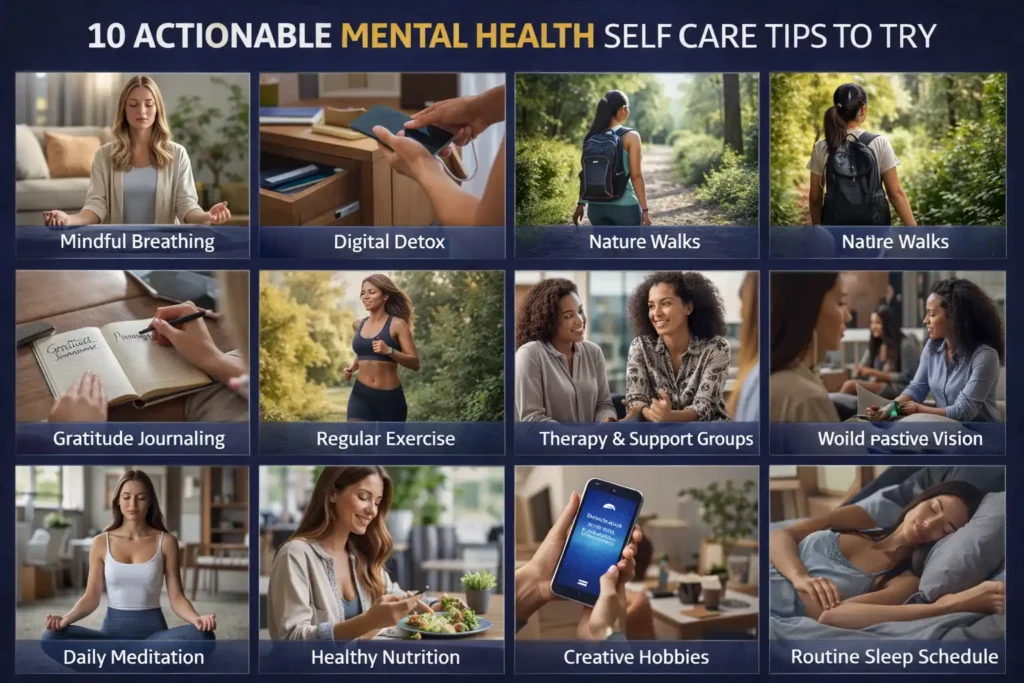
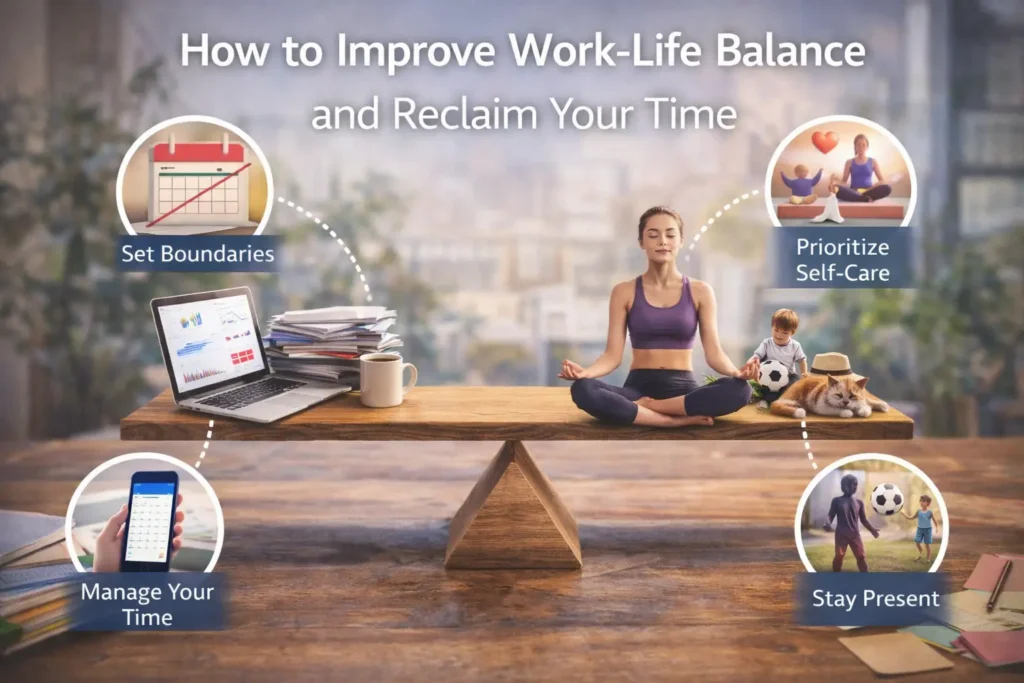
To truly calm anxiety naturally, we first need to get a handle on what’s actually happening in your body. It’s less about willpower and more about working with your body’s built-in systems. Simple, powerful techniques like deep breathing, sensory grounding, and mindful movement are so effective because they speak directly to your nervous system, helping you shift from high alert back to a state of calm.
Understanding Why Your Body Reacts to Anxiety

Before we jump into the “how-to,” let’s get real about what anxiety feels like. It’s not just a thought or a worry; it’s a full-body experience. That racing heart, the shallow breaths that won’t go deep enough, the tension clenching your shoulders—these are all physical signals. They’re coming from your body’s ancient survival mechanism: the ‘fight-or-flight’ response.
When your brain senses a threat—whether it’s a genuine danger, a looming work deadline, or just an overwhelming social situation—it hits the panic button. This floods your system with stress hormones like cortisol and adrenaline. Their job is to get you ready for immediate, physical action, which is why your heart pounds and your muscles get tight.
I like to think of it as an overactive smoke detector. Your body has the best intentions and is just trying to protect you, but its alarm system can be a little too sensitive for modern life.
The Biology of Your Body’s Alarms
Understanding this biological wiring is the first step toward regaining a sense of control. When you can recognize a pounding heart for what it is—a hormonal surge, not a sign that something is terribly wrong—you can start working with your body instead of fighting against it.
This is where the natural techniques we’re about to cover come in. They are designed to directly communicate with this primitive alarm system.
For example, when you intentionally slow down and deepen your breath, you activate the vagus nerve. This major nerve is like a direct line to your nervous system’s command center, and deep breathing sends it a clear signal that it’s safe to stand down. This simple act can physically lower your heart rate and blood pressure, effectively hitting the brakes on that fight-or-flight reaction. You’re essentially sending a message back to your brain that says, “False alarm. We’re okay.”
When you reframe anxiety symptoms as biological signals—not personal failings—you shift from feeling like a victim of your emotions to being an active participant in managing your body’s responses. This perspective is empowering and is the foundation for learning how to truly calm anxiety.
You Are Not Alone in This Feeling
If these physical sensations make you feel overwhelmed and isolated, please know you are in good company. Far from it. Anxiety disorders have been on the rise globally, growing from 3.7% of the population in 1990 to 4.4% by 2021. That translates to hundreds of millions of people worldwide who know exactly what this feels like.
This guide will give you the tools to manage these physical alarms, putting you back in the driver’s seat. For more insights on taking charge of your wellness, feel free to explore our other articles on health.
Grounding Techniques for Immediate Anxiety Relief
When anxiety floods your system, it can feel like a genuine emergency. Your thoughts start racing, your heart pounds, and the future suddenly seems terrifying. In moments like these, you don’t need a complex, long-term strategy. What you need is an anchor—something to pull you back to the present, right now.
This is where grounding techniques become your most powerful tool.
Grounding is simply the practice of anchoring yourself in the present moment by reconnecting with your physical body and senses. It’s an incredibly effective way to interrupt the spiral of anxious thoughts by shifting your focus to what is real and tangible. Best of all, these methods are discreet, simple, and can be used anywhere, anytime.
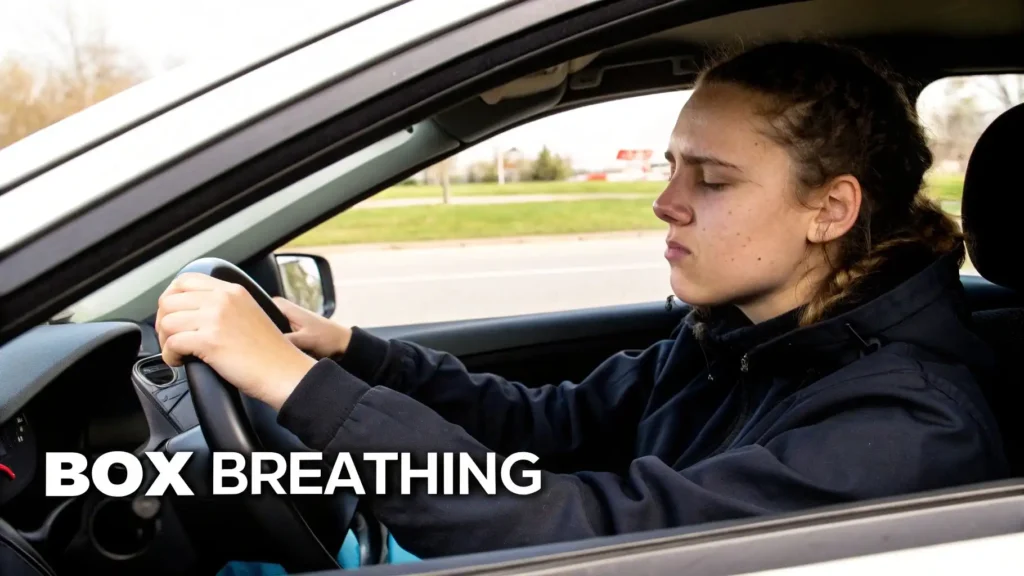
Master Your Breath with Box Breathing
One of the quickest and most effective ways to calm your nervous system is by controlling your breath. When you’re anxious, your breathing naturally becomes shallow and rapid, which only reinforces your body’s ‘fight-or-flight’ response. By intentionally slowing your breath down, you send a direct message to your brain that the perceived threat has passed and it’s safe to relax.
Box breathing, sometimes called four-square breathing, is a profound technique used by everyone from Navy SEALs to therapists to manage acute stress. The rhythmic, predictable nature of the practice is incredibly soothing.
Here’s the simple pattern:
- Inhale Slowly: Breathe in through your nose for a slow count of four. Feel the air completely fill your lungs.
- Hold Your Breath: Gently hold your breath for another count of four. Try not to clench your muscles during the hold.
- Exhale Slowly: Breathe out gently through your mouth for a slow count of four, pushing all the air out.
- Hold Again: Hold your breath for a final count of four before starting the cycle over again.
Imagine you’re sitting in your car before a big meeting. Your heart is hammering and your mind is a chaotic mess of “what ifs.” Instead of letting that anxiety build, you can quietly practice a few rounds of box breathing. The steady rhythm gives your brain a focal point, pulling your attention away from your worries and back to the simple act of breathing. After just a minute or two, you’ll start to feel your heart rate slow down.
Engage Your Senses with the 5-4-3-2-1 Method
When your mind is stuck in an anxious loop, pulling your awareness back to your five senses is a game-changer. The 5-4-3-2-1 technique is a sensory-based exercise designed to pull you out of your head and into your immediate environment, stopping the cycle of panic before it can really take hold.
This method works because it forces your brain to focus on concrete, tangible details around you, which makes it nearly impossible to simultaneously entertain abstract fears and worries.
The goal of the 5-4-3-2-1 method isn’t to stop your thoughts entirely, but to shift your focus. By deliberately engaging your senses, you give your mind a new task, effectively sidelining the anxious chatter and anchoring you firmly in the present moment.
Here’s the step-by-step process you can follow anywhere:
- 5 Things You Can See: Look around the room and name five distinct objects. Don’t just list them; really notice the details. For instance, “I see the blue pen on my desk, the specific grain of the wood, a small crack in the ceiling, the light reflecting off my phone screen, and a spiderweb in the corner.”
- 4 Things You Can Feel: Turn your attention to physical sensations. What are four things you can feel right now? It could be the softness of your sweater against your skin, the solid chair supporting you, the slight breeze from a vent, or the cool surface of a table under your fingertips.
- 3 Things You Can Hear: Listen carefully and identify three distinct sounds. Maybe it’s the distant hum of traffic, the ticking of a clock, or even just the sound of your own breathing.
- 2 Things You Can Smell: What scents can you pick up in your environment? It might be the faint smell of coffee, the hand lotion you used, or the clean scent of the air. If you can’t identify anything, just imagine two smells you find pleasant.
- 1 Thing You Can Taste: Finally, focus on one thing you can taste. This could be the lingering taste of your morning tea, a sip of water, or simply the natural taste inside your mouth.
Picture yourself in a crowded, overwhelming grocery store. You can pause your cart and discreetly run through this exercise. It immediately pulls your focus from the internal chaos to the external world, providing a quick sense of stability and calm.
For a quick reference, here are some of the most effective techniques you can use when you feel anxiety rising.
Immediate Anxiety Relief Techniques
This table provides a snapshot of simple, effective techniques you can deploy the moment you feel overwhelmed.
| Technique | How It Works | Best For |
|---|---|---|
| Box Breathing | Regulates the nervous system by slowing heart rate and signaling safety to the brain. | Moments of high stress, panic, or before a nerve-wracking event. |
| 5-4-3-2-1 Senses | Interrupts racing thoughts by forcing your brain to focus on the immediate environment. | Feeling disconnected, overwhelmed by thoughts, or being stuck in “what-if” scenarios. |
| Cold Exposure | A splash of cold water or holding an ice cube triggers a physiological reset (mammalian dive reflex). | Sudden, intense spikes of panic or when you need a powerful “pattern interrupt.” |
| Progressive Muscle Relaxation | Releases physical tension by systematically tensing and then relaxing muscle groups. | When anxiety manifests as physical tightness, restlessness, or muscle aches. |
Keep these tools in your back pocket. The key is not to wait until you’re in a full-blown panic but to use them as soon as you notice the first signs of anxiety. With practice, they become second nature.
Building Long-Term Calm with Daily Lifestyle Habits
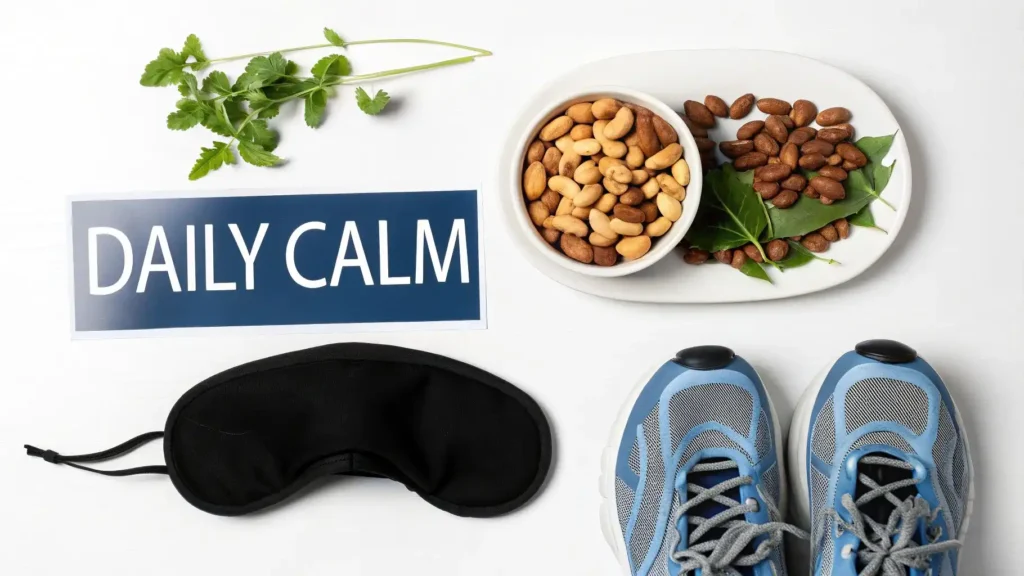
While the techniques we’ve discussed are your go-to for putting out fires in the moment, building a life with less anxiety is more about fire prevention. It’s a long game, played with the small, consistent choices you make every single day.
This is about creating a strong foundation of calm that makes you less vulnerable to life’s inevitable storms. It’s the difference between being reactive and being proactive. We build this foundation by focusing on three core pillars of well-being: nutrition, sleep, and movement. Don’t think of these as chores—see them as daily opportunities to send your body powerful signals of safety and support.
Fuel Your Brain for Calm
The connection between your gut and your brain isn’t just a trendy wellness topic; it’s a profound biological reality. What you eat directly impacts your mood, your energy, and your brain’s ability to cope with stress. Some foods can secretly stoke the fires of anxiety, while others provide the essential building blocks for a balanced mind.
Ever notice how a mid-afternoon sugar rush is followed by a jittery crash? That sudden dip in blood sugar can perfectly mimic the physical symptoms of an anxiety attack, right down to the racing heart. Likewise, while that morning coffee is a non-negotiable ritual for many, too much caffeine can crank your nervous system into a state of high alert and keep it there.
The goal is to intentionally incorporate foods rich in nutrients known to support brain health and emotional regulation.
- Magnesium-Rich Foods: Think of this mineral as a natural relaxant for your nervous system. You’ll find it in dark leafy greens (spinach, kale), nuts (almonds are great), seeds (especially pumpkin seeds), and avocados.
- Omega-3 Fatty Acids: Famous for their anti-inflammatory power, omega-3s are absolutely vital for healthy brain function. Fatty fish like salmon and mackerel are fantastic sources, but so are walnuts and flaxseeds.
- Complex Carbohydrates: Ditch the simple sugars and embrace foods like oats, brown rice, and quinoa. They provide a slow, steady release of energy, which helps prevent the dramatic blood sugar spikes and crashes that can leave you feeling anxious.
This isn’t about achieving a “perfect” diet. It’s about making small, mindful swaps. Choose a handful of almonds over a candy bar. Toss some spinach into your morning smoothie. Each one of these choices is a vote for a calmer state of mind.
Prioritize Restorative Sleep
Sleep is when your brain and body get to work on critical maintenance and repair. When you skimp on quality sleep, your nervous system becomes frayed and your emotional resilience plummets. It’s no wonder you’re more likely to perceive a neutral comment as a threat when you’re exhausted.
Of course, just telling someone with anxiety to “get more sleep” is laughably unhelpful. The key is to focus on your sleep hygiene—the environment and habits you create around bedtime. Building a consistent, calming routine is one of the most effective things you can do to manage anxiety day-to-day.
A solid wind-down routine could look like this:
- Dim the Lights: About an hour before you want to be asleep, lower the lights in your home. This helps signal your brain to start producing melatonin, the hormone that governs your sleep-wake cycle.
- Go Screen-Free: The blue light from our phones, tablets, and TVs actively interferes with melatonin production. Put all screens away at least 60 minutes before bed.
- Find a Calming Ritual: Read a book (not a thriller!), do some gentle stretching, or listen to calm music. Avoid anything that gets your mind racing, like work emails or the evening news.
- Be Consistent: Try to go to bed and wake up around the same time every day, even on weekends. Your body’s internal clock thrives on this kind of regularity.
Taking a proactive approach to rest pays huge dividends in your ability to handle stress. For more ideas on building these kinds of habits, check out our other mental health self-care tips.
Move Your Body to Soothe Your Mind
Movement is one of the most powerful, readily available anti-anxiety tools we have. When you feel that familiar surge of anxiety, your body is being flooded with stress hormones like adrenaline and cortisol, prepping you for fight-or-flight. Physical activity gives that energy a productive place to go, literally burning off the stress.
You don’t need to sign up for a marathon to feel the effects. Even moderate, consistent movement makes a world of difference.
- Take a Brisk Walk: A simple 20-30 minute walk can significantly lower cortisol levels and trigger the release of mood-lifting endorphins. If you can do it outside in nature, even better.
- Try Gentle Yoga or Stretching: These practices are brilliant because they combine physical movement with mindful breathing, which directly activates the parasympathetic nervous system—your body’s “rest and digest” mode.
- Just Dance: Put on your favorite music and just move. It’s a fantastic way to release physical tension and get out of your own head for a few minutes.
The secret is to find a form of movement you actually enjoy. That’s what makes it a sustainable part of your life. When you move your body regularly, you’re not just managing anxiety in the moment; you’re improving your sleep and building long-term resilience.
These daily habits—nourishing your body, prioritizing rest, and moving consistently—are the building blocks of mental wellness. They are not quick fixes. Sadly, many people who could benefit from these strategies never get the support they need. The World Health Organization highlights a massive treatment gap for anxiety disorders, showing that only about 27.6% of people affected receive any kind of care. You can learn more about these global mental health challenges and why accessible strategies are so vital. By taking these small, deliberate steps, you are actively building a more resilient foundation, one day at a time.
Mindfulness Strategies to Reframe Anxious Thoughts
Anxiety is a masterful storyteller. It spins these incredibly convincing tales of worst-case scenarios, playing them on a loop in your head until they feel like facts. A huge part of learning how to calm anxiety naturally isn’t just about the physical stuff; it’s about learning how to press pause on those stories and take back the remote.
This is where mindfulness comes in. Forget any ideas about it being some complex, mystical practice. Think of it as a practical workout for your brain.
At its core, mindfulness is just paying attention to right now, without judging it. When an anxious thought storm rolls in, our first instinct is usually to fight it or get completely swept away. Mindfulness gives you a third option: just watch it.
Imagine your thoughts are cars driving down a busy street. Mindfulness is like sitting on a park bench and just watching them go by. You don’t have to jump into traffic and chase every single one. You just notice them—some are loud, some are fast, some are beat-up old station wagons—but you realize you’re the person on the bench, not the cars.
The Power of Observing Your Thoughts
This simple act of watching your thoughts creates a tiny bit of space between you and your anxiety. And in that space, you find your power again. You start to see anxious thoughts for what they really are—just temporary blips in your brain, not your unchangeable reality.
An easy way to start is with a really short, daily meditation. Find a quiet corner, get comfortable, and just focus on the feeling of your breath going in and out. A thought will pop up (it always does). When it does, just gently label it in your head—”thinking,” “worrying”—and guide your attention right back to your breath.
The point isn’t to have an empty mind. The goal is to practice coming back, over and over. Every time you do, you’re building the mental muscle you need to step out of those anxious thought loops during the day.
Schedule a Worry Period
One of the most maddening things about anxiety is how it ambushes you when you’re trying to focus on something else. A great trick to get a handle on this is scheduling a “worry period.” It sounds counterintuitive, but you’re basically giving your worries an appointment.
Here’s the game plan:
- Put it on the calendar: Pick a 15-20 minute slot every day. Maybe 4:30 PM to 4:45 PM. This is your official, dedicated time to worry.
- Delay the worry: When an anxious thought crashes the party outside of that time, acknowledge it. Tell yourself, “Okay, I see that thought. I’ll deal with it during my worry time later.”
- Worry on purpose: When your scheduled time arrives, let it rip. Go through all your worries. Write them down, pace around, whatever you need to do.
- Pencils down: When the timer goes off, you’re done. Get up, change your environment, and move on.
This simple technique helps you contain anxiety instead of letting it contaminate your entire day. You’ll be surprised how often, by the time your worry appointment rolls around, some of those earlier anxieties have already fizzled out on their own.
By creating a boundary around your worries, you teach your brain that you are in control of when and how you engage with anxious thoughts. It transforms worry from a constant, intrusive background noise into a scheduled, manageable task.
Challenge Your Anxious Thinking Patterns
A lot of anxious thoughts are powered by what psychologists call cognitive distortions, or “thought traps.” These are basically faulty thinking habits that warp how you see reality and crank up your anxiety. Learning to spot them is a game-changing skill borrowed from Cognitive Behavioral Therapy (CBT).
One of the most common traps is black-and-white thinking. This is where you see everything in extremes—it’s either a complete success or an absolute failure. There’s no middle ground.
Real-World Scenario
Let’s say you fumbled a little during a presentation at work.
- Black-and-White Thought: “I totally bombed that presentation. I’m a complete failure at my job.”
- Challenge the Thought: Hold on. Was the entire presentation a disaster because of one slip-up? What about the parts that went well? Did anyone actually say it was terrible? A more realistic view might be, “I messed up that one slide, but the rest of my points were solid, and people seemed to get the main idea.”
By questioning that first catastrophic thought, you reframe the situation into something that’s more accurate and way less stressful. This isn’t about toxic positivity; it’s about seeing the shades of gray. The more you practice this, the weaker those anxious thoughts become, giving you a clearer, calmer perspective.
Building Your Personal Anti-Anxiety Toolkit
It’s one thing to understand your body’s signals and have a few go-to techniques. It’s another thing entirely to have a real plan for when things get tough. Knowledge is great, but a personalized strategy is what truly makes a difference on a hard day.
This is where we move from simply learning about managing anxiety to building your own system for it. The idea is to create two distinct, actionable plans: one for prevention and one for those moments you need immediate intervention.
Your Daily Calm Routine
Think of this as your proactive defense. It’s all about weaving small, intentional habits into your day to keep your nervous system balanced and your baseline anxiety low. The goal isn’t to pile more onto your to-do list, but to find tiny pockets of calm that are actually sustainable.
Imagine a student prepping for finals, feeling overwhelmed from morning to night. Their daily routine could look something like this:
- Morning Kickstart (5 Minutes): Before even looking at their phone, they do three rounds of Box Breathing. This sets the tone for the day, starting from a place of regulation, not reactivity.
- Study Break Reset (10 Minutes): Every hour, they step away from the books for a ten-minute walk outside. Just focusing on the sights and sounds gives their brain a much-needed break.
- Evening Wind-Down (30 Minutes): An hour before bed, the phone goes on airplane mode. They dim the lights and read something completely unrelated to their studies to signal to their brain that it’s time to switch off.
This kind of structure creates predictable moments of calm, preventing stress from snowballing throughout the day.
Your Anxiety Flare-Up Plan
This is your emergency guide—the instructions you write for yourself when your mind is too clouded by panic to think clearly. When anxiety spikes, rational decision-making flies out the window. Having a pre-made plan removes all the guesswork.
Keep it simple, clear, and write it down somewhere you can easily grab it, like a note on your phone or a small card in your wallet.
Your Flare-Up Plan is a compassionate act of self-care from your calmest self to your most anxious self. It’s a roadmap back to safety that you create when you have the clarity to do so.
Your plan should list your most effective, no-fuss tools. For a busy parent juggling work and kids, it might be:
- Top 3 Grounding Techniques:
- Splash cold water on my face.
- Do the 5-4-3-2-1 Senses method.
- Grip an ice cube until it melts.
- A Comforting Mantra:
- “This feeling is temporary, and I am safe.”
- A Person to Call:
- My sister, who knows to just listen.
- A Soothing Activity:
- Put on headphones and listen to a specific calming playlist for five minutes.
Having this tangible list gives you immediate, concrete steps to take when you feel lost in an anxiety spiral. The reality is, you’re not alone in feeling this way. In the United States, anxiety disorders are the most prevalent mental illness. In fact, social anxiety disorder alone affects 15 million adults, which is 7.1% of the population. A personalized toolkit is a practical response to a very common challenge. You can find more anxiety statistics from the United States to see just how many people are navigating similar feelings.
By preparing both a daily routine and an emergency plan, you’re building a solid, comprehensive approach to managing your well-being. For even more ideas on handling daily pressures, our other articles on stress management offer plenty of additional insights.
Knowing When Natural Methods Are Not Enough
Learning these natural strategies is a game-changer. It puts incredible tools for calming your mind right at your fingertips, building your resilience day by day.
But there’s another crucial piece to this puzzle: knowing when self-help isn’t the full picture. Reaching out for professional support is never a sign of failure. In fact, it’s a powerful, courageous step toward taking back control of your well-being.
Think of it this way: natural methods are like excellent first aid for your mind, perfect for handling everyday challenges. But for deeper wounds, you need a doctor. If anxiety is consistently getting in the way of you living your life, it might be time to bring in a professional.
Signs It’s Time to Talk to a Professional
Take a moment and see if any of these situations feel familiar. If they do, it might be a signal that the weight of anxiety has become too much to carry alone, and that’s perfectly okay.
- Your day-to-day life is getting hard. Is anxiety making it tough to focus at work, connect with your loved ones, or even just get through your daily routine?
- You’re in a constant state of distress. You feel on edge, overwhelmed, or filled with a sense of dread most of the time, and the techniques you’ve learned just aren’t cutting it anymore.
- You’re starting to shrink your world. Are you avoiding social events, places, or things you used to love because of intense fear or the threat of panic?
Seeking professional help is an act of profound self-respect. It means you value your mental health enough to team up with an expert who can offer a fresh perspective and proven strategies designed just for you.
Getting familiar with the types of help available can make the whole process feel much less intimidating.
A therapist or counselor can guide you through talk therapy to build effective coping strategies. One of the most common and successful approaches is Cognitive Behavioral Therapy (CBT). It’s a practical method that helps you identify, challenge, and reframe those sticky, anxious thought patterns we’ve been talking about.
A psychiatrist is a medical doctor who specializes in mental health. They can provide a diagnosis and, if necessary, prescribe medication as part of a treatment plan. For many people, the combination of therapy and medication delivers the best results. The goal is always the same: to give you the comprehensive support you need to feel like yourself again.
Frequently Asked Questions About Natural Anxiety Relief
When you’re exploring ways to manage anxiety naturally, it’s normal to have a few questions pop up. Let’s tackle some of the most common ones.
A big one is: how fast can I expect this stuff to work? For the in-the-moment techniques, like box breathing or the 5-4-3-2-1 grounding method, the answer is pretty quickly. You can often feel your nervous system begin to downshift within just a few minutes. The real trick is making it a consistent practice.
People also wonder when the best time is to use these strategies. Think of it as a two-part approach. You’ll want to deploy tools like grounding the second you feel that familiar spike of anxiety. But you also need to play the long game by weaving proactive habits—like mindful movement and brain-healthy nutrition—into your daily routine. This gives you both an emergency brake and a stronger foundation for lasting calm.
How Long Until I See a Difference?
While quick techniques can put out an immediate fire, it’s the long-term lifestyle shifts that truly build your resilience. If you commit to improving your sleep or adopting a diet that supports your mental health, it might take a few weeks before you notice a significant, lasting change in your baseline anxiety.
Be patient with yourself. The goal here is steady progress, not overnight perfection. Learning how to calm anxiety naturally is a journey, and every consistent step forward counts.
At maxijournal.com, we’re focused on giving you clear, practical information to support your well-being. You can find more of our curated articles on health, science, and personal growth right here: https://maxijournal.com.
Discover more from Maxi Journal
Subscribe to get the latest posts sent to your email.