You have two hours after dinner. One night you want a quiet village, a fire, and a field that needs work before winter. The next night you want a siege, a weapon in your hands, and friends yelling over the clash. Medieval games for PC split along that line, and the right pick is the evening you have.
This list sorts ten games by play style and time commitment, across RPGs, strategy, action, simulation, and survival. I judge each pick on feature depth, historical grounding, learning curve, and value. Some are finished products, with editions and mods that change the run, and some are still in development, so today’s build may not match next season’s.
Hardware comes before taste, because a heavy open world on a weak PC turns a slow RPG into a slideshow. If the machine is still parts on a desk, start with these tips for assembling a gaming computer. Then match the game to your hours. A dynasty sim wants a season, a melee night wants friends online, and a village builder pauses cleanly when you are tired.
1. Kingdom Come: Deliverance II
Kingdom Come: Deliverance II is the slow evening. You play Henry in 15th-century Bohemia, on foot, with no dragons and no spell bar. Swordplay is skill-based, and quests react to who you are in that world.
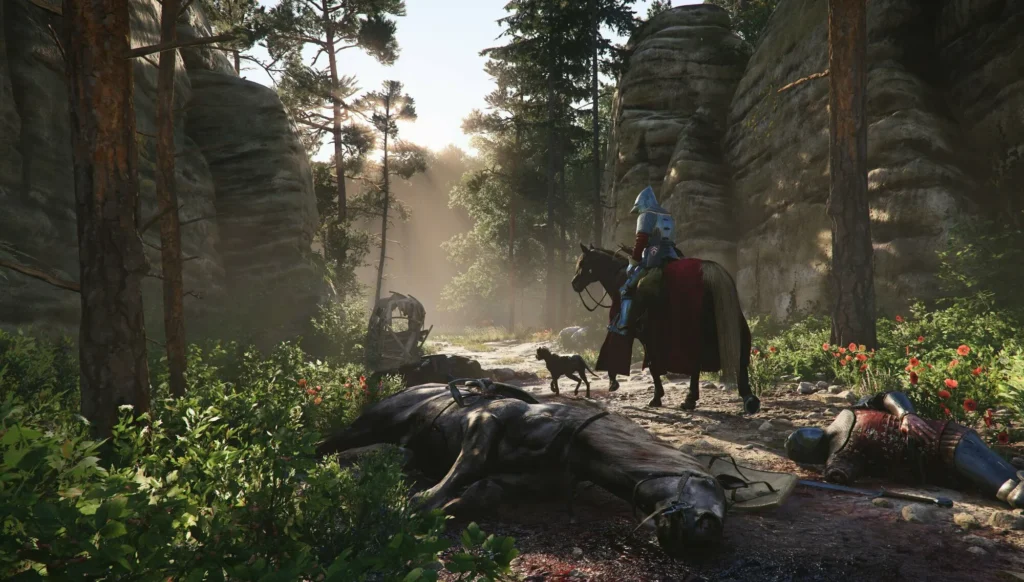
Launch demand was real. The game sold more than 1 million copies on its release day and hit an all-time Steam concurrent-player peak of 256,206, according to Wikipedia’s Kingdom Come: Deliverance II page. Treat that peak as platform engagement, not a pure PC sales total, because it also shipped on consoles.
What the hours feel like:
- A specific place: Villages, roads, and politics belong to Bohemia, not a generic castle theme park.
- A weapon you earn: Period arms punish button mashing until your skills catch up.
- Side roads: Quests reward players who poke around instead of rushing the main plot.
Combat and progression take time. If you want constant action, this is the wrong slot, though strong PC games you can start tonight cover faster options. Details sit on the Kingdom Come site.
2. Mount & Blade II: Bannerlord
Mount & Blade II: Bannerlord gives you a sandbox, not a guided plot. In Calradia, a fictional continent, you choose how to build your life: fight in first or third person, recruit troops, trade, negotiate, or claim a throne.
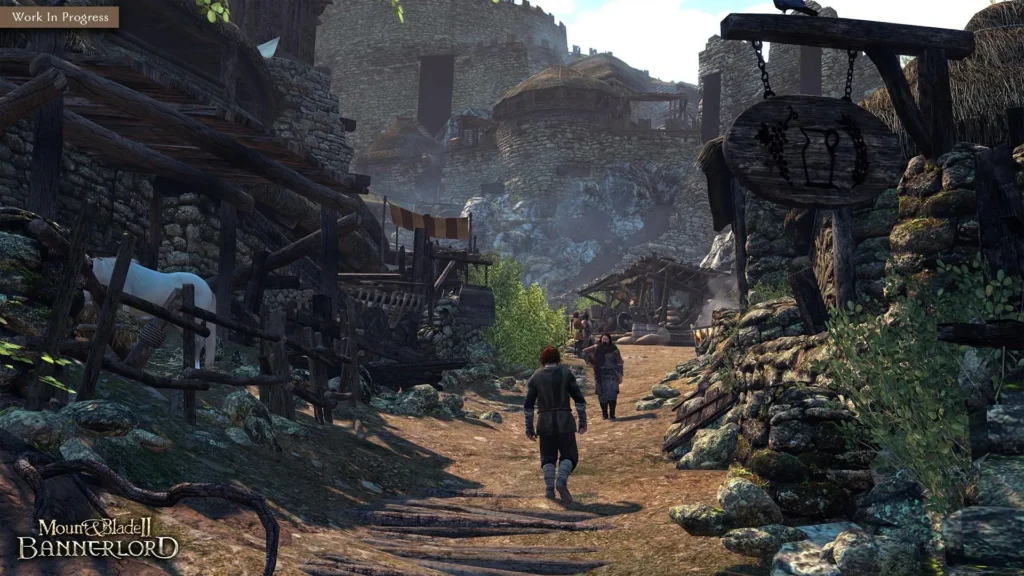
Its audience has remained active beyond launch week. I would skip it if you want a tightly directed story. Choose it if you want a save shaped by your own decisions over a long campaign, with Workshop mods that can change troops, maps, and economies. Character appearance and gear are part of the appeal, so it also suits players looking for games with character customization.
Practical rule: Treat mods as the closest thing to an expansion pack. Vanilla systems can feel uneven, and the sandbox offers little direction when you are unsure what to do next.
Battles put you in the fighting, but your own swings are only part of the outcome. Troop lines can hold or collapse around you. For details, visit Bannerlord at TaleWorlds.
3. Crusader Kings III
The campaign map in Crusader Kings III is a family argument that lasts centuries.
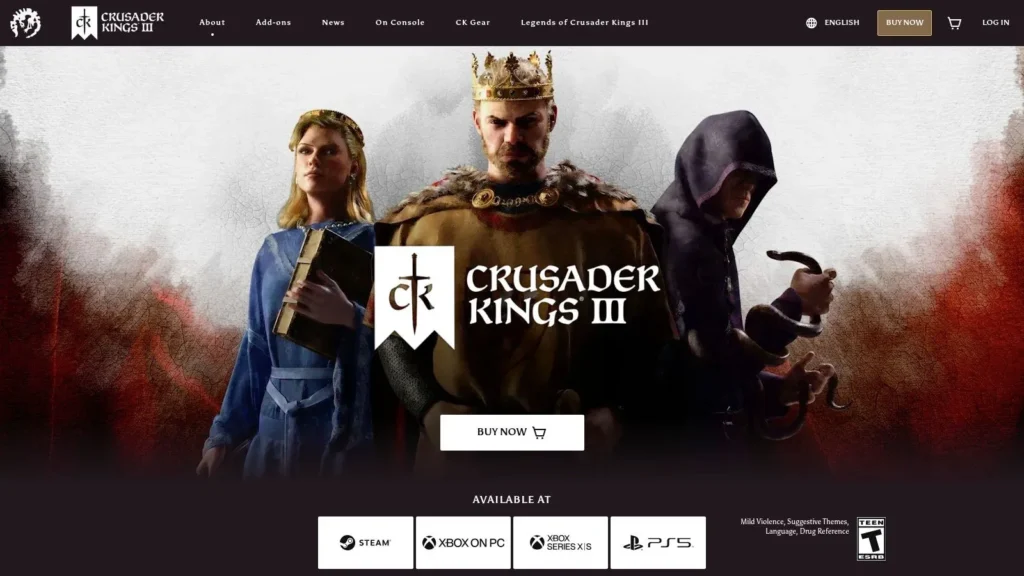
You do not clear a map in one night. You run a dynasty. Marriages, inheritance, grudges, and ugly traits write the campaign for you. Diplomacy, war, and realm management are the core. There is no fixed ending, which is the point and also the risk. If you need a narrator, you will drift.
What the expansions change
The base game already fills a weekend. Optional packs add regions, events, and systems, and the bill grows if you grab all of them at full price. I recommend the base game first. Learn one succession crisis before you stack DLC.
The menu of systems is daunting, and that is fair warning. It is also why a failed marriage can outlast a won battle in your memory. Start at Crusader Kings III.
4. Age of Empires II: Definitive Edition
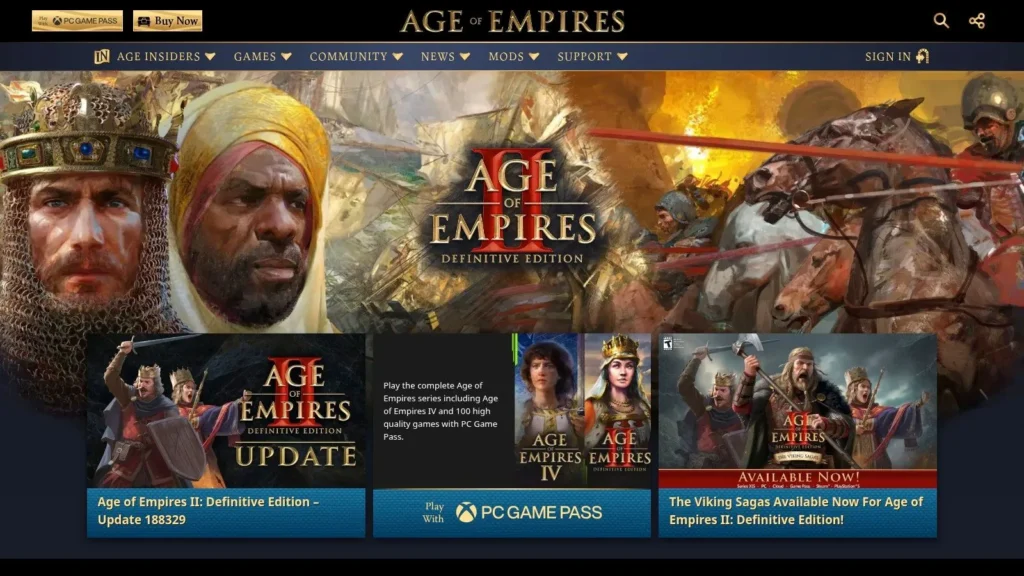
Age of Empires II: Definitive Edition is the weeknight strategy pick. You gather, age up, and break a base. Campaigns, a roster of more than 45 civilizations, co-op, and a scenario editor ship together. Friends can join without reading a novel of tooltips. Ranked matches are another sport. They move fast, and newcomers get flattened.
A classroom claim is easy to oversell. Research in the International Journal of Management and Applied Research reported that 12 of 12 second-year students and 25 of 31 third-year students surveyed had played medieval-history games, and it also warned that learning depends on viewpoint, simplification, and what the player does. This game teaches maps, timings, and civilization bonuses. It does not teach life in a manor.
The Definitive Edition is the clean starting box. Extra packs pile up, and the store page can confuse you, so add them after you know you like the pace. Play it from Age of Empires II: Definitive Edition.
5. Manor Lords
Manor Lords is the town you build when you do not want to be the hero. Layout, seasons, and supply lines sit in front of the battles. Military pressure shows up because your economy created it.
The town you are laying out is the whole game, not a menu between fights.
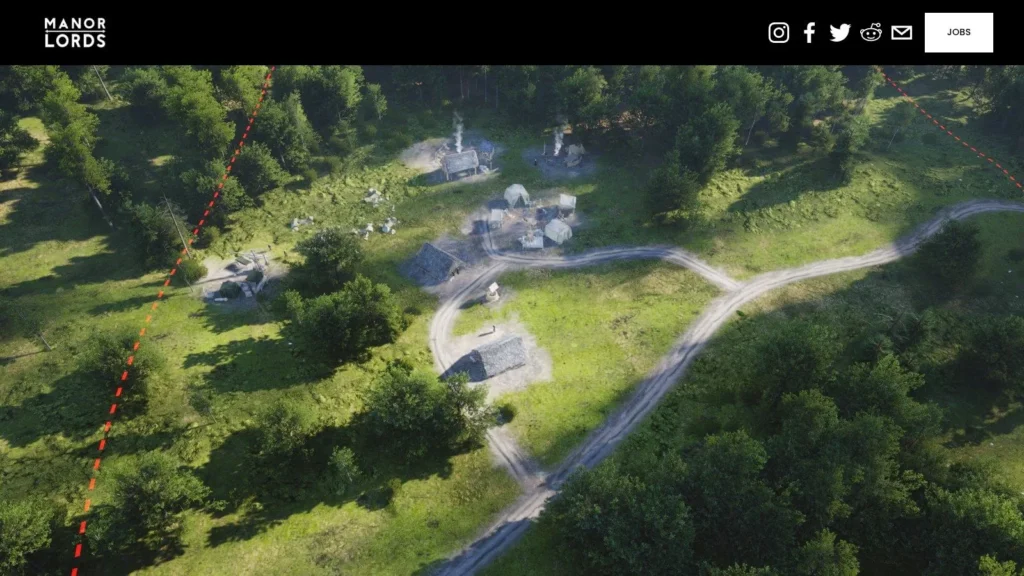
Windows Central, citing Steam data, reported more than 170,000 concurrent players on PC shortly after the April 2024 Early Access launch. That rush does not mean the game is finished. Check the current build before you pay. Systems and content still move.
The pace is measured. If you need a fight every ten minutes, you will get bored. If you like placing roads until the village looks right, you will not. Follow updates at Manor Lords.
6. Medieval Dynasty
Medieval Dynasty drops you to civilian scale. You hunt, farm, craft, and grow a family. You are not a king, and nobody hands you a war to win. Online co-op lets friends raise the same village, which changes the chore list from lonely to shared.
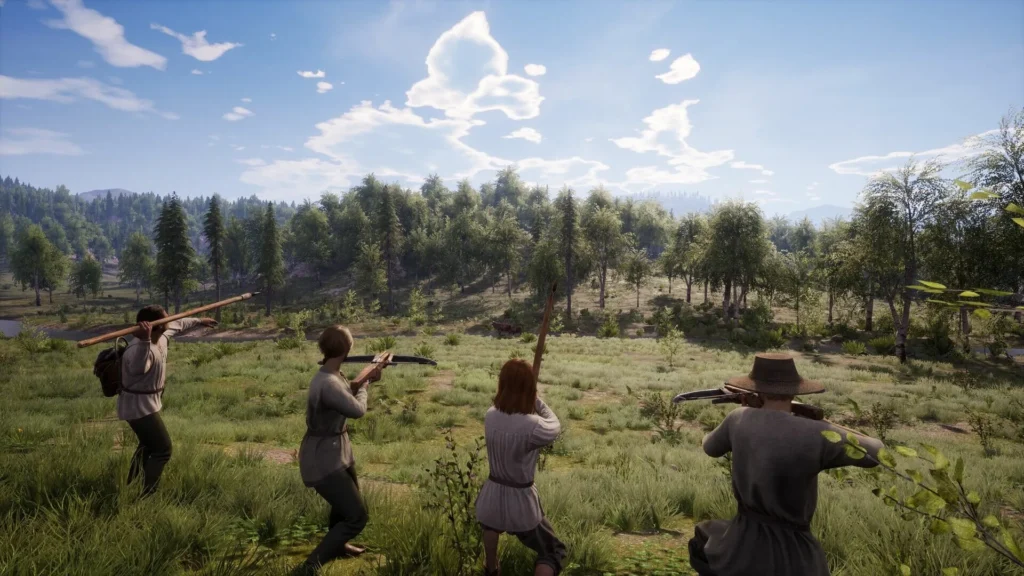
Render Cube said the game had reached 2 million players globally by June 2024, as reported by Game World Observer. That audience fits a slow loop. Days repeat. There is no tight authored plot pulling you to the next cutscene.
A good fit when you want:
- A home, not a throne: Building and family progression are the point.
- Company: Co-op turns farming and crafting into a shared project.
- Low drama: Survival pressure stays practical, not cinematic.
Skip it if you need scripted twists. The site is Medieval Dynasty.
7. Kingdom Come: Deliverance
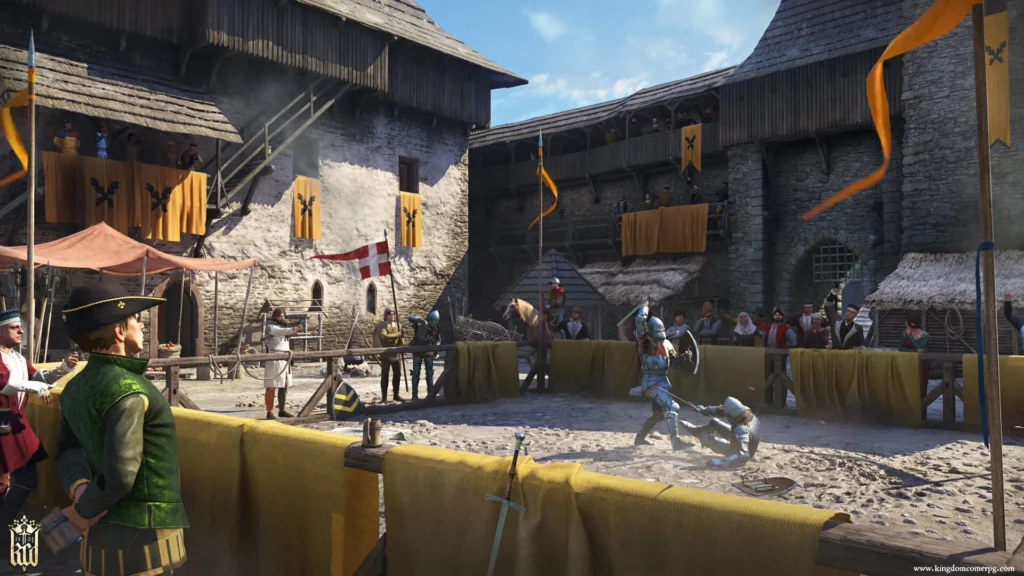
Kingdom Come: Deliverance is the cheaper door into Henry’s story if the sequel’s price stings. Same rules apply. It is an open-world RPG, combat is first person, and there is no magic. Early fights feel clumsy on purpose. You are a nobody with a sword you do not know how to use.
Why the Royal Edition matters
Sales did not fade after launch week. The game sold approximately 500,000 copies in its first two days, and reported sales passed 8 million by November 2024, according to Wikipedia’s Kingdom Come: Deliverance page. Buy the Royal Edition if you want the expansions in one box. They add quests and activities. They do not remove the learning curve. Patience is the add-on.
It is a strong sale pickup and a poor impulse if you hate deliberate systems. See Kingdom Come: Deliverance.
8. Total War: MEDIEVAL II – Definitive Edition
Total War: MEDIEVAL II – Definitive Edition is the older commander’s chair. You move armies on a turn-based map, then drop into real-time battles. The Definitive Edition includes the Kingdoms expansion, four extra campaigns on different maps. Mods and a long-running community still carry it. The interface shows its age, and conveniences from newer strategy games are mostly missing.
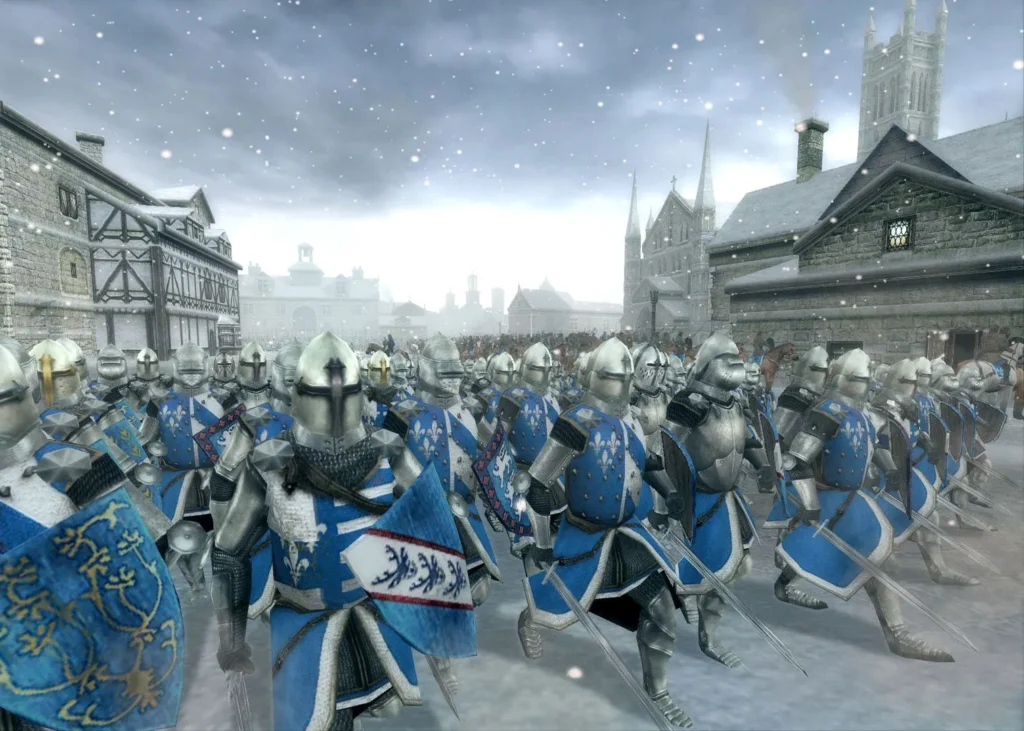
The series earned a wide PC audience early. Medieval: Total War, released in 2002, ranked as the number-one PC game by units sold in the United Kingdom during September 2002, with sales approximately 1.5 times those of the second-ranked PC title, according to an Activision release on the ELSPA/Chart-Track report. That was a different game. It explains why large-scale medieval command still gets recommended.
What still works, and what does not:
- Campaign bulk: Kingdoms gives you four more maps when the base war is done.
- Battle layer: You plan on the map, then you command the field.
- Age: Graphics and menus lag behind modern strategy games.
I would pick it for conquest, not character drama. Grab it at Total War Medieval II.
9. Chivalry 2
Chivalry 2 is the siege night with friends. Big teams, swords, polearms, and objectives. You can play first or third person, and cross-platform play is there. There is no solo campaign to hide in when you lose a match.
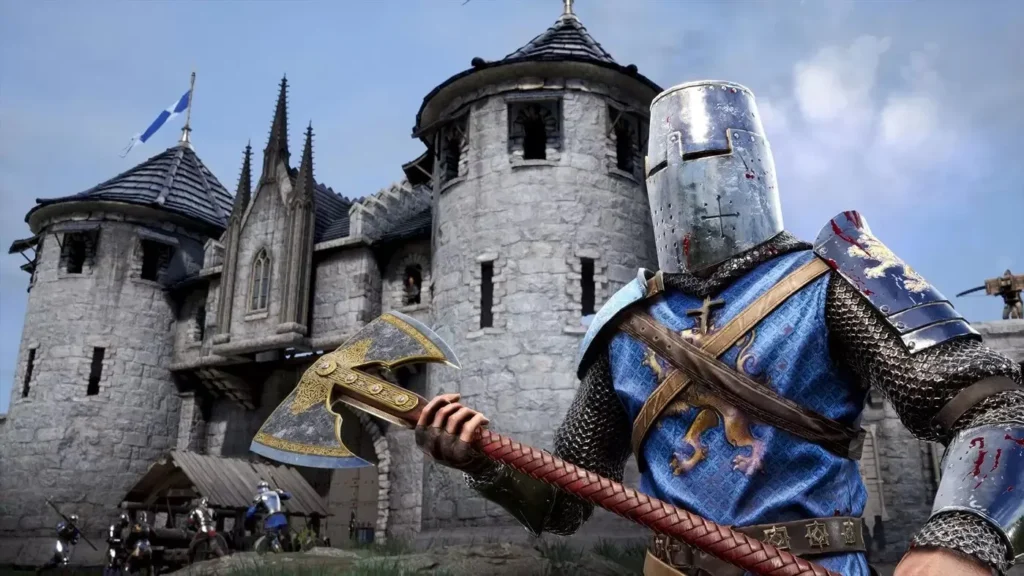
Jump in for an hour. Do not expect strategy-game depth, and do not expect a quiet story.
Recent player feedback is more mixed than the overall English-language rating, so read fresh reviews before you buy for a group. It is still the cleanest ninety-minute option on this list. If you want something calmer for a pair of players, two-player RPG games are a different lane. The game lives at Chivalry 2.
10. The Witcher 3: Wild Hunt, Complete Edition
The Witcher 3: Wild Hunt, Complete Edition is not a history lesson. It is a dark fantasy RPG with medieval furniture: war, mud, swords, folklore, and monsters.
The Complete Edition is the version worth owning if you want the extra maps, not a shorter weekend.
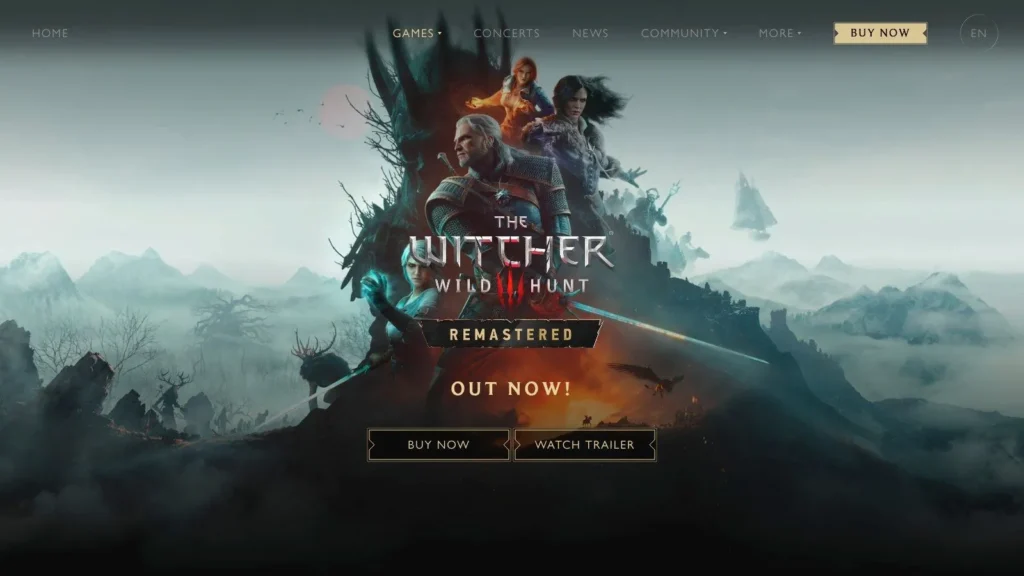
Hearts of Stone and Blood and Wine ship in that edition. Both are large, and Blood and Wine is almost a second map. Quests are written with care, alchemy and monster hunts fill the gaps, and choices stick. The world is huge, which is a con if you wanted a short game.
If you wanted a historical sim, this is the wrong buy. If you wanted a long fantasy evening that still feels like a rough countryside, it is the right one. Start at The Witcher 3.
Medieval PC Games at a Glance
| Item | Core Gameplay | Multiplayer or Co-op | Best For |
|---|---|---|---|
| Kingdom Come: Deliverance II | Historical open-world RPG with skill-based combat and quests | No multiplayer focus | Players seeking an immersive, grounded medieval RPG |
| Mount & Blade II: Bannerlord | Sandbox battles, kingdom building, trade, and diplomacy | Multiplayer available; strong mod support | Players who enjoy open-ended warfare and governing |
| Crusader Kings III | Dynasty-focused grand strategy, intrigue, and realm management | No co-op focus | Strategy fans who enjoy political storytelling |
| Age of Empires II: Definitive Edition | Resource gathering, civilization building, and real-time strategy | Online multiplayer and co-op | Players seeking strategic matches with friends |
| Manor Lords | Settlement building, economic management, and tactical battles | Single-player | Players who enjoy measured town-building and simulation |
| Medieval Dynasty | Survival, crafting, farming, and village development | Online co-op | Players who want to build a medieval community |
| Kingdom Come: Deliverance | Story-driven historical RPG with first-person combat | No multiplayer focus | Players seeking a challenging, immersive solo adventure |
| Total War: MEDIEVAL II – Definitive Edition | Turn-based empire management and real-time battles | Single-player and multiplayer | Players who enjoy historical conquest and large-scale command |
| Chivalry 2 | Objective-based medieval melee battles | Large online team battles and cross-platform play | Players seeking fast-paced multiplayer combat |
| The Witcher 3: Wild Hunt, Complete Edition | Open-world fantasy RPG with sword combat, quests, and monster hunting | No multiplayer focus | Players seeking a rich, expansive fantasy adventure |
Pick Your Medieval World and Start Playing
Go back to the evening you pictured. If you want Henry’s boots on a Bohemian road, and you can spare the learning curve, start with Kingdom Come: Deliverance II. If the price is steep, Kingdom Come: Deliverance and the Royal Edition teach the same patience for less. If you want a village and a season of chores, take Manor Lords or Medieval Dynasty. Manor Lords is still moving, so read the latest notes. Dynasty is the one to share in co-op.
Long campaigns are a different commitment. Crusader Kings III is the dynasty you leave running for months. Total War: MEDIEVAL II Definitive Edition is the map you conquer, with Kingdoms campaigns and mods doing work newer graphics do not. Age of Empires II: Definitive Edition is the one you boot with friends on a weeknight. Bannerlord is the sandbox you bend with Workshop mods when no story arrives. Chivalry 2 is the siege, not the campaign. The Witcher 3 Complete Edition is the fantasy detour when you want monsters and muddy roads.
Accuracy is the trap. A game can feel medieval and still invent the politics, the clothes, and the faith. Open Library of Humanities scholarship argues that medieval games often create authenticity from cultural memory and familiar imagery rather than primary historical evidence. Players with a thin background can treat a developer’s claim as fact. I do not. Separate the map, the weapons, the religion, and the daily work. Eleventh-century England is not fifteenth-century Bohemia, and a fantasy countryside is neither.
Before you pay, check three things. Is the build finished, or still in Early Access? Which edition bundles the expansions you plan to play? Do mods matter, and are they alive? If the price is high, wishlist it and wait for a sale. Start on the base systems until they feel familiar, then add DLC or a mod list. A huge stack on day one mostly creates menus.
Set the desk up so a long campaign does not wreck your neck. A few ideas for battlestation inspiration from DigiDevice help if you are about to live in one of these maps. Then pick one game, not three, and play it past the awkward first hours.
Maxijournal covers games the same way it covers the rest of its daily magazine, with plain writing you can use before you spend money or a weekend. If you are still choosing between a slow historical RPG, a dynasty sim, and a siege with friends, the gaming desk at maxijournal.com is the place to keep reading. Stop by, pick the next piece that matches your evening, and start from there.
Discover more from Maxi Journal
Subscribe to get the latest posts sent to your email.