In a world saturated with video, simply hitting ‘record’ is a recipe for being ignored. The difference between a video that vanishes and one that goes viral is not luck, it’s strategy. Many creators and businesses focus on expensive gear while neglecting the foundational principles that truly capture audience attention and drive tangible results. They publish content that is generic, poorly optimized, and fails to connect, leaving them wondering why their efforts fall flat. This common approach is why most video marketing fails before it even has a chance to succeed.
This guide cuts through that noise. We are not going to talk about abstract theories or tell you to “just be authentic.” Instead, we will explore the 10 essential video marketing best practices that separate amateur efforts from professional, high-impact campaigns. These are the specific, actionable tactics that top performers use to consistently win.
From mastering the critical first three seconds to leveraging platform-specific algorithms and using data for intelligent iteration, these insights are your blueprint for creating videos that do more than just get views. You will learn how to build a loyal community, achieve measurable business goals, and turn your video content into a powerful asset. For any creator aiming to turn diverse topics into compelling, shareable content, applying these core principles is the key to standing out and making a real impact. Let’s dive into the practices that will ensure your video marketing thrives.
1. Create Platform-Specific Content
One of the most impactful video marketing best practices is to move beyond the “one-size-fits-all” approach. Instead of posting the exact same video across every channel, you must tailor content to each platform’s unique format, audience expectations, and technical specifications. What captivates an audience on YouTube often falls flat on TikTok, and what works on LinkedIn won’t necessarily resonate on Instagram Reels.
This strategy involves adapting your core message for different user behaviors. A viewer on YouTube might be ready for a 10-minute deep dive, while a TikTok user expects a high-energy, sub-60-second clip. Adapting content ensures your message lands effectively, respecting the context of where your audience is consuming it.

Why Platform-Specific Content Matters
Each social media platform has cultivated a distinct culture and content consumption pattern. For instance, LinkedIn is a professional network where polished, industry-focused videos perform well. In contrast, TikTok and Instagram Reels thrive on authenticity, trends, and fast-paced, vertical storytelling. By ignoring these differences, you risk appearing out of touch and seeing your engagement plummet.
Media giants like The New York Times exemplify this perfectly. They might produce a comprehensive three-minute documentary for their YouTube channel on a specific news story, while simultaneously posting a fast-paced, 15-second TikTok summarizing the key takeaways with trending audio. This multi-pronged approach maximizes reach and relevance.
Actionable Tips for Implementation
- Adapt Aspect Ratios: Design for vertical viewing (9:16) on TikTok, Reels, and Shorts. Use horizontal (16:9) for YouTube and square (1:1) or vertical (4:5) for Instagram and Facebook feeds.
- Vary Video Length: Create a long-form “hero” video for YouTube. Then, create micro-content from it: a 60-second clip for Reels, a 30-second version for Twitter/X, and a professional summary for LinkedIn.
- Adjust Pacing and Tone: Your YouTube intro can be methodical. Your TikTok intro needs to grab attention in the first three seconds. The tone on LinkedIn should be professional, while on Instagram it can be more casual and personal.
- Utilize Native Features: Incorporate platform-specific features like TikTok’s trending sounds, Instagram’s interactive stickers, or YouTube’s end screens to boost engagement natively.
2. Lead with Strong Hooks in First 3 Seconds
In today’s fast-scrolling digital landscape, you have mere seconds to earn a viewer’s attention. One of the most critical video marketing best practices is to lead with a powerful hook within the first three seconds. This is the window where most users decide whether to keep watching or swipe away, making your video’s opening the single most important factor for retaining an audience.
An effective hook immediately signals value by posing a compelling question, presenting a surprising statistic, or showing a dramatic visual. This front-loading strategy is essential for social media feeds where content is consumed rapidly and a slow start guarantees your video will be ignored. It promises the viewer that their time will be well-spent.
Why a Strong Hook Matters
The “wait for the reveal” approach of traditional media is obsolete on platforms like TikTok, Instagram, and YouTube Shorts. Your audience’s attention is the most valuable currency, and you must earn it instantly. A strong hook acts as a pattern interrupt, breaking through the noise of a user’s feed and creating an immediate curiosity gap that compels them to stay.
Content creators like MrBeast have mastered this by leading with the most exciting outcome first (e.g., “I just gave this person $1,000,000”). Similarly, educational channels like Kurzgesagt open with striking animations and bold scientific claims. This principle ensures that even if a viewer only watches for a few seconds, they absorb the most impactful part of your message.
Actionable Tips for Implementation
- Ask a Compelling Question: Start with a question that your target audience wants to know the answer to (e.g., “What if you fell into a black hole?”).
- Show the “After” First: In a tutorial or transformation video, show the stunning final result immediately before explaining how you got there.
- Use a Pattern Interrupt: Grab attention with a sudden sound effect, a quick visual cut, or an unexpected on-screen text overlay.
- Leverage Surprising Data: Open with a shocking statistic or a counterintuitive fact that challenges a common belief.
- Analyze Retention Data: Use your platform’s analytics to see where viewers drop off. If you see a steep decline after 3-5 seconds, your hook needs improvement.
3. Optimize for Mobile Viewing and Vertical Video
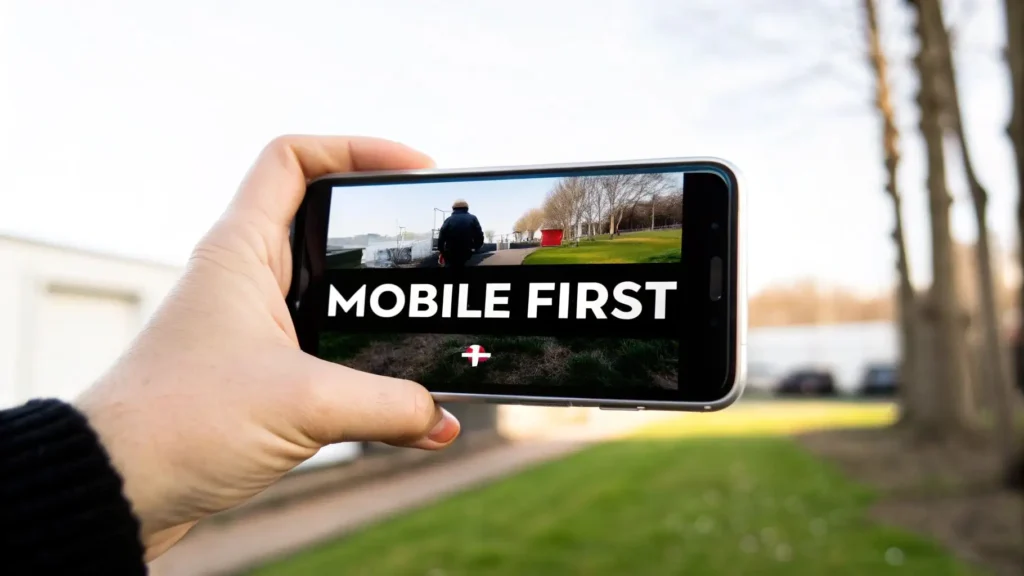
A critical component of modern video marketing best practices is designing content with a mobile-first mindset. With over 80% of social media video consumption happening on smartphones, failing to optimize for small, vertical screens means you’re ignoring the vast majority of your audience. This approach goes beyond simply reformatting; it involves creating videos specifically for the portrait (9:16) orientation that dominates platforms like TikTok, Instagram Reels, and YouTube Shorts.
This strategy ensures your content is immersive and native to the user’s experience. Viewers shouldn’t have to turn their phones sideways to watch your video. By embracing vertical formats, you meet your audience where they are, providing a seamless and engaging experience that significantly boosts watch time and interaction rates.

Why Mobile-First Optimization Matters
The dominance of platforms pioneered by Snapchat and now led by TikTok has fundamentally shifted video consumption habits. These platforms have conditioned users to expect full-screen, vertical content that is easy to consume on the go. A horizontal video placed in a vertical feed appears small, unprofessional, and is often skipped. Optimizing for mobile also means considering factors like sound-off viewing, which is incredibly common in public spaces.
Brands like Chipotle have mastered this by creating TikTok campaigns that feel native to the platform. Their videos use vertical framing, trending sounds, and fast-paced editing, looking like content from a typical user rather than a corporate ad. This authenticity drives massive engagement because it perfectly aligns with how the platform’s mobile audience consumes content.
Actionable Tips for Implementation
- Shoot in Vertical (9:16): Whenever possible, record your videos vertically. If you must use horizontal footage, ensure key subjects are centered so they remain visible when cropped to a 9:16 aspect ratio.
- Prioritize Captions: Design your videos to be understood without sound. Always burn captions directly into your video to capture the large audience segment that watches with their audio off.
- Keep Visuals Centered and Large: Important text, logos, and visuals should be placed within the central 60% of the screen. This prevents them from being cut off by platform user interface elements like usernames or like buttons.
- Use Large, Readable Fonts: Ensure any on-screen text is large enough to be easily read on a small smartphone screen. Test your video on an actual mobile device before publishing to confirm legibility.
4. Use Captions and Text Overlays Strategically
One of the most critical video marketing best practices is designing for sound-off viewing. A staggering number of videos, particularly on social media, are watched on mute. Incorporating burned-in captions and strategic text overlays ensures your message is fully understood, even without audio, making your content more accessible and engaging.
This approach goes beyond simple subtitles; it involves using text as a dynamic visual element to emphasize key points, introduce speakers, or highlight data. For a platform like maxijournal.com, with content ranging from science explainers to pet features, this ensures every viewer grasps the core message, regardless of their viewing environment or hearing ability.

Why Captions and Overlays Matter
With studies indicating that up to 85% of social media videos are viewed without sound, relying on audio alone means you’re losing a huge portion of your audience. Captions significantly improve viewer comprehension and retention. Furthermore, they boost accessibility for hearing-impaired audiences and help non-native speakers follow along, broadening your global reach. Search engines can also crawl caption files, which can positively impact your video’s SEO.
Media outlets like Vox have built their brand on a distinctive style of bold text overlays that present statistics and core arguments. Similarly, TED Talks provides high-quality captions in multiple languages, making its educational content universally accessible and setting a high industry standard.
Actionable Tips for Implementation
- Prioritize Readability: Use high-contrast colors, such as white text on a dark, semi-transparent background. Choose clean, sans-serif fonts like Arial or Helvetica that are easy to read on small screens.
- Optimize Placement: Position captions and key text in the lower third of the screen. This placement avoids obscuring the main subject or crucial visual information.
- Sync for Natural Pacing: Time your captions to appear in sync with speech patterns, not as a word-for-word transcript. Break longer sentences into shorter, digestible lines for better readability.
- Test on Mobile: Always preview your video on a smartphone to ensure your text is large enough and placed correctly within the safe zones of platforms like Instagram Reels or TikTok.
5. Tell Compelling Stories Rather Than Listing Facts
Human brains are wired for narrative, not for data dumps. One of the most powerful video marketing best practices is to structure your content around a compelling story rather than simply listing facts or features. This approach transforms dry information into an engaging experience with a clear setup, conflict, and resolution, making complex topics memorable and shareable.
This strategy involves framing your message within a narrative arc. Instead of explaining the technical specs of a new AI, tell the story of the innovators who built it. A video about a health discovery becomes a personal journey of overcoming a challenge. This method connects with viewers on an emotional level, which is far more persuasive than logic alone.
Why Storytelling Matters
Facts inform, but stories resonate. When you present information as a narrative, you tap into universal human emotions and create a stronger, more lasting connection with your audience. A story gives viewers a reason to care about the information you’re presenting, boosting retention and encouraging social sharing. It is the difference between a lecture and a captivating documentary.
Educational channels like Kurzgesagt master this by explaining complex scientific concepts through vibrant, narrative-driven animation. Similarly, TED Talks often use a speaker’s personal journey to illustrate a larger idea, a technique that requires exceptional presentation skills. This is why many creators work to improve their public speaking to better connect their stories with audiences. By building a narrative, these brands make abstract concepts feel personal and urgent.
Actionable Tips for Implementation
- Start with a Human Problem: Begin your video with a question or conflict that your audience can relate to, rather than immediately presenting the solution or product.
- Introduce Characters: Feature real people like scientists, customers, or artists. Giving your story a protagonist makes it instantly more relatable.
- Build Narrative Tension: Don’t reveal everything at once. Create suspense by introducing obstacles or unanswered questions that keep the viewer engaged until the end.
- Create a “Revelation” Moment: Structure your story to build toward a surprising insight or a key takeaway that serves as the climax.
- End with a Clear Call to Action: Conclude your story by explaining the broader implications or telling the audience what they should do next with this newfound knowledge.
6. Maintain Consistent Publishing Schedule and Series Format
One of the most overlooked yet powerful video marketing best practices is creating a reliable rhythm for your content. Building a loyal audience is about more than just great videos; it’s about becoming a dependable source of value. By publishing on a predictable schedule and grouping content into thematic series, you train both viewers and platform algorithms to anticipate and prioritize your new releases.
This strategy transforms passive viewers into an active community. When an audience knows to expect your “Tech Tuesday” deep dive or your monthly “Indie Artist Spotlight,” they build a habit around your content. This consistency fosters trust and creates what is known as “appointment viewing,” a key driver for sustained channel growth and audience retention.
Why Consistency and Series Matter
Algorithms on platforms like YouTube favor channels that publish regularly. A consistent schedule signals that your channel is active and reliable, increasing the likelihood that your videos will be recommended to new audiences. More importantly, it sets expectations for your subscribers, reducing churn and encouraging repeat viewership. A series format adds another layer of engagement by creating a cohesive content library that encourages binge-watching.
Educational channels like Kurzgesagt and TED-Ed master this by releasing high-quality animated explainers on a predictable, albeit less frequent, schedule. Their audiences know the wait is worthwhile. Similarly, news organizations like Vox have found immense success with recurring formats like their “Vox Explains” series, which provides a consistent, recognizable structure for exploring complex topics.
Actionable Tips for Implementation
- Choose a Sustainable Frequency: Don’t commit to a daily schedule if you can only realistically manage weekly or bi-weekly. Consistency is more important than high frequency.
- Batch Produce Content: Film and edit several videos at once (e.g., a month’s worth of content). This creates a buffer, ensuring you never miss a scheduled upload due to unexpected delays.
- Create Branded Series Templates: Use consistent intros, outros, graphics, and music for each series. This builds brand recognition and makes production more efficient.
- Promote Your Schedule: Clearly communicate your publishing days and times in your channel banner, video descriptions, and on other social media platforms to build anticipation.
- Organize with Playlists: Group all videos from a specific series into a dedicated playlist. This makes it easy for viewers to find and watch related content, increasing session time.
7. Optimize Video SEO with Keywords, Tags, and Descriptions
Creating a great video is only half the battle; ensuring people can find it is the other crucial part. One of the most essential video marketing best practices is optimizing your content for search engines like YouTube and Google. This involves strategically using relevant keywords in your video’s title, description, tags, and other metadata to improve its discoverability and capture valuable organic traffic.
When users search for information, YouTube’s algorithm scans this metadata to determine which videos are most relevant to their query. By mastering Video SEO, you significantly increase the chances of your content appearing in search results and being recommended to new audiences, turning your video library into a sustainable source of views and leads.
Why Video SEO Matters
YouTube is the world’s second-largest search engine. Neglecting to optimize your videos is like writing a book and leaving it in an unmarked library basement. Without proper SEO, your content remains invisible to millions of potential viewers actively searching for the topics you cover. A well-optimized video continues to attract views long after its initial publication date, providing a lasting return on your investment.
Educational channels like Veritasium and Kurzgesagt are masters of this. They craft keyword-rich titles like “The Most Misunderstood Concept in Physics” and pair them with detailed descriptions full of research links and timestamps. This not only helps viewers but also feeds the algorithm exactly what it needs to rank their content for complex scientific queries.
Actionable Tips for Implementation
- Conduct Keyword Research: Use tools like YouTube’s autocomplete search bar and Google Trends to identify the phrases your target audience is searching for.
- Front-Load Your Title: Place your primary keyword within the first 50-60 characters (or the first 5 words) of your video title to maximize its impact in search results.
- Write Rich Descriptions: Craft detailed descriptions (200+ words) that naturally incorporate your primary and secondary keywords. Write for humans first, but ensure the algorithm has context. This is as important for a tech review as it is for content creators learning how to start a travel blog.
- Utilize Timestamps and Tags: Break longer videos into chapters with timestamps in the description for better user experience and SEO. Use a mix of broad and specific tags relevant to your video’s content.
- Add Relevant Hashtags: Include 3-5 relevant hashtags at the end of your description to help YouTube categorize your video and connect it with similar content.
8. Encourage Audience Interaction and Community Engagement
A crucial video marketing best practice is to transform your content from a one-way broadcast into a two-way conversation. Building an active community around your videos involves intentionally soliciting questions, comments, polls, and even user-generated content. This strategy directly boosts engagement metrics that algorithms favor, such as watch time and comment velocity, while fostering deep audience loyalty.
Instead of just publishing and hoping for engagement, you actively design moments that invite participation. This transforms passive viewers into active community members and brand advocates. Platforms like YouTube heavily weigh comment engagement in their recommendation algorithms, making this a powerful lever for discoverability.
Why Audience Interaction Matters
Videos that foster community feel less like advertisements and more like a shared experience. When viewers feel seen and heard, they are more likely to subscribe, share, and return for future content. This creates a sustainable feedback loop where an engaged audience provides valuable insights, ideas, and social proof that attracts new viewers.
Content creators like MrBeast are masters of this, frequently building challenges around viewer comments or directly asking the audience to decide on a future video’s direction. Similarly, music channels can explode in popularity by featuring fan covers or reaction videos, making the audience part of the content itself. This approach turns consumption into collaboration.
Actionable Tips for Implementation
- End with a Clear Question: Conclude your video with a specific, open-ended question like, “What’s the one strategy you’re going to try first?” instead of a simple “Leave a comment.”
- Respond Strategically: Reply to as many comments as possible within the first few hours of publishing to signal to the algorithm that your video is generating conversation. Pin insightful or positive comments.
- Utilize Community Features: Leverage YouTube’s Community tab or Instagram’s Stories with polls, quizzes, and “ask me anything” stickers to keep the conversation going between video uploads. Building a vibrant community is key, and you can learn how to increase engagement on Instagram for more platform-specific tips.
- Feature Your Audience: Create dedicated videos or segments that showcase the best audience comments, fan art, or user-submitted clips. This provides powerful social proof and incentivizes future participation.
9. Invest in Quality Audio and Production Value
While crisp visuals are important, one of the most critical video marketing best practices is prioritizing high-quality audio. Viewers are surprisingly forgiving of mediocre video quality, but poor, fuzzy, or distracting audio is an instant turn-off that causes them to abandon content immediately. Excellent audio signals professionalism and builds trust with your audience.
Investing in audio and overall production value doesn’t necessarily mean a Hollywood-level budget. It’s about paying attention to the details that create a polished and immersive viewing experience. Clear dialogue, balanced background music, and intentional sound design elevate your content from amateur to authoritative, ensuring your message is not just seen but also clearly heard.
Why Quality Audio and Production Matter
Poor audio directly undermines your credibility. If your audience has to strain to understand you or is distracted by background noise and echo, they will associate that friction with your brand. High production value, especially clear audio, makes your content more enjoyable and your message more impactful, holding viewer attention for longer.
Media brands like Vox and Kurzgesagt exemplify this principle. Vox videos feature exceptionally clean voiceovers and precisely mixed audio that guide the narrative, while Kurzgesagt uses intricate sound design and custom musical scores to make complex scientific topics feel epic and engaging. This investment in audio makes their content stand out and feel premium.
Actionable Tips for Implementation
- Invest in a Good Microphone: Start with a quality USB microphone (around $100-$300). This is the single biggest improvement you can make to your audio quality over a built-in mic.
- Control Your Recording Environment: Record in a quiet, sound-dampened space. A walk-in closet filled with clothes is a great low-budget option to reduce echo and reverb.
- Balance Your Audio Levels: Mix your audio carefully. Dialogue should be clear and present, with background music mixed significantly lower (a common rule is to keep music around -18dB to -22dB).
- Use Quality Music and Sound Effects: Utilize royalty-free music services like Epidemic Sound or Artlist to find professional tracks. Subtle sound effects can also enhance key moments.
- Master the Basics of Lighting: Good lighting is a key component of production value. A simple three-point lighting setup (key light, fill light, back light) can dramatically improve your video’s professional look, even with a smartphone camera.
10. Analyze Performance Metrics and Iterate Based on Data
One of the most critical video marketing best practices is to transform your content strategy from a guessing game into a data-driven science. Instead of creating videos based solely on gut feelings, you must analyze performance metrics to understand what truly resonates with your audience. This process involves a continuous loop of creating, measuring, and optimizing based on real-world feedback.
By diving into analytics, you can pinpoint exactly why one video succeeded while another underperformed. This empowers you to systematically improve future content, ensuring your efforts consistently align with viewer preferences. It’s the difference between hoping for success and engineering it.
Why Performance Analysis Matters
Data provides objective insights into audience behavior. Key metrics like Average View Duration, Audience Retention Curves, and Click-Through Rate (CTR) reveal the true impact of your content. A high CTR but low retention, for example, indicates a great title and thumbnail but content that failed to deliver on its promise.
Channels like Veritasium have famously used public discussions of their analytics to show how data guides their creative decisions. They analyze retention graphs to identify moments where viewers lose interest, helping them refine their storytelling and pacing. Similarly, creators on maxi-journal.com can analyze which topics, from science and music to pets and fashion, generate the most engagement, guiding their editorial calendar.
Actionable Tips for Implementation
- Review Analytics Weekly: Set aside time each week to review key metrics. Look for trends in view duration, CTR, and traffic sources across your recently published videos.
- Study Audience Retention Curves: Compare the retention graphs of your best and worst-performing videos. Identify the exact points where viewers drop off and analyze what might have caused it.
- A/B Test Thumbnails and Titles: Use tools like YouTube’s “Test & Compare” feature to run experiments on new uploads. Small changes can significantly impact a video’s initial CTR and overall reach.
- Track Subscriber Conversion: Monitor which videos are most effective at turning viewers into subscribers. This helps you understand what content drives long-term audience growth.
10-Point Video Marketing Best Practices Comparison
| Strategy | Implementation complexity | Resource requirements | Expected outcomes | Ideal use cases | Key advantages |
|---|---|---|---|---|---|
| Create Platform-Specific Content | High | High — multiple edits, templates, platform knowledge | Improved platform performance and engagement per channel | Multi-platform campaigns for diverse audiences | Optimizes watch time and discoverability per platform |
| Lead with Strong Hooks in First 3 Seconds | Medium | Low–medium — creative scripting and short edits | Higher click-through and early retention | Short-form social, attention-competitive feeds | Rapid attention capture and improved early retention |
| Optimize for Mobile Viewing and Vertical Video | Medium | Medium — vertical framing, captions, testing on devices | Higher completion rates on mobile and better social reach | Mobile-first audiences, TikTok/Reels/Shorts | Better mobile UX and higher shareability |
| Use Captions and Text Overlays Strategically | Low–Medium | Medium — captioning tools, QC, possible translations | Increased engagement for sound-off viewers and accessibility | Social feeds, multilingual or accessibility-focused content | Accessibility, SEO benefits, improved comprehension |
| Tell Compelling Stories Rather Than Listing Facts | High | High — scripting, interviewing, longer production | Greater emotional connection, retention, and shareability | Educational explainers, long-form features, documentaries | Enhances memorability and viewer loyalty |
| Maintain Consistent Publishing Schedule and Series Format | Medium | Medium — production planning, batching, editorial calendar | Improved subscriber retention and algorithm favor | Channels aiming for audience growth and repeat viewership | Builds habitual viewing and predictable growth |
| Optimize Video SEO with Keywords, Tags, and Descriptions | Medium | Low–medium — keyword research tools, metadata work | Increased organic discovery and long-term traffic | Evergreen educational and how-to content on YouTube | Improves search ranking and thumbnail CTR |
| Encourage Audience Interaction and Community Engagement | Medium | Medium — moderation, community management, live tools | Higher engagement metrics, loyalty, and UGC | Channels seeking active communities and repeat interactions | Drives comments, shares, and algorithmic promotion |
| Invest in Quality Audio and Production Value | Medium–High | High — microphones, editing, sound design, licensing | Lower drop-off, higher perceived credibility and retention | Professional features, interviews, music and narrative video | Strongly improves professionalism and viewer retention |
| Analyze Performance Metrics and Iterate Based on Data | Medium | Low–medium — analytics tools, time for analysis | Continuous improvement and optimized content strategy | Data-driven channels across all topics | Enables informed decisions and growth through iteration |
From Best Practices to Consistent Results
Navigating the landscape of video marketing can feel like trying to hit a moving target. Trends shift, algorithms change, and audience attention spans seem to shrink by the day. However, the foundational principles we’ve explored throughout this guide are not fleeting fads; they are the strategic cornerstones of sustainable success. Mastering these video marketing best practices is less about a one-time setup and more about adopting a continuous, iterative mindset.
The journey from creating a single video to building a powerful marketing engine begins with deliberate application. You don’t need to implement all ten strategies perfectly overnight. The key is to start small and build momentum. Identify your most significant weaknesses and turn them into strengths.
Your Actionable Starting Points
Is your audience dropping off within the first few seconds? Focus your energy entirely on crafting irresistible hooks and optimizing those crucial opening moments. Are your engagement numbers flat? Double down on community interaction and ask direct questions in your videos to spark conversation. By concentrating your efforts, you can make tangible improvements that create a positive feedback loop, motivating you to tackle the next challenge.
Consider these initial steps:
- Perform a Content Audit: Review your last five videos. Where did viewers drop off? Which videos had the highest engagement? Use your own data to identify the lowest-hanging fruit.
- Choose Two Focus Areas: Select one pre-production practice (like storytelling) and one post-production practice (like SEO optimization) to master over the next month.
- Schedule a “Metrics Monday”: Dedicate a small block of time each week to dive into your analytics. Don’t just glance at view counts; look at audience retention, click-through rates, and comment sentiment. Data tells a story about what your audience truly wants.
The Power of an Integrated Strategy
The true potential of these best practices is unlocked when they work in concert. A compelling story (Practice #5) is amplified by high-quality audio (Practice #9). That video, when optimized for mobile (Practice #3) and subtitled for accessibility (Practice #4), reaches a wider audience. Promoting it on a consistent schedule (Practice #6) builds anticipation, while strong video SEO (Practice #7) ensures it’s discoverable long after its initial publication.
This interconnectedness is what separates sporadic viral hits from a strategically built brand channel. Each practice supports the others, creating a resilient framework that can adapt to platform changes and evolving audience tastes. You move from simply producing content to engineering a viewer experience. By consistently applying this holistic approach, you transform your video efforts from a checklist of tasks into an intuitive, data-informed workflow that drives predictable growth and deepens your connection with your audience. The goal isn’t just to make videos; it’s to build a valuable asset that consistently delivers results for your brand.
Ready to put these strategies into action and share your own insights? Turn your expertise into influence by publishing your articles and thought leadership on maxijournal.com. Join a community of creators and experts and build your brand presence by contributing to a platform that values quality content. Start your author journey today at maxijournal.com.
Discover more from Maxi Journal
Subscribe to get the latest posts sent to your email.