When you’re just starting out, picking the right running shoes really comes down to three things: plenty of cushioning, a moderate heel-to-toe drop, and a fit that feels just right. Getting these basics covered helps absorb impact, encourages a natural stride, and keeps common issues like blisters and shin splints at bay. Trust me, it makes those first few miles a whole lot better.
Finding Your First Running Shoes Without the Confusion
Walking into a running store for the first time can be a bit much. You’re hit with a wall of brightly colored shoes, and it’s easy to feel lost. But here’s the good news: you don’t need a degree in biomechanics to find a great pair. The best thing you can do is tune out the marketing noise and focus on what actually matters—comfort and support.
As a new runner, your body is still getting used to the repeated stress of hitting the pavement. That’s why your first pair of shoes should be all about protection, not pure, raw speed. Let’s get into the features that will actually make a difference for you.
The Pillars of a Great Beginner Shoe
Your number one goal is to find a shoe that makes you want to get out and run, all while keeping you healthy. This means zeroing in on a few key areas that have a direct impact on your comfort and help prevent injuries.
- Generous Cushioning: You’re looking for shoes with a good amount of foam in the midsole. Think of it as your personal shock absorption system, softening the landing with every single step.
- A Supportive Heel-to-Toe Drop: This is just the height difference between the heel and the front of the shoe. For beginners, a slightly higher drop can take some of the strain off your calves and Achilles tendon as they adapt.
- An Unmistakably Comfortable Fit: This is the ultimate deal-breaker. The shoe should feel great the second you slide your foot in. No pinching, no weird rubbing spots, no uncomfortable pressure points. Period.
Most running coaches will tell you to look for shoes with at least 30mm of cushioning under the heel and a heel-to-toe drop of 8mm or more. Why? A huge percentage of new runners land on their heels, and this specific combination is fantastic at absorbing shock where you need it most. It can make a real difference in preventing those common aches and pains during your first 100 miles.
The biggest mistake I see beginners make? Picking a shoe because it looks cool or because their marathon-running friend swears by it. Your feet are completely unique, and what works for someone else might be all wrong for you.
To make things even easier, I’ve put together a quick checklist to help you feel more confident when you’re looking at your options. As you get more miles under your belt, you’ll start to figure out your own preferences, but these fundamentals are a bulletproof place to start. And if you’re building your routine from scratch, you might find these general fitness tips for beginners helpful, too.
Beginner Running Shoe Quick Start Checklist
Here’s a simple table summarizing the most important things to look for in your first pair of running shoes. Use it as a guide to cut through the noise and focus on what truly counts.
| Feature | What to Look For | Why It Matters for Beginners |
|---|---|---|
| Cushioning | At least 30mm of foam in the heel (plush, not mushy) | Absorbs impact to protect your joints as your body adapts to the stress of running. |
| Heel-to-Toe Drop | 8mm or higher | Reduces strain on your Achilles tendon and calf muscles, which are prone to soreness. |
| Fit & Comfort | A thumb’s width of space at the toe, no pinching or rubbing | Prevents blisters and black toenails, ensuring your runs are enjoyable from the start. |
| Stability | A “neutral” or “stable” shoe, not a minimalist one | Provides a solid, reliable platform that supports a natural foot motion and prevents rolling. |
Sticking to these core features will give you a solid foundation, allowing you to focus on building your endurance and enjoying the run, rather than worrying about your feet.
Get to Know Your Feet: Finding Your Gait and Foot Type
Before you get lost in shoe models, colorways, and tech specs, the first—and most important—step is to understand your own two feet. Every runner has a unique foot shape and a specific way their foot lands and rolls with each stride. This movement is called pronation, and it’s your body’s built-in suspension system for absorbing shock.
Think of it this way: as your foot hits the ground, it naturally rolls slightly inward to spread out the impact. That’s a good thing! The goal isn’t to stop pronation, but to make sure it’s happening in a controlled, efficient way. Problems pop up when your foot rolls too much or not enough.
Getting this right is your first big step toward injury-free running. A staggering 68% of runners are reportedly in the wrong shoes simply because they haven’t considered their own biomechanics, which can lead to a world of hurt. While a neutral shoe is a great starting point for many, knowing if you’re one of the roughly 50% of runners who overpronate can help you decide if you need a little extra support. You can dive deeper into the science behind this with this in-depth running shoe guide.
The Classic At-Home Wet Test
You don’t need a fancy gait analysis lab to get a solid idea of your foot type. The “wet test” is a tried-and-true method that’s surprisingly effective, and you can do it right now with stuff you already have at home.
- Pour a thin layer of water into a shallow pan.
- Get one bare foot completely wet on the bottom.
- Carefully step onto a piece of cardboard, a dark towel, or even a paper bag—anything that will leave a clear footprint.
- Step off and take a look at the shape you left behind.
That simple imprint tells a surprisingly detailed story about your arch height, which is directly tied to how you pronate.
What Your Footprint Is Telling You
Okay, let’s play detective with that wet mark. Your footprint will most likely match one of three common profiles, each pointing toward a different type of running shoe.
Flat Arch (Overpronation)
If you see a full, wide footprint with very little curve on the inside, you probably have flat feet or low arches. This often means you overpronate, where your foot and ankle roll too far inward after you land. This can put extra stress on your shins, knees, and even your hips.
- What it looks like: A complete or nearly complete imprint of your foot.
- What it means: Your arch is likely collapsing inward to absorb shock.
- Shoe to look for: A stability or motion control shoe. These are built with firmer foam or support posts on the inner side to gently guide your foot and keep it from rolling in too much.
High Arch (Supination or Underpronation)
Did your footprint show just your heel, the ball of your foot, and maybe a pencil-thin line connecting them along the outside? That’s a classic high arch. Runners with high arches often supinate (or underpronate), meaning their foot doesn’t roll inward enough to properly absorb shock. All that impact gets concentrated on the outer edge of the foot.
- What it looks like: A very narrow band connecting your heel and forefoot, or maybe no connection at all.
- What it means: Your foot is more rigid and doesn’t do a great job of shock absorption on its own.
- Shoe to look for: A neutral shoe with a ton of cushioning. You don’t need corrective support; you need a plush, flexible ride that soaks up the impact your foot isn’t.
Neutral Arch (Neutral Pronation)
If your footprint shows a nice, clear curve along the inside, kind of like a “C” shape, congratulations—you have a neutral arch. This is the biomechanical sweet spot. It means your foot pronates just enough to absorb impact efficiently before pushing off for your next stride.
- What it looks like: A distinct curve on the inside, with about half of your arch area visible.
- What it means: Your body’s natural shock absorption is working perfectly.
- Shoe to look for: A neutral shoe. These shoes let your feet do their thing, providing cushioning and support without any “corrective” features.
Beginner’s Tip: If you’re really not sure or feel like you’re somewhere in between, you can’t go wrong starting with a well-cushioned neutral shoe. It offers a protective and forgiving ride, which is perfect while you figure out what feels best over those first 50 miles.
This flowchart gives you a great visual on how to piece these first few decisions together.
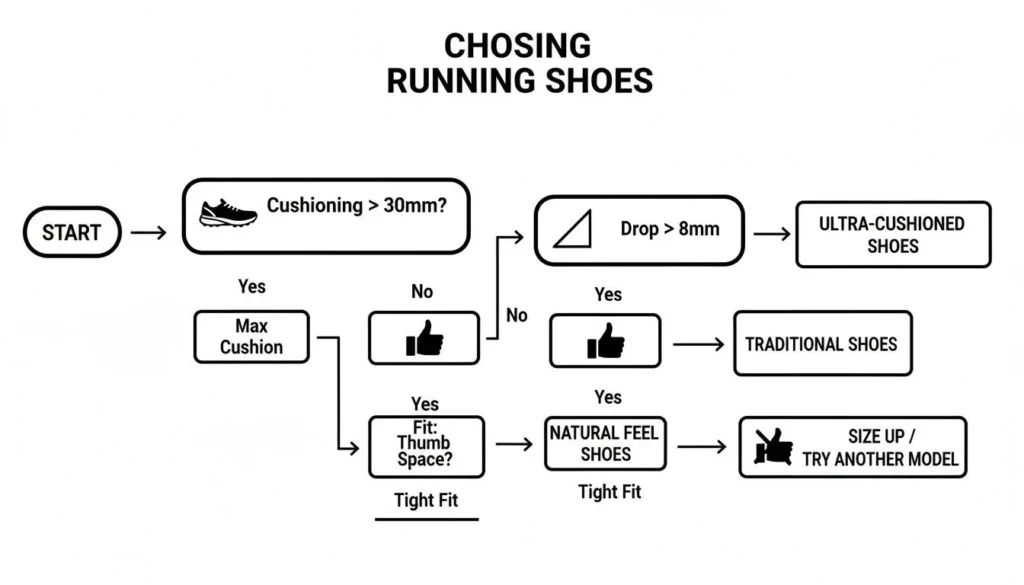
As you can see, the main idea is to start with plenty of cushioning and a moderate drop, then fine-tune everything based on how the shoe actually feels on your foot.
Getting to Know Your Shoe: Decoding the Tech and Terminology
Diving into the world of running shoes can feel like you’re trying to learn a new language. You’ll hear people toss around terms like “stack height,” “midsole compound,” and “heel drop,” and it’s easy to feel a little lost.
But don’t worry. Think of this as your personal translator. We’re going to break down the anatomy of a running shoe and figure out what all this lingo actually means for your feet on the run.
The Midsole: The Engine Room of the Shoe
The midsole is, without a doubt, the most important part of any running shoe. It’s that thick slab of foam sitting between the part your foot is in (the upper) and the rubber that hits the ground (the outsole). This is where all the magic happens—cushioning, stability, and that “feel” you get with every stride.
The foam used here has a massive impact on the ride. Some foams are built for soft, pillowy comfort, while others are engineered to be firm and bouncy.
- EVA (Ethylene-Vinyl Acetate): This is the OG, the classic workhorse foam. It’s lightweight, dependable, and does a great job absorbing shock. You’ll find it in a ton of daily trainers, and it’s a fantastic starting point for beginners.
- TPU (Thermoplastic Polyurethane): You’ve probably seen this as little fused-together pellets (think Adidas Boost). TPU is famous for its incredible durability and bouncy energy return. It just feels resilient and springy underfoot, mile after mile.
- PEBA (Polyether Block Amide): This is the super foam. It’s the high-end, premium stuff you find in top-tier racing shoes. PEBA is ridiculously lightweight, incredibly soft, and gives you the most energy return, creating that “pop” you feel when you pick up the pace.
For someone just starting out, a shoe with a healthy amount of a forgiving and durable foam, like a modern EVA or a TPU blend, is a perfect choice. It gives your body the protection it needs as it gets used to the repetitive impact of running.
What are Stack Height and Drop?
Two of the most critical numbers you’ll see on a shoe’s spec sheet are stack height and heel-to-toe drop. These two stats define the shoe’s geometry and can have a real effect on your running form.
Stack height is simply how much shoe is between your foot and the pavement, measured in millimeters (mm). A higher stack height, generally 30mm and up, means more cushioning. A lower stack height gives you a better feel for the ground beneath you.
Heel-to-toe drop (or just “drop”) is the height difference between the heel and the forefoot.
If a shoe has 35mm of foam under the heel and 25mm under the forefoot, it has a 10mm drop. This slope helps take some of the strain off your Achilles tendon and calf muscles.
Most traditional running shoes come with a drop somewhere between 8mm and 12mm. This setup often works well for runners who land on their heel first—which is something like 80% of new runners. Lower drop shoes (0mm to 6mm) encourage more of a midfoot or forefoot landing, which asks a bit more from your lower legs.
As a beginner, it’s usually safest to stick within that 8mm-12mm drop range. It’s a familiar feeling and provides a supportive platform that helps protect areas prone to getting sore.
A Quick Tour of the Shoe’s Anatomy
Beyond the foam, a few other key parts of the shoe work together to give you a secure and comfortable ride. Understanding their jobs will help you figure out why one shoe feels great and another just feels… off.
The Upper
This is everything that wraps around your foot—the fabric part of the shoe. Its main job is to hold your foot snugly and securely without being restrictive, all while letting your feet breathe.
- Engineered Mesh: This is what you’ll find on most shoes today. It’s soft, flexible, and cleverly designed. The weave is often tighter where you need support and more open where you need airflow.
- Knit Uppers: These offer a comfy, sock-like fit that really molds to the shape of your foot. They can feel amazing, but sometimes offer a little less lockdown if you’re making sharp turns.
The Outsole
The rubber on the bottom? That’s the outsole. It has two main jobs: provide durable traction so you don’t slip, and add a little bit of structural stability to the shoe. Road shoes have flatter, more flexible rubber for pavement, while trail shoes have deep, aggressive lugs to grip onto dirt, rocks, and mud.
The Heel Counter
Feel the back of the shoe around your heel—that semi-rigid cup is the heel counter. It’s a small piece of plastic built into the shoe to cradle your heel and keep it from sliding around. A firm, well-structured heel counter is usually a sign of a supportive, well-made shoe.
Matching Your Shoes to Your Running Environment
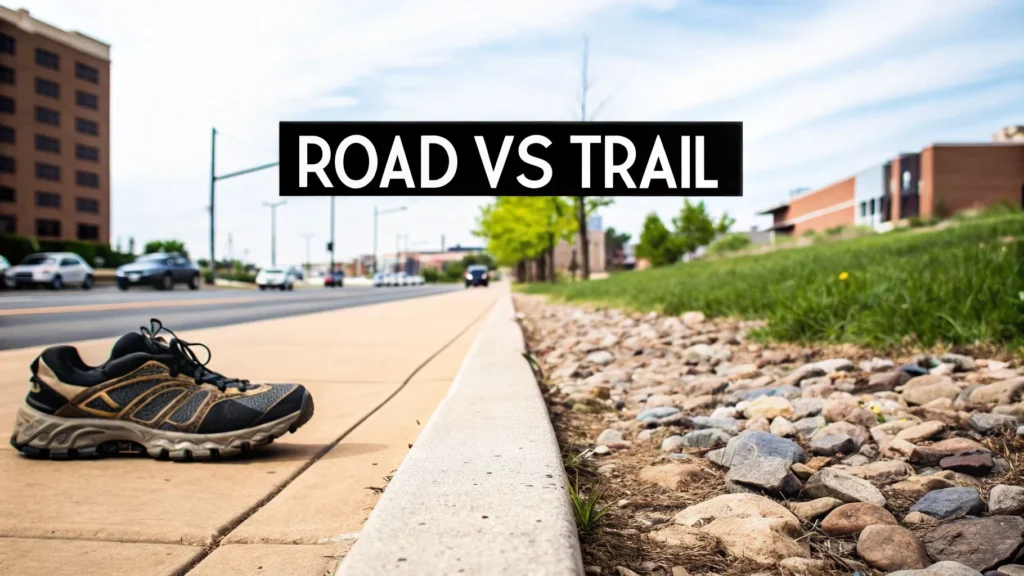
The perfect running shoe should feel like it was made just for you, almost like a natural extension of your foot. But where you take that shoe matters. A lot.
The soft, even belt of a treadmill is a world away from the unforgiving pavement of a city block. And neither comes close to the rugged, unpredictable nature of a muddy forest trail.
Thinking about where you’ll log most of your miles is one of the most important parts of the process. Your typical running surface dictates everything—from the grip you need to the amount of cushioning and protection that will keep you running comfortably and safely. It’s not about finding one magical shoe that does it all; it’s about finding the right shoe for your routine.
The Great Divide: Road Shoes vs. Trail Shoes
To the untrained eye, most running shoes look pretty similar. But the differences between a road shoe and a trail shoe are huge, and they’re engineered for completely different environments. Picking the wrong one is a classic rookie mistake—like taking a sleek road bike onto a gnarly mountain path. Sure, you might make it a few feet, but you’re not setting yourself up for a good time.
- Road Running Shoes: These are your workhorses for pavement, sidewalks, treadmills, and even well-maintained gravel paths. They’re built to be light, flexible, and cushioned to handle the repetitive impact of hitting a hard, uniform surface over and over again. The bottoms, or outsoles, have smoother, shallower tread designed for grip on asphalt.
- Trail Running Shoes: Made for the wild, trail shoes are tougher, more rugged, and built to handle whatever nature throws at you. They have deep, aggressive lugs on the outsole to bite into dirt, mud, and rock. Many also have built-in “rock plates” to protect your feet from sharp stones and reinforced uppers to prevent rips and tears.
I see this all the time: a beginner buys a burly-looking trail shoe thinking it will be more durable for road running. Big mistake. Those deep lugs wear down incredibly fast on pavement, and the shoe’s stiff build can feel clunky and harsh on hard surfaces.
For almost every beginner, a good road running shoe is the right place to start. Even if you think you’ll hit some light, groomed trails occasionally, the versatility and forgiving cushion of a road shoe will serve you best.
How Your Mileage Influences Your Shoe Choice
It’s not just about where you run, but how much. As a beginner, your main goal is simply to build consistency, and your shoes need to support that journey.
What you’re looking for is a daily trainer. This is the bread and butter of any running shoe lineup. It’s designed with a perfect balance of durable cushioning, solid support, and all-around comfort. It won’t be the lightest or flashiest shoe on the wall, but it’s built to soak up the bulk of your weekly miles while keeping your feet and joints happy.
You’ll see a lot of super-lightweight, minimal shoes marketed for “race day” or “speed work.” Ignore them for now. Those are specialized tools for more experienced runners who are willing to trade cushion and support for a lighter feel. As your body is just getting used to the stress of running, that’s the last thing you need.
And on that note, it’s a great idea to get familiar with how to prevent common sports injuries right from the beginning. The right shoe is your first line of defense.
Sticking with a reliable daily trainer gives you the best shot at making running a habit you love. These shoes are engineered to last somewhere between 300 to 500 miles, providing a protective and comfortable ride as you build your fitness from the ground up.
How to Get a Perfect Running Shoe Fit Every Time
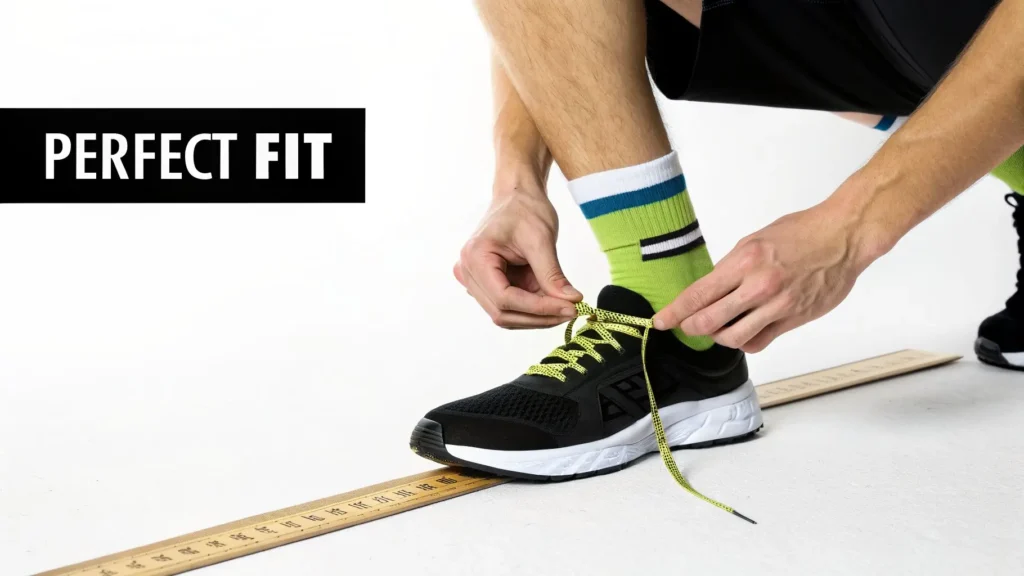
You can geek out on midsole foams and carbon plates for hours, but none of it matters if the shoe doesn’t fit. A bad fit is a fast track to blisters, black toenails, and a miserable time on the road. Honestly, nailing the fit is the single most important part of choosing a running shoe.
Here’s a truth every runner learns, usually the hard way: your running shoe size is almost never the same as your street shoe size. Your feet swell during a run, and they need extra room to splay and move forward with each stride.
Let’s walk through how to get a perfect fit, whether you’re at a specialty store or clicking “add to cart” online.
Getting the Timing and Tools Right
Believe it or not, when you try on shoes is just as critical as how. Feet naturally swell throughout the day, so to get the most accurate fit, always shop for running shoes in the late afternoon or evening.
And please, don’t forget your socks. Bring the actual socks you run in. A thick, cushioned sock versus a paper-thin one can completely change how a shoe feels, so this is a non-negotiable step for getting it right.
Mastering the In-Store Fit Test
Okay, you’re in the store with a promising shoe in hand. The real test is about to begin. Don’t just sit there and give your toes a little wiggle. You need to put the shoe through its paces.
Here’s what I do every single time:
- Lock and Lace: Get the shoe on and lace it up properly. Your heel should feel completely locked in at the back—no slipping or sliding. The midfoot should feel snug and secure, but not like it’s in a vise.
- Check the Length: Now, stand up. All your weight should be on your feet. There needs to be about a half-inch of space—roughly the width of your thumb—between the end of your longest toe and the front of the shoe. This is the famous “rule of thumb,” and it’s your best defense against beat-up toes.
- Gauge the Width: The shoe should feel like a firm handshake around your foot. You shouldn’t be bulging over the sides or feel any pinching. If it feels tight on the sides, don’t hesitate to ask for a wide (2E) size.
- The Test Drive: This is crucial. Any good running store will have a treadmill or at least some floor space for you to jog. Use it! This is the only way you’ll know if there are any weird rubbing spots, hot spots, or pressure points.
Your foot should feel secure from the heel through the midfoot, but your toes need room to party. If you feel any pinching or sharp pressure right away, that’s the one. It’s not going to “break in.”
Navigating the Online Shopping Maze
Buying shoes online is super convenient, but it means you have to become your own fit expert. Since you can’t physically try before you buy, a little homework is required.
First, measure your feet. Grab a piece of paper, place it on the floor against a wall, and stand on it with your heel flush against the wall. Mark where your longest toe ends. Measure that distance in centimeters—it’s the most universal unit—and check it against the brand’s official sizing chart.
Just remember that sizing is notoriously inconsistent across different brands. A size 10 in Brooks might feel totally different than a size 10 in Hoka. Spend some time reading reviews to see if a model is known to run large, small, or true to size.
And the golden rule of online shoe shopping? Check the return policy. A hassle-free return process is your ultimate safety net.
Common Questions for New Runners
After sorting through all the technical specs, a few practical questions almost always pop up. You’ve got the basics down on how to pick your first pair of running shoes, but now it’s time to tackle those nagging “what ifs” that can mess with your confidence. Let’s clear up the confusion so you can make your final choice.
We’ll cover how long your shoes will last, what you should expect to pay, and whether that trip to a specialty shop is really worth it.
How Often Should I Replace My Running Shoes?
This is the number one question I hear from new runners, and for good reason. A shoe’s cushioning doesn’t last forever, and running on worn-out foam is a fast track to injury. The general rule of thumb is to replace your shoes every 300 to 500 miles.
If you’re just starting out and running about 10-15 miles a week, that means you’ll probably need a new pair every 6 to 12 months. But mileage is only one piece of the puzzle. You have to pay attention to how the shoes actually feel.
- Feel the Foam: Does the cushioning still have a bit of spring to it, or has it gone flat and hard?
- Listen to Your Body: Are you suddenly getting new aches in your shins, knees, or feet? This is often the first red flag that your shoes are toast.
- Check the Tread: Look at the bottom of the shoe. Is the rubber visibly worn down, especially in key spots? Uneven wear can throw off your entire stride.
Here’s a simple trick I’ve used for years: grab a permanent marker and write the date you started using the shoes on the inside of the tongue or on the midsole. It’s an easy, low-tech way to keep track without needing an app.
Do I Really Need to Go to a Specialty Running Store?
For your very first pair? Absolutely, yes. I know it’s tempting to hunt for a deal online, but the expert guidance you get at a specialty running store is priceless for a beginner. The staff there do more than just grab a box from the back room.
They’ll perform a gait analysis, which just means they’ll watch you walk or jog for a few seconds to see how your foot lands and rolls. This quick observation is the most reliable way to know if you need a neutral shoe or one with more stability. They’ll also measure both the length and width of your feet (you’d be surprised how many people are in the wrong size) and recommend specific models that fit your needs. Think of it as the best investment you can make to start your running journey on the right foot.
Are More Expensive Running Shoes Actually Better?
Not always. In the running world, “more expensive” usually just means “more specialized,” not necessarily “better” for someone new to the sport. The sweet spot for a fantastic, durable, and comfortable daily trainer is usually in the $100 to $140 range. Shoes at this price point have all the premium cushioning and support tech you need to get started safely.
Those super-pricey shoes, often costing $160 or more, typically have high-tech features like carbon-fiber plates. They’re built like race cars—designed for speed and performance for experienced runners. For everyday training, they can feel unstable and are much less durable. My advice? Focus on what feels comfortable and supports your foot, not the price tag.
Should I Own More Than One Pair of Running Shoes?
It’s definitely not a requirement on day one, but once you start running consistently, rotating between two different pairs of shoes is a fantastic strategy for reducing injury risk. Research has shown that alternating shoes varies the load on your muscles and tendons, which can make you more resilient over time. Running can be a great way to manage stress, and you can learn more about finding calm in our guide on how to meditate for stress relief.
There’s another great benefit, too. It gives the foam in each shoe more time to decompress and bounce back between runs. This simple habit can actually make both pairs last longer. Once you find yourself running three or more times a week, it’s a good time to think about adding a second pair into your rotation.
At maxijournal.com, we publish daily writing to help you explore new interests and improve your well-being, from sports and health to technology and the arts. Check out our latest articles to find fresh perspectives on the topics that matter to you.
Discover more from Maxi Journal
Subscribe to get the latest posts sent to your email.