So, can cats have a lick of your Greek yogurt? The short answer is yes, but with some major caveats. While a tiny taste isn’t toxic, it’s not exactly a health food for felines, and for most cats, it can cause some serious tummy trouble.
Think of it like a rich dessert for a person—a small bite is a rare treat, but a whole slice is asking for a stomach ache.
The Simple Answer to Greek Yogurt for Cats
You’ve seen the look. Your cat, perched on the counter, eyeing your breakfast bowl with intense curiosity. But when it comes to sharing human foods, especially dairy, you have to be careful. The biggest hurdle for cats and yogurt is lactose intolerance.
It’s a common myth that adult cats need or enjoy milk. While kittens have the enzyme (lactase) needed to digest their mother’s milk, they lose most of this ability as they wean and grow up.
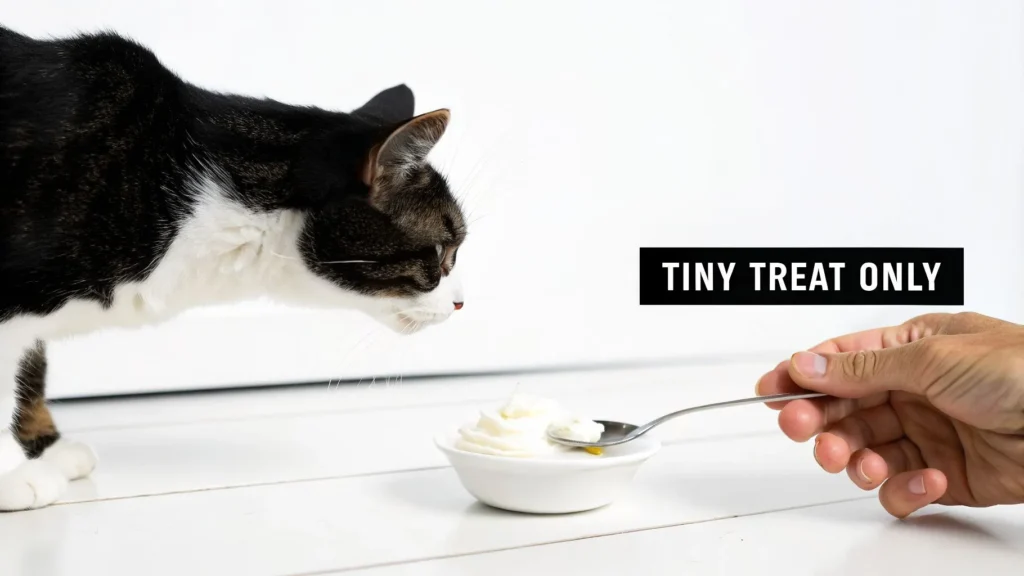
In fact, veterinary experts estimate that around 70% of the world’s adult cats are lactose intolerant. This is a pretty significant number. Even though Greek yogurt is strained and has about 50% less lactose than regular yogurt, the 4-6 grams per 100g that remain can still be more than enough to trigger gas, bloating, and diarrhea. You can find more great insights on this topic over at Hepper.com.
The golden rule for any cat treat is that it should never make up more than 10% of your cat’s total daily calories. For a food like Greek yogurt, that works out to a very small amount—no more than a half-teaspoon, and only on rare occasions.
This guide will break down everything you need to know, so you can decide if this occasional treat is a safe choice for your specific cat.
To make things simple, here’s a quick summary of the most important safety points.
Greek Yogurt for Cats At a Glance
| Aspect | Safety Guideline |
|---|---|
| Portion Size | Maximum of a half-teaspoon, very rarely. |
| Yogurt Type | ALWAYS plain, unsweetened, and low-fat. |
| Main Risk | Lactose intolerance causing digestive upset. |
| Hidden Dangers | Flavored yogurts, especially those with xylitol. |
Keeping these guidelines in mind is the first step to making sure any treat you offer is a safe and positive experience for your cat.
What Greek Yogurt Actually Offers Your Cat
Before you let your cat lick the yogurt container, it helps to see things from their point of view. Cats are obligate carnivores, which is a scientific way of saying their bodies are built exclusively for a meat-based diet. Human foods, even the “healthy” ones, just don’t fit their biological puzzle.
Let’s break down what’s actually in Greek yogurt—protein, fat, and lactose—to see how it stacks up for a feline.
On paper, the high protein in Greek yogurt looks like a huge win. It boasts nearly double the protein of regular yogurt, packing about 18 grams per 100 grams compared to just 9 grams. This seems great, especially since the National Research Council suggests a cat’s diet should be 50-60% protein. But don’t get too excited—the other ingredients bring some serious risks to the table. You can find a more detailed nutritional breakdown for pets on mywaggle.com.
That creamy texture your cat might go crazy for? It comes from fat, and that’s where the first problem pops up.
The Problem with Fat and Lactose
Even if you choose a low-fat or non-fat version, there’s still some fat content to worry about. A high-fat diet can put your cat at risk for pancreatitis, a painful and potentially dangerous inflammatory condition.
Over time, those extra calories from fat can also lead to weight gain. Studies have shown that obese cats are three times more likely to develop diabetes.
But the biggest nutritional red flag in Greek yogurt is lactose.
Think of the enzyme lactase as a special key your cat has as a kitten. This key is the perfect shape to unlock the “lactose lock” in its mother’s milk, making it easy to digest. As a cat gets older, that key effectively changes shape and doesn’t fit anymore, making it nearly impossible to process lactose.
This is exactly why most adult cats are lactose intolerant. While the straining process for Greek yogurt removes a lot of the whey and lactose, there’s often just enough left to cause an upset stomach.
Don’t Forget the Probiotics
A spoonful of Greek yogurt does contain probiotics—those friendly bacteria known for supporting gut health. While beneficial in theory, the amount in a single lick of yogurt is simply too small to make a real, lasting difference for your cat.
If you’re genuinely interested in boosting gut flora, it’s far more effective to understand the best time to take probiotics for real impact, and even then, a supplement made specifically for cats is a much safer bet.
In the end, while the protein is a nice bonus, it’s completely overshadowed by the potential downsides of fat and lactose. For our feline friends, Greek yogurt is a nutritionally complicated treat at best.
The Benefits and Real Risks for Your Feline
When you’re thinking about sharing Greek yogurt with your cat, it’s a classic case of weighing the supposed benefits against some very real risks. We’ve all heard the buzz about probiotics, and it’s natural to wonder if they could give our cats a little health boost. But the flip side is that the dangers can be much more serious than just a minor tummy ache.
The main selling point for Greek yogurt is its probiotic content. These are the “good bacteria” that help maintain a healthy gut. In principle, giving these to your cat sounds like a great idea.
But here’s the reality: the dose makes all the difference. A single lick of yogurt has a tiny, almost insignificant amount of probiotics compared to a full serving. It’s like trying to water your entire garden with a single eyedropper. The intention is there, but the effect is practically zero. If you’re serious about probiotics, your cat needs a supplement specifically formulated for felines with the right strains and dosage.
The Hidden Dangers in Yogurt
While the probiotic perks are tiny, the risks can be huge. The first big worry is pancreatitis, a painful and serious inflammation of the pancreas that high-fat foods can trigger. Even a low-fat yogurt can pose a threat if it becomes a regular or large part of their diet.
Putting the fat aside, the real minefield is the ingredient list on any flavored or sweetened yogurt. This is where a simple treat can turn toxic in a hurry.
Becoming a vigilant label detective is one of the most important skills a pet owner can develop. Many seemingly harmless “human foods” contain ingredients that are extremely toxic to cats and dogs.
You have to be on guard for additives that can cause serious harm. The only safe bet is plain, unsweetened, low-fat Greek yogurt. Anything else is a gamble.
Ingredients That Are Absolute No-Gos
Many yogurts, especially the flavored ones, are packed with ingredients that are flat-out poisonous to cats. Never, ever offer your cat a yogurt that contains:
- Xylitol: This artificial sweetener, sometimes called birch sugar, is incredibly toxic to pets. Even a tiny bit can cause a life-threatening drop in blood sugar and lead to liver failure.
- Chocolate: Every form of chocolate is poisonous to cats, leading to everything from vomiting to seizures and heart problems.
- Grapes or Raisins: These innocent-looking fruits are known to cause sudden and irreversible kidney failure in cats.
- Citrus Fruits: The oils and compounds in lemons, limes, and oranges can cause major digestive distress.
Unfortunately, these dangers aren’t rare. Some data suggests that nearly 20% of yogurts on store shelves contain fruits that are toxic to our feline friends. A good rule of thumb is if an ingredient isn’t plain yogurt, just assume it’s not safe. For more expert tips on foods to avoid, you can explore this comprehensive guide on mywaggle.com.
The list of household dangers doesn’t stop with food, either. Many common plants can be just as hazardous, which is why it’s smart to know which popular plants like hydrangeas are poisonous to cats. When it comes down to it, the tiny, questionable benefits of Greek yogurt are just not worth the significant risks, making it a treat to either skip entirely or offer with extreme caution.
Alright, so you’ve weighed the evidence and decided your cat deserves a tiny taste of Greek yogurt. Let’s talk about how to do this the right way, because when it comes to new foods, safety is everything. This isn’t something you can just scoop into their bowl; think of it more like a rare, special treat that requires careful handling.
First things first: picking the right yogurt. Your only option is plain, unsweetened, and either low-fat or non-fat. Breeze right by anything with fruit, honey, vanilla, or any other flavorings.
And here’s a pro tip: check the ingredients list every single time you buy it, even if it’s the same brand you always get. Companies tweak their recipes all the time, and a product that was safe last month might suddenly contain a sugar substitute like xylitol, which is extremely toxic to pets. A quick label check is your cat’s best line of defense.
Portion Control Is Everything
Once you have a cat-safe yogurt, the next hurdle is portion size. For a cat, a “serving” is laughably small. We’re not talking about a spoonful like you’d eat. We’re talking about a tiny dab.
As a general rule, a safe amount is no more than half a teaspoon. This isn’t a daily snack. It’s an occasional-only indulgence, reserved for very special moments.
Giving them any more than this dramatically increases the chance of an upset stomach from the lactose. It also piles on unnecessary fat and calories, which can lead to weight gain down the road.
Vets generally echo this cautious advice. For a safe treat, the recommendation is often no more than one teaspoon (5ml) per 10 pounds of body weight per week. It absolutely must be plain and unsweetened. According to ASPCA data, the sweetener xylitol can trigger hypoglycemia in up to 80% of cats who ingest it. So even with trusted brands like Fage or Chobani, the rule is simple: always read the label. For more on this, you can find excellent guidance on safe treat practices for cats on hepper.com.
This simple chart is a great visual for the only safe way to share yogurt with your cat.
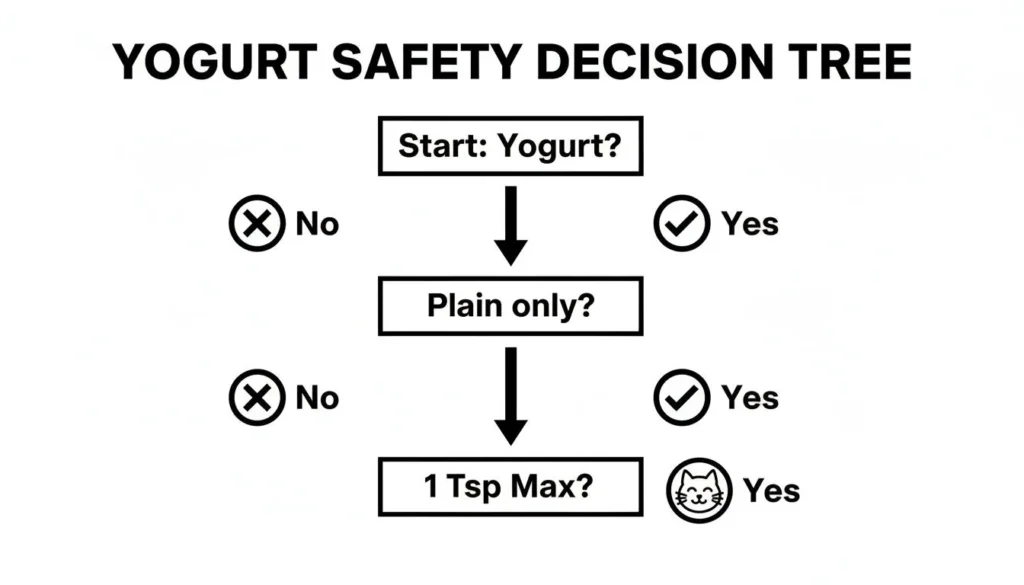
As you can see, the path to a safe treat is very narrow. Any other option is a no-go.
The “Go Slow” Introduction
Whatever you do, don’t just plop a dollop of yogurt into your cat’s food bowl and hope for the best. Anytime you introduce a new food, you have to do it slowly to make sure they can handle it.
Here’s a simple, step-by-step way to offer that first taste:
- Start with a Tiny Dab: Put a very small amount—we’re talking less than the size of your pinky nail—on the tip of your finger or a spoon and let your cat lick it off.
- Wait and Watch: For the next 24-48 hours, be a bit of a helicopter parent. Keep a close eye on your cat for any signs of an upset stomach, like diarrhea, vomiting, or unusual tiredness.
- Check the Results: If your cat is perfectly fine after the waiting period, you know a tiny taste is probably okay for them as a rare treat. But if they have any kind of bad reaction, Greek yogurt is officially off the menu for good.
Spotting Signs of a Bad Reaction

So you’ve offered that first tiny spoonful of Greek yogurt. Now, your job switches from chef to detective. You’re your cat’s first line of defense, so paying close attention over the next 24 to 48 hours is absolutely critical. Any new food can cause an upset, but your careful watch will keep a small treat from becoming a big problem.
Most of the time, a bad reaction boils down to one thing: lactose intolerance. Most adult cats just don’t have the right enzymes to break down the milk sugars in dairy. Think of it like trying to run a diesel engine on regular gasoline—the system just sputters and stalls out.
The signs are almost always digestive and tend to show up within a few hours.
Telltale Signs of Lactose Intolerance
Keep a close eye out for any of these red flags. They’re your cat’s way of telling you their stomach isn’t happy.
- Diarrhea or Loose Stools: This is the number one sign you’ll see. It’s also worth noting that parasites can cause similar symptoms. If the problem doesn’t clear up, our guide on coccidia in cats might offer some insight into other potential causes.
- Vomiting: If your cat’s body can’t handle the yogurt, its first instinct might be to get it out the way it came in.
- Gas and Bloating: This one’s a little harder to spot, but you might notice your cat seems uncomfortable, restless, or has a slightly puffy-looking belly.
- Stomach Pain: Pain often shows up as a change in behavior. A cat with a sore tummy might suddenly start hiding, seem unusually tired, or hiss and swat if you try to pick them up or touch their abdomen.
The directive here is clear and simple: If you notice any of these signs, stop offering yogurt immediately. For your cat, Greek yogurt is officially off the menu for good.
While it’s much less common, your cat could have a true dairy allergy. This is an immune system response, not just a digestive issue. An allergy can look different, causing things like itchy skin, rashes, or even patches of hair loss over time.
If you see severe symptoms—like non-stop vomiting or extreme lethargy—or if milder signs don’t go away within a day, it’s time to call your veterinarian. Your quick thinking and sharp eye are the best tools you have for keeping your furry friend safe and healthy.
Healthier Treat Alternatives for Your Cat
So if Greek yogurt feels like too much of a gamble, what can you give your cat when you’re itching to offer a special treat? Luckily, there are tons of cat-approved options out there that are not only safer but also mesh perfectly with their needs as natural carnivores.
Shifting your focus to these healthier snacks is a much better move. Your cat gets something new and exciting, and you get the peace of mind that you’re actually boosting their health, not risking it.
Instead of reaching for dairy, think meat. Small, bite-sized bits of cooked, unseasoned chicken, turkey, or fish are fantastic choices. Think salmon or even tuna packed in water. These treats speak directly to your cat’s instincts and deliver high-quality protein without the digestive gamble of lactose.
Better Options for Gut Health and Bonding
If the probiotics in yogurt were what caught your eye, there’s a much more effective way to support your cat’s gut. Instead of the tiny, unpredictable dose they might get from a lick of yogurt, go for a cat-specific probiotic supplement. These products are formulated to deliver the right strains in the right amounts to genuinely help a feline digestive system.
Just look at Brazil, home to a staggering 25 million cats. Many city-dwelling owners there started giving their cats yogurt to help with digestion. Vets quickly began recommending approved probiotics instead, which can deliver over 1 billion CFUs per serving—far safer and more effective than a spoonful of dairy. Sharing treats is all about bonding, but a science-backed approach is always best for their long-term health. You can find more great insights on cat nutrition and safe treat alternatives on mywaggle.com.
Choosing treats that serve a purpose can be incredibly rewarding. Many commercial cat treats are designed not just for flavor, but for specific health benefits.
Consider swapping yogurt out for these vet-approved alternatives:
- Dental Health Treats: These are made with a special crunchy texture that helps scrape plaque and tartar off your cat’s teeth as they chew.
- Single-Ingredient Treats: You can’t go wrong with freeze-dried chicken, salmon, or minnows. They’re pure, simple, and incredibly motivating for most cats.
- Lickable Treats: These treats in a tube are amazing for bonding time. They are usually low in calories and add a bit of hydration, making them a very smart choice.
By choosing these healthier options, you can still have those special moments of connection without throwing your cat’s diet out of whack.
Frequently Asked Questions
Even with a good grasp of the pros and cons, a few lingering questions might pop up. We’ve gathered some of the most common ones here to give you quick, direct answers so you can make confident choices for your cat.
Can Kittens Eat Greek Yogurt?
It’s true that kittens produce more lactase than adult cats, but their digestive systems are incredibly delicate. Tossing human foods like yogurt into the mix is a recipe for trouble—it can easily trigger diarrhea and throw their fragile gut bacteria out of whack.
The safest bet is to stick with a high-quality kitten food that your veterinarian recommends. This ensures they get the precise nutrition they need for this critical growth stage, without any digestive setbacks.
What If My Cat Ate Flavored Yogurt?
First things first: grab the container and scan the ingredients list right away. If you see xylitol (sometimes called birch sugar), treat it as a medical emergency. You need to call your vet or a pet poison helpline immediately, no exceptions.
Even a tiny amount of xylitol can cause a cat’s blood sugar to plummet to life-threatening levels and lead to liver failure. Time is absolutely critical.
If the yogurt doesn’t have xylitol but contains other flavorings, keep a close eye on your cat for the next 24-48 hours. Look out for any vomiting, diarrhea, or unusual tiredness. If any of these signs appear, it’s still a smart move to call your vet for advice.
Are Non-Dairy Yogurts Safe for Cats?
Swapping to non-dairy yogurts made from almonds, coconut, or soy might seem like a clever workaround to avoid lactose. The problem is, these alternatives bring their own set of issues for our feline friends.
These products are often loaded with fats, oils, and sugars that are simply not healthy for cats and can lead to an upset stomach or even pancreatitis. They can also contain thickeners, stabilizers, and other additives that have no place in a cat’s natural diet. It’s best to avoid them completely and opt for treats designed specifically for cats.
At maxijournal.com, we’re dedicated to bringing you clear, well-researched content on pets, health, and a wide range of other topics to help you make informed decisions. Find more insightful articles and guides by visiting maxijournal.com.
Discover more from Maxi Journal
Subscribe to get the latest posts sent to your email.