That familiar catch in your lower back can change the whole tone of a day. You bend to tie a shoe, stand up from your desk, or turn to grab something from the car seat, and suddenly every movement feels guarded. The immediate reaction is often to try and stay as still as possible. That’s understandable, but it often isn’t the best long-term answer.
For many cases of non-specific low back pain, the right kind of movement helps more than complete rest. A large 2022 network meta-analysis in the Journal of Orthopaedic & Sports Physical Therapy reviewed 118 randomized controlled trials with 9,710 participants and found that exercise interventions improved outcomes compared with control approaches, with some forms of exercise ranking especially well for pain and disability relief (JOSPT review on exercise for non-specific low back pain). That doesn’t mean every exercise is right for every back, or that you should push through sharp pain. It means smart movement matters.
Before you start, know the red flags. If your pain followed a fall or other recent injury, is severe and escalating, travels with significant numbness, comes with leg weakness, or is paired with bowel or bladder changes, stop and get medical care. Those situations need assessment, not a home routine.
If your pain is the more common stiff, nagging, movement-sensitive kind, these are some of the best exercises for lower back pain to start with. Each one includes what it helps, how to do it safely, and when to modify it so you can build a routine that supports recovery.
1. Cat-Cow Stretch (Marjaryasana-Bitilasana)
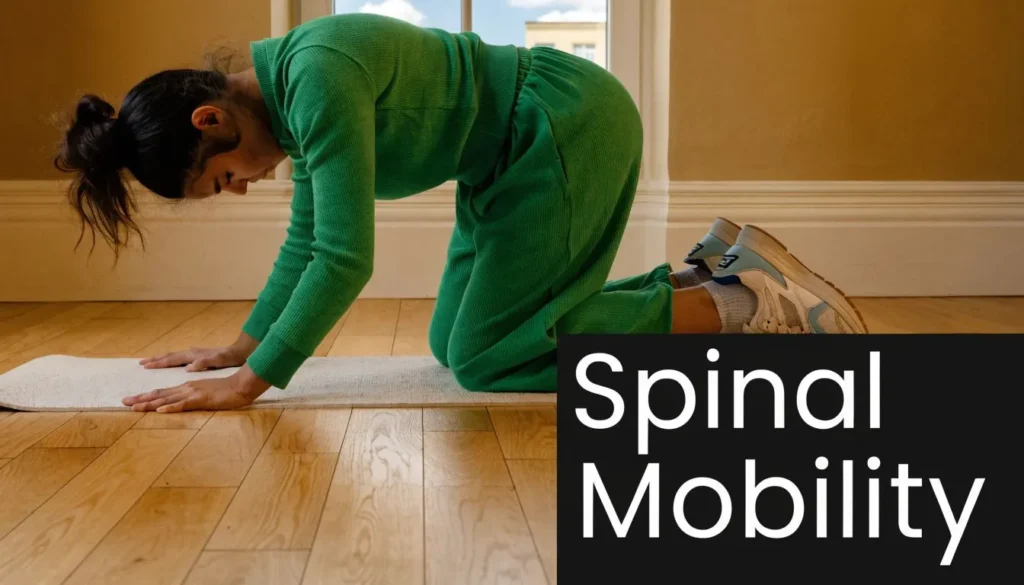
Cat-cow is one of the simplest ways to get a sore back moving again without loading it heavily. On hands and knees, you slowly alternate between a gentle arch and a gentle round through the spine. The movement is small, controlled, and useful when your back feels stiff from sleeping awkwardly or sitting too long.
For many people, this works best early in the day because it reduces that “rusty hinge” feeling. It also helps people who brace their trunk all day and forget that the spine is designed to move.
How to do it well
Set your hands under your shoulders and knees under your hips. As you inhale, let your chest open and tailbone tip slightly upward into cow. As you exhale, gently round the back and tuck the chin into cat.
Don’t force either end position. The goal is smooth spinal motion, not the biggest possible curve.
- Match movement to breath: Inhale into cow, exhale into cat. Breathing keeps people from rushing.
- Keep the stack clean: Hands under shoulders, knees under hips. If your knees are too far forward or back, the movement gets awkward.
- Move slowly: Aim for controlled repetitions, not fast ones. Slower is usually better for irritated backs.
Gentle mobility is often the first thing a guarded lower back tolerates.
A useful real-world example is the desk worker who stiffens after long meetings. A few slow rounds before work, after lunch, and again at night often feel better than one longer session. If you already use yoga for recovery, these kinds of spinal mobility drills pair well with calming practices like yoga poses for stress relief, especially when tension and poor breathing are feeding your back tightness.
When to modify it
If kneeling bothers your knees, place a folded towel or thicker mat underneath. If wrist pressure is the problem, make fists or raise your hands on a bench or couch cushion.
Stop if rounding or arching creates sharp pain, tingling, or pain shooting down the leg. In that case, your back may need a more individualized plan instead of repeated spinal motion.
2. Planks and Modified Planks
Planks aren’t flashy, but they’re one of the most practical ways to build the endurance your spine depends on. Lower back pain often shows up not because one muscle is weak in isolation, but because the trunk can’t hold steady under everyday demand. Carrying groceries, standing at the sink, and lifting a child all ask for sustained support, not just short bursts of strength.
That’s where planks help. They teach the abdominals, shoulders, hips, and back to work together while the spine stays relatively quiet.
Start easier than you think
Beginning an exercise with excessive intensity can lead to immediate compensation, manifesting as sagging through the low back, piking the hips, or holding one’s breath. A modified plank done well beats a long, sloppy standard plank every time.
Try a forearm plank from the knees first. Keep the body in a straight line from shoulders to knees and gently brace your midsection as if preparing for a cough. Hold for a short, clean effort.
- Choose the right version: Wall plank, bench plank, knee plank, then full plank. Progression matters.
- Think long, not high: Reach the heels back and the crown of the head forward. That usually cleans up alignment.
- Keep the ribs down: If your front ribs flare, your back often takes over.
Practical rule: End the set when form slips, not when your timer says so.
In rehab settings, I’d much rather see several solid short holds than one grinding effort. New exercisers often do well with a countertop plank because it feels safe and lets them learn bracing without fear. If you’re rebuilding your exercise base in general, these same progression habits apply beyond back care, and they fit well with fitness tips for beginners that emphasize technique before intensity.
What planks don’t do
Planks are excellent for stability, but they won’t solve everything by themselves. If your hips are stiff, your glutes are underactive, or you’re sensitive to prolonged sitting, you’ll usually need mobility and hip work too.
Skip planks for now if they clearly increase back pain during the hold or leave you flared up afterward. In that case, pelvic tilts or dead bugs are often a better starting point.
3. Bridges and Glute Activation Exercises
A lot of sore backs are doing work the hips should be doing. When the glutes don’t contribute enough, the lower back often steps in during standing, stair climbing, and lifting. Bridges are one of the cleanest ways to retrain that pattern.
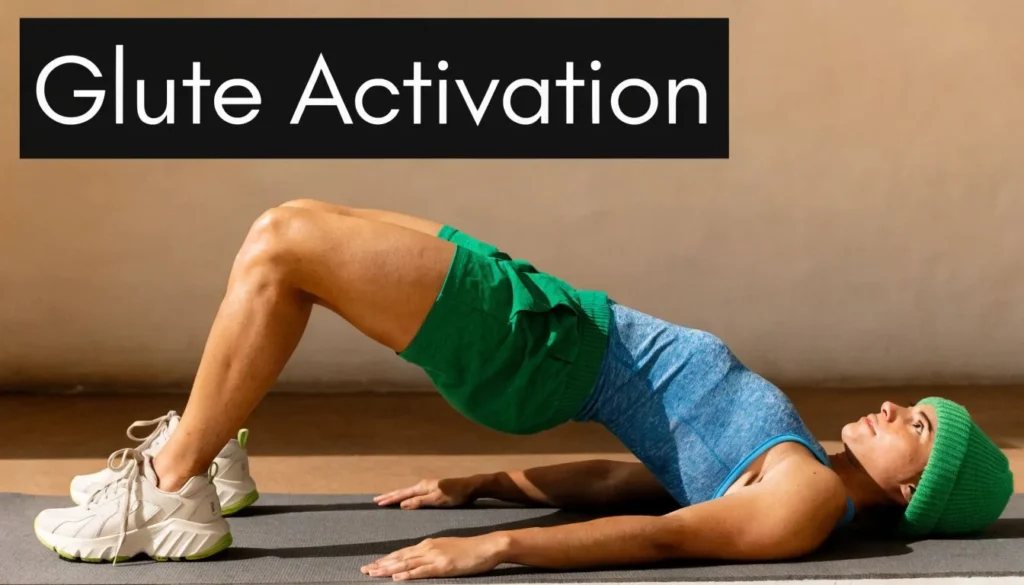
Lie on your back with knees bent and feet flat. Press through your heels, tighten your glutes, and lift your hips until your torso and thighs form a gentle line. Pause briefly, then lower with control.
Why this one matters
Bridges are useful because they strengthen the back side of the body without forcing a lot of spinal motion. That makes them a good fit for people who feel vulnerable bending and twisting but still need strength work.
They’re also easy to scale. A beginner can start with a small lift and a short pause. A stronger person can add a resistance band around the knees, hold longer at the top, or progress to a single-leg version.
- Drive through the heels: That helps many people feel the glutes more than the hamstrings.
- Keep the ribs quiet: Don’t arch your back to get higher.
- Squeeze, then lower slowly: The lowering phase is where control improves.
A runner with recurring back tightness after long sessions often benefits from adding bridges and side-lying clamshells a few times per week. The same goes for field sport athletes returning from a strain, which is why these movements often show up alongside broader sports injury prevention strategies.
Common mistake
People often chase height instead of tension in the right place. If you feel mostly hamstrings or low back, shorten the range. A smaller bridge with a true glute squeeze is the better rep.
If cramping hits the hamstrings, bring your feet a little closer to your body and reduce the lift. If symptoms shoot down the leg, stop and get assessed before pushing this one.
4. Quadruped Bird Dogs
Bird dogs look easy until you try to do them without wobbling. That’s why they’re so effective. This exercise trains your body to stabilize the trunk while the arms and legs move, which is exactly what daily life demands.
You start on hands and knees, brace gently, then reach one arm forward and the opposite leg back. The challenge isn’t how high you lift. The challenge is keeping your spine and pelvis steady while you move.
Control beats range
It is often beneficial to make this smaller than anticipated. A long reach through the fingertips and heel usually works better than a high arm swing or a leg kicked toward the ceiling.
Imagine balancing a glass of water on your lower back. That cue instantly improves form for many people.
- Reach away, don’t lift up: Height often creates back extension and hip rotation.
- Keep your hips level: If one side opens up, reduce the leg range.
- Pause briefly: A short hold helps build awareness and coordination.
Bird dogs are especially useful for someone who gets pain during tasks like loading the dishwasher, making a bed, or carrying a bag while turning. Those tasks require your trunk to resist motion, not just create it. This exercise teaches that skill in a low-risk position.
If you can keep your pelvis still, the rep is working. If you twist to finish it, the rep is too big.
When to regress it
If extending both limbs at once is too much, start with only the leg or only the arm. Another good option is sliding the toes along the floor instead of lifting the leg. That gives you the pattern without the same balance demand.
If kneeling isn’t tolerated, skip it for now and use dead bugs instead. The same anti-rotation idea carries over well on your back.
5. Pelvic Tilts
Pelvic tilts are often the first exercise I give people who are nervous to move. They’re small, safe, and teach something important. Your lower back doesn’t need to be rigid all the time, and your pelvis has a direct effect on what your lumbar spine feels.
Lie on your back with knees bent and feet flat. Gently flatten your lower back toward the floor by tipping the pelvis, then release and allow a small natural arch to return. This is not a forceful press. It’s a slow rocking motion.
Why beginners do well with it
This movement helps people find awareness before they build strength. If you can’t tell when your back is over-arched, over-flattened, or neutral, more advanced exercises tend to turn into compensation drills.
Pelvic tilts are also a good warm-up before bridges, dead bugs, or getting out for a walk. They reduce guarding and help people reconnect with abdominal control without a lot of load.
- Exhale as you flatten: That usually makes the deep abdominal connection easier.
- Keep your shoulders relaxed: The movement should come from pelvis and trunk, not neck tension.
- Use a gentle range: Think “rock,” not “crush your back into the floor.”
A common real-life use is after a long car ride or first thing in the morning before standing for a busy day. They can also help people who are fearful of movement after a flare and need a first win.
What to watch for
If pressing flat increases symptoms, keep the range smaller or skip the flattening phase and just practice finding a comfortable neutral. Some backs dislike repeated end-range flexion even in a small form.
Pelvic tilts are not a full program. They’re a reset and a teaching tool. Used that way, they’re one of the best exercises for lower back pain in the early stage of getting moving again.
6. Dead Bugs
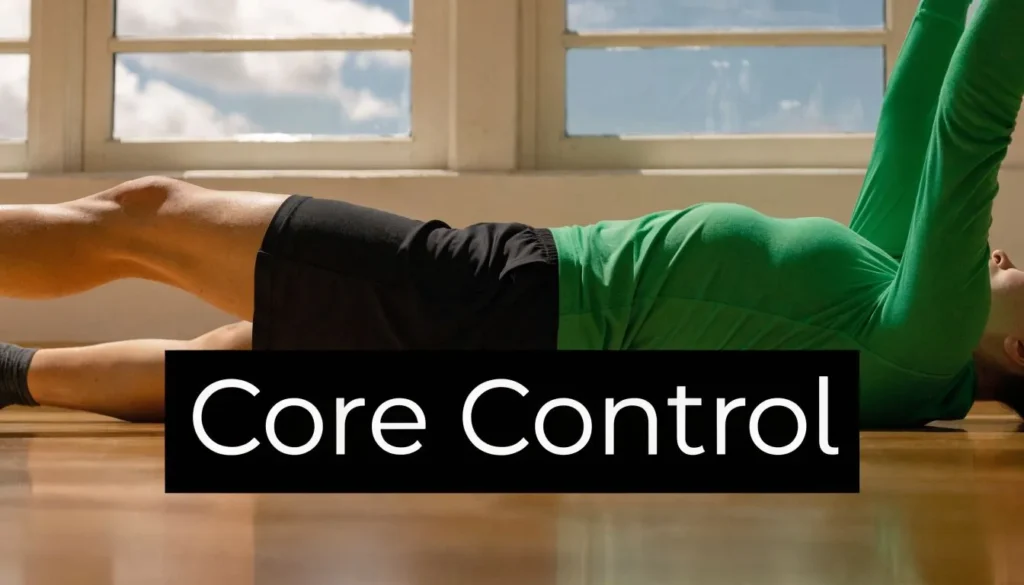
Dead bugs are one of the best exercises for lower back pain when someone needs core training but can’t tolerate planks yet. You’re on your back, supported by the floor, which removes some of the fear and lets you focus on control.
Start lying on your back with knees bent and arms reaching toward the ceiling. Bring your hips and knees into a tabletop position if that feels manageable, then slowly lower one arm overhead while the opposite leg extends away. Return and switch sides without letting your back peel off the floor.
A 2013 randomized trial in sedentary adults with non-specific chronic low back pain found that a moderate-intensity walking program reduced low back pain by 20%, compared with 15% in a strengthening group, with no statistically significant difference between groups (PMC summary of the 2013 trial on aerobic exercise and strengthening for chronic low back pain). That’s a useful reminder. Core work matters, but it doesn’t have to replace simple aerobic movement like walking. In practice, dead bugs and walking often complement each other well.
Form details that matter
A common mistake is reaching too far with the leg and losing trunk position. Only move through a range you can control.
Your low back should stay quiet. A small natural contact with the floor is fine, but if your back arches and your ribs pop up, scale it back.
- Shorten the leg reach first: That’s the easiest way to keep the trunk stable.
- Move on the exhale: Breathing out during the reach often improves abdominal control.
- Think slow return: The way back matters as much as the reach out.
For people who like a visual demo before trying a movement, this walkthrough can help:
Who benefits most
This is excellent for the person who can’t tell when their back starts taking over. It’s also useful for postpartum clients, office workers with low-load deconditioning, and athletes returning to core training after a flare.
If tabletop is too demanding, keep one foot on the floor and move only the arms, or slide one heel out along the ground instead of lifting the leg.
7. Quadriceps and Hip Flexor Stretches
Sometimes the back is the victim, not the source. Tight hip flexors and quadriceps can pull the pelvis forward and make standing, walking, and even sleeping feel harder on the low back. This is common in people who sit for long stretches, cycle often, or train hard without restoring hip extension.
The kneeling hip flexor stretch is a strong place to start. One knee goes down on a pad, the other foot steps forward, and you gently shift your body forward until you feel a stretch in the front of the hip on the kneeling side. Add a light glute squeeze to keep the stretch in the hip instead of dumping into the low back.
Make the stretch clean
People often turn this into a back bend. That misses the target. Keep your ribs stacked over your pelvis and think about moving the whole body forward as one unit.
A standing quad stretch works too, especially for people who don’t tolerate kneeling. Hold your ankle behind you, keep knees close together, and stand tall without arching.
- Squeeze the glute of the stretched side: That usually improves the front-of-hip stretch fast.
- Stay upright: Leaning back shifts the stress into the lumbar spine.
- Use support: A wall or chair makes balance easier and form better.
A 35-trial meta-analysis involving 2,132 participants found that several exercise categories improved pain in non-specific lower back pain, with walking, Pilates, and tai chi among the strongest options for pain relief, and walking, Pilates, and yoga showing favorable effects for disability (PMC meta-analysis of exercise types for non-specific lower back pain). Stretching can help, but this is the practical trade-off. Mobility work is often best as a support act, not the whole plan.
Tight hips can make your back feel guilty for a problem the hips created.
When stretching helps least
If your pain is primarily from prolonged loading intolerance, weakness, or poor movement control, stretching alone usually won’t change much. It may feel good temporarily, but the relief doesn’t last.
That’s why I usually pair hip flexor stretching with bridges, bird dogs, or walking. Mobility opens the door. Strength keeps it open.
8. Partial Crunches and Modified Sit-ups
A common scenario in the clinic is someone who can walk, bridge, and hold a plank without much trouble, but still feels unsteady when rolling out of bed or curling forward to reach socks. That gap matters. Daily life includes some trunk flexion, so the goal is not always to avoid it forever. The goal is to reintroduce it carefully, if your back tolerates it.
Partial crunches can help build abdominal strength for the right person. Full sit-ups usually create more spinal loading and more hip flexor involvement than many sore backs handle well, so I start with a much smaller motion. The lift is short, controlled, and driven by the abdominal wall rather than momentum.
Who should use these, and when
This exercise fits later in the progression, after you can brace well and move without a pain spike. It is a selective option, not a default pick for every case of lower back pain.
Set up on your back with knees bent and feet flat. Cross your arms over your chest or place your fingertips behind your head without pulling. Exhale as you tighten your abdominals, then lift your head and shoulders slightly off the floor. Pause briefly, then lower with control.
- Keep the range small: A slight shoulder lift is enough.
- Lead with the ribs, not the neck: The chin stays relaxed, and the hands only support the head.
- Move slowly both ways: Fast reps usually shift the work away from the trunk.
- Stop if symptoms travel: Pain, tingling, or numbness into the leg is a clear reason to stop.
Modified sit-ups can work too, but only when they are properly modified. That usually means a short range, fewer reps, and a clear reason for using them. If a person has strong extension bias symptoms or gets worse with bending, I skip them and use dead bugs, planks, or bird dogs instead.
The trade-off is straightforward. Partial crunches train a movement pattern you may need in real life, but they are less forgiving than neutral-spine core work. They also do not cover everything your trunk needs. A recovery plan still works better when it includes bracing, breathing control, hip strength, and walking or other tolerable activity.
As noted earlier, exercise approaches that emphasize control and coordinated trunk work tend to outperform high-volume sit-up style training for ongoing low back pain. That is why these belong near the end of the list, not the beginning.
Red flags and smart modifications
Skip this exercise during a painful flare, after a recent disc injury unless a clinician has cleared it, or any time repeated flexion clearly increases next-day symptoms.
Try one of these changes if the standard version feels borderline but not clearly aggravating:
- Reduce the height of the lift: Even a head nod with abdominal bracing can be enough at first.
- Shorten the set: Start with 5 controlled reps instead of chasing fatigue.
- Use a towel behind the head: This can reduce neck strain without changing the exercise goal.
If you feel stronger in daily tasks after adding partial crunches, keep them. If your back complains during the movement or stiffens up later that day, they are not the right fit right now. That kind of decision-making is what makes a back program safer and more useful than a generic exercise list.
Top 8 Lower Back Pain Exercises Comparison
| Exercise | Implementation complexity | Resource requirements | Expected outcomes | Ideal use cases | Key advantages |
|---|---|---|---|---|---|
| Cat-Cow Stretch (Marjaryasana-Bitilasana) | Very low, simple movement with basic form cues | None (mat optional) | Spinal mobility, reduced morning stiffness, core engagement | Morning mobility, gentle rehab, desk-related stiffness | Gentle on joints, easy daily practice |
| Planks and Modified Planks | Moderate, requires sustained correct alignment | None (mat optional); forearm variation for wrists | Core endurance, spinal stability, improved posture | Core strengthening, posture correction, general fitness | Builds deep stabilizers, scalable variations |
| Bridges and Glute Activation Exercises | Low–Moderate, needs glute activation awareness | None (mat optional) | Stronger glutes, improved hip extension, reduced lumbar load | Correcting muscle imbalances, runners, rehab | Targets glutes directly, improves load distribution |
| Quadruped Bird Dogs | Moderate, coordination and balance required | None (mat optional) | Neuromuscular control, spinal stability, proprioception | Functional stability training, injury prevention, rehab | Trains stability during limb movement, low impact |
| Pelvic Tilts | Very low, foundational, easy to learn | None (can be done in bed) | Neutral spine awareness, gentle lower-back mobilization | Early back-pain recovery, acute pain phases, beginners | Extremely safe, ideal first exercise for rehab |
| Dead Bugs | Moderate, requires coordinated bracing and limb control | None (mat optional) | Core control, reduced compensatory patterns, safe progression | Progression from pelvic tilts, core-control rehabilitation | Safer supine core training, prevents spinal rotation |
| Quadriceps and Hip Flexor Stretches | Low, static technique, minimal skill | None (space to stand/kneel) | Improved hip flexibility, reduced anterior pelvic tilt | Office workers, posture correction, post-exercise stretching | Directly addresses sitting-related tightness, low risk |
| Partial Crunches and Modified Sit-ups | Low–Moderate, controlled spinal flexion needed | None (mat optional) | Anterior core strength with limited lumbar stress | Abdominal development within balanced programs | Familiar movement, less risky than full sit-ups |
Building a Consistent and Safe Routine
The best exercises for lower back pain aren’t necessarily the hardest ones, and they aren’t the ones that leave you the sorest the next day. The right routine is the one you can do consistently, with good form, and without stirring up your symptoms. Individuals typically achieve better results with a short plan they repeat often than with an ambitious program they abandon after three days.
Start with two or three exercises that feel manageable. For many people, that means one mobility drill, one core stability exercise, and one hip-strength movement. Cat-cow, pelvic tilts, and bridges are a solid combination for a beginner. If those go well, add bird dogs or dead bugs. If your body responds well to gentle aerobic work, add walks on top of the exercise plan instead of trying to replace it.
Progress slowly. Increase one variable at a time. That might mean a few more repetitions, a slightly longer plank hold, or a cleaner range of motion rather than jumping to a harder variation. People often get into trouble when they confuse “feels easier today” with “I should double everything.” Backs usually prefer steady progression over heroic effort.
Pay attention to the difference between effort and aggravation. Muscles working is fine. Mild stretching discomfort can be fine. Sharp pain, spreading pain, numbness, or a clear worsening of symptoms that lingers after the session isn’t the kind of signal to ignore. If an exercise repeatedly flares you up, it’s not the right one for you right now, even if it helps someone else.
It also helps to match the exercise to the pattern of your day. If mornings are your stiffest time, start with cat-cow or pelvic tilts before doing anything more demanding. If sitting is your trigger, break up the day with short walks and a quick bridge set. If standing and lifting wear you down, prioritize endurance-based core work like planks and bird dogs.
One more point matters. Exercise is powerful, but diagnosis still matters when symptoms don’t behave as expected. If your pain keeps returning, changes character, or limits your sleep, work, or walking tolerance despite a few weeks of steady effort, get evaluated by a physical therapist or physician. A good plan should make your body feel more capable over time, not more confusing.
The goal isn’t to find one miracle movement. The goal is to build a body that tolerates life better. Done regularly, these exercises can reduce stiffness, improve control, and give your back more support from the muscles around it. That’s what lasting relief usually looks like. Not a dramatic fix, but a steady return to trust in your own movement.
If you want more approachable health, fitness, sports, and science content, visit maxijournal.com. It’s a good place to keep reading, discover fresh articles across multiple topics, and explore opportunities if you’re interested in contributing your own writing.
Discover more from Maxi Journal
Subscribe to get the latest posts sent to your email.