Let’s get one thing straight: you don’t need a salon-sized budget to get incredible hair. The best drugstore conditioner isn’t some mythical, one-size-fits-all bottle. It’s simply the right bottle for your hair. It’s time to bust the myth that a higher price tag equals better quality—the real secret to healthy hair is knowing what to grab at your local drugstore.
Why High-Quality Hair Care Is Already in Your Shopping Cart
The hair care aisle is a sensory overload. Every bottle screams promises of shine, volume, and miracle repairs. So, how do you know what’s real and what’s just slick marketing? The truth is that drugstore brands have become masters at delivering serious performance without the sticker shock.
These companies operate on a massive scale, pouring money into research and development to perfect their formulas with proven, effective ingredients. While a luxury brand might tout a rare orchid extract, drugstore formulas focus on nailing the science of core conditioning agents—the stuff that actually does the heavy lifting to smooth and hydrate your hair.
The Value Proposition of Drugstore Conditioners
At its core, a conditioner’s job is to restore moisture, smooth down the hair’s outer layer (the cuticle), and make it manageable. Salon products often do this with super-concentrated formulas, but drugstore options get the same results using well-tested ingredients in smart, effective combinations.
You aren’t just buying a cheaper product; you’re buying into a system built for efficiency. And it’s working. The global hair conditioner market, which includes mainstays like Pantene and Garnier, was valued at USD 5.04 billion in 2025 and is expected to hit USD 9.62 billion by 2034. That massive growth is fueled by people like us who want great hair without breaking the bank. You can discover more about the hair conditioner market’s future on fortunebusinessinsights.com.
Here’s a little secret: a great conditioner has a much bigger impact on your hair’s health than a pricey shampoo. Shampoo’s main job is just to get your hair clean. Conditioner is what sticks around longer, doing the real work of hydrating, smoothing, and preventing tangles.
This makes finding the right drugstore conditioner a high-impact, low-cost upgrade for your entire hair routine. Plus, many affordable brands now offer larger pump bottles or refills, which is a simple way to reduce plastic waste in your household.
A Quick Guide to Aisle Navigation
To cut through the noise on your next shopping trip, we put together a simple cheat sheet. Use this table to match your main hair concern with the right type of conditioner and the ingredients that will actually help.
Quick Guide to Selecting Your Drugstore Conditioner
| Hair Concern | Look For This Conditioner Type | Key Ingredients to Find |
|---|---|---|
| Dry or Brittle | Moisturizing, Hydrating | Glycerin, Aloe Vera, Shea Butter, Argan Oil |
| Fine or Limp | Volumizing, Lightweight | Panthenol (Pro-Vitamin B5), Biotin, Hydrolyzed Proteins |
| Frizzy or Unruly | Smoothing, Anti-Frizz | Dimethicone (a silicone), Keratin, Coconut Oil |
| Damaged or Color-Treated | Repairing, Color-Safe | Ceramides, Amino Acids, Hydrolyzed Wheat Protein |
| Oily Roots, Dry Ends | Balancing, Lightweight | Jojoba Oil, Tea Tree Oil (apply to ends only) |
Armed with this simple guide, you can walk that aisle with confidence. You’ll be able to spot the formulas that will deliver what they promise, proving that fantastic hair care is already waiting in your cart.
How to Read a Conditioner Label Like a Chemist
Ever feel lost in the conditioner aisle? The front of the bottle promises miracles, but the back is just a long list of confusing words. Learning to read that list is the single best way to find a great drugstore conditioner that actually works for your hair.
Think of the ingredient list as a recipe. Everything is listed by weight, from most to least. The first five ingredients do most of the heavy lifting, so that’s where you should focus. Anything listed after “fragrance” or “parfum” is usually there in amounts less than 1%.
The Core Building Blocks of a Conditioner
Every conditioner is made from a few key ingredient types. Once you know what they do, you can pick up any bottle and instantly understand its purpose. They all work together to make your hair feel soft, smooth, and easy to manage.
Here are the main players you’ll find in almost every formula:
- Humectants: These are moisture magnets. Look for ingredients like glycerin, aloe vera, and panthenol (Pro-Vitamin B5). They pull water from the air right into your hair for a serious dose of hydration.
- Emollients: These ingredients lock that moisture in. They act like a protective seal for your hair. Common emollients are natural oils (argan oil, coconut oil) and butters (shea butter, cocoa butter), which smooth everything down and add shine.
- Cationic Surfactants: This is the scientific name for the main conditioning agents. Ingredients like behentrimonium chloride or cetrimonium chloride carry a positive charge that sticks to the negative charge of damaged hair. This is what instantly tames frizz and makes detangling so much easier.
If you see glycerin high up on the list, you know it’s a hydrating formula. If oils and butters are near the top, it’s built for smoothing and sealing. It’s that simple.
Decoding Silicones and Proteins
Silicones and proteins are two of the most misunderstood ingredients in hair care. They both have a mixed reputation, but they’re incredibly useful when you know what you’re looking for.
Silicones, like dimethicone and amodimethicone, get a bad rap for causing buildup. But they are fantastic at what they do: creating a silky-smooth surface, cutting down on frizz, protecting from heat, and adding major shine. Think of them as a temporary shield for your hair. The trick is to use a clarifying shampoo every few weeks to wash away any residue.
On the other hand, proteins are the repair crew. Ingredients like hydrolyzed keratin, silk amino acids, or hydrolyzed wheat protein fill in the gaps in damaged hair cuticles. They make the strand temporarily stronger, but you don’t want to overdo it. “Protein overload” is a real thing and can make hair feel stiff and brittle.
The science behind these ingredients is why drugstore brands are so competitive. The global conditioner market was valued at $10.49 billion in 2024 and is expected to hit $15.59 billion by 2033. Drugstore brands are a massive piece of that pie. In fact, industry giants like L’Oréal and Henkel captured about 70% of revenue in related hair care markets from 2020 to 2024 by perfecting these affordable formulas. You can discover more research on the global conditioner market trends on mordorintelligence.com.
Once you can spot these key ingredients, you can confidently pick a product based on what your hair actually needs, not just what the marketing claims. This turns you from a regular shopper into someone who knows exactly how to find the perfect match.
Matching the Right Conditioner to Your Hair Type
Okay, so you can now read an ingredient label like a pro. Let’s put that knowledge to work and match those ingredients to your actual hair. Finding the best drugstore conditioner isn’t about some mythical “holy grail” product. It’s about knowing what your hair needs and picking a formula that gets the job done.
Think of it just like skincare. You wouldn’t put a thick, oily cream on acne-prone skin, right? The same idea applies here. A rich conditioner made for thick, coily hair will just leave fine, straight hair looking flat and greasy. On the flip side, a light volumizing formula won’t do much for dry, thirsty curls.
This need for targeted solutions is a huge part of the hair care market. The North American conditioner industry is on track to hit USD 4.5 billion by 2026, and adults make up over 94% of the people buying these products. Why? Because we’re all looking for specific formulas to tackle everything from dryness to thinning. You can read more about the growing conditioner market on mordorintelligence.com if you’re curious.
This flowchart is a great cheat sheet for connecting your hair goals to the right types of ingredients.
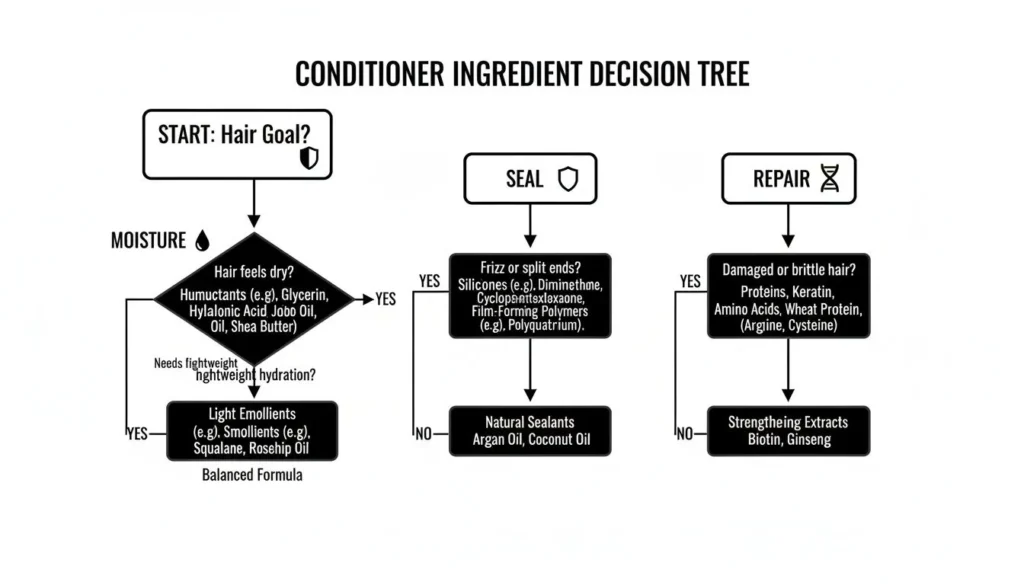
The main takeaway here is simple: your primary goal—whether it’s moisture, sealing, or repair—points you directly to a family of ingredients you should be looking for on that label.
For Fine or Oily Hair
If your hair gets weighed down at the drop of a hat or your roots look greasy by the end of the day, you need conditioning without the heft. Your hair strands are smaller in diameter, which means heavy oils and butters will flatten them out fast.
You’re looking for a lightweight or volumizing conditioner. These formulas are made to give you just enough slip to detangle and smooth things out, but they rinse clean without leaving gunk behind.
- Look For: Ingredients like panthenol (Pro-Vitamin B5) and biotin. These can help temporarily swell the hair shaft, making it look and feel a bit fuller.
- Avoid: Heavy butters like shea and cocoa butter, especially if they’re high up on the ingredient list. And always apply your conditioner from the mid-lengths to the ends, keeping it far away from your scalp.
For Thick or Coarse Hair
Thick hair simply means each strand has a wider diameter. This often makes it more susceptible to dryness and feeling rough, and it can soak up a ton of product before it feels saturated. Your hair can handle—and frankly, needs—the rich stuff.
Your go-to conditioner will probably be labeled moisturizing, hydrating, or smoothing. These are loaded with the heavy-hitting emollients needed to soften coarse hair and make it easier to manage.
A good analogy is to think about fabric. Fine hair is like silk; it needs a delicate touch. Thick, coarse hair is more like denim; you need a powerful fabric softener to make it supple. Your conditioner is your hair’s fabric softener.
Look for conditioners packed with natural oils and butters. Things like argan oil, shea butter, and avocado oil will give your hair that intense dose of hydration it needs to feel soft and look glossy instead of wiry.
For Dry or Damaged Hair
If your hair feels brittle, snaps easily when you brush it, or just looks dull and sad, its protective outer layer (the cuticle) is probably damaged. Your job is to pump moisture and lipids back in while smoothing down that roughed-up surface.
You should be grabbing conditioners labeled repairing, restorative, or for damaged hair. These are usually the richest, most intensive formulas you can find, packed with ingredients designed to hydrate and add temporary strength.
- Must-Have Ingredients: Look for hydrators like glycerin and aloe vera. You’ll also want to see ingredients like ceramides and amino acids, which act like a temporary patch, filling in the little “potholes” on the damaged cuticle to make hair feel smoother and stronger.
- Application Tip: For really thirsty hair, leave your conditioner on for an extra minute or two in the shower. That extra time gives it a better chance to really sink in.
For Curly and Coily Hair
Curly and coily hair (think types 3A to 4C) has a structure that makes it tough for the natural oils from your scalp to travel down the hair shaft. This means it’s almost always prone to dryness, making moisture your absolute top priority.
The best drugstore conditioner for you will be one that offers serious moisture and great slip. “Slip” is that slick, seaweed-like feeling you get that lets you detangle your curls with your fingers without causing a ton of friction and breakage.
- Key Ingredients: For maximum slip, look for formulas with behentrimonium chloride or cetrimonium chloride high on the ingredient list.
- Moisture Powerhouses: Conditioners loaded with shea butter, coconut oil, and mango butter will give your curls the deep hydration they crave to clump nicely and keep frizz at bay. Many people with curly hair even “co-wash,” which just means they skip shampoo and wash with conditioner only.
Solving Specific Hair Problems on a Budget
Sometimes your hair has issues that go beyond a simple type like “oily” or “dry.” Problems like damage from coloring, constant heat styling, frizz, or thinning hair need a more specific plan of attack. You can absolutely tackle these concerns without buying expensive salon products.
The key is understanding what’s causing the problem. When you bleach your hair, for instance, the chemicals rough up the hair’s protective outer layer, called the cuticle. A conditioner for color-treated hair must contain ingredients that smooth that cuticle back down to protect your color. This need for specialized care is why the global market for conditioning treatments is projected to climb from $10.49 billion in 2024 to $15.59 billion by 2033. Women’s hair care is a huge part of that growth, a trend you can learn more about from Market.us.
Here’s how to find the right affordable conditioner for your specific hair problem.
For Color-Treated or Bleached Hair
Color-treated hair has two main needs: moisture and protection. The dyeing process is very drying, and regular washing can make your new color fade. Your goal is to find a conditioner that hydrates while also sealing the hair’s cuticle to lock in the color.
- What to Look For: Find conditioners with labels like “color-safe,” “color-protect,” or “for color-treated hair.” These are made without harsh sulfates that strip color.
- Key Ingredients: Look for polymers that create a protective layer over the hair. You also want gentle moisturizers and strengthening ingredients like amino acids to help fix damage from the dyeing process.
For Heat-Damaged or Brittle Hair
If you regularly use a flat iron, curling wand, or blow dryer, your hair is likely dealing with heat damage. This looks like split ends, breakage, and a dry, straw-like feel. You need a conditioner that acts like a first-aid kit, delivering serious moisture and repair.
Look for formulas with “repairing,” “restorative,” or “anti-breakage” on the label. These are filled with powerful ingredients.
The goal is to put back the lipids your hair has lost and temporarily patch up the cuticle. It’s like using spackle to fill cracks in a wall—ingredients like ceramides and hydrolyzed proteins fill in the gaps in the hair strand, making it feel smoother and stronger.
You can often find the best drugstore conditioner for this by seeking out rich, creamy formulas that list ingredients like ceramides, keratin, and nourishing oils.
For Frizzy and Unruly Hair
Frizz is just your hair’s way of saying it’s thirsty. When your hair is dry, its outer cuticle layer opens up, letting moisture from the air get inside. This makes the hair strand swell and poof out. The fix is to keep your hair so hydrated that it doesn’t need to steal moisture from the atmosphere.
- Best Bet: Smoothing or anti-frizz conditioners are what you need. They are made to coat the hair, smooth the cuticle, and block humidity.
- Star Ingredients: Silicones such as dimethicone are very effective at this. They create a light barrier that locks in moisture and keeps humidity out. Natural oils like argan or coconut oil are also great for taming frizz.
For Thinning Hair or Hair Loss Concerns
A rinse-out conditioner won’t regrow hair, but it can play a vital support role. If you have thinning hair, you want a conditioner that helps create a healthy scalp and makes your existing hair look fuller without weighing it down. For those looking for more direct solutions, a new treatment for hair growth could offer more options.
The most important thing is to use a lightweight formula that doesn’t clog hair follicles or make fine hair flat. Apply conditioner only to the mid-lengths and ends of your hair to avoid greasy roots, which can make thin hair look even more sparse.
Mastering Your Conditioning Technique for Salon Results
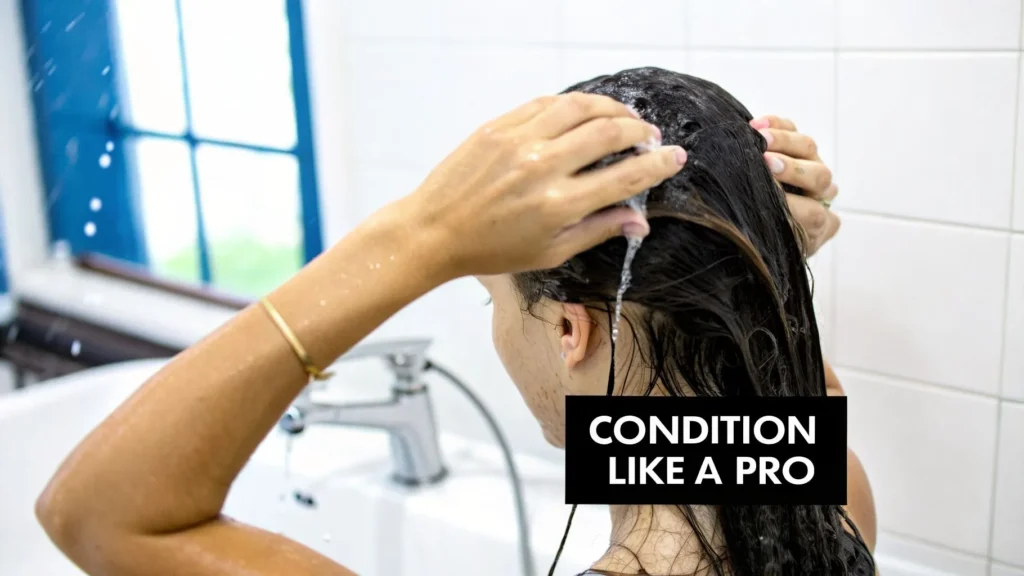
You can own the best drugstore conditioner available, but if your application technique is flawed, its potential is wasted. Proper technique is what transforms an affordable product into a high-performance treatment. It starts by correcting a few common habits.
Forget the “quarter-sized amount” rule. The right quantity is determined by your hair’s length, thickness, and porosity. It’s better to start with a small amount—a dime-sized dollop for short hair, perhaps a quarter for shoulder-length—and add more only as needed. Your hair will signal when it has enough: it should feel slick and detangle easily, but not heavy or weighed down.
The Foundation of Effective Conditioning
Before the conditioner even touches your hair, one step can dramatically improve its performance: squeeze out the excess water. Think of your hair as a sponge. A sponge saturated with water cannot absorb any more liquid.
By gently pressing water from your hair post-shampoo, you make room for the conditioner’s ingredients to penetrate the hair shaft. Without this step, the product simply slides off, delivering minimal benefit. This ensures you get more impact from less product.
Once your hair is prepped, application placement is critical. Conditioner is meant for your hair, not your scalp. Applying it near the roots is a common cause of greasy, flat hair, a particular problem for those with fine or oily hair types.
Start your conditioner application from the mid-lengths and work it down to the ends. This area contains the oldest, driest, and most damaged hair that requires the most moisture and repair. Lightly work any leftover product upward, but keep it away from the first two to three inches of your scalp.
Specialized Techniques for Better Results
With the basic principles established, you can move on to specialized methods that target specific hair concerns. These techniques require no special equipment, only minor adjustments to your routine. For those looking to fully customize their hair care, many are also exploring alternative cleansing methods, like learning how to clean hair without traditional shampoo.
The right technique can significantly alter your results. Below is a comparison of different conditioning methods designed for specific hair needs.
Conditioning Methods for Different Hair Needs
| Technique | Best For | How It Works | Pro Tip |
|---|---|---|---|
| Standard Application | Most hair types | Apply from mid-lengths to ends on damp hair. Wait 1-3 minutes, then rinse. | Squeeze out excess water before applying to maximize product absorption. |
| Squish to Condish | Wavy & Curly Hair | After applying, cup hands with water and “squish” hair upwards to encourage curl clumping and hydration. | Don’t rinse fully. Leaving a small amount of “slip” can help define curls and reduce frizz. |
| Reverse Washing | Fine or Oily Hair | Apply conditioner to ends before shampooing. Rinse, then wash hair as normal. | This protects fragile ends from detergents without weighing down roots with conditioning agents. |
| Pulsing | Low Porosity Hair | Gently “pulse” or squeeze conditioner into the hair in sections to help it penetrate the tightly closed cuticle. | A shower cap can trap heat, helping the cuticle lift and absorb the product more effectively. |
| Leave-In Time | Dry & Damaged Hair | Allow the conditioner to sit for 3-5 minutes (or longer) before rinsing. | Use this time to complete other shower tasks. A longer wait time allows deeper penetration for intense repair. |
By selecting the right method for your hair, you can ensure that every bottle of conditioner you purchase delivers its maximum benefit. These strategies can provide salon-quality results without the associated cost.
Your Drugstore Conditioner Questions Answered
Even after you know what to look for on a label, a few lingering questions always seem to pop up in the hair care aisle. Let’s tackle some of the most common ones to give you that final boost of confidence.
Are Silicones in Drugstore Conditioners Really Bad for My Hair?
Not at all, for most people. Think of silicones as a protective, smoothing topcoat for your hair shaft—they’re fantastic at taming frizz and delivering that slippery, shiny feel.
The only real issue comes from certain heavy, non-water-soluble silicones that can build up over time, especially on fine hair. Many modern formulas, however, use lightweight silicones that rinse away easily. The simplest fix? Just use a clarifying shampoo once or twice a month to hit the reset button and wash away any residue. For the vast majority of us, the benefits of silicones far outweigh the downsides.
Can I Use a Deep Conditioner or Hair Mask as My Regular Conditioner?
It’s tempting, but you’ll want to avoid this. Deep conditioners and masks are like a rich dessert for your hair—amazing as a weekly treat, but way too heavy for daily use. They are packed with high concentrations of butters, oils, and proteins.
Using these intense formulas every day can easily lead to “over-conditioning.” This is where your hair becomes limp, greasy, or even brittle and straw-like from getting too much protein. Stick to these treatments about once a week and use your normal rinse-out conditioner for regular washes to keep everything in balance.
How Do I Know if My Conditioner Has Stopped Working?
If your hair suddenly feels dry, looks limp, or just isn’t behaving the way it used to, it’s a classic sign that something’s up. It’s usually not that the conditioner “went bad,” but rather a sign of product buildup or a shift in what your hair needs.
First, try a good clarifying shampoo. Often, that’s all it takes to solve the problem. If your hair still feels off, its needs have probably changed. Maybe the weather got drier and you need more moisture, or maybe you need to back off the protein for a bit. See it as your hair telling you it’s time to switch things up.
Is There a Real Difference Between Men’s and Women’s Conditioners?
Honestly, the main difference is the marketing. We’re talking about the scent and the color of the bottle, not the core formula. The conditioning ingredients that hydrate, smooth, and detangle hair work exactly the same way on everyone.
While some “for men” products might be formulated to tackle an oily scalp, you can often find much better and more targeted formulas in the main hair care section. The best move is to completely ignore the gendered packaging and just shop based on your hair type and what the ingredient list tells you.
Discover more from Maxi Journal
Subscribe to get the latest posts sent to your email.