To really get a handle on reducing plastic waste, you first need to understand what we’re up against. It’s about more than just feeling bad about a plastic bottle here or a grocery bag there.
The goal is to make conscious, consistent changes. That means swapping disposables for reusables, choosing to buy from brands that are serious about plastic-free options, and actually getting recycling right. This is how we start shrinking the amount of plastic choking our landfills and oceans.
Confronting the Reality of Plastic Waste in 2026
The plastic crisis can feel pretty abstract, but looking at the hard numbers is the only way to grasp the reality. Vague ideas about “too much plastic” don’t inspire action—but real data does.
Seeing the true scale of the problem gives every small choice we make real weight and purpose. This isn’t about guilt. It’s about realizing why refusing a plastic lid or choosing a different brand of pasta actually matters in the grand scheme of things.
The Planetary Tipping Point
The global plastic crisis has officially hit a breaking point. A landmark study from Earth Action For Impact revealed that in 2025, we generated a staggering 225 million tonnes of plastic waste. That’s a 2.3% jump from the year before.
This officially pushed us past what our planet can sustainably manage.
This threshold has a name: Plastic Overshoot Day. In 2025, it landed on September 5th. That’s the exact date when the plastic waste we created surpassed the world’s entire capacity to manage it for the year. Every piece of plastic waste after that day became unmanageable surplus.
The most shocking stat? Roughly 31.9% of all plastic waste is mismanaged on a global scale. This means nearly a third of it isn’t properly recycled, incinerated, or secured in a landfill. Instead, it’s just out there, polluting our environment.
The infographic below puts these 2025 figures into perspective, detailing total waste, the Overshoot Day, and the percentage of mismanaged plastic.
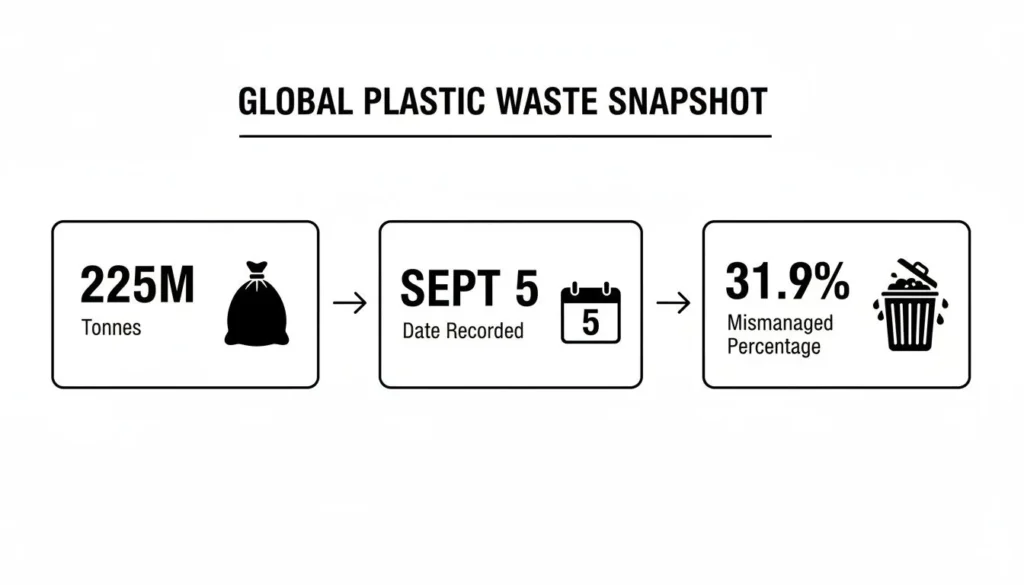
Seeing it all together makes the urgency crystal clear. We are generating waste far faster than our systems can possibly keep up, and a huge chunk of it is directly harming our planet. This data turns an abstract worry into a measurable crisis. Now, let’s get into the actionable steps you can take to fight back.
Simple Swaps to Reduce Your Daily Plastic Use
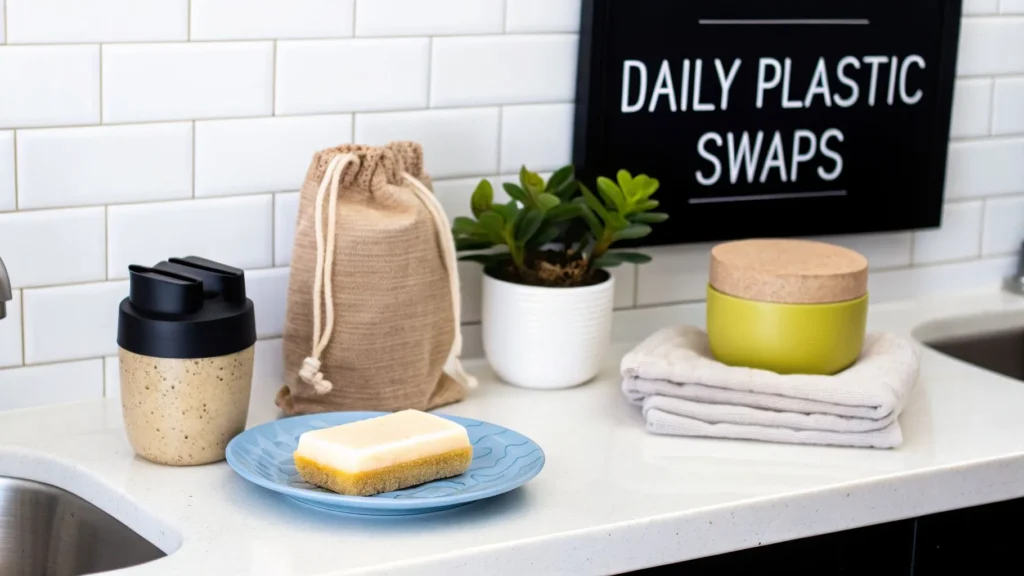
Getting a handle on your plastic waste doesn’t mean you have to turn your life upside down overnight. Real, lasting change comes from making small, smart swaps in your daily routine. Forget the dramatic overhauls; let’s look at some affordable and genuinely effective changes you can make today.
The best place to start is often right in your shower. That lineup of plastic shampoo and conditioner bottles is an easy target. Switching to solid bars completely eliminates this waste. If you’re worried about a “waxy” feeling, don’t be—modern formulas have come a long way. Just look for bars with pH-balanced ingredients to sidestep that issue entirely.
Your daily coffee or tea is another quick win. A good, leak-proof travel mug is more than just an eco-friendly choice; it’s a practical upgrade. Plus, many coffee shops will even knock a few cents off your order for bringing your own cup. The trick is to find one you actually enjoy using—something that keeps your drink hot and won’t ever leak in your bag.
Rethinking Your Bathroom and Kitchen
Your bathroom is probably another goldmine for single-use plastics. Between toothpaste tubes, disposable razors, and plastic-wrapped soaps, the opportunities to make a change are everywhere.
- Toothpaste Tablets: These little chewable tabs come in glass jars or compostable bags, replacing the unrecyclable plastic tube.
- Safety Razors: A stainless steel safety razor is a one-time buy. After that, you just replace the all-metal blades, which are cheap and widely recyclable.
- Bar Soap: Ditching the plastic body wash bottle for a simple bar of soap is one of the easiest swaps. It works just as well, lasts a long time, and usually comes in a paper wrapper.
Making these switches feels surprisingly good. If you’re ready to take it a step further, you can learn how to clean your hair without traditional shampoo in our dedicated guide.
I switched to a safety razor a few years back and was floored by the difference. I got a much closer shave, and I figured out I’m saving over $100 a year on those pricey disposable cartridges. The metal razor feels like a tool I’ll have for life, not just another throwaway item.
Packing a Plastic-Free Lunch
Packing your lunch is already a great move for your wallet and your health, but it can easily become a major source of plastic waste with all the Ziplock bags, plastic wrap, and takeout containers.
The solution is to build a zero-waste lunch kit. A stainless steel tiffin or a set of glass containers with silicone lids can handle everything from salads to hot soup. For snacks and sandwiches, reusable beeswax wraps or silicone pouches are the perfect stand-in for plastic wrap and baggies. You can even swap the disposable fork for a compact bamboo or metal cutlery set to keep in your bag.
This isn’t about giving things up; it’s about upgrading your lunch game. Your food will stay fresher, your bag will be more organized, and you’ll cut out a huge chunk of your daily plastic use without even trying. It just goes to show that reducing plastic isn’t a sacrifice—it’s just a smarter way to do things.
Your Guide to Plastic-Free Shopping
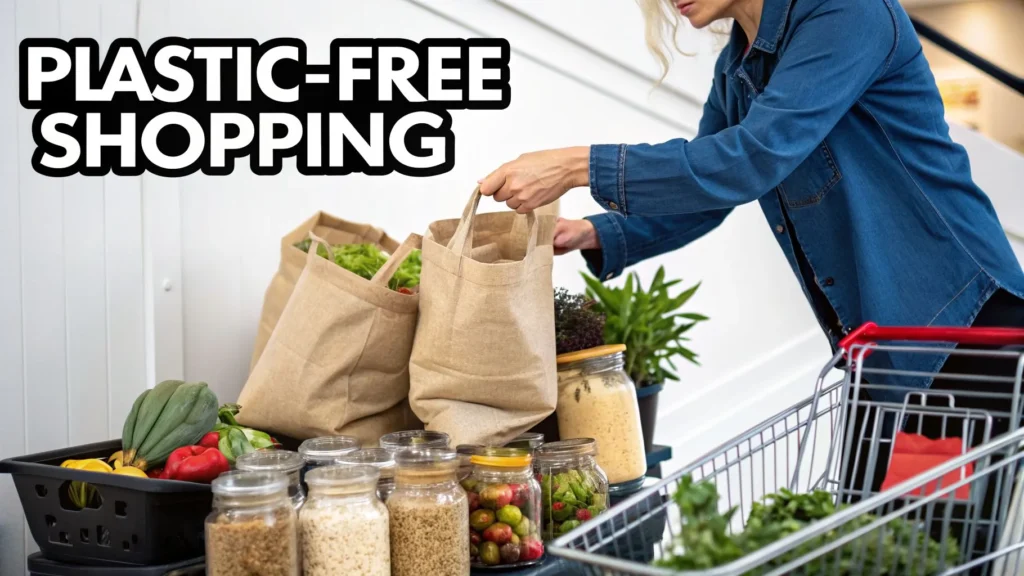
The grocery store can feel like the epicenter of our plastic problem. But with the right game plan, you can turn your weekly shop into a huge win for waste reduction. It’s all about shopping with intention—skipping past the plastic-wrapped everything and showing retailers what you actually want to buy.
Honestly, half the battle is won before you even walk out the door. Get your kit ready: reusable produce bags, a few cloth sacks for bulk items, and some glass jars or containers. Being prepared makes all the difference.
Stick to the Perimeter
One of the most effective tricks I’ve learned is to shop the perimeter of the store first. This is where you’ll find all the fresh, unpackaged food—fruits, veggies, and the meat and deli counters. The center aisles? That’s just a minefield of processed foods wrapped in layers of plastic.
In the produce section, bring your own mesh or cloth bags. Ditch the flimsy plastic ones they offer. For things like broccoli, avocados, or a bunch of bananas that have their own natural peel, you can just put them straight into your cart. This one small change makes a massive dent in the plastic you bring home.
The same goes for the bakery. You can almost always find unpackaged bread, bagels, or rolls. Just ask the employee to pop them right into a cloth bag you brought. I’ve found most people are happy to help.
Master the Bulk Bins
The bulk bin aisle is your best friend for cutting out packaging. This is where you can stock up on pantry staples like rice, pasta, grains, nuts, spices, and even coffee beans, all completely package-free.
It might seem complicated at first, but using your own containers is pretty simple once you get the hang of it.
- Get the tare weight. Before you fill up, weigh your empty container at a customer service desk or a scale in the produce section. This is the “tare” weight.
- Mark the container. Just jot down the tare weight on a sticky note or a piece of tape. This lets the cashier subtract the weight of your container at checkout.
- Fill it up. Get exactly how much you need. It’s a great way to reduce food waste, too.
- Write down the PLU number. Every bin has a product look-up (PLU) number. Make sure to write it on your container so the cashier can ring you up correctly.
Following these tips means you only pay for the food itself, not the container, and you walk away with zero new packaging.
To make these swaps easier, here’s a quick cheat sheet for some of the most common items you’ll encounter.
Common Plastic Items vs Their Low-Waste Alternatives
| Plastic-Packaged Item | Low-Waste Alternative | Where to Find It |
|---|---|---|
| Pre-packaged produce | Loose fruits and vegetables | Produce section, farmers’ market |
| Bagged bread | Unpackaged loaves or rolls | Bakery section, local bakeries |
| Boxed grains and pasta | Rice, oats, pasta, flour | Bulk bin section |
| Plastic-wrapped cheese | Cheese wrapped in paper | Deli counter, cheesemonger |
| Packaged nuts and seeds | Loose nuts, seeds, dried fruit | Bulk bin section |
| Plastic spice jars | Spices by the scoop | Bulk bin section, specialty spice shops |
| Liquid soap in a bottle | Bar soap | Health and beauty aisle, local soap makers |
This table is just a starting point, but you’ll be surprised how many alternatives you can find once you start looking.
Don’t be shy at the deli or meat counter. It might feel a little awkward at first, but just politely ask the staff to put your sliced cheese or meat directly into a clean, reusable container you’ve brought from home. Every time you do this, you’re helping to normalize plastic-free options.
Tackle Tricky Items
Some things are just plain tough to buy without plastic. Meat, cheese, and dips almost always come pre-packaged. Don’t let that stop you. Your best bet is to go straight to the source: the butcher or deli counter.
By shopping this way, you’re doing more than just shrinking your own plastic footprint. You’re actively casting a vote for a more sustainable way of doing business, showing stores that there’s real demand for change.
Making Sense of the Recycling System
We’ve all been taught that recycling is the answer to our plastic problem. Just toss it in the blue bin, and it magically becomes something new, right? If only it were that simple.
The truth is, recycling is a complex and often broken system. While it’s a piece of the puzzle, treating it as the ultimate solution is a mistake. To really make a difference, we have to look past the blue bin and understand what’s actually happening behind the scenes.
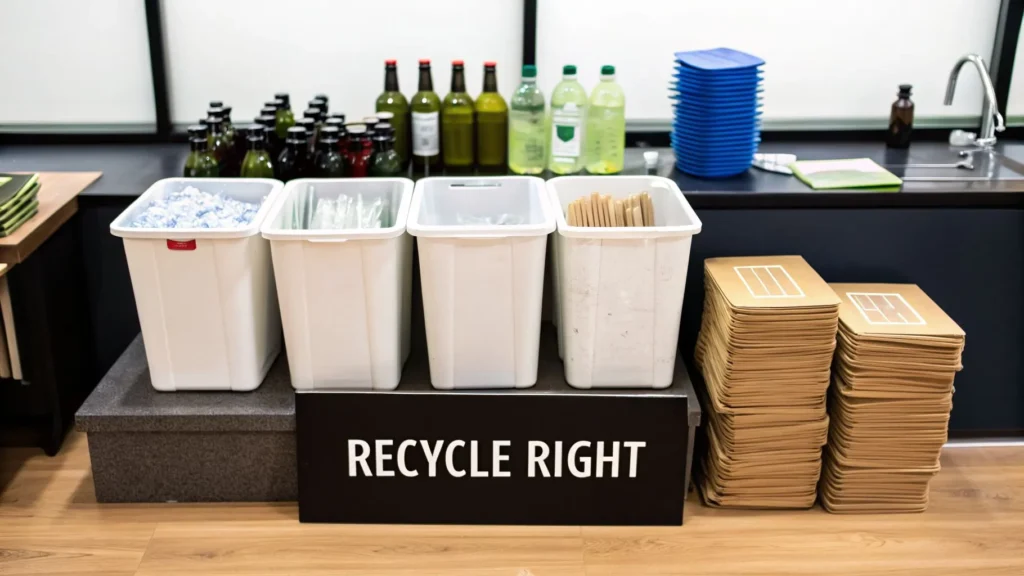
Many of us are guilty of “wish-cycling”—throwing something in the recycling bin hoping it can be recycled. This well-intentioned habit actually causes huge problems. A single dirty container or the wrong type of plastic can contaminate an entire truckload of good materials, forcing the whole batch to be sent straight to the landfill.
How to Recycle Right
To avoid wish-cycling, you have to follow your local program’s rules to the letter. These guidelines aren’t just suggestions; they exist to make sure the materials collected are clean enough to actually be repurposed.
Here are the universal rules for effective recycling:
- Clean and Dry: All food and drink containers must be empty and rinsed. You don’t need to scrub them spotless, but a quick swirl of water to remove residue is essential. This prevents mold, pests, and contamination.
- Know Your Numbers: Look for the small number inside the chasing arrows symbol. Most curbside programs only accept plastics #1 and #2 (think water bottles and milk jugs). Check your local municipality’s website for their specific list.
- Caps On or Off?: This rule is constantly changing. Some facilities want caps left on bottles so they don’t fall through sorting equipment, while others want them off. A quick search for your city’s recycling guide will give you the current rule.
One of the most common mistakes is putting your recyclables into a plastic trash bag. These bags get tangled in the sorting machinery, bringing the entire facility to a halt. Workers often have no choice but to grab the whole bag and toss it in the landfill pile. Always put your recyclables into the bin loose.
Recycling Is the Last Resort
Even when we do it perfectly, recycling should always be our last option after “reduce” and “reuse.” A look at the economics of plastic production shows exactly why.
In 2023 alone, global plastic production reached a staggering 436 million metric tonnes, with the trade in plastic products exceeding $1.1 trillion. Yet, a mind-boggling 75% of all plastic ever produced has already become waste. A huge part of the problem is that making new, “virgin” plastic is almost always cheaper and easier than collecting, sorting, and melting down old plastic. You can dive deeper into the economics and challenges in this detailed UNCTAD report.
At the end of the day, the most powerful action you can take is to cut off the problem at its source. When you focus on buying less plastic in the first place, you don’t have to worry about whether or not it can be recycled.
How to Amplify Your Impact Beyond the Bin
Making changes in your own home is a fantastic first step, but the real magic happens when you scale your efforts. Taking what you’ve learned about reducing plastic waste into your workplace and community creates a ripple effect that can lead to significant, system-wide change.
Don’t underestimate the power of your personal experience. Once you’ve shown that a low-waste lifestyle is not only possible but also practical, you have the credibility to inspire others—without having to be preachy about it.
Drive Change in Your Workplace
Your office is a great place to start. Think about it: the daily flood of coffee pods, disposable cups, and takeout containers from lunch runs adds up to a mountain of single-use plastic.
You don’t need to propose a massive, immediate overhaul. Small, smart suggestions are often the most effective. Try researching the cost of a bulk coffee service with reusable filters versus the price of all those single-use K-cups. When you can show your office manager a cost-neutral or even money-saving alternative, making the switch becomes a no-brainer.
Another powerful move is to suggest a “waste audit.” It’s simple: you and a few colleagues collect the office’s trash for a week and sort it out. Nothing gets the point across like a visual of overflowing bins filled with plastic cups and containers. It’s a compelling way to get leadership on board. And if you’re wondering what to do with all those coffee grounds, you can read our guide on how to compost at home.
Pro Tip: Make it a team effort. Frame your suggestions as a way to make the office more sustainable and efficient together. Pitch the idea of a small “green team” to brainstorm solutions. Shared ownership makes the process more engaging and successful for everyone.
Get Involved at the Community Level
Taking your efforts local can sound intimidating, but there are plenty of easy ways to make a real difference. One of the simplest is to vote with your wallet.
Champion Sustainable Businesses: Make a point of visiting the cafe that gives discounts for reusable cups or the grocer that lets you bring your own containers. Better yet, tell the owner you appreciate what they’re doing. Positive reinforcement goes a long way.
Participate in Local Clean-ups: Joining a park or beach clean-up is a powerful, hands-on way to see the direct impact of plastic pollution in your own neighborhood. It’s also an incredible opportunity to connect with like-minded people.
Communicate with Local Officials: You’d be surprised how much impact a single, polite email to a local representative can have. Advocacy doesn’t have to be complicated. If you notice a lack of public recycling bins or think your town could benefit from a community compost program, just reach out and say so.
Shaping a Future with Less Plastic
Looking ahead, the numbers can feel a bit daunting. Current projections show that without significant global action, the amount of plastic entering our environment could more than double by 2040.
But that forecast isn’t our destiny—it’s a call to action. Research from The Pew Charitable Trusts’ ‘Breaking the Plastic Wave 2025’ report shows that a business-as-usual approach would see annual plastic pollution jump from 130 million metric tonnes to an incredible 280 million metric tonnes by 2040.
The same research, however, offers a clear path forward. By implementing solutions we already have—reducing production, designing for reuse, and upgrading waste management—we could cut that pollution by 83%. You can explore these findings in the full report.
Your First Steps Toward Lasting Change
This is where your personal habits connect to the global picture. The strategies we’ve discussed are the exact tools needed to help rewrite that future. Every time you skip a single-use item or pick a product with minimal packaging, you’re part of that collective solution.
Here are a few of the most effective first steps you can take today:
- Audit Your Bin: For one week, just observe the plastic you throw out. Is it mostly drink bottles, snack bags, or bathroom containers? Knowing your main waste sources gives you a personal, high-impact starting point.
- Pick One Swap: Don’t try to change everything overnight. Choose one simple swap to master, like using a reusable coffee cup or always bringing your own shopping bags. Make it a solid habit before adding another.
- Shop the Perimeter: Try to buy most of your groceries from the outer aisles of the store. This is where you’ll typically find fresh, unpackaged foods like fruits, vegetables, and items from the deli or bakery counters.
The goal isn’t perfection; it’s progress. Your journey to reduce plastic waste is a marathon, not a sprint. Celebrate the small wins, because they are the building blocks of a more sustainable lifestyle.
From Personal Habits to Collective Movement
As you build these new habits, you’ll start to see how they link to bigger concepts. For instance, choosing products with less packaging often means supporting brands that focus on quality and mindful consumption.
This is a key principle you can learn more about by exploring what is sustainable fashion. The idea of buying less but choosing better applies to much more than just your pantry.
Ultimately, your daily choices send a clear signal to the market. They show a growing demand for a world with less plastic. You aren’t just one person making a small change; you are an essential part of a global movement pushing for a cleaner, healthier planet.
Frequently Asked Questions About Reducing Plastic
Diving into a low-plastic lifestyle naturally brings up a lot of questions. It’s a big shift, after all. We’ve gathered some of the most common concerns people have when they start out and answered them here.
Is It More Expensive to Live a Low-Plastic Lifestyle?
It’s a common myth, but the answer is generally no. In fact, you’ll likely save money over time.
Sure, there can be a higher upfront cost for some swaps. A quality stainless steel razor or a set of silicone food bags will cost more initially than a pack of disposables. But they pay for themselves quickly once you stop buying the throwaway versions over and over again.
The real savings come from shifting your habits. Focusing on whole foods, shopping the bulk bins, and simply buying less unnecessary stuff almost always leads to a smaller grocery bill. Think of it as an investment that pays you back.
What if My Town Has Limited Recycling Options?
This is a frustratingly common problem, and it highlights exactly why “reduce” and “reuse” are so much more powerful than recycling. If your local program is limited, the best thing you can do is focus your energy on not bringing plastic home in the first place.
That said, don’t give up entirely. You can look for specialized recycling programs that fill the gaps.
- TerraCycle runs collection programs for all sorts of hard-to-recycle items.
- Many larger grocery chains have drop-off bins at the front of the store specifically for plastic bags and flexible films, which can’t go in most curbside bins.
How Can I Make a Difference if I’m Just One Person?
It’s easy to feel like your small actions are just a drop in the ocean. But every single major social movement in history was started by individuals deciding to do things differently. Your choices have more weight than you think.
Your individual choices create a ripple effect. When you choose a plastic-free option, you’re casting a vote for the kind of products you want to see. Your habits can influence friends and family, and when you support businesses with sustainable practices, you help drive market-wide change.
When you refuse a single-use plastic item, you’re sending a clear signal that there’s less demand for that product. When your friends and family see you making consistent, thoughtful choices, it often inspires them to do the same. You’re not just one person; you’re part of a growing wave.
At maxijournal.com, we believe in the power of informed action. We publish daily articles across a wide range of topics to keep you engaged and knowledgeable. Explore more content at https://maxijournal.com.
Discover more from Maxi Journal
Subscribe to get the latest posts sent to your email.