You’re probably doing what most travelers do at the start of a big drive. A dozen tabs are open, every route looks “iconic,” and half the advice online is too vague to help you decide where to spend your actual vacation days. The result isn’t inspiration. It’s friction.
That’s why this guide gets practical fast. These are the best road trip routes in usa if you want more than pretty photos and broad claims. Each route below includes what the drive is best for, what usually goes wrong, how many days to allow, where to pace yourself, and what kind of budget to expect without pretending every traveler spends the same way.
Road trips work best when the route matches your tolerance for long driving days, your comfort with weather changes, and the kind of stops you enjoy. Some drives reward slow travel and constant pullovers. Others are better when you treat scenic sections as the core experience and everything else as secondary. If you get that trade-off right, the whole trip feels easier.
I’ve also kept the planning advice grounded. Where hard data exists, it’s cited. Where it doesn’t, I’m not going to invent “average trip costs” or fake traffic statistics. For estimated costs, I’m using practical trip-planning ranges based on travel style, not fabricated benchmarks. Think of them as planning categories: budget, mid-range, or higher-spend.
If you want sea cliffs, desert horizons, mountain overlooks, old-school motels, river towns, or island bridges over blue water, there’s a route here that fits. Pick one based on your time, not your fantasy self. The best trip is the one you can drive without rushing every mile.
1. Pacific Coast Highway California PCH 1
The Pacific Coast Highway is the route people choose when they want the drive itself to be the headline. The classic stretch most travelers mean runs along the California coast between San Diego and San Francisco, with long ocean views, beach towns, cliffside curves, and enough worthwhile stops that trying to “do it all” usually weakens the trip.
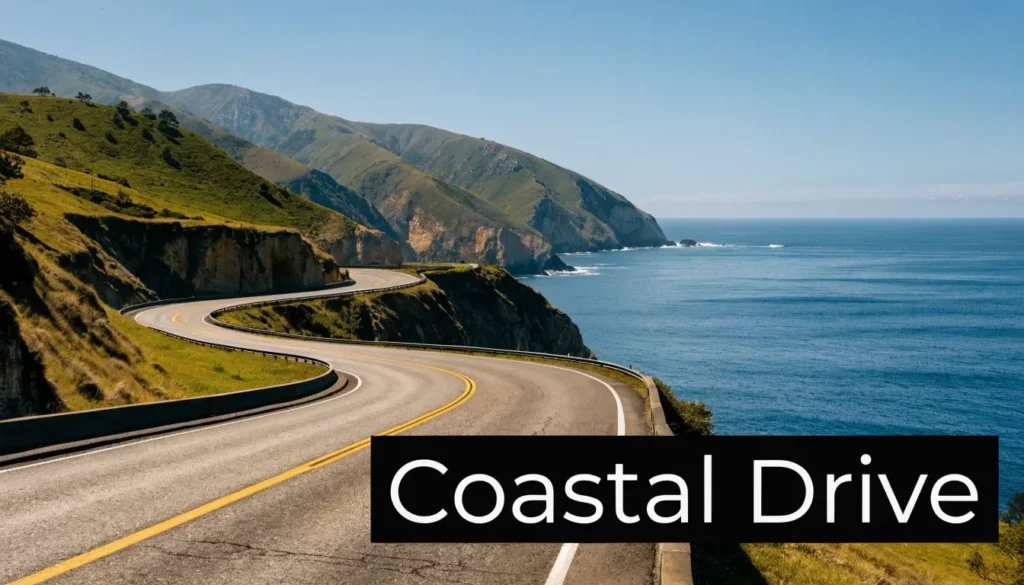
Drive it northbound if possible. The lane position makes many pull-ins and ocean viewpoints easier from the driver’s side, and the route feels more natural that way. The mistake I see most often is packing too many city stops into a coastal trip that’s really at its best between the bigger metros.
Sample itinerary
A practical version is five to seven days. Start in San Diego, overnight in Orange County or Los Angeles, continue to Santa Barbara or San Luis Obispo, give Big Sur breathing room, then finish around Monterey, Santa Cruz, or San Francisco.
A shorter version can work, but you’ll need discipline. Pick either Southern California beach culture or the Central Coast and Big Sur section as your focus. Trying to force both into a rushed weekend turns a great road trip into a windshield tour.
Practical rule: Fill up before the Big Sur section and check closure updates before you commit to the day’s drive.
Cost and difficulty
Estimated costs are moderate to high because California lodging, parking, and coastal dining add up fast. Budget travelers can cut costs by staying inland a short drive from the coast, using grocery stores for breakfast and lunch, and limiting paid attractions.
Difficulty is moderate. The roads are paved and straightforward, but the route demands patience. Curves, scenic pullouts, slow traffic, and weather shifts all stretch the day. What works is building in fewer miles than you think you need. What doesn’t is assuming coastal mileage behaves like interstate mileage.
2. Route 66 Chicago to Los Angeles
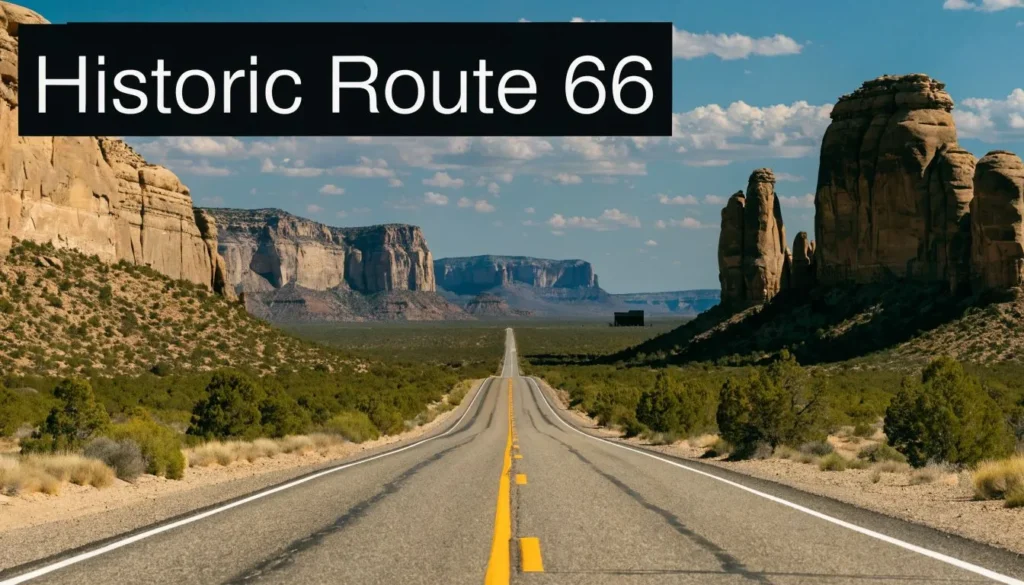
If you want the most culturally loaded drive in the country, start here. Route 66 remains the most popular road trip route in the United States, attracting over 5 million road trips annually as of 2024, according to Road Genius road trip statistics on U.S. routes. That popularity makes sense once you’re on it. Few drives deliver this much Americana, roadside nostalgia, and regional change in one continuous trip.
The route was commissioned in 1926, fully paved by 1938, spans about 2,448 miles across eight states, and runs from Chicago to Santa Monica. It was also a major westward path during the Dust Bowl era, when over 2 million migrants traveled it in the 1930s, before the road was officially decommissioned in 1985. None of that history feels abstract when you’re stopping at old diners, neon signs, trading posts, and small downtowns that still organize their identity around the Mother Road.
Sample itinerary
Give this trip at least two weeks if you want it to feel like Route 66 rather than a long transfer drive. A strong pacing model is Chicago, St. Louis area, Springfield, Tulsa, Oklahoma City, Amarillo, Santa Fe or Albuquerque via a detour, Flagstaff, Kingman, and Santa Monica.
Download offline maps before you leave. Several classic segments pull you through towns and older alignments where signage can get inconsistent. Stay in at least a few vintage motels if that’s part of why you chose the route in the first place. Skipping all those stops and sleeping only at generic highway chain hotels misses the point.
Cost and difficulty
Estimated costs are moderate. Fuel is a major line item because of the route length, but daily costs can stay manageable if you mix simple motels with a few destination stays and keep meals casual.
Difficulty is moderate to high because the challenge isn’t technical driving. It’s endurance. Long stretches can blur together if you don’t break them with strong overnight stops. Route 66 works when you embrace the odd attractions and local museums. It doesn’t work when you treat them as delays.
Route 66 rewards travelers who like texture more than efficiency.
3. Blue Ridge Parkway North Carolina and Virginia
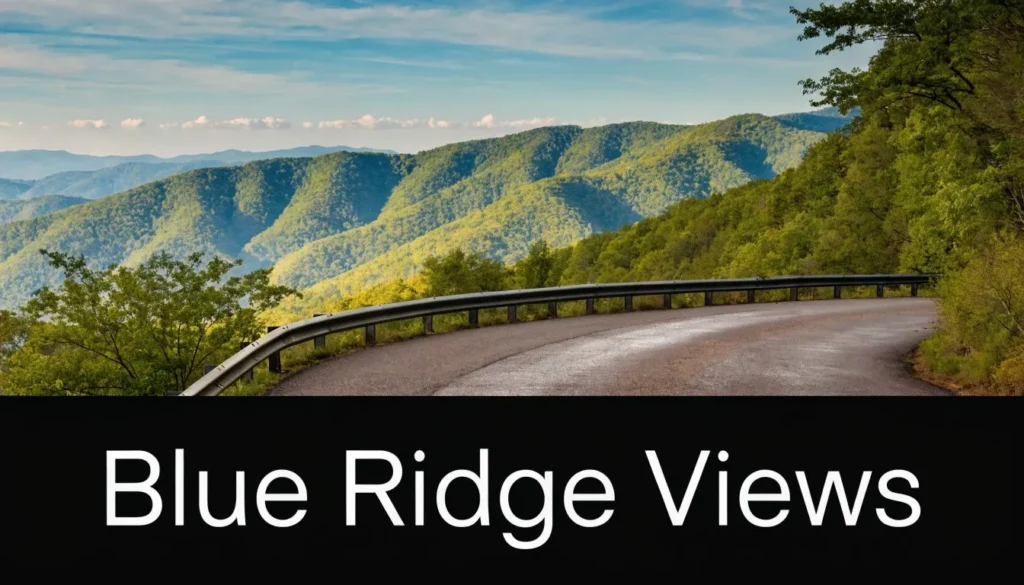
The Blue Ridge Parkway is for travelers who want to slow down on purpose. This mountain drive links Shenandoah National Park and Great Smoky Mountains National Park, and the route is known less for giant single landmarks than for the steady rhythm of overlooks, ridgelines, forest pullouts, craft stops, and small Appalachian communities.
It’s also a route where timing matters more than people expect. Fall color is the headline season, but that also means heavier traffic and tighter lodging. Outside peak leaf season, the drive often feels calmer and easier to shape around hiking, photography, and scenic picnics.
What a good trip looks like
A four to six day itinerary works well. Start near Shenandoah, overnight around Roanoke, continue toward Blowing Rock or Boone, add time near Asheville, and finish near the Smokies. If hiking is a priority, keep daily driving short and anchor your nights around trail access instead of pure mileage.
Cell service can be unreliable, and gas options aren’t constant, so this is one of those drives where old-fashioned preparation still matters. Download maps, top off the tank before long scenic sections, and carry layers even if the lowland forecast looks warm.
Cost and difficulty
Estimated costs are moderate, with a good chance to keep spending under control if you book practical lodges, cabins, or park-adjacent stays rather than peak-view resorts.
Difficulty is low to moderate. The road itself isn’t hard, but weather, fog, and mountain fatigue can make the days longer than expected. The most common mistake is overcommitting to hikes and viewpoints in a single day. On this route, less usually feels better.
- Best for: Travelers who want scenery without a punishing pace.
- Watch for: Changing mountain weather and limited food options in some stretches.
- Works best when: You drive early and leave afternoons open for walks, overlooks, and local stops.
4. Southwest Loop Arizona Utah and Nevada
This is the trip for travelers who want scale. The Southwest loop pulls together canyon country, red rock, open desert, and a few of the most dramatic park regions in the country. It’s also one of the easiest routes to overbuild. Every stop sounds essential, and that’s exactly how people end up spending half the vacation loading bags in hotel parking lots.
A cleaner version of the route starts in Las Vegas or Phoenix, then loops through the Grand Canyon, Monument Valley, Page, Bryce Canyon or Zion, and back. You can shape it around national parks, scenic highways, or photography. The wrong way to do it is to cram every famous stop in the region into one week.
Here’s a visual overview to help with route planning.
Sample itinerary
Allow seven to ten days. One workable plan is Las Vegas, Zion, Bryce Canyon, Page, Monument Valley, Grand Canyon South Rim, then return to Las Vegas. Another strong variation starts in Phoenix and finishes in Las Vegas if you want less backtracking.
If you’ll visit multiple federal sites, the America the Beautiful pass can simplify entry planning. The annual pass costs $80, as noted in the planning guidance provided in your route brief. That’s one of the few fixed planning costs on this list worth deciding before departure.
Cost and difficulty
Estimated costs run moderate to high. Park-adjacent lodging often books early, and last-minute rooms in gateway towns can get expensive. You can save money by staying slightly farther out and by limiting restaurant dependence with a cooler and grocery stops.
Difficulty is high in practical terms. Not because the roads are complex, but because heat, elevation, early starts, and long distances wear people down. Carry plenty of water, leave hiking for dawn when possible, and never assume gas or shade is right around the corner.
In the Southwest, comfort comes from preparation, not spontaneity.
5. Florida Keys Scenic Drive US Route 1
The Florida Keys drive is short enough to fit into a long weekend and memorable enough to justify a full week. That’s rare. The route from mainland South Florida to Key West is less about constant stopping and more about the mood of crossing water, changing islands, seafood shacks, boat marinas, and sunsets that make people reorganize dinner plans.
The road itself isn’t difficult, but the trade-off is simple. You’re largely committed to a linear route with limited detours once you’re deep in the chain. If traffic builds, there isn’t always a clever shortcut. That means patience matters more here than aggressive scheduling.
Sample itinerary
For three to five days, start near Miami or Homestead, overnight in Key Largo or Islamorada, continue to Marathon, then finish in Key West with at least one full day there. If you have a week, split your stay between Upper Keys and Lower Keys instead of changing hotels every night.
A convertible can be fun here, but it isn’t automatically the best choice if you’re carrying a lot of luggage or traveling in peak heat. What matters more is booking rooms early and keeping your day flexible enough for weather changes. Tropical conditions can shift fast.
Cost and difficulty
Estimated costs are moderate to high, with lodging usually driving the budget more than fuel because the route isn’t very long. Food and drinks can also climb quickly if every stop becomes a waterfront splurge.
Difficulty is low. This is one of the more accessible best road trip routes in usa for travelers who want easy navigation. What doesn’t work is trying to race to Key West, snap a few photos, and leave. The route earns its reputation when you linger on side islands, local seafood stops, and sunset rituals.
- Best for: Couples, beach-focused travelers, and anyone who wants a shorter road trip with a distinct atmosphere.
- Main trade-off: Great scenery, but less variety in terrain than a mountain or desert route.
- Smart move: Build around overnight stays, not just drive time.
6. Great River Road Minnesota to Louisiana
The Great River Road is one of the most underrated long drives in the country because it doesn’t sell itself with one giant postcard image. Instead, it gives you a moving cross-section of America through river towns, bluffs, farmland, industrial stretches, music history, and regional food traditions. Done well, it feels expansive. Done badly, it feels repetitive.
The key is choosing the right segment for your time. You don’t need to drive the full route from Minnesota to Louisiana to get a strong experience. A northern section gives you scenic river overlooks and smaller towns. A southern section adds deeper music, food, and cultural history.
Sample itinerary
For a full-scale trip, allow ten to fourteen days and move from Minnesota down toward New Orleans. For a shorter version, pick either Minneapolis to St. Louis or Memphis to New Orleans. Those are easier to pace and easier to remember afterward.
Highway choice matters. If you’re heading south, many travelers prefer following the river corridor with stops in larger cities for lodging stability and smaller towns for daytime exploring. That’s usually a better balance than staying every night in very small towns with limited accommodation options.
Cost and difficulty
Estimated costs are moderate. One reason this route is attractive is that it can be easier on the budget than the California coast or major park circuits, especially if you mix city nights with simpler roadside motels.
Difficulty is moderate because of the trip length, not the road conditions. The challenge is curation. You need to decide what kind of river trip you want. Scenic, historical, musical, culinary, or all of the above. The route works best when you build around themes instead of trying to stop everywhere.
Pick your Mississippi first. Bluff country, blues country, or bayou country all create different trips.
7. Mountain Loop Colorado and Wyoming
If you like alpine roads, high meadows, cold mornings, elk sightings, and the feeling that every turnout deserves ten more minutes, this loop delivers. A practical version connects Estes Park, Rocky Mountain National Park, Grand Lake, and a longer swing toward Wyoming and Cheyenne. It’s not the biggest route on this list, but it’s one of the most rewarding for travelers who enjoy hiking as much as driving.
This is also a route that punishes overconfidence. Altitude changes the pace of everything. Short walks feel longer, weather can turn quickly, and afternoon storms can erase the relaxed schedule you imagined in the morning.
Sample itinerary
Use five to seven days. Start in Denver or Estes Park, spend time crossing high-country sections, overnight near Grand Lake, add scenic and outdoor time based on conditions, then loop toward Wyoming before returning. If hiking is central, add acclimatization time at the beginning rather than forcing a high-altitude trail on day one.
Start early. On mountain loops, early hours are when parking is easiest, wildlife is more active, and the weather is usually more stable. Midday is for shorter scenic stops, town breaks, and repositioning.
Cost and difficulty
Estimated costs are moderate to high. Mountain towns can be expensive in peak season, and the best-located lodging often goes first. Booking months ahead usually matters more here than bargain hunting at the last minute.
Difficulty is high for anyone not used to elevation. The route works if you respect the altitude, carry layers, and leave slack in the day. It doesn’t work when travelers plan one long drive and one strenuous hike every day as if they were still near sea level.
- Best for: Hikers, wildlife watchers, and travelers who don’t mind cool nights in summer.
- Not ideal for: Travelers who want predictable weather or easy same-day spontaneity.
- Worth remembering: Driving slowly is part of the experience here, not a problem to solve.
8. Outer Banks Scenic Loop North Carolina
The Outer Banks is a road trip for people who enjoy fragile coastal environments and maritime history more than nonstop attractions. Barrier islands, ferry links, lighthouses, dunes, weather-beaten villages, and long beach stretches give this route a distinct pace. It’s less flashy than the Keys and less dramatic than Big Sur, but that understatement is exactly why many travelers love it.
The route also rewards travelers who understand the logistics in advance. Ferries, storms, wind, beach traffic, and seasonal business hours can all shape the trip. If you improvise too casually here, you’ll spend more time adjusting than enjoying.
Sample itinerary
A four to six day itinerary works well. Start around Nags Head or Kitty Hawk, spend time at the Wright Brothers area and nearby beaches, continue south with lighthouse stops, then include Ocracoke if ferry timing aligns with your trip.
This is a great route for mixing half-days. Do a historic site or museum in the morning, then beach time in the afternoon. That rhythm works better than trying to stack long sightseeing lists into every day.
Cost and difficulty
Estimated costs are moderate. Ferry fees, beach-town lodging, and seafood dinners can push the budget up, but careful booking and shoulder-season travel help a lot.
Difficulty is moderate. The roads themselves are easy, but weather and transport timing create friction. Bring insect repellent, reserve ferries when possible, and don’t assume every island segment operates on mainland timing. Coastal routes teach patience, and the Outer Banks is a prime example.
9. Pacific Northwest Loop Oregon and Washington Coast
This route is for travelers who want variety without the visual whiplash of a giant cross-country trip. A good Pacific Northwest loop can combine Portland, the Oregon Coast, forested sections, Seattle, and a ferry-supported extension toward the San Juan Islands. It gives you rugged shoreline, working waterfronts, coffee cities, independent shops, and moody weather in one trip.
The planning challenge is deciding how much city time you want. Many people say they want “coast and cities,” then under-budget the time required for both. If the coast is your reason for going, keep the urban stops selective. If Portland and Seattle are central, don’t pretend you also have time for every famous beach turnout.
Sample itinerary
Use seven to nine days. One balanced version starts in Portland, heads to the Oregon Coast, works north into Washington, adds Seattle, then finishes with a ferry leg if you’ve booked it in advance. Another version starts and ends in Seattle if flights make that easier.
Bring a rain jacket no matter what the forecast says. This isn’t negativity. It’s basic Northwest competence. You’ll enjoy the route more if you stop trying to dress for ideal conditions and plan for changing ones.
Cost and difficulty
Estimated costs are moderate to high because city lodging, ferry planning, and coastal accommodations can pile up. You can offset that by using public transit in major cities and keeping paid urban parking to a minimum.
Difficulty is moderate. Navigation is easy enough, but ferry schedules, urban traffic, and weather all influence timing. The route works best when you treat the trip as a mix of scenic driving and place-based exploring, not one long coastal marathon.
10. Desert Highway Adventures California and Nevada
This final route is for travelers who want the stark, open, almost lunar side of the American West. A desert highway trip through California and Nevada can include Death Valley, Mojave vistas, ghost towns, and long paved stretches where the scenery feels stripped to essentials. It’s one of the best road trip routes in usa if you prefer geology, silence, wide skies, and dawn light over classic tourist-town energy.
There’s a strong case for choosing less crowded desert roads if you’ve already done the headline routes. Planning notes in the verified brief point out that major scenic routes have grown more crowded, while alternatives such as Nevada’s US Route 50 and California’s US Route 395 appeal to travelers looking for more solitude. That’s a useful lens for this trip. The best desert drive often isn’t the one with the biggest name. It’s the one where you can feel the terrain.
Sample itinerary
Plan five to seven days. Start in Las Vegas or Southern California, cross into Death Valley with an early start, continue through Mojave country, and add ghost town or high desert overnight stops based on your interests. If you want a quieter trip, build around fewer hotels and longer stays.
Early morning is your friend. Desert light is better, temperatures are easier, and the drive feels calmer before midday glare flattens the scenery.
Cost and difficulty
Estimated costs are moderate, but with a big caveat. Fuel, remote services, and heat-related planning can make cheap travel less flexible than it looks on paper. Saving money by running your tank low or skipping water is false economy.
Difficulty is high. This route demands respect. Carry extra water, use offline maps, know where you’re fueling, and check conditions before committing to remote segments. What works is treating the desert like a serious environment. What doesn’t is assuming the next service stop is closer than it looks.
Top 10 US Road Trip Routes Comparison
| Route | Implementation complexity | Resource requirements | Expected outcomes | Ideal use cases | Key advantages |
|---|---|---|---|---|---|
| Pacific Coast Highway (California PCH-1) | Moderate, coastal route planning, seasonal bookings | ~10 days, $2.5–4.5k, reliable vehicle, fuel, good cellular | High-value scenic photography, culinary and lifestyle content | Photographers, lifestyle and culinary creators, digital nomads | Dramatic coastal vistas, year-round favorable weather, strong amenities |
| Route 66: Chicago to Los Angeles | High, very long itinerary, remote logistics | ~14 days, $1.8–3k, offline maps, spare parts, long driving days | Rich Americana storytelling, vintage visuals and history content | History buffs, nostalgia-focused creators, documentary makers | Authentic small-town culture, low-cost vintage lodging, preservation networks |
| Blue Ridge Parkway (NC & VA) | Low, slow scenic driving, limited services | 7–10 days, $1.2–2.2k, fuel, layers, limited cellular | Nature and fall-foliage photography, arts & crafts features | Nature lovers, photographers, regional arts & craft coverage | Peaceful drives, panoramic mountain vistas, strong artisan communities |
| Southwest Loop (AZ, UT & NV) | High, multi-park coordination, long drives | 10–12 days, $2–3.5k, park passes, water, advance lodging | Epic landscape and geology content, adventure photography | Adventure photographers, outdoor enthusiasts, digital nomads in hubs | Access to five major parks, reliable tourist infrastructure, varied geology |
| Florida Keys Scenic Drive (US 1) | Low, single-route logistics, weather considerations | 3–5 days, $1.5–3k, advance bookings, water-sport gear | Beach lifestyle, nightlife and marine activity content | Beach lovers, music/entertainment creators, water-sport enthusiasts | Unique island driving, tropical atmosphere, strong entertainment scene |
| Great River Road (MN to LA) | High, multi-state coordination, long duration | ~14 days, $1.6–2.8k, varied accommodations, offline maps | Music, history and regional cuisine content, cultural storytelling | Music and history enthusiasts, cultural tourism creators | Deep cultural diversity, riverfront scenery, affordable local stays |
| Icefields Parkway Alternative: Mountain Loop (CO & WY) | Moderate, high-elevation planning, seasonal closures | 7–10 days, $1.4–2.4k, acclimatization time, layers, permits | Alpine adventure, health/fitness and mountain photography | Hikers, adventure sports creators, health-focused travelers | High-elevation panoramas, excellent hiking and wildlife viewing |
| Outer Banks Scenic Loop (NC) | Low, straightforward route with ferry segments | 7–10 days, $1.0–2.0k, ferry tickets, insect repellent | Maritime history, wildlife and beach content | History enthusiasts, beach and wildlife lovers | Historic landmarks, wild horse habitats, less crowded beaches |
| Pacific Northwest Loop (OR & WA Coast) | Moderate, mixed urban/coastal logistics, ferries | 10–12 days, $1.8–3.2k, rain gear, ferry reservations | Environmental, tech and arts content, coastal photography | Environmental advocates, tech-savvy travelers, foodies | Old-growth forests, tech hubs, strong sustainability culture |
| Desert Highway Adventures (CA & NV) | High, remote route, safety and heat risks | 8–10 days, $1.2–2.2k, extra water/fuel, offline maps | Geology, stargazing and extreme-environment content | Science-focused creators, photographers, solitude seekers | Unique geological features, dark-sky stargazing, minimal crowds |
Plan Your Journey, Hit the Road
The best road trip usually isn’t the one with the longest mileage or the most famous name. It’s the one that fits your time, your tolerance for driving, and the kind of days you enjoy. Some travelers are happiest on a coast road with frequent coffee stops and short scenic walks. Others want a historic cross-country route with motels, diners, and old signage. Others want mountains, early trailheads, and cold air by sunrise. All of those are valid versions of a great American road trip.
That’s why planning matters more than ambition. If you have four or five days, choose a route that feels complete in that window. The Florida Keys, the Outer Banks, and shorter mountain or coastal loops work better than forcing a giant interstate-heavy sprint. If you have ten days or more, routes like Route 66, the Great River Road, or a Southwest loop start to make real sense because you can absorb the character of the places in between.
Budgeting also gets easier when you match the route to your travel style. Expensive trips often become expensive because travelers try to compensate for rushed planning. They book last-minute rooms in high-demand areas, eat every meal out because they didn’t stock up, or pay premium rates because the day got away from them. A cooler, downloaded maps, realistic daily mileage, and pre-booked lodging in the busiest sections solve a lot of that.
The trade-offs matter. Coastal drives give you easy beauty but often come with higher lodging costs and more traffic. Desert routes offer drama and solitude but require stronger preparation and better fuel discipline. Mountain loops can be magical, but weather and altitude make sloppy itineraries fall apart fast. Historic routes are rich in culture, but they ask you to slow down enough to notice what makes them special.
One of the smartest ways to plan any of these best road trip routes in usa is to decide what your trip is really about before you pick the road. Do you want scenery, food, history, hiking, beach time, photography, or the feeling of movement itself? Once you answer that honestly, the route choice gets simpler. So does the day-to-day pacing.
Use these itineraries as a blueprint, not a script. Leave room for a diner that looks better than the one you researched, a scenic turnout that deserves an extra half hour, or a small town where you decide to stay the night because the place feels right. Road trips are at their best when they’re planned well enough to be easy and loose enough to still surprise you.
Pick the route that matches the trip you can take. Then drive it properly. Slow enough to remember it.
If you enjoy practical travel guides, culture-forward commentary, and smart reads across tourism, science, entertainment, business, and more, explore maxijournal.com. If you’re a reader looking for fresh perspectives or a writer interested in contributing, it’s a strong place to keep on your regular list.
Discover more from Maxi Journal
Subscribe to get the latest posts sent to your email.