The best way to tackle body acne is by combining a steady cleansing routine with powerful, targeted ingredients. Proven fighters like benzoyl peroxide washes (great for killing bacteria) and salicylic acid exfoliants (perfect for clearing out pores) can make a huge difference when you stick with them daily.
What Really Causes Body Acne

If you thought body acne was just for teenagers, think again. It’s an incredibly common issue that millions of adults deal with. To get what’s going on, just picture your pores as tiny, microscopic highways on your skin. A breakout is basically a traffic jam in one of those highways.
This gridlock happens when a pile-up of excess oil (sebum), dead skin cells, and bacteria clogs the lane. The pore gets blocked, creating the perfect storm for inflammation. That’s what we see as pimples, blackheads, or those deeper, more painful cysts on the back, chest, and shoulders. Figuring out what’s causing the traffic jam in the first place is the absolute key to clearing it up for good.
The Main Drivers Behind Body Breakouts
It’s almost never just one single thing causing breakouts. More often, it’s a perfect storm of factors, from your own biology to your day-to-day habits, all coming together.
To make it easier to see the big picture, here’s a quick breakdown of the usual suspects.
Quick Guide to Body Acne Causes
| Cause Type | Primary Factor | Common Triggers |
|---|---|---|
| Internal | Genetics & Hormones | Family history, puberty, menstrual cycles, stress, hormonal imbalances. |
| Internal | Gut Health | Inflammation linked to an imbalanced gut microbiome. |
| External | Friction & Pressure | Tight clothing, backpacks, sports equipment rubbing against the skin. |
| External | Sweat & Environment | Trapped sweat from workouts, humid climates, pore-clogging products. |
Understanding how these internal and external pressures work together is the first step toward building a routine that actually gets results.
Recent research really brings home how common this is. Some new studies have found that up to 52% of adults struggle with some form of body acne. The same data shows that breakouts can spike by as much as 38% in people who are physically active, which points to a strong link between lifestyle and skin health. You can explore more about these body acne prevalence findings to understand the data.
Sweat, Friction, and Acne Mechanica
One of the biggest culprits, especially if you work out, is a specific condition known as acne mechanica. This isn’t your typical hormonally-driven acne. Instead, it’s triggered by purely physical things—heat, pressure, and constant friction on your skin.
When you wear tight, non-breathable athletic wear during a workout, you create a warm, moist environment. This traps sweat and oil against your skin, providing an ideal breeding ground for acne-causing bacteria and leading directly to clogged pores.
This is exactly why you might see breakouts along your sports bra line, on your shoulders right where your backpack straps sit, or across your back after a sweaty spin class. On a related note, things happening inside your body can also stir up skin inflammation. You might find it useful to check out our guide on the best time to take probiotics, as a healthy gut is being increasingly tied to clearer skin. Getting a handle on these external triggers is a non-negotiable step in any effective body acne treatment plan.
Navigating Over-The-Counter Body Acne Solutions
Walking into the skincare aisle can feel overwhelming. You’re met with a wall of bottles, sprays, and washes, all claiming to be the answer to body acne, but figuring out where to even start is tough.
The good news? You don’t need to try everything. You just need to know which active ingredients actually work. Think of them as specialized tools for a specific job. Once you understand what each one does, you can pick the right products with confidence. This isn’t about finding one “magic” cure, but about strategically using the right ingredients to get to the root of the problem.
The Three Key Players in OTC Body Acne Care
Most of the effective over-the-counter body acne products you’ll find use one of three main ingredients. Each one works a little differently to clear out pores, calm down inflammation, and stop new breakouts before they start.
Benzoyl Peroxide: This is one of the strongest acne fighters you can get without a prescription. Its primary function is to kill C. acnes, the bacteria that hangs out in clogged pores and causes those red, angry pimples. It works by pushing oxygen into the follicle, creating an environment where the bacteria just can’t survive.
Salicylic Acid: As a beta-hydroxy acid (BHA), salicylic acid is oil-soluble. That’s a fancy way of saying it can dive deep into your pores, cutting through the oil to break down the mix of dead skin cells and sebum that’s causing the clog in the first place. It’s fantastic for clearing out existing blackheads and whiteheads and keeping new ones from forming.
Glycolic Acid: This one is an alpha-hydroxy acid (AHA). Unlike salicylic acid, its main job is on the skin’s surface. Think of it as a chemical polisher that gently buffs away the top layer of dead skin cells. This helps prevent future clogs, smooths out rough texture, and can even help lighten the dark spots left behind by old breakouts. While effective, some natural ingredients can also offer skin-brightening benefits. You may want to explore our article on the benefits of cinnamon on skin for complementary care.
Choosing the Right Product Format
The best ingredient won’t do you any good if you can’t get it on your skin consistently. The format of the product really matters, especially when you’re trying to treat hard-to-reach areas like your back.
Pro-Tip: The skin on your body is generally tougher and less delicate than the skin on your face. This means it can often handle higher concentrations of active ingredients, but you should still start with lower percentages and use them sparingly at first to avoid irritation.
Here’s a breakdown of your options:
- Washes and Cleansers: These are perfect for covering large areas like your chest and back while you’re in the shower. A benzoyl peroxide or salicylic acid wash is an excellent first step for any body acne routine.
- Sprays: A total game-changer for dealing with back acne, or “bacne.” A quick-drying salicylic acid spray can be spritzed on effortlessly right after a shower or workout.
- Lotions and Creams: Best for treating specific spots or for anyone who also needs a bit of hydration with their treatment. Just make sure to look for non-comedogenic formulas that are designed not to clog pores.
Starting Your OTC Treatment Journey
When you first start using these active ingredients, consistency and patience are everything. Introduce just one new product at a time so you can see how your skin handles it. For example, you might start with a 2% salicylic acid wash three times a week and slowly build up to using it every day.
Once your skin has adjusted, you can bring in a second product, like a leave-on benzoyl peroxide treatment. In fact, that specific combination is a proven powerhouse. One study found that a routine using a 2% salicylic acid wash and a 5% benzoyl peroxide leave-on product led to a 67% reduction in inflammatory body acne over 12 weeks. This just goes to show that a smart, multi-ingredient approach is often the fastest way to get clearer skin.
Building Your Daily Body Acne Fighting Routine
When it comes to body acne, consistency is everything. Think of it like a fitness plan—you won’t see results from a single session. Real, lasting change comes from a steady, daily commitment. Here’s a blueprint for a simple and effective routine you can start tonight.
A good way to approach this is with a two-part strategy. Your morning routine is about defense: gently cleansing your skin and protecting it from the day’s challenges. Your evening routine is your offense, where you use active ingredients to treat existing breakouts and stop new ones from forming while your body repairs itself.
Your Morning Defense Plan
The goal in the morning is simple: start with a clean slate without over-stripping your skin. Aggressive scrubbing can actually make inflammation worse, so a gentle touch is non-negotiable.
- Gentle Cleanse: In the shower, use a mild, non-comedogenic body wash. If your skin is on the oily side, you can use a cleanser with salicylic acid. For many people, though, a simple, fragrance-free soap is all that’s needed for the morning.
- Pat Dry: After showering, gently pat your skin dry with a clean towel. Rubbing can irritate hair follicles and contribute to acne mechanica.
- Protect (If Needed): If breakout-prone areas like your chest or shoulders are exposed to the sun, applying a lightweight, non-comedogenic sunscreen is critical. Sun exposure can darken post-acne marks, and certain acne medications make your skin more sensitive to the sun.
Your Evening Treatment Strategy
Evening is prime time for treating body acne. Your skin has accumulated sweat, oil, and environmental grime throughout the day. Your post-shower routine is when you bring out the active ingredients to get to work.
Key Insight: Applying treatments to warm, slightly damp skin right after a shower can help the active ingredients absorb more effectively. This is the optimal window to target clogged pores and inflammation.
Showering as soon as you can after a workout is a major game-changer. Dermatological research shows that people who shower within an hour of exercising see a 44% lower rate of new body acne formation compared to those who wait three hours or more. You can read the full research about these post-exercise acne findings00877-6/fulltext) to see just how much the timing matters.
This flowchart shows how the most common over-the-counter ingredients can work together in a complete body acne treatment plan.
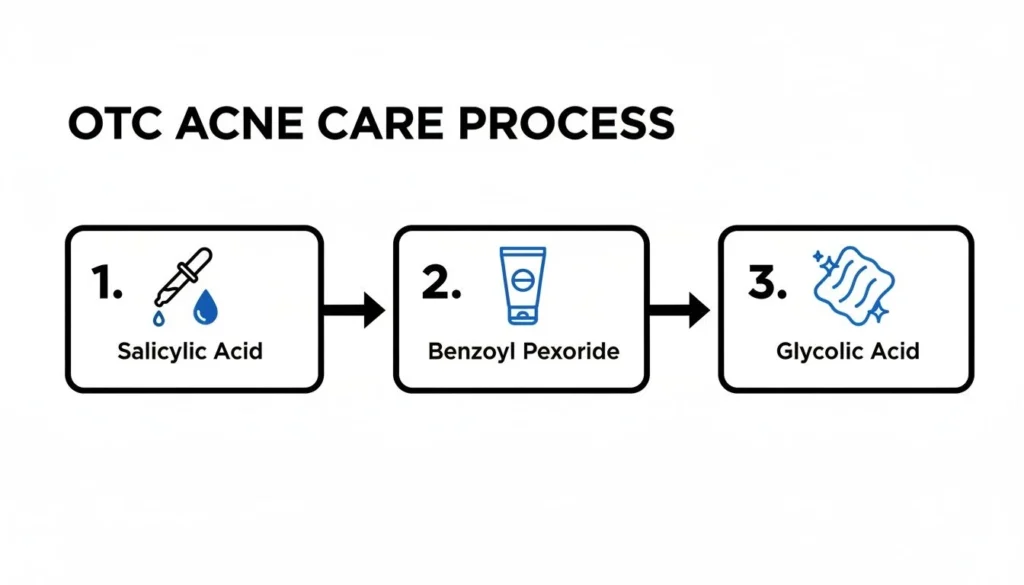
The process starts with deep pore cleansing, moves on to fighting bacteria, and finishes with renewing the skin’s surface.
After your evening shower, it’s time to apply your chosen leave-on treatments.
- For Widespread Breakouts: A spray containing salicylic acid is perfect for covering large areas like your entire back and chest quickly and easily.
- For Inflamed Pimples: A spot treatment or lotion with benzoyl peroxide can be applied directly to red, angry bumps to kill bacteria and reduce inflammation.
- For Texture and Marks: A lotion with glycolic acid can be used a few times a week (on nights you aren’t using other actives) to help smooth skin and fade dark spots.
Your Weekly Power-Up Routine
To give your daily efforts a boost, add a more intensive treatment once or twice a week. This acts as a deep-cleaning session for your pores.
A purifying clay mask is a great option. Apply a thin layer of a kaolin or bentonite clay mask to breakout-prone areas like your back and chest. Let it sit for 10-15 minutes before you rinse it off in the shower. This helps pull out excess oil and impurities from deep within the pores, giving your daily routine an extra edge.
When to Get Professional Help from a Dermatologist
Over-the-counter products are fantastic, but they have their limits. If you’ve been putting in the work with a solid routine and the body acne just isn’t clearing up, it’s not you—it’s the acne. That’s your cue that it might be time to bring in a specialist with more powerful tools.
Think of it this way: you’ve done your due diligence, and now it’s time to escalate. Calling a board-certified dermatologist isn’t admitting defeat; it’s the smartest next step you can take to finally get clear skin.
Clear Signs It’s Time to See a Dermatologist
Knowing when to level up your treatment can save you a ton of frustration and, more importantly, prevent long-term issues like scarring. If any of these sound familiar, it’s a good time to book an appointment.
- Your Acne Persists: You’ve been consistent with products containing salicylic acid and benzoyl peroxide for three months or more, but you’re seeing little to no change.
- You Have Painful Cysts or Nodules: Your breakouts are deep, large, and painful bumps under the skin. This type of acne rarely responds to anything you can buy in a store and carries a high risk of scarring.
- You’re Noticing Scars: As breakouts heal, you’re left with dark spots (post-inflammatory hyperpigmentation) or pitted, indented scars. A dermatologist can tackle the active acne and the scarring at the same time.
- It’s Affecting Your Mental Health: This is a big one. If body acne is tanking your confidence, causing you distress, or making you want to hide, that alone is a perfectly valid reason to seek professional help.
What a Dermatologist Can Offer for Body Acne
A dermatologist’s toolkit is way bigger and more potent than what’s available on drugstore shelves. They can build a personalized game plan that attacks acne from angles you simply can’t with OTC products.
Seeing a board-certified dermatologist isn’t just about getting stronger medication; it’s about getting an accurate diagnosis and a strategic treatment plan tailored specifically to your skin’s needs and acne type.
For starters, they have access to powerful prescription-strength medications that work in very different ways.
Prescription Topical Treatments:
- Topical Retinoids (like Tretinoin): These are the gold standard. They’re vitamin A derivatives that dramatically speed up cell turnover, stopping pores from getting clogged in the first place.
- Topical Antibiotics (like Clindamycin): These directly target and reduce the amount of acne-causing bacteria on the skin while also calming down inflammation.
Oral Medications:
- Oral Antibiotics (like Doxycycline): Taken for a limited period, these work systemically to crush bacteria and bring down inflammation for widespread or severe acne.
- Hormonal Regulators (like Spironolactone or birth control): If your acne is clearly tied to hormonal cycles, these can be game-changers by addressing the root cause.
- Isotretinoin: Often known by the brand name Accutane, this is the heavy hitter. It’s an oral retinoid reserved for severe, cystic, and stubborn acne that hasn’t responded to anything else.
The difference a professional can make is huge. According to the American Academy of Dermatology, seeing a dermatologist for moderate-to-severe acne boosts the odds of achieving 90% skin clearance by over 300% compared to just using OTC products. You can discover more insights about dermatologist intervention success rates to see just how effective professional guidance can be.
Exploring Advanced Prescription and Procedural Treatments
When your over-the-counter routine just isn’t cutting it, that’s your cue to call in the heavy hitters. Dermatologists have a whole arsenal of medical-grade treatments that can tackle persistent, severe, or widespread body acne from both the inside out and the outside in. These options work on a much deeper level to shut down inflammation, get oil production under control, and stop those deep, painful breakouts that often lead to scarring.
Think of OTC products as your first line of defense. If that line gets overwhelmed, prescription treatments are your specialized reinforcements. They target the biological triggers of acne in a way that store-bought products simply can’t, offering real hope for even the most stubborn cases.
Oral Medications That Work Systemically
For body acne that’s moderate to severe, topicals alone often aren’t enough. It’s just too much surface area to cover, and they can’t always reach the deep inflammation. This is where a dermatologist might suggest an oral medication that works throughout your entire body.
Oral Antibiotics: Medications like Doxycycline are often a starting point for prescription treatment. They work on two fronts: first, by reducing the population of acne-causing bacteria, and just as importantly, by bringing down the inflammation that makes breakouts so red and angry.
Hormonal Regulators: For anyone whose body acne is clearly linked to their hormonal cycle, drugs like spironolactone can be a game-changer. Spironolactone works by blocking the effects of androgens—the hormones that kick oil production into overdrive—right at the skin level. This directly tackles one of the main causes of breakouts on the chest and back.
These medications get to the internal roots of the problem, building a foundation for clearer skin while you stick with your supportive topical routine.
Isotretinoin: The Gold Standard for Severe Acne
For the most severe, scarring, and treatment-resistant body acne, Isotretinoin (you might know it by its old brand name, Accutane) is pretty much the most powerful tool we have. This oral retinoid, a derivative of vitamin A, is a powerhouse. It dramatically shrinks your skin’s oil glands, slows down skin cell turnover, kills bacteria, and calms inflammation. It’s the only treatment out there that hits all four major causes of acne at once.
Because it’s so potent, Isotretinoin requires close medical supervision with regular check-ins and blood tests to watch for side effects. But its track record is remarkable. A multi-year study that zeroed in on severe body acne cemented its status as a top-tier treatment, showing an incredible long-term remission rate of 85% after just one course. You can learn more about Isotretinoin’s long-term efficacy findings to see just how significant its impact is on stubborn acne.
In-Office Procedures to Accelerate Results
Beyond prescriptions, dermatologists can also perform procedures right in the office that work alongside your home routine to speed up your progress. These are fantastic for dealing with the stubborn texture, discoloration, and scarring that old breakouts leave behind.
Think of in-office procedures as a professional “reset” for your skin. While your daily routine is about maintenance, these treatments give your skin a concentrated boost to exfoliate, purify, and repair on a level you just can’t get at home.
These treatments are always tailored to your skin’s specific needs and can make a huge difference in both active acne and its after-effects.
Comparing Dermatological Body Acne Treatments
To help you get a clearer picture of what a dermatologist might recommend, here’s a quick comparison of some common interventions.
| Treatment Type | Primary Target | Best For |
|---|---|---|
| Chemical Peels | Dead skin cells, clogged pores, and hyperpigmentation | Smoothing rough texture, fading dark spots, and reducing shallow scarring. |
| Light & Laser Therapy | C. acnes bacteria and overactive oil glands | Inflammatory acne (red pimples), especially for those who want to avoid oral medications. |
| Corticosteroid Injections | Intense inflammation in a single lesion | Quickly shrinking large, painful, and deep cysts or nodules to reduce pain and prevent scarring. |
Each of these advanced options represents a major step up in the fight against body acne. The best way to figure out which prescription, procedure, or combination of treatments is the right move for you is to sit down with a dermatologist and map out a strategy for your skin.
Lifestyle Habits to Prevent Future Breakouts
Getting your skin clear with a consistent body acne treatment plan is half the battle. The other half is making sure it stays that way. This is where your day-to-day habits make all the difference. With a few smart adjustments, you can create a skin-friendly environment that stops future breakouts before they even start.
Think of it this way: your skincare products handle active acne, but your lifestyle choices are what maintain those results for the long haul. It’s a holistic approach that shifts the focus from constantly treating breakouts to simply preventing them.
Re-examine Your Diet and Hydration
While the connection between what you eat and acne can be personal, some foods are common triggers. High-glycemic foods, like white bread and sugary drinks, are often culprits. For some people, dairy products can also cause problems. These foods can spike insulin, which in turn can ramp up oil production and inflammation.
You don’t need to overhaul your entire diet immediately. A better approach is to simply pay attention. If you notice new spots after a weekend of indulging, you may have found a personal trigger. The best universal strategy is to eat a balanced, antioxidant-rich diet filled with fruits, vegetables, and lean protein to help fight inflammation from the inside.
Master Your Laundry and Fabric Choices
What’s touching your skin all day (and all night) has a major impact. Friction from tight clothing and bacteria on unwashed fabrics are two huge contributors to body acne. Fortunately, they are also easy to manage.
- Choose Breathable Fabrics: Whenever possible, opt for loose-fitting clothes made from natural, breathable materials like cotton or linen. These fabrics let air circulate, preventing sweat and oil from getting trapped against your skin.
- Wash Items Frequently: Make it a habit to regularly wash anything that has prolonged contact with your skin, especially workout gear, towels, and bedsheets. Stick to a fragrance-free, non-comedogenic detergent to avoid adding new irritants.
The effect of these simple hygiene habits can be quite dramatic. One controlled study found that people who switched to fresh pillowcases and towels twice a week saw a 35% reduction in new inflammatory acne lesions. Discover more insights about these hygiene and acne prevention findings to see how small changes can produce significant results.
Manage Stress and Prioritize Rest
If you’ve ever noticed a breakout pop up during a stressful week, it wasn’t just a coincidence. When you’re stressed, your body pumps out more cortisol, a hormone that can throw your oil glands into overdrive. This makes stress management a powerful, if indirect, form of body acne treatment.
Think of stress management as a way of turning down your skin’s internal alarm system. When you’re calm, your hormones are more balanced, which translates directly to less oil production and reduced inflammation.
Working stress-reducing activities into your routine—like exercise, meditation, or just a short walk—can have a real, visible impact on your skin. For more ideas, you might find our guide on how to calm anxiety naturally helpful. Just as important is getting enough sleep, which is when your body and skin do most of their repair work. Aim for 7-9 hours per night to give your skin its best shot at staying clear.
Your Body Acne Questions Answered
When you’re dealing with body acne, a lot of questions come up. Getting clear, no-nonsense answers is the key to seeing real progress instead of just getting frustrated. Let’s get straight to some of the most common ones.
Can Specific Foods Really Cause Body Acne?
For some people, the answer is a definite yes. While diet isn’t a universal trigger, certain foods are well-known for making things worse. The main offenders are high-glycemic foods (think sugary drinks, white bread, and pastries) and, for some, dairy products.
Don’t go on a crazy restrictive diet, though. Instead, just pay attention. If you consistently break out a day or two after eating a particular food, you’ve probably found a personal trigger. It’s all about listening to your body and making small adjustments.
How Long Until I See Results from a Body Acne Treatment?
Patience is tough, but it’s non-negotiable with skincare. How long it takes to see results really depends on the products you’re using and how consistent you are.
With a steady over-the-counter routine using ingredients like salicylic acid or benzoyl peroxide, you need to give it at least 8-12 weeks. Skin cell turnover is a slow process, and it takes that long to see a real drop in breakouts.
Prescription treatments you get from a dermatologist might work faster, but always follow their instructions to the letter for the best results.
Is It Okay to Pop a Pimple on My Back?
The short answer: absolutely not. It’s incredibly tempting, but picking or squeezing a pimple on your back or chest is one of the worst things you can do. The skin on your body is thicker, and trying to pop a spot often just shoves bacteria and inflammation deeper.
This doesn’t just make the pimple angrier and more swollen. It dramatically increases your risk of permanent scars and those stubborn dark spots known as post-inflammatory hyperpigmentation. Your best bet is to leave it alone or use a spot treatment.
At maxijournal.com, we publish clear, evidence-based articles to help you navigate your health and wellness questions. Explore our daily content for more insights at https://maxijournal.com.
Discover more from Maxi Journal
Subscribe to get the latest posts sent to your email.