When you see your cat miserable from itching, sneezing, or even stress, it’s natural to want to make them feel better fast. That often leads to a frantic Google search: can I give my cat Benadryl?
While the short answer is that veterinarians do occasionally use it, giving your cat Benadryl without a vet’s explicit instructions is incredibly risky and something we strongly advise against.
The Urgent Question: Can You Give a Cat Benadryl?
It’s tempting to reach for a familiar over-the-counter medicine. After all, it works for you, right? But it’s critical to remember that your cat’s body is not a miniature version of a human’s. Their unique metabolism means they process medications in a completely different—and often more sensitive—way.
The active ingredient in most Benadryl products is diphenhydramine, an antihistamine. When veterinarians recommend it, this is considered an “off-label” use. That just means the drug wasn’t originally developed or FDA-approved for cats, so using it requires careful professional judgment.
Why You Must Consult a Vet First
Reaching for Benadryl without a diagnosis is like trying to fix a complex engine problem with a single wrench. You might get lucky and tighten a loose bolt, but you’re just as likely to cause serious, expensive damage by using the wrong tool or applying too much force. A vet, on the other hand, is like a master mechanic with a full diagnostic kit. They can pinpoint the actual issue and select the right tool for a safe, effective fix.
Without a proper diagnosis, you might give Benadryl for a problem it can’t solve, like a skin infection, fleas, or a food allergy. That doesn’t just fail to treat the root cause; it delays the right treatment, allowing your cat’s condition to get worse. More importantly, self-dosing is a dangerous gamble.
Giving a human medication to your cat without professional guidance is one of the quickest ways to cause accidental harm. It’s a risk that is never worth taking when your pet’s health is on the line.
The danger is very real. Giving human medications improperly is a leading cause of pet poisoning. A report from the Pet Poison Helpline on human medications poisonous to pets shows just how vulnerable animals are, especially cats with their sensitive systems.
Before you even think about reaching for that little pink pill, a veterinarian must confirm three critical things:
- The Diagnosis: Is an antihistamine even the right treatment for what’s ailing your cat?
- The Dosage: What is the precise dose for your cat’s specific weight and health profile?
- The Formulation: Does the product contain only diphenhydramine and no other ingredients that are toxic to cats?
To make it simple, we’ve put the most important safety checks into this quick reference guide.
Benadryl for Cats Quick Reference Safety Guide
Before you even consider this medication, run through these essential checkpoints. They highlight the non-negotiable steps to keep your cat safe.
| Consideration | Action / Guideline | Reasoning |
|---|---|---|
| Professional Diagnosis | Always consult a veterinarian first. | Self-diagnosing often leads to incorrect treatment, delaying proper care and potentially harming your cat. |
| Correct Product | Only use products with diphenhydramine HCl as the sole active ingredient. | Many “Benadryl” products are combination formulas with ingredients like acetaminophen or pseudoephedrine, which are highly toxic to cats. |
| Precise Dosing | Never guess the dose. A vet must calculate it based on weight and health. | Cats have a very narrow margin of safety. A small dosing error can easily lead to a toxic overdose. |
Ultimately, a conversation with your vet is the only safe starting point. It ensures your cat gets the right help without the risk of accidental poisoning.
When Vets Might Recommend Benadryl for Cats
So, is there ever a time when giving your cat Benadryl is okay? The short answer is: only if your veterinarian explicitly tells you to. This isn’t a casual nod—it’s a calculated medical decision made after a full exam, where the pros of using the drug are weighed against the very real risks for your specific cat.
A vet’s green light for diphenhydramine comes only after they have a professional diagnosis. They aren’t just treating a bit of itching you noticed; they’re addressing a confirmed condition. This is critical because cats process drugs much differently than we do. They lack certain liver enzymes that humans and even dogs have, making them slow to break down medications like diphenhydramine.
This unique metabolism puts them at a much higher risk of overdose and long-lasting side effects from a dose that would seem tiny to us. You can read more about the fascinating science of how drug metabolism differs in animals on the Merck Vet Manual.
For Mild Allergic Reactions
One of the few times a vet might bring up Benadryl is for a mild, one-off allergic reaction. Think of a single, minor insect bite or a small patch of hives from brushing against a new plant.
Even in this case, the vet’s first job is to rule out anything serious. They’ll check for red flags of a severe reaction (anaphylaxis) like widespread hives, a swollen face, or any trouble breathing. Those signs mean it’s an emergency, not a situation for an over-the-counter pill.
- Good Scenario: Your cat has a single, puffy bug bite on her leg but is otherwise eating, playing, and acting normally. After an exam, your vet might walk you through giving a single, specific dose to take the edge off the itch.
- Bad Scenario: Your cat is scratching its whole body raw. This points to a much bigger problem like a flea infestation, food allergy, or skin infection. Benadryl can’t fix any of those and will only delay the real treatment your cat needs.
For Short-Term Sedation or Motion Sickness
Another potential off-label use is for its drowsy side effect, but this approach comes with major warnings. A vet might consider it for a very short, stressful event like a car ride for a cat with a known history of motion sickness.
The problem is, the sedative effect of Benadryl is a total gamble in cats. Some might get sleepy, but others experience a “paradoxical reaction” and become hyper, agitated, and stressed—the complete opposite of what you were hoping for.
Because of this unpredictability, most vets now lean on safer, more reliable prescription drugs for anxiety, such as gabapentin or trazodone. These medications are designed for animals and deliver far more consistent results.
A vet would only suggest diphenhydramine for travel after a thorough checkup, ensuring your cat has no underlying issues like heart disease or glaucoma that the drug could make dangerously worse.
When a Vet Will NOT Recommend Benadryl
It’s just as important to know when Benadryl is completely off the table. A veterinarian will tell you this medication is the wrong tool for the job for:
- Chronic Itching or Skin Disease: These problems demand a proper diagnosis and a long-term, targeted treatment plan.
- Severe Allergic Reactions: Anaphylaxis is a true medical emergency that requires immediate vet care and powerful injectable drugs.
- Behavioral Issues: Ongoing anxiety or stress needs to be addressed with behavior modification and safer, vet-prescribed medications.
- Pain Relief: Benadryl is not a painkiller. It has zero effect on pain and should never be used for that purpose.
Ultimately, using Benadryl is a professional judgment call. Your vet is there to make sure that if this drug is used at all, it’s being done correctly, safely, and for the right reason.
Understanding the Dangers of Incorrect Dosing
If there’s one part of this guide you need to read twice, it’s this one. When you’re worried about your cat, it’s incredibly tempting to search for a quick answer online, find a dosing formula, and think you’re all set. But this is where a small misstep can lead to a huge problem.
Giving your cat a safe dose of any medication isn’t just about plugging their weight into a formula. When your vet calculates a dose, they’re looking at the whole picture: your cat’s exact weight, yes, but also their age, overall health, and especially their kidney and liver function. A cat with even slightly compromised kidneys will process a drug like diphenhydramine very differently than a healthy one, which can push them toward toxicity much faster.
The Myth of the Simple Formula
You’ll see it all over the internet: the general guideline for diphenhydramine in cats is roughly 1 milligram (mg) per pound of body weight. This is a veterinary reference point, NOT a DIY instruction manual. The real danger isn’t the formula itself, but the attempt to translate it into a physical dose using a product made for a 150-pound human.
The margin for error here is paper-thin. The consequences of getting it wrong are heartbreaking.
Let’s break down why this is such a gamble.
Example: The Peril of Pill Cutting
Imagine you have a small 8-pound cat. Following the 1 mg per pound guideline, a vet might target a dose of around 8 mg. But the most common over-the-counter Benadryl pills are 25 mg.
- To get an 8 mg dose, you’d need to somehow cut that tiny pill into thirds.
- Trying to be safer by quartering it? Each piece is now about 6.25 mg, which is a significant underdose, likely rendering it useless.
- Attempting to cut a pill into perfect thirds is almost impossible. You’re far more likely to end up with a 10 mg or 12 mg fragment—a major overdose for an 8-pound cat.
Now think about a tiny 5-pound cat. Their target dose would be 5 mg. You’d have to cut that 25 mg pill into fifths. The pill would just crumble, leaving you with no idea if you’re giving 3 mg or 7 mg. It’s not just hard; it’s a dangerous guessing game.
The Liquid Benadryl Calculation Trap
Okay, so what about liquid Children’s Benadryl? It seems safer, but it comes with its own set of problems. These products have different concentrations, but a common one is 12.5 mg of medicine in every 5 milliliters (mL) of liquid.
Let’s go back to our 8-pound cat who needs an 8 mg dose.
- First, you do the math: 12.5 mg divided by 5 mL equals 2.5 mg per 1 mL.
- Next, you calculate the volume: To get 8 mg, you’d divide that by the 2.5 mg/mL concentration. The answer? 3.2 mL.
Do you have a medical-grade oral syringe marked for tenths of a milliliter? Can you be certain you drew up exactly 3.2 mL, not 3.5 mL? What happens if your cat spits half of it out? All these variables make accurate dosing at home a minefield. While we’re focused on cats, the same risks apply to dogs. You can find more on that in our guide to giving dogs Benadryl.
The core danger lies not just in the drug itself, but in the physical act of converting a human-sized product into a cat-sized dose. The potential for a slight miscalculation to cause a major overdose is immense.
Even if you get the math right, an overdose can still happen. The signs of toxicity can escalate quickly, so it’s critical to know what to watch for.
Warning Signs of Benadryl Toxicity in Cats
The table below outlines the symptoms of an overdose, from mild to severe. If you see any of these signs after giving your cat diphenhydramine, you need to act fast.
| Symptom Severity | Signs to Watch For | Immediate Action Required |
|---|---|---|
| Mild | Extreme drowsiness, dry mouth (panting, thick saliva), urinary retention | Yes. Contact your vet or an emergency clinic immediately for guidance. |
| Moderate | Agitation, hyperactivity, stumbling, disorientation, rapid heart rate, dilated pupils | Yes. This is an emergency. Get your cat to the nearest veterinary hospital. |
| Severe | Extreme agitation, tremors, seizures, difficulty breathing, elevated body temperature | YES. This is a life-threatening emergency. Transport your cat to a vet right away. |
Recognizing these symptoms is your first line of defense, but the best approach is to avoid this situation entirely by consulting a professional from the start.
This whole process highlights why a vet’s involvement is non-negotiable. As the infographic below shows, there are only a handful of specific scenarios where a vet might even consider this medication—and always after a proper exam.
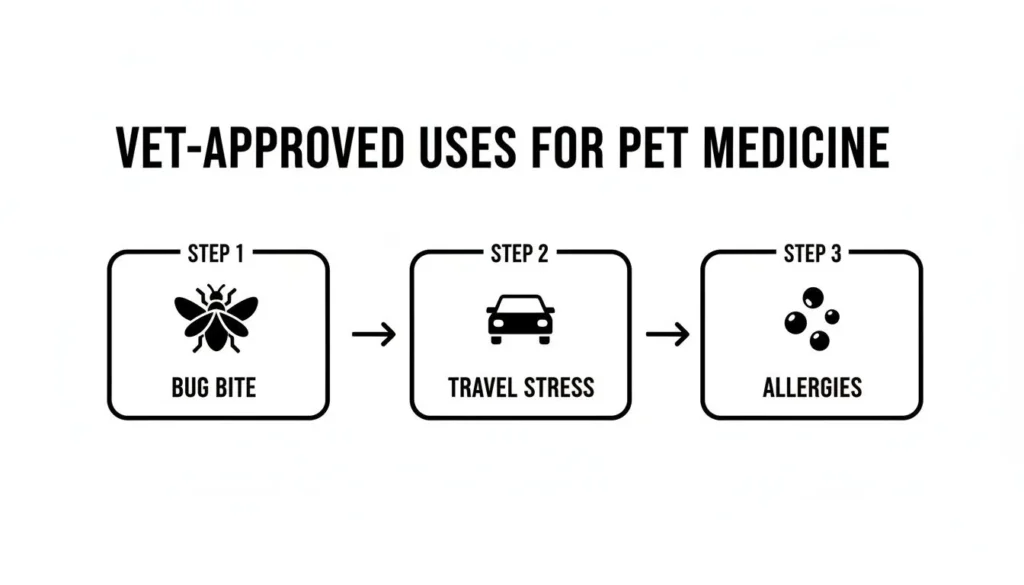
These situations—allergic reactions, motion sickness, or mild sedation—require a diagnosis first. This isn’t a drug for solving medical mysteries at home. It’s a specific tool that requires professional training, the right equipment, and access to properly concentrated medications to use safely and effectively.
Why Combination Cold and Flu Products Are Toxic
When you walk down the cold and flu aisle at the pharmacy, you’ll find the name “Benadryl” on dozens of different boxes. This is exactly where a simple, well-intentioned mistake can turn into a tragic emergency for your cat. The name on the front of the box is just marketing; the truth is always on the back.
Many of these products are not just Benadryl. They’re combination formulas made for human sinus, cold, or flu symptoms. For cats, these products are extremely dangerous because they bundle in other active ingredients that are highly toxic to felines. Picking up the wrong box is a critical error.
The Hidden Poisons in Combination Formulas
Think of it like this: a plain oatmeal cookie might be fine for a dog, but an oatmeal raisin cookie is toxic. The cookie isn’t the problem—the hidden raisins are. It’s the same with these medications. While pure diphenhydramine has some specific, vet-approved uses, the combination cold and flu products hide ingredients that are poisonous to your cat.
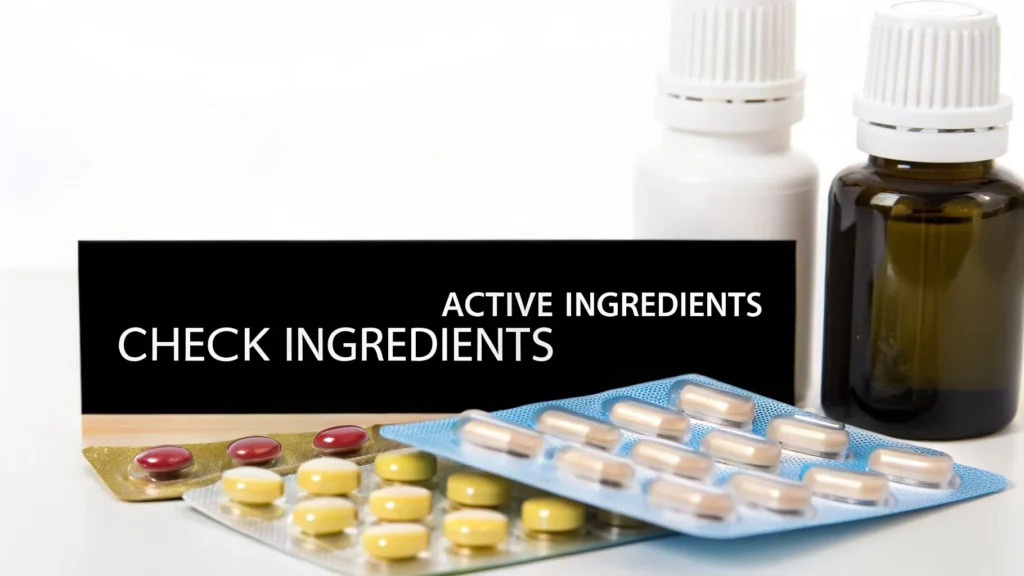
This is why you have to become a label detective. Turn every box over and find the “Active Ingredients” section. This is the only part of the packaging that matters. If you see anything listed besides diphenhydramine HCl, the product is absolutely unsafe for your cat.
Here are the most common toxic ingredients to look out for:
- Acetaminophen: Often found in Tylenol and many “Cold & Flu” remedies, this pain reliever is devastating for cats. It causes severe liver failure and destroys red blood cells, proving fatal even in tiny amounts.
- Pseudoephedrine or Phenylephrine: These are decongestants used in “Sinus,” “PE,” or “Congestion” formulas. In cats, they act as powerful stimulants that can trigger a dangerously rapid heart rate, sky-high blood pressure, severe agitation, and seizures.
The only potentially safe option—and only when explicitly recommended by your vet—is a product where the sole active ingredient is diphenhydramine HCl. Any other ingredient is a non-negotiable red flag. Put the box down.
Choosing the Right Liquid Product Carefully
Veterinarians sometimes suggest liquid formulations for more precise dosing, especially for small animals. Children’s liquid Benadryl is a common go-to because its lower concentration makes it easier to measure tiny doses. However, this introduces another critical risk: sweeteners.
You must check the “Inactive Ingredients” for xylitol. This sugar substitute is perfectly safe for people but incredibly dangerous for pets. Even a small amount can cause a life-threatening drop in blood sugar and acute liver failure in both cats and dogs. You can learn more about xylitol toxicity in pets from VCA Hospitals. Many other things around the house can be surprisingly risky, which is why we also have a guide on whether hydrangeas are poisonous to cats.
When it comes to giving your cat Benadryl, the stakes are very high. The brand name means almost nothing, but the active ingredients mean everything. Reading that label carefully is the most important thing you can do to protect your cat. Always, always double-check with your veterinarian before buying or giving any over-the-counter medication.
Recognizing Side Effects Versus an Emergency
Even when you follow your vet’s instructions perfectly, you have to know what to watch for after giving your cat any new medication. Answering “can I give my cat Benadryl?” doesn’t stop once you’ve given the dose. The real work begins with monitoring your cat closely to tell the difference between a normal side effect and a red flag that signals a true medical emergency.
After a correct dose, the most common thing you’ll see is drowsiness. This is a well-known effect of diphenhydramine, so a sleepy cat is usually no cause for alarm. You might also notice a dry mouth, which can cause them to drink more or have thick, ropey saliva. Some cats might also have a bit of trouble urinating. While you should let your vet know about these, they are generally considered mild and expected side effects.
Normal Side Effects Versus Emergency Signs
Knowing the difference between a mild reaction and a crisis is everything. A sleepy cat is one thing; a cat in serious distress is something else entirely. Being able to spot the signs will help you act fast and get your cat the urgent care they need if a real problem develops.
Here’s a breakdown of what’s considered a common, mild side effect versus what should be treated as an emergency.
Common, Mild Side Effects:
- Drowsiness and Lethargy: Your cat will probably seem extra sleepy or less active than usual.
- Dry Mouth: You may notice them drinking more water or see thick saliva.
- Urinary Retention: Your cat might strain in the litter box or go less often.
- Mild Digestive Upset: A small number of cats might have temporary, minor vomiting or diarrhea.
Keep in mind, though, that the sedative effect of Benadryl can sometimes be misleading. What looks like simple drowsiness could be hiding a more serious illness that requires immediate veterinary care. As explained in veterinary pharmacology resources from Today’s Veterinary Practice, this lethargy might mask symptoms and delay a diagnosis for a painful infection or organ issues.
Red Flags That Signal an Overdose or Emergency
If you see any of the symptoms below, this is no longer a “wait and see” situation. These are clear signs of a potential overdose or a severe reaction, and your cat needs to see a veterinarian right away.
Interestingly, a diphenhydramine overdose often does the opposite of what you’d expect. Instead of getting sleepy, your cat might become dangerously agitated and overstimulated. This is what’s known as a paradoxical reaction.
CRITICAL ACTION: If you witness any of the severe symptoms listed below, this is a medical emergency. Do not wait. Contact an emergency veterinarian or a pet poison control hotline immediately.
Emergency Signs Requiring Immediate Action:
- Severe agitation, vocalization, or hyperexcitability
- Rapid heart rate or frantic panting
- Disorientation, stumbling, or loss of coordination
- Dilated pupils and a wide-eyed stare
- Muscle tremors or seizures
- Vomiting that is severe or persistent
- Collapse or inability to stand
Who to Call in a Crisis
Having emergency numbers ready can save precious time. If you suspect your cat is having a severe reaction or has been overdosed, do not hesitate to call for help. Some health issues in cats, like coccidia, require specific treatments from a vet and should not be self-diagnosed. You can learn more by checking out our guide on coccidia in cats.
Keep these numbers on your fridge or saved in your phone:
- Your Primary Veterinarian: They know your cat’s health history best.
- A Local 24/7 Animal Emergency Hospital: Know the closest one before you ever need it.
- ASPCA Animal Poison Control Center: (888) 426-4435 (A consultation fee may apply).
- Pet Poison Helpline: (855) 764-7661 (A consultation fee may apply).
Acting quickly is the single most important thing you can do to protect your cat. Differentiating between expected sleepiness and dangerous agitation is a responsibility that comes with giving any medication, which is why your vet’s guidance is absolutely essential.
Exploring Safer Vet-Approved Alternatives
When you’re worried about your cat, reaching for a familiar over-the-counter fix like Benadryl feels like you’re doing something. The truth is, it’s often a step in the wrong direction. Instead of grabbing a risky, outdated medication, it’s far better to see what safer, more effective solutions your veterinarian can offer.
Think of your vet as a specialist with a modern toolkit designed just for cats. You wouldn’t take an old family remedy for a serious heart issue; you’d see a cardiologist. In the same way, your vet has targeted treatments that get to the root of the problem, not just cover up the symptoms. This change in thinking is the key to giving your cat the best care possible.
Modern Solutions for Allergies and Itching
If your cat is miserable with chronic itching, asking “can I give my cat Benadryl?” is starting with the wrong question. Itching is a symptom, not a diagnosis. Your vet’s first job is to figure out the “why” behind it, which could be anything from fleas to a complex food or environmental allergy.
Thankfully, modern veterinary medicine has far better options than a first-generation antihistamine like diphenhydramine.
- Cat-Specific Antihistamines: Newer antihistamines are made specifically for cats. They typically have fewer side effects and work much more reliably, especially for long-term management.
- Prescription Diets: If a food allergy is the culprit, your vet might suggest a hydrolyzed or novel protein diet. This is both a diagnostic tool and a treatment rolled into one, directly tackling the trigger.
- Targeted Therapies: For issues like atopic dermatitis (environmental allergies), vets now use advanced treatments that target the specific immune response causing the itch. They provide a level of relief that Benadryl simply can’t.
These modern approaches work because they’re based on an accurate diagnosis. Your vet has access to medications tested and formulated for felines, which is why they’re safer and more dependable for chronic problems. You can read more about these advanced approaches to feline atopic syndrome on Clinician’s Brief.
Better Options for Anxiety and Travel Stress
Using Benadryl for its sedative effect is a complete gamble. While some cats might get drowsy, a significant number have a paradoxical reaction, becoming even more agitated and stressed out. Why risk it when there are proven, reliable alternatives?
Relying on Benadryl for feline anxiety is like using a dim, flickering candle in a storm. Safer, brighter, and more reliable lights are available that won’t accidentally make things worse.
For stress related to travel or vet visits, your vet can prescribe medications that are both safer and far more predictable.
- Gabapentin and Trazodone: These are two of the most trusted and commonly prescribed medications for situational anxiety in cats. They deliver a consistent, reliable calming effect without the high risk of a hyperactive backlash.
- Calming Pheromone Products (Feliway): Available as diffusers, sprays, and wipes, these products release a synthetic copy of a cat’s own facial pheromones. This creates a sense of safety and security in their environment and works wonders for general, low-level stress.
By having an open conversation with your vet, you can move past the risky question of “can I give my cat Benadryl?” and on to a much more powerful one: “What’s the best and safest way to help my cat feel better?”
Frequently Asked Questions About Benadryl for Cats
Even after covering the basics, you probably still have a few specific questions. Let’s run through some of the most common ones we hear from cat owners, driving home the key safety points.
How Much Liquid Benadryl Can I Give My Cat?
This is a dangerous question to try and answer yourself. The right dose in milliliters (mL) hinges entirely on the product’s concentration (mg/mL), and that number is different for nearly every brand and formula. A small mistake in your math can easily lead to a toxic overdose.
For this reason, only your veterinarian should ever do this calculation. They need your cat’s exact weight and the specific product you have to figure out a precise, safe dose. Never attempt to guess or estimate this on your own.
Is Benadryl Okay for a Cat’s Constant Scratching?
While Benadryl might give some minor, temporary relief, using it for a chronic itch is like putting a small bandage on a major wound. It covers up the symptom without addressing what’s actually causing it, and it’s simply not an effective long-term strategy for a persistently itchy cat.
Constant scratching is a red flag for bigger problems that need a real diagnosis and a targeted treatment plan from your vet. Common culprits include:
- Flea infestations or other parasites
- Bacterial or fungal skin infections
- Underlying food or environmental allergies
Relying on Benadryl just postpones the real care your cat needs, which allows the actual problem to get worse.
Can I Use Benadryl for a Bee Sting on My Cat?
A single bee sting can set off a severe allergic reaction called anaphylactic shock, which is a true life-threatening emergency. While a vet might use an injectable antihistamine as one part of their in-clinic emergency treatment, giving your cat a pill at home is not the right move.
If you spot signs of a severe reaction—like facial swelling, hives, vomiting, or trouble breathing—your cat needs a vet immediately. Don’t waste precious time trying to give them a pill. Get to the nearest emergency vet right away.
At maxijournal.com, we are committed to providing clear, responsible pet health information to keep your companions safe. Explore our daily articles for more insights into the world around you. Find more at maxijournal.com.
Discover more from Maxi Journal
Subscribe to get the latest posts sent to your email.