So, you’ve caught your dog giving you the puppy-dog eyes as you peel potatoes for dinner. It’s a common scene in many kitchens. But it begs the question: can our canine companions actually eat potatoes?
The short answer is yes, but with some very important rules. When prepared correctly, a bit of plain, cooked potato can be a perfectly safe—and even nutritious—treat. But get it wrong, and you could be dealing with an upset stomach or worse. Think of it as an occasional, special snack, not a staple of their diet.
The Simple Answer to Potatoes for Your Pup
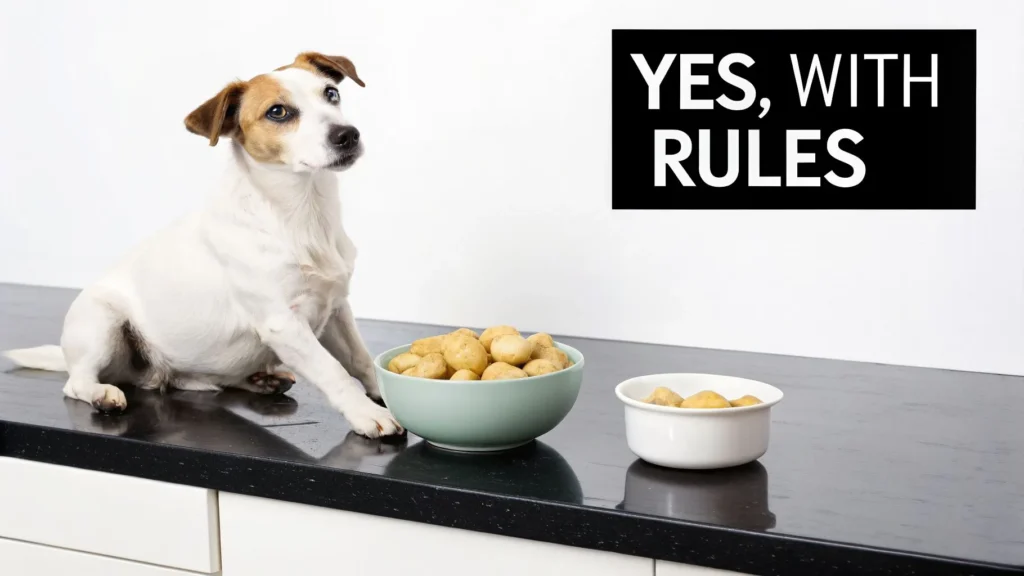
It might surprise you, but a plain, cooked potato isn’t just empty carbs for your dog. Vets agree that when served correctly, potatoes offer a good source of vitamins and minerals. They’re packed with things like vitamin C, B vitamins, potassium, iron, and magnesium. Given that potatoes are a staple food for humans all over the globe (as you can see from these potato consumption stats), it’s no wonder they pack a nutritional punch.
But here’s the most important part: moderation is everything. A good rule of thumb for any treat, potatoes included, is the 10% rule. This means treats should make up no more than 10% of your dog’s total daily calorie intake. This simple guideline helps prevent weight gain and ensures your dog is getting the bulk of their nutrition from their balanced, everyday dog food.
Do’s and Don’ts at a Glance
It can feel like there are a lot of rules, but it really boils down to one core idea: plain and cooked is good, while raw or seasoned is bad. The potato dishes we humans love are almost always a definite no for our dogs.
To keep things simple, I’ve put together this quick reference table.
Quick Guide to Serving Potatoes Safely
This table breaks down the essentials for you. Stick to the “do” column, and you’ll be all set.
| What to Do (Safe) | What to Avoid (Unsafe) |
|---|---|
| ✅ Serve plain, cooked potatoes (baked, boiled, or mashed). | ❌ Feed any raw or green-skinned potatoes. |
| ✅ Remove the skins before serving to aid digestion. | ❌ Add salt, butter, oil, cheese, or other seasonings. |
| ✅ Cut into small, bite-sized pieces to prevent choking. | ❌ Serve french fries, potato chips, or loaded baked potatoes. |
| ✅ Offer in small, treat-sized portions only. | ❌ Give to your dog if they are diabetic without vet approval. |
If there’s one thing to take away, it’s this: potatoes for your dog should be boring. If it’s a dish loaded up with delicious toppings that you’d enjoy, it’s almost certainly not safe for your furry friend.
Sticking to these simple guidelines means you can safely share this common kitchen staple without any stress. Now, let’s get into the why behind some of these rules.
The Hidden Dangers in Raw and Green Potatoes
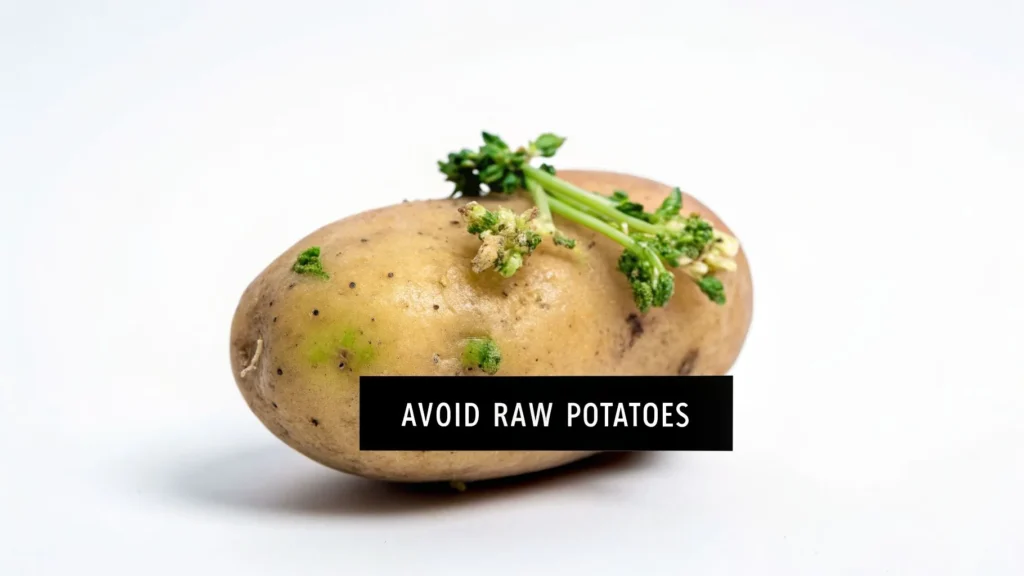
While a plain, cooked potato can be a fine treat, that same spud in its raw state is a major no-go for your dog. The danger comes from a naturally occurring compound called solanine. Plants, including potatoes, produce this toxin as a built-in defense system to ward off pests while they grow.
Think of it like the poisonous pits in cherries or the seeds in an apple—it’s the part of the plant you instinctively know to avoid. When a dog ingests solanine, it can lead to what’s known as potato poisoning. It would take a whole lot of raw potato to cause a fatal reaction, but even smaller amounts can make your dog seriously sick and uncomfortable.
Potatoes belong to the nightshade family, a group of plants known for containing solanine, especially in any part that’s raw, green, or has started to sprout. While toxic in high doses, the good news is that cooking almost entirely neutralizes the threat, which is why a properly prepared baked or boiled potato is generally safe. For a deeper dive into plant compounds in canine diets, you can check out this detailed study on plant-based diets for dogs.
Where Solanine Hides
Solanine isn’t spread evenly through the potato. It concentrates in specific areas that are pretty easy to spot once you know what you’re looking for. Always give a potato a quick inspection before preparing it for your pup.
- The Skin and Sprouts: The highest concentrations of solanine are found in the potato’s sprouts (the “eyes”) and in any green-tinged skin.
- Green Patches: If a potato has been sitting in the light, you might notice it starts to turn green. That color comes from chlorophyll, but it’s also a big red flag that solanine levels are high in that spot.
Key Takeaway: Never, ever feed your dog any part of a potato that looks green or has started sprouting. If you see green spots, don’t just try to cut them off. The safest move is to toss the entire potato and grab a fresh one.
Recognizing the Signs of Solanine Poisoning
If your dog sneaks a bite of raw potato—especially if it’s green or sprouted—you need to watch them closely for signs of solanine poisoning. The symptoms can vary from mild to severe based on how much they ate and their size.
You’ll often see digestive issues first:
- Vomiting
- Diarrhea
- Loss of appetite
- Stomach pain
In more serious cases, the problem can escalate to neurological signs:
- Lethargy and weakness
- Confusion or dizziness
- Dilated pupils
- A slow heart rate
If you spot any of these signs and suspect your dog got into raw potatoes, contact your veterinarian immediately. Getting prompt medical help is critical when dealing with potential toxicity.
Thankfully, this is one of those dangers that’s completely preventable. By simply cooking potatoes thoroughly and tossing out any questionable ones, you remove the solanine risk and can safely offer your pup a tasty, occasional treat.
How to Prepare Potatoes Your Dog Can Safely Eat
Ready to share this simple vegetable with your dog? Preparing potatoes for your pup is easy, but you have to think differently than when you’re cooking for people. The number one rule is to keep it completely plain.
Think of it as a clean, simple supplement, not a human-style side dish. First, always wash and peel the potato thoroughly. While a little bit of cooked skin isn’t toxic, it’s high in fiber and contains compounds called oxalates, which can be hard on a dog’s digestive system. Peeling is the safest way to avoid an upset stomach.
Best Cooking Methods for Dogs
Once peeled, the potato must be cooked until it’s soft all the way through. This is non-negotiable, as it gets rid of the solanine and makes the starchy vegetable easy for your dog to digest.
Stick to these simple, safe methods:
- Boiling or Steaming: This is one of the best options. Just chop the potato into chunks and boil or steam it in plain water until it’s fork-tender.
- Baking: You can also bake a potato whole after piercing it a few times. Once it’s soft, let it cool completely and scoop the flesh out of the skin.
- Mashing: After boiling or baking, mashing the potato makes it very easy for dogs of all sizes to eat and cuts down on any choking hazard.
A critical reminder: when you boil, bake, or mash the potato, use absolutely no additives. This means no salt, butter, oil, or milk. And definitely no garlic or onions, which are toxic to dogs. The potato must be 100% plain.
Serving the Perfect Potato Treat
After the potato is cooked and has cooled down completely, you’re ready to serve. Hot food can easily burn your dog’s mouth, so don’t rush this step.
For smaller dogs, a teaspoon or two of mashed potato is plenty. For larger dogs, a tablespoon or two is a good portion size. If you’ve cooked chunks, make sure they are cut into small, bite-sized pieces appropriate for your dog’s size to prevent choking.
You can serve the plain potato pieces as a special reward or mix a small amount of mashed potato into their regular food. This simple preparation ensures you’re giving them a safe, enjoyable, and healthy treat that won’t throw off their balanced diet.
Finding the Right Serving Size for Your Dog
So, plain, cooked potatoes are safe for your dog. But this doesn’t mean they get an all-you-can-eat pass. When it comes to any treat, more is definitely not better. The key is to keep this starchy veggie as an occasional snack, not a diet staple that could lead to weight gain.
Think of your dog’s diet like a budget. Their main meals are for all the essentials—protein, vitamins, and minerals. Treats, including potatoes, are just fun extras. They need to be given in moderation so they don’t mess up the core nutritional plan.
The 10 Percent Treat Rule
The golden rule among vets is the 10% rule, and it absolutely applies to potatoes. This guideline is simple: treats should never make up more than 10% of your dog’s total daily calories. The other 90% has to come from their complete and balanced dog food.
Following this rule is non-negotiable for a few big reasons:
- Weight Management: Potatoes are carb-heavy. Too many can easily lead to extra pounds, which is tough on your dog’s joints and overall health.
- Nutritional Balance: If your dog fills up on treats, they’ll be less interested in their actual food, which contains the nutrients they need to thrive.
- Preventing Pancreatitis: High-calorie snacks can contribute to pancreatitis, a painful inflammation of the pancreas. Keeping all treats to a minimum helps reduce this risk.
Serving Sizes by Dog Weight
So, what does the 10% rule actually look like? A few bites for a tiny Chihuahua is a world away from a few bites for a Great Dane. You have to adjust the serving size based on your dog’s weight.
To make things easy, here’s a quick guide to the maximum daily amount of plain, cooked potato you should offer as a treat.
Daily Potato Serving Size by Dog Weight
This table provides a simple reference for how much plain, cooked potato your dog can have per day. Remember, this is a maximum, not a daily requirement.
| Dog Size | Weight Range (lbs) | Recommended Daily Amount |
|---|---|---|
| Toy | Under 10 lbs | 1-2 teaspoons |
| Small | 11-25 lbs | 1 tablespoon |
| Medium | 26-50 lbs | 2-3 tablespoons |
| Large | 51-100 lbs | ¼ cup |
| Giant | Over 100 lbs | A few tablespoons, up to ½ cup |
Use these amounts as a starting point, but always watch your dog. If you spot any tummy upset or notice they’re gaining weight, cut back or stop giving them potatoes. Treats like potatoes can be fantastic for positive reinforcement during training sessions. For more ideas, check out this guide on how to train your dog.
The infographic below shows the simple, three-step process for preparing potatoes safely.
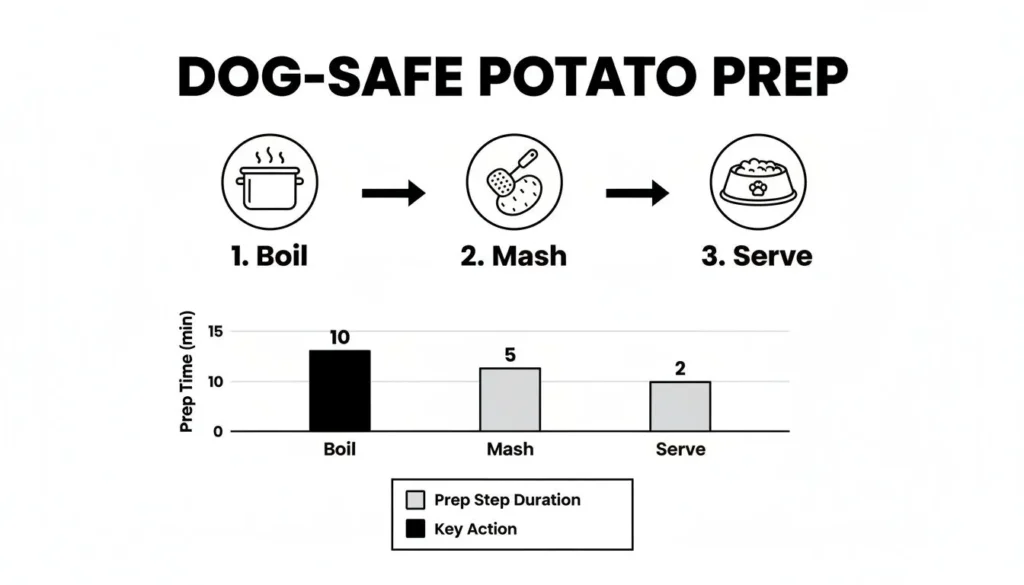
Stick to these prep steps and portion sizes, and potatoes can be a perfectly safe and enjoyable snack for your dog.
Potatoes vs. Sweet Potatoes: Which Is Better for Dogs?
You’ve probably seen both white and sweet potatoes on the ingredient list for your dog’s food. While both can be safe for your dog when cooked and served plain, they aren’t interchangeable from a nutritional perspective.
Let’s break it down. Think of a regular white potato as a simple, starchy snack. A sweet potato, on the other hand, is more of a nutrient-dense superfood. Both give your dog energy, but the sweet potato offers a much bigger nutritional benefit with fewer potential issues.
The main difference comes down to how each one affects your dog’s blood sugar.
The Nutritional Showdown
Regular white potatoes sit high on the glycemic index. This means they can cause a quick, sharp spike in blood sugar right after your dog eats them. That’s not great, especially for dogs who are overweight, less active, or diabetic.
Sweet potatoes are a different story. They have a lower glycemic index, releasing sugar into the bloodstream much more slowly. This provides a more stable and sustained source of energy, making them a safer pick for dogs with those specific health concerns.
Key Takeaway: The lower glycemic index of sweet potatoes makes them a superior choice, as they provide steady energy without the dramatic blood sugar spikes associated with white potatoes.
Beyond blood sugar, sweet potatoes are also packed with more good stuff. Here’s a quick look at what each brings to the bowl:
- Sweet Potatoes are Rich in Vitamin A: They are loaded with beta-carotene, which your dog’s body turns into Vitamin A. This vitamin is essential for healthy vision, a strong immune system, and good skin and coat health. Regular white potatoes don’t have this benefit.
- Both are High in Fiber: Both types of potatoes are a good source of dietary fiber. This is great for your dog’s digestive health and helps keep them regular.
- Both Offer Key Minerals: You’ll find important minerals in both. They contain potassium, which helps with muscle function, and manganese, which plays a role in metabolism.
So, while a bit of plain, cooked white potato is a perfectly fine treat now and then, its sweet potato cousin simply offers more health advantages. If you have the choice, steamed or baked sweet potato is the clear winner for boosting your dog’s nutrition while keeping their energy levels on an even keel.
When You Should Talk to Your Veterinarian
While everything here gives you the essential safety rules for feeding your dog potatoes, it’s no substitute for a chat with your veterinarian. Your vet knows your dog’s complete health history and should always be your go-to for any diet-related questions.
Think of it this way: before adding a new, carb-heavy food like potatoes to their routine, a quick check-in is always a good idea. This is especially true if your dog has any underlying health issues.
Dogs with Special Health Needs
For some dogs with specific conditions, potatoes just aren’t a good fit. It’s absolutely essential to get your vet’s approval before offering potatoes if your dog has:
- Diabetes: Potatoes have a high glycemic index, which can cause a sharp, fast rise in blood sugar. This is risky for a diabetic dog whose insulin needs careful management.
- Weight Issues: Since potatoes are packed with calories, they can easily lead to weight gain. If your dog is already overweight, your vet can point you toward better, lower-calorie treats.
- Food Allergies or Sensitivities: While a potato allergy isn’t common, any dog can react to any food. If your pup has a history of sensitivities, it’s best to be extra cautious.
Spotting a Bad Reaction
Even with a perfectly healthy dog, you need to watch them closely after they try any new food for the first time. A bad reaction to potatoes often looks like other food sensitivities. If you think you’re seeing an allergic reaction, our guide on giving a dog Benadryl safely might be useful after you’ve spoken with your vet.
Call your veterinarian if you notice any of these signs after your dog eats potatoes:
- Vomiting or diarrhea
- Lots of gas or a gurgling stomach
- Itchy skin, hot spots, or new ear infections
- Lethargy or seeming unusually tired
At the end of the day, you know your dog better than anyone. If something seems off after they can eat potatoes, don’t wait. Making that call to the vet gives you peace of mind and keeps your best friend safe and healthy.
Frequently Asked Questions About Dogs and Potatoes
When it comes to feeding your dog potatoes, a few common questions always pop up. Let’s get straight to the answers you need to keep your pup safe and healthy.
Can My Dog Eat Potato Skins?
It’s safest to just say no to potato skins. The skins themselves aren’t toxic, but they contain oxalates and are packed with fiber, which can be tough on a dog’s digestive system and lead to an upset stomach.
The best practice is simple: always peel the potatoes before you cook them for your dog.
What Should I Do if My Dog Ate Raw Potato?
First, don’t panic. If your dog snuck a small, clean piece of a fresh potato, they’ll most likely be fine. Just keep a close eye on them.
The real danger is if they ate a large amount, or if the potato was green or had sprouts. If that’s the case, you need to call your veterinarian for advice right away. Watch for any signs of solanine poisoning, which can include:
- Vomiting
- Diarrhea
- Lethargy or weakness
Key Insight: Raw potatoes, especially those with green spots or sprouts, contain a toxic compound called solanine. Cooking destroys the solanine, making potatoes safe. If your dog eats any raw potato that is green or sprouted, it warrants an immediate call to your vet.
Are French Fries or Potato Chips Safe?
This is an absolute no. You should never feed your dog french fries, potato chips, or any other kind of fried potato.
They are full of fat, salt, and oils that are a recipe for disaster, potentially leading to serious health issues like pancreatitis, obesity, or a severe case of stomach upset. When it comes to potatoes for dogs, stick to the basics: plain and cooked. That’s it.
And if you’re curious about other foods, see our guide on whether dogs can eat cranberries.
Discover more from Maxi Journal
Subscribe to get the latest posts sent to your email.