When your vet mentions an intestinal parasite, your mind probably jumps straight to worms. But there’s another common culprit that’s entirely different: coccidia. This isn’t a worm at all, but a microscopic, single-celled organism that can cause a nasty intestinal infection called coccidiosis, especially in kittens and cats with weaker immune systems.
What Is Coccidia in Your Cat?
So, what exactly is this parasite? Instead of thinking of something you can see, like a roundworm, picture a tiny, invisible saboteur. Coccidia are protozoa that take up residence inside the very cells that line your cat’s intestines.
The infection they cause, coccidiosis, is most often from two species: Isospora felis and Isospora rivolta. It’s a surprisingly common issue. Many healthy adult cats can actually carry a small number of these parasites without ever getting sick. The real trouble starts when the cat is young, stressed, or their immune system is already busy fighting something else.
The Uninvited Guest Analogy
Think of it like this: an uninvited guest shows up at your house, moves in, and starts tearing up the floorboards and wiring from the inside. That’s essentially what coccidia does. After a cat ingests the parasite, it multiplies like crazy in the gut lining, damaging the cells. This damage makes it hard for your cat to absorb nutrients and water properly, which is what leads to the classic symptoms of coccidiosis.
You might be surprised at how widespread this parasite is. Data from the Companion Animal Parasite Council reveals that coccidia shows up in anywhere from 3% to 36% of cats in North America. It’s one of the more common findings in routine poop checks. For more context on just how prevalent these issues are, you can read more about feline parasite statistics.
Coccidiosis is a huge headache in places with a lot of cats living together, like shelters, catteries, and even multi-cat homes. Because of how it spreads, keeping things clean is absolutely fundamental to getting it under control and preventing new infections.
For a quick reference, here’s a simple breakdown of the key facts about this common feline parasite.
Coccidia in Cats at a Glance
| Key Aspect | Brief Explanation |
|---|---|
| What It Is | A microscopic, single-celled protozoan parasite, not a worm. |
| Infection Name | Coccidiosis. |
| Common Species | Isospora felis and Isospora rivolta. |
| How It Works | Invades and destroys cells in the intestinal lining. |
| Main Symptom | Watery, sometimes bloody, diarrhea. |
| Most Vulnerable | Kittens, senior cats, and those with weak immune systems. |
Understanding these basics helps you see why a seemingly healthy cat can suddenly develop symptoms and why kittens are so often affected.
Who Is Most at Risk?
Any cat can technically pick up coccidia, but some are far more likely to get sick from it. The high-risk groups include:
- Kittens: Their immune systems are still learning the ropes and can’t mount a strong defense against the rapidly multiplying parasites.
- Senior Cats: An older cat’s immune defenses might not be as robust, particularly if they have other underlying health problems.
- Immune-Compromised Cats: Cats with conditions that weaken the immune system, like Feline Immunodeficiency Virus (FIV) or Feline Leukemia Virus (FeLV), are prime targets.
- Stressed Cats: Big changes like moving to a new home, the arrival of a new pet, or another illness can cause enough stress to suppress the immune system, allowing a low-level infection to flare up.
Knowing if your cat falls into one of these categories is a big step toward proactive care. To learn more about protecting your cat’s well-being, feel free to explore our other guides on cat health.
How Cats Get Coccidia
To get a handle on preventing coccidia, you first have to understand how it gets into a cat’s system. It all starts with something called an oocyst, which is basically the microscopic “egg” stage of the parasite. These tiny oocysts are the troublemakers, but they aren’t infectious right when they’re passed in an infected animal’s poop.
Think of a freshly passed oocyst like a seed that isn’t ready to sprout. It needs some time out in the world—usually just one to two days, given the right temperature and moisture—to mature, a process called sporulation. Only a sporulated oocyst can cause a new infection.
The Two Main Paths of Infection
So how does a cat end up swallowing one of these infectious oocysts? It really boils down to two main routes, though both end with the cat ingesting the mature parasite.
The most straightforward way is by coming into direct contact with a contaminated environment. This is more common than you might think.
- Dirty Litter Boxes: If a litter box isn’t scooped daily, any oocysts present have plenty of time to mature and become a booby trap for the next cat who uses it.
- Contaminated Soil: Outdoor cats are at risk because these oocysts can hang around for months in cool, damp soil.
- Contaminated Surfaces: Any floor, bedding, or food bowl that has touched infected feces can become a source of infection.
The second path is a bit more indirect and involves what we vets call a transport host. This is classic “circle of life” stuff, where a cat gets infected by eating another animal that’s already carrying the parasite.
A mouse, for instance, might pick up coccidia oocysts from the ground. The parasite doesn’t make the mouse sick; it just forms cysts in its tissues and waits. When a cat comes along and eats that infected mouse, the parasite wakes up and is passed on, with the cat becoming its new primary host.
This flow chart gives you a simple visual of how this microscopic invader can lead to a very sick cat.
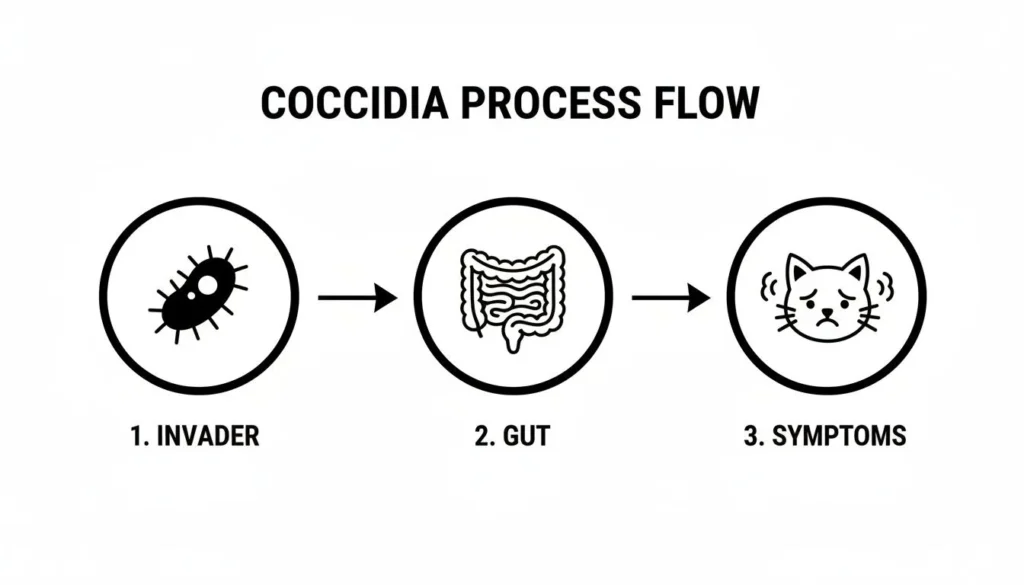
As you can see, the parasite invades, sets up shop in the gut, and eventually causes the symptoms that pet owners notice.
From Ingestion to Illness
Once a cat swallows a mature oocyst, its journey through the digestive system begins. It travels down to the small intestine, where it essentially “hatches” and releases sporozoites. These little invaders immediately get to work, burrowing into the cells lining the intestinal wall.
Inside these cells, the parasites start multiplying like crazy through asexual reproduction. They create thousands of copies, which eventually burst out of the host cell—destroying it in the process. These newly released parasites then just invade the neighboring cells, and the destructive cycle continues. It’s this widespread damage to the gut lining that leads to the tell-tale signs of coccidiosis, like diarrhea.
After a few rounds of this, the parasites switch to sexual reproduction. This final stage creates the brand-new oocysts that are shed in the cat’s feces, ready to mature in the environment and kick off the whole cycle again.
Recognizing the Signs of Coccidiosis
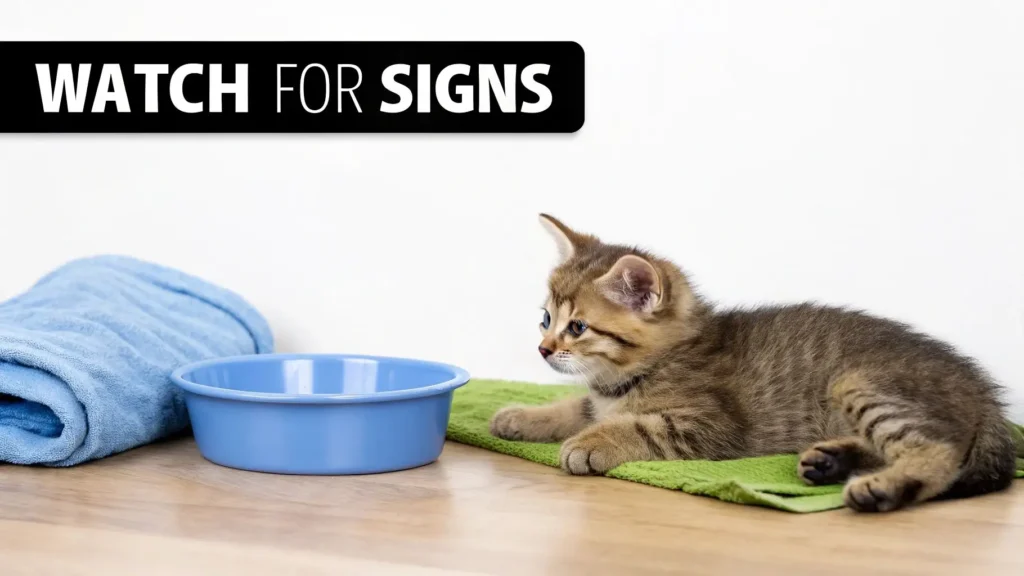
Knowing what to look for is the first step in getting your cat the help it needs. While a coccidia infection can sometimes fly under the radar in healthy adult cats, it often leaves a trail of distinct clues, especially in kittens. The most common and obvious sign is persistent, watery diarrhea.
This isn’t just a mild, one-off upset stomach. The diarrhea caused by coccidiosis is often foul-smelling and can have streaks of mucus or even blood. This happens because the parasites are literally destroying the cells that line your cat’s intestines as they multiply. This damage messes with the gut’s ability to absorb water and nutrients, which leads directly to those messy, watery stools.
Beyond Just Diarrhea
While diarrhea is the classic symptom, coccidiosis affects a cat’s entire system. The intestinal damage can set off a chain reaction of other issues you should keep an eye on.
Think of it like a car with a major engine problem. It’s not just the engine that sputters; soon, the car overheats, the electronics flicker, and it stops running altogether. When a cat’s gut is in this much distress, the rest of its body feels the fallout.
Common signs that often show up alongside diarrhea include:
- Vomiting: The intense irritation in the gastrointestinal tract can easily make a cat feel nauseous.
- Loss of Appetite: Abdominal pain and discomfort make eating the last thing your cat wants to do.
- Weight Loss: This is a direct result of the gut not absorbing nutrients properly, combined with a lack of appetite.
- Dehydration: Caused by fluid loss from both diarrhea and vomiting. Telltale signs are lethargy, sunken eyes, and tacky-feeling gums.
- Lethargy: Your cat might seem unusually tired, weak, or completely uninterested in its favorite toys or activities.
It’s really important to know that the severity of these signs can vary dramatically. A strong adult cat might just have a mild case of diarrhea or show no symptoms at all. On the flip side, a tiny kitten can become dangerously sick from the exact same infection in a very short amount of time.
Why Kittens Are So Vulnerable
The huge difference in how coccidiosis affects adult cats versus kittens is one of the most critical things to understand. Adult cats have often been exposed to the parasite before, so they’ve built up some immunity. Their bodies are better at keeping the parasite population in check before it spirals out of control.
Kittens, however, are a completely different story. Their immune systems are still learning the ropes and haven’t figured out how to fight off this particular invader yet. When a kitten swallows coccidia oocysts, the parasites can reproduce at an explosive rate inside their delicate intestines.
The clinical impacts of coccidia in cats disproportionately affect the young. In kittens under six months of age, this intestinal parasite can cause severe, water-losing diarrhea, rapid dehydration, and significant weight loss. Most severe cases strike when kittens are just 4 to 12 weeks old. You can discover more insights about the specific risk factors for young felines on PMC.
This is precisely why coccidiosis is such a big worry in shelters, catteries, and other places where lots of young kittens live together.
Do Not Self-Diagnose
A key takeaway for any pet owner is that these symptoms are not exclusive to coccidia. A whole host of other conditions can cause diarrhea, vomiting, and lethargy in cats.
Common issues with similar signs include:
- Intestinal worms: Parasites like roundworms and hookworms cause similar GI upset.
- Giardia: Another single-celled parasite that is notorious for causing diarrhea.
- Dietary indiscretion: Your cat ate something it shouldn’t have—a classic cause of an upset stomach.
- Bacterial infections: Pathogens like Salmonella or E. coli can cause severe GI signs.
- Viral infections: Feline panleukopenia (distemper) can present with similar, but often far more severe, symptoms.
Because of this overlap, trying to diagnose coccidia in cats at home is a bad idea. Only a veterinarian can run the right tests, like a fecal analysis, to pinpoint the real cause of your cat’s illness. Getting an accurate diagnosis is the only way to make sure your cat gets the right treatment and starts feeling better.
How Vets Diagnose and Treat Coccidia
When your cat is under the weather, getting a clear diagnosis from your vet is the first step toward getting them well. If you suspect coccidia, understanding how vets pinpoint and treat this parasite can help ease your worries. The whole process is actually quite straightforward, relying on simple, effective science to get your companion back to their happy, healthy self.
The journey to a diagnosis starts with something surprisingly simple: a stool sample. Your vet will ask you to bring in a fresh sample from your cat’s litter box. This is the crucial piece of the puzzle, as it holds the microscopic evidence needed to confirm what’s causing the trouble.
The Gold Standard for Diagnosis
The most reliable way to spot coccidia is through a test called fecal flotation. Think of it as a clever lab technique designed to isolate the parasite’s oocysts (the egg-like stage) from everything else in the sample.
Here’s a quick look at how it works:
- A small amount of your cat’s stool is mixed into a special high-density solution.
- Because the parasite oocysts are incredibly lightweight, they float to the top of this solution, while the heavier fecal material sinks.
- A glass slide is touched to the surface to collect the floating oocysts. Your vet then examines this slide under a microscope, where the coccidia can be clearly identified.
This simple yet effective test gives a definitive yes or no, ensuring the treatment plan is perfectly targeted.
The Go-To Treatment for Coccidiosis
Once the diagnosis is confirmed, treatment usually begins immediately. The most common medication prescribed is a sulfa-based antibiotic, specifically sulfadimethoxine, which you might know by its brand name, Albon. It’s typically given as a liquid or tablet for about one to two weeks.
What’s really interesting is how this drug works. Sulfadimethoxine isn’t designed to kill the parasites outright. Instead, it’s what we call a coccidiostat.
This means the medication stops the coccidia from reproducing. By halting their life cycle in its tracks, it gives your cat’s own immune system a chance to catch up, clear out the existing parasites, and begin healing the inflamed intestines.
This approach is incredibly effective and is the standard of care in veterinary medicine. In some cases, especially in shelters or catteries where infections can spread quickly, vets might opt for other medications like ponazuril or toltrazuril, which act faster to kill the parasites directly.
Supportive Care: A Critical Part of Recovery
Medication is key, but it’s not the whole story. For kittens, senior cats, or any cat hit hard by the infection, supportive care is just as important. Coccidia can leave a cat weak and dangerously dehydrated.
This supportive care is tailored to what your cat needs most and often includes:
- Fluid Therapy: Diarrhea quickly leads to dehydration. Vets can administer fluids either under the skin (subcutaneous) or through an IV to rehydrate your cat and balance their electrolytes.
- Nutritional Support: A sick cat often refuses to eat. Your vet will likely recommend a bland, highly digestible diet that’s easy on their gut. For severe cases, syringe feeding might be necessary to ensure they get enough calories to fight the infection.
- Probiotics: Once the infection is under control, reintroducing “good” bacteria with probiotics can help restore balance to the digestive system and get their stool back to normal.
Taking these extra steps is fundamental to helping a sick cat bounce back. To learn more about the fascinating science behind animal well-being, check out our science category. It’s this powerful combination of targeted medication and dedicated supportive care that sets your cat on the path to a full and speedy recovery.
Preventing Coccidia in Your Home
Once you’ve dealt with a bout of coccidiosis in your cat, you’ll want to do everything in your power to avoid a repeat. Preventing coccidia in cats really boils down to one thing: meticulous sanitation. The entire life cycle of this parasite depends on fecal contamination, so a squeaky-clean environment is your best defense to break the cycle of infection for good.
It helps to think of coccidia oocysts as tiny, invisible seeds. They aren’t immediately infectious when they’re passed in feces. But give them a little time in the right environment—like a warm, damp litter box—and they mature into a real threat. Your job is to clear out these “seeds” before they ever get a chance to sprout.
Mastering Litter Box Hygiene
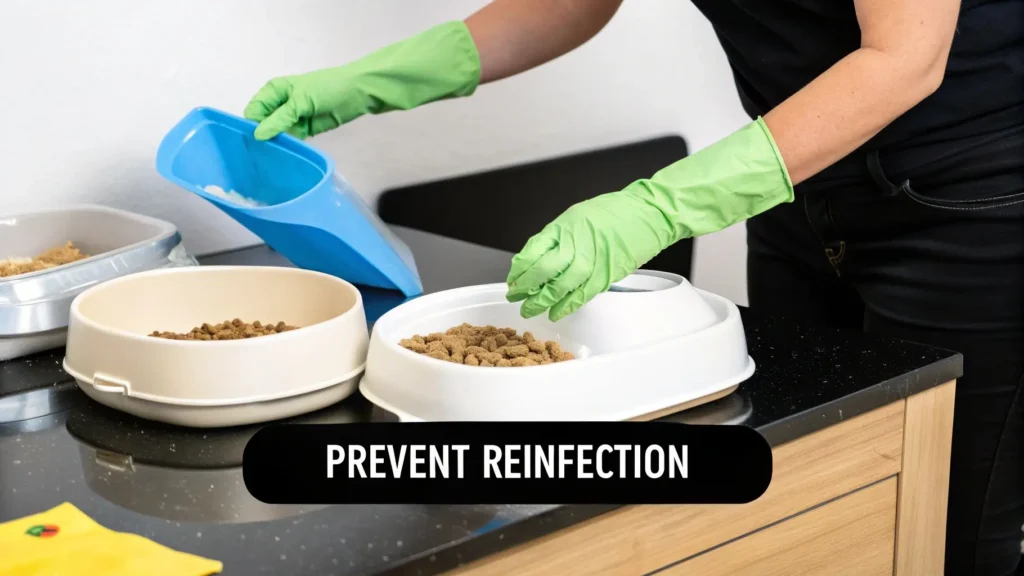
The litter box is ground zero for coccidia, making its daily upkeep your most critical task. Here’s a key fact to remember: oocysts need at least 24 hours in the environment to become infectious. That one piece of information makes your daily scooping routine incredibly powerful.
When you scoop the box every single day, you’re getting rid of the oocysts before they can even mature. It’s a simple habit that dramatically lowers the risk of your cat reinfecting itself or passing the parasite to other pets.
But for a true deep clean, regular soap and water just won’t do the trick. Coccidia oocysts are protected by a tough outer shell that shrugs off most common household cleaners. You need to bring out the heavy hitters to properly sanitize the box.
- Diluted Ammonia Solution: A mix of 1 part ammonia to 10 parts water is one of the few things that can effectively kill oocysts. Just be sure to work in a well-ventilated space, rinse the box thoroughly with clean water, and let it air dry completely before adding fresh litter.
- Steam Cleaning: If you want a chemical-free option, the intense heat from a steam cleaner is also fantastic for destroying these resilient parasites. It’s a great way to sanitize the litter box and the floor around it.
Keeping the Broader Environment Clean
While the litter box is the main battlefield, the fight against coccidia doesn’t stop there. Those microscopic oocysts can easily hitch a ride on your cat’s paws and fur, contaminating bedding, floors, and food dishes.
Get into the habit of frequently washing your cat’s bedding, blankets, and any soft toys in hot water. It’s also wise to wash their food and water bowls daily with hot, soapy water to prevent any accidental ingestion of the parasite.
If there’s one crucial takeaway for pet owners, it’s that prevention is an ongoing commitment, not a one-time fix. Consistent, meticulous hygiene is the only way to effectively break the environmental contamination cycle of coccidia.
The difference in parasite exposure between indoor and outdoor cats is staggering. One survey of domestic cats revealed that while the overall prevalence of intestinal parasites was 95.3%, it shot up to 100% in feral cats. This just goes to show how an uncontrolled environment raises the stakes, underscoring why strict hygiene at home is so vital. You can learn more by exploring the full research on feline parasites.
Managing Your Feline Household
In a home with multiple pets, preventing the spread requires a bit more strategy. If you’re thinking of bringing a new cat or kitten home, one of the smartest things you can do is implement a quarantine period.
Set up the newcomer in a separate room with their own litter box, food, and water for at least two weeks. This gives you time to schedule a vet visit for a wellness check and a fecal exam, screening for coccidia and other parasites before they meet your resident pets.
For cats that do go outside, try to minimize their hunting. Rodents, birds, and other small animals can carry coccidia, passing it on to your cat when eaten. You can’t eliminate this risk completely, of course, but keeping your cat well-fed and entertained with engaging indoor toys can definitely reduce their drive to hunt.
To make things easier, here is a simple checklist to help you stay on top of your prevention game.
Coccidia Prevention Checklist for Cat Owners
| Frequency | Prevention Task | Why It’s Important |
|---|---|---|
| Daily | Scoop all litter boxes at least once. | Removes oocysts before they become infectious (within 24 hours). |
| Daily | Wash food and water bowls with hot, soapy water. | Prevents accidental ingestion from environmental contamination. |
| Weekly | Completely empty, sanitize (ammonia/steam), and refill litter boxes. | Eliminates any remaining oocysts and keeps the primary source clean. |
| Weekly | Wash all pet bedding, blankets, and soft toys in hot water. | Kills oocysts that may have been transferred from your cat’s fur. |
| As Needed | Quarantine new cats for at least 2 weeks before introduction. | Screens for parasites and prevents introducing infection to resident pets. |
| Ongoing | Discourage hunting by providing enrichment and a healthy diet. | Reduces the risk of ingesting oocysts from infected prey (transport hosts). |
Sticking to a consistent cleaning schedule is the most effective way to protect your cats from coccidia and ensure a happy, healthy home for everyone.
Common Questions About Coccidia in Cats
Even after you’ve got the basics down on signs, treatment, and prevention, it’s completely normal to have a few more questions rattling around. This parasite can be a real worry for cat owners, but getting straight answers can make all the difference in feeling confident about your cat’s care.
We’ve pulled together some of the most frequent questions veterinarians hear from cat owners dealing with coccidiosis. Let’s clear things up.
Can I Get Coccidia from My Cat?
This is usually the number one question on every pet owner’s mind, and thankfully, the answer is a big relief. It is extremely unlikely you will get coccidia from your cat.
The types of coccidia that infect cats, like Isospora felis, are what we call “host-specific.” This just means they’ve adapted to live in felines and don’t cause problems for people. While humans can get their own types of coccidia (like Cryptosporidium), you won’t catch the feline version from cleaning the litter box or snuggling your sick kitty. That said, it’s always a non-negotiable rule of good hygiene to wash your hands thoroughly after handling any pet waste.
Why Does My Cat Still Have Diarrhea After Treatment?
It’s incredibly frustrating when you’ve finished the full course of medication, but your cat’s diarrhea is sticking around. Don’t panic—this doesn’t automatically mean the treatment failed. Think of it this way: the medication is like an herbicide that kills the weeds (the parasites), but the lawn (your cat’s intestinal lining) is still damaged and needs time to recover.
The medicine stops the parasites from multiplying, but it can’t instantly heal the irritation and inflammation they’ve already caused. It often takes a week or more for the gut to settle down and for your cat’s stools to firm up again.
If the diarrhea drags on for more than a week after treatment ends, or if it seems to be getting worse, it’s time to call your vet. There might be something else going on, like a secondary infection with another parasite (Giardia is a common culprit) or even an unrelated food sensitivity.
How Long Are Cats with Coccidia Contagious?
A cat can spread the infection as long as it’s shedding the parasite’s eggs (called oocysts) in its poop. The entire point of treatment is to stop this shedding, but the process isn’t always instant. This is exactly why being a stickler for hygiene during and immediately after treatment is so critical for preventing reinfection and keeping other pets safe.
Your vet will almost certainly want to do a follow-up fecal test, typically about two weeks after your cat finishes the medication. This re-check is super important for a few key reasons:
- It confirms the treatment actually worked.
- It ensures your cat is no longer shedding infectious oocysts.
- It gives you the green light to finally ease up on your intensive cleaning routine.
Understanding the full picture is key to your cat’s health. If you have more questions, you can always get in touch with our team for more information.
Discover more from Maxi Journal
Subscribe to get the latest posts sent to your email.