So, the big question: how long would it really take to terraform Mars? The honest answer is it’s a project measured in generations, not years. We’re talking several centuries at an absolute minimum, and more realistically, thousands of years. This is a monumental task, far beyond anything we can currently achieve.
The Realistic Timeline for Terraforming Mars
Thinking about terraforming Mars isn’t like planning a construction project. It’s more like trying to kickstart an entire planetary ecosystem on a frozen, irradiated desert. The sheer scale is almost unimaginable, which means there are no shortcuts.
The scientific consensus is clear: making Mars a truly habitable world is a multi-generational mission that would demand unprecedented resources and technological breakthroughs we can only dream of today. Think of it like trying to turn all of Antarctica into a temperate rainforest using only the tools we have right now. That’s the kind of challenge we’re up against.
To really wrap our heads around the timeline, we first have to understand the planet-sized problems we need to solve.
Core Challenges to Martian Habitability
The roadblocks to a livable Mars aren’t small details; they’re fundamental to the planet’s nature. Any serious timeline has to start with tackling these three colossal issues:
- A Thin Atmosphere: Mars’ atmosphere is less than 1% as dense as Earth’s. It offers almost no protection from radiation and makes it impossible for liquid water to last on the surface. It just boils away into space.
- Brutal Cold: The average temperature on Mars is a punishing -81°F (-63°C). Just getting the global thermostat above freezing is the first, and arguably the hardest, step.
- Relentless Radiation: Mars lacks a global magnetic field to shield it. As a result, it’s constantly blasted by deadly solar and cosmic radiation that would kill unprotected life and strip away any new atmosphere we manage to build.
This visual breaks down the bare-minimum timelines for each major phase of the process, showing how one step builds on the next.
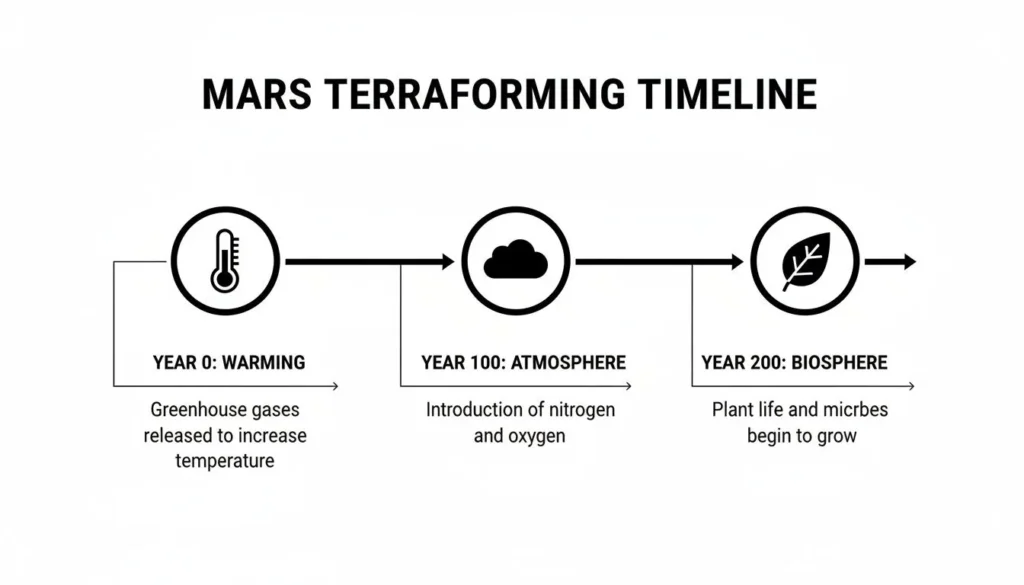
As the infographic makes plain, even in the most optimistic models, the final biological phase—creating a breathable atmosphere—stretches out for millennia. This long, slow process of building a biosphere is by far the most time-consuming part of the whole endeavor.
The key takeaway from most scientific models is this: while we might achieve initial warming in a century or two, creating a stable, self-sustaining biosphere is a project for the distant future, likely taking well over 1,000 years.
To give a clearer picture, the table below breaks down the estimated timelines for each phase. It contrasts what we might be able to do with futuristic technology versus what’s realistic with our current capabilities. This really drives home the vast uncertainty involved in planning such a colossal undertaking.
Estimated Terraforming Timelines by Phase
Here’s a breakdown of the minimum estimated time required for each major phase of Martian terraforming, based on current scientific models and technological assumptions.
| Terraforming Phase | Optimistic Timeline (With Advanced Tech) | Pessimistic Timeline (With Current Tech) |
|---|---|---|
| Initial Planetary Warming | 100-200 Years | 500+ Years |
| Atmosphere Thickening | 200-400 Years | 1,000+ Years |
| Liquid Water Introduction | 50-100 Years (following warming) | 200+ Years |
| Biosphere & Oxygenation | 1,000 – 3,000+ Years | Potentially Never |
As you can see, the gap between optimistic and pessimistic forecasts is huge. While we might make Mars warmer in a few centuries, the final goal of a breathable, living world could take thousands of years—or prove to be impossible altogether.
What’s the End Goal for Terraforming Mars?
So, how long would it take to terraform Mars? Before we even start the clock, we need to agree on what “done” looks like. Terraforming isn’t like flipping a switch; it’s the biggest restoration project imaginable. Think of cleaning up a barren, toxic wasteland on Earth, then scale that ambition up to the size of an entire planet.
The ultimate vision is to create a second Earth, but getting there involves hitting a series of massive milestones. Each step is harder and takes much longer than the last, all aimed at turning the Red Planet from a sterile desert into a world where life can take root. It’s about rebuilding a whole world, from the ground up.
The Planetary Restoration Checklist
To get Mars to a point where it’s even remotely habitable, we’d have to work through a planetary-scale to-do list. These are the absolute must-haves for making the environment survivable, never mind comfortable.
- Pump Up the Atmosphere: Mars’s atmosphere is so thin that your blood would literally boil without a pressure suit. The first job is to thicken it enough so liquid water can exist and to get some basic protection from cosmic radiation.
- Turn Up the Heat: The average temperature on Mars is a brutal -81°F (-63°C). We’d have to intentionally trigger a runaway greenhouse effect to get the planet above freezing, which is critical for unlocking its water.
- Start a Water Cycle: Once it’s warm and pressurized enough, the ice locked away at the poles and underground could finally melt. This could create rivers, lakes, and maybe even small oceans, kicking off a cycle of clouds and rain.
- Make the Air Breathable: This is the final, and by far the longest, step. It means introducing engineered organisms to slowly start converting the thick carbon dioxide atmosphere into one with enough oxygen for us to breathe.
The problem is, the raw materials are scarce. While Mars’s atmosphere is 95% carbon dioxide, it’s a featherlight 25 trillion tons. Earth’s atmosphere, by comparison, weighs in at a hefty 5 quadrillion tons. Just to reach a bare-minimum pressure, we’d need to increase the Martian atmosphere’s mass by a factor of 100. You can discover more about these Martian resource limitations and how they throw a wrench in many terraforming theories.
Earth-Like vs. Livable-Ish
The timeline for this project depends entirely on where we set the goalposts. Are we shooting for a true “Earth 2.0,” or something a bit more realistic?
A “partially habitable” or “paraterraformed” Mars is a world where you could walk outside without a full pressure suit, though you’d still need an oxygen mask. This is a far more achievable goal than creating a world with breathable air.
Creating a fully Earth-like planet with breathable oxygen is a project that would take millennia, perhaps even tens of thousands of years. On the other hand, a partially habitable Mars—where the pressure is right, it’s warm enough for plants and liquid water, and humans only need breathing gear—could potentially be achieved in a few centuries. Deciding which of these two futures we’re aiming for is the biggest single factor in figuring out how long it would take to terraform Mars.
Kicking Off the First Phase of Planetary Warming
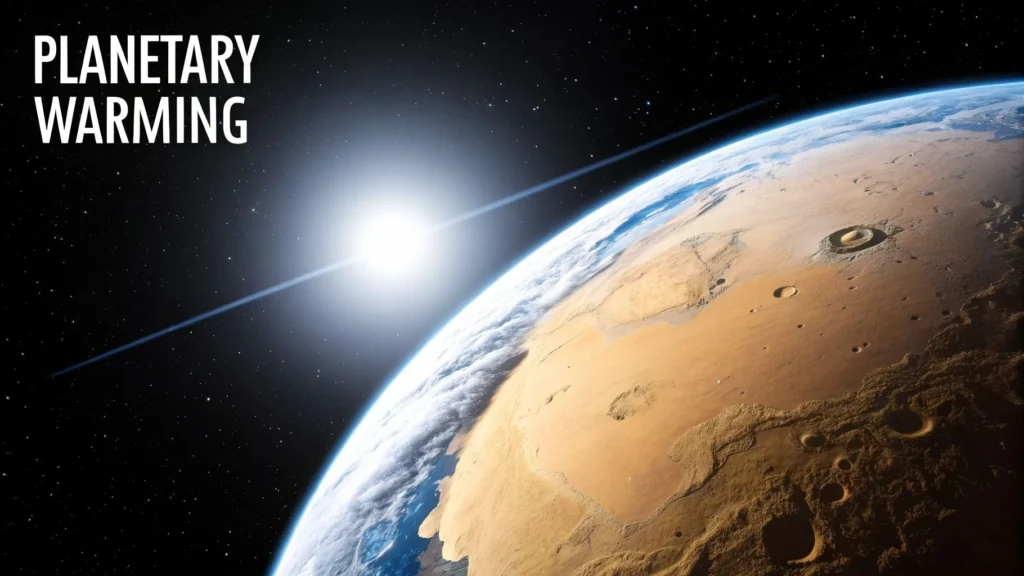
The first, and by far the most difficult, step in terraforming Mars is simply turning up the heat. Before we can have flowing rivers or a breathable atmosphere, we have to wake the planet from its deep freeze. This isn’t like nudging your home thermostat a few degrees; it’s more like trying to thaw a planet-sized block of ice with a handful of matches.
Mars currently shivers at an average temperature of -81°F (-63°C). To get that number anywhere near the melting point of water, we’d need to intentionally trigger a runaway greenhouse effect. The whole game is about trapping as much of the Sun’s energy as possible, a challenge of truly astronomical scale.
Engineers and scientists have brainstormed some incredibly ambitious ideas to get this planetary heatwave started. No single method will do the trick, though. It’s going to take a combination of strategies, each one a monumental project in its own right, just to get the ball rolling.
Focusing Sunlight with Orbital Mirrors
One of the classic ideas is to park colossal mirrors in orbit around Mars. These giant reflectors, sometimes called “solettas,” would be angled to beam concentrated sunlight down onto the planet’s surface, specifically targeting the polar ice caps.
The goal is to heat the poles enough to sublimate the vast quantities of frozen carbon dioxide (dry ice) and water ice trapped there.
- The Power of Sublimation: By blasting the poles with light, we could turn that solid CO2 directly into a gas, releasing it into the atmosphere.
- A Greenhouse Kickstart: As CO2 gas builds up, it thickens the thin Martian air. This begins to trap more of the Sun’s heat, which in turn melts more ice, creating a self-reinforcing feedback loop.
- The Scale of the Challenge: We’re talking about mirrors that would need to be hundreds of kilometers across, all constructed and positioned in deep space. That’s a manufacturing and engineering feat well beyond anything we can do today.
Even with such a massive effort, just vaporizing the north polar cap could take decades of continuous work. It would be a slow, painstaking process of coaxing the planet’s frozen atmosphere back to life.
Releasing Potent Greenhouse Gases
A more direct, brute-force method involves manufacturing and pumping out incredibly powerful greenhouse gases right on Mars. While CO2 is the long-term workhorse, we could jumpstart the warming with artificial compounds that are thousands of times more effective at trapping heat.
The top candidates for this job are perfluorocarbons (PFCs). Since they don’t exist on Mars, we’d have to build a network of automated factories across the surface, whose sole purpose would be to churn out PFCs and vent them into the sky. It’s like wrapping the entire planet in an invisible, high-tech layer of insulation.
The energy cost alone is almost beyond comprehension. One study estimated that producing enough PFCs would require the equivalent of Earth’s entire annual energy output, running nonstop for several decades, just for this one part of the terraforming plan.
This is where the sheer scale of the project really hits home. It’s not just about clever ideas; it’s about generating and deploying unimaginable amounts of power for centuries.
Darkening the Martian Surface
A third approach works from the ground up. Mars’s iconic red surface is actually quite reflective, bouncing a lot of precious sunlight back into space. We could make the planet absorb more of that energy by simply making it darker.
- Spreading Dark Dust: We could mine dark material, perhaps from Mars’s own moons, Phobos and Deimos, and spread a fine layer of it across the bright polar caps. This would lower their albedo (reflectivity) and cause them to absorb more heat.
- Hardy, Dark Plants: Further down the line, we could introduce genetically engineered life, like dark-colored lichens or microbes. These organisms would spread across the surface, absorbing sunlight and slowly warming the ground beneath them.
While these ground-level methods might seem small, they would be crucial supporting players in maximizing every watt of energy that hits the planet.
Ultimately, there’s no silver bullet for warming Mars. The first phase will demand a coordinated attack, combining orbital mirrors, atmospheric factories, and surface modifications. Even in the most optimistic scenarios, this initial warming period would likely take at least 100 to 200 years.
Confronting Mars’ Critical Resource Shortage
While it’s exciting to imagine grand schemes for warming Mars, they all eventually run headfirst into a single, harsh reality. The simple truth is that Mars seems to be fundamentally short on the key ingredients we need. It’s like trying to bake a giant cake, but when you check your pantry, you find you only have a teaspoon of flour. The recipe might be perfect, but you just don’t have the materials.
This isn’t just guesswork. Recent NASA findings have poured cold water on some of the more optimistic terraforming ideas, suggesting the whole project is flat-out impossible with any technology we can realistically imagine today. Even if we could snap our fingers and instantly release every known bit of carbon dioxide and water ice, it wouldn’t come close to creating a world we could live on.
The Sobering Atmospheric Math
The first major step in any terraforming plan is to thicken the atmosphere. A denser atmosphere is crucial for trapping heat, raising the surface pressure so water can stay liquid, and providing a shield against deadly space radiation. The most obvious place to find the gas for this is the carbon dioxide frozen in the Martian polar ice caps.
But even if we managed to vaporize all of it, the results would be pretty underwhelming. Studies show that releasing all known accessible CO2 would only bump up the atmospheric pressure to about 7% of Earth’s at sea level. That’s like the air pressure you’d find at an altitude twice as high as Mount Everest.
This level of pressure is nowhere near enough to get the job done. Water would still boil off into space, and the air would be far too thin to offer any real protection from the constant shower of solar and cosmic rays.
In fact, after looking at over two decades of data from missions like the Mars Reconnaissance Orbiter and Mars Odyssey, researchers have a pretty stark picture. They concluded that most of Mars’s original CO2 isn’t conveniently waiting in the ice caps. Instead, it’s locked away in minerals deep inside the planet’s crust, way beyond our ability to get at it. You can learn more about these sobering findings from the NASA research, which really highlights the scale of the challenge.
The Atmosphere That Bleeds into Space
On top of the resource problem, there’s an even bigger, more relentless issue: Mars can’t hold onto its atmosphere. Unlike Earth, which is wrapped in a protective global magnetic field, Mars lost its magnetic shield billions of years ago. This left it completely exposed to the solar wind, a nonstop stream of charged particles blasting out from the Sun.
Imagine the solar wind as a sandblaster that’s been running for eons, slowly but surely stripping away the Martian atmosphere, particle by particle. NASA’s MAVEN (Mars Atmosphere and Volatile EvolutioN) orbiter was sent there specifically to study this process, and its data confirmed our worst fears.
- Continuous Atmospheric Stripping: MAVEN has directly measured gases from the Martian atmosphere being carried off into space right now. This isn’t a historical event; it’s an ongoing process that turned the once wetter Mars into the cold, dry desert we see today.
- A Leaky Bucket Problem: Any new atmosphere we pump into the sky would immediately start leaking out. Without a planetary magnetic field to protect it, we would be in a constant, losing battle, having to replenish the air faster than the Sun could blow it away.
This long-term sustainability problem is probably the single biggest roadblock to answering the question of how long would it take to terraform Mars. It changes the problem from “How do we build an atmosphere?” to “How do we build an atmosphere and stop it from disappearing?” For that second part, we currently have no practical answers. It’s a lot like how learning how to compost at home fails if you don’t have the right mix of materials; terraforming without enough resources and a way to keep them is a dead end.
Exploring Futuristic Terraforming Blueprints
The sobering reality is that Mars simply doesn’t have enough easily accessible resources to make terraforming straightforward. This has pushed scientists to think beyond conventional methods and into the realm of science fiction. Instead of working with what little Mars offers, these ambitious blueprints propose bringing the solution with us, using brute-force engineering to reshape the planet.
These aren’t plans for the next few decades. Think of them as speculative roadmaps for a future civilization with energy and manufacturing capabilities far beyond what we have today. They tackle the planet’s core limitations head-on, proposing ways to sidestep them completely. While the costs and technical hurdles are astronomical, they represent our biggest dreams for making Mars a second home.
One of the most compelling ideas throws out the slow, centuries-long warming process in favor of a direct and aggressive approach. This isn’t about gently coaxing a greenhouse effect into life; it’s about planetary shock and awe.
A Three-Step Plan for Rapid Warming
Recent scientific papers have sketched out a tantalizingly fast path to a warmer, wetter Mars. Rather than waiting centuries for CO2 to slowly accumulate, this blueprint suggests we could kickstart the entire process in just a few decades by targeting the planet’s most abundant resource: water ice.
- Melt the Ice Caps: The first step involves using a combination of enormous orbital mirrors and dark surface aerosols to blast the polar regions with heat. The goal here is to melt the vast reserves of frozen water, not just the thin layer of CO2 ice on top.
- Split Water for Oxygen: With liquid water available, massive automated facilities would use electrolysis to split H₂O molecules into hydrogen and breathable oxygen. This engineered approach would pump oxygen into the atmosphere far more quickly than any plant-based method ever could.
- Create Habitable Pockets: While the global atmosphere is still under construction, we could create localized, livable zones using advanced materials like silica aerogel. A thin sheet of this incredibly light insulator could trap enough heat to keep the ground beneath it warm, allowing for liquid water and plant growth in “islands” of habitability.
This accelerated plan comes with an almost unbelievable energy bill. A 2024 paper calculated that this three-step process could warm Mars by 30°C in a matter of decades. However, sustaining it would require multi-terawatt power systems, likely from continent-sized solar arrays. Mars holds enough frozen water to create an ocean the size of North America that’s 1,000 feet deep, and engineered electrolysis could dramatically shorten the oxygenation timeline. Still, the authors note that full human habitability without suits would be at least a century away. You can read the full research about this ambitious terraforming blueprint to grasp its massive scale.
The Ultimate Sci-Fi Solution A Magnetic Shield
Even if we manage to build a thick, warm atmosphere, Mars has a fatal flaw: it lacks a global magnetic field. Without one, the relentless solar wind would simply strip away any air we create, undoing all our hard work. The most audacious solution? Give Mars an artificial one.
The concept involves building a colossal magnetic dipole satellite and placing it at the L1 Lagrange point—a gravitationally stable spot between Mars and the Sun. From this vantage point, it would generate a powerful magnetic bubble, deflecting the solar wind and shielding the entire planet.
An artificial magnetic field is the ultimate “get out of jail free” card for terraforming Mars. It solves the atmospheric erosion problem permanently, allowing any new atmosphere to thicken and stabilize over time.
This single piece of technology would be a true game-changer. It would shift the long-term outlook on how long it would take to terraform Mars from “maybe never” to “eventually possible.” The challenge, of course, is building a satellite powerful enough for the job. We’re talking about a structure requiring a power source equivalent to a nuclear reactor, all assembled and maintained in deep space. Such forward-thinking problem-solving is also found in fields like bioinformatics, which you can learn more about in our article.
Building a Martian Biosphere from Scratch
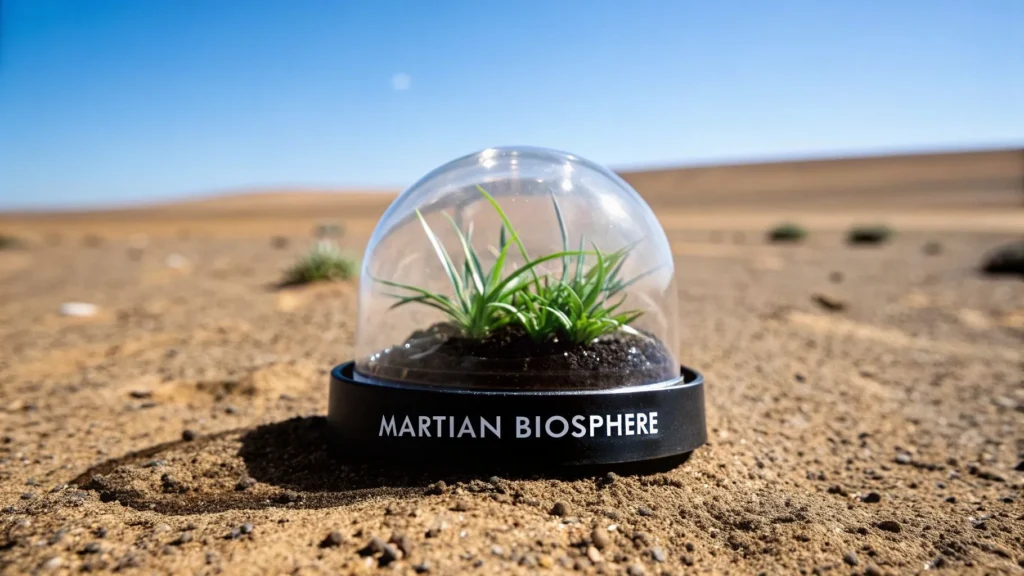
Even if we could successfully warm Mars and create a water cycle, the most difficult and lengthy stage would be just beginning. This is the biological phase—the monumental challenge of building a living, breathing ecosystem from the ground up on a sterile planet.
This stage alone dramatically changes the answer to how long would it take to terraform Mars. It’s less about massive engineering projects and more like planetary-scale gardening. The first life we’d send to this new Mars wouldn’t be complex animals or sprawling forests, but Earth’s most tenacious survivors.
The Pioneer Species
Think about the first life to take hold on a new volcanic island here on Earth. They are rugged, simple, and unbelievably resilient. The first life on a terraformed Mars would have to be even tougher.
The best candidates for this pioneering mission are extremophiles—organisms that flourish in conditions that would instantly kill almost anything else. We would begin by seeding the planet with genetically engineered lichens, algae, and bacteria.
- Lichens and Algae: These organisms are masters of survival. They can cling to bare rock, endure punishing UV radiation, and photosynthesize in the frigid, thin air.
- Cyanobacteria: Often called blue-green algae, these microbes would serve as the planet’s primary oxygen factories. They would be engineered to convert the dense CO2 in Mars’s atmosphere into the breathable oxygen we need, kickstarting the most vital biological process.
These pioneers would slowly colonize the Martian landscape, creating the first patches of organic soil and starting the multi-millennial job of oxygenating the atmosphere.
This biological phase is the great filter of terraforming. While warming might take centuries, models show that generating a breathable atmosphere naturally using engineered life would likely take several thousand years at a minimum.
The first steps would be slow and methodical. We’d likely seed these organisms in the most promising locations, like warmer equatorial canyons or areas with freshly melted water. As they gain a foothold, they would gradually alter the chemistry of the soil and air, paving the way for more complex life.
You can also explore our guide on how CRISPR works, which covers the exact kind of gene-editing technology that would be critical for designing these Martian pioneers.
A Profound Ethical Dilemma
Beyond the incredible technical challenges and vast timescales, building a Martian biosphere forces us to confront a huge ethical problem. Is it right to introduce Earth life to another world, potentially changing its natural state forever?
This isn’t just a philosophical thought experiment; it has very real consequences. If Mars harbors any native microbial life, even if it’s dormant deep underground, introducing organisms from Earth could trigger a planetary-scale extinction event. We might wipe out a completely separate evolutionary history before we even know it exists.
This possibility raises serious red flags. As planetary scientist Nina Lanza from Los Alamos National Laboratory has warned, making such irreversible changes would permanently erase Mars’s pristine geological and potential biological record. You can read more expert insights about the ethics of Martian projects and the lasting impact they could have. This ethical challenge is just as formidable as any of the engineering hurdles, adding another layer of complexity to the already daunting task of making Mars a second home for humanity.
Frequently Asked Questions About Terraforming Mars
Even thinking about a project this big brings up some very practical questions. Let’s run through some of the most common ones and get some clear answers based on what scientists and economists are projecting right now.
How Much Would Terraforming Mars Cost
Trying to nail down an exact price tag is basically impossible, but the expert consensus lands somewhere in the tens or even hundreds of trillions of dollars. This isn’t a one-time payment, of course. It’s a cost spread over centuries.
To get a sense of that scale, this figure is worlds beyond any project humanity has ever attempted. It would require a total pivot of the global economy toward a single goal that would span many generations, making the financial challenge just as massive as the engineering one.
Can We Just Live in Domes Instead
Yes, and this is a much more realistic goal for the near term. The idea of living in self-contained, pressurized habitats is what we call colonization, and it’s something we could probably pull off within the next century. It neatly sidesteps the monumental task of changing an entire planet.
Colonization is about creating small, isolated bubbles of an Earth-like environment on Mars. Terraforming is the much, much bigger dream of changing the whole planet so people could eventually walk around without a pressure suit.
For the foreseeable future, any human presence on Mars will look like a collection of advanced, self-sufficient bases, not a wide-open world like our own.
What Are the Main Ethical Concerns
Beyond the mind-boggling technical and financial hurdles, terraforming Mars opens up some deep ethical questions we have to face. They really boil down to two big problems that challenge our right to reshape another world.
The core issues we need to wrestle with include:
- Planetary Protection: There’s a very real risk we could contaminate Mars with microbes from Earth. If any kind of native Martian life exists, even if it’s just dormant bacteria, our actions could trigger the first-ever extraterrestrial extinction event before we even find it.
- Planetary Preservation: This is a more philosophical debate. Does humanity even have the right to permanently and irreversibly change the fundamental nature of another planet? Wiping out billions of years of Martian history to create a “second Earth” is a decision whose consequences would be eternal.
These ethical questions are just as tough as the scientific ones, forcing us to ask not only if we can terraform Mars, but if we should.
At maxijournal.com, we explore the biggest questions in science and technology. From the future of space exploration to the latest health breakthroughs, we deliver fresh insights daily. Find your next great read at https://maxijournal.com.
Discover more from Maxi Journal
Subscribe to get the latest posts sent to your email.