If you’ve noticed you’re running on fumes lately, you’re not alone. That feeling of being perpetually drained has become a modern epidemic, and the data paints a pretty clear picture. Our fast-paced lifestyles are simply out of sync with our fundamental, biological need for good rest.
Why We’re All So Tired and How to Get Better Sleep Tonight
The numbers don’t lie. Recent global sleep trends show a troubling decline in our collective rest. In just one year (2026), worldwide sleep quality dipped from an average of 74.26% down to 73.92%.
A 0.46% drop might not sound like much, but when you consider it’s based on data from over 105 million nights of tracked sleep, it signals a significant problem. As detailed in the ‘Sleep Around the World’ report by Sleep Cycle, we’re getting worse at sleeping, not better.
Taking Your First Steps Tonight
The good news? You don’t need to radically overhaul your entire life to feel a difference. Small, deliberate tweaks can have a massive impact, sometimes in a single night. Instead of getting bogged down by a long list of sleep rules, let’s focus on a few high-impact moves you can make right away.
The main goal is to send strong, clear signals to your brain that the day is over and it’s time to power down. This all starts by creating a solid boundary between your hectic day and your sleep. A consistent bedtime isn’t just a rule for children—it’s one of the most powerful anchors for your internal body clock, or circadian rhythm.
Key Takeaway: Your body doesn’t just like routine; it craves it. By setting a non-negotiable bedtime and making a few simple adjustments to your bedroom, you can retrain your brain to associate the evening with deep relaxation, not lingering stress.
Likewise, your environment is a huge piece of the puzzle. When your bedroom doubles as an office, a gym, or a late-night movie theater, it sends your brain a lot of mixed signals. Making your bedroom a sanctuary dedicated purely to rest is a game-changer.
Your Quick-Start Guide to Better Sleep
To help you get started, we’ve boiled it down to the most effective, science-backed actions you can take tonight. Think of this as your cheat sheet for immediate results. Making these simple shifts a part of your daily wind-down is a fantastic form of self-care and vital for your well-being. For more ideas, take a look at our guide on mental health and self-care tips.
Here’s a simple breakdown of what to do, why it works, and how to start.
Your First Steps to Better Sleep Tonight
| Action | Why It Works (The Science) | Simple First Step |
|---|---|---|
| Set a Consistent Bedtime | This reinforces your body’s natural sleep-wake cycle (circadian rhythm), making it much easier to fall asleep and wake up refreshed. | Pick a realistic bedtime and set a “wind-down” alarm for 30 minutes before you plan to get in bed. |
| Make Your Room Dark | The sleep hormone, melatonin, is only produced in true darkness. Even tiny amounts of light can disrupt its release and keep you awake. | Unplug or cover all electronic lights. Try blackout curtains or a comfortable sleep mask. |
| Cool Down Your Room | To initiate sleep, your body’s core temperature naturally needs to drop. A cooler room (around 65°F or 18°C) helps this process along. | Turn your thermostat down a couple of degrees about an hour before bed. |
| Ditch Screens Before Bed | The blue light from phones, tablets, and TVs tricks your brain into thinking it’s still daytime, which suppresses melatonin production. | Put your phone on its charger—ideally in another room—at least 60 minutes before your bedtime. |
Start with one or two of these tonight. You might be surprised at how quickly you notice a difference in how you feel tomorrow morning.
Turning Your Bedroom into a Sleep Sanctuary
Your bedroom environment can make or break a good night’s sleep. We often think we have the basics covered, but truly optimizing your room goes way beyond just flicking off the lights. The idea is to turn your bedroom from a place where you just happen to sleep into a space that actively signals to your brain that it’s time to power down.
Think of it as a multi-sensory mission. We’re going to tackle the three biggest players: temperature, light, and sound. Each one has a scientifically-backed role in helping your body do what it’s naturally supposed to do at night.
Find Your Ideal Sleep Temperature
Ever find yourself tossing and turning in a stuffy room? That’s not just in your head. Your body’s core temperature actually needs to drop a bit to initiate sleep, and a cool room is the catalyst.
The sweet spot for sleep is surprisingly chilly—somewhere between 60 and 67 degrees Fahrenheit (15-19°C). This range helps your body make that crucial temperature dip, which allows you to get into the deeper, more restorative stages of sleep. A room that’s too hot actively fights against this process, leading to more wake-ups and less quality rest.
Try setting your thermostat a degree or two cooler about an hour before you plan to go to sleep. If you don’t have A/C, a simple fan can work wonders for air circulation and that cool feeling. It’s all about finding the temperature where you’re cozy under your blankets but not overheating.
A cooler room isn’t just about comfort; it’s a biological trigger for sleep. By lowering the temperature, you’re actively supporting your body’s natural sleep-wake cycle, making it easier to fall and stay asleep.
You’ll need to experiment a little. Some people swear by the low 60s, while others feel better closer to 67°F. The goal is to create an environment that helps your body regulate its temperature all night long. This is a cornerstone of how to improve sleep quality.
Conduct a Thorough Light Audit
Light is the single most powerful signal that controls your body clock, or circadian rhythm. Even a tiny bit of it can throw a wrench in the production of melatonin, the hormone that tells your body it’s nighttime. To achieve true darkness, you have to go on a light-hunting mission.
Tonight, turn off all the lights and stand in your room for a minute as your eyes adjust. You’ll be surprised by the sneaky light sources you’ve been ignoring.
- Electronics: Those tiny standby lights on your TV, computer monitor, or phone chargers are brighter than you think.
- Power Strips: Many have a constant, glaring red or green light.
- Digital Clocks: Even a dim display can be enough to disrupt sleep. Blue or white light is the worst offender.
- Outside Light: Look for light bleeding in from around your curtains from streetlights or passing cars.
Once you’ve found the culprits, the fix is easy. A small piece of black electrical tape works perfectly for covering indicator lights. If you need a clock, turn it to face the wall or, even better, switch to one with a dimmable red-light display. For windows, investing in a good set of blackout curtains is probably the single best purchase you can make for your sleep.
Master Your Bedroom’s Soundscape
Unwanted noise is a huge reason for what we call “sleep fragmentation.” It yanks you out of deep sleep, often without you even realizing it. The mission here is to create a consistent, predictable sound environment. For some, that means pure silence. For others, a steady, gentle noise works much better.
Sound Solutions for Your Sanctuary
| Sound Type | How It Helps | Best For |
|---|---|---|
| Silence | The total absence of noise. Can be deeply relaxing if you aren’t easily woken by small, sudden sounds. | People in quiet areas or those who aren’t particularly light sleepers. |
| White Noise | A “wall of sound” containing all frequencies. It effectively masks disruptive noises like traffic or a snoring partner. | City dwellers, light sleepers, or anyone who finds total silence unsettling. |
| Pink Noise | Deeper and more natural-sounding than white noise, like steady rain or wind. Lower frequencies are more prominent. | People who find the “hiss” of white noise too harsh. Many find it more relaxing. |
You don’t need anything fancy. Simple earplugs or a dedicated sound machine can do the trick. There are also dozens of smartphone apps that offer a huge library of soundscapes. The key is to drown out the sudden, jarring noises that can startle you and give your brain a predictable auditory backdrop to relax into.
That hour before you crawl into bed? It can make or break your entire night. A solid wind-down ritual isn’t about cramming more chores into your day. It’s about drawing a clear line in the sand between your hectic, switched-on daytime self and the restorative, restful night you need. This routine becomes a powerful cue, training your brain and body to recognize it’s time to power down.
The real secret sauce here is consistency. Your body loves a schedule. Just like it learns to expect lunch around noon, it can learn to feel sleepy at a specific time each night. When you repeat the same calming activities, you’re essentially creating a Pavlovian response for sleep, making the whole process of drifting off feel much more natural and automatic.
Building Your Personalized Routine
There’s no magic, one-size-fits-all formula for a wind-down routine. The goal is to pick a few low-stimulation activities that you actually find relaxing. Think of it as a personal menu of calming options you can mix and match until you find the perfect combination for you.
Here are a few evidence-backed ideas to get you started:
- Read a Physical Book: Pick up something light and engaging, but maybe not a thriller that will have you on the edge of your seat. Reading a real, paper book under a dim lamp is a great way to help your eyes and mind disconnect.
- Journal for a Mental Clear-Out: Spend just 5-10 minutes jotting down whatever is rattling around in your head—lingering worries, to-do lists, random thoughts. This “brain dump” gets the mental clutter out of your head and onto paper, so it doesn’t follow you to bed.
- Light Stretching or Yoga: A few minutes of gentle, slow movements can do wonders for releasing physical tension. Focus on deep breaths and mindful stretches to tell your nervous system it’s safe to relax.
- Try Mindfulness or Meditation: Even a short, guided meditation can be incredibly powerful for quieting a racing mind. If you’re new to the practice, we have a simple guide on how to meditate for stress relief that can help you get started with the basics.
The Non-Negotiable Digital Sunset
This might be the single most important part of any modern wind-down routine: the “digital sunset.” It’s simple. You have to power down all your screens—phones, tablets, laptops, and TVs—at least 60 to 90 minutes before you plan to sleep.
The blue light blasting from these devices is a notorious sleep disruptor. It actively suppresses the production of melatonin, which is your body’s main sleep hormone. Your brain sees that blue light and thinks, “Hey, it must be daytime!” This throws your internal clock completely out of whack, making it significantly harder to feel tired.
A screen-free buffer before bed isn’t just a nice idea; it’s a biological necessity for good sleep. Think of it as manually flipping the “night mode” switch for your brain.
This is an incredibly powerful habit, especially when you consider how many of us are struggling. A staggering 60% of adults in the US aren’t getting the recommended 7+ hours of sleep. But the good news is that people who commit to good sleep hygiene and a consistent schedule often see dramatic improvements, with some studies showing an average gain of 45 minutes of sleep per night.
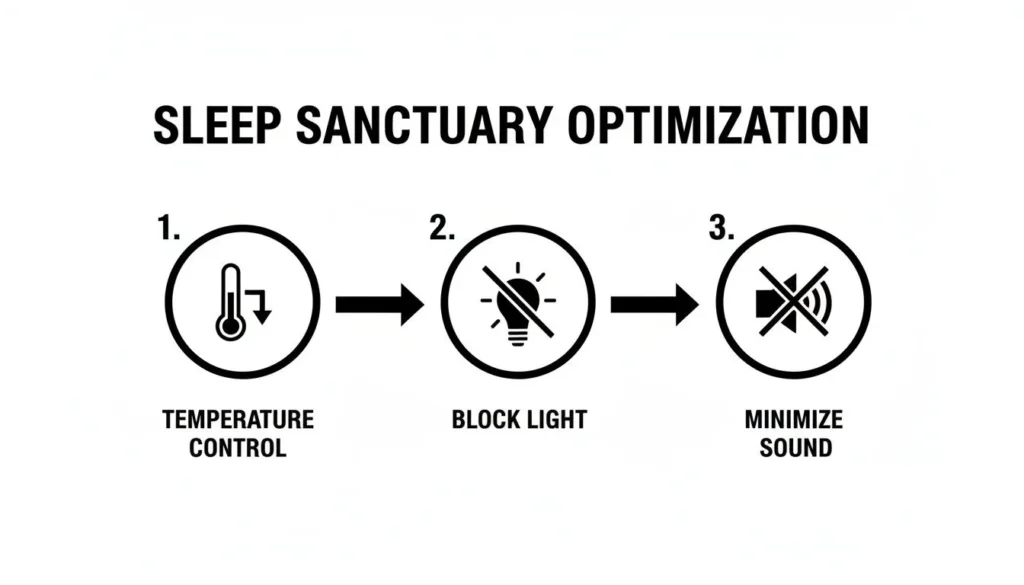
As you can see, tackling your environment by controlling temperature, light, and sound is a foundational part of the puzzle. When you combine those environmental tweaks with a consistent pre-sleep ritual, you create a powerful one-two punch for a much better night’s rest.
How Your Daily Habits Dictate Your Nightly Rest

Great sleep doesn’t just happen when you turn out the lights. It’s built, piece by piece, by the choices you make all day long. From what you eat for lunch to when you hit the gym, your daily routine is the true foundation for a restorative night.
If you’re trying to fix your sleep, you can’t just focus on the bedroom. You have to start with the foundational pillars of your day: diet and exercise.
Fuel Your Sleep With the Right Foods
What you eat—and just as importantly, when you eat—directly influences your body’s ability to power down. Some foods are packed with nutrients that help calm the nervous system and promote sleep hormones, while others act like stimulants that can completely derail your night.
For a sleep-friendly dinner or evening snack, try incorporating a few of these:
- Magnesium-Rich Foods: This mineral is a relaxation powerhouse. You’ll find it in leafy greens like spinach, nuts (especially almonds), seeds, and legumes.
- Tryptophan Sources: This amino acid is a precursor to both serotonin (the “feel-good” neurotransmitter) and melatonin (the sleep hormone). Turkey, chicken, eggs, and dairy are all great sources.
What you avoid is just as critical. Heavy, fatty, or super spicy meals close to bedtime can trigger indigestion and heartburn. This forces your body to focus on digestion when it should be winding down for rest.
Timing Your Meals and Drinks
The timing of your food and drink can be a complete game-changer. Simply paying attention to what you consume in the hours before bed is one of the most powerful habits you can build for better sleep.
Here’s a quick guide to some common items and how to manage them for a better night’s rest.
Foods and Drinks For Better Sleep
| Item | Impact on Sleep | Best Practice |
|---|---|---|
| Caffeine | A potent stimulant that blocks sleep-promoting chemicals. Its effects can linger for many hours. | Cut it off by 2:00 PM, or at least 8 hours before bed. |
| Heavy Meals | Kicks your digestive system into high gear, raising body temperature and causing discomfort. | Finish eating at least 3 hours before you plan to sleep. |
| Sugary Snacks | Causes blood sugar to spike and then crash, which can easily wake you up in the middle of the night. | Avoid within 2-3 hours of bed. A small, protein-rich snack is a better choice if you’re hungry. |
Following these simple rules helps get your body’s internal clock on the same page as your bedtime.
The Powerful Link Between Exercise and Sleep
Regular physical activity is one of the best natural sleep aids you can find. It’s a fantastic way to regulate your mood, burn off stress, and strengthen your body’s circadian rhythm. A solid workout builds up your “sleep drive,” making you feel naturally tired and ready for bed when the time comes.
But timing is everything. An intense workout spikes your heart rate, body temperature, and adrenaline—all things that work directly against sleep. It’s the reason a vigorous evening run can leave you feeling buzzed and wide awake for hours.
Aim to finish any moderate-to-intense exercise at least three to four hours before your bedtime. This gives your body plenty of time to cool down and for stimulating hormones to return to normal.
Gentle movements like light stretching or restorative yoga, on the other hand, are perfect for the evening and can be a great addition to your wind-down routine. If you’re just starting out, we have some excellent fitness tips for beginners that can help you get moving.
Smart Rules for Napping and Alcohol
Two common habits, napping and drinking, can be a double-edged sword for sleep. Used correctly, they can help. Used poorly, they can completely sabotage your night.
A short nap can be an amazing recovery tool, but if it’s too long or too late in the day, it can steal “sleep pressure” from your night, making it much harder to fall asleep. If you need a nap, the golden rules are to keep it short—around 20-30 minutes—and finish it before 3:00 PM.
Alcohol is another sneaky sleep disruptor. Sure, a glass of wine might make you feel drowsy at first, but it fragments your sleep later in the night. It’s particularly brutal on your REM sleep and often causes you to wake up frequently as your body processes it.
You don’t just have to take our word for it. Data from over 60 million nights tracked by the Sleep Cycle app in 2026 revealed that consuming alcohol can reduce sleep quality by a staggering 10-15%. The takeaway is pretty clear: if you want better sleep, it’s best to limit alcohol, especially in the few hours before bed.
Of course. Here is the rewritten section, following all your specific requirements for style, tone, and formatting.
Overcoming Common Sleep Hurdles and Frustrations
You’ve done everything by the book. The room is cool, the screens are off, and you have a consistent bedtime. So why are you still staring at the ceiling at 2 AM with your mind running a marathon? These moments are incredibly frustrating, and for many, they’re the biggest barrier to getting real rest.
If you’re wrestling with these issues, you are definitely not alone. A recent global sleep survey from ResMed found that people are missing nearly three full nights of good sleep every week.
The data even revealed a gender gap, with women getting just 3.83 quality nights compared to men’s 4.13. Perhaps most surprisingly, about 22% of people around the world just give up and “live with” their poor sleep instead of trying to fix it.
Let’s move past the basics and dig into the troubleshooting guide for those nights when sleep just won’t cooperate.
When You Can’t Fall Asleep
Lying in bed for hours on end is a special kind of torture. This usually happens when your brain hasn’t learned to see your bed as a place only for sleep. Over time, it can become a space for worrying, planning tomorrow, or endlessly scrolling.
To fix this, we can borrow a powerful technique from sleep science called stimulus control. The goal is to retrain your brain to create an automatic, iron-clad connection between your bed and sleep itself. The main rule is simple but absolutely non-negotiable: your bed is only for sleep and intimacy. That’s it.
If you find yourself still awake after what feels like 20-25 minutes, you have to get out of bed.
Go to another room and keep the lights dim. Do something genuinely calm and boring—read a textbook, listen to quiet ambient music, or even fold some laundry. The key is to avoid looking at your phone or turning on any bright lights. Only head back to bed when you feel that wave of sleepiness hit you. You might have to do this a few times a night at first, and that’s perfectly fine.
By getting up when you can’t sleep, you’re teaching your brain that the bed isn’t a battleground. It’s a place for rest, and if rest isn’t happening, you leave. This simple act reduces sleep-related anxiety and rebuilds that crucial bed-sleep association over time.
Taming a Racing Mind
So often, the biggest thing keeping you awake isn’t physical discomfort—it’s mental. A mind buzzing with to-do lists, anxieties, and replayed conversations from the day can keep your nervous system stuck in “fight or flight” mode, even when your body is completely exhausted.
One of the most effective ways I’ve seen to deal with this is to schedule “worry time” much earlier in the evening. Set aside 15-20 minutes at least a couple of hours before you plan to go to bed. During this specific window, grab a notebook and write down everything that’s on your mind.
- Brain Dump Your Worries: Get every concern out, no matter how big or small.
- Create a To-Do List: List out all the tasks for tomorrow so your brain doesn’t feel the need to remind you at 3 AM.
- Identify a Next Step: For any worry you can actually do something about, just jot down one single, small action you can take tomorrow.
This technique works by externalizing your thoughts, moving them from your head to paper. When those same thoughts try to pop up later in bed, you can gently tell yourself, “I’ve already handled that. It’s on the list for tomorrow.”
Waking Up in the Middle of the Night
Waking up once or twice during the night is actually a normal part of the human sleep cycle. The real problem is when you can’t get back to sleep. This is where many of the same principles we’ve discussed come into play, but the first rule is the most important: do not check the time.
Clock-watching is the enemy of sleep. It only fuels anxiety about how much rest you’re losing, triggering a stress response that makes it even harder to drift off.
If you find yourself awake, try taking a few deep, slow breaths. If you’re still wide awake after 20 minutes, it’s time to use the stimulus control rule: get up, go to another dimly lit room, and do something relaxing until you feel sleepy again. This prevents your brain from learning that 3 AM is a perfectly good time to be awake and worrying in bed.
Recognizing When to Talk to a Doctor About Your Sleep
While lifestyle tweaks can make a world of difference for your sleep, some problems just won’t budge. That’s often a sign that there’s a deeper, underlying medical condition at play. If you’ve given good sleep hygiene a solid shot for several weeks and are still struggling, it’s probably time to talk to a professional.
A major red flag is feeling constantly exhausted even when you think you’re getting enough hours in bed. This is a surprisingly common problem. In fact, the 2026 Sleep in America Poll found that about one-third of people around the world report symptoms of insomnia. These issues aren’t just about feeling tired; they lead to lost productivity and are linked to an alarming 100,000 drowsy-driving crashes each year in the U.S. alone. You can dig into the specifics in the full National Sleep Foundation report.
Key Symptoms to Watch For
Some symptoms are particularly strong indicators that you need a doctor’s evaluation. It’s really important not to brush these off. You should pay close attention if you or your sleep partner notice any of these:
- Loud, persistent snoring, especially if it’s accompanied by gasping or choking sounds during the night.
- An overwhelming and irresistible urge to move your legs, which gets worse in the evenings.
- Frequently waking up with headaches or a very dry mouth in the morning.
Don’t hesitate to seek help. These symptoms can point to common conditions like sleep apnea or restless legs syndrome. The good news is they are highly treatable, but they absolutely require a proper medical diagnosis to manage effectively.
Frequently Asked Questions About Improving Sleep
Even with the best plan in hand, you’re bound to have a few questions as you start dialing in your sleep. Let’s tackle some of the most common ones that pop up.
How Long Does It Take to See Improvements in Sleep Quality?
While you might feel the immediate perk of a cooler, darker room tonight, real, lasting change takes a bit of patience. Most people start feeling a real difference in their energy and sleep depth within 1-2 weeks of nailing a consistent bedtime.
For the bigger shifts, like overhauling your diet or exercise routine, you’re probably looking at around 2-4 weeks to see a steady, positive effect. The secret sauce is consistency. If you can stick with your new habits for three solid weeks, you’re well on your way to making them automatic.
Are Sleep Tracking Apps Actually Accurate and Helpful?
Sleep trackers can be fantastic for building awareness. They’re great for seeing if you’re actually going to bed on time, getting enough hours in, and connecting the dots between, say, a late-afternoon espresso and a restless night.
That said, don’t mistake them for a clinical sleep lab. Their ability to accurately pinpoint specific sleep stages like deep or REM sleep is still pretty limited.
Think of a sleep tracker as a motivational coach, not a doctor. Use it to reinforce good habits, but pay more attention to how you feel during the day than obsessing over the app’s nightly score. Chasing perfect numbers can lead to a new kind of sleep anxiety called “orthosomnia.”
What if I Wake Up and Cannot Get Back to Sleep?
This is probably the most maddening sleep problem out there. The best strategy I’ve found is the “20-minute rule.” If you’ve been tossing and turning for what feels like 20 minutes, just get out of bed.
Go to another room and do something mind-numbingly boring in dim light—read a dull book, listen to some calm ambient music, you get the idea. The key is to avoid all screens and absolutely do not check the time. This simple act helps break the frustrating cycle of associating your bed with being awake. Only head back to bed when you feel genuinely sleepy again.
Can I Catch Up on Sleep on the Weekends?
Sleeping in on a Saturday might feel great, but it’s more of a band-aid than a cure for sleep debt. In fact, it can throw your whole system off, creating what researchers call “social jetlag” and making Monday mornings feel even more brutal.
A smarter move? If you need to catch up, take a short 20-30 minute power nap in the early afternoon on Saturday or Sunday. But for a true long-term fix, the goal is to lock in a consistent wake-up time every single day—weekends included. This keeps your internal clock running smoothly.
At maxijournal.com, we’re dedicated to bringing you clear, science-backed insights on health, technology, and more. Explore our daily articles to stay informed and inspired. Visit us at https://maxijournal.com to read more.
Discover more from Maxi Journal
Subscribe to get the latest posts sent to your email.