An email list isn’t just another marketing channel—it’s a direct, reliable connection to your audience, completely independent of fickle social media algorithms. The whole game is about picking the right tools, offering a genuinely valuable reason for people to sign up (your lead magnet), and then consistently showing up in their inbox with content that matters.
When you do it right, this direct line becomes your single most powerful marketing asset.
Why an Email List Is Your Best Marketing Asset
In a digital world that’s all about shifting algorithms and overcrowded social feeds, your email list is one of the few channels you actually own. Think about it: it’s a direct line to your audience, letting you build real relationships and grow your brand on your own terms.
A social media follower is one thing, but an email subscriber has literally invited you into their inbox. That’s a much more personal and focused space, creating an incredible opportunity for connection and, ultimately, conversion. You’re not just broadcasting; you’re cultivating a community of people who want to hear from you.
Before we dive into the “how,” let’s quickly break down the core pieces you’ll need to get this off the ground.
Core Components for Building Your Email List
Here’s a quick overview of the essential elements we’ll cover, giving you a high-level look at what it takes to build a successful list from the ground up.
| Component | What It Is | Why It Matters |
|---|---|---|
| Email Service Provider (ESP) | The software platform you use to manage your list and send emails. | Provides the core infrastructure for automation, segmentation, and analytics. |
| Lead Magnet | A valuable freebie (e.g., checklist, ebook, webinar) offered in exchange for an email. | The primary incentive that convinces visitors to subscribe. |
| Opt-in Forms | The forms on your website where people enter their email to sign up. | The gateway to your list; their design directly impacts conversion rates. |
| Onboarding Sequence | An automated series of emails new subscribers receive immediately. | Welcomes new members, sets expectations, and builds initial trust. |
| Content Strategy | The plan for what you’ll send to your subscribers and when. | Keeps your audience engaged and prevents them from unsubscribing. |
| Growth Tactics | Specific strategies to attract more subscribers (e.g., popups, partnerships). | Actively expands your reach and accelerates list growth. |
Each of these components plays a crucial role. Getting them right is the difference between a list that languishes and one that becomes a driving force for your business.
The Unmatched Return on Investment
Email marketing isn’t just a feel-good strategy; it delivers a seriously impressive return. The numbers don’t lie. Back in 2019, marketers were already seeing an average return of £42 for every £1 spent. It’s a testament to just how efficient and powerful this channel is.
With the number of global email users expected to hit 4.73 billion by 2026, it’s obvious this isn’t a dying trend—it’s a thriving one. A staggering 89% of marketers lean on email as their main channel for lead generation, blowing social media out of the water. You can explore more compelling email statistics to see the full picture.
The process is pretty straightforward: a smart investment upfront and consistent engagement leads directly to returns.
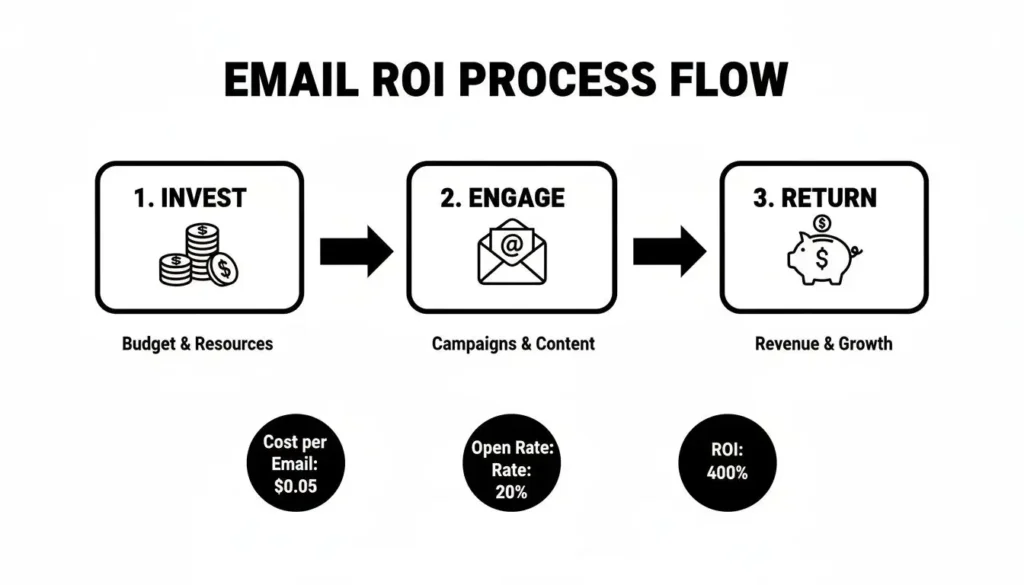
As you can see, a relatively small investment in your email strategy kicks off a cycle of direct engagement that generates a significant financial return over time.
Building Authentic Connections
Beyond the raw numbers, an email list lets you get personal in a way that platforms like Instagram or TikTok just can’t. You have the power to segment your audience based on their specific interests, their past behavior, and their history with your brand.
An email list is more than a marketing tool; it’s a digital handshake. It’s your chance to move beyond broadcasting messages and start having real conversations that build lasting trust and loyalty with your audience.
This targeted approach means you can send content that actually resonates, making your subscribers feel seen and understood. Whether it’s behind-the-scenes stories, exclusive offers, or genuinely helpful tips, the inbox is where real brand affinity is built, one thoughtful email at a time.
Setting the Foundation for List Building Success
Before you even think about an opt-in form or writing a single welcome email, you need a plan. People with massive, engaged email lists didn’t just get lucky; they built their success on a solid strategy and the right tools. Think of it like laying the foundation for a house—if you skimp on this part, the whole thing will be wobbly.
Your first big decision is picking an Email Service Provider (ESP). This is the platform that will actually store your contacts, send your emails, and show you who’s opening what. While there are a ton of options out there, most people starting out land on one of two: Mailchimp or ConvertKit.
Mailchimp is famous for its super-friendly interface and a pretty generous free plan, which makes it a no-brainer for many beginners. ConvertKit, on the other hand, was built from the ground up for creators. It’s a powerhouse for things like automation and tagging subscribers based on their interests, making it perfect if you plan on selling products or running a more complex content machine. Your choice really just comes down to your budget and where you see this thing going long-term.
Define Your Primary Goal
Let’s get real for a second: Why are you building an email list? Answering that question with crystal clarity will guide every other decision you make, from the freebies you offer to the articles you share. A list without a purpose is just a spreadsheet of names.
Your main goal will likely fall into one of these buckets:
- Driving Sales: You’re here to sell. Your emails will be focused on promoting products, running sales, or pushing affiliate offers to generate revenue.
- Sharing Content: The goal is to keep your audience coming back. You’ll send out alerts for new blog posts, YouTube videos, or podcast episodes. If this is you, our guide on how to start a blog is a great place to get your content engine running.
- Building a Community: You want to create a tribe. Your emails will feel more exclusive, with behind-the-scenes stories, personal insights, and conversations that make people feel like insiders.
Your email list’s purpose is its north star. If you don’t know why you’re sending emails, your subscribers won’t know why they should open them.
Once you know your “why,” crafting emails feels so much more intentional. That focus is what turns a list of passive subscribers into a loyal audience of true fans.
Platforms like Mailchimp make it easy to see if you’re hitting your targets. The dashboard gives you a clean, at-a-glance view of your audience growth and campaign performance.
This kind of immediate feedback is gold because it helps you spot what’s working so you can do more of it.
Understand Who You’re Talking To
The final piece of the puzzle is knowing exactly who your ideal subscriber is. If you write for everyone, you’ll connect with no one. Generic emails get ignored. To write emails that people actually want to read, you have to get inside their heads and understand what they need, what they struggle with, and what they secretly want.
This is where creating a quick reader persona is a game-changer. It’s just a simple, fictional profile of the person you’re trying to reach. You don’t need a dissertation, just a sketch.
Here are a couple of examples to show you how simple it can be:
- Persona: “DIY Dana”
- Who she is: A homeowner in her 30s who gets a kick out of tackling home projects herself, but she’s on a budget.
- Her pain point: She gets paralyzed by all the conflicting advice online. She just wants a clear, trustworthy guide to follow.
- What she wants: Actionable project tutorials, smart ideas for decorating on the cheap, and honest tool recommendations.
- Persona: “Startup Steve”
- Who he is: A founder in his late 20s, neck-deep in building his first SaaS company.
- His pain point: He has zero time and a tiny budget. He’s completely overwhelmed by marketing.
- What he wants: Quick, impactful marketing tactics, productivity hacks for busy founders, and real-world case studies from people who’ve been there.
When you have a persona like Dana or Steve in mind, you stop writing to a faceless crowd. Instead, you’re writing a personal note to someone you understand. That little mental shift is what makes your emails feel more human, more empathetic, and way more effective.
Creating Lead Magnets That Actually Convert
Let’s be honest: a simple “subscribe to my newsletter” button doesn’t really work anymore. Think about it from your own perspective. Your inbox is sacred territory. To get someone to hand over their email address, you need to offer a killer deal—an immediate, tangible reward that feels like a genuine win for them. This is where a lead magnet comes in.
A lead magnet is basically a bribe. It’s a free, valuable resource you offer in exchange for an email address. It’s a simple value-first transaction that shows you’re here to help, not just to sell. The right lead magnet can seriously speed up your list growth, turning casual window shoppers into actual subscribers who want to hear from you.
The trick is to create something so undeniably useful that your ideal subscriber feels like they’re getting the better end of the bargain. Generic offers are easy to ignore. Specific solutions, on the other hand, are magnetic.
Identifying Your Perfect Lead Magnet
The best lead magnets solve one specific problem, fast. Forget about writing a massive, all-encompassing guide. Instead, focus on a quick win. What’s a nagging frustration for your audience that you can help them solve in five minutes? That’s your sweet spot.
A great place to hunt for ideas is your own analytics. Look at your most popular blog posts. If an article consistently pulls in traffic, you’ve hit on a topic your audience cares about. From there, you can create a “content upgrade”—a bonus resource that goes a little deeper on that exact topic.
Here are a few formats I’ve seen work time and time again:
- Checklists: People love checklists. They’re easy to digest and super actionable. For an audience of writers, a “10-Point Pre-Publish Blog Post Checklist” is a no-brainer.
- Templates: Offer a fill-in-the-blank resource that saves your audience a ton of time. A “Guest Post Pitch Template” or a “Weekly Content Calendar Spreadsheet” are both incredibly practical.
- Short Email Courses: Break down a skill into a 3-5 day automated email series. Something like “Your First 5 Days of Learning Guitar” delivers value directly to their inbox, building trust along the way.
- Ebooks or Guides: These require a bit more effort but can be hugely valuable. Just keep them hyper-focused. Think “The Beginner’s Guide to Urban Gardening,” not “Everything About Plants.”
Remember, it’s all about perceived value. A slick, well-designed, one-page checklist that solves a burning problem is way more valuable than a sloppy, 50-page ebook that’s too generic to be useful. For more ideas, you can check out our resources covering different aspects of content strategy.
Placing Your Opt-in Forms for Maximum Impact
Okay, so you’ve created a fantastic lead magnet. Now what? You need to make it ridiculously easy for people to find it. Where you place your signup forms (or opt-in forms) can make or break your conversion rates. Sticking one in your website footer and calling it a day is a recipe for disappointment.
Your opt-in form should feel like a natural next step, not an annoying interruption. Put it where your reader is most engaged and already looking for what to do next.
This means using a variety of form types and placing them strategically across your site. Here’s where to focus your efforts:
- Within Blog Posts: Embed a form right inside a relevant article. If your post is about “Healthy Meal Prep,” it’s the perfect spot to offer a downloadable “Weekly Meal Prep Planner.”
- Homepage Feature Box: Your homepage is prime real estate. Put a prominent signup box “above the fold” so it’s one of the first things a new visitor lays eyes on.
- Exit-Intent Pop-ups: These forms trigger when a user’s cursor moves toward the exit button. They can be incredibly effective, capturing up to 5% of abandoning visitors. Use your best lead magnet here as one last shot to provide value and get them on your list.
Make no mistake, email is a beast when it comes to connection. It delivers 40 times the customer acquisition power of social media. With 376.4 billion emails sent daily worldwide, it’s the undisputed king of direct engagement.
Crafting High-Converting Form Copy
The words you use on your signup form are just as important as the lead magnet itself. Your copy has to be clear, punchy, and persuasive. Always focus on the benefit to the user, not just the feature you’re offering.
Instead of a boring “Download our Ebook,” try something like, “Get Your Free Guide to Mastering Remote Work & Boost Your Productivity Today.” See the difference? The second option paints a picture of the outcome they actually want.
Here’s a simple formula to follow for your form copy:
- A Compelling Headline: Grab their attention and state the primary benefit right away.
- A Brief Description: Use a quick sentence or a few bullet points to explain what they’re getting and why it’s so valuable.
- A Strong Call-to-Action (CTA): Your button text matters. Use active, exciting language. “Get the Checklist!” or “Send Me the Guide!” will always outperform a generic “Submit.”
Crafting a Welcome Sequence to Engage New Subscribers
Getting someone to sign up for your email list is a huge win, but honestly, that’s just the starting line. The real magic happens in those first few critical days after they join. This is your golden opportunity to turn a casual signup into an engaged fan, and a single, generic “thank you” email just won’t cut it anymore.
Instead, a well-planned, automated welcome sequence is how you make a killer first impression. Think of it like rolling out a red carpet for every new subscriber, making them feel seen, valued, and genuinely excited for what’s to come. This series of emails works for you in the background, building a real relationship with every single person who joins.
This isn’t just about being friendly; it’s just smart business. Data shows that consumers who get email offers spend 138% more than those who don’t. That’s an incredible lift that can turn casual readers into loyal fans or even paying customers. You can discover more insights about email marketing effectiveness and see exactly why this first interaction is so crucial.
The Essential Three-Part Welcome Sequence
I’ve found that a simple yet incredibly effective welcome sequence is built around three core emails, each with a very specific job. Think of it as a guided tour of your brand, delivered straight to their inbox over a few days.
Email 1: The Instant Delivery and Expectation Setter
This first email needs to fire off immediately after someone subscribes. No delays. Its main job is to deliver the lead magnet you promised, whether that’s a checklist, a template, or a guide. Make the link or download button big, bold, and impossible to miss.
But beyond just delivering the goods, this email sets the stage for your entire relationship.
- Confirm their subscription: A simple line like, “You’re in!” reassures them they’re in the right place.
- Set expectations: Briefly tell them what kind of emails you’ll be sending and how often. For example, “Look for a new tip from me every Tuesday morning.”
- Ask a simple question: Encourage a reply by asking something like, “What’s the biggest challenge you’re facing right now with [your topic]?” This one little trick can do wonders for your sender reputation.
Your first welcome email has one job: deliver on your promise instantly. It builds immediate trust and proves that subscribing to your list was a smart decision.
This isn’t the time for your life story; it’s about delivering quick, tangible value.
Email 2: The Connection and Story Builder
After a day or two, it’s time to get a little more personal. Your second email is where you move beyond the transaction and start building a genuine connection. This is your chance to share your “why”—the story behind your brand, blog, or business.
Don’t just list off your accomplishments. Share the struggle, the a-ha moment, or the passion that drives what you do. People don’t connect with faceless brands; they connect with authentic human stories. For a site like maxijournal.com, this could be the story of why you started curating articles across so many diverse topics in the first place.
The goal here is simple: be relatable. Show them there’s a real person behind the emails, someone who understands their interests and has been in their shoes.
Email 3: The Value and Best-Of Showcase
The final email in this core sequence, sent a couple of days later, is all about proving your value. You’ve delivered the lead magnet and shared your story; now it’s time to show them what you’re all about by pointing them to your best stuff.
The key is not to overwhelm them with a dozen links. Instead, hand-pick just a few of your most popular or helpful resources.
- Your cornerstone blog post: Link to that one in-depth article that always gets great feedback.
- A popular video or podcast episode: Show off your expertise in a different format.
- A helpful tool or resource page: Point them to something that can provide immediate utility.
By guiding them to your proven, high-value content, you’re not just giving them more free stuff. You’re training them to see your emails as a source of must-read information, making sure they’ll actually be excited to open the next one. This sequence lays the perfect groundwork for a long-term relationship with an engaged subscriber.
Proven Strategies to Actively Grow Your Email List
Alright, you’ve laid the groundwork. Your lead magnets are ready and your welcome sequence is firing on all cylinders. Now, let’s kick things into high gear and shift from passively collecting emails to actively hunting for new subscribers.
These strategies are all about putting your best offers in front of the right people at the right time. We’re moving beyond just having a signup form on your site and creating a multi-channel engine that brings a steady stream of your ideal subscribers right to your digital doorstep. This is how you build a powerful, valuable email list.
Use Content Upgrades to Boost Conversions
One of my favorite, high-impact tactics is the content upgrade. Think of it as a bonus piece of content that’s hyper-specific to a single blog post or page. Instead of a generic, site-wide freebie, it’s an irresistible offer tailored to what someone is already reading.
For instance, say you have a popular blog post called “10 Tips for Beginner Gardeners.” A killer content upgrade would be a “Printable Planting Calendar for Your First Garden.” The reader is already hooked on the topic, so this offer feels like the perfect, practical next step. It’s almost impossible to say no to.
This works so well because it meets the reader exactly where they are, right at their peak moment of interest. You’ve already proven the topic is valuable, and the upgrade gives them an immediate tool to put that knowledge into action.
Run Strategic Giveaways and Contests
A well-planned giveaway can feel like pouring gasoline on your list growth fire, bringing in a huge wave of new subscribers. The key here is being strategic. Don’t just give away an Amazon gift card—that attracts everyone, not just your target audience. Your prize should be something only your ideal subscriber would genuinely want.
Here are a few ideas to get you started:
- A curated product bundle: Partner up with a few complementary brands in your niche to offer a package of amazing products.
- A one-on-one consultation: Offer an hour of your expert time for coaching or a strategy session.
- A “starter kit”: Put together a collection of essential tools or resources that helps someone new to your field get going.
When the prize is super relevant, you attract higher-quality subscribers who are far more likely to stick around and engage with your content long after the contest is over.
Partner with Complementary Creators
You don’t have to build your list alone in a dark room. Teaming up with other creators or brands who serve a similar audience (but aren’t direct competitors) is a massive win-win. This is often called a cross-promotion.
You could co-host a webinar, create a joint lead magnet, or simply give each other’s newsletters a shout-out. This tactic gives you instant access to a new, pre-qualified audience that already trusts the person recommending you. It’s one of the fastest ways to grow your list and build valuable industry connections at the same time. If you want more ideas on expanding your reach, check out our other articles on how to grow a blog.
Leverage Social Media Channels
Your social media profiles are more than just content platforms; they’re powerful list-building tools. The trick is to stop just posting and start actively driving your followers toward your email list.
Think of social media as the cocktail party where you meet new people. Your email list is where you invite them for a deeper, more meaningful conversation. Use every profile and post as an opportunity to extend that invitation.
Here’s how to put it into practice:
- Link in Bio: That link is prime real estate. Stop sending people to your homepage and point it directly to a dedicated landing page for your best lead magnet.
- Promote in Stories: Use features like Instagram’s “link sticker” to share a timely lead magnet that connects with what you’re talking about that day. Make it feel natural and helpful.
- Run Targeted Ads: If you’ve got a budget, running paid ads on platforms like Facebook or Instagram can be a total game-changer. You can get incredibly specific with your targeting to drive traffic straight to a signup page, allowing you to scale your list growth predictably.
Even if you’re just starting, a few simple tweaks to your social media strategy can turn passive followers into engaged subscribers. Just remember to make it easy and compelling. Marketers who take that extra step to segment their lists see incredible results—some report revenue increases as high as 760%. You can dig deeper into the impact of email marketing trends to see just how effective this can be.
Comparing List Growth Tactics
Here’s how different growth strategies stack up in terms of effort, cost, and impact, helping you decide where to focus your energy and budget.
| Tactic | Effort Level | Typical Cost | Best For |
|---|---|---|---|
| Content Upgrades | Low to Medium | Low (Time) | Bloggers & content creators looking for high conversion rates. |
| Giveaways | Medium | Medium to High | Brands wanting a rapid influx of subscribers & social engagement. |
| Partnerships | Medium | Low to Medium | Businesses looking to tap into established, relevant audiences. |
| Social Media | Low (Organic) | Varies (Paid) | Anyone with an active social media presence. |
No single tactic is a silver bullet. The best approach is to test a few of these strategies to see what resonates most with your audience. Start with the lower-effort, lower-cost options and scale up as you find what works for you.
Keeping Your List Healthy and Engaged
Getting someone to sign up for your email list is a huge win, but let’s be honest—that’s where the real work starts. A massive list full of people who never open your emails can actually do more harm than good. It craters your open rates, hurts your reputation with inbox providers like Gmail, and ends up costing you money. The goal was never just a big list; it’s a healthy, active, and profitable one.
Long-term success isn’t about one-off campaigns; it’s about consistent list hygiene and keeping your subscribers engaged. Think of your list less like a static asset and more like a community that needs regular attention. This means shifting from a pure acquisition mindset to a long-term relationship strategy.
Why You Need to Clean Your List Regularly
This might feel a little backward at first, but one of the best things you can do for your list is to regularly remove people from it. It’s just a fact: over time, some subscribers will stop opening your emails. These inactive subscribers are more than just dead weight; they actively signal to email providers that your content might be spammy.
I like to think of it like pruning a plant. You have to trim away the dead leaves to make room for healthy new growth.
A small, highly engaged list will always outperform a large, disengaged one. It leads to better deliverability, higher open rates, and a much clearer picture of what your audience actually cares about.
Most email service providers make this pretty easy. You can create a segment of “cold subscribers”—people who haven’t opened your emails in, say, 90 days. Before you cut them loose, send them a final re-engagement campaign asking if they still want to hear from you. If they don’t bite? It’s time to say goodbye. It’s a simple move that does wonders for keeping your sender score high.
Use Segmentation to Send Stuff People Actually Want
Blasting the same email to every single person on your list is a one-way ticket to mediocrity. The real magic of email marketing lies in personalization, and that’s where segmentation comes in. It’s simply the practice of splitting your list into smaller, more focused groups based on what you know about them.
You can slice and dice your audience based on all sorts of data points:
- Purchase History: Group customers who bought a specific product to send them targeted upsells or content that helps them get more value from their purchase.
- Interests: Tag subscribers based on the links they click in your emails. Now you can send them content specifically about “health” or “gaming” instead of guessing.
- Engagement Level: Create special segments for your die-hard fans (the ones who open everything) versus those who are drifting away.
- Location: Got a brick-and-mortar store or hosting a local event? Send geographically relevant offers and invites.
When you send more relevant content, you dramatically increase the odds that your emails will get opened and clicked. It proves you’re paying attention, which is fundamental to building trust.
Stay Compliant and Build Trust from Day One
Finally, a healthy list is a compliant one. Regulations like GDPR in Europe and the CAN-SPAM Act in the US aren’t just legal boxes to check. They’re about respecting your subscribers’ privacy and building a business on a foundation of trust.
This means being totally transparent about how you collect data, making it ridiculously easy for people to unsubscribe, and never, ever adding someone to your list without their clear consent. Following the rules shows you see your subscribers as people, not just email addresses. With email marketing revenue projected to hit nearly $11 billion by 2026, building your list the right way isn’t just good practice—it’s essential for any kind of sustainable growth. Learn more about email marketing’s powerful future.
Got Questions About List Building? We’ve Got Answers.
Even with the best game plan, a few questions always pop up when you’re getting your hands dirty with list building. Let’s walk through some of the most common ones I hear, so you can move forward with total confidence.
“How Often Should I Actually Email My List?”
This is the big one, isn’t it? There’s no single magic number, but consistency is what really matters. For most businesses, sending one genuinely valuable email per week is a fantastic starting point. It keeps you top-of-mind without becoming another piece of inbox noise.
A good pro tip? Tell new subscribers exactly what to expect right in your welcome email. Then, let your analytics be your guide. Your open rates and unsubscribe numbers are direct feedback from your audience—they’ll tell you if you’re hitting the sweet spot or need to adjust your timing.
“What Are the Most Important Metrics to Track?”
It’s easy to get lost in a sea of data. When you’re just starting to build your email list, laser-focus on the three metrics that tell the most important part of the story:
- Open Rate: Are your subject lines compelling enough to get that initial click? This is your first hurdle.
- Click-Through Rate (CTR): Is your content actually resonating? This tells you if people are engaged enough to take the next step.
- Unsubscribe Rate: Are you delivering on your promise? This is your reality check on content alignment.
Don’t panic when you see a few unsubscribes after sending an email. That’s actually a good thing. It means your list is cleaning itself, leaving you with people who are truly interested in what you have to say.
Nailing these core three will give you a clear, actionable picture of your list’s health without the overwhelm.
“Can I Build an Email List Without a Website?”
You absolutely can, and plenty of successful people start this way. Most modern email marketing platforms like Mailchimp or ConvertKit let you create simple, standalone landing pages in just a few minutes.
You can whip up a dedicated page for your best lead magnet, drop the opt-in form on it, and you’re good to go. Share that link everywhere your audience hangs out—your social media bio, your email signature, you name it. It’s a perfect way to start gathering subscribers while your main site is still a work in progress.
At maxijournal.com, we’re passionate about the power of building a direct connection with an audience. We invite you to explore our daily articles across a world of topics and see how great content creates a loyal community. Discover your next favorite read today!
Discover more from Maxi Journal
Subscribe to get the latest posts sent to your email.