Stepping into the world of painting can feel both exhilarating and overwhelming. With a vast array of colors, brushes, and mediums to choose from, the initial question is often, “Where do I even begin?” The answer isn’t in buying the most expensive supplies; it’s in mastering a core set of foundational skills that serve as the building blocks for any artistic style. This guide is designed to demystify the process by providing a clear, practical roadmap through the most crucial painting techniques for beginners.
We have curated a comprehensive list of 10 essential methods that will build your confidence and expand your creative toolkit. Forget vague theories and abstract advice. Instead, you’ll find a structured approach to learning, with each technique presented as an actionable mini-lesson. Inside, we will explore everything from creating soft, blended gradients with the wet-on-wet method to building rich, tangible texture using impasto. You’ll learn the secrets behind layering transparent glazes, the efficiency of blocking in a composition, and the spontaneity of alla prima painting.
This article is your direct path from hesitation to creation. Each entry includes not only a clear description but also step-by-step instructions, practical exercises to hone your skills, specific material suggestions for various mediums like acrylic and oil, and troubleshooting tips for common beginner hurdles. We will cover a diverse range of foundational skills, including:
- Wet-on-Wet & Dry Brush: Mastering paint application and texture.
- Layering (Glazing) & Impasto: Building depth, color, and physical form.
- Blocking In & Alla Prima: Approaches for structuring and completing a painting.
- Color Mixing & Palette Management: The crucial skill behind every great painting.
- Scumbling, Stippling, & Negative Space: Advanced beginner techniques for detail and composition.
Prepare to move beyond uncertainty and start creating with purpose. It’s time to dip your brush in and discover the artist within.
1. Wet-on-Wet Technique
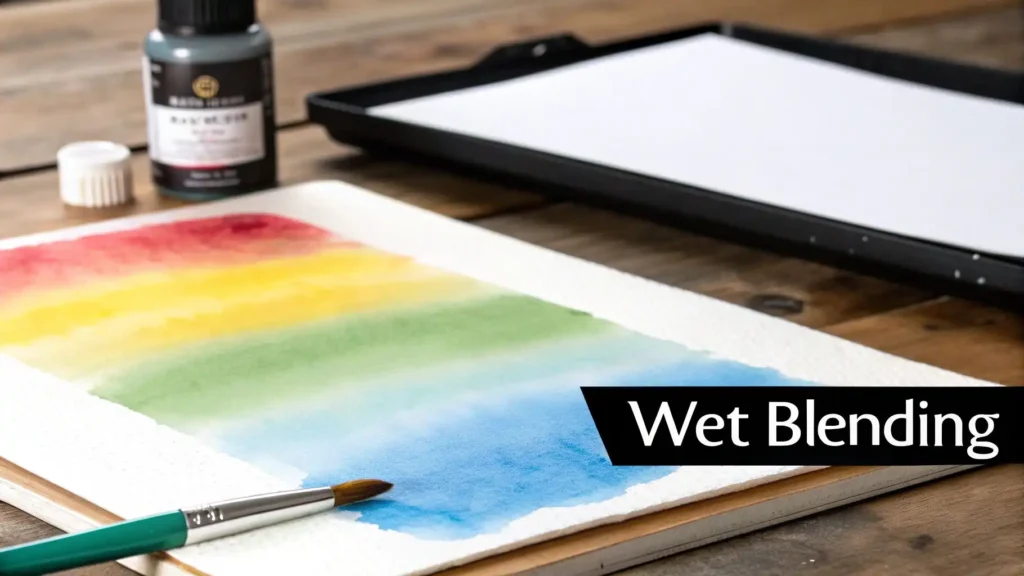
The wet-on-wet technique is a foundational method where you apply wet paint onto a surface that is already wet, either with water or another layer of wet paint. This approach is beloved by beginners and masters alike because it allows colors to blend, bleed, and flow into each other with a beautiful, often unpredictable, softness. It’s one of the most essential painting techniques for beginners, especially in watercolor, but it also creates stunning effects in acrylics and oils.
This method is perfect for creating soft, atmospheric backgrounds, gentle gradients, and dreamy landscapes where sharp lines are not desired. Artists like J.M.W. Turner mastered this technique in his dramatic watercolor seascapes, and Bob Ross famously used a version of it for his “happy little clouds” in oil painting. The beauty of wet-on-wet lies in letting go of precise control and embracing the natural movement of the paint.
Why It’s Great for Beginners
Wet-on-wet is incredibly forgiving. It encourages you to work quickly and intuitively, which builds confidence and helps you understand how your paints behave. Instead of focusing on perfect brushstrokes, you learn about color relationships and fluidity, making it an excellent starting point for your artistic journey.
Actionable Tips for Success
To get the most out of this technique, keep these practical tips in mind:
- Prepare Your Colors: Mix all the colors you plan to use before you wet your surface. The process moves fast, and you won’t have time to mix once you’ve started.
- Control the Water: Wet your paper or canvas evenly with a large brush or sponge. You want a consistent sheen, not puddles of water. If you see pools forming, gently lift them with a dry brush or a paper towel.
- Work with Gravity: Don’t be afraid to tilt your paper or canvas. This encourages the colors to flow and mingle in specific directions, giving you a degree of control over the beautiful chaos.
- Keep a Spray Bottle Handy: If you notice your surface drying too quickly, a light mist from a spray bottle can extend your working time. This is especially helpful when working with fast-drying acrylics.
2. Dry Brush Technique
The dry brush technique is the textural opposite of wet-on-wet, involving a brush loaded with paint but very little water or medium. When dragged across a dry surface, it leaves a scratchy, broken, and distinctly textured mark rather than a smooth coat of color. This effect is fantastic for rendering surfaces like weathered wood, rugged stone, wispy clouds, or the subtle texture of skin, making it one of the most versatile painting techniques for beginners to master.
This method is all about control and creating visual interest through texture. It’s perfect for adding finishing details, suggesting form without meticulously blending, and building up layers of depth. The legendary artist Andrew Wyeth used dry brush techniques to achieve the stunning, hyper-realistic textures in his tempera paintings, capturing every blade of grass and thread of fabric. Its power lies in adding a tactile quality to your work that draws the viewer in.
Why It’s Great for Beginners
The dry brush technique teaches incredible brush control and demonstrates how different pressures and angles can create a wide range of marks. It helps you understand how to build up layers slowly and intentionally, a crucial skill in any medium. Because it’s a more controlled process, it’s an excellent way to add precise details and texture without the risk of colors bleeding together.
Actionable Tips for Success
To achieve a perfect dry brush effect, focus on these practical steps:
- Load Your Brush Sparingly: Dip your brush into the paint, then wipe most of it off on a paper towel or the side of your palette. You want the bristles to be coated but not saturated.
- Practice on Scrap Paper: Before applying the brush to your final piece, test the stroke on a spare piece of paper. This helps you gauge how much paint is on the brush and the texture it will create.
- Use Over a Dry Layer: This technique works best when applied over a completely dry base layer of paint. This contrast allows the textured strokes to stand out clearly.
- Vary Your Strokes: Experiment with different brush directions, pressures, and speeds. A light, quick flick will create a different effect than a slow, firm drag. Combining these creates more dynamic and realistic textures.
3. Layering (Glazing) Technique
The layering, or glazing, technique is a classic method where you apply multiple thin, transparent layers of paint over a dried underpainting. This approach, foundational in both oil and acrylic painting, is how artists create incredible depth, luminosity, and complex, jewel-like colors. It’s one of the most rewarding painting techniques for beginners to learn as it teaches patience, color theory, and subtlety.
This method is perfect for rendering realistic skin tones, creating atmospheric depth in landscapes, or making objects appear to glow from within. Masters like Leonardo da Vinci used a form of glazing for his famous sfumato effect, and painters from Rembrandt to Vermeer relied on it to achieve their signature luminous quality. By building color slowly, you maintain control and can achieve a richness that is impossible with a single, opaque layer.
Why It’s Great for Beginners
Glazing demystifies complex color mixing by breaking it down into simple, transparent steps. Instead of mixing the perfect shadow color on your palette, you can create it by glazing a transparent blue over a dried red. This process builds an understanding of color relationships and transparency while being very forgiving; a mistake in one thin layer is much easier to correct than a mistake in a thick, opaque one.
Actionable Tips for Success
To get the most out of this technique, keep these practical tips in mind:
- Thin Your Paint Correctly: Your glaze should be thin and transparent. Mix a small amount of pigment with a glazing medium (for acrylics) or a mixture of solvent and oil (for oils) until it has the consistency of thin cream or milk.
- Patience is Paramount: Ensure each layer is completely dry before applying the next. Applying a wet glaze over a tacky layer will lift the paint underneath and create a muddy mess. This is especially crucial for oil painting.
- Plan Your Layers: Think about your color sequence. Generally, you work from light to dark. Applying a light-colored glaze over a dark one will not be very effective, so plan your build-up of value and color in advance.
- Use Transparent Pigments: Not all paints are transparent. Check your paint tubes for a symbol (often a hollow square) indicating transparency. Using opaque paints will create a cloudy, dull effect instead of a luminous glaze.
4. Impasto Technique
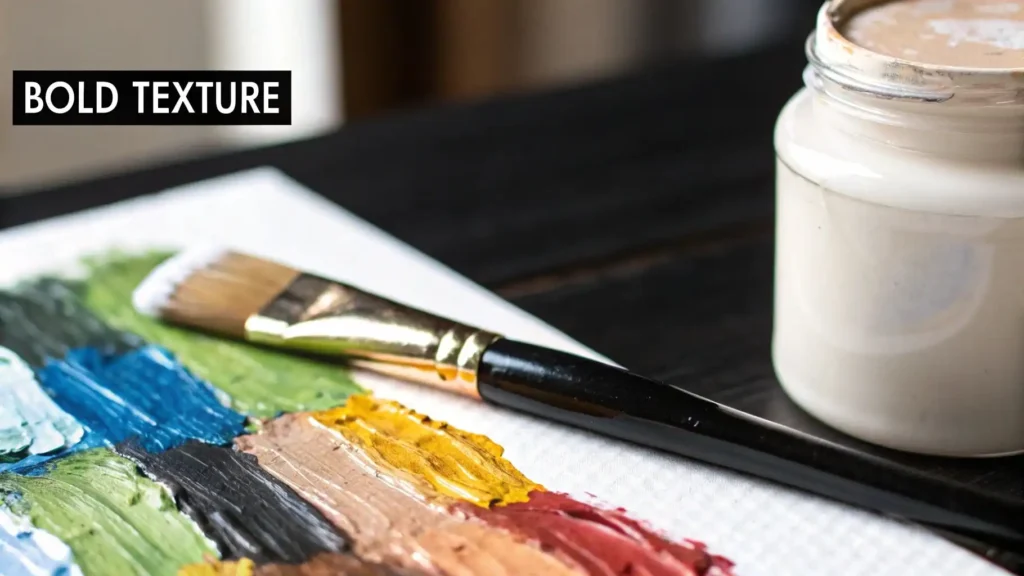
Impasto is a bold and expressive technique where paint is applied so thickly that the brush or palette knife strokes are visible, creating tangible texture on the surface. This method transforms a flat canvas into a three-dimensional object, adding a dynamic, tactile quality that engages viewers both visually and physically. It’s one of the most exciting painting techniques for beginners because it produces dramatic, confident-looking results with minimal precision.
This technique is perfect for conveying emotion, movement, and light. The thick peaks of paint catch light in unique ways, adding highlights and shadows that change as the viewer moves. Vincent van Gogh famously used impasto to create the swirling energy in “The Starry Night,” and contemporary artists use it to build powerful abstract compositions. The beauty of impasto is in its physicality; you are not just painting an image, you are sculpting with paint.
Why It’s Great for Beginners
Impasto is incredibly liberating. It shifts the focus from perfect, blended details to expressive texture and form. This allows you to cover mistakes easily and encourages a loose, intuitive approach, which is fantastic for building confidence and developing a unique artistic voice without the pressure of photorealism.
Actionable Tips for Success
To get the most out of this technique, keep these practical tips in mind:
- Use the Right Paint: Heavy body acrylics or oil paints are ideal. You can also mix a gel medium or modeling paste into your acrylics to increase their thickness and volume without using too much pigment.
- Invest in Palette Knives: While stiff-bristled brushes work, palette knives are the quintessential tool for impasto. They allow you to scoop, spread, and sculpt the paint like frosting on a cake.
- Build Layers Gradually: Apply a thinner “base” layer first to establish your composition. Then, build up the thicker, more textured layers on top. This ensures better adhesion to the canvas and prevents cracking.
- Allow for Long Drying Times: Thick applications of paint, especially oils, can take weeks or even months to dry completely. Be patient and work in a well-ventilated area where your masterpiece can cure undisturbed.
5. Blocking In (Underpainting) Technique
The blocking in technique, also known as underpainting, is a foundational method where you establish the basic shapes, composition, and values of your painting with a simplified layer of color before adding any detail. This initial layer acts as a roadmap, guiding your subsequent brushstrokes and color choices. It’s one of the most crucial painting techniques for beginners to learn, as it transforms a daunting blank canvas into a manageable puzzle.
This approach is rooted in classical and academic art traditions, used by masters for centuries to build complex compositions with accuracy and depth. By first establishing the lights and darks (values) with a single neutral color, artists can solve compositional problems early on, ensuring a strong foundation for the final piece. Blocking in prevents the common beginner mistake of getting lost in details too soon and helps create a more cohesive, professional-looking painting.
Why It’s Great for Beginners
Blocking in removes the pressure of getting everything right from the start. It breaks the painting process down into logical steps, similar to how you would outline a research paper before writing. This structured approach helps you understand composition, proportion, and value relationships without the added complexity of color, building a strong base of fundamental skills.
Actionable Tips for Success
To get the most out of this technique, keep these practical tips in mind:
- Choose a Neutral Color: Start with a thinned-down neutral color like burnt sienna, ultramarine blue, or a mix of both. This creates a versatile base that won’t overpower your final color layers.
- Keep It Thin and Loose: Use a thin consistency of paint (add a bit of water for acrylics or solvent for oils) and focus on large, general shapes. Don’t worry about details at this stage; just capture the main forms.
- Establish Light and Shadow: Squint your eyes at your reference to simplify it into a few main value masses. Block in the main shadow shapes first to immediately create a sense of form and light.
- Step Back Frequently: Take regular breaks to step back from your canvas. This gives you a better perspective on the overall composition and helps you spot any proportional errors before you’ve invested too much time.
6. Alla Prima (Wet-on-Wet Direct) Technique
Alla prima, Italian for “at first attempt,” is a direct painting method where a work is completed in a single session, while the paint is still wet. This approach, also known as “wet-on-wet direct,” is one of the most expressive painting techniques for beginners to explore. It forces you to make bold, decisive strokes and captures a sense of immediacy and energy that is difficult to achieve with layered, slower methods.
This technique is celebrated for its fresh, lively, and often textural results. The Impressionists, like Claude Monet, used it extensively to capture the fleeting effects of light and atmosphere outdoors. Modern portrait artists such as John Singer Sargent also mastered alla prima to create portraits that felt alive and spontaneous. The beauty of this method is in its confidence; you’re not building up layers over days but capturing a moment in time with pure, unlabored color.
Why It’s Great for Beginners
While it demands confidence, alla prima is a fantastic learning tool. It teaches you to simplify shapes, see values clearly, and mix colors efficiently. By working quickly, you avoid the tendency to overthink and overwork your painting, which often leads to muddy colors and a stiff appearance. It’s an exercise in trusting your instincts.
Actionable Tips for Success
To master the spontaneity of alla prima, a little preparation goes a long way:
- Set Up Everything First: Have all your paints squeezed, brushes ready, and your reference in place before you start. The goal is to paint without interruption once you begin.
- Establish Values Quickly: Begin by blocking in your darkest darks and lightest lights. This creates a value “map” that guides the rest of your painting and ensures a strong composition from the start.
- Work from Large to Small: Start with larger brushes to establish the main shapes and masses of color. Only switch to smaller brushes for details toward the end of the session.
- Embrace Imperfection: Alla prima is not about photorealism. Let your brushstrokes show and accept that some “mistakes” will contribute to the painting’s energy and character. Think of them as happy accidents.
7. Color Mixing and Palette Management Technique
Color mixing and palette management is less of a single action and more of a foundational skill that elevates every brushstroke you make. It involves understanding how to mix colors cleanly on your palette, manage a limited set of colors to achieve harmony, and apply basic color theory. This is one of the most crucial painting techniques for beginners because it is the key to moving beyond muddy, disjointed results and creating work that looks intentional and professional.
This discipline is about making conscious choices rather than guessing. Artists who master this can create a vast range of hues from just a few tubes of paint, ensuring their work is cohesive and visually appealing. The principles are universal, from creating vibrant secondary and tertiary colors to neutralizing bright hues with their complements for realistic shadows. It’s the behind-the-scenes work that makes a painting truly sing.
Why It’s Great for Beginners
Learning to mix colors from a limited palette builds a deep, intuitive understanding of color relationships. It saves you money by reducing the need for dozens of pre-mixed tubes and forces you to think like an artist, analyzing how light, shadow, and hue interact. This skill is empowering and is the fastest way to gain confidence in your color choices.
Actionable Tips for Success
To get the most out of this technique, keep these practical tips in mind:
- Start with a Limited Palette: Begin with primary colors (a warm and cool version of each is ideal), plus white and black or a dark neutral like Burnt Umber. This simplifies the process and forces you to learn mixing.
- Organize Your Palette: Arrange your colors logically, for example, from warm to cool. Keep a dedicated space for mixing to prevent contamination and create clean, predictable hues.
- Create a Color Mixing Chart: Make a grid on paper or in a notebook. Mix each color on your palette with every other color, plus white. This becomes your personal reference guide to your paints’ potential.
- Neutralize with Complements: To dull a color or create realistic shadows, mix it with a small amount of its complementary color (the one opposite it on the color wheel). For example, add a touch of orange to blue to create a sophisticated gray-blue.
- Always Mix a Lighter Color into a Darker One: You need far less dark paint to change a light color than vice-versa. This simple rule helps you avoid wasting paint and gives you more control over the final value of your mixture.
8. Scumbling Technique
Scumbling is a wonderfully expressive method where you use a dry or semi-dry brush with a small amount of paint to lightly drag color over a dry underlying layer. Instead of a solid coat, this creates a broken, textured layer of color that allows parts of the layer beneath to show through. This is one of the more versatile painting techniques for beginners as it adds instant texture, depth, and a sense of atmosphere with minimal effort.
This technique is brilliant for suggesting textures like weathered stone, tree bark, misty skies, or shimmering water. Artists like J.M.W. Turner used scumbling to create hazy, luminous atmospheres in his seascapes, while Impressionists employed it to build up complex, light-filled foliage and skies. Scumbling adds a sophisticated, painterly quality, breaking up flat areas of color and introducing a subtle vibration that brings the artwork to life.
Why It’s Great for Beginners
Scumbling is an excellent way to learn about paint application and texture without needing perfect brush control. It’s a very forgiving technique that allows you to build up layers slowly, correct mistakes easily by painting over them, and experiment with creating complex visual effects. It’s a fantastic method for loosening up your style and adding professional-looking texture to your work.
Actionable Tips for Success
To master the scumbling technique, keep these practical tips in mind:
- Choose the Right Brush: Stiff-bristled brushes, like hog bristle for oils or a stiff synthetic for acrylics, are ideal. They grab the paint and skip across the surface texture more effectively than soft brushes.
- Less is More: Load your brush with a very small amount of paint. Wipe off most of it on a paper towel or your palette until the brush is almost dry. This is key to achieving that broken color effect.
- Use a Light Touch: Apply the paint with light, quick, and often circular or scrubbing motions. Don’t press down hard; you want the brush to just kiss the high points of the canvas or paper texture.
- Build Layers Gradually: Scumbling works best when built up in thin, semi-transparent layers. Allow each layer to dry completely before adding the next one to avoid creating muddy colors. This gradual process creates incredible depth and luminosity.
9. Stippling Technique
Stippling is a meditative method where you build up an image using small, distinct dots or dabs of paint. This technique, heavily influenced by the Pointillist art movement, creates form, texture, and complex color by placing dots of pure color next to one another, allowing the viewer’s eye to optically blend them. While it requires patience, it’s one of the most rewarding painting techniques for beginners because it breaks down complex subjects into simple, manageable marks.
This approach is fantastic for creating vibrant, luminous paintings with incredible texture and depth. The most famous examples come from Georges Seurat, whose masterpiece A Sunday Afternoon on the Island of La Grande Jatte is a hallmark of Pointillism. The beauty of stippling lies in its precision and the stunning, almost digital-like effect it produces, making it a surprisingly modern and versatile technique for everything from realistic portraits to abstract designs.
Why It’s Great for Beginners
Stippling is exceptionally forgiving. Since the image is built from tiny dots, a misplaced mark is virtually unnoticeable and easily corrected. It forces you to slow down and focus on color theory and value, teaching you how to build form without relying on traditional blending. This process builds immense patience and control, making it a great skill-building exercise.
Actionable Tips for Success
To get the most out of stippling, keep these practical tips in mind:
- Vary Your Dot Size: Use a combination of small and slightly larger dots to create visual interest and define different textures. A uniform dot size can make the work look flat.
- Build Color in Layers: Instead of mixing a new color, layer dots of primary colors (like blue and yellow) to create the optical illusion of green. This adds a unique vibrancy and luminosity to your work.
- Use Different Tools: Don’t limit yourself to a brush tip. Experiment with cotton swabs, the end of a pencil eraser, or even a small sponge to create different dot shapes and textures.
- Work from Light to Dark: It’s generally easier to add dark dots over lighter areas than the other way around. Establish your lightest values first and gradually build up to your shadows.
10. Negative Space Painting Technique
The negative space painting technique is a fascinating, almost counter-intuitive method where you focus on painting the space around your subject rather than the subject itself. This powerful approach shifts your perception, forcing you to see shapes and relationships differently. It’s one of the most effective painting techniques for beginners for improving composition, defining edges, and understanding form.
This method is incredibly versatile and can be used to create sophisticated still lifes, dramatic portraits, and compelling abstract works. Instead of drawing a flower, you paint the shapes of the background around the petals, letting the unpainted (or differently colored) area become the flower. This technique trains your eye to see the whole composition, not just the isolated object, leading to more balanced and visually interesting art.
Why It’s Great for Beginners
Negative space painting is a mental exercise as much as a technical one. It bypasses the part of your brain that says “this is how a vase should look” and instead makes you focus on the abstract shapes you actually see. This builds foundational observational skills, helping you achieve more accurate proportions and dynamic compositions without getting bogged down in tiny details.
Actionable Tips for Success
To master this shift in perspective, keep these practical tips in mind:
- Squint to See Shapes: Squinting at your reference photo or subject blurs the details and helps your brain register the large, simple shapes of the negative space more easily.
- Map It Out First: Lightly sketch the outlines of the negative space shapes on your canvas before you start painting. This gives you a clear roadmap to follow.
- Use Strong Value Contrast: Make the negative space significantly darker or lighter than the positive space (your subject). This high contrast makes the subject pop and creates a clear, defined edge.
- Start with Simple Subjects: Practice with a simple object like a pair of scissors or a houseplant against a plain wall. This makes it easier to identify the negative space shapes without getting overwhelmed.
Comparison of 10 Beginner Painting Techniques
| Technique | Implementation complexity | Resource requirements | Expected outcomes | Ideal use cases | Key advantages |
|---|---|---|---|---|---|
| Wet-on-Wet Technique | Low–Medium — timing skills needed | Low — fluid mediums, pre-wet surface, spray bottle | Soft blends, atmospheric transitions, diffused edges | Landscapes, abstracts, watercolor & acrylic studies | Forgiving, spontaneous color blending; beginner-friendly |
| Dry Brush Technique | Medium — brush control & pressure | Low — minimal medium, quality natural-hair brushes | Defined, textured strokes; precise highlights and detail | Details, portraits, texture emphasis, finishing touches | Precise marks, strong texture, avoids muddy mixes |
| Layering (Glazing) Technique | High — patient, methodical layering | Medium — glazing mediums, drying time (oil/acrylic) | Luminous depth, refined color complexity | Portraits, realistic works, controlled depth effects | Professional luminosity; controlled color building |
| Impasto Technique | Low–Medium — expressive application | High — large paint volume, palette knives, sturdy supports | Bold, dimensional texture; visible brush/palette knife marks | Abstracts, expressionism, textured landscapes | Dramatic visual impact; hides minor imperfections |
| Blocking In (Underpainting) Technique | Low–Medium — value/composition understanding | Low — neutral paints, thin brushes, quick coverage | Strong compositional framework and value relationships | Portraits, figure work, complex compositions | Prevents composition errors; speeds and clarifies workflow |
| Alla Prima (Wet-on-Wet Direct) Technique | High — fast decisions, confident brushwork | Medium — all materials ready, optional fast-drying mediums | Fresh, energetic single-session paintings | Plein air, impressionistic landscapes, studies | Spontaneity; cohesive color harmony; quick results |
| Color Mixing & Palette Management | Medium — study of color theory & practice | Low–Medium — organized palette, primary paints, mixing tools | Consistent, professional color results; reduced waste | All painting techniques and media; foundational practice | Improves overall quality; essential foundational skill |
| Scumbling Technique | Medium — timing and brush selection important | Low — stiff brushes, minimal paint load | Broken, semi-transparent texture; underlying layers visible | Skies, foliage, atmospheric effects in landscapes | Adds subtle texture and depth with minimal materials |
| Stippling Technique | Medium–High — patient, repetitive application | Medium — time-intensive; small tools (brushes, Q-tips) | Built-up tone and texture; optical color mixing | Small portraits, abstracts, color studies, meditative work | Forgiving small marks; teaches color layering and patience |
| Negative Space Painting Technique | Medium — conceptual/compositional shift | Low — standard materials, planning tools | Strong silhouette and spatial relationships; defined edges | Portraits, still life, composition training | Improves observation and composition; produces polished results |
Your Artistic Journey Starts Now
You’ve just journeyed through ten foundational painting techniques for beginners, each a distinct language for communicating your artistic vision. From the spontaneous bleeds of wet-on-wet watercolor to the bold, sculptural textures of oil impasto, you now possess a powerful toolkit. The techniques we covered, such as layering, blocking in, and scumbling, are not isolated tricks; they are the fundamental grammar of visual art, used by masters for centuries and now available to you.
Remember that understanding these methods conceptually is only the first brushstroke. The real learning, the genuine artistic growth, happens when you pick up a brush and translate theory into practice. Your initial goal should not be to create a masterpiece but to become intimately familiar with your materials and how they respond to these new approaches.
From Knowledge to Action: Your Next Steps
The path to becoming a confident painter is paved with experimentation. Instead of feeling overwhelmed by the ten techniques, think of them as a menu of creative options. Your immediate next step is to choose one or two that resonated with you and commit to exploring them deeply.
Here’s a practical action plan to get started:
- Select Your Focus: Did the idea of building up translucent layers with glazing excite you? Or does the immediate, expressive energy of the alla prima technique feel more your style? Pick one primary technique and perhaps a secondary one to experiment with.
- Dedicate Practice Time: Set aside a specific, non-negotiable time for painting, even if it’s just 30 minutes a few times a week. Consistent practice builds muscle memory and intuitive understanding far more effectively than infrequent, long sessions.
- Embrace ‘Failed’ Paintings: Reframe your perspective on mistakes. Every muddy color, every unintentional smudge, and every composition that doesn’t quite work is not a failure. It is a data point. It’s your paint and canvas teaching you a lesson that no article ever could. These moments are invaluable parts of the learning process.
Key Takeaway: Mastery in painting is not about inherent talent; it’s the cumulative result of curiosity, persistent practice, and the courage to make mistakes.
Building Your Creative Voice
As you practice these painting techniques for beginners, you’ll start to notice your own preferences emerging. Perhaps you love the control and precision of dry brushing for rendering textures like wood grain or animal fur. Maybe the abstract possibilities of negative space painting unlock a new way of seeing the world. This is your unique artistic voice beginning to form.
Don’t be afraid to combine techniques. A single painting can feature a smooth, glazed background, a subject blocked in with solid colors, and foreground details added with stippling or a dry brush. The true magic happens when you stop thinking of them as separate exercises and start seeing them as integrated tools to achieve a specific effect. This synthesis of skills is what elevates a painting from a technical study to a personal expression.
Your journey is just beginning. The skills you’ve learned about today, from effective palette management to the strategic use of underpainting, are the foundation upon which all of your future creations will be built. You have the knowledge, the tools, and a clear path forward. The only thing left to do is to start painting.
Ready to document your creative progress and explore more artistic insights? The journey of an artist is one of constant learning and reflection. At maxijournal.com, we provide the perfect platform for creative individuals to journal their experiences, share their work, and connect with a community of fellow learners. Start your free online journal today at maxijournal.com and create a beautiful record of your artistic evolution.
Discover more from Maxi Journal
Subscribe to get the latest posts sent to your email.