
Improving your work-life balance isn’t about some massive, life-altering overhaul. It really just starts with two things: a quick, honest look at where your time is actually going and a real commitment to setting boundaries.
It’s about the small, intentional choices we make every day. Things like scheduling a hard stop to your workday and actually sticking to it. These are the moves that help you reclaim your personal hours and dial down that constant, humming stress.
Forget the myth of a perfect 50/50 split. True balance is about finding a sustainable rhythm that genuinely works for you.
Why Does Work-Life Balance Feel So Out of Reach?

Does the end of your workday feel less like a finish line and more like a brief pause before the next Slack notification hits? You are definitely not alone.
The line between the desk and the living room has all but vanished for many of us. This has created a weird culture where being perpetually available feels like part of the job description. That constant connection makes genuine downtime feel like an impossible luxury.
And that pressure isn’t just in your head. Recent data shows a massive shift in what people want from work, with a staggering 83% of workers now prioritizing balance over salary. This isn’t just about clocking fewer hours; it’s a direct response to skyrocketing rates of burnout and chronic stress.
When work is constantly spilling into your personal time, the consequences are way more serious than just feeling a bit tired.
The Real Cost of Imbalance
Consistently ignoring the need for balance chips away at your well-being. A poor work-life balance is a fast track to a host of problems that can tank both your mental and physical health.
- Sky-High Stress and Anxiety: When your brain never gets a chance to truly switch off, it stays in a heightened state of alert. Hello, chronic stress.
- Declining Physical Health: It’s not just a feeling. Studies have shown that working just three extra hours a day can increase the risk of heart-related problems by a shocking 60%.
- Tanking Productivity: Working constantly without real rest doesn’t make you a hero; it leads to burnout. And burnout absolutely destroys your focus, creativity, and overall performance.
This cycle of overwork and exhaustion just isn’t sustainable. The conversation is finally shifting away from that mythical, perfect “balance” and toward a more realistic model of work-life integration. It’s all about creating a fluid harmony between your job and your life, where one doesn’t consistently steamroll the other.
For those feeling the weight of it all, learning how to calm anxiety naturally can be a powerful first step in taking back control.
The goal isn’t to build a wall between work and life. It’s to build a door and take control of when you open and close it.
Quick Wins for Better Balance This Week
Thinking about how to fix your work-life balance can feel overwhelming, but you don’t have to do it all at once. The best way to start is with small, immediate actions that can make a difference right away. Instead of aiming for a massive change, just focus on one or two simple things this week.
Here’s a look at some easy, actionable ideas to get you started.
| Quick Wins for Better Balance This Week | ||
|---|---|---|
| Action | Impact | Time Commitment |
| Schedule a “Hard Stop” | Prevents work from bleeding into your personal time, creating a clear end to your day. | 5 minutes to set a recurring calendar reminder. |
| Take a Real Lunch Break | Provides a much-needed mental reset and helps you fight off that afternoon slump. | 30-60 minutes completely away from your desk. |
| Turn Off Work Notifications | Creates an immediate mental boundary and kills the compulsive urge to check in after hours. | 2 minutes to adjust your phone and computer settings. |
Just picking one of these can set a new tone for your week. It’s about building momentum with small, achievable victories.
Setting Boundaries That Actually Stick

Let’s be honest: solid boundaries are the bedrock of a healthy work-life balance, but enforcing them can feel next to impossible. We’ve all been there—worried about looking like we’re not a “team player” or slacking off. That fear traps us in a cycle of late nights and being constantly plugged in.
But the tide is turning. The old-school culture of overwork is finally being challenged.
Flexibility isn’t just a perk anymore; it’s a dealbreaker. Research shows 28% of employees now put work-life balance ahead of salary, and that number climbs to 32% for Gen Z. Still, the pressure is real. A nervous 34% of people fear backlash if they don’t reply to messages after hours.
Setting effective boundaries isn’t about building walls or being difficult. It’s about clear, proactive communication that frames your limits around your well-being and peak performance, not just your personal preferences.
Communicate Proactively, Not Reactively
The absolute best time to set a boundary is before someone crosses it. Don’t wait until you’re completely fried to announce you won’t be checking emails on Saturday. You have to make your working style clear from the get-go.
One of the easiest ways to do this is right in your shared calendar. Go block off time. Put a hard stop at the end of your day and label it “Unavailable” or “End of Day.” It’s a simple, visual cue that tells your colleagues when you’ve clocked out, no awkward conversations needed.
You can also block out one or two “deep work” sessions each week. This sends a clear signal that you’re head-down on important tasks and manages expectations around instant replies.
Key Takeaway: Stop trying to prove your value through constant availability. Instead, show it through the focused, high-quality work you deliver during your designated hours.
Use Scripts to Handle After-Hours Requests
Having a few go-to responses in your back pocket can take all the anxiety out of saying “no” in the moment. These scripts are professional, polite, and reinforce your boundaries without creating any friction.
Feel free to adapt these for your own use:
- For an evening email: “Thanks for sending this over. I’m offline for the day but will take a look first thing tomorrow morning and get back to you.”
- For a non-urgent weekend request: “Appreciate you flagging this! I’m taking the weekend to recharge but will make it a priority first thing Monday.”
- When asked to take on too much: “My plate is pretty full right now, and I want to make sure I can give my current commitments the attention they need. Can we look at the priorities and see where this fits in?”
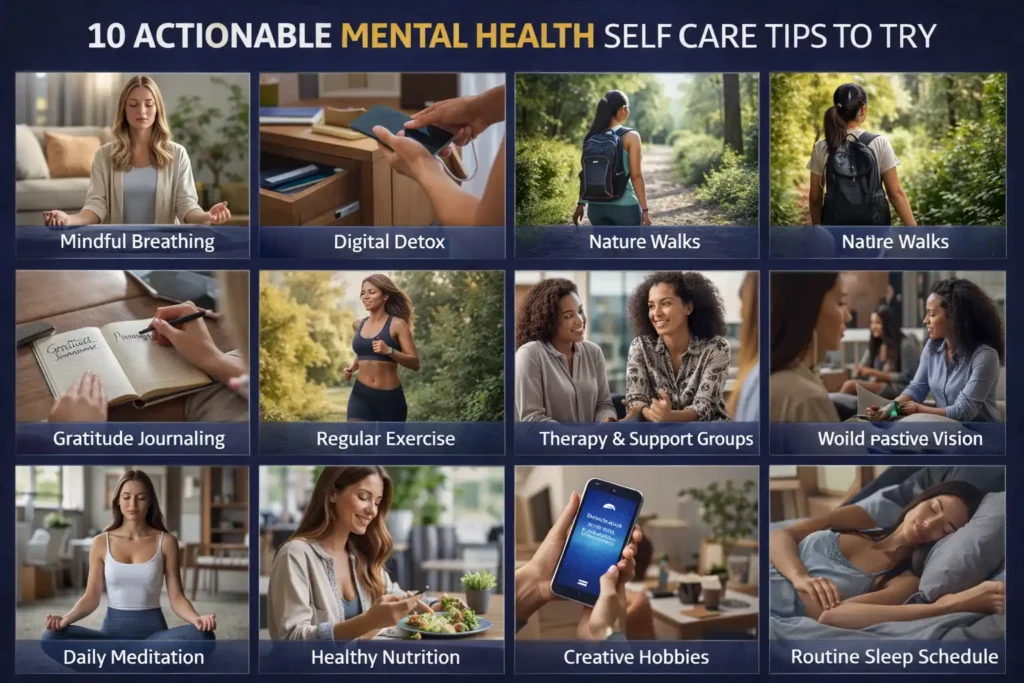
These small, consistent moves make a huge difference. Remember, setting boundaries is a huge part of taking care of yourself. We dig into this more in our guide to mental health and self-care tips. By practicing these habits, you’re not just protecting your own time—you’re teaching others how to respect it, which is the key to a sustainable, fulfilling work-life.
Making Remote and Hybrid Work for You
The big shift to remote and hybrid work felt like the golden ticket to better balance, didn’t it? While the flexibility has been incredible, it also completely erased the line between the office and the living room for a lot of us. Suddenly, that ‘always-on’ pressure found a new home—right inside ours.
The secret isn’t just where you work. It’s about how you architect your day so that flexibility actually serves you, instead of the other way around.
When you get it right, the upside is huge. The data doesn’t lie: 51% of workers feel most productive from home, and a staggering 90% of hybrid workers say they’re just as productive or even more so. The most telling number? 77% of remote or hybrid professionals feel they have the flexibility to actually manage their lives. You can explore more insights on work-life quality balance to get the full picture, but use these stats as proof that making this work for you is a worthy goal.
Create a Real Separation—Physically and Mentally
You might not have a commute anymore, but your brain still desperately needs a signal that the workday is done. This all starts with drawing a clear physical line in the sand between your “work zone” and your personal space, even if that’s just a tiny corner of your bedroom.
- Claim Your Workspace: Working from the couch or bed is a trap. It tells your brain that these places of rest are also places of stress. A dedicated desk, no matter how small, creates a powerful psychological boundary. At the desk, you’re on. Away from the desk, you’re off.
- Master the “Shutdown Ritual”: At the end of the day, you need something to replace the old drive home. Create a simple routine that signals you’re clocking out. It could be as simple as closing your laptop with a satisfying click, tidying your desk, and putting on a specific “after-work” playlist. This small ritual is the new commute—a clear cue for your mind to switch gears.
My Favorite Trick: If your workspace is in a common area like the living room, make it disappear at 5 PM. I mean it. Put your laptop in a drawer, cover your monitor with a throw blanket, whatever it takes. Out of sight, out of mind truly works wonders here.
Reclaim Your Commute Time (for You, Not for Work)
One of the biggest perks of ditching the office is getting back all that time you used to spend in traffic. Don’t just let those precious minutes get swallowed up by more work or mindless scrolling. Get intentional.
This is your time to claw back, and it’s a powerful move for your work-life balance. Whether it was 30, 60, or 90 minutes, that time now belongs to you. Use it for something that actually fills your cup.
- Your Morning Kickstart: Before you even think about logging on, use that old commute time for a quick workout, meditation, reading a chapter of a book, or just savoring a coffee without rushing. Starting the day on your own terms, not your inbox’s, is a game-changer for stress.
- The Evening Wind-Down: Once you’ve done your shutdown ritual, use your old “drive home” time to decompress. Go for a walk around the block, listen to a non-work-related podcast, or noodle on a hobby for 20 minutes. This creates a much-needed buffer between your professional self and your personal self.
By structuring your remote day with these clear boundaries and intentional habits, you can stop feeling like you live at work and start making flexibility the incredible tool it was always meant to be.
Working Smarter to Reclaim Your Hours
Getting a real handle on work-life balance isn’t about logging fewer hours. It’s about making the hours you do work more effective. The real goal is to get more done in the time you have, which frees you up for the parts of life that happen outside your job. This requires moving past generic advice and digging into productivity methods that actually work.
So many of us get stuck in a reactive cycle, letting emails and Slack notifications run our day. Working smarter means flipping that script. It’s about being proactive and taking deliberate control of your schedule and your focus—becoming the architect of your day instead of just a passenger.
Master Your Tasks with Smart Techniques
Three powerful methods can immediately help you structure your day for maximum impact: time blocking, task batching, and the Pomodoro Technique. Each one is designed to fight distractions and keep your brain locked in on what’s important.
- Time Blocking: This is more than a to-do list; it’s about assigning every task a specific home on your calendar. A graphic designer might block out 9-11 AM for “Logo Design Project” and 2-3 PM for “Client Revisions.” You treat these blocks like unbreakable appointments with yourself.
- Task Batching: The idea here is to group similar small tasks and knock them out all at once. For example, instead of answering emails every time one dings, a project manager could schedule two 30-minute blocks—one mid-morning and one before signing off—to clear their inbox.
- The Pomodoro Technique: This classic time management hack uses a timer to break work into hyper-focused sprints. You work for 25 minutes, then take a 5-minute break. After four of these “pomodoros,” you take a longer break. It’s a surprisingly effective way to push past procrastination, especially on big, intimidating tasks.
For anyone working remotely, the first step is always setting up a dedicated workspace and clear boundaries. It’s non-negotiable for success.
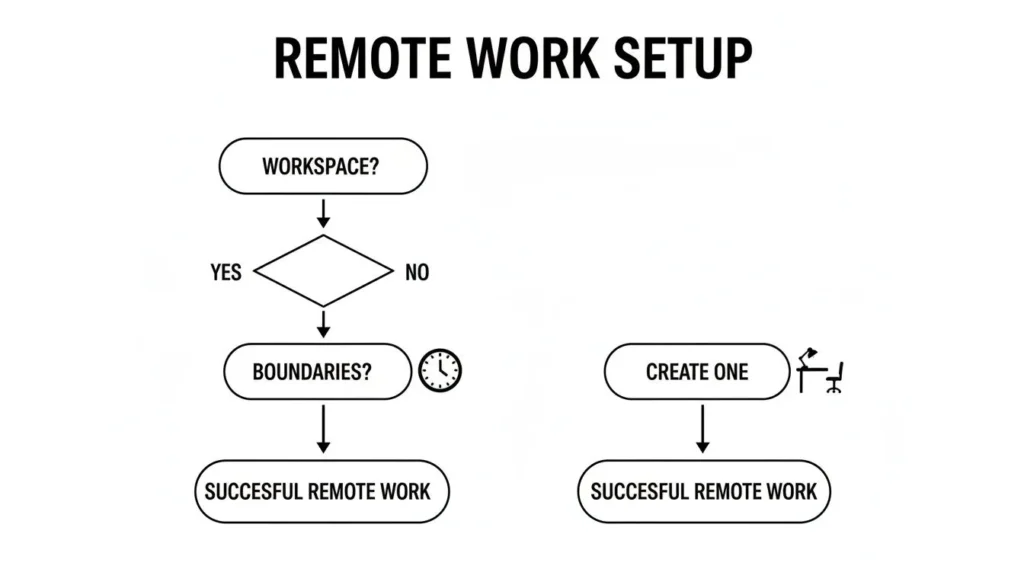
This flowchart really drives the point home: successful remote work hinges on either having a space with boundaries from the start or intentionally creating one.
Prioritize Ruthlessly to Focus on What Matters
Let’s be honest: not all tasks are created equal. A huge part of working smarter is learning to tell the difference between what feels urgent and what’s genuinely important. This is where a good prioritization framework can be a total game-changer.
The Eisenhower Matrix is my go-to tool for this. It’s a simple grid that helps you sort tasks into four boxes: urgent and important (do it now), important but not urgent (schedule it), urgent but not important (delegate it), and neither (delete it).
Using a tool like this helps you escape the “urgency trap”—that feeling of spending all day putting out small fires without making any real progress on your big goals. When you learn how to improve work life balance through smarter prioritization, you take back control of your time and energy, making sure your effort goes where it counts.
Lessons from the World’s Best Work Cultures
You don’t have to reinvent the wheel to find a better work-life balance. Sometimes, the best move is to look at cultures that have already cracked the code. A handful of countries consistently top the charts for employee happiness, not by some happy accident, but through smart policies and a shared mindset that truly values life beyond the office.
We can learn a ton by looking at these global leaders. This isn’t about wishing you lived somewhere else; it’s about borrowing their best habits and weaving them into your own workday, no matter where you punch the clock.
What Top-Ranking Countries Get Right
It’s fascinating to see which nations are leading the pack and, more importantly, why. Dig into the data, and a clear pattern emerges: they prioritize people over productivity, which, ironically, ends up boosting both.
Take Remote’s 2025 Global Life-Work Balance Index, for example. It recently crowned New Zealand as number one, with Ireland and Belgium right behind. These countries champion policies that support a “work smarter, not harder” philosophy. Norway also made a huge leap into the top five, thanks to incredibly generous parental leave and a national average workweek of just 32.6 hours.
And then there’s the Netherlands, which boasts one of the shortest workweeks in the world at an average of only 30.5 hours. It’s solid proof that putting in more time doesn’t automatically mean getting more done.
The big takeaway here is that while government policies and cultural values are huge factors, the principles behind them can be adopted on a much smaller, more personal scale.
Adopting a Global Mindset
You don’t need to pack your bags for Amsterdam to start reaping the benefits. The real magic happens when you adopt the mindsets that make these cultures so successful. It’s all about shifting your own perspective on what a productive day actually looks like.
Here are a few ideas you can put into practice right away:
- Embrace the Dutch concept of “Niksen”. This is literally the art of doing nothing on purpose. Instead of filling every spare second with a task or doom-scrolling, schedule short niksen breaks. Just let your mind wander. It’s a surprisingly powerful tool for cutting stress and sparking creativity.
- Practice the German “Feierabend”. The word roughly translates to “evening celebration” and signifies a hard stop to the workday. When you’re done, you are done. No more “just checking one last email.” That clean separation is vital for mentally recharging.
- Adopt the Swedish tradition of “Fika”. Fika is a cherished daily ritual: a coffee and cake break with colleagues. It’s not about the caffeine—it’s about connection and hitting the pause button. Scheduling a quick, non-work chat with a coworker can break up the monotony and build stronger team bonds.
Key Insight: These aren’t just quaint cultural quirks. They’re strategic tools for preventing burnout and maintaining the kind of energy that fuels long-term productivity.
By weaving these small, globally-inspired habits into your routine, you can start building a healthier relationship with your work. If you’re looking to dive deeper into transformative business thinking, check out our list of the best business books for entrepreneurs. The goal, after all, is to build a work life that supports—not drains—your personal life.
Common Questions About Work Life Balance
Even with a solid game plan, trying to put these strategies into practice will inevitably stir up new questions and challenges. Improving your work-life balance isn’t a one-and-done fix; it’s an ongoing process of tweaking and adjusting. This section tackles some of the most common hurdles people run into, with clear, straightforward answers to keep you on track.
Think of this as your go-to troubleshooting guide. We’ll get into the real-world friction that pops up when you start setting new boundaries and building new habits, so you can feel confident you’re handling it the right way.
What Is the First Step I Should Take?
Before you do anything else, you need to run a time audit. Seriously. You can’t fix a problem if you don’t know exactly what it is, and a time audit gives you the hard data you need. For just one week, be brutally honest and track how you spend every single hour at work—from meetings and focused tasks to distractions and any time spent working late.
This gives you a clear, objective snapshot of your daily reality. You might think those long meetings are your biggest time-suck, but a detailed audit often shines a light on the real culprits: constant context switching and all those “quick” five-minute interruptions.
Once you have that baseline, you can get strategic. If you discover you’re losing two hours a day to random Slack pings, you’ll know that scheduling “do not disturb” blocks is your highest-impact move.
How Can I Set Boundaries Without Seeming Uncooperative?
This is a big one. The trick is to frame your boundaries around productivity and results, not just personal preference. Doing so flips the script from what you won’t do to how you work best.
Instead of a flat, “I don’t check emails after 6 PM,” try a more strategic approach. Something like: “To make sure I’m fully focused for our team during work hours, I disconnect after 6 PM to recharge for the next day. If something is truly urgent, please give me a call.”
This simple shift shows your commitment to high-quality work and the team’s success. It also helps to be proactive. Let colleagues know you block out 9-11 AM for deep work and will get back to messages afterward. This isn’t you being difficult; it’s you managing your time to hit company goals—the mark of a responsible and effective employee.
By leading with a commitment to performance, you make your boundaries a professional asset, not a personal inconvenience for others. This simple reframing is often all it takes to get buy-in from your manager and colleagues.
How Do I Find Balance When My Company Celebrates Overwork?
Navigating a culture that glorifies long hours is tough. Trying to be the first one to pack up for the day can feel like a career-limiting move. The best strategy here is to lead by example, but you have to make your efficiency impossible to ignore.
Start by focusing on your own output. When you wrap up your tasks and leave on time, make it a point to share what you accomplished that day in the team chat or a quick end-of-day email. It subtly links your timely departure with high productivity.
Look for allies—other colleagues who also want a healthier balance. Even a small group can start to shift the team’s narrative from rewarding “face time” to celebrating actual results. If you have a decent relationship with your manager, you could also bring up the well-documented risks of burnout and pitch the benefits of sustainable performance for the whole team.
At maxijournal.com, we’re dedicated to publishing fresh perspectives on how to thrive in both your career and personal life. Explore our curated articles at https://maxijournal.com for more insights on business, health, and personal growth.
Discover more from Maxi Journal
Subscribe to get the latest posts sent to your email.

Pingback: Building a Productive Workplace: Essential Tips for Leaders
Pingback: Simple Steps to Start Composting at Home for Beginners