You open the closet. It’s full. The rail is packed, shelves are crowded, shoes are competing for floor space, and yet getting dressed still feels oddly difficult. You try on one outfit, then another, then default to the same few pieces you always wear.
That’s usually the main reason people start looking up how to start capsule wardrobe. Not because they want fewer clothes for the sake of it, but because they want a closet that behaves better. They want less friction in the morning, fewer impulse buys, and clothes that effectively work together.
A capsule wardrobe helps because it turns your closet from a storage unit into a system. It’s not about owning the least. It’s about keeping the right things in active rotation, then buying with a plan instead of reacting to sales, trends, or panic.
Why a Capsule Wardrobe is Your Closet’s Best Kept Secret
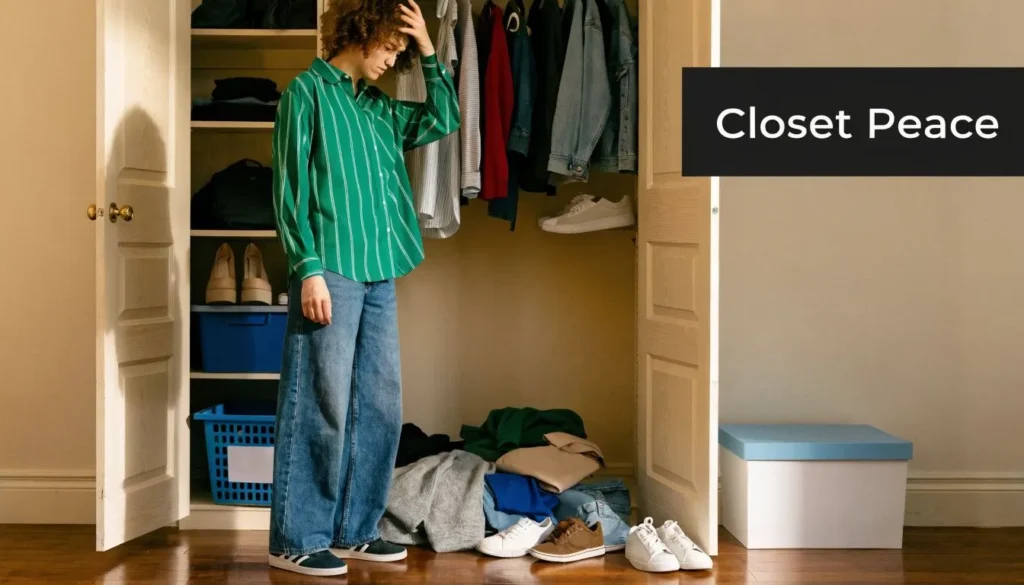
Most overstuffed closets have the same hidden problem. They contain plenty of individual items, but not enough useful combinations. You don’t need more clothes. You need more clarity.
That’s why capsule dressing keeps gaining traction. The capsule wardrobe market was valued at USD 1.3 billion in 2023 and is projected to reach USD 2.6 billion by 2030, with growth driven in part by the 65% of millennials and Gen Z who say they prefer sustainable clothing, according to Strategic Market Research’s capsule wardrobe market analysis. That matters because it shows this isn’t just a niche minimalist hobby. More shoppers are actively choosing fewer, more versatile pieces.
It solves practical problems first
A good capsule wardrobe cuts down three forms of waste at once:
- Time waste because you stop sorting through clothes you never reach for.
- Money waste because each purchase has a job.
- Style waste because your pieces are chosen to work together instead of competing with each other.
The shift is mental as much as visual. A capsule asks better questions. Does this fit your actual week? Does it layer well? Can it dress up and down? Will you still want to wear it after the excitement of purchase day fades?
Practical rule: A capsule wardrobe shouldn’t feel sparse. It should feel usable.
It’s freedom, not restriction
People often assume a capsule means living in beige basics and giving up personal style. In practice, the opposite is usually true. When you remove the random purchases, your actual taste becomes easier to see.
You notice your preferred shapes. You see which fabrics you trust. You stop buying versions of yourself and start dressing the one who has meetings, school runs, long commutes, events, weather shifts, and a budget.
That’s the secret. A capsule wardrobe isn’t a fashion challenge. It’s a working edit of your life.
Conduct a Mindful Closet Audit

The first mistake people make is starting with a shopping list. The second is doing a dramatic purge before they understand what they wear. A better audit is quieter and more revealing.
Pull everything into view by category. Put jeans with jeans, work trousers with work trousers, knitwear with knitwear, and so on. You’re looking for patterns, not trying to impress yourself with ruthless decision-making.
Sort by use, fit, and honesty
As you handle each item, ask a few direct questions.
- Have you worn it recently? If not, why not?
- Does it fit your body now? Not five kilos ago. Not after tailoring you haven’t booked.
- Does it suit your current life? A wardrobe full of “someday” clothes is how clutter survives.
- Would you buy it again today? If the answer is no, that tells you a lot.
Create practical piles or zones rather than dramatic yes-or-no bins.
| Audit group | What belongs there | What to notice |
|---|---|---|
| Wear on repeat | Pieces you instinctively reach for | Color palette, fit, fabric, comfort |
| Good but neglected | Items you like but rarely style | Missing pairings, tailoring needs |
| Wrong for now | Poor fit, wrong season, old role in your life | Store, alter, or let go |
| Immediate exit | Damaged, uncomfortable, never right | Donate, sell, recycle if possible |
This stage often surprises people. The “best” clothes on paper are not always the clothes earning their keep. A beautiful blouse that wrinkles instantly or shoes that pinch by noon don’t belong in a functional capsule.
Keep emotional attachment in perspective
Sentimental clothes need boundaries. You don’t have to force every memory into active wardrobe space.
If an item matters emotionally but doesn’t serve your present life, store it separately from your daily capsule. That keeps the closet clear without asking you to be cold about meaningful pieces.
Some of the most useful audit decisions come from admitting, “I like this idea more than I like wearing it.”
A visual walkthrough can help if you’re struggling to start:
What works and what doesn’t
What works is identifying your real wardrobe heroes. The black trousers you wash and rewear. The cardigan that saves half your weekday outfits. The denim that fits without negotiation.
What doesn’t work is auditing from guilt. Don’t keep things because they were expensive, aspirational, or trendy once. Keep them because they support your current style and routine.
A good closet audit leaves you with three things: the pieces you trust, the gaps that keep repeating, and the habits that caused the clutter in the first place.
Define Your Signature Style and Palette
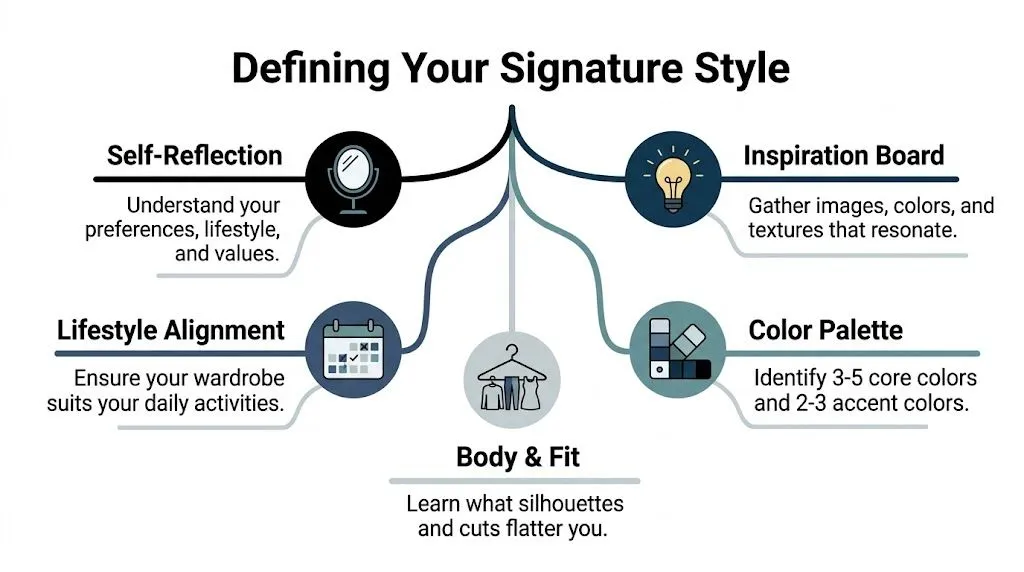
The strongest capsule wardrobes don’t begin with a formula. They begin with recognition. You need to know what feels like you before you decide what deserves space.
Many people can describe what they don’t want to wear far more easily than what they do. Start there, then turn the negatives into style language. “Not fussy” might become clean and structured. “Not too formal” might become relaxed polish. “Nothing clingy” might point you toward straighter silhouettes, softer drape, or strategic layering.
Build a style vocabulary
A mood board helps, but don’t use it as a shopping fantasy board. Use it as an editing tool. Save outfits you’d realistically wear, then study them for repetition.
You’re looking for signals like:
- Shape preferences such as straight-leg trousers, cropped jackets, column dressing, oversized shirts
- Fabric preferences like denim, crisp cotton, fine knits, linen blends, soft jersey
- Styling habits such as tucked tops, layered outerwear, tonal dressing, flat shoes
- Mood words including classic, relaxed, sharp, romantic, minimal, artsy, sporty
Once those patterns become obvious, set a palette that supports them. Most workable capsules rely on a small group of neutrals plus a handful of accent colors. If you wear black shoes, a black bag, and black outerwear regularly, black is probably one of your anchors. If cream washes you out, don’t force cream because minimalist content says you should.
For readers refining seasonal color choices, this autumn color guide in fashion can help you think about accent shades in a more practical way.
Fit matters more than trend language
Many capsule guides fall apart because they assume everyone can wear the same white shirt, same straight jean, same slip skirt, same trench. Real wardrobes don’t work like that.
A 2025 fashion inclusivity report says 67% of consumers identify as plus-size or outside standard sizing, yet most capsule advice still overlooks fit challenges. The same report notes that prioritizing custom tailoring and adaptive pieces can increase wear frequency by up to 40%, as discussed in The Laurie Loo’s guide to building a capsule wardrobe.
That should change how you build your capsule. If you’re petite, hem length may matter more than brand. If you’re plus-size, fabric recovery and shoulder fit might determine whether a blazer becomes a hero piece or closet clutter. If you use adaptive clothing, closures, seam placement, and dressing ease aren’t side considerations. They are core criteria.
Buy for your body and your day. A capsule built around “universal essentials” often fails because universal fit doesn’t exist.
Match style to actual life
A polished wardrobe that ignores your routine won’t last. Before finalizing your style direction, map your week in simple terms.
- Work rhythm from office days to school pickups to remote calls
- Climate reality including heat, rain, transit, layering needs
- Social patterns such as dinners, events, worship, travel, casual weekends
- Care tolerance meaning what you’ll steam, hand wash, polish, mend, or dry clean
If you need machine-washable layers, build around that. If you spend most days walking, comfort and sole grip should shape your shoe plan. If your style comes alive through jewelry, scarves, or lipstick, let those carry personality while the clothing stays simple.
A signature style isn’t something you invent from scratch. It’s something you uncover, then support with better choices.
Select Your Core Capsule Wardrobe Pieces
Once your style direction is clear, it’s time to build the structure. Now, a capsule becomes concrete. You’re no longer deciding whether you “like basics.” You’re deciding which exact categories deserve room in your season.
A useful benchmark is 30 to 40 pieces for a seasonal capsule. That range is practical enough to create variety without sliding back into clutter. It also creates a strong contrast with the far larger wardrobes many people are used to living with.
Use modules instead of random categories
One of the most effective ways to build is the Modular Capsule Wardrobe Methodology. It uses a repeatable structure such as 2 pants, 3 tops, and 1 outer layer to create 12+ outfits, and recommends a seasonal ratio of roughly 9 tops, 5 bottoms, and 5 pairs of shoes, according to The Concept Wardrobe’s capsule wardrobe guide.
That matters because most failed capsules aren’t too small. They’re too uneven. People keep buying tops because tops are emotionally easy to buy, then realize they have nothing interesting to wear them with.
Example 37-Piece Seasonal Capsule Wardrobe
| Category | Item Examples | Quantity |
|---|---|---|
| Tops | Tees, tanks, button-downs, fine knits, dressier blouse | 9 |
| Bottoms | Jeans, tailored trousers, relaxed pants, skirt, shorts | 5 |
| Dresses or one-piece options | Shirt dress, knit dress, jumpsuit | 2 |
| Layering pieces | Cardigan, blazer, light sweater, overshirt | 4 |
| Outerwear | Trench, wool coat, denim jacket | 3 |
| Shoes | Sneakers, loafers, boots, sandals, low heel | 5 |
| Bags | Everyday tote, crossbody | 2 |
| Accessories | Belt, scarf, jewelry, sunglasses, hat | 5 |
| Occasion-specific item | Event piece or specialty layer | 2 |
This is a template, not a command. If you never wear dresses, shift those pieces into trousers or knitwear. If your climate is cold for most of the year, outerwear may need more weight in the mix.
What your core pieces should do
The best capsule pieces earn their place in multiple ways at once.
- They bridge settings. A cardigan that works with denim and smart trousers is stronger than one that only makes sense with one skirt.
- They tolerate repetition. Good jeans, clean sneakers, and a reliable coat should improve your week, not require special handling.
- They layer cleanly. Bulky sleeves, awkward hems, and fussy necklines can diminish outfit combinations.
- They support your proportions. Even timeless pieces fail if the rise, length, shoulder line, or fabric weight doesn’t suit you.
A capsule piece is a workhorse, not a placeholder. If it can’t carry repeated wear, it doesn’t belong in the core.
Common selection mistakes
The first is choosing duplicates without admitting it. Five black tops can still leave you with nothing to wear if all five serve the same purpose.
The second is over-indexing on “investment pieces” before your basics are stable. A perfect coat won’t rescue a wardrobe that’s missing comfortable trousers and easy tops.
The third is building for an idealized social life. If your real week is errands, laptop work, commuting, and casual dinners, your capsule should reflect that. Occasionwear can exist, but it shouldn’t dominate precious space.
A good core capsule feels calm on the hanger and surprisingly versatile on the body.
Master Outfit Combinations and Shop Smart
Owning the right pieces isn’t enough. You need proof that they work together. That’s where outfit planning comes in.
Lay out your tops on one axis and your bottoms on another. Add shoes and outer layers afterward. This simple outfit matrix shows which pieces carry the most weight and which ones stall out. If a blouse only works with one pair of trousers and one heel, it may be lovely, but it’s not strong capsule material.
Build an outfit matrix that exposes gaps
Use a notes app, Canva, a spreadsheet, or printed photos. The tool matters less than the visibility.
Try these prompts as you test combinations:
- Start with your highest-use bottom. Build as many looks around your most-worn jean or trouser as possible.
- Swap only one variable. Keep the top and bottom fixed, then test different shoes or outer layers.
- Check for full-day wearability. An outfit that looks good but can’t survive walking, sitting, weather, or layering isn’t dependable.
- Photograph successful formulas. Your phone becomes a lookbook for rushed mornings.
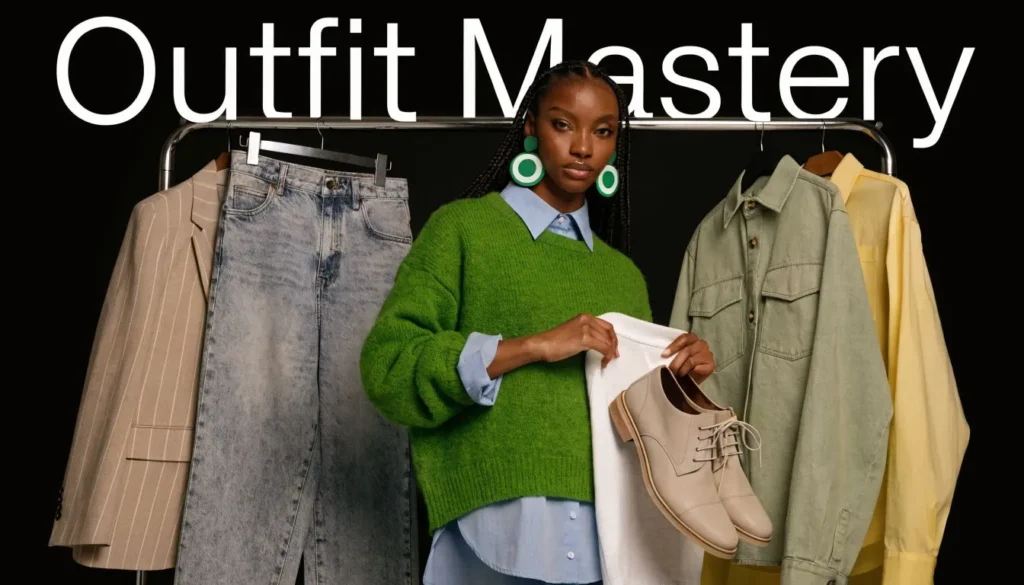
This process also shows you which purchases would have the highest payoff. Sometimes the missing piece isn’t another top. It’s a belt that finishes outfits, a shoe that bridges casual and polished looks, or a knit that layers under jackets without bunching.
Shop like an editor, not a browser
Consumer preferences have moved strongly toward versatile wardrobe builders. Requests for solid-colored tops increased by 100% year-over-year, and straight-leg jeans increased by 16% year-over-year, according to A Considered Life’s capsule wardrobe analysis. That tracks with what works in practice. The most useful buys are often the least dramatic.
Shop with a short, specific list:
- Name the gap clearly. “Black ankle boot with low heel for work and weekends” is far better than “I need shoes.”
- Set decision criteria before shopping. Fabric, rise, length, closure, washability, heel height, and budget should be decided in advance.
- Prefer compatibility over novelty. If an item only matches the clothes you don’t wear much, leave it.
- Use secondhand channels strategically. Consignment, resale, and tailoring can solve gaps at lower cost than constant full-price experimentation.
If you’re building a wardrobe that also needs to travel well, this guide on how to pack light for Europe offers a useful capsule-minded approach to outfit planning.
Shop after you test outfits, not before. Your wardrobe will tell you what’s missing if you let it.
Impulse shopping creates clutter because it answers emotion, not function. A smart purchase solves a repeated styling problem.
Maintain and Rotate Your Capsule for Longevity
A capsule wardrobe works best when you treat it as a living edit. Not fixed forever. Not rebuilt from scratch every month. Just adjusted with attention.
Seasonal rotation keeps the closet usable. When weather shifts, move off-season pieces out of prime space, clean them before storage, and store them where they’re protected from dust, moisture, and crushing. Fold heavy knits rather than hanging them if they stretch easily. Brush coats before putting them away. Clean shoes before storage so they’re ready when they come back out.
Keep the system from drifting
The simplest maintenance habit is one in, one out. If a new item enters the capsule, something else needs to leave active rotation, get stored, or be passed on. That keeps volume from creeping up again.
A quick monthly check helps too:
- Notice what you wore repeatedly
- Flag items you avoided
- Repair what’s worth saving
- Write down any real gaps before you shop
Many wardrobes improve. Not through dramatic overhauls, but through small corrections. A hem gets shortened. A knit gets depilled. A bag gets replaced because it no longer suits your actual day.
Care is part of style
Capsules rely on repeat wear, so maintenance matters. Read care labels. Use a steamer if that helps you wear pieces more often. Store shoes with shape in mind. Mend early, before tiny problems become reasons not to wear something.
If you want your wardrobe to stay aligned with lower-impact buying habits, it helps to understand the bigger picture around sustainable fashion. Caring for what you already own is part of that practice.
The best sign your capsule is working isn’t that it looks sparse on Instagram. It’s that getting dressed becomes easier, shopping becomes calmer, and your closet starts reflecting the person you are instead of the person marketing keeps trying to invent for you.
If you enjoy practical fashion advice that connects style with real life, maxijournal.com publishes approachable articles across fashion, travel, health, technology, arts, and more. It’s also a useful place to explore guest-friendly editorial writing if you like clear, everyday guidance without the usual clutter.
Discover more from Maxi Journal
Subscribe to get the latest posts sent to your email.