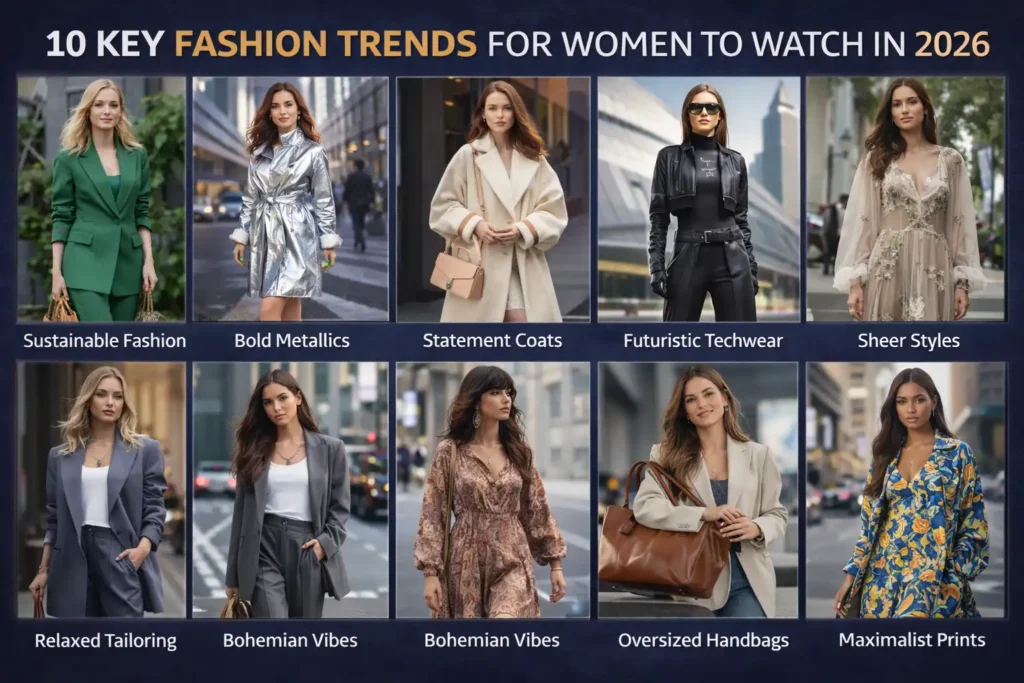
You put on an oversized blazer in the fitting room, step back, and wonder if you look polished or if you borrowed someone else’s jacket on the way out. That hesitation is common. The piece looks effortless on other people, but on your own body it can feel bulky, stiff, or oddly costume-like.
The fix is seldom “don’t wear oversized.” The fix is learning how to style oversized blazer outfits so the volume looks intentional. When the cut, proportions, and finishing pieces work together, the blazer becomes one of the easiest items in your wardrobe. It can sharpen denim, relax tailoring, and give simple basics a point of view.
Why the Oversized Blazer is a Modern Wardrobe Hero
You can throw an oversized blazer over a plain tank and jeans at 8 a.m., then wear the same jacket over a slip skirt or dressy trousers at dinner and look appropriately dressed. Very few pieces earn that kind of range.
Its staying power is deliberate. The shape has roots in 1980s power dressing, when broader, more assertive tailoring became tied to authority and visibility in professional settings. It returned with fresh relevance in recent years because people wanted clothes that felt polished without feeling stiff. By 2020, oversized blazers appeared in 65% of major fashion week collections, and they accounted for 28% of blazer sales growth in major markets in 2022 and 2023, according to this trend report discussion.
What keeps the oversized blazer in rotation, though, is function. It adds shape to soft basics, relaxes outfits that would otherwise feel too formal, and gives simple looks more intention. In styling sessions, I often use it as the piece that settles an outfit down. A minidress feels less exposed. Wide-leg jeans look more finished. A knit top and trousers stop reading flat.
It also works across body types, which generic trend coverage often skips. A petite frame usually needs cleaner lines and controlled length. A tall frame can carry extra volume with less adjustment. A fuller bust, broader shoulders, or a plus-size shape changes where the blazer should break and how much structure helps. That is why blanket advice fails. The same jacket can look sharp on one person and overwhelming on another, even when both are technically wearing the trend “correctly.”
That flexibility is why it keeps showing up in conversations about modern essentials and broader fashion trends for women. The oversized blazer earns its place because it is useful. Once the proportions suit your frame, it stops feeling intimidating and starts doing real work in your wardrobe.
The oversized blazer works best when you treat it as a precision styling piece, not a one-size-fits-all trend.
Nailing the Foundation Choosing Your Perfect Blazer
The outfit starts before the styling starts. If the blazer itself is wrong, no clever shoe or belt can fully rescue it.
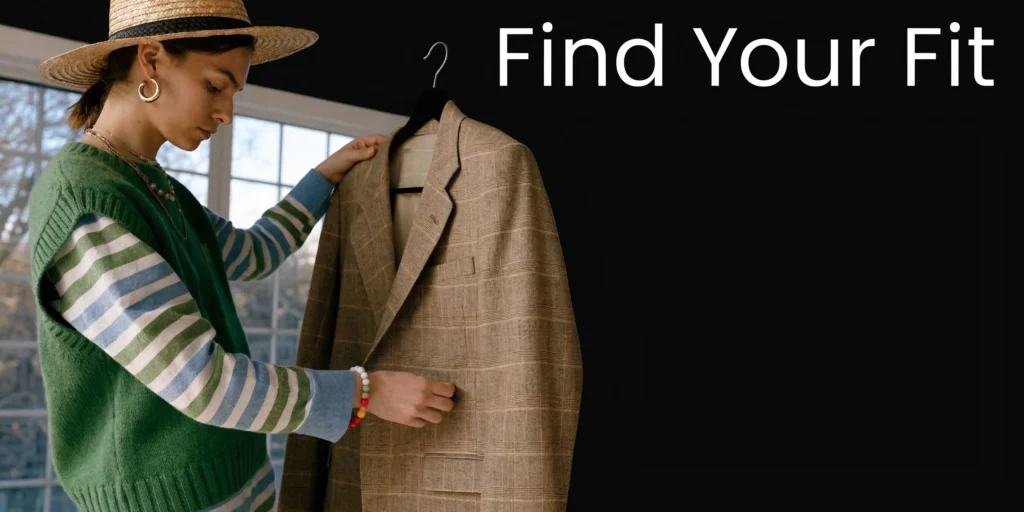
Search interest reflects how many people are trying to figure this out. Google Trends data showed search volume for “oversized blazer outfits” surged 320% between 2019 and 2023, and styling guides consistently recommend structured shoulders and fluid fabrics like wool blends or Tencel to keep the look intentional rather than sloppy, according to this oversized blazer styling analysis.
Start with the shoulders
Shoulders decide whether the blazer feels fashion-forward or too large.
A true oversized blazer still has a plan. The shoulder line may be extended or softly dropped, but it should not collapse in a way that drags your whole frame downward. When the shoulders are mushy, the jacket wears you. When they are clean, the volume looks deliberate.
Check these details in the mirror:
- Shoulder line: It should look designed, not accidental.
- Collar stance: The lapels should sit flat instead of kicking away from the chest.
- Upper back: You want ease, not bunching.
If one area must be right, prioritize the shoulders first.
Fabric decides the mood
The same oversized cut behaves very differently in different materials.
A wool blend usually gives you a crisper outline. That works well if you want authority, sharper workwear, or a cleaner city look. Tencel and other fluid fabrics soften the shape, which is useful if you want the blazer to drape over knitwear, denim, or a slip dress without looking boxy.
Personal values can also shape the purchase. If fabric choice matters to you beyond silhouette, it helps to understand the bigger conversation around what is sustainable fashion, especially when you are deciding between trend-driven buys and long-term wardrobe staples.
Length changes the whole outfit
Oversized is not one single formula. Length matters as much as width.
Consider this approach:
| Blazer length | Best effect | Watch out for |
|---|---|---|
| Cropped to high hip | Fresh, youthful, easy with wide trousers or skirts | Can lose the relaxed blazer feel if too short |
| Hip length | Most versatile, easiest for everyday wear | Needs clean shoulder fit to avoid squareness |
| Mid-thigh or tunic length | Strong editorial line, great over slim layers | Can overpower shorter frames if not balanced |
What to reject in the fitting room
Some blazers are not oversized. They are wrong.
Skip it if:
- The sleeves swallow your hands: You can roll sleeves later, but if the whole arm feels lost, the scale is off.
- The button placement pulls strangely: That means the cut is fighting your bust or torso length.
- The hemline cuts at an awkward point: If the blazer hits the widest part of your hip and stiffens there, it can make the whole outfit feel heavier.
Buy the blazer that already looks close to right. Styling should refine the piece, not perform emergency repairs.
Mastering Proportions for a Flattering Silhouette
Once the blazer is right, proportion becomes an essential skill. Most outfits succeed or fail depending on this.
The oversized silhouette needs contrast. Not necessarily tight clothing, but a sense that one part of the outfit is controlling the volume of the other. Without that contrast, the eye reads the whole look as one large block.
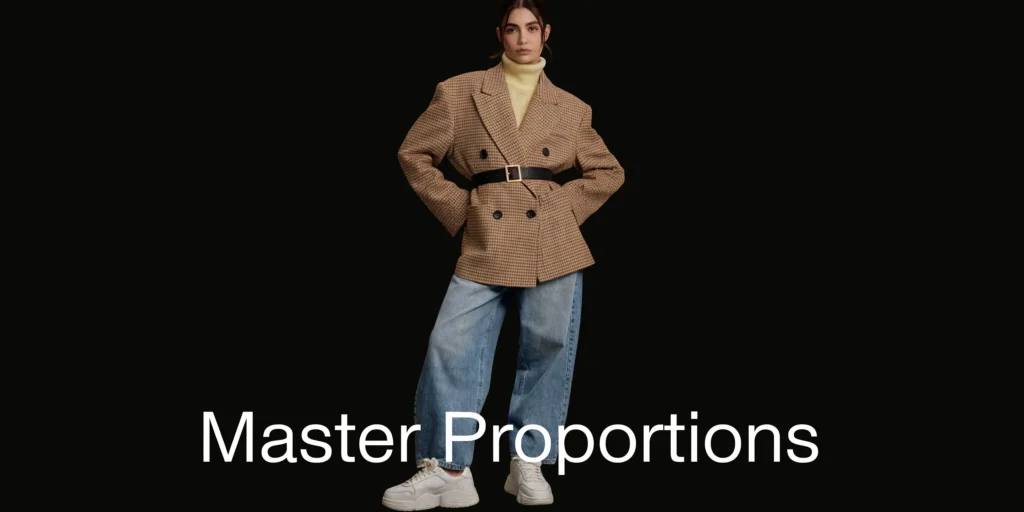
Data-backed styling guidance puts this clearly. The Waist Definition and Volume Juxtaposition Technique works across body types. Rolling sleeves to the elbow can reduce the “swamped” perception by 80%, and waist cinching with a belt elevates figure-flattery scores by 88%, according to this guide to acing the oversized blazer trend.
Use visual volume subtraction
This sounds technical, but the idea is simple. You remove visual heaviness from specific points so the blazer reads as relaxed rather than engulfing.
The easiest places to do that are the wrists, neckline, and waist.
If your blazer feels too big, do not abandon it. First, expose skin at the wrist by pushing or rolling the sleeves. That small break makes the jacket look styled instead of slouchy. The eye can locate your arms again, which gives the whole look shape.
Necklines matter too. A crew neck under a boxy blazer can work, but it often makes the top half feel denser. A scoop neck, soft V-neck, open shirt collar, or slim tank creates breathing room.
Contrast matters more than tightness
Many people hear “balance the blazer” and think that means skinny jeans only. That is too narrow.
You do need contrast, but contrast can come from line, length, fabric, or structure. Straight-leg trousers can work well if the fabric falls cleanly. A column skirt can work because it creates a long uninterrupted line. A fitted knit dress works because the body remains visible under the oversized layer.
What usually fails is volume piled on volume without control. If the blazer is broad, long, and heavy, then wide puddling pants and bulky layers underneath tend to blur the silhouette.
Belting changes the message
An unbelted oversized blazer says ease. A belted oversized blazer says intention.
Neither is better. They do different jobs.
Use a belt when:
- You want shape quickly: Especially over a dress, slim knit, or monochrome base.
- You need a dressier finish: A belt can make a borrowed-feel blazer look more deliberate.
- You want to mark your waist without changing the whole outfit: This works well if your bottom half is already simple.
Leave it unbelted when:
- The blazer has a beautiful drape on its own
- You want a cleaner, cooler line
- The outfit already has enough structure below
If an oversized blazer feels “off,” expose the wrists first, then reassess. That one adjustment often solves more than people expect.
A quick proportion check
Before leaving the house, run through this short mirror test:
Can you clearly see your hands and wrists?
If not, push the sleeves up.Does one part of the outfit feel sleeker than the blazer?
If every piece is equally oversized, refine one of them.Is there a visible shape somewhere?
That shape can come from a belt, a neckline, a slim base layer, or a clean trouser line.Does the outfit have a focal point?
If not, the blazer can look accidental instead of styled.
Outfit Recipes for Every Body Type and Occasion
Generic advice breaks down fast with oversized blazers. “Just wear slim bottoms” helps some people, but not all. Height, shoulder width, bust, and torso length all change what balance looks like.
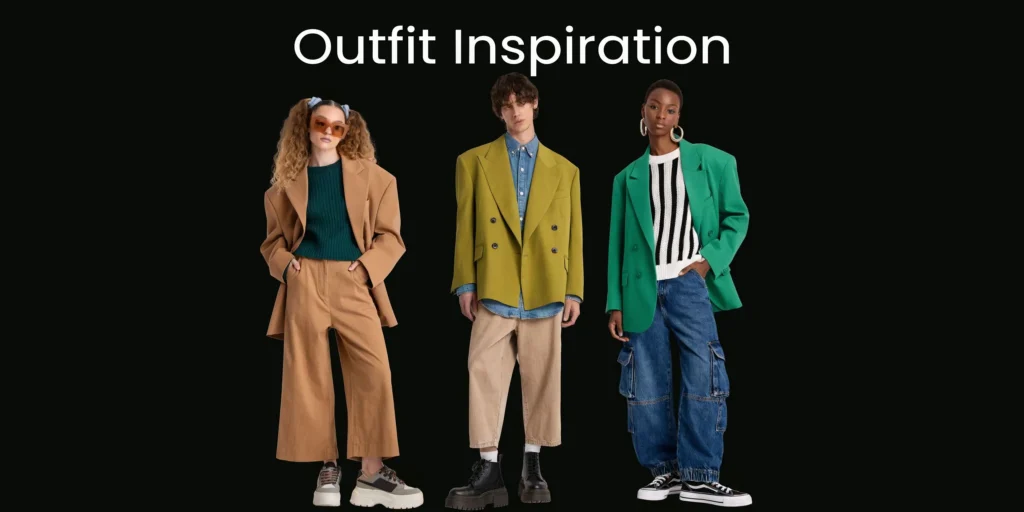
For petite frames under 5’4″, a more precise method works better. The strongest approach includes a precise shoulder seam, rolled sleeves, and high-waisted bottoms that create a 2:1 volume ratio, which can boost perceived height by 15-20% with a success rate over 90%, according to this petite oversized blazer styling methodology.
For petite frames
Petites do not need smaller ideas. They need tighter control of scale.
The biggest mistake is buying a blazer for the oversized effect and ending up with one that extends too far at the shoulder and too low through the body. That kills leg line immediately. A blazer can still be roomy, but the structure has to stay clear.
Try these outfit formulas:
Office formula: Hip-length blazer, tucked silk cami, high-waisted straight trousers, pointed shoes.
This keeps the torso neat and lets the trouser rise do the elongating.Weekend formula: Single-breasted blazer, fitted tank, dark straight jeans, low-profile loafers or sleek sneakers.
The fitted top keeps the top half defined.Evening formula: Mid-thigh blazer, monochrome mini or slim knit dress, heeled sandals or pumps.
The continuous color line underneath helps the blazer feel longer, not heavier.
Small details matter more on a petite frame. Roll the sleeves, keep the lapels clean, and avoid excess bulk under the jacket.
For curvy and plus-size figures
An oversized blazer can look incredible on curves when it skims instead of fights the body.
What usually works best is a blazer with enough room through the bust and upper arm, plus a clean front closure or an open front that falls straight. If the jacket strains across the chest, the oversized effect disappears and the fit starts to look tense.
Use shape strategically:
- A slim knit top or bodysuit under the blazer gives the eye a starting point.
- A V-neck or open neckline breaks up density at the chest.
- Pants, straight jeans, or a column skirt often balance best.
A few strong combinations:
Polished daytime look
Mid-thigh single-breasted blazer, soft V-neck knit, straight black trousers, block heels.
Casual look
Relaxed blazer, tucked tee, dark jeans, structured bag, ankle boots.
Dinner look
Blazer worn open over a fitted midi dress, simple earrings, heeled sandals.
If you like belting, use it with intention. Place the belt where your waist naturally sits, not where the blazer forces it to sit. That difference matters.
For tall frames
Tall wearers usually have more freedom with length, which makes the oversized blazer especially strong.
Longer hemlines often look elegant rather than overwhelming, and you can carry more fabric through the body without losing proportion. That means a tunic-length blazer over a slim knit and tall boots can look effortless instead of heavy.
Good formulas for tall proportions include:
- Long-line workwear: Tunic blazer, fine-gauge knit, full-length structured trousers.
- Relaxed smart-casual: Oversized blazer, tank, straight or wide-leg denim with a clean hem.
- Evening: Belted blazer over a slip skirt or worn over a short fitted dress.
Tall clients can also handle stronger shoulder lines more easily, especially when the rest of the outfit stays sleek.
For broad shoulders
This group is frequently overlooked.
If you already have shoulder presence, you do not always need aggressive padding. Look for blazers with a natural shoulder fall and enough softness through the torso. You still want structure, but not football-shoulder drama.
What helps:
- Open necklines that lengthen the upper body
- Single-breasted fronts rather than dense overlap
- Minimal shoulder ornamentation
- Cleaner lapels and lighter layering underneath
What to avoid:
- Heavy shoulder pads plus chunky knits
- Double-breasted cuts that add width across the chest
- Stiff fabric with no drape
A strong broad-shoulder formula is a fluid blazer, slim knit tank, straight dark trousers, and a pointed shoe. It reads long and clean.
A quick visual example helps when you are deciding how much structure feels right:
Occasion-based outfit ideas
Body type matters, but occasion matters too. The same blazer can do different work depending on what you pair with it.
Office
The office version should feel controlled, not stiff.
Choose a neutral blazer, a simple knit or blouse, and trousers with a clean line. If the blazer is oversized, keep the underlayer smooth. Avoid ruffles, bulky pockets, or too many competing details.
Casual weekend
For casual weekends, oversized blazers often shine best.
Use contrast. A white tank, good jeans, a leather belt, and a roomy blazer can look sharp without trying hard. Sneakers make it casual. Loafers make it more considered. Boots add edge.
Evening
For night, simplify.
A blazer over a slip dress, fitted midi dress, or even a minimal top and sleek trousers works because the blazer becomes the statement shape. Add one focused accessory. Earrings, a cuff, or a clutch is enough.
The best oversized blazer outfits do not try to prove the blazer is oversized. They make the blazer look like it belongs there.
The Finishing Touches Shoes and Accessories
Shoes decide how the blazer reads before anyone notices the rest of the outfit.
If you wear heels, the blazer feels more intentional. Pumps, heeled sandals, or a sharp slingback pull the silhouette upward and add a cleaner finish. This is especially useful when the blazer is long or boxy.
Flat shoes shift the mood. Loafers keep things polished and grounded. Sleek sneakers make the outfit more off-duty. Chunky boots add weight, which can be great if the blazer itself is crisp and structured. If the blazer is already heavy and long, though, bulky boots can push the look too far.
Match the shoe to the line of the outfit
A quick rule helps here.
- Slim base outfit: Any shoe works because the line is already controlled.
- Relaxed denim or wider trousers: Choose footwear with shape. A pointed toe, structured loafer, or defined boot helps.
- Dress or skirt under the blazer: Let the shoe support the mood. Barely-there heels feel lighter. Boots make it stronger.
Accessories should support the blazer, not crowd it.
Keep the accessories selective
An oversized blazer already brings visual presence. You do not need every styling trick at once.
Try one of these approaches:
- Neck focus: Open blazer, simple chain or layered necklaces, clean neckline.
- Ear focus: Plain top, statement earrings, no necklace.
- Waist focus: Belted blazer, minimal jewelry, strong bag.
- Bag focus: Structured handbag or clutch that echoes the blazer’s polish.
Scarves can work well, especially in cooler months, but tie them with restraint. If the lapels are strong and the blazer is boxy, too much fabric at the neck can clog the whole look. For seasonal color ideas, it helps to look at how different autumn colors fashion pair with classic blazer neutrals.
A final practical point. Steam the blazer. Oversized tailoring looks expensive when it is crisp and disappointing when it is wrinkled. Because the silhouette is roomy, creases show more clearly.
Essential Dos and Donts for Styling Oversized Blazers
The fastest way to get this trend right is to stop assuming one formula suits every frame. That is one reason so many people get frustrated. Styling advice often skips body diversity, even though 35% of oversized blazer returns from petite shoppers are tied to poor shoulder proportioning, according to this analysis of gaps in oversized blazer advice.
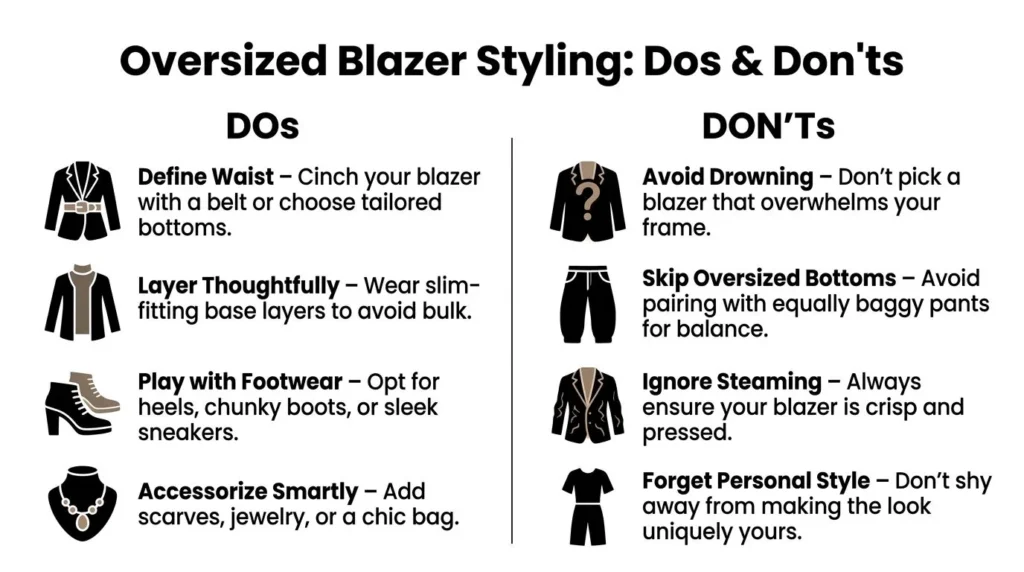
Keep this checklist in mind:
Do
Choose intentional shoulders
A blazer can be relaxed without looking collapsed.Expose the wrists
Rolled or pushed sleeves make the whole silhouette feel lighter.Use contrast somewhere
That can come from slim layers, a clean trouser line, a column dress, or a belt.Dress for your frame
Petite, tall, curvy, and broad-shouldered wearers need different adjustments.
Don’t
Buy the biggest blazer and hope styling fixes it
Oversized is a cut, not a sizing mistake.Pile volume on every part of the outfit
You need one area to bring order.Ignore fabric behavior
Stiff cloth and drapey cloth create different results.Over-accessorize
Let the blazer stay the main shape.
The oversized blazer is not a trick item. It is a precision item. Once you control fit, proportion, and finish, it becomes one of the easiest pieces to rely on.
If you enjoy practical style guides, trend breakdowns, and approachable commentary across fashion and culture, maxijournal.com is worth exploring. It’s a smart place to read fresh articles, discover new perspectives, and find clear, reader-friendly pieces that make style feel easier to apply in real life.
Discover more from Maxi Journal
Subscribe to get the latest posts sent to your email.