How do you find new independent music releases when recommendation engines keep feeding you cleaner versions of what you already play? Algorithms are efficient at extending listening history, but they tend to miss local scenes, small labels, niche subgenres, and artists who have not yet produced enough engagement data to rank well.
That matters because independent music now occupies a large share of listener attention across major platforms, as noted earlier. The hard part is no longer access. It is sorting signal from volume.
A better method is to use several types of discovery sources at once. Marketplaces surface what artists and labels are releasing in real time. Editorial outlets add judgment and context. Radio stations catch records that work outside playlist logic. Playlist ecosystems reveal early momentum. Aggregators help you scan what is rising across blogs and fan communities.
That mix turns discovery into a repeatable practice instead of a passive feed experience. If you want to spot up-and-coming music artists before they are folded into mainstream recommendation loops, the source matters as much as your taste.
The seven platforms below were selected for clear, different strengths: direct artist support, editorial rigor, scene awareness, speed, and breadth. Used together, they help you build your own filtering system and make better decisions about what to hear, follow, and support.
1. Bandcamp
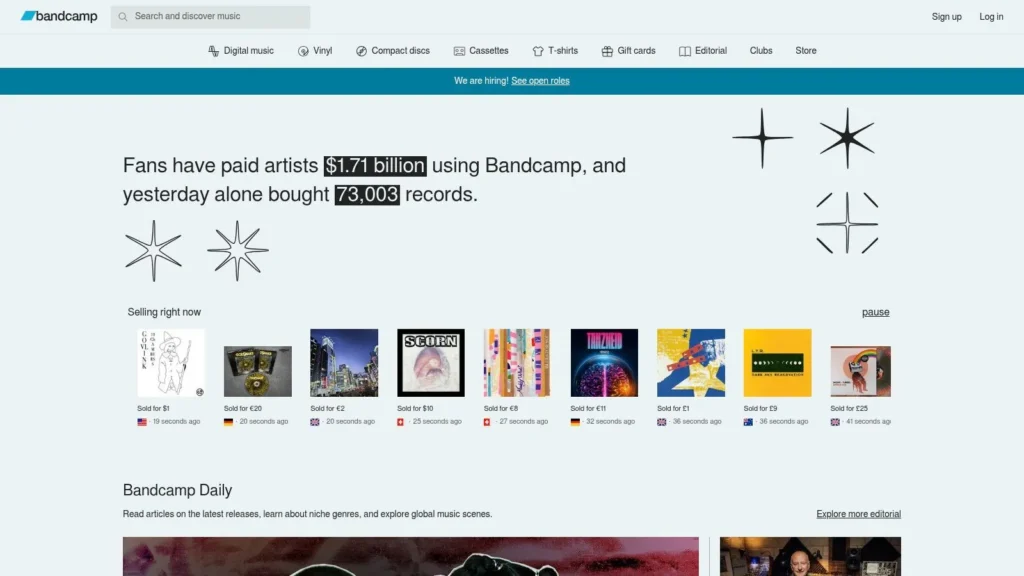
What makes Bandcamp the strongest starting point for finding new independent music release after release, rather than stumbling into one good record at a time? It combines discovery, context, and direct artist support inside the same system, which changes how a listener evaluates what to follow.
Bandcamp is valuable because its discovery tools are tied to release behavior, not just listening behavior. The New & Notable feed surfaces current releases across genres. Bandcamp Daily adds reporting, scene guides, and label features that explain where a record fits. Clubs add a subscription layer for listeners who want recurring recommendations from a trusted curator instead of an endless feed.
That structure produces a different kind of signal than streaming services. On Bandcamp, artists, labels, and fans all leave visible trails. You can move from one release to a label catalog, from that label to related artists, then to listener collections that reveal scene connections a playlist usually hides.
Why Bandcamp belongs in a serious discovery system
Bandcamp works best for listeners who want to build taste deliberately. Following labels is often more productive than browsing by genre because labels filter for aesthetic consistency, recording quality, and scene affiliation before the music reaches you. Public collections help too. If several committed listeners keep buying from the same micro-scene, that pattern usually matters before larger editorial outlets register it.
The platform also closes the gap between hearing and supporting. If a release stands out, you can buy it immediately, follow the artist, and keep track of future work from the same network. That makes Bandcamp more useful than platforms built mainly for low-friction sampling.
A practical way to use it:
- Follow labels before artists: Labels usually provide a steadier filter for future discovery.
- Check who bought the release: Public collections often reveal adjacent scenes and overlooked records.
- Read Bandcamp Daily selectively: Use features and scene guides to understand why a release is getting attention.
- Buy one release each session: That habit turns browsing into a repeatable method for support and curation.
Practical rule: If a release holds up for a second listen, follow the label before leaving the page. That action improves future recommendations more than saving a single track elsewhere.
For readers trying to spot up-and-coming music artists before broader outlets catch on, Bandcamp is usually the clearest place to see early momentum in real time.
2. NPR Music
How do you tell whether a promising new artist has substance, not just momentum?
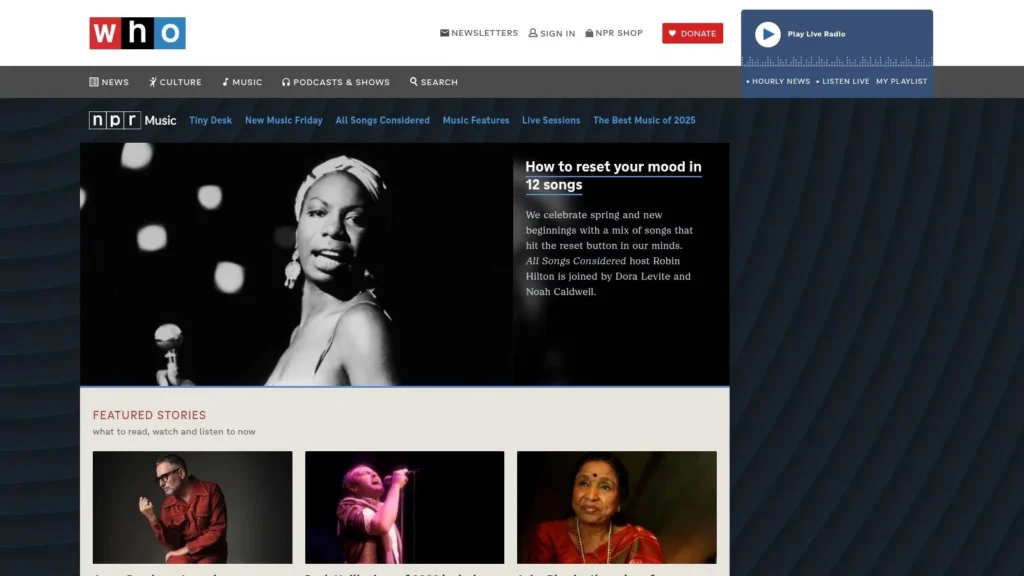
NPR Music is one of the few discovery sources built to answer that question. Its value is not volume. It is editorial context across multiple formats. A listener can encounter an artist through New Music Friday, hear critics explain what stands out on All Songs Considered, and then test the songs in a live setting through Tiny Desk. That sequence makes NPR useful as a verification tool, not just a recommendation feed.
For independent music discovery, that distinction matters. Streaming playlists are good at surfacing tracks. They are weaker at showing whether an artist has a clear point of view, a convincing live presence, or enough depth to hold attention beyond one single. NPR covers those gaps with reporting, discussion, and performance.
Best for separating durable artists from short-term buzz
NPR is especially valuable because it sits between underground scenes and broader public attention. If a relatively new artist appears there, you are not just seeing that someone on an editorial team liked a song. You are seeing that the artist can support a larger story, whether through songwriting, performance, or cultural relevance.
Tiny Desk is the strongest example. Stripped-back performances reduce the role of studio polish and expose timing, voice, arrangement, and stage chemistry. For independent acts, that is a better test than playlist placement. An artist who still feels distinct in that format usually merits closer attention.
The platform also rewards slower listening. Short write-ups and roundtable conversations often mention collaborators, local scenes, and influences that point to your next search path. That makes NPR more useful as a discovery system than a one-off media brand.
Use it like this:
- Start with All Songs Considered or New Music Friday: Use them as a weekly filter, then note which names come up more than once.
- Check for a Tiny Desk set: A strong live performance is a better signal of staying power than a polished single alone.
- Follow the surrounding context: Pay attention to producers, scene references, and peer artists mentioned in the coverage.
NPR helps you decide which new artists deserve deeper listening, not just a quick save.
Its limitation is clear. NPR does not focus exclusively on independent music, and some selections arrive after early adopters have already found them elsewhere. That is precisely why it belongs in a discovery guide. It works best after Bandcamp and before faster-moving outlets like Stereogum, giving you a reliable midpoint between raw emergence and wider recognition.
3. Stereogum

Stereogum is useful for one reason above all: repetition. Independent music discovery rarely hinges on a single glowing write-up. It usually happens when an artist keeps appearing in different editorial contexts over several weeks, first as a promising single, then in a feature, then in album coverage, then in reader conversation. Stereogum is one of the few outlets built around that rhythm.
Its recurring columns create a practical monitoring system. “The 5 Best Songs Of The Week,” Album Of The Week, and Band To Watch are not interchangeable. Each serves a different stage of discovery. Weekly song lists surface immediate standouts. Band To Watch helps identify artists still forming a wider reputation. Album Of The Week asks for a higher level of commitment and signals that a release can sustain attention beyond one track.
That structure makes Stereogum valuable if your goal is to become a better curator rather than a passive consumer of recommendations. A name that appears once may just reflect a strong PR cycle. A name that appears across formats is more likely to indicate real editorial confidence. If you already read independent music reviews and release analysis, Stereogum works well as the faster, more iterative layer in that process.
Best for tracking momentum before consensus hardens
Stereogum sits in a specific part of the discovery chain. It is later than Bandcamp, where artists often appear with little framing, but earlier than fully canonizing outlets that tend to mark consensus after it forms. That middle position is useful. It lets you watch which independent releases are gaining traction while there is still time to form your own view.
Use the site with a clear filter:
- Read weekly song roundups as a scan, not a verdict: Save the tracks that hold up on a second listen.
- Treat Band To Watch as an early signal: Follow the artist elsewhere and see whether the promise extends beyond the featured song.
- Use Album Of The Week selectively: Give one full release your full attention instead of skimming five.
Its limitation is editorial range. Stereogum has a strong indie-rock and alternative center, and that shapes what gets repeated. If you are searching for local scenes, specialist electronic subgenres, or non-anglophone independent music, you will need other sources alongside it.
For listeners building a repeatable system for finding new independent music, Stereogum earns its place because it shows momentum in motion. That is more useful than a static list of releases.
4. Pitchfork Best New Music
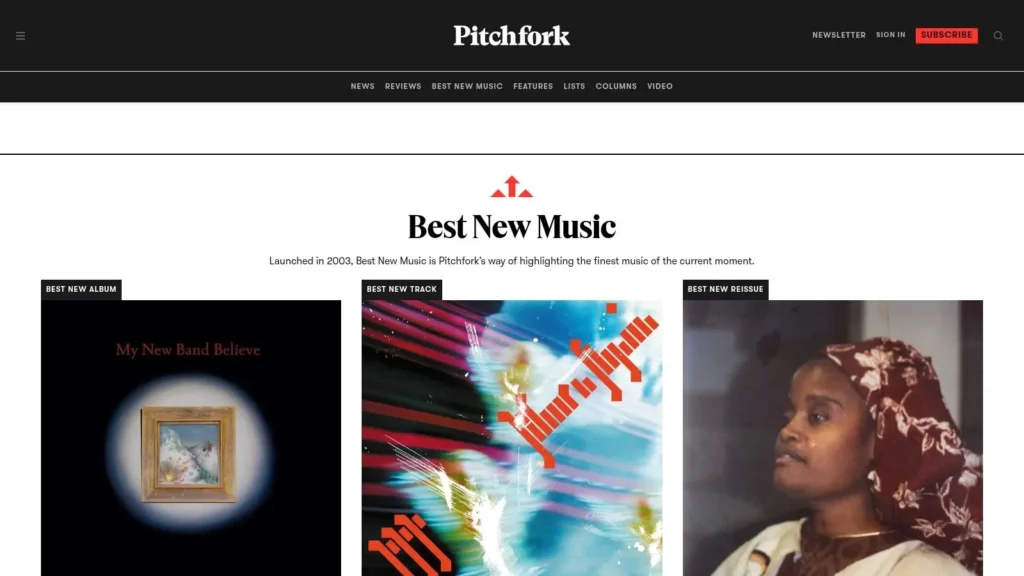
Which source helps most once you already have too many promising releases and need a sharper filter? Pitchfork’s Best New Music hub remains one of the clearest editorial signals available. It is useful for listeners who prefer a smaller set of recommendations shaped by explicit critical standards rather than by playlist churn or early buzz.
That role is distinct from the sources above. Stereogum is useful for watching momentum form in real time. Pitchfork is stronger later in the process, when you want to know which releases a major critic-driven outlet believes will matter enough to merit sustained attention.
Best when you want a critical shortlist with context
Pitchfork earns a place in a discovery system because it does two jobs at once. It selects. It explains. Albums, songs, and reissues appear within the same editorial framework, so you are not only finding what is new. You are also seeing how a release fits into a longer history of scenes, influences, and production ideas.
That second function matters. Independent music discovery often breaks down once everything is reduced to a stream of new names. A strong review can clarify whether an album stands out for songwriting, sonic design, label context, or cultural significance. That gives you criteria you can reuse elsewhere, which is the difference between consuming recommendations and becoming your own curator.
A practical way to use Pitchfork looks like this:
- Start at Best New Music, not the full review archive: The designation creates a tighter, more deliberate shortlist.
- Read reviews for argument, not just score: The reasoning is often more valuable than the rating.
- Use reissues to trace influence: Older selections can explain why certain current indie records sound the way they do.
- Compare your reaction with the review after listening first: That preserves your judgment while still benefiting from criticism.
Pitchfork also has clear limits. Its coverage can skew toward releases that fit established critical narratives, and its canon-shaping influence can narrow attention if you rely on it alone. Used well, though, that is not a reason to avoid it. It is a reason to pair it with less centralized sources and treat it as a selective checkpoint rather than a complete map.
If criticism is part of how you discover music, MaxiJournal’s independent music reviews and release analysis can serve as a useful companion. Together, those sources help you judge not only what is new, but what deserves time, repeat listens, and support.
5. Spotify Fresh Finds
Spotify Fresh Finds matters for one reason: it reduces the gap between hearing a promising track and deciding whether an artist deserves more of your attention. Because it sits inside a platform many listeners already use daily, it turns discovery into an active habit rather than a separate research task.
That convenience can produce real range. The main Fresh Finds playlist and its genre-specific versions often surface artists at an earlier stage than traditional review outlets, which makes Spotify useful for spotting movement before a broader critical consensus forms. If Bandcamp is strong at direct artist-to-listener discovery and Pitchfork is strong at filtering through criticism, Fresh Finds is strong at scale and speed.
Its weakness is the same feature that makes it effective. High playlist turnover favors quick impressions. Songs arrive fast, disappear fast, and rarely come with enough context to explain why they matter.
Use it as a first-pass filter, not a final verdict.
A better method looks like this:
- Save immediately: If a track stands out, keep it before the playlist refresh pushes it out of view.
- Check the artist profile right away: One strong single can signal a developing act, or it can be the only notable track.
- Look for release patterns: Recent singles, EPs, and collaborations tell you more than one playlist placement.
- Cross-check outside Spotify: If an artist keeps holding your attention, verify that instinct through interviews, live sessions, Bandcamp pages, or press coverage.
Fresh Finds is also less transparent than editorial outlets with named writers or DJs. You get selection without much argument. That limits its value if you want to understand scenes, influences, or artistic intent. It increases its value if your goal is volume. For readers trying to become their own curators, that distinction matters. Spotify can surface candidates efficiently, but the judgment still has to come from you.
Used that way, Fresh Finds earns a place in this guide. It is not the source that explains independent music best. It is the source that helps you notice more of it, faster, inside the listening habits you already have.
6. KEXP
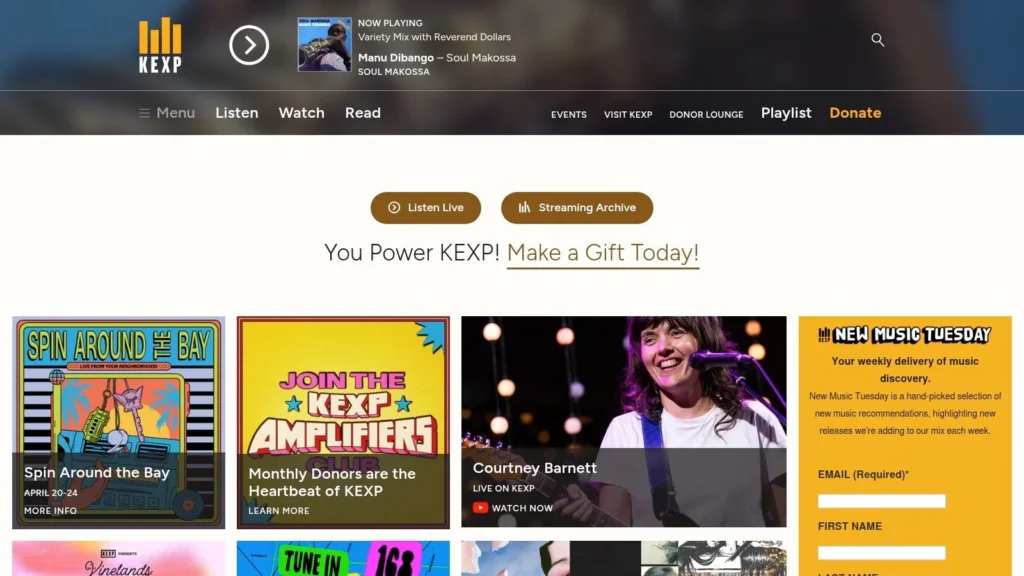
KEXP earns its place in this guide because it does more than surface tracks. It supplies editorial judgment in sequence. A DJ decides what belongs together, what tension to create, and when a new independent release makes more sense beside older records, local scenes, or adjacent genres. That sequencing gives listeners context that playlists and review aggregators often leave out.
For readers who want more than isolated recommendations, KEXP is one of the best ways to hear how independent music fits into a broader musical argument. Its value is cumulative. One song may catch your ear, but a full set can show you patterns in production, lineage, geography, and mood. That makes it especially useful if your goal is to build your own system for discovering new music across different platforms and curators.
Best for context, curation, and scene awareness
KEXP works best when discovery requires interpretation, not just exposure. Song of the Day offers an easy entry point. In-studio sessions let you test whether a promising act has command beyond the recording. The two-week archive of DJ shows offers a distinct advantage, because it lets you compare hosts and notice which artists return across programs.
That recurring exposure matters. As noted earlier, the independent sector is large enough that abundance itself has become part of the problem. KEXP addresses that problem with taste, framing, and continuity.
Use it with a method:
- Start with archived shows, not only live radio: Archived sets reveal each host’s range and make comparison easier.
- Note which DJs repeatedly support the same artist: Repetition across programs suggests conviction, not a one-off placement.
- Move from a track to a session: A live performance often reveals whether the artist has identity or only one strong single.
- Pay attention to transitions and commentary: The explanation between songs is often as useful as the songs themselves.
One practical rule helps here. Follow DJs whose selections keep widening your frame of reference. Over time, the host becomes a more reliable discovery source than any single recommendation.
KEXP’s limitation is control. It is less precise than a database, a tag system, or a searchable marketplace. That tradeoff is also its strength. If Spotify helps you scan quickly, KEXP helps you understand why a release belongs in your rotation at all.
7. Hype Machine
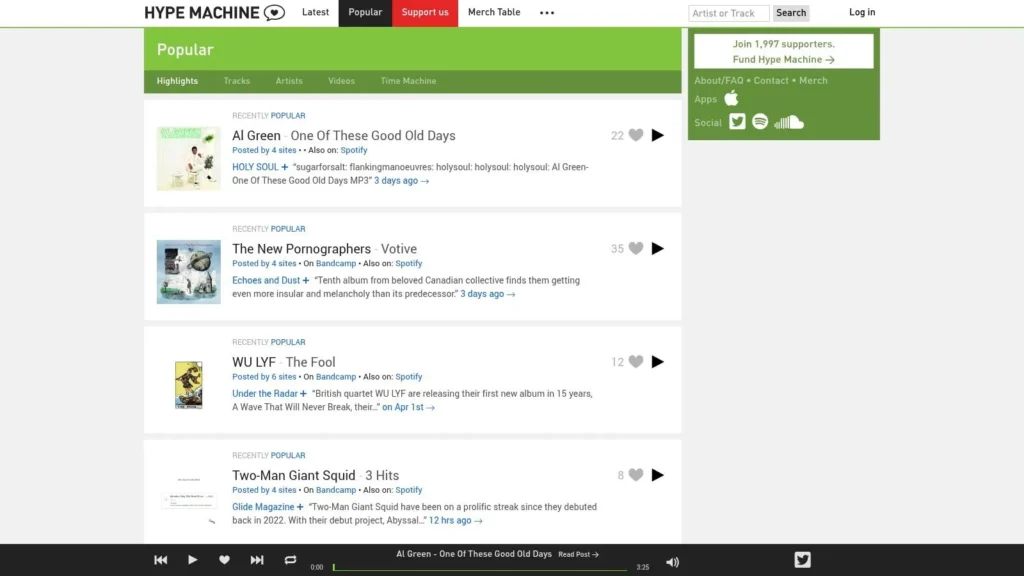
Hype Machine is still one of the clearest ways to monitor what the blog ecosystem is noticing in real time. Its interface is plain, but its function is sharp. The Latest feed acts like a live wire from a curated index of music blogs, while the Popular charts show which songs listeners are actively favoriting across short time windows.
This makes Hype Machine less of a destination and more of a radar screen.
Best for early blog buzz
The platform is useful because it surfaces conversation before consensus hardens. Playlists often tell you what has already been selected. Hype Machine can show you what writers are posting about right now, often before those tracks settle into larger editorial circuits.
That kind of speed matters because one major gap in current coverage is the lack of real-time discovery tools for emerging releases, especially beyond static year-end or genre lists. A summary of existing coverage noted that current outlets lean heavily on retrospective 2025 roundups and leave a gap in actionable discovery for newer releases, according to Far Out Magazine-focused analysis of the discovery gap. Hype Machine partially solves that problem by turning scattered blog activity into one visible stream.
Its best uses are practical:
- Check Latest for raw input: New independent music releases appear here before they’ve been normalized.
- Use Popular to sort noise from traction: Community “loves” aren’t perfect, but they help prioritize.
- Click through to blogs selectively: The surrounding write-up often explains why the track landed.
For listeners building a multi-platform routine, Hype Machine works well as the first alert layer. Find something there, verify it on Bandcamp or Spotify, then look for deeper framing from a publication or radio session.
If you want a broader strategy for combining tools like this, MaxiJournal’s guide to the best ways to discover new music is a useful companion.
New Indie Releases: 7-Source Comparison
| Platform | Implementation complexity | Resource requirements | Expected outcomes | Ideal use cases | Key advantages |
|---|---|---|---|---|---|
| Bandcamp | Low, simple browsing and buying; optional club subscriptions | Low, account optional, budget for purchases or donations | Direct artist support, discovery of niche/underground releases | Buying/collecting music, supporting indie artists, deep dives into scenes | Direct revenue to artists, curated feeds, editorial features |
| NPR Music | Low, read articles/watch Tiny Desk videos | Low, web access; possible geo limits for some videos | Critically curated discovery and exposure for emerging acts | Finding editorial picks, discovering artists via Tiny Desk/Contest | Public-media credibility, broad genre coverage, proven artist breaks |
| Stereogum | Low, frequent posts and weekly roundups | Low, time to follow posts and playlists | Timely indie/alt recommendations and news | Weekly discovery, following columns like Band To Watch or Album Of The Week | Independent editorial voice, high posting cadence |
| Pitchfork (Best New Music) | Low–Medium, read in-depth reviews and use filters | Low, web access, time for longform pieces | Strong critical signals identifying standout releases | Researching notable indie/experimental albums and reissues | High editorial standards, centralized Best New Music hub |
| Spotify Fresh Finds | Low, follow playlists inside app | Medium, Spotify account (free/premium), follow/save tracks to retain | Streamlined streaming discovery and artist development exposure | Passive in-app discovery, tracking emerging artists on DSPs | Seamless streaming integration, artist support programs, wide genre reach |
| KEXP | Low, tune in live or use archived shows | Low, web/app access, time to listen to shows | Human-led discovery, live-session debuts, local scene highlights | Radio-style serendipity, catching live in-studio performances | DJ curation, in-studio sessions, free access and archives |
| Hype Machine | Medium, scan aggregated blog feeds and charts | Low, web access, time to sift trending posts | Rapid signal of blog-driven buzz and early releases | Real-time trend spotting from tastemaker blogs | Aggregates diverse blogs, popularity metrics, fast discovery |
From Discovery to Support Your Role in the Indie Scene
What turns a casual listener into someone who strengthens the independent music field?
The answer is not volume of listening. It is behavior after discovery. This guide has focused on platforms that surface new independent music through different signals, editorial judgment, community tags, radio programming, playlist placement, and blog momentum. Their real value appears only when a listener uses those signals to build habits that last longer than a single release cycle.
Independent music is no longer a niche corner of the market. As noted earlier, it represents a large but fragmented part of music consumption, which makes listener decisions more consequential than they look. In fragmented markets, small actions spread unevenly. A save, a merch purchase, a ticket sale, or a well-aimed recommendation can matter more than passive streams because those actions travel through systems that independent artists control more directly.
That is the practical advantage of using several discovery sources instead of relying on one app. Bandcamp helps you buy direct. NPR Music, Stereogum, and Pitchfork give editorial filters that reduce noise. KEXP adds human programming and live performance context. Hype Machine surfaces early blog attention. Spotify Fresh Finds shows which emerging artists are gaining traction inside a major streaming system. Used together, these platforms do more than help you find songs. They let you separate short-term buzz from artists worth following for years.
Support works best when it is specific.
How to turn discovery into meaningful support
- Buy where the artist keeps more control: Purchasing music, vinyl, or merch through Bandcamp or an artist’s own store usually contributes more directly than casual streaming.
- Follow with a purpose: Saves, follows, and playlist adds increase the chance that you will catch the next release, tour date, or limited merch drop.
- Share concrete recommendations: Name the song, the release, or the live session, and explain what stands out. Specific referrals travel farther than generic praise.
- Attend local shows: A ticket sale often matters financially, but shows also deepen the connection between artist and audience in a way streams do not.
- Track labels and scenes: Following a small label, college station, venue calendar, or local promoter often produces better long-term discovery than chasing isolated singles.
These habits also improve your own judgment. Passive listening trains recommendation systems to send back familiar variations. Active listening produces a record of your taste. If you save albums, revisit sessions, compare coverage across sources, and occasionally pay for what you love, you start building a personal framework for discovery instead of renting one from an algorithm.
For artists, the lesson is equally clear. Different discovery channels reward different forms of work. Streaming playlists tend to favor release planning, metadata discipline, and consistent audience signals. Editorial outlets respond to strong music, a clear story, and professional materials. Radio, blogs, and local scenes often reward persistence, relationships, and repeated exposure over time.
The strongest listeners become useful participants in that system. They do not just consume new independent music. They identify patterns, support artists early, and help good work circulate through communities that can sustain it.
If you’re tracking new independent music releases and want thoughtful coverage beyond recycled lists, explore maxijournal.com. You’ll find approachable commentary across music and culture, plus a platform for readers and contributors who want sharper discovery, clearer analysis, and fresh independent voices.
Discover more from Maxi Journal
Subscribe to get the latest posts sent to your email.