Think the age of exploration is over? Think again. The real frontier isn’t in some distant galaxy—it’s right here in our planet’s oceans, lakes, and rivers. Hundreds of new fish species are being discovered every single year, from stunning reef dwellers to creatures pulled from the crushing pressures of the deep sea.
It proves just how many secrets our world still holds.
The Age of Discovery Is Now
Forget dusty old books and sepia-toned maps. The greatest era of biological discovery is happening as we speak, and our planet’s waters are the main stage. The sheer volume of new finds is incredible; it’s a non-stop parade of life previously unknown to science.
This guide is your ticket to that frontier. We’ll dive into the modern detective work—everything from deep-diving submersibles to cutting-edge DNA analysis—that scientists use to track down these hidden species. You’ll meet some of the most amazing recent discoveries and see why this work is so much more than just putting names to faces.
An Explosion of New Finds
The pace of discovery isn’t just steady, it’s speeding up. New technology has completely changed the game. Just since 2008, scientists have formally described over 1,000 new-to-science marine fish species around the globe.
That works out to an average of more than 10 discoveries every single month. These aren’t just tiny, obscure fish, either. The count includes 122 new sharks and rays and 131 new gobies, showing that discoveries are happening across the entire fish family tree. You can dig deeper into these finds and see how DNA analysis is uncovering this hidden diversity.
This isn’t just a mission to fill up textbooks. It’s a race against time. Every new species we identify gives us a vital snapshot of biodiversity, which is the first step in protecting fragile ecosystems before they’re gone for good.
What You Will Learn
Here’s a look at what we’ll cover in this guide:
- The Discovery Toolkit: A breakdown of the primary methods scientists use to find and identify new fish.
- Recent Discoveries: Profiles of some of the most interesting new species found in both freshwater and marine habitats.
- Conservation Impact: Why formally identifying a new fish is the single most important step toward protecting it.
- How to Contribute: Real, actionable ways you can help support or even take part in the ongoing search for undiscovered life.
Let’s dive into the science, the stories, and the significance behind every new species that gets its name.
How Scientists Uncover a New Fish Species
Finding a new species of fishes isn’t like stumbling upon a lost puppy. It’s a full-on detective story that kicks off with a trek to some of the planet’s most remote places—think deep-sea trenches, uncharted rivers, or forgotten corners of a coral reef. Researchers often rely on high-tech gear like Remotely Operated Vehicles (ROVs) or specialized nets to snag specimens that just don’t look like anything on record.
Once a potential new candidate is on the research vessel, the real work begins. This is where the science of ichthyology, the study of fish, truly shines.
The Initial Examination
The first order of business is a meticulous physical check-up. Scientists measure everything. And I mean everything—from the number of rays in each fin to the exact layout of the scales. This process, called morphology, is all about comparing the fish’s physical blueprint against massive databases of every known species.
If there’s no match, the team’s heart rate probably goes up a notch. But looks can be misleading, so the real proof is hiding in the fish’s DNA.
Cracking the Genetic Code
Every species has a unique genetic signature, kind of like a biological barcode. To confirm a new discovery, scientists sequence a specific part of the fish’s DNA and run that sequence against a global library of genetic codes from millions of other organisms.
When the sequence comes back as one-of-a-kind, that’s the smoking gun. It’s a powerful confirmation that they’ve found something completely new. This genetic data does more than just say “it’s new”; it also reveals the fish’s closest relatives, helping scientists place it on the vast evolutionary tree of life. If you’re curious about the technology that powers this, our article explaining what bioinformatics is and how it works is a great place to start.
This whole journey, from the field to the lab to the final announcement, follows a clear path.
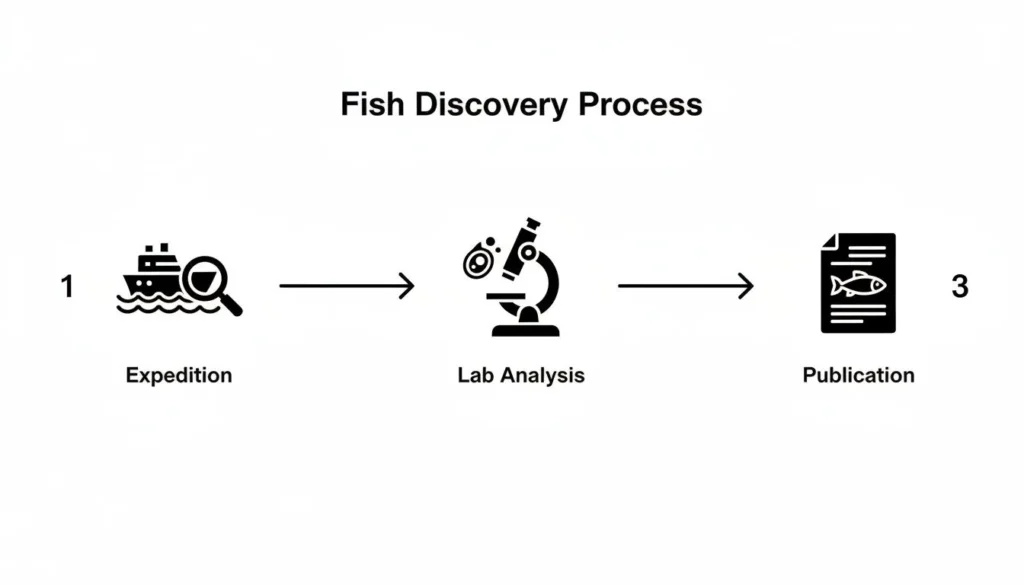
Each step is critical. You can’t have one without the others. It’s a systematic move from broad exploration to laser-focused analysis and, finally, sharing that knowledge with the world.
Speeding Up the Discovery Process
Today, organizations are finding ways to fast-track this process. The Nippon Foundation-Nekton Ocean Census, for instance, has developed a workflow that combines old-school expert analysis with super-fast DNA sequencing. By running both in parallel, they’ve managed to crush the average time it takes to confirm a new species from a staggering 13.5 years down to a much more manageable timeframe. This speed is vital when so many species could vanish before we even know they exist.
The final act is the formal introduction. The lead researcher writes a detailed scientific paper describing the species, gives it an official two-part Latin name, and gets it published in a peer-reviewed journal. Only after all that is the new fish species officially welcomed into the scientific community.
Exploring Freshwater Discovery Hotspots
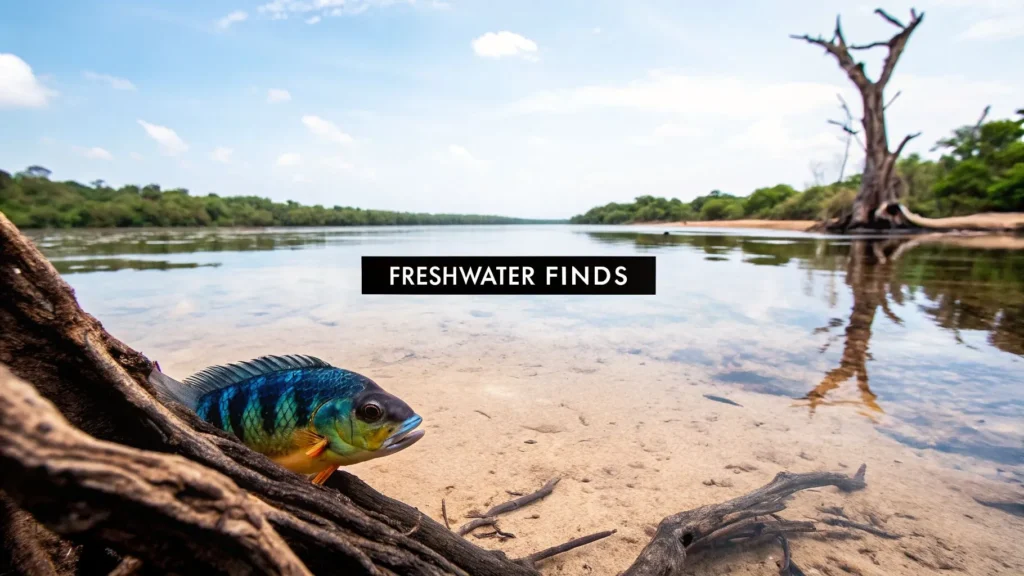
When you think of new animal discoveries, the deep sea probably comes to mind. But it’s the world’s rivers and lakes that are the real hotspots for finding new species of fishes. Freshwater habitats cover less than 1% of the planet’s surface, yet they are home to almost half of all known fish species.
The rate of discovery here is staggering. In a single recent year, taxonomists officially described 260 new freshwater species. That pace shows no sign of slowing, which tells us one thing for sure: there are so many more out there waiting for us to find them. You can read the full report and understand why protecting these fish is a top priority for conservationists.
South America and Asia: The Epicenters of Discovery
Year after year, two continents lead the pack for freshwater fish discoveries: South America and Asia. The Amazon River Basin, with its maze of tributaries and flooded forests, feels like a bottomless well of new species. Likewise, the river systems of Southeast Asia—from the Mekong to the isolated streams of Borneo—keep surprising scientists with fish they’ve never seen before.
These places have a few things in common that make them such productive discovery zones:
- Immense and Complex River Systems: Their vast, tangled waterways create countless isolated pockets where unique species can evolve in private.
- High Habitat Diversity: From rushing mountain streams to murky, slow-moving backwaters, the sheer variety of environments fuels an incredible diversity of life.
- Historical Under-Exploration: Many of these regions are remote and hard to reach, so they’ve only recently been explored with modern scientific tools.
Finding a new fish in a remote tributary is like discovering a new sentence in a book we thought we’d already read. It adds detail, changes our understanding of the plot, and reminds us that the story of evolution is far from over.
Portraits of New Freshwater Species
The species turning up in these hotspots are often stunning. Think of a totally blind, pigment-free fish found living in a deep underground cave, perfectly tuned to a life in total darkness. Its survival depends on super-sensitive touch and chemical-sensing abilities, giving us a live look at how life adapts to extreme conditions.
Another recent find might be a tiny, brilliantly colored dwarf cichlid from a blackwater stream in the Amazon. Its vibrant mating colors could have evolved in just that one spot, making it a living, one-of-a-kind jewel. These finds aren’t just names to add to a list; they’re real-time examples of evolution at work.
The existence of such specialized fish also points to how fragile their homes are. A single dam, a new source of agricultural pollution, or deforestation along a riverbank could easily wipe out an entire species before it’s even officially named. This turns the work of taxonomists into more than just a scientific project—it’s a race against time to document and protect life itself.
Meet the Newest Stars of the Deep
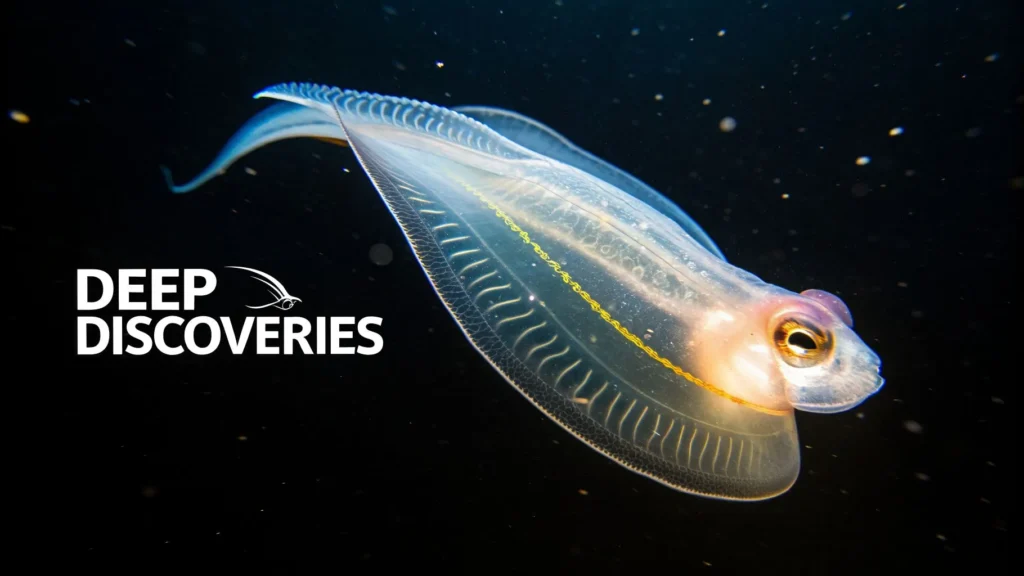
While we have a good handle on many freshwater systems, the deep ocean remains one of the last truly unexplored places on Earth. Every expedition into the abyss has the potential to add a new character to the story of life, often revealing species that stretch our understanding of biology.
Each year unveils a lineup of incredible creatures. The announcements from 2026 are no different, showcasing a range of new species of fishes that are as fascinating as they are important for science. From the crushing depths to vibrant, remote reefs, let’s take a look at a few of the latest discoveries.
The Mariana Ghost Snailfish (Pseudoliparis aetherius)
This fish is like something out of a ghost story. Found almost 8,000 meters down in the Mariana Trench, the Mariana Ghost Snailfish is nearly see-through. Its gelatinous, scaleless body is built to handle pressures that would instantly crush most other life forms.
It took advanced technology to even find it. A remotely operated vehicle (ROV) was needed to capture the first images of the snailfish moving through the dark. Its existence proves that life can flourish even in the planet’s most hostile environments and gives us clues about how biology works under such extreme conditions.
The Psychedelic Dragonet (Synchiropus phantasticus)
A complete opposite to the pale snailfish, the Psychedelic Dragonet is a burst of color. It was discovered in the shallow, isolated lagoons of a newly surveyed atoll in the Coral Triangle. This small fish is covered in an iridescent, swirling pattern of neon orange, electric blue, and deep purple.
Its main skill is camouflage. The dragonet lives among branching corals that are just as colorful, making it almost impossible to see. A team of divers finally spotted it only after watching a single coral head for hours, noticing a tiny flicker of movement that didn’t belong. This discovery underscores the sheer biodiversity that can be hiding in plain sight within complex reef systems.
Each new discovery is a reminder that we are still just scratching the surface. These species are not just scientific curiosities; they are ambassadors from an unseen world, carrying vital information about the health and complexity of our oceans.
Spotlight On Recent Marine Discoveries (2026)
The finds from 2026 highlight just how much variety is still out there waiting to be found. This table provides a quick look at some of the recent new species of fishes, each adding another unique piece to the massive puzzle of marine life.
| Species Profile | Key Characteristic | Discovery Location | Scientific Significance |
|---|---|---|---|
| Mariana Ghost Snailfish (Pseudoliparis aetherius) | Gelatinous, transparent body; survives extreme pressure. | Mariana Trench, Pacific Ocean | Provides insights into biology and protein stability in abyssal zones. |
| Psychedelic Dragonet (Synchiropus phantasticus) | Vivid, swirling neon coloration for camouflage. | Coral Triangle, Indo-Pacific | Shows how species-specific evolution occurs in isolated micro-habitats. |
| Abyssal Spiderfish (Bathyfilamentum insidiator) | Elongated fins used as a sensory “tripwire” network. | Mid-Atlantic Ridge | Demonstrates novel predation strategies in pitch-black, food-scarce areas. |
These discoveries aren’t just names to add to a list. They are living proof that the age of exploration is far from over.
Why Finding New Fish Species Matters
It’s easy to think of a new fish discovery as just another scientific headline. But finding a new species is much more than a notch on a researcher’s belt—it has huge, real-world effects on everything from global ecosystems to our own dinner plates.
Every discovery answers the big “so what?” question, showing us exactly why this constant search into the unknown is so critical.
The most direct impact is on conservation. Imagine global biodiversity as a massive, incredibly complex jigsaw puzzle. Every time a scientist identifies a new species of fishes, they’re adding a piece we never even knew was missing.
A Foundation for Protection
Here’s a simple truth: you can’t save what you don’t know exists. The simple act of formally naming and describing a species is the absolute first step toward protecting it legally.
Many of these new fish are found in tiny, fragile habitats, like a single river system or a remote underwater mountain. Once a species is officially on the map, conservation groups and governments can finally start to assess its population. They can then push to protect its home from threats like pollution, overfishing, or coastal development. Without a name, it’s just invisible.
Think of a new species as a previously unknown cornerstone in a building’s foundation. It reinforces the whole structure and tells you there’s a unique part of the ecosystem that, if it vanished, could weaken everything else around it.
Securing Human Well-Being
The benefits hit close to home, too. Healthy, diverse fish populations are the bedrock of the world’s fisheries, which provide the main source of protein for billions of people.
When we understand the full range of fish diversity, it helps fishery managers make smarter, more sustainable choices. It lets us see the entire ecosystem, not just the handful of commercial species we’re fishing for. That knowledge is what keeps the food chains that support our food supply intact, ensuring we have fish for generations to come.
Unlocking Future Breakthroughs
Finally, every new discovery is a lottery ticket for scientific and medical breakthroughs. Marine life is a biological goldmine, with organisms creating all sorts of unique chemical compounds to survive in their often-extreme environments.
These compounds can lead to incredible new medicines and biotechnologies. A chemical from a deep-sea sponge might turn out to have anti-cancer properties. A fish’s unique genetic code could inspire new technological solutions. The potential is limitless, and you can learn more about how scientists can adapt these discoveries in our guide on how CRISPR works.
At the end of the day, finding new fish helps us protect the planet’s health while unlocking innovations for our own future.
How You Can Join the Age of Discovery
The thrilling hunt for a new species of fishes isn’t just for scientists in high-tech submersibles anymore. Thanks to the world of “citizen science,” the door is wide open for anyone with a passion for nature to make a real difference. You can jump from the sidelines right into the heart of modern discovery.
Platforms like iNaturalist have completely changed the game for data collection. Whether you’re a diver, an angler, or just enjoy walking the beach, you can upload photos and notes about the life you see. Each record, geotagged and time-stamped, feeds into a massive global database that helps researchers track species and spot anomalies—the very clues that might point to a new find.
Become a Digital Explorer
You don’t even have to get your feet wet to contribute. Many projects are looking for volunteers to help classify images from deep-sea cameras or identify fish from expedition photo logs. This kind of digital volunteering is crucial, helping scientists sift through enormous amounts of data faster than they ever could alone.
Beyond getting hands-on, you can also support the organizations doing the groundwork. Groups like Ocean Census and SHOAL are on the front lines of exploration, and they rely on public support to fund their missions. Donating or volunteering with them directly fuels the discovery of new life. Making sure your photos are clear is vital; check out our guide on how to take better photos to make your contributions even more valuable.
Follow the Official Discoveries
If you want to track discoveries as they become official, there are some incredible resources at your fingertips. The World Register of Marine Species (WoRMS) is the definitive database where new marine life is formally cataloged.
Here is a look at the WoRMS homepage, which serves as a central hub for marine species data.
This platform provides authoritative taxonomic information, letting anyone verify a species’ name and learn its classification. It’s a direct window into the work of taxonomists around the globe, making the science behind new discoveries accessible to everyone.
Frequently Asked Questions About New Fish Species
It’s a fascinating topic, and naturally, it brings up a lot of questions. We’ve gathered some of the most common ones to give you a clearer picture of how science keeps uncovering life beneath the waves.
How Many New Fish Are Found Each Year?
You might be surprised to learn that scientists discover and formally name between 300 and 500 new fish species every single year. That number covers everything from freshwater streams to the deep ocean.
This rate has stayed remarkably steady. It’s largely thanks to better technology and expeditions reaching remote, previously unexplored waters. Every new discovery is a reminder of just how much of the aquatic world we have yet to meet.
Where Are Most New Fish Species Discovered?
The hot spots for discovery really depend on whether you’re looking in freshwater or saltwater. For freshwater species, two areas consistently top the charts:
- The Amazon Basin: This massive, intricate web of South American rivers provides countless isolated pockets where unique species can evolve undisturbed.
- Southeast Asia: The river systems here, like the Mekong and the countless streams flowing through Borneo, are also treasure troves of undiscovered fish.
In the ocean, the most fruitful places are the deep sea and the vibrant coral reef systems, especially in the Indo-Pacific’s famous “Coral Triangle.”
Key Insight: Finding a “new” species doesn’t always mean venturing to a place no one has ever been. Often, it’s a “cryptic species”—a fish that looks nearly identical to a known one but is proven by its DNA to be entirely different. This happens a lot, even in well-studied coral reefs.
Can a Regular Person Really Discover a New Species?
Absolutely! While it’s not something that happens every day, citizen scientists have been the first to spot fish that were later confirmed as brand new to science.
These are often dedicated scuba divers, wildlife photographers, or even sharp-eyed anglers. By uploading good, clear photos with exact location details to platforms like iNaturalist, everyday people can provide the critical first clue that kicks off a formal scientific discovery.
What Happens After a New Fish Is Found?
Spotting the fish is really just the first step. From there, it enters a demanding scientific process. This involves a deep dive into its morphological (physical) traits and genetic makeup to prove it’s one-of-a-kind.
Once confirmed, a scientist has to write up a detailed scientific paper. This paper formally describes the species, gives it a unique two-part Latin name (its genus and species), and gets published in a peer-reviewed journal. Only then does it become officially recognized by scientists around the world.
At maxijournal.com, we bring you accessible and engaging stories from the frontiers of science, technology, and the natural world. Explore our latest articles and join our community of curious readers today!
Discover more from Maxi Journal
Subscribe to get the latest posts sent to your email.