Imagine you’re walking down the street and stumble upon a sudden protest, a flash flood, or even just a vibrant community celebration. You pull out your phone, hit record, and share it online. In that moment, you’ve become a citizen journalist.
You’re taking part in the act of collecting, reporting, and sharing news, often delivering immediate, on-the-ground coverage long before a traditional news van might arrive.
Understanding Citizen Journalism
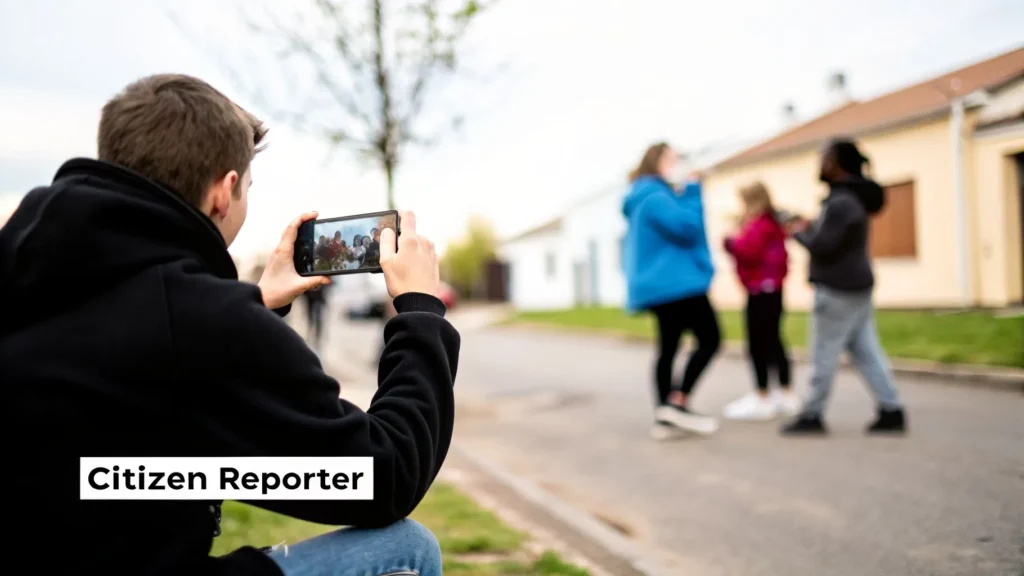
Think of citizen journalism less as a formal job and more like a neighborhood watch for information. It’s a grassroots movement made possible by the technology most of us carry every day. Anyone with a smartphone can offer a raw, unfiltered look at events as they happen, filling crucial gaps that professional news organizations might miss.
This has handed a microphone to people everywhere. Their presence on the ground provides an immediacy and authenticity that established media outlets can find hard to match, especially when a story is breaking fast.
Core Components Of Citizen Journalism
So, what does citizen journalism actually involve? It’s more than just snapping a quick picture. The process mirrors traditional journalism in many ways, just without the formal structure. These core components show how an observation becomes a news story.
| Component | Description |
|---|---|
| Observation & Collection | This is the starting point. It’s about actively witnessing and documenting an event using video, photos, audio, or even just written notes on your phone. |
| Reporting & Dissemination | The next step is sharing what you’ve captured. This usually happens on social media platforms like X (formerly Twitter), Facebook, or a personal blog to get the word out quickly. |
| Analysis & Commentary | Simply sharing a video isn’t always enough. Adding context, your interpretation, or an opinion helps your audience grasp the importance of what they’re seeing. |
At its heart, this process turns people from passive media consumers into active contributors.
Citizen journalism democratizes the flow of information, giving a voice to communities and individuals who might otherwise go unheard in the mainstream news cycle.
The Rise Of The Citizen Reporter
This entire movement exploded thanks to one thing: the smartphone. Before, reporting required expensive cameras, editing bays, and a way to broadcast. It was a closed-off profession. Today, the tools for gathering news are in the pockets of billions of people.
This accessibility has completely changed how news breaks and spreads. It’s no longer uncommon for the first reports of a major global event to come not from a news crew, but from an ordinary person who just happened to be there. This creates a far more dynamic information environment where anyone can help paint a more complete picture of our world.
How a Tsunami Ignited a Media Revolution
If you want to pinpoint the exact moment citizen journalism went from a niche idea to a global force, you have to go back to a single, catastrophic day: December 26, 2004. Before then, the notion of ordinary people reporting on major world events was mostly theoretical. After that day, it became fundamental to how we understand our world.
The event, of course, was the Indian Ocean tsunami. When a massive 9.0-magnitude earthquake ruptured the seafloor off Sumatra, it unleashed the deadliest tsunami in living memory. The disaster’s sheer scale was staggering, hitting remote coastlines across multiple countries. Professional news crews were completely overwhelmed and, in the immediate aftermath, a massive information vacuum opened up.
But as news organizations scrambled to get teams on the ground, something incredible was happening. Tourists and locals caught in the path of the waves were doing what came instinctively—they were hitting record. With the first generation of camera phones and digital cameras in hand, they captured the raw, terrifying reality of the disaster as it happened.
The World Gets Its First Glimpse
What they produced weren’t polished news segments. The footage was shaky, often pixelated, and full of raw, unfiltered human emotion. These videos and photos showed the true horror of the waves hitting the shore in a way no reporter standing in a studio ever could.
Within hours, this content started flooding early social platforms like Flickr and YouTube. For the first time, a global audience was witnessing a catastrophe not through the polished lens of a news agency, but directly through the eyes of those living it. By January 2005, these clips had millions of views, proving there was a massive public appetite for authentic, immediate information.
This torrent of firsthand accounts was a turning point. Major news outlets like the BBC and CNN realized they couldn’t just ignore this powerful new source. They started actively looking for these videos and photos, weaving them into their own broadcasts while being sure to credit the “citizen journalists” who captured them. Research from the era shows just how quickly the public adapted. A 2005 Pew Research study found that 29% of Americans were already turning to online sources like blogs and personal videos for their tsunami news. You can explore more data on journalism trends and their historical context to see how these patterns evolved.
A New Model for News Gathering
The 2004 tsunami didn’t create citizen journalism out of thin air, but it proved its undeniable power on a global stage. It effectively wrote the playbook for how news is gathered during a crisis—a new model where professionals and citizens often work side-by-side.
The tsunami showed that when official channels are broken, the public becomes the first line of reporting. Their collective viewpoint provides a mosaic of on-the-ground truth that would otherwise be lost.
The event established a precedent we now see in nearly every major story, from natural disasters to political movements. The core lessons from that tragedy were clear:
- Immediacy is paramount: Citizen reports can deliver instant coverage when traditional media simply can’t get there.
- Authenticity resonates: Raw, unedited footage connects with audiences on a deep, emotional level.
- Coverage becomes decentralized: Suddenly, news gathering wasn’t just for professionals with expensive gear.
In the end, the tragic waves that swept the Indian Ocean also sent a wave of change crashing through the media landscape. It cemented the role of the ordinary citizen as a vital part of telling the world’s most important stories, ensuring that even when chaos strikes, the cameras keep rolling.
Citizen Journalism vs. Professional Journalism
Thinking about the difference between citizen and professional journalism is a bit like comparing a passionate eyewitness account to a thoroughly researched documentary. Both can tell you something important about an event, but they come from entirely different places and are built on different foundations.
Professional journalists work within a system. They’re trained professionals, usually part of a news organization, and they’re held to strict ethical codes and a rigorous fact-checking process. Their work isn’t just a hobby; it’s a career governed by standards that have been built and refined over decades.
On the other hand, citizen journalists are often regular people thrust into extraordinary situations. They might be driven by a powerful sense of civic duty, or they could simply be in the right place at the right time with a smartphone. They typically operate on their own, without the formal training, editorial oversight, or legal protection that backs a professional reporter.
A pivotal moment that truly highlighted this new reality was the 2004 Indian Ocean tsunami, where firsthand accounts from ordinary people with cameras provided the world’s first look at the disaster.
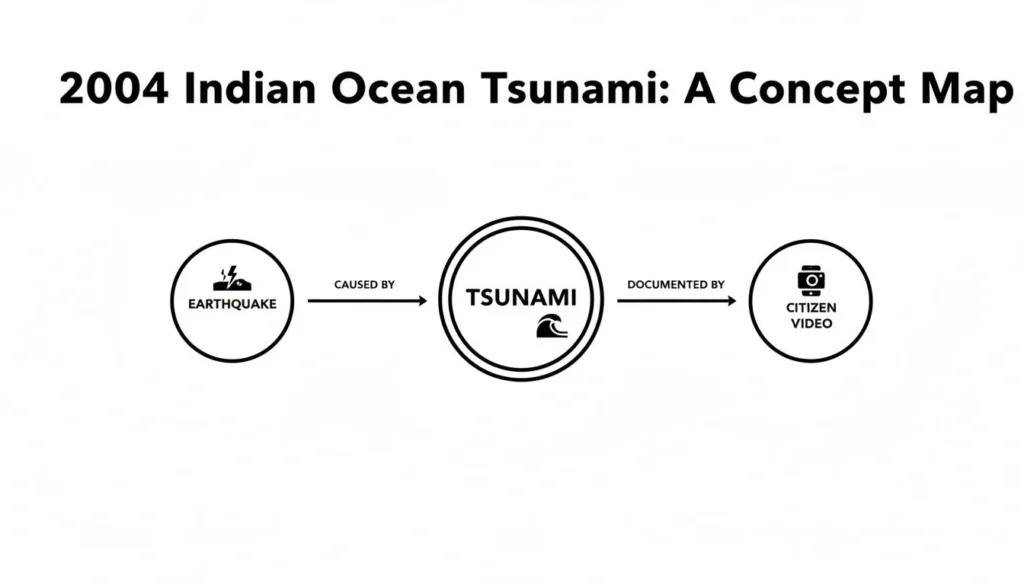
The map above breaks down how this event unfolded, showing a direct line from the earthquake to the citizen-shot videos that shaped the global understanding of the tragedy long before traditional news crews could arrive.
Speed vs. Accuracy: A Core Distinction
One of the most defining differences between the two boils down to speed versus accuracy. Citizen journalism is all about immediacy. An eyewitness can start a livestream and broadcast an event as it’s happening, giving the public raw, unfiltered information in real-time. It’s incredibly fast.
Professional journalism, while also striving for timeliness, puts accuracy and verification first. A story will pass through several layers of review—from editors to fact-checkers—before it ever gets published. This process is designed to ensure the information is correct, but it naturally takes more time. This creates a constant tension: citizen reports are often first, but professional reports are generally more reliable.
Citizen vs. Professional Journalism: A Head-to-Head Comparison
To really get a feel for their unique roles in our news ecosystem, it helps to see them side-by-side. Neither one is inherently “better,” but they fulfill very different needs.
| Criterion | Citizen Journalism | Professional Journalism |
|---|---|---|
| Training & Skills | Rarely formal; skills are typically self-taught or learned on the fly through direct experience. | Formal education or deep on-the-job training in reporting, ethics, and media law. |
| Resources & Tools | Limited to personal equipment, most often smartphones and publicly available software. | Access to professional-grade equipment, extensive research databases, and full institutional support. |
| Verification Process | Often minimal or left to the audience; the focus is on capturing the moment as it happens. | Mandatory and multi-layered; fact-checking and source confirmation are required before publication. |
| Accountability | Individual and informal; mistakes mainly risk a loss of personal credibility online. | Institutional and formal; errors can lead to official retractions, legal trouble, and career consequences. |
| Legal Protection | Very little; individuals face significant personal risk of lawsuits or arrest without organizational backing. | Shielded by press freedom laws and backed by their organization’s legal teams. |
This breakdown really clarifies why the two types of journalism look and feel so different. If you’re inspired to share your own stories, understanding these differences is a crucial first step before even looking into the best online magazine websites to publish on.
The power of professional journalism is trust, built through a rigorous process. The power of citizen journalism is authenticity, born from immediate, direct experience.
Not Competitors, But Collaborators
It’s easy to frame this as a competition, but that’s a big misconception. The reality is that these two forms of journalism are increasingly working together in a powerful, symbiotic relationship.
More and more, citizen reports act as a “first alert” for professional newsrooms. A viral video from a local protest or a tweet from a natural disaster zone can be the spark that ignites a much deeper investigation by journalists who have the time and resources to uncover the full story.
In this modern framework:
- Citizens provide the raw material: They capture the initial event, offering crucial eyewitness footage and on-the-ground perspectives.
- Professionals provide the context and verification: They step in to confirm the details, interview key figures, analyze the implications, and place the event in a broader context.
This collaborative model ultimately leads to a richer, more complete news landscape for everyone. It blends the unfiltered immediacy of citizen reporting with the disciplined, verified approach of professional journalism, giving us all a more nuanced and thorough understanding of the world.
The Power and Peril of Citizen-Led Reporting
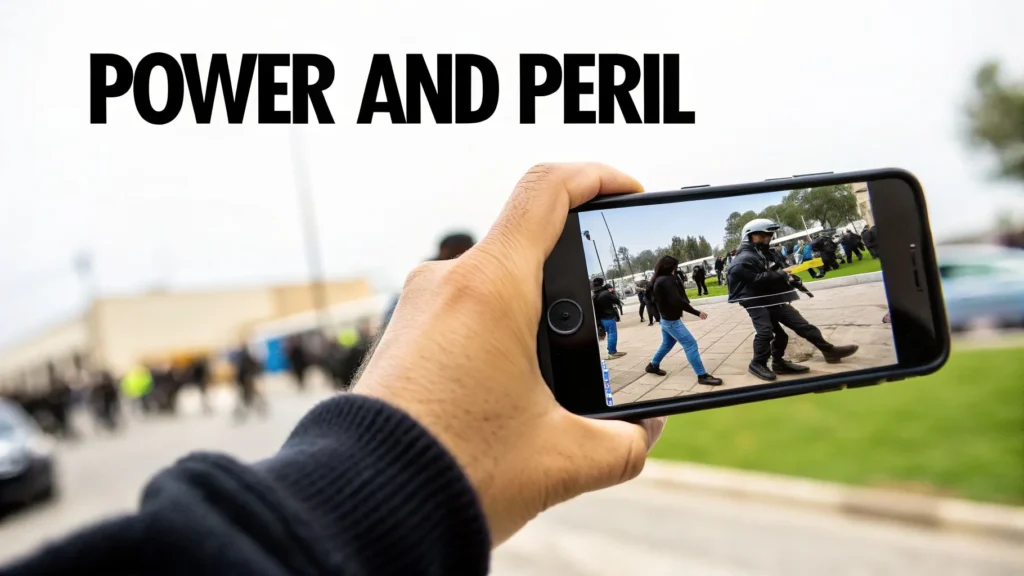
Citizen journalism is a double-edged sword. It has an incredible capacity to bring truth to light, but it can also sow chaos and confusion. To really understand its place in our world, you have to appreciate both its potential for good and its inherent risks.
The real power here is in democratizing who gets to tell the story. When a professional journalist can’t get to a scene, a citizen with a smartphone can. This simple fact has given a platform to entire communities that were once invisible to the mainstream media.
Amplifying Voices and Demanding Accountability
Perhaps the most important role of citizen-led reporting is its ability to hold people in power accountable. A single video, captured by a bystander, can cut through official statements and provide raw, undeniable proof of what actually happened.
Think back to the Arab Spring, which kicked off in 2010. Reports, photos, and videos from ordinary people on platforms like Facebook and Twitter were absolutely critical. They helped organize protests and showed the world what was happening on the ground, often cutting through government-controlled media blackouts.
But this isn’t just about global movements. It happens right in our own backyards. Citizen journalists are stepping up to fill the gaps left by shrinking local newsrooms. They’re doing things like:
- Documenting environmental violations from a local factory.
- Recording interactions with law enforcement to ensure proper conduct.
- Covering underfunded school board meetings that professional outlets can no longer afford to staff.
In this way, citizen journalism is creating a more informed and engaged public from the ground up.
The Peril of Unchecked Information
On the flip side, the very things that make citizen journalism so potent—its speed and lack of traditional gatekeepers—also make it incredibly dangerous. Without the training, ethical framework, and editorial oversight of a newsroom, major problems can surface.
The most obvious danger is the explosive spread of misinformation and disinformation. A video snippet taken out of context, a wrongly identified person, or an unverified rumor can go viral in minutes and cause real-world harm. A news organization can issue a formal retraction, but a false report from a citizen is like a feather in the wind; once it’s out there, you can never fully get it back.
The greatest strength of citizen journalism is its immediacy; its greatest weakness is that this immediacy often comes at the expense of accuracy. A viral video can expose a hidden truth or propagate a harmful lie with equal speed.
This lack of a verification process is a huge problem. An emotionally charged but inaccurate post can incite panic, destroy a reputation, or even trigger violence.
The Dangers for Citizen Reporters
The risks don’t just stop with the audience; they extend directly to the people doing the reporting. Citizen journalists often walk into volatile situations without the institutional backing or legal protection that professionals rely on, exposing them to serious threats.
Physical and Legal Risks:
- Personal Safety: Reporting on protests, conflicts, or crime can put you in harm’s way from both authorities and the public.
- Legal Trouble: Without knowing media law, a citizen reporter can easily get hit with a lawsuit for defamation or invasion of privacy. They also have no legal team to call if they’re arrested while reporting.
- Harassment: Once identified, citizen reporters can become easy targets for online harassment, doxxing, and even physical threats from people who don’t like what they’re showing.
It’s crucial to see both sides of the coin. Citizen journalism has fundamentally changed how we witness events, offering us firsthand perspectives and a powerful check on authority. But it operates in a high-stakes arena where the line between reporting the news and creating a problem can be dangerously thin. For all of us—both contributors and readers—navigating this reality demands a healthy dose of skepticism and a real commitment to getting the facts straight.
Essential Tools for the Modern Citizen Journalist

So, you’re ready to get out there and start reporting. While your smartphone is without a doubt the most powerful tool in your pocket, relying on it alone is like a carpenter showing up with just a hammer. To do the job right—to report accurately, protect your sources, and create compelling work—you need a well-stocked digital toolkit.
The right apps and platforms can make all the difference. They can turn a shaky video into a credible report, secure a sensitive conversation, and help you sort fact from fiction. Let’s look at the gear that will help you gather, verify, and share news safely and effectively.
Capturing and Sharing the Story
Your first job on the scene is to document what’s happening. Your phone’s camera is your go-to, but for the immediacy and quality that makes citizen reporting so vital, some specialized tools are a must.
- Live-Streaming Platforms: Apps like Instagram Live and Facebook Live are indispensable for real-time coverage. Broadcasting an event as it unfolds gives your audience an immediate, unfiltered perspective. This is incredibly effective for protests, breaking news, or local meetings where being “live” is the whole story.
- High-Quality Recording: The default camera app is fine, but for more professional-looking footage, an app like FiLMiC Pro gives you manual control over things like focus, exposure, and frame rates. Better visuals make for more powerful storytelling. Of course, even the best app won’t help if your technique is off, so learning how to take better photos is a great place to start.
Protecting Yourself and Your Sources
This is non-negotiable. When you’re covering sensitive topics, the safety and anonymity of your sources (and yourself) are paramount. Using secure communication channels isn’t just a good idea; it’s an ethical obligation to the people who are trusting you with their stories.
Protecting your sources is a core ethical duty. Using encrypted communication tools builds trust and ensures people feel safe sharing information that could put them at risk.
- Signal: Widely considered the gold standard for secure communication, Signal provides end-to-end encryption for all messages, voice calls, and video calls. This means absolutely no one—not even the company itself—can access your conversations.
- Telegram: Another popular choice, Telegram is known for its “Secret Chats” feature, which offers similar end-to-end encryption. It also allows you to create large, anonymous channels, which can be a great way to distribute information securely to a broad audience.
Verifying Information Before You Publish
In an era of rampant misinformation, your credibility is your currency. Before you even think about hitting “publish” or “share,” you have a responsibility to verify that the images, videos, and claims you’re presenting are authentic.
This is where you put on your detective hat.
Tools like the InVID-WeVerify browser plugin are built specifically for this. The dashboard above shows how it can break a video into keyframes, run reverse image searches, and analyze hidden data to help you spot doctored content or old footage being passed off as new.
Essential Verification Tools:
- Google Reverse Image Search: This should be your first reflex. Upload an image to see where else it has appeared online. This simple step can immediately expose an old photo being used in the wrong context.
- TinEye: This is another powerful reverse image search engine. Sometimes TinEye will find different results than Google, so using both gives you a more comprehensive look at an image’s online history.
- InVID-WeVerify: This is a heavyweight tool for debunking fake videos. It’s a browser extension that lets you slice videos into individual frames for reverse searching and dig into the file’s metadata to check for signs of manipulation. It’s an absolute must-have.
The Future of Citizen Journalism in a Connected World
As we look ahead, the story of citizen journalism is clearly one of evolution. It’s not about replacing professional newsrooms, but about becoming a more complex and essential thread in the fabric of how we get our information. We’re moving past the simple act of hitting “record” and entering a new era shaped by artificial intelligence, hyperlocal needs, and genuine collaboration.
One of the biggest game-changers on the horizon is artificial intelligence (AI). For citizen reporters, AI offers some incredible new tools. Imagine software that can transcribe an interview in seconds or comb through massive public datasets to find a story. AI can even act as a first line of defense, flagging potential misinformation by checking claims against known facts.
But there’s a catch. The same technology that helps can also be used to deceive. The rise of incredibly convincing deepfakes and AI-generated articles presents a sophisticated new threat. A fake video can go viral in minutes, making strong verification skills more critical than ever for both creators and consumers. The future will require all of us to have a more skeptical eye.
Filling the Void in News Deserts
As local newspapers shrink or shut down, many communities have become “news deserts”—places with no professional, reliable source for local news. This is where citizen journalists are making a huge difference. They are stepping up to become the default chroniclers of their own towns.
These are the people showing up to city council meetings with their phones. They’re the ones reporting on school board decisions, celebrating local business openings, and asking tough questions. By doing so, they provide a vital service, keeping local government accountable and ensuring their community’s stories don’t just disappear.
The most impactful future for citizen journalism may lie not in covering global crises, but in tending to the informational needs of its own backyard. It ensures that every community, no matter how small, has a voice.
A More Collaborative Relationship with Mainstream Media
The dynamic between citizen reporters and professional newsrooms is also changing for the better. What started as a cautious, reactive relationship—often just grabbing a viral clip for the evening news—is becoming a real partnership. Today, established media outlets actively monitor social media for leads and use citizen-provided footage as the starting point for their own in-depth investigations.
I expect this collaboration will only get deeper. We’re likely to see:
- Formalized Partnerships: News organizations creating dedicated, secure platforms for citizens to submit tips, photos, and videos.
- Training Initiatives: Media outlets offering free workshops on ethics, safety, and verification to help cultivate a network of skilled local contributors.
- Credit and Compensation: A stronger push toward properly crediting and, in some cases, paying for high-quality, verifiable content. You can learn more about how video is reshaping media by exploring our guide on video marketing best practices.
Ultimately, the future of citizen journalism rests on two pillars: ethics and sustainability. As it becomes a more integrated part of how we gather news, tough questions about responsibility, verification, and the safety of contributors will move to the forefront. This next chapter is about shifting from spontaneous acts of reporting to building a more structured, responsible, and enduring movement that strengthens our connected world.
Frequently Asked Questions About Citizen Journalism
As more news breaks on our social media feeds instead of the evening broadcast, it’s natural to have questions. What exactly is citizen journalism, and how does it fit into the world of professional reporting? Let’s clear up a few of the most common questions.
Is Citizen Journalism Real Journalism?
This is the big one when we’re trying to define what is citizen journalism. It’s true that citizen journalists usually don’t have the formal training or editorial oversight that professionals do. But they absolutely perform the most essential function of journalism: getting important information to the public.
Here’s a good way to think about it: A professional journalist is often judged by their process and adherence to industry standards. A citizen journalist, on the other hand, is judged almost entirely by the outcome. If an ordinary person’s reporting is accurate, ethical, and shines a light on something the public needs to know, then it’s a powerful act of journalism. Its value comes down to its credibility and intent.
How Can I Spot Fake News From a Citizen Source?
When anyone can be a publisher, a healthy dose of skepticism is your best defense. The burden of fact-checking often falls to the reader, so you need to know what to look for. This simple checklist can help you sort fact from fiction.
- Check the Source: Who is this person? Look at their profile and posting history. Is it a brand-new account with no other posts? Do they only share one-sided or highly emotional content? These are major red flags.
- Look for Corroboration: Are established news outlets reporting the same thing? If a massive event is supposedly happening but only one random account is talking about it, be very cautious.
- Use a Reverse Image Search: This is a game-changer. Tools like Google Images or TinEye let you upload a picture to see where else it has appeared online. You’ll often find that viral images are old photos being used in a new, misleading context.
- Mind Your Emotions: Does the post make you immediately angry or scared? Disinformation is often designed to trigger a strong emotional reaction, hoping you’ll share it before you have a chance to think critically.
The most important thing you can do, no matter the source, is to ask questions. Start with these two: How do they know this, and what evidence are they showing me?
Is It Legal to Film Events in Public?
For the most part, yes. In countries like the United States, you generally have a First Amendment right to film or photograph in any public space where there isn’t a “reasonable expectation of privacy.” This covers streets, parks, and public squares, which is why we see so much citizen footage of protests and police interactions.
However, the rules can get complicated and change depending on where you are. It’s smart to be aware of your local laws. Filming on private property without permission, for example, is almost always off-limits. There may also be restrictions around sensitive locations like military bases or through airport security. Above all, always be aware of your surroundings and prioritize your safety.
At maxijournal.com, we champion the power of clear information and diverse perspectives. We bring you fresh articles on everything from technology to art, written for curious minds. Discover a community built on engaging and accessible content. Find your next great read at https://maxijournal.com.
Discover more from Maxi Journal
Subscribe to get the latest posts sent to your email.