When you strip away the jargon, climate change is really just a long-term change in the usual weather patterns we’ve come to expect across the globe. It’s about Earth’s average temperature creeping consistently upward over decades, a trend driven mostly by human activities like burning fossil fuels. This isn’t just a tiny blip on the thermometer; it’s a fundamental shift in the very systems that keep our planet livable.
Understanding Earth’s Changing Climate
Picture the Earth wrapped in an invisible blanket of gases—our atmosphere. This blanket is essential. It traps a portion of the sun’s heat, keeping our planet warm enough for life to flourish. This natural process is called the greenhouse effect, and without it, Earth would be a frozen, barren rock.
The trouble starts when our activities add extra heat-trapping gases to the atmosphere, essentially making that blanket thicker and heavier. When we burn coal, oil, and gas for power and transport, we pump staggering amounts of carbon dioxide (CO2) into the air. This excess CO2 is like throwing a heavy duvet over our already-cozy blanket, trapping too much heat and pushing the planet’s average temperature higher.
Climate and Weather Are Not the Same
It’s one of the most common mix-ups out there, but understanding the difference between climate and weather is crucial to getting a real handle on climate change. They operate on completely different timelines.
- Weather is what’s happening outside your window right now. It describes short-term conditions in a specific place—rain in London today, sun in Los Angeles this afternoon.
- Climate is the big picture. It’s the average of all that weather over a long period, typically 30 years or more. We know Miami has a hot, humid climate, and Antarctica has a polar one because of decades of data, not just one day’s forecast.
A single brutally cold winter doesn’t mean global warming isn’t happening. That’s just weather. Climate change is about the long-term trend, the steady, decades-long rise in global average temperatures that makes extreme heat far more likely and intense overall.
A Present-Day Reality
This isn’t some far-off problem for future generations; the evidence shows our climate is already changing right now. Scientists at organizations like NASA meticulously track global temperatures, and the data is undeniable: the last decade was the warmest in recorded history. Since the late 19th century, the planet’s average surface temperature has already climbed by more than 1.1°C (2°F).
While that might not sound like much, this small increase is having huge consequences, knocking the Earth’s delicate systems out of balance. It’s the engine driving the melting glaciers, rising sea levels, and the barrage of extreme weather events we see on the news. Grasping this fundamental shift is the first step toward figuring out what we can do about it.
The Undeniable Evidence of a Warming Planet
You don’t need to be a scientist to feel that something is off. Summers feel hotter, storms seem stronger, and the seasons just don’t feel the same. The idea that our planet is warming isn’t a distant theory—it’s a reality we can measure, and the data paints a crystal-clear picture of a world changing at an unprecedented pace.
Let’s start with the most obvious piece of the puzzle: global temperatures. Think of it like a patient with a persistent fever. According to NASA’s global temperature data, 2025’s average surface temperature was a blistering 2.14°F (1.19°C) above the 1951-1980 average. That puts it in a dead heat with 2023 as one of the hottest years since we started keeping records back in 1880, right behind the record-shattering heat of 2024.
These aren’t just abstract numbers. They translate directly into the scorching heatwaves hitting Europe, the out-of-control wildfires in places like Los Angeles, and the devastating floods we see on the news. Looking ahead, the World Meteorological Organization’s Global Annual to Decadal Climate Update warns there’s a 70% chance the five-year average from 2025 to 2029 will cross the 1.5°C warming threshold, with each year expected to be between 1.2°C and 1.9°C warmer than pre-industrial times.
Tracking Changes From Ice Caps to Oceans
The rising thermometer is just one of many vital signs showing our planet is under stress. When scientists look at the bigger picture, all the evidence points in the same direction.
One of the most visually stunning—and alarming—signs is the melting ice. The world’s glaciers and massive ice sheets are shrinking at a staggering rate. Greenland is losing an average of 279 billion tons of ice every single year. Antarctica isn’t far behind, shedding about 149 billion tons annually. All of that melted ice has to go somewhere, and its destination is our oceans.
That brings us to the next critical piece of evidence: rising sea levels. For most of the 20th century, the global average sea level crept up by about 1.4 millimeters per year. But between 2006 and 2018, that rate more than doubled to 3.6 millimeters per year. A few millimeters might not sound like much, but year after year, it adds up to more frequent and destructive coastal flooding, threatening communities from Miami to Mumbai.
Observable Shifts in Our Natural World
The fingerprints of climate change are all over the natural world, disrupting rhythms that have been stable for millennia. These aren’t just subtle changes; they are fundamental shifts in how our planet’s ecosystems function.
The infographic below does a great job of breaking down the difference between weather—what’s happening outside your window right now—and climate, which is the long-term average of all those daily weather patterns.
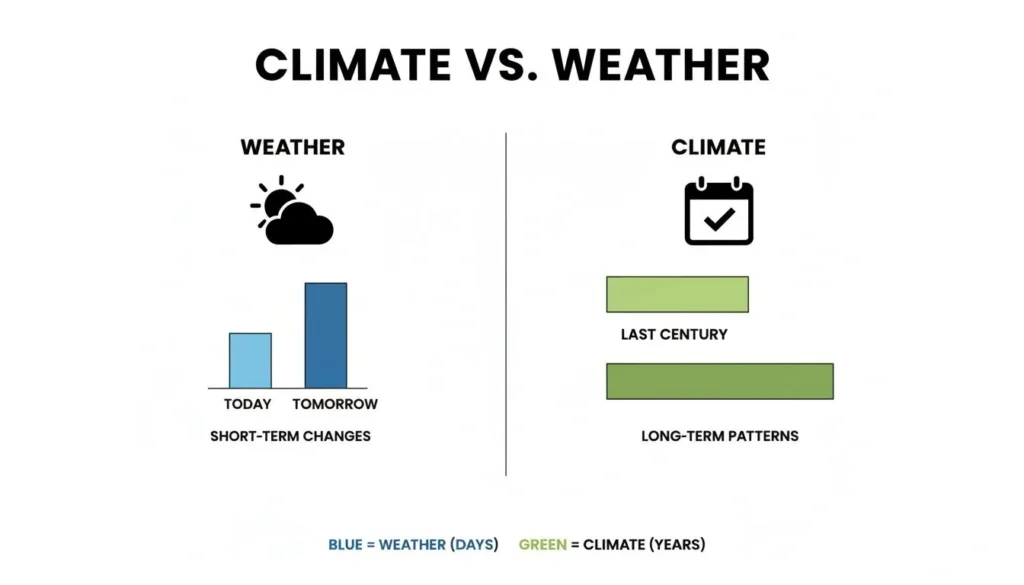
While a single cold day doesn’t disprove global warming, the steady, upward trend in average conditions is what defines climate change.
We can see the consequences playing out everywhere:
- Shifting Seasons: Spring is arriving earlier in many places, throwing off the delicate timing for plant pollination and animal migration.
- Extreme Weather Events: Heatwaves, biblical downpours, and severe droughts are becoming more common and more intense. A warmer atmosphere acts like a giant sponge, holding more moisture that can be unleashed in powerful storms.
- Ocean Acidification: Our oceans have been a huge help, absorbing between 20% and 30% of the CO2 we’ve pumped into the air since the 1980s. But there’s a cost. When CO2 dissolves in seawater, it forms carbonic acid, making the ocean more acidic and jeopardizing marine life, especially creatures with shells like corals and oysters.
All this evidence—from temperature records and shrinking ice to struggling ecosystems—tells a single, consistent story. The changes aren’t isolated or random. They are systemic, global, and they’re picking up speed.
Pinpointing the Causes of Climate Change
To get a real handle on climate change, you have to look at where it’s coming from. While it’s true the Earth’s climate has always had its natural ups and downs, the rapid warming we’re seeing today is a whole different beast.
Think of the atmosphere like a bathtub. For thousands of years, the water level stayed pretty steady. Natural sources were like a faucet filling it up, but the drain let water out at about the same rate. Now, that drain is completely overwhelmed.
The scientific consensus is crystal clear: human activities have cranked the faucet to full blast. We are pumping greenhouse gases into the atmosphere much faster than the planet can naturally remove them. This fundamental imbalance is what’s driving modern climate change.
The Human Fingerprint on a Warming World
The story of the climate we live in today really kicks off with the Industrial Revolution. That’s when we started burning fossil fuels—coal, oil, and natural gas—on a massive scale to power our factories, light our homes, and run our cars. This process unleashes huge amounts of carbon dioxide (CO2), the single most significant greenhouse gas.
And this isn’t just a small top-up. Since the industrial era began, atmospheric CO2 has shot up by nearly 50%. We’re now at levels not seen in at least 800,000 years. All that extra CO2 acts like wrapping another thick blanket around the planet, trapping heat that should escape into space and pushing global temperatures steadily upward.
But it’s not just about the fuel we burn. Several other human activities are major contributors:
- Deforestation: Forests are our planet’s lungs, pulling CO2 out of the air. When we clear huge tracts of trees for farming or cities, we’re not just getting rid of a vital carbon-absorbing service—we’re also releasing all the carbon that was stored in those trees right back into the atmosphere.
- Industrial Agriculture: Modern farming methods pack a surprising punch. Livestock, especially cattle, release enormous quantities of methane (CH4), a greenhouse gas that’s over 25 times more potent at trapping heat than CO2 is over a century. On top of that, nitrogen-based fertilizers produce nitrous oxide (N2O), another powerful warming gas.
- Industrial Processes: Manufacturing essentials like cement and steel releases CO2 as a chemical byproduct. And while they’re released in smaller amounts, some industrial chemicals called fluorinated gases are incredibly potent greenhouse gases.
The connection is direct and undeniable. The sharp spike in global temperatures perfectly mirrors the dramatic increase in human-caused greenhouse gas emissions over the last century. Natural factors alone simply cannot account for the speed and scale of the warming we are experiencing.
What About Natural Climate Drivers?
Of course, natural forces can and do influence Earth’s climate. You’ll often hear critics of human-caused climate change point to these factors, but when you dig into the science, it’s clear they aren’t the main character in today’s warming story.
Let’s look at the two most common natural culprits people bring up:
- Solar Cycles: The sun’s energy output naturally fluctuates in predictable 11-year cycles. But here’s the thing: satellite data going back decades shows the sun’s energy reaching Earth has been stable, even showing a slight cooling trend. That directly contradicts the warming we’re observing down here.
- Volcanic Eruptions: Big volcanic eruptions can actually have a short-term cooling effect. They throw ash and sulfur dioxide high into the stratosphere, which reflects sunlight back into space and can briefly drop global temperatures for a year or two. They simply don’t cause long-term warming.
Even the clothing we choose has a surprising link to the planet’s health. You can discover more by exploring our guide on what is sustainable fashion and how it fits into the bigger environmental picture.
While these natural forces are still in play, their influence is completely dwarfed by the massive, sustained impact of human emissions. Scientists use sophisticated climate models to “fingerprint” the different causes of warming. It’s only when these models include the flood of human-generated greenhouse gases that they can accurately reproduce the temperature rise we’ve already seen. The evidence points overwhelmingly to one conclusion: we are the main cause.
How Climate Change Impacts Our World
The charts and temperature graphs tell one part of the story, but what does climate change actually look like on the ground? It’s not just about the planet getting a bit warmer. Think of it as a domino effect—a cascade of changes that ripples through everything from the food on our plates to the stability of our communities.
And these aren’t some far-off, futuristic problems. They’re happening right now. The headlines about record-breaking storms and the subtle shifts in our own backyards are the tangible symptoms of a planet under pressure.
The Rise of Extreme Weather
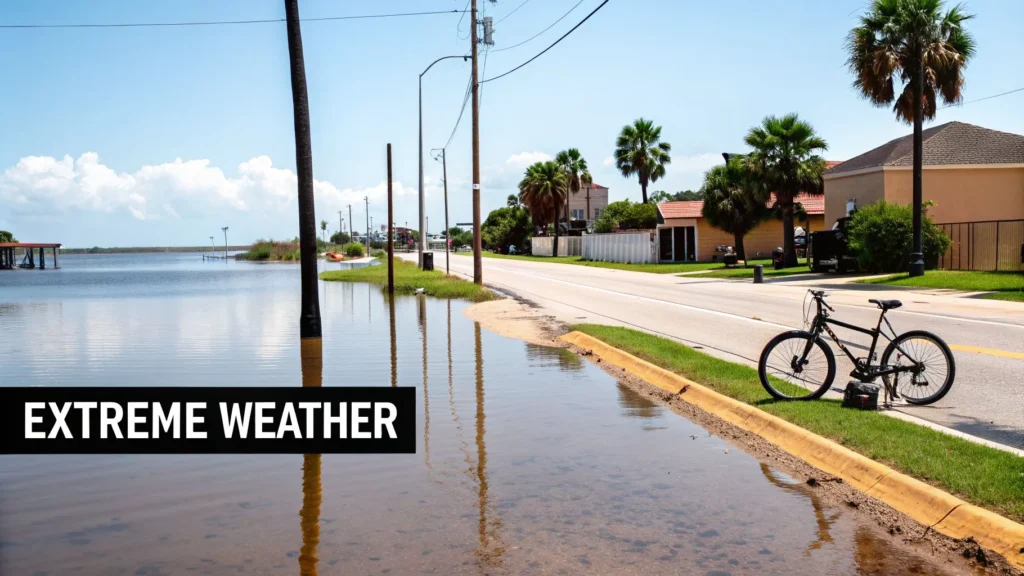
One of the most visible impacts is the explosion in extreme weather. A warmer atmosphere can hold more moisture, which basically acts as rocket fuel for storms. This leads to heavier downpours and more destructive flooding.
It’s a bit like a sponge. A damp sponge can only let out a little water, but a totally saturated one can unleash a flood. Our atmosphere is behaving like that saturated sponge, juicing up storms and turning them into something much more powerful. This is why we’re seeing more intense hurricanes that can escalate with frightening speed.
At the same time, while some places are getting drenched, others are bone-dry. Shifting weather patterns are disrupting the seasonal rains that entire regions depend on. The result? Prolonged droughts, failed crops, and landscapes primed for devastating wildfires that overwhelm our infrastructure and emergency services.
Threats to Food and Water Security
Our entire food system is built on a delicate balance, and climate change is throwing it completely out of whack. Farmers who’ve relied on predictable weather for generations are now facing a new, chaotic reality.
Unexpected rains, long droughts, and sudden heatwaves can wipe out entire harvests. Just one poorly timed heatwave can ruin a season’s worth of wheat or coffee. This volatility doesn’t just threaten farmers’ livelihoods; it drives up food prices for every single one of us.
Our water supply is facing an equally critical threat:
- Shrinking Glaciers: Billions of people get their drinking water from glacial melt. As these massive “frozen reservoirs” disappear, they endanger the year-round water supply for major rivers across Asia and South America.
- Contaminated Supplies: As sea levels rise, saltwater creeps inland and contaminates coastal freshwater sources—a process called saltwater intrusion. This can render local water undrinkable and soil useless for farming.
The World Health Organization estimates that by 2025, half of the world’s population will be living in water-stressed areas. Climate change is a major driver of this fast-approaching crisis.
Ecosystems and Human Health on the Frontline
The natural world is feeling the heat, literally. Countless species are in a desperate race to adapt to rapidly changing temperatures and habitats. The most vivid example is the bleaching of coral reefs, like Australia’s Great Barrier Reef. Warmer ocean water stresses the corals, causing them to expel the vibrant algae they need to survive, leaving behind a sterile, white skeleton.
This isn’t just a tragedy for nature. We depend on healthy ecosystems for everything from crop pollination to clean water. Iconic species, from polar bears in the Arctic to the monarch butterflies in our gardens, are facing existential threats.
Make no mistake, this is a human health crisis, too. More frequent and intense heatwaves lead to a spike in heat-related deaths, especially among the elderly and vulnerable. On top of that, warmer climates are a welcome mat for disease-carrying insects. Mosquitoes and ticks are expanding their territory, bringing illnesses like dengue fever and Lyme disease to places that have never seen them before.
How We Can Respond to Climate Change
So, what’s our game plan? The sheer scale of climate change can feel paralyzing, but we have a clear, two-part strategy for tackling it: mitigation and adaptation.
Imagine an overflowing bathtub. Mitigation is about aggressively turning off the faucet to stop more water from pouring in. Adaptation is grabbing a mop to deal with the water that’s already soaked the floor. You can’t just do one; we need both, and we need them now.
Climate Action Strategies at a Glance
To understand how these two approaches work together, it helps to see them side-by-side. Both are essential, but they tackle the problem from different angles.
| Strategy Type | Primary Goal | Example Actions |
|---|---|---|
| Mitigation | Reduce or prevent greenhouse gas emissions to slow down warming. | Switching to solar and wind power, improving energy efficiency, reforesting land. |
| Adaptation | Adjust to the current and future effects of climate change to reduce harm. | Building sea walls, developing drought-resistant crops, creating early-warning systems. |
Ultimately, successful mitigation makes the job of adaptation much easier and less costly down the road.
Mitigation: Turning Down the Faucet
Mitigation strategies get right to the root of the problem. Their one and only goal is to cut the volume of greenhouse gases being released into the atmosphere. This is our primary, long-term offensive play against climate change.
From massive, grid-level overhauls to simple household habits, every action that reduces emissions counts.
Key mitigation actions include:
- Shifting to Clean Energy: This is the big one. It means moving away from fossil fuels like coal and natural gas and building our world around renewable sources like solar, wind, and geothermal power.
- Boosting Energy Efficiency: The cheapest and cleanest energy is the energy we don’t use. This looks like well-insulated buildings, efficient appliances, and LED lighting.
- Protecting Nature’s Carbon Sinks: Forests act like giant carbon vacuums for the planet. Stopping deforestation and planting new trees are powerful, natural ways to pull CO2 from the air.
- Greening Our Food Systems: Modern agriculture is a major source of emissions. Adopting sustainable farming practices and even learning how to compost at home can slash methane from both livestock and landfills.
Mitigation is a proactive strategy. Every ton of CO2 we prevent from entering the atmosphere today makes the job of adaptation easier tomorrow. It’s about building a cleaner, more sustainable world for future generations.
Adaptation: Managing the Overflow
While we work on cutting emissions, we also have to deal with the impacts already baked into the system. Adaptation is all about preparing for the unavoidable changes and building resilience in our communities.
This is our defensive strategy, focused on protecting people, economies, and ecosystems from a climate that’s already changing.
Examples of adaptation in action:
- Building sea walls and restoring coastal mangroves to shield cities from rising sea levels.
- Developing drought-resistant crop varieties to maintain food security as rainfall patterns shift.
- Creating sophisticated early-warning systems for heatwaves, wildfires, and floods.
- Upgrading critical infrastructure like roads, bridges, and power grids to handle more extreme weather.
Global Progress and Collective Action
This isn’t a problem any single nation can solve. It requires global teamwork on a scale we’ve never seen before. The Paris Agreement, a historic deal where nearly every country on Earth agreed to work toward limiting global warming, is the cornerstone of this effort.
We’re also getting better at tracking who is pulling their weight. The Climate Change Performance Index 2026, for example, gives a clear-eyed view of which countries are making real progress. It shows that while leaders like Denmark are pushing ahead, many of the G20 nations—responsible for over 75% of global emissions—are still falling dangerously short. You can dive into the full country rankings on the NewClimate Institute website.
By combining these global agreements with strong local and individual action, we can build a viable path forward. The challenge is huge, but the solutions are right in front of us.
Your Questions About Climate Change Answered
After digging into the science, the evidence, and the potential solutions, it’s completely normal to have some questions left. Climate change is a massive topic, and wading through all the information out there can feel overwhelming. Here, we’ll tackle some of the most common questions head-on with clear, straightforward answers.
Let’s clear up any lingering confusion and make sure the most important points really stick.
Hasn’t The Earth’s Climate Always Changed?
Yes, it has. Over its 4.5-billion-year history, the Earth has cycled through everything from ice ages to sweltering heat. But the key difference between those past shifts and what’s happening today is speed.
Previous climate changes, like the ones that triggered ice ages, played out over thousands and thousands of years. That glacial pace gave ecosystems time to adjust. The warming we’re seeing now is happening faster than anything in at least the last 10,000 years.
Natural cycles, like changes in the Earth’s orbit or volcanic eruptions, just don’t account for the sharp, “hockey-stick” spike in global temperatures that started with the Industrial Revolution. This breakneck pace is what makes modern climate change so dangerous—it’s simply too fast for many natural systems to keep up.
How Can Scientists Be Sure Humans Are The Cause?
Scientists didn’t just point a finger at human activity on a whim. The conclusion comes from multiple lines of evidence—think of it like a detective building a case. All the clues point to the same culprit.
This “fingerprinting” method leaves little room for doubt:
- Running the Numbers: When climate models are run with only natural factors (sun activity, volcanoes), they can’t reproduce the warming we’ve actually measured. It’s only when they add in human-caused greenhouse gas emissions that the models match reality.
- The Isotope Signature: The carbon dioxide coming from burning fossil fuels has a distinct chemical signature—a different ratio of carbon isotopes. Scientists have tracked a steady increase in this specific “fossil fuel carbon” in our atmosphere.
- The Pattern of Warming: If the sun were getting hotter, we’d expect the whole atmosphere to warm up. Instead, we’re seeing the lower atmosphere (the troposphere) warm while the upper atmosphere (the stratosphere) cools. This is the tell-tale sign of the greenhouse effect trapping heat closer to the ground.
Is It Too Late To Stop Climate Change?
No, it’s not too late to prevent the worst-case scenarios, but we are definitely in the critical decade for action. Some amount of warming is already baked in, but every single thing we do to cut emissions from here on out makes a huge difference.
Think of it this way: the car is already skidding, but we can still grab the wheel and steer away from the edge of the cliff.
Every fraction of a degree of warming we avoid means fewer lives lost, more ecosystems saved, and a smaller bill for adapting to the changes we can no longer prevent. The choices we make right now will decide if our future is one of manageable risks or one of constant crisis. The mission now is to limit the warming as much as we possibly can.
What Can One Person Actually Do To Help?
It’s easy to feel like your own actions are just a drop in the bucket. But that bucket is filled by a whole lot of individual drops. Your choices don’t happen in a vacuum; they ripple outward, influencing friends, family, and your community.
Your personal impact really boils down to two key areas:
Shrink Your Carbon Footprint:
- Cut Energy Waste: Make your home more efficient with better insulation or newer appliances. Even just remembering to turn off the lights helps.
- Rethink How You Move: Walk, bike, or take public transit when you can. If you need a car, think about making your next one electric.
- Eat with the Climate in Mind: Cutting back on meat, particularly red meat, is one of the most effective personal changes you can make. Eating local and seasonal foods also cuts down on “food miles.” For instance, learning to garden can be a great first step, and you can see how in our guide on how to grow tomatoes from seed.
Use Your Voice:
- Just Talk About It: Simply having conversations about climate change makes it a normal and urgent topic among your peers.
- Vote with Your Wallet: Support businesses that are serious about sustainability.
- Push for Policy: Let your elected officials know you want strong climate action, whether that’s investing in renewable energy or protecting natural lands.
When millions of people make these individual choices, it creates the groundswell of social and political will needed for the big, systemic changes our planet requires.
At maxijournal.com, we believe that clear, accessible information is the first step toward meaningful action. We publish daily writing at the intersection of science, technology, and culture to keep you informed and inspired. Explore more at https://maxijournal.com.
Discover more from Maxi Journal
Subscribe to get the latest posts sent to your email.