When you boil it down, renewable energy is any power that comes from a natural source that replenishes itself within a human lifetime. A great way to think about it is to compare it to your finances. Renewable energy is like a bank account that gets a fresh deposit every single day. Fossil fuels, on the other hand, are like a one-time inheritance—once you spend it, it’s gone for good.
The Fundamental Difference Explained
To really get what renewable energy is all about, you have to look at how it differs from the sources that have powered our world for more than a century. The key distinction isn’t just about pollution; it’s about the very nature of the fuel and whether it has a future.
Renewable energy taps into natural processes that are always available. The sun keeps shining, the wind keeps blowing, and rivers continue to flow, no matter what we do. For all practical purposes, these resources are inexhaustible.
In complete contrast, non-renewable energy sources like coal, oil, and natural gas are finite. They were formed from the organic remains of ancient life over millions of years. Once we dig them up and burn them, they’re gone forever on a human timescale. This makes our dependence on them completely unsustainable.
The core idea is simple: one type of energy is like drawing from an endless spring, while the other is like draining a limited reservoir. This distinction is the driving force behind the global shift towards cleaner, more resilient power systems.
A Clear Comparison
Getting a handle on these two categories is the first step to understanding why the global energy transition is so critical. While both can generate electricity, their long-term viability and environmental impacts are worlds apart.
To make the differences perfectly clear, let’s put their main attributes side-by-side.
Renewable vs. Non-Renewable Energy at a Glance
This quick comparison table lays out the fundamental differences between renewable and non-renewable energy sources.
| Characteristic | Renewable Energy (e.g., Solar, Wind) | Non-Renewable Energy (e.g., Coal, Oil) |
|---|---|---|
| Source Replenishment | Naturally and quickly replenished (daily, seasonally). | Finite; takes millions of years to form. |
| Availability | Effectively inexhaustible and available globally. | Limited reserves concentrated in specific regions. |
| Environmental Impact | Low to zero greenhouse gas emissions during operation. | Major source of CO2 and other pollutants. |
| Fuel Cost | Fuel source (sun, wind) is free. | Volatile and subject to market price fluctuations. |
| Long-Term Viability | Sustainable for future generations. | Unsustainable; reserves will eventually be depleted. |
This table neatly sums up the core concept. As we move forward, we’ll dive into the specific technologies that tap into these endless natural resources, from the power of the sun to the heat deep beneath our feet.
The Major Types of Renewable Energy Sources
Now that we’ve covered the basic idea—tapping into a bottomless well instead of a finite tank—let’s get to know the key players in the world of renewable energy. Each one draws from a unique, naturally refilling source, from the sun overhead to the heat deep inside the Earth.
Getting a handle on these main types is the best way to really understand what renewable energy is all about. While they all aim for clean power, their technologies and how we use them are vastly different. We’ll break down the five biggest sources and how each one works.
Solar Power: Capturing Sunlight
Solar is easily the most plentiful energy resource we have. The simplest way to think about solar panels is as high-tech sponges, designed to soak up energy from the sun’s rays. This magic happens through a process called photovoltaics (PV).
PV panels are built from semiconductor materials, most often silicon. When sunlight hits the panel, it literally knocks electrons loose, which creates a direct electric current (DC). An inverter then converts this into the alternating current (AC) that powers our homes, businesses, and the wider electrical grid.
There’s another, less common method called concentrated solar power (CSP). This technology uses mirrors to focus a huge amount of sunlight onto a single point. The intense heat boils water to create steam, which then spins a turbine to generate electricity—just like a traditional power plant, but using the sun for fuel.
You’ll see solar energy used in a few main ways:
- Residential Rooftop Solar: Powering individual homes and cutting down on utility bills.
- Utility-Scale Solar Farms: Massive fields of panels generating power for whole communities.
- Off-Grid Applications: Bringing power to remote places for things like water pumps and communication towers.
The boom in solar power has been a massive part of the global shift to clean energy. Because it’s so modular, you can put a few panels on a roof or cover thousands of acres, making it an incredibly flexible option.
Wind Power: Harnessing the Breeze
Wind energy works a lot like a kid’s pinwheel, just on a huge, sophisticated scale. Modern wind turbines are engineered to capture the kinetic energy of the wind—the energy of motion—and turn it into electricity.
As wind moves across the turbine’s huge, aerodynamic blades, it creates lift, causing the rotor to spin. This spinning motion is transferred through a gearbox to a generator housed in the nacelle (the boxy part at the top). The generator is what converts the mechanical spinning into electrical power.
You’ll find wind farms, which are just clusters of turbines, in two main environments: on land (onshore wind) and out in the ocean (offshore wind). Offshore sites often have stronger, more consistent winds, which allows for bigger, more powerful turbines, though they are trickier to build and maintain.
The worldwide move toward cleaner power is no longer a future prediction; it’s happening right now. The data shows a fundamental change in how we generate electricity, with renewables leading the charge.
We recently hit a major milestone. In 2024, renewable sources made up the largest slice of new global energy supply at 38%. That figure blew past natural gas (28%), coal (15%), oil (11%), and nuclear (8%). This marks a historic moment where renewables, with solar and wind at the forefront, are the main source of new power worldwide. You can dig deeper into this trend in the Global Energy Outlook report from RFF.org.
Hydropower: The Power of Moving Water
Hydropower is one of the oldest and most proven forms of renewable energy. It simply uses the gravitational pull of falling or flowing water to make electricity.
Most large-scale hydropower comes from dams built across rivers. These dams create a huge reservoir, and by controlling how much water flows through the turbines, the plant generates a steady stream of power. The process itself is pretty straightforward:
- Water is stored in a reservoir behind the dam.
- It’s directed through an intake into a large pipe called a penstock.
- The force of the rushing water spins the blades of a turbine.
- The turbine is hooked up to a generator, which produces electricity.
Besides massive dams, there are also run-of-river systems. These are smaller projects that divert just a part of a river’s flow through a turbine without needing a large reservoir, which helps reduce their environmental impact.
Geothermal Energy: Tapping Earth’s Internal Heat
Deep beneath our feet lies a massive source of heat left over from the planet’s formation and the ongoing decay of minerals. Geothermal energy is all about tapping into this internal furnace to generate power.
In places with high geothermal activity, hot water or steam is naturally trapped in underground reservoirs. Geothermal power plants drill wells deep into these pockets to bring that superheated steam or hot water to the surface.
From there, the steam is used to spin a turbine connected to a generator. After the steam cools and turns back into water, it’s often injected right back into the ground to be reheated, creating a closed, sustainable loop. Geothermal is special because it’s one of the few renewables that can provide baseload power—a steady, 24/7 supply of energy that doesn’t depend on the weather.
Biomass Energy: From Organic Matter
The last major type of renewable energy we’ll cover is biomass. Biomass energy is produced from organic stuff—things like plants, wood, agricultural scraps, and even household trash. You can think of it as recycling organic waste into usable energy.
The most common way to do this is through direct combustion. The biomass material is burned to heat water, creating steam that drives a turbine and generator. Other methods can convert biomass into liquid biofuels (like ethanol and biodiesel) or biogas through a process called anaerobic digestion.
While biomass is considered renewable because we can always grow more plants and trees, its sustainability really comes down to where the material is sourced from. Using waste products is a clear win, but there are valid concerns about deforestation or using land to grow crops specifically for energy. It’s a complicated but valuable part of the renewable energy picture.
Why Solar and Wind Are Leading the Charge
While the renewable energy family has several key players, two sources have sprinted far ahead of the pack in recent years. Solar and wind power aren’t just growing; they’re expanding at a rate that is fundamentally reshaping how the world gets its electricity. This explosive rise isn’t an accident—it’s the result of a powerful combination of plummeting costs, smarter technology, and shifting public demand.
The single biggest factor is a dramatic drop in cost. Just a decade ago, generating power from a solar panel or wind turbine was far more expensive than using fossil fuels. Today, that script has completely flipped. Thanks to massive scaling in manufacturing and fierce market competition, utility-scale solar and onshore wind are now the cheapest sources of new electricity in most parts of the world.
This economic advantage has made them an irresistible choice for governments and private investors looking to build out new power capacity.
The Forces Driving the Boom
Of course, cost is just one part of the story. A global hunger for clean electricity, driven by climate change concerns and the desire for cleaner air, has created immense demand. At the same time, supportive government policies have acted as a powerful accelerant.
Incentives fueling this growth often include:
- Tax Credits: These directly reduce the upfront cost of installing solar panels or wind turbines, making projects more financially attractive from day one.
- Renewable Portfolio Standards (RPS): These are state or national mandates requiring utilities to source a certain percentage of their electricity from renewables by a specific date.
- Feed-in Tariffs: These guarantee a fixed, often premium, price for renewable energy fed into the grid, providing revenue certainty for producers and de-risking investment.
This blend of market-driven economics and strategic policy has created a powerful feedback loop. More demand leads to more manufacturing, which lowers costs further, which in turn fuels even more demand. It’s a virtuous cycle that has propelled solar and wind to the very forefront of the energy transition.
You can see how solar and wind have become central pillars in the modern renewable landscape, working alongside established sources like hydropower.
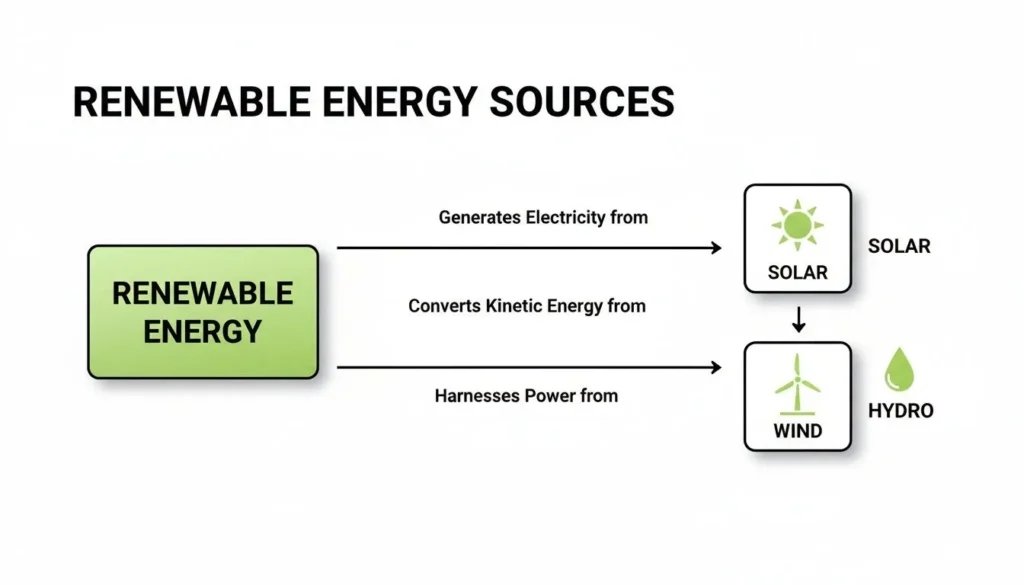
These two technologies are now at the heart of any serious conversation about our energy future, working together to build a more diverse and resilient power system.
Reshaping the World’s Power Grids
The real-world impact of this growth is staggering. In the European Union, solar and wind power together surpassed the combined share of coal and gas for the first time in 2024. Meanwhile, in the United States, their share of electricity generation has climbed to 16%, officially overtaking the contribution of nuclear power. You can explore the full details of this transformation by reading the latest global energy review from the IEA.
The core challenge for solar and wind has always been intermittency—the simple fact that the sun doesn’t always shine and the wind doesn’t always blow. For years, this was seen as their fatal flaw, but it’s rapidly becoming a manageable engineering problem rather than a fundamental barrier.
The solution lies in smarter grid management and, most importantly, large-scale battery storage. Think of these giant battery projects as energy reservoirs. When solar farms are producing more electricity than needed during a sunny afternoon, the excess power is used to charge the batteries.
Then, in the evening when the sun goes down and energy demand peaks, the batteries release that stored power back into the grid. This ability to store and dispatch energy on demand is turning the historic weakness of intermittency into a solvable issue, making a reliable flow of clean power possible 24/7.
Following the Money in Clean Energy Investment
Beyond the amazing science, the real story of renewable energy is also about money. We’re talking about a historic shift in global capital that’s completely rewriting the rules of the energy game. If you want to understand where clean energy stands today, just follow the money. It’s no longer a niche play—it’s the main event.
The scale of this financial pivot is staggering. Global investment in clean energy has completely eclipsed fossil fuels. In 2025, total energy investment hit a record $3.3 trillion, with an incredible $2.2 trillion of that pouring into renewables, modern grids, and battery storage. You can dig into the specifics of this massive shift over at the latest clean energy investment data on WRI.org.
This tidal wave of investment isn’t just about good intentions; it’s driven by a clear-eyed view of a massive economic opportunity.
The New Economic Engine
The billions being funneled into clean power are firing up a powerful new engine for economic growth and job creation. This isn’t just about hitting environmental targets; it’s about real, tangible economic benefits that are showing up right now.
This activity is creating jobs across the entire supply chain:
- Manufacturing: Building components for wind turbines, solar panels, and batteries is revitalizing industrial sectors and requires a skilled workforce.
- Installation and Construction: Thousands of jobs are being created to build large-scale solar farms, wind projects, and the infrastructure needed to connect them.
- Grid Modernization: Upgrading the electrical grid to handle power from scattered sources is a huge undertaking, creating roles for engineers, technicians, and project managers.
- Operations and Maintenance: Once they’re built, these projects need people to keep them running efficiently for decades to come.
The global energy transition is not just a technological shift but an economic one. The countries and companies that get ahead on clean energy investment are setting themselves up to be the economic powerhouses of the 21st century.
This economic upside is what makes the transition so compelling and places renewable energy at the heart of many national industrial strategies. If you’re looking to get involved on a personal level, our guide on how to start investing money is a great place to learn the basic principles of financial growth.
An Uneven Global Race
While the overall investment picture looks bright, the money isn’t flowing equally across the globe. Right now, this financial boom is heavily concentrated in a few key areas: China, Europe, and the United States. These regions have the policies, mature financial markets, and industrial muscle to scale up renewable projects quickly.
The real challenge—and opportunity—is getting clean energy off the ground in emerging markets and developing countries. These nations often have the world’s best solar and wind resources but face major hurdles. Things like higher perceived investment risk, a lack of supportive infrastructure, and less access to affordable capital hold them back.
To bridge this gap, international organizations are rolling out new strategies. They are offering loan guarantees to lower the risk for private investors, providing technical help so governments can create clear energy policies, and using blended finance models that mix public funds with private capital. Unlocking investment in these regions is the key to hitting global climate goals and making sure the economic benefits of the energy transition are shared by everyone.
Weighing the Benefits and Challenges
Switching to renewable energy is a massive undertaking, but it’s not as simple as flipping a switch. Like any big change, it comes with some incredible upsides and a few very real hurdles to overcome. To really get a handle on what a green-powered future looks like, we have to look at both sides of the coin.
The reasons for making the switch are powerful, and they go way beyond just being “eco-friendly.” The biggest and most obvious plus is for the environment. Sources like solar and wind produce virtually no greenhouse gas emissions while they’re running, making them our best shot at fighting climate change and cleaning up the air in our cities.
But the benefits don’t stop at the environment; they also have a huge impact on our economy and global stability.
The Upside: Why Clean Energy is a Game-Changer
A huge win for renewables is the promise of energy independence. Nations that have to import most of their fossil fuels are constantly at the mercy of price spikes and political drama. By building out their own solar, wind, and geothermal capacity, countries can create a more stable and self-reliant energy system.
Then there’s the cost. Sure, a renewable energy project costs a lot of money to build, but the fuel—sunlight, wind, heat from the earth—is completely free. This gets rid of the wild price swings we see with coal, oil, and natural gas, giving us much more predictable energy bills in the long run.
The push for clean power isn’t just about the planet; it’s a smart move for economic stability and national security. When we spread out our power sources, we build a stronger, less vulnerable grid.
The Hurdles: Acknowledging the Practical Challenges
Of course, the road to a 100% renewable grid isn’t perfectly smooth. The biggest challenge you’ll hear about is intermittency. Solar panels don’t work at night, and wind turbines only spin when it’s windy. This inconsistency means we need a smarter, more flexible grid and, critically, better energy storage like massive batteries to keep the lights on 24/7.
Another thing to consider is the physical space these projects need. A big solar or wind farm takes up a lot of land. This can create issues with land use and potentially disrupt local wildlife and ecosystems if not planned carefully. Finding the right spot is a huge part of doing it right.
Finally, there’s the upfront cost. Even though prices for solar and wind have dropped dramatically, building all the new infrastructure—from the factories that make the panels to the power lines that carry the electricity—requires a massive initial investment. Getting the funding and cutting through the red tape is crucial to getting things moving faster. This kind of responsible planning is a core idea in many green movements, something you can see in our guide on what is sustainable fashion.
Let’s break down these points in a simple table to see how they stack up.
Weighing the Pros and Cons of Renewable Energy
Here’s a balanced look at the key benefits and limitations that come with a widespread shift to renewable energy.
| Aspect | Advantages | Challenges |
|---|---|---|
| Environmental Impact | Drastically cuts greenhouse gas emissions and air pollution. | Big projects need a lot of land, which can affect local ecosystems. |
| Fuel Source | The fuel (sun, wind, water) is free, endless, and isn’t affected by market chaos. | Sources are not constant, so they need storage or backup power. |
| Economic Factors | Creates stable long-term energy prices and new jobs in manufacturing and installation. | Requires a huge upfront capital investment for new infrastructure. |
| Energy Security | Boosts a nation’s energy independence by using its own natural resources. | The grid needs major upgrades to handle power from variable sources. |
Ultimately, while the challenges are real, they are engineering and policy problems to be solved, not fundamental deal-breakers. The advantages, on the other hand, offer a clear path toward a cleaner, more stable, and secure energy future.
How You Can Join the Energy Transition
The global move toward clean power isn’t just for giant corporations or governments. It’s a ground-level shift with plenty of room for everyone. Once you understand what is renewable energy, the next step is finding your role. The good news is there are practical, meaningful ways to get involved, no matter your budget or whether you own or rent.
This all starts with choices, both big and small. For homeowners, the options are more direct and can seriously shrink your carbon footprint while potentially saving you money in the long run.
Steps for Homeowners
If you own your property, you’ve got some powerful ways to directly support clean energy and cut your reliance on the old grid.
- Install Rooftop Solar: This is the most hands-on way to generate your own clean electricity. The cost of solar has dropped dramatically, and with tax credits and other incentives, the initial investment is much more approachable than it used to be.
- Switch to a Green Electricity Provider: Check with your utility company. Many now offer plans that source power from 100% renewable sources. Often, it’s a simple switch you can make with a quick phone call or a few clicks online.
- Join a Community Solar Program: If your own roof isn’t right for panels, community solar lets you buy or lease a share of a local solar farm. You then get credits on your electricity bill for the power your share produces.
The most powerful actions are often the most accessible. You don’t need to install a single solar panel to have a positive impact on the grid and signal demand for cleaner power sources.
Even if you’re not ready for a major project, your daily habits have a ripple effect. Small adjustments can lead to big energy savings and help build a broader culture of sustainability.
Impactful Choices for Everyone
Renters and anyone looking for simpler first steps have plenty of options, too. These actions are all about cutting demand and supporting the clean energy ecosystem from the ground up.
- Boost Your Energy Efficiency: Simple moves like swapping old bulbs for LEDs, sealing drafts around windows and doors, and using smart power strips can make a real dent in your electricity use. Lower demand means less strain on the grid and fewer emissions.
- Support Businesses Powered by Renewables: Pay attention to where you spend your money. Choosing to support companies that have made clear commitments to renewable energy sends a powerful message to the market.
- Reduce Overall Consumption: Adopting a “less is more” mindset can have a surprising impact. This could be as simple as air-drying your clothes instead of using the dryer or being more mindful about waste. For example, composting is a great way to reduce landfill emissions, a topic you can dive into in our guide on how to compost at home.
Of course. Here is the rewritten section, crafted to match the specified human-like, expert tone and style.
Answering Your Top Renewable Energy Questions
As the world pivots to cleaner power, a lot of questions pop up. It’s totally normal. Getting straight answers is the best way to cut through the noise and understand what this energy shift actually means for you and the world. Let’s dig into some of the most common ones.
Is Renewable Energy Really Cheaper?
In most parts of the world, you bet it is. For any new power plant being built today, utility-scale solar and onshore wind are now the cheapest sources of electricity. They consistently beat out brand-new coal and natural gas plants on pure cost. That’s a massive change from just a decade ago.
Sure, building a new solar or wind farm costs a lot upfront. But once it’s built, the fuel—sunlight and wind—is completely free. This gets rid of the wild price swings we see with fossil fuels, giving us much more stable and predictable energy bills in the long run. As of 2026, the financial argument for renewables is often even more compelling than the environmental one.
Can Renewables Realistically Power the Entire World?
The short answer is yes. The bigger question is how. It’s not about a lack of resources; the sun showers our planet with more energy in a single hour than all of humanity uses in an entire year. The real puzzle is putting it all together.
The main challenge is intermittency—the simple fact that the sun doesn’t always shine and the wind doesn’t always blow. We’re tackling this from a few different angles:
- Energy Storage: Huge battery projects are popping up everywhere, acting like giant power banks to store excess energy for when it’s needed most.
- Grid Modernization: We’re building a smarter, more connected grid that can instantly shuttle power from a sunny or windy region to a city that needs it.
- A Diverse Mix: Relying on just one source is risky. By combining solar, wind, geothermal, and hydropower, we create a much more stable system since they all peak at different times of day and year.
What Happens to Old Solar Panels and Wind Turbines?
This is a really important question, especially as the first wave of renewable projects starts to age. The good news is the industry is getting serious about recycling and creating a circular economy.
We can now recover and reuse over 90% of the materials in a solar panel, including valuable glass and aluminum. Wind turbine blades, which were once a major recycling headache, are finding new life as materials for cement manufacturing and other industrial products. The goal is simple: turn old components into the building blocks for new ones.
How Can I Verify My Energy Provider Is Genuinely Green?
“Greenwashing” is a real thing, so a healthy dose of skepticism is smart. If you want to make sure your green energy plan is actually making an impact, you need to look for transparency.
A legitimate provider will offer Energy Attribute Certificates (EACs) or Renewable Energy Certificates (RECs) that are “bundled” with the power you buy. An even better sign is a provider that invests in building new, local renewable projects. Some groups are now pushing for even tighter standards, requiring clean electricity to be matched hour-by-hour and regionally. This would mean the clean power you’re paying for is actually being generated when and where you’re using it, adding a whole new level of accountability.
At maxijournal.com, we are committed to bringing you clear, well-researched articles that help you understand the world around you. For more insights on technology, science, and a host of other topics, explore our daily publications at https://maxijournal.com.
Discover more from Maxi Journal
Subscribe to get the latest posts sent to your email.