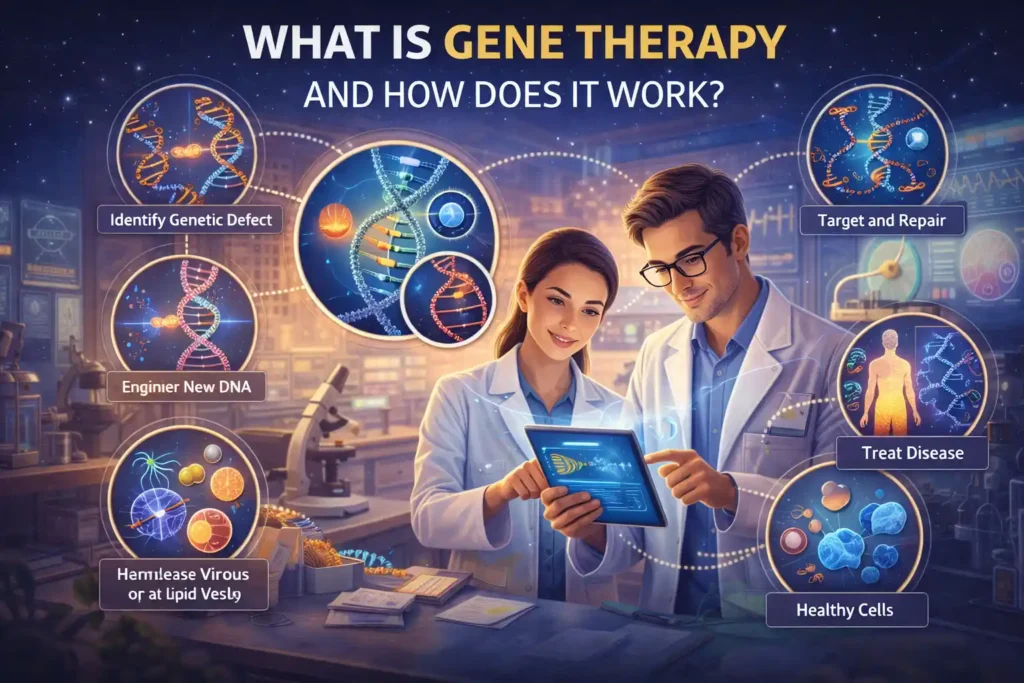
One patient in the 1990s heard a familiar sentence: “You have lung cancer, and this is the standard chemotherapy.” Another patient today may hear something very different: “You have a tumor in the lung, but the more important question is which molecular changes are driving it.”
That change in language captures the heart of 21st century oncology. Cancer care is no longer defined only by where a tumor sits in the body. It is increasingly shaped by the tumor’s internal wiring.
A Tale of Two Patients
Maria and David are fictional, but their treatment paths reflect a real shift in medicine.
Maria is diagnosed in the late 1990s. Her doctors identify the organ involved, stage the disease, and choose from the main tools available at the time: surgery, radiation, and broadly acting chemotherapy. Those treatments can save lives, but they often work like a general assault. If the cancer is in the lung, it is treated as lung cancer. If it is in the breast, it is treated as breast cancer. The organ gives the disease its name and largely dictates the plan.
David is diagnosed today. He still gets imaging. He still needs pathology. He may still need surgery, radiation, or chemotherapy. But one more layer is added early: molecular testing. His care team asks what signals are helping the cancer grow, what proteins appear on the tumor, whether a blood test can track tumor material, and whether his profile matches a targeted drug or a clinical trial.
The difference isn’t just technical. It changes the patient experience.
Maria’s question might have been, “What’s the standard treatment for my kind of cancer?”
David’s question is more likely to be, “What kind of biology is hiding inside my cancer?”
Why this matters: In modern oncology, two tumors that look similar under a scan may behave very differently once doctors examine their molecular features.
That shift can feel confusing at first. Many people still think of cancer as a map of body parts: lung, colon, brain, skin. That map still matters. Surgeons need it. Radiation oncologists need it. Symptoms depend on it. But in 21st century oncology, the organ is no longer the whole story.
Doctors now often treat cancer as both a location problem and an information problem. Where is it? What is it made of? Which signals are active? How can those signals be blocked, exposed, or turned against the tumor itself?
From Sledgehammers to Smart Keys
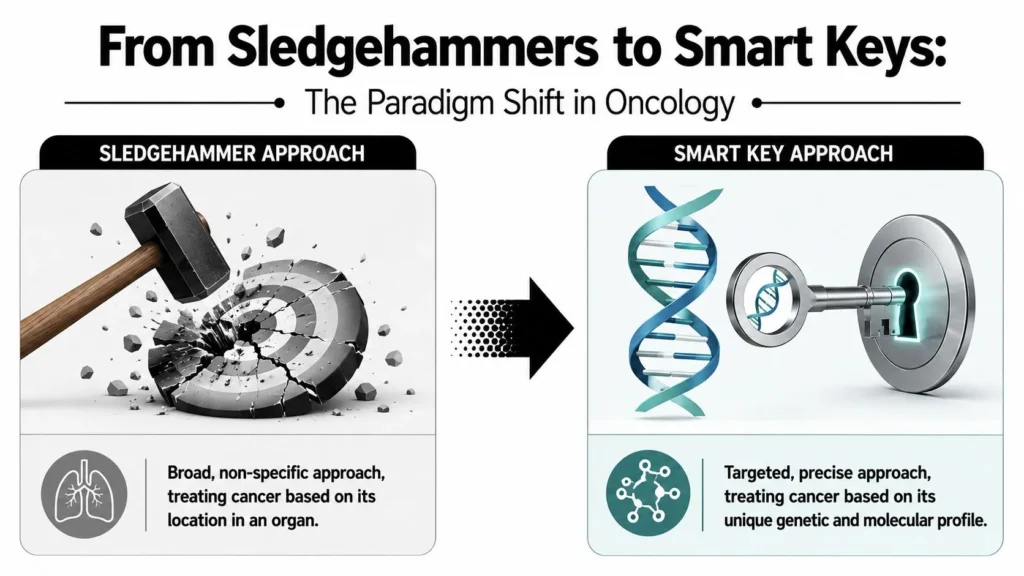
For much of cancer’s modern history, treatment often relied on blunt force. That doesn’t mean older therapies were crude or unimportant. Many remain essential. It means they were designed to attack fast-growing cells broadly, not to exploit one exact molecular weakness.
A useful analogy is this. Traditional chemotherapy can act like a sledgehammer. It can smash cancer cells, but it may also hit healthy fast-dividing cells along the way. Hair follicles, the lining of the gut, and bone marrow often get caught in the blast radius.
Targeted treatment works more like a smart key. Instead of smashing everything in the room, it tries to fit a specific lock.
When the disease name changed meaning
Many readers find this point confusing. People hear phrases like “lung cancer” and “breast cancer” and assume those are single diseases. They aren’t, at least not in the way doctors once thought.
In 21st century oncology, the label keeps getting narrower and more informative. A doctor may no longer stop at “non-small cell lung cancer.” The next question is what molecular feature defines that tumor. The practical result is that one disease name can split into multiple biologically distinct illnesses.
The scientific foundation for that shift became especially visible in a major set of milestones described by the National Cancer Institute’s cancer milestones overview. In 2017, the U.S. FDA approved pembrolizumab for advanced melanoma, and NCI notes that this was the first cancer treatment approved on the basis of the genetic characteristics of the disease rather than where the tumor started. The same year also saw the first CAR-T cell therapy approval, tisagenlecleucel. NCI also reports that The Cancer Genome Atlas analyzed more than 30 human cancer types, and that gastric cancer was shown to include four distinct diseases based on tumor characteristics.
Those facts changed more than drug labels. They changed the mental model of oncology.
What a smart key actually unlocks
A molecularly guided treatment is built around a tumor feature. That feature might be:
- A gene variant that drives growth
- A protein signal that helps the tumor hide from immune cells
- A surface marker that can be recognized by an engineered therapy
- A molecular pattern that predicts response or resistance
This is why modern oncology reports often sound more technical than older ones. The extra jargon reflects a deeper level of description. It’s the difference between identifying a car by color and identifying it by engine type, fuel system, and faulty brake line.
For readers who want a plain-language primer on one of these newer treatment categories, this overview of immunotherapy for cancer helps translate the basic ideas.
Why the old tools didn’t disappear
The smart-key model didn’t replace the sledgehammer overnight, and it hasn’t made older treatments obsolete.
Some cancers still respond best to surgery first. Some need radiation for local control. Some patients still benefit from chemotherapy because cancer biology is messy, mixed, and capable of changing over time. Doctors often combine old and new tools rather than choosing one philosophy over the other.
A modern cancer center doesn’t ask, “Should we use biology or anatomy?” It asks how to use both.
That’s the fundamental change. The field moved from treating tumors mainly by address to treating them by address plus blueprint.
The Pillars of Modern Cancer Treatment
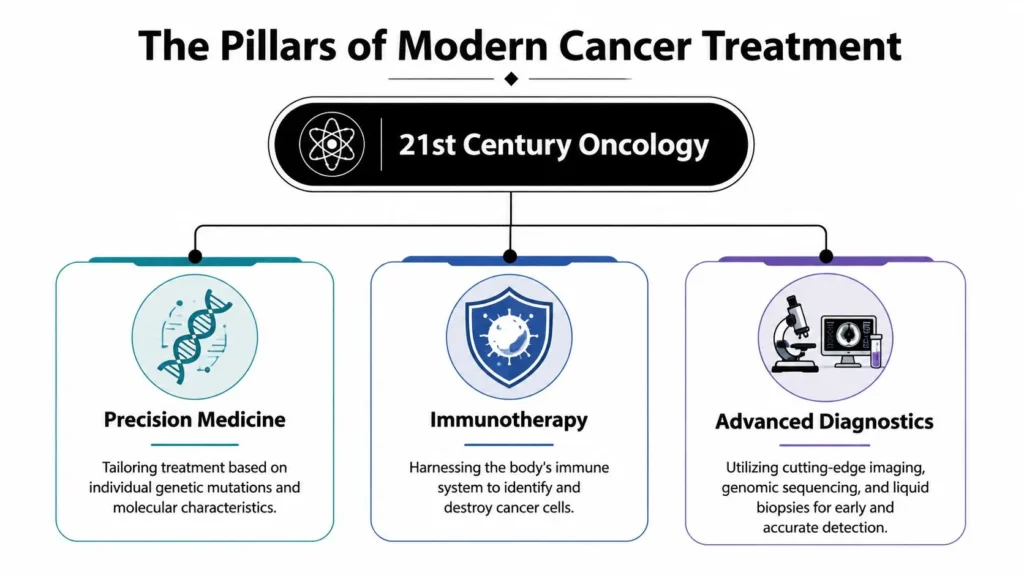
If 21st century oncology has a working toolkit, it rests on three connected pillars: precision medicine, immunotherapy, and advanced diagnostics. They aren’t separate silos. They act more like members of the same search-and-response team.
Here is the simplest way to think about them. Precision medicine chooses the target. Immunotherapy recruits the body’s own defenses. Advanced diagnostics tells clinicians where the enemy is, how it is changing, and whether the plan is working.
Precision medicine as the targeted missile
Precision medicine starts from a practical question: what is this tumor unusually dependent on?
If doctors can identify a molecular driver, they may be able to aim treatment with more specificity than a general chemotherapy regimen. That doesn’t guarantee success. Cancer cells adapt. Tumors contain mixed populations. But the logic is strong. If a cancer depends on a particular signal, interrupting that signal may expose a weakness.
This is why genomic testing matters so much. It gives the care team a closer look at the circuitry.
For people who want a broader background on how biology becomes technology in medicine, this short explainer on what biotechnology is provides helpful context.
Immunotherapy as retraining the body’s police force
Immunotherapy is often misunderstood because people assume it “boosts” immunity. That’s too vague. A better analogy is that it re-trains the body’s police force to recognize a suspect it kept overlooking.
Cancer cells can hide in plain sight. They may exploit normal immune checkpoints, disguise themselves, or create a local environment that discourages immune attack. Immunotherapy tries to change that balance.
Some approaches release the brakes on immune cells. Others involve engineered cells, such as CAR-T therapy, designed to recognize tumor targets more directly. The big idea is not just to poison cancer, but to help the body identify and attack it.
Later in the same therapeutic chain, local procedures may also support this process. A review in Precision and Future Medicine on interventional oncology and immuno-oncology describes a key trend: local treatments such as ablation can release tumor antigens and inflammatory signals that may synergize with checkpoint inhibitors or CAR-T cells, helping turn a “cold” tumor “hot” while linking local control to systemic immune control.
That insight matters because it shows how modern oncology is mixing categories that used to be kept apart.
A quick visual primer can help here:
Advanced diagnostics as GPS and intelligence reports
No targeted plan works without good information. That’s where advanced diagnostics comes in.
Doctors now rely on a combination of pathology, imaging, molecular testing, and in some settings liquid biopsy, which looks for tumor material such as circulating DNA or RNA in blood. These tools help answer three practical questions:
- What is this tumor really made of
- Where exactly is it now
- Is it changing under treatment
That information doesn’t just guide therapy. It shapes trial matching, monitoring, and follow-up.
Why the pillars need each other
A patient might receive molecular testing that identifies a useful target. Imaging then maps where disease is located and whether local treatment is feasible. Immunotherapy may be considered if the tumor profile and clinical context fit. Interventional procedures may be used not only to destroy tissue, but also to influence the immune environment.
In daily oncology work, the challenge is often not lack of scientific options but coordination. That’s one reason data standards and coding matter more than most patients realize. For readers interested in how treatment activity is translated into usable clinical data, OMOPHub’s guide to CPT codes and OMOP CDM offers a grounded look at how radiation oncology workflows connect to broader health data systems.
Technology and AI Remaking Cancer Care
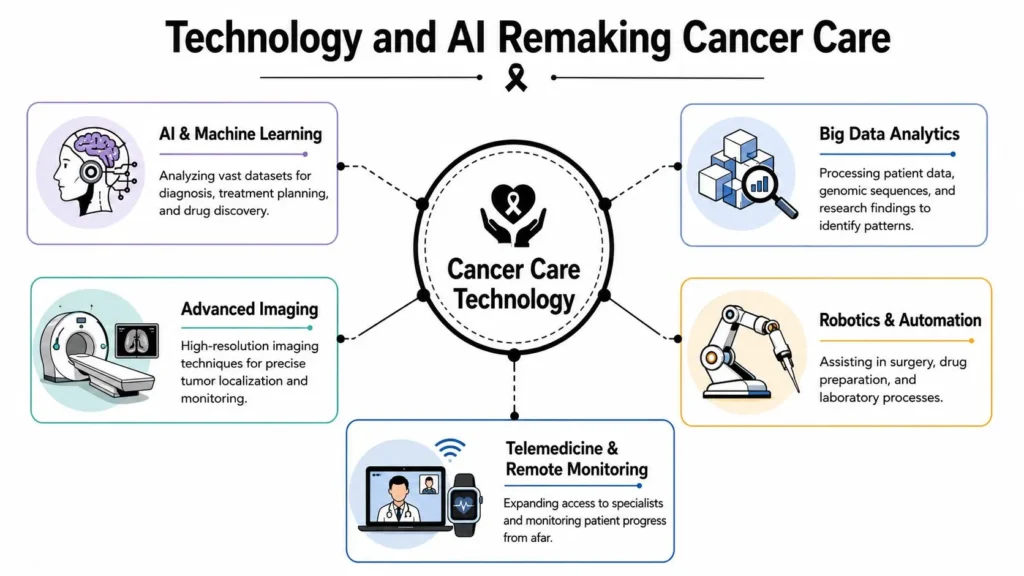
Cancer care now runs on a combination of biology, imaging, software, and workflow design. Without those tools, many of the promises of precision medicine would stay trapped in research papers.
AI is part of that shift, but it helps to be concrete about what “AI in oncology” means. In practice, it often shows up in narrow tasks: helping contour tumors on scans, assisting treatment planning, finding patterns in pathology images, and sorting through large sets of clinical and molecular data.
The radiotherapy control room
Radiation oncology is one of the clearest examples of technology changing patient care in visible ways.
A recent review at Cancer Network on advances in radiotherapy care describes modern radiation oncology as more accurate through AI-assisted contouring and planning and adaptive radiotherapy. It also notes that CT and MRI allow tighter target localization, reducing unnecessary toxicity to surrounding tissue, while adaptive workflows let clinicians modify treatment plans as anatomy changes during treatment.
That sounds technical, so here’s the everyday version. A tumor is not a statue. Bodies change. Swelling changes. Filling of nearby organs changes. Weight changes. If the map changes, the plan may need to change too. Adaptive radiotherapy gives clinicians a way to respond rather than pretending the first plan will fit forever.
Practical takeaway: Better imaging doesn’t just produce prettier pictures. It helps doctors aim treatment more tightly and spare more healthy tissue.
Liquid biopsy and digital surveillance
One of the most striking ideas in 21st century oncology is that a blood sample can sometimes provide clues about a tumor’s molecular behavior.
Liquid biopsy doesn’t replace every tissue biopsy. Tissue still matters. Pathologists still need to examine actual tumor cells in many settings. But liquid biopsy can serve as a less invasive way to monitor change, detect emerging molecular signals, or support decision-making when repeated tissue sampling is difficult.
This is part of a broader shift toward multi-modal data integration, where clinicians pull together imaging, genomic findings, pathology, and blood-based signals into one usable picture. If you’re curious about the data science behind that process, this explainer on bioinformatics is a good entry point.
What AI changes and what it doesn’t
AI can reduce repetitive tasks and help clinicians spot patterns faster. It can also make complicated planning workflows more manageable. But it doesn’t replace judgment.
Doctors still have to decide whether a contour makes anatomical sense, whether a molecular signal is clinically actionable, and whether a patient can safely tolerate the proposed plan. The software suggests. The clinical team is accountable.
For a broader nontechnical overview of where these tools fit in medicine, RiverAxe offers useful insights into healthcare AI solutions, especially for readers trying to separate realistic clinical use from marketing language.
A helpful way to think about technology in oncology is this short comparison:
| Tool | What it helps with | Why it matters |
|---|---|---|
| CT and MRI | Tumor localization | More precise treatment targeting |
| AI-assisted planning | Radiation contouring and plan support | More efficient and consistent workflows |
| Adaptive radiotherapy | Updating plans as anatomy changes | Better safety and dose conformality |
| Liquid biopsy | Molecular monitoring from blood | Less invasive tracking of tumor change |
The modern cancer center isn’t just a place where drugs are given. It’s a place where information is constantly gathered, checked, and translated into action.
The New Patient and Clinician Experience
Walk into a modern tumor board meeting and you can see how different cancer care has become. The room may include a medical oncologist, surgeon, radiation oncologist, radiologist, pathologist, and sometimes a genetics expert or research coordinator. One patient’s case appears on the screen, but several kinds of evidence are under review at once.
The scan shows location. The pathology shows cell type. Molecular testing adds another layer. Prior treatment history changes the options. Trial eligibility may enter the discussion. What looks from the outside like one diagnosis is often, inside the hospital, a collaborative puzzle.
What a patient notices first
Patients usually don’t experience this shift as a scientific revolution. They experience it as a different kind of appointment.
They may hear terms like biomarker, molecular profile, sequencing, immunotherapy, or trial matching much earlier in the process than patients did in earlier decades. They may be asked for more records, more tissue analysis, or more detailed family and treatment history. That can feel overwhelming, especially when someone just wants a clear answer.
A lot of confusion comes from a mismatch in expectations. Patients often want one doctor to deliver one recommendation. Modern oncology often delivers a discussion of pathways.
Here are a few features of that newer experience:
- Shared decision-making: Patients are more often asked to weigh trade-offs among treatment choices, side effects, timing, and goals.
- Navigation support: Many systems now rely on patient navigators, nurse coordinators, or trial coordinators to help people move through testing and referrals.
- More personalized language: Instead of hearing only the disease name, patients may hear descriptions tied to molecular findings or treatment response patterns.
What clinicians are doing differently
For clinicians, 21st century oncology means less solo decision-making and more cross-specialty interpretation. A pathologist’s report may influence a systemic therapy choice. A radiologist’s reading may affect whether local treatment is possible. A trial coordinator may identify a study that changes the conversation entirely.
That collaboration is good for patients, but it also creates friction. Records may be fragmented across systems. Community practices may not have immediate access to every specialized test. Insurance approval can slow care. Some patients have to travel to major centers to get certain options fully discussed.
Modern oncology asks clinicians to be translators as much as prescribers.
Doctors also spend more time explaining uncertainty. Molecular findings don’t always point to one obvious treatment. Sometimes a test reveals a target with a matching therapy. Sometimes it reveals biology that is informative but not yet actionable. Those are very different outcomes, and both require careful communication.
A more informed patient isn’t always a calmer patient
There’s a common assumption that more information automatically strengthens people. Sometimes it does. Sometimes it also creates anxiety.
A patient may learn that their tumor has a certain molecular feature and immediately search for a miracle drug. But biology is context-dependent. Stage, prior treatment, overall health, and local expertise still matter. The hardest part of modern care is often not finding information. It’s learning which information applies to this patient, right now.
That’s why good oncology care still depends on old-fashioned skills: listening, explaining, coordinating, and revisiting decisions as the picture evolves.
Major Challenges on the New Frontier
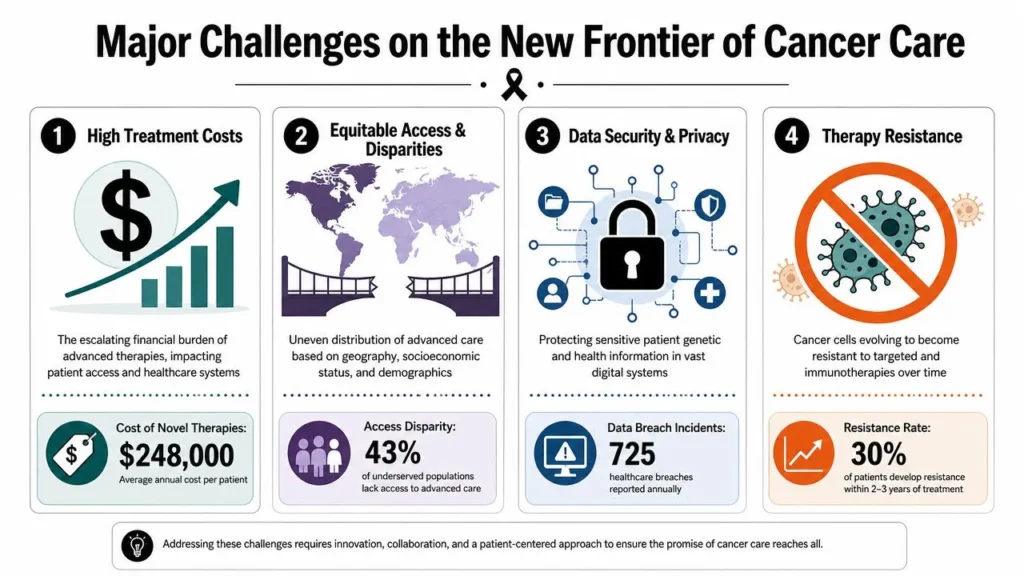
Scientific progress can make cancer care look cleaner than it is. In reality, some of the hardest problems in 21st century oncology aren’t about discovering a drug. They’re about getting the right patient to the right option at the right time.
That gap between scientific possibility and real-world delivery is where many patients get lost.
The implementation gap
One of the most under-discussed bottlenecks is clinical trial matching.
An NRG Oncology discussion of the cancer clinical-trial matching ecosystem argues that many patients who could benefit from a trial are never connected to one, especially in community settings, and that the bottleneck is often navigation and eligibility workflow, not solely lack of trials or lack of patient willingness.
That point deserves emphasis because it overturns a common assumption. People often imagine that trial access is mainly a supply problem. In practice, it can be a routing problem. If records are scattered, referrals are delayed, and eligibility criteria are hard to operationalize quickly, patients miss the window.
Equity is not a side issue
Another easy mistake is to talk about progress in averages. Averages can hide who is still being left out.
A 2022 review on advances and challenges in oncology notes that pediatric cancer survival in the United States has risen to over 80%, while major disparities persist. The same broader discussion stresses that underserved communities face structural barriers to diagnosis and treatment, including disruptions that delayed screening and therapy.
That means the story of modern oncology cannot just be “better drugs, better outcomes.” It also has to include geography, transportation, referral patterns, insurance complexity, and whether a patient receives advanced testing early enough to benefit from it.
The frontier is uneven
The newer model of care creates at least four recurring obstacles:
- Access to expertise: Molecularly guided care often depends on specialists, tumor boards, and advanced diagnostics that are easier to find at large centers.
- Workflow complexity: Trial matching and treatment sequencing demand organized records and fast communication.
- Information overload: Patients can receive large amounts of technical information without enough support to interpret it.
- Persistent disparities: Rural, low-income, pediatric, and historically underserved communities may face extra barriers even when good treatments exist.
Breakthroughs don’t help the patient who never reaches the doorway.
There are other challenges too. Tumors can become resistant. New tools create data privacy questions. Costs can be hard on families and systems alike. But even without putting numbers on those issues, one lesson is clear. Progress in oncology is not just a laboratory achievement. It’s a delivery challenge.
Navigating the Future of Oncology
A generation ago, two patients with tumors in the same organ were often treated as if they had the same disease. Today, doctors increasingly start with a different question: what is the tumor’s molecular blueprint?
That change sounds technical, but it reshapes the whole experience of cancer care. “Lung cancer” is still a useful label, because location affects symptoms, surgery, and radiation planning. But it is no longer the whole story. Two tumors in the lung can behave like different illnesses if they run on different molecular circuits. One may respond to a targeted drug designed for a specific mutation. Another may be more likely to respond to immunotherapy, which works like re-training the body’s police force to recognize a disguised threat.
This is the central shift of 21st century oncology. Doctors are no longer treating cancer only by address. They are treating it by address plus instruction manual.
If you’re a patient or caregiver
That new model changes the questions worth asking. The best ones often make the care process more visible.
You can ask:
- Has this tumor been tested for relevant biomarkers or molecular features?
- Would liquid biopsy or added molecular testing change the treatment plan?
- Is my case being reviewed by a multidisciplinary team?
- Are there clinical trials that fit my situation, and who helps identify them?
- If I live far from a major center, which parts of my care can happen locally and which should be referred out?
These questions do not guarantee access, and they do not make the science simple. They do something else that matters. They help patients and families see where decisions are coming from, and whether the team has enough information to choose well.
If you’re a clinician outside a major specialty center
No clinician can keep every biomarker, drug approval, trial, and sequencing strategy in mind at once. The practical answer is a repeatable workflow.
Know which tests need to happen early. Know which findings should trigger subspecialty review. Know when a patient should be considered for trial referral before treatment choices narrow. In modern oncology, timing matters because the right result arrived too late can be almost as limiting as no result at all.
The goal is not to master the entire field. It is to build a reliable path from diagnosis to the next useful decision.
If you want to contribute to the field
The future of oncology will not be built only in drug labs.
It also depends on people who can connect scattered pieces of information into care that patients can receive. That includes better data integration across pathology, imaging, and genomics. It includes trial matching systems that do not miss obvious options. It includes patient navigation, rural referral networks, insurance support, and plain-language communication that explains uncertainty without burying people in jargon.
A few paths stand out:
- For researchers: Build tools that turn molecular discoveries into choices clinicians can use.
- For data scientists: Improve how imaging, pathology, and genomic data fit together in real clinical workflows.
- For care designers and advocates: Reduce the delays and bottlenecks that keep patients from advanced testing and trials.
- For communicators: Explain complicated science clearly enough that patients and general clinicians can act on it.
The future of oncology will be shaped not only by new treatments, but by whether those treatments are understandable, reachable, and usable.
There is good reason for optimism, with discipline. Cancer remains difficult. Tumors still evolve. Some patients benefit dramatically, while others do not. But the underlying change in thinking is durable. A tumor is not just a mass in an organ. It is a living system with signals, mutations, defenses, and weak points.
Once you see cancer that way, the future of oncology comes into focus. Better care depends on reading the blueprint well, matching treatment to that blueprint, and making sure patients can reach the care their biology calls for.
Discover more from Maxi Journal
Subscribe to get the latest posts sent to your email.