You’re probably here because “Pokémon 2 player” can mean wildly different things. Maybe you want a relaxed couch session with a sibling, maybe you want proper head-to-head competition, or maybe you just want a way to share Pokémon with a friend without each of you disappearing into separate solo grinds. The problem is that Pokémon has spread across console RPGs, mobile games, fighters, and tabletop formats, so the answer isn’t one game.
That split matters more than it used to. The franchise’s oldest competitive structure came from the Trading Card Game, which was designed as a direct duel where players try to Knock Out each other’s Pokémon and the first player to take 6 wins the game, according to the Pokémon TCG quick start rulebook. By 2024, the same source notes that the Pokémon TCG had sold over 75 billion cards, which tells you something important. Two-player Pokémon isn’t a side activity. It’s one of the franchise’s core habits.
What’s changed is the variety. Today, one duo might want a same-screen co-op RPG, another might want a fighting game, and another might want a beginner box they can open on the kitchen table and start playing immediately. This guide sorts the best options by how two people play, so you can pick the format that fits your attention span, hardware, and skill gap.
1. Pokémon Let’s Go, Pikachu! and Let’s Go, Eevee!
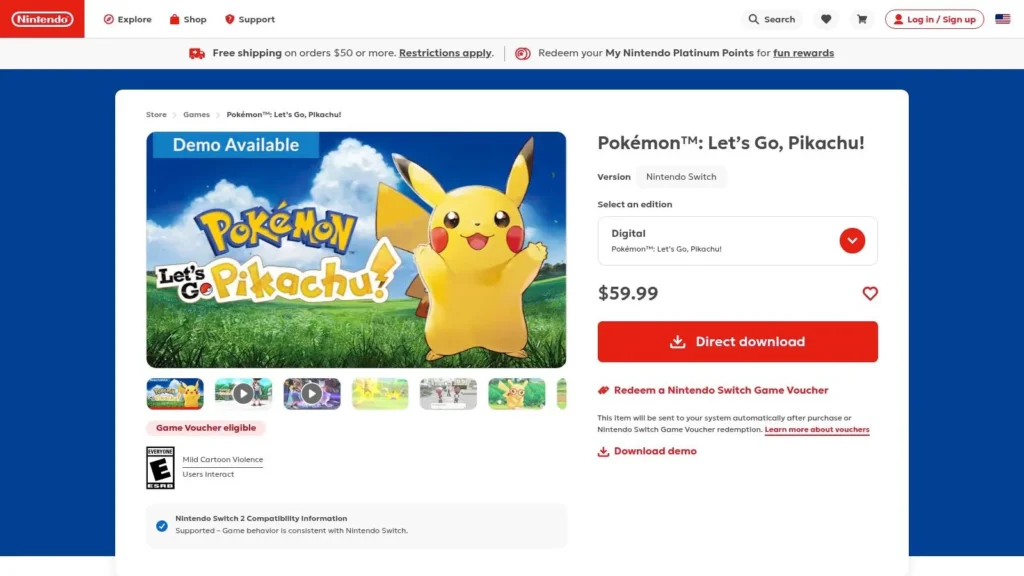
If your version of Pokémon 2 player means “sit on the same couch and play together,” this is still the cleanest answer. Pokémon Let’s Go, Pikachu! and Let’s Go, Eevee! let a second player jump in locally on one Switch, which removes the usual friction of needing two systems, two saves, and two copies of the game.
That simplicity is the selling point. Player two joins the host’s adventure rather than running a separate campaign, so this works best for a parent and child, a returning fan and a beginner, or any pair where one person doesn’t care about owning the save file.
Best for shared couch play
The co-op design keeps the focus on movement, catching, and light battle support. It feels more like a guided adventure than a full parallel campaign, and that’s why it works. You aren’t spending half the session troubleshooting menus or sync issues.
A few practical strengths stand out:
- Single-system setup: One Switch and one copy are enough for local co-op.
- Low rules overhead: The catching and battle flow is easier for new players than many mainline entries.
- Shared momentum: Since progression stays on the host save, sessions move forward instead of splitting into separate admin tasks.
Practical rule: Choose Let’s Go when one player wants ownership and the other wants participation. That’s the sweet spot for this game.
The tradeoff is control. Player two doesn’t build an independent long-term file, and anyone looking for equal campaign ownership may bounce off that limitation. If your duo wants mirrored progression, Scarlet and Violet fit better.
Still, for families and casual pairs, Let’s Go solves the hardest part of Pokémon 2 player. It makes playing together feel immediate.
2. Pokémon Scarlet and Pokémon Violet
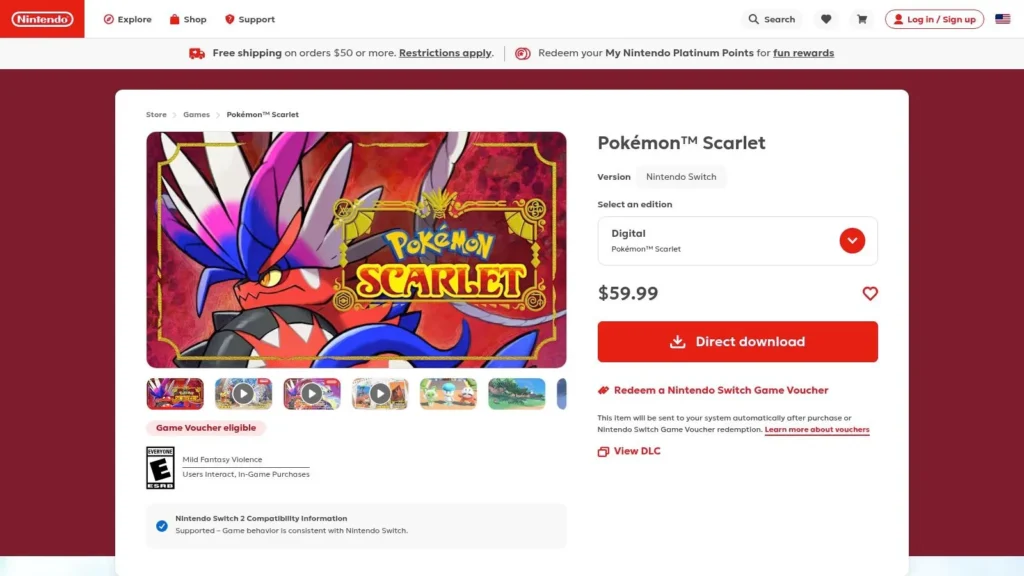
Pokémon Scarlet and Violet are the strongest choice for duos who want modern Pokémon with room to roam. Their Union Circle feature gives two players a shared world session, which changes the feel of co-op from “helper mode” to “parallel exploration.”
That distinction matters. Let’s Go is better at guided couch play. Scarlet and Violet are better when both players want agency. You can explore, trade, battle, and hunt for version differences together without turning one person into a sidekick.
Best for completion-focused duos
This is the Pokémon 2 player option for pairs who like goals. Filling the Pokédex, comparing catches, finding exclusives, and preparing teams all fit naturally here. If your duo also likes buildcraft, pairing co-op sessions with better stat planning helps, especially once you get into competitive prep and EV training methods in Pokémon.
What makes Scarlet and Violet stand out is flexibility:
- Shared exploration: Both players can exist in the same session rather than watching one host move the story.
- Trading and battling: The Poké Portal keeps the social loop active.
- Version synergy: Visiting a friend’s world makes version-exclusive hunting more practical.
The downside is that this isn’t true split-campaign co-op in every sense. Some story progress still belongs to each player individually, so the game is best for two people who don’t mind a looser structure. If you want a rigid “we do every step together” system, this can feel slightly uneven.
This is the best pick when your duo likes the broader Pokémon hobby, not just a single co-op gimmick.
For many players, that’s enough. Scarlet and Violet don’t force one definition of Pokémon 2 player. They support several at once.
3. Pokkén Tournament DX
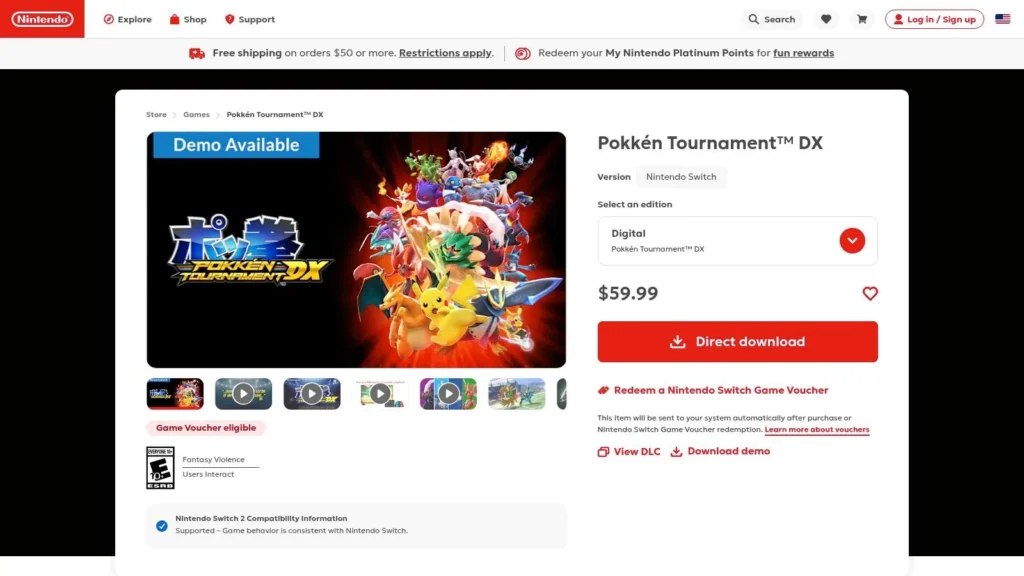
Some people don’t want co-op at all. They want a duel. Pokkén Tournament DX is the sharpest version of that idea in the franchise, because it strips away collecting and progression clutter and centers the experience on one thing: fighting another person.
That makes it the cleanest competitive recommendation on this list. If your shared fun comes from rematches, matchup learning, and local rivalry, Pokkén is easier to recommend than a mainline RPG battle format because the entire product is built around versus play.
Best for direct competition
The big advantage here is immediacy. You can hand someone a controller, pick Pokémon, and start learning interactions fast. That lowers the barrier for casual rivals while still leaving depth for pairs who want to improve.
A good way to approach it is to start with Pokémon you already understand from the broader series. If one of you tends to like aerial or speed-focused characters, even basic type familiarity from guides like this overview of Flying-type Pokémon weaknesses can help you think about spacing and tendencies, even though Pokkén has its own fighting-game logic.
Useful setup paths include:
- Single-console local battles: Best for couch competition.
- Local wireless: Better if each player wants a personal screen.
- Online matches: Useful once your duo wants outside competition.
The limitation is obvious. There’s no shared adventure here. No co-op campaign, no exploration, no trading loop. If one player mainly likes the collecting side of Pokémon, they may lose interest faster than they would in Scarlet, Violet, or GO.
But if your household keeps saying “one more match,” this is probably your game.
4. Pokémon Stadium
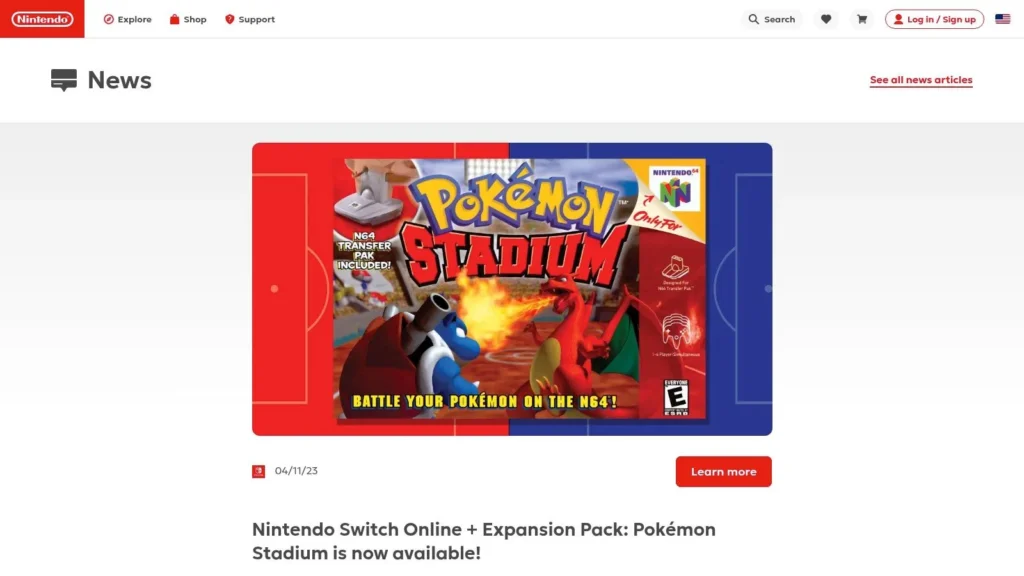
There’s a reason Pokémon Stadium still matters in conversations about Pokémon 2 player. It solves a problem that modern entries often don’t. It lets two people battle quickly without first managing a long RPG file.
On Switch, Pokémon Stadium through Nintendo Switch Online + Expansion Pack works best for nostalgia-driven pairs and for casual duos who want turn-based battles without prep work. Rental teams keep the setup light, and the side activities keep sessions from becoming too serious.
Best for quick retro sessions
This is the option I’d hand to two players who say, “We want Pokémon, but we don’t want homework.” That’s where Stadium still shines.
Its biggest strengths are easy to spot:
- Fast start: Rental teams mean you can begin battling without raising Pokémon first.
- Party-game energy: The mini-games give non-competitive duos another reason to keep playing.
- Turn-based clarity: Battles are easy to follow, even for someone who hasn’t touched modern Pokémon systems.
Stadium works when your duo wants short rounds and clean rules, not long-term progression.
The biggest drawback on Switch is historical rather than mechanical. You can’t recreate the old hardware fantasy of importing from Game Boy titles through a Transfer Pak. That means the modern version is best understood as a self-contained battle sandbox, not a bridge to a larger save file.
Even so, it’s one of the most painless ways to introduce someone to classic Pokémon battling. For some pairs, that’s all they need.
5. Pokémon UNITE
Pokémon UNITE sits in a different category from every other game here. It isn’t a duel, and it isn’t a story co-op RPG. It’s a team game where your two-player bond matters because you queue together, coordinate roles, and try to carry momentum across repeated matches.
That makes it the best Pokémon 2 player option for duos who already like online team games. If you and your friend enjoy forming habits, calling lanes, and learning a roster over time, UNITE gives you a consistent loop.
Best for duo queue teamwork
The big appeal is low friction. It’s free to start, available on Switch and mobile, and built for repeatable sessions rather than multi-hour commitments. You can play a few matches and log off without feeling like you abandoned a campaign.
Why some pairs click with UNITE:
- Cross-platform access: One player can use Switch while the other plays on mobile.
- Same-team focus: It rewards coordination rather than internal rivalry.
- Short-session design: Good for regular evening play.
That said, UNITE is still a live-service competitive game. Balance shifts, roster familiarity, and progression systems can frustrate players who only want a stable casual environment. If one person likes adaptation and the other hates changing metas, friction can build.
This is also the least “traditional Pokémon” recommendation on the list. You’re not traveling region to region or building a cartridge adventure. You’re running coordinated matches. For some duos, that’s perfect. For others, it barely scratches the Pokémon fantasy.
Choose it when your partnership matters more than Pokémon nostalgia.
6. Pokémon GO
If your version of Pokémon 2 player needs to work anywhere, Pokémon GO is the most flexible answer. Pokémon GO supports local Trainer Battles, remote friend battles, and cooperative raid play, so two people can turn a walk, commute, or lunch break into a Pokémon session.
Its scale also explains why this format matters. Business of Apps reports that Pokémon GO generated $207 million in revenue in its first month, reached 232 million active players in 2016, had about 55 million active users in 2023, made $545 million in revenue in 2024, and hit 1 billion downloads, according to the Business of Apps Pokémon GO statistics report. The same report, alongside ActivePlayer estimates cited there, describes a recent sample with about 604,957 online players in a one-hour snapshot and 34,312,013 daily active players during the sampled month. That doesn’t just show popularity. It shows that two-player Pokémon moved from local-only play into an always-available mobile habit.
Best for spontaneous real-world play
GO works well for duos because it supports both versus and co-op without demanding a dedicated play space. One day you can battle. Another day you can team up for raids. That range gives it more staying power than many one-mode Pokémon games.
A practical use case is the pair that wants lightweight goals. Evolving favorites, chasing event spawns, and refining raid teams all create small reasons to keep playing. If one of you is working through Eevee forms, a simple reference like this guide on how to evolve Eevee into Vaporeon in Pokémon GO fits naturally into that loop.
- Local battles: Good for nearby sessions.
- Remote battles: Useful when friends live apart.
- Duo raids: Best for pairs who like planning around counters and timing.
The downside is inconsistency. Mobile connectivity, battery drain, seasonal move changes, and event cadence can all shape whether a session feels smooth or annoying.
For two people with busy schedules, GO is often the only Pokémon game that actually gets played regularly.
That practical advantage is hard to beat.
7. Pokémon Trading Card Game Battle Academy 2022
If you want the most purpose-built two-person Pokémon product on this list, Battle Academy is it. The Pokémon TCG Battle Academy 2022 announcement presents it as an entry product with three complete 60-card decks, a two-player board, tutorial guides, and accessories, which is exactly what beginners need.
That’s the key distinction. Many Pokémon games happen to support two players. Battle Academy is designed around the expectation that two people will open the box and learn together.
Best for beginners and screen-free play
For households trying to reduce screen time without losing the Pokémon hook, this is one of the smartest purchases in the franchise. It creates a repeatable ritual. Sit down, shuffle up, follow the guides, and improve a little each session.
The official structure also connects to the wider history of Pokémon 2 player. The web is crowded with fan-made challenge formats, but official guidance has expanded too. PokéBeach’s report on The Pokémon Company International’s Alternative Play Handbook highlights formal TCG variants such as raid format and 2v2 team battles in the Alternative Play Handbook coverage on PokéBeach. That matters because it shows cooperative and team-based Pokémon card play isn’t just community invention. The official game now acknowledges broader ways pairs can play.
A few buying and setup notes matter here:
- Strong onboarding: Tutorial decks reduce the intimidation factor.
- Expandable rules path: Skills transfer into standard TCG play later.
- Good for fixed pairs: The structure works especially well when the same two people play repeatedly.
You should also know what it isn’t. Competitive players will outgrow the included decks, and if you’re trying to compare current retail value before buying, outside listings like this page with pricing data for Battle Academy are best used as shopping context, not as a measure of long-term competitive relevance.
For many readers, though, Battle Academy is the cleanest answer to the question behind “Pokémon 2 player.” You want two people, one box, and a clear start.
Pokémon 2-Player: 7-Title Comparison
| Item | Implementation complexity | Resource requirements | Expected outcomes | Ideal use cases | Key advantages |
|---|---|---|---|---|---|
| Pokémon: Let’s Go, Pikachu!/Let’s Go, Eevee! | Low, simple drop‑in co‑op and mechanics | One Nintendo Switch + one game copy; extra Joy‑Con or Poké Ball Plus optional | Shared host save progression and assisted catching | Family play, couch co‑op, newcomers | Very accessible; effortless local co‑op and catch assistance |
| Pokémon Scarlet / Pokémon Violet | Medium, open‑world session joining with per‑player story beats | Each player needs a Switch and game copy; Nintendo Switch Online for remote features | Flexible shared exploration, joint encounters and trades | Friends completing Pokédex, exploring together, co‑op tasks | Most flexible “do anything together” in a mainline RPG |
| Pokkén Tournament DX | Low–Medium, pick‑up‑and‑play fighting with competitive depth | Single console local or local wireless/online between consoles; optional DLC | Fast 1v1 competitive matches and arcade modes | Competitive duos, short vs sessions, fighting fans | Immediate, polished versus experience with a dedicated community |
| Pokémon Stadium (N64 via NSO + Expansion Pack) | Low, quick setup with rental teams and party games | Nintendo Switch + active NSO + Expansion Pack subscription | Nostalgic turn‑based duels and party mini‑games | Quick local or online duels, retro multiplayer sessions | Fast to set up; included with Expansion Pack subscription |
| Pokémon UNITE | Medium, MOBA mechanics and team coordination required | Switch or mobile device, stable internet; free‑to‑play with microtransactions | 5v5 team matches with duo queue and seasonal updates | Duo ranked/casual matches, repeatable short sessions | Cross‑platform, no upfront cost, regular content updates |
| Pokémon GO | Low, simple installation with optional learning curve for PvP/raids | Mobile device with GPS and internet; optional in‑app purchases | Spontaneous local or remote battles and duo raids | On‑the‑go play, remote sessions with friends, outdoor meetups | Ubiquitous access, free entry, strong remote play features |
| Pokémon TCG: Battle Academy (2022) | Low, guided tutorials designed for beginners | Physical boxed set (decks, board, guides) and table space | Immediate two‑player TCG matches and learning progression | Teaching newcomers, in‑person learning and casual play | All‑in‑one starter kit with clear onboarding for new players |
Choosing Your Perfect Pokémon Duel or Duo
The best Pokémon 2 player option depends less on franchise loyalty than on shared play style. That’s the point many recommendation lists miss. They rank games by reputation, but duos don’t choose the same way solo players do. Two people need matching expectations.
Start with the simplest question. Do you want to work together or compete directly? If you want a shared adventure on one screen, Let’s Go is still the easiest recommendation. If both players want more freedom and long-term goals, Scarlet and Violet offer the broadest modern RPG social play. They’re especially good for pairs who like trading, version exclusives, and joint collecting.
If competition is the whole draw, split that category in two. Pokkén Tournament DX is for action-minded rivals who want fast rematches and skill expression. Pokémon Stadium is for duos who prefer turn-based battles, rental teams, and lower setup friction. One is sharper. The other is more relaxed.
UNITE and GO fill a different need. They work best when your duo doesn’t always have the same room, the same hardware, or the same schedule. UNITE is ideal for coordinated team play in short sessions. GO is the most flexible when real life gets in the way, because it can turn spare time into a battle, a raid, or a quick shared objective.
Battle Academy is the strongest choice when clarity matters most. It’s the best fit for beginners, families, and pairs who want a physical game with a clear teaching path. It also has an advantage that screen-based options don’t. The game itself slows players down enough to learn the rhythm of Pokémon competition.
One larger pattern stands out across all seven picks. Pokémon started with a widely recognizable head-to-head format in the TCG, then expanded into mobile, co-op, and team-based play without replacing that original duel structure. That’s why “Pokémon 2 player” feels so broad now. The franchise supports different kinds of pairs, not one ideal pair.
Choose the game that matches how the two of you already like to spend time. That’s usually a better predictor of a good purchase than which Pokémon title has the biggest name.
If you want more practical gaming guides, approachable comparisons, and everyday answers to niche questions like Pokémon 2 player, visit maxijournal.com. It’s an independent magazine covering games, tech, entertainment, education, and more, with writing that stays readable even when the topic gets deep.
Discover more from Maxi Journal
Subscribe to get the latest posts sent to your email.