You’re at the airport with a nearly full suitcase, a phone showing a changed gate, and a passport, medication pouch, charger, and one clean shirt that must stay within reach. The weather at your destination may not match the forecast you checked earlier, your plans may include both a client meeting and a long walking day, and a checked bag could arrive later than you do.
The strongest packing list essentials aren’t a collection of extra products. They’re a dependable core system that protects documents, health, communication, clothing, and money, then changes according to the destination, trip length, work requirements, planned activities, and travel companions. SITA recorded 33.4 million mishandled bags worldwide in 2024, although the rate fell to 6.3 bags per 1,000 passengers, and 66% of lost bags were recovered within 48 hours (SITA’s 2024 baggage report). That makes carry-on access to medication, chargers, documents, and a change of clothes a sensible risk-control measure.
This reusable list starts with the universal core, then adapts it for technology, health, clothing, business, adventure, pets, longer trips, and minimalist travel. You can save the system digitally, tailor it to a specific itinerary, and print the final version before leaving home.
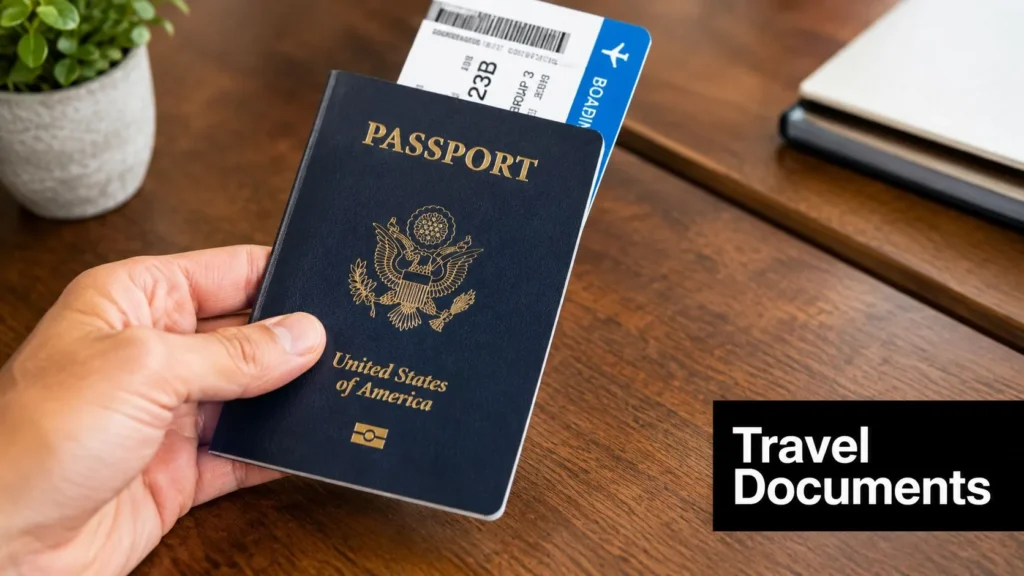
1. Valid Passport and Travel Documents
Your passport deserves the first place on any international packing list because it connects you to border control, airlines, hotels, and other services that need official identification. Check the expiration date well before departure, and verify the destination’s entry rules rather than assuming that a valid passport alone is enough. Visa requirements, travel permits, and health-related certificates can vary by country and by the purpose of the visit.
A journalist covering an overseas assignment may need press credentials alongside a passport. A business traveler may need a specific visa for meetings, while an adventure writer attending an international event may need permits connected to the activity. Build those requirements into the list as soon as you confirm the itinerary.
Protect access to the information
Keep the original document secure, but don’t make it inaccessible during airport transfers or border checks. Carry a separate physical copy of the identification page and store a digital copy in a secure cloud account that you can reach without relying on a single device.
- Check the expiration date early: Confirm the destination’s validity rules before booking becomes difficult to change.
- Photograph the information page: A clear image can help you recover key details if the original is lost.
- Separate the copy from the passport: Keep it away from the wallet and main document pouch.
- Research visas directly: Use official government or embassy guidance for current entry requirements.
A sustainable passport holder can keep the document, boarding pass, and small paper records together without adding a bulky organizer, such as these sustainable passport holder options.
2. Travel Documentation and Important Records
A passport proves who you are, but the rest of your travel records help you prove what you’ve booked, what coverage you have, and who should be contacted if plans go wrong. Keep flight confirmations, hotel addresses, insurance details, emergency contacts, medical records, and relevant reservations in one master document instead of scattering them across email threads.
Digital storage is convenient, but it isn’t a complete backup. A dead phone, weak connection, locked account, or lost device can block access at the moment you need it. Keep selected paper copies in a separate part of your luggage, and write down essential phone numbers because contacts stored only in your phone aren’t useful if the phone disappears.
Build a document pack that works offline
Use a folder in Google Drive or Dropbox, then email the key files to yourself as a second access route. Protect sensitive records with a strong account password and avoid leaving unnecessary personal information in shared devices.
- Create a master itinerary: Include transportation, lodging, addresses, and arrival instructions.
- Save emergency contacts on paper: Add local accommodation details and contacts at home.
- Photograph critical records: Include the passport page, insurance card, and prescriptions.
- Separate originals and copies: Keep the copy pack available if the main bag is lost or stolen.
A travel writer moving between several hotels benefits from a single document that shows each address and booking reference. A business traveler should add conference registration, meeting details, and work credentials. The same approach supports a reporter carrying press information or a traveler who needs medical documentation.
3. Appropriate Clothing for Destination Climate
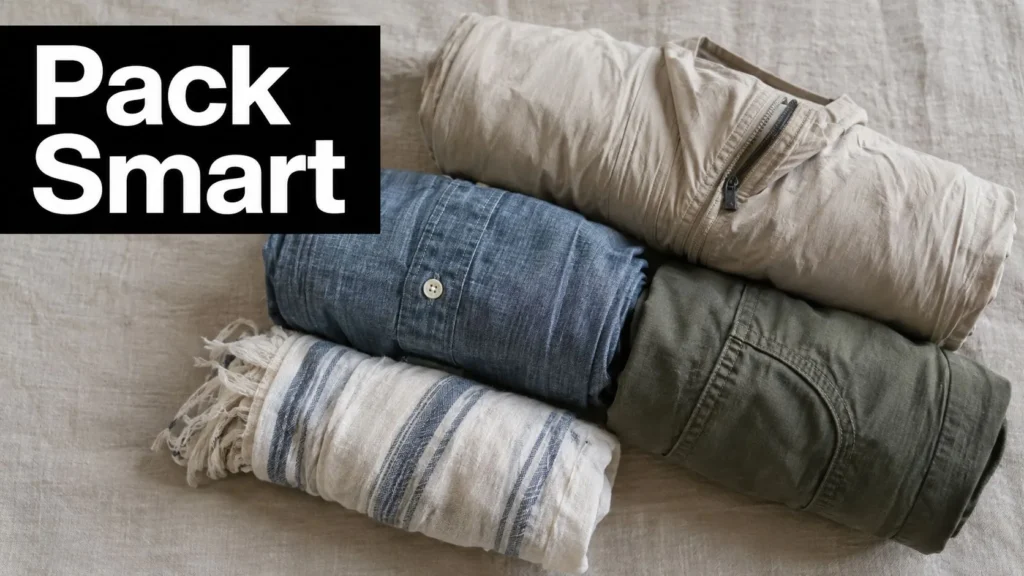
Clothing should follow the itinerary, not your usual wardrobe. Check the destination’s climate, expected conditions, cultural dress expectations, and the difference between daytime and evening temperatures. A warm coastal trip may still require a light layer for transportation, while a high-altitude excursion can demand warmer clothing than the city at the same destination.
Choose pieces that work together. Neutral colors, interchangeable tops and bottoms, and layers usually outperform single-use outfits. A fashion writer covering shows may need event-specific clothing, but that doesn’t mean every outfit needs a separate pair of shoes or accessories. A sports journalist standing outside for hours should prioritize weather protection and comfort before appearance.
Pack for changes, not just the forecast
A weather forecast is useful, but it can’t guarantee the conditions you’ll meet across a full itinerary. A lightweight jacket, scarf, overshirt, or packable rain layer can protect a carefully limited wardrobe without taking much space.
- Choose mix-and-match colors: Each top should work with more than one bottom.
- Add one flexible layer: Use it on the plane, outdoors, or in cool indoor spaces.
- Reserve one polished outfit: It can cover a business meeting, dinner, or formal event.
- Match clothing to local expectations: Research places where shoulders, legs, or specific footwear need more coverage.
- Plan for washing: Select fabrics that dry reasonably well and can be worn more than once when appropriate.
Rolling can make soft clothing easier to arrange, while folding structured garments may prevent creases. The best method depends on the fabric and the bag’s shape. Don’t pack clothing for every hypothetical situation. Pack for the activities you’ve planned, then include one adaptable backup layer.
4. Comfortable Footwear and Backup Shoes
Footwear can determine whether a trip feels easy or exhausting. Shoes that look suitable in a bedroom may cause blisters after a full day through airports, galleries, city streets, or event venues. Travel footwear should be broken in before departure, support the activities on your itinerary, and coordinate with several outfits.
Most travelers don’t need a large shoe collection. A practical combination might include a reliable walking pair, a casual or formal option, and lightweight sandals where the destination makes them useful. Specialty shoes deserve space only when a planned activity requires them. Packing hiking boots for a trip that contains no trail is wasted capacity, while skipping them for a remote outdoor assignment creates a safety problem.
Use every pair efficiently
Wear the bulkiest pair during transit and pack smaller shoes around the suitcase perimeter. Stuff socks or small accessories inside clean shoes, but place them in a shoe bag first so the interior stays separate from clothing.
- Break shoes in first: Test them on walks long enough to reveal rubbing or pressure points.
- Choose versatile colors: Neutral footwear works with more clothing combinations.
- Carry suitable socks: Moisture-managing socks can make long walking days more comfortable.
- Add sandals selectively: They can help at a hostel, resort, shared shower, or beach.
- Avoid duplicate functions: Two pairs of nearly identical casual shoes rarely justify the space.
A travel writer exploring neighborhoods all day needs a different shoe plan from a fashion editor attending formal events. An adventure journalist may need activity-specific footwear, but should still ask whether the item can serve another purpose. The right backup pair is the one that solves a realistic failure or itinerary need, not the one that reflects every possible plan.
5. Technology and Charging Devices
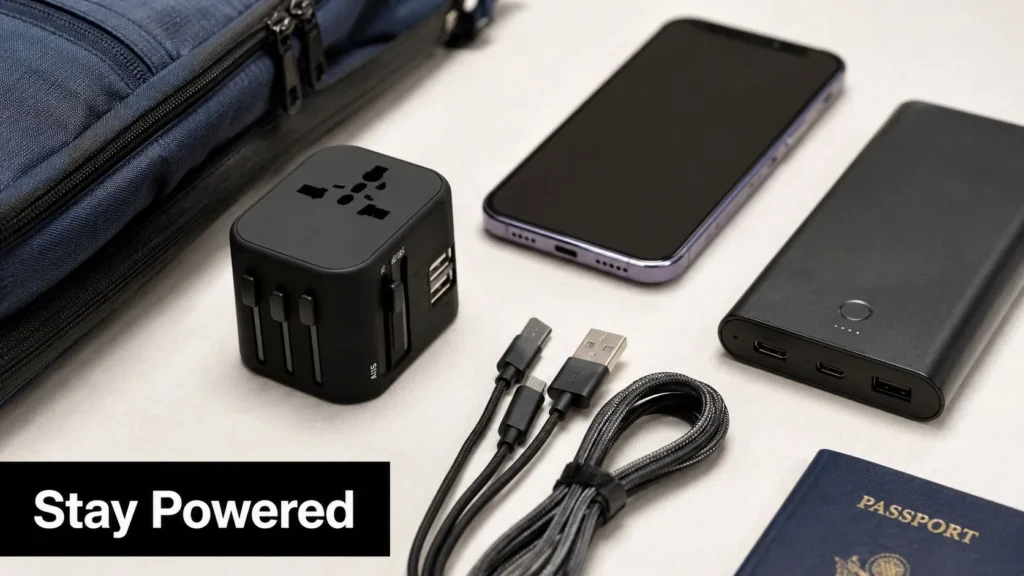
Your phone may handle navigation, boarding passes, communication, translation, bookings, and emergency contact, but it only helps while it has power and access to the information you need. Build the technology category around actual tasks. A leisure traveler may need a phone, cable, adapter, and power bank. A content creator or business traveler may also need a laptop, camera, storage, and separate charging equipment.
Use one charging pouch for cables, adapters, and small accessories. Labeling cables or choosing distinct colors can prevent confusion when several devices use similar connectors. A universal adapter is useful for international travel, but confirm whether your devices require only a plug adapter or also voltage conversion.
Keep the critical devices in your personal bag
Power banks should travel according to current airline and security rules, and the plan notes recommend using TSA-approved models under 100Wh. Check the airline and airport requirements before departure because rules can change. Carry laptops where security screening makes them easy to remove, and don’t place irreplaceable data only on a device that travels in checked luggage.
- Pack every required cable: Match each device to its charging lead before closing the bag.
- Download offline maps: Navigation shouldn’t depend entirely on roaming or Wi-Fi.
- Back up important files: Use cloud storage and, when appropriate, a separate physical copy.
- Test the power bank: Confirm that it charges the intended device before the trip.
- Keep a spare short cable: It can solve a problem without adding much bulk.
For planning, navigation, and booking support, review MaxiJournal’s guide to the 12 best travel apps for planning. For charging equipment, an essential USB-C PD adapter can simplify a kit built around compatible devices.
6. Camera and Content Creation Equipment
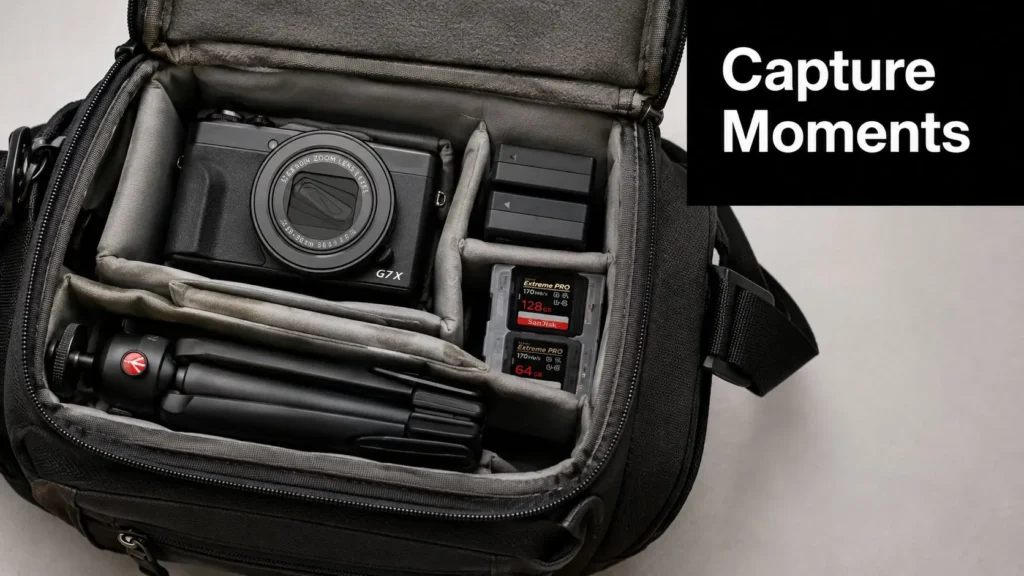
A camera kit should serve the story you’re traveling to produce. A mirrorless or DSLR camera may provide control and image quality for professional work, while a good smartphone can cover quick notes, backup images, and situations where a large camera attracts unwanted attention. The correct choice depends on the assignment, lighting, access, and how much equipment you can safely carry.
A sports journalist may need a longer lens and fast access to spare batteries. An entertainment writer covering a concert may need a microphone or approved recording setup, but venue restrictions can matter more than the equipment itself. A fashion or arts writer may prioritize color accuracy, low-light performance, and discreet movement through crowded spaces.
Protect the work, not just the hardware
Use a padded camera bag and keep the kit with you rather than in checked baggage. Carry extra memory cards, batteries, and a small lens-cleaning kit when the assignment depends on uninterrupted shooting. Expensive equipment also deserves appropriate insurance and a clear record of serial numbers.
- Choose versatile lenses: One flexible lens may be more useful than several rarely used options.
- Use your phone as backup: It gives you a second way to record notes or images.
- Separate storage media: Don’t keep every card in the same pocket.
- Back up as you go: Transfer important files when a secure connection or drive is available.
- Check destination conditions: Dust, rain, heat, and low light affect the protection you need.
A tripod, microphone, or action camera earns its place when the planned work requires it. Otherwise, each extra accessory increases weight, charging demands, and the number of things you must monitor. Pack the smallest kit that can produce the work, then protect it with organization rather than excess gear.
7. Toiletries and Personal Hygiene Items
A toiletry kit should keep you comfortable without recreating your bathroom at home. Start with the items you rely on every day, such as a toothbrush, toothpaste, deodorant, cleanser, moisturizer, hair tools, shaving supplies, contact-lens products, and feminine hygiene products. Add destination-specific needs such as sunscreen or insect repellent when outdoor exposure makes them relevant.
Solid products can reduce leaks and simplify liquid management. Solid shampoo and conditioner bars, for example, avoid some liquid-pouch problems, but they aren’t automatically better for every traveler. If your hair or skin reacts badly to a product change, a familiar small container may be more practical than an eco-oriented swap that causes discomfort.
Make the kit compliant and replaceable
Transfer liquids into clearly labeled reusable containers and keep them together in a transparent pouch when carrying them through security. Rules vary by airport and itinerary, so check the current requirements before departure instead of relying on an old routine. Put nonessential liquids in checked luggage when appropriate, but keep the products you need during transit accessible.
- Prioritize hard-to-replace items: Pack prescription skincare, specialty products, and personal hygiene supplies first.
- Use a small backup: A modest reserve can help if a flight delay extends the trip.
- Prevent leaks: Close caps tightly and place liquids in a separate waterproof pouch.
- Consider destination availability: Don’t assume a preferred product will be easy to find abroad.
- Protect changing skin needs: A dry climate may call for moisturizer, while strong sun calls for reliable sunscreen.
Waterless products can fit a lower-waste routine, and this ArtNaturals waterless beauty advice offers relevant context for travelers considering solid or low-water alternatives. The practical test is simple. If a swap saves space and works for your body, keep it. If it creates inconvenience or irritation, familiarity may be worth the extra room.
8. Medications and First Aid Essentials
Medication belongs in your carry-on, not in a checked bag that could arrive later. Keep prescriptions in their original labeled containers, carry copies of prescription information, and research whether the destination restricts a particular medication. Requirements can differ across borders, so a medication that is routine at home may need documentation or prior approval elsewhere.
Your first-aid kit should match the environment and activity. A basic urban trip may need bandages, antiseptic or antibiotic ointment, pain relief, and medication for common minor complaints. A remote adventure assignment may justify more robust supplies, but only if you know how to use them and have considered the consequences of being far from medical care.
Separate routine health from emergency backup
Make one pouch for daily medication and another for first aid. That arrangement keeps essential prescriptions easy to reach and lets you remove the first-aid kit for a short outing without unpacking the entire health category.
- Carry prescription documentation: Include copies of prescriptions and relevant medical information.
- Keep medication accessible: Store it where you can reach it during transit.
- Review destination rules: Check customs or government guidance before crossing borders.
- Add minor-injury supplies: Bandages, ointment, and pain relievers cover common needs.
- Carry vaccination records when relevant: Keep physical and digital copies with travel documents.
- Review medical coverage: Know how your insurance handles emergency treatment abroad.
A science writer traveling for a medical assignment may need documentation for personal medication, while an adventure journalist should think about injury response and evacuation logistics. Don’t add antibiotics or unfamiliar treatments casually. Ask a qualified clinician or pharmacist what belongs in your personal kit and how it should be stored.
9. Travel Insurance and Financial Documents
Travel insurance is a planning decision, not an item to remember after something goes wrong. Review whether the policy addresses the risks your trip creates, including medical emergencies, cancellation, theft, delayed baggage, or activity-specific evacuation. Adventure travel often requires closer attention to exclusions, while a business trip may make missed transportation or interrupted plans especially costly.
Financial resilience requires more than one payment method. Carry a primary card, a backup card stored separately, and a practical amount of emergency cash suited to the destination. Notify your bank about travel when its systems require that step, and keep emergency contact instructions somewhere separate from the cards themselves.
Read the policy before packing it
Save the policy documents offline and record the insurer’s assistance number. Don’t assume that a general policy covers mountain activities, professional equipment, or pre-existing medical conditions. The details determine whether the document helps during a crisis.
- Check the exclusions: Look for medical, activity, baggage, and cancellation limitations.
- Keep proof accessible: Store policy details in your document folder and carry a paper copy.
- Separate payment methods: A lost wallet shouldn’t remove every way to pay.
- Save receipts: They may support a claim for approved expenses.
- Protect bank access: Confirm your cards work internationally and know how to report loss.
For a deeper review of policy features and international considerations, use this guide to finding the best travel insurance for international trips. The best policy is the one whose terms match the actual journey, not the one with the longest list of benefits.
10. Adaptable Packing Strategy and Luggage Organization
Organization turns a list into a working system. Choose luggage based on the route, surfaces, airline conditions, trip length, and how often you’ll move between locations. A wheeled suitcase suits paved urban routes, while a backpack or hybrid bag can work better when stairs, uneven paths, or frequent transfers dominate the itinerary.
Packing cubes are useful because they create visible categories, not because they magically create more luggage space. Assign cubes to clothing, underwear, toiletries, or technology, then keep a small personal bag for documents and transit essentials. Compression bags can save space with soft items, but they may encourage overpacking and can make a bag harder to close.
Arrange the bag by access priority
Place heavy items near the wheels, shoes around the perimeter, and frequently used items in the top layer. Wear bulky clothing during transit when it’s comfortable, and keep medication, documents, chargers, and one change of clothes in your carry-on. A carry-on-only approach can simplify shorter trips, but it isn’t always the right choice for specialized equipment, family needs, or longer stays.
- Pack by category: Use cubes or pouches that make one group easy to remove.
- Limit clothing duplication: Build around a repeatable outfit system rather than imagined occasions.
- Plan laundry: Wash-and-wear pieces can reduce the amount of clothing needed on longer trips.
- Leave access space: Don’t bury the items you’ll need at security or after arrival.
- Separate dirty clothing: A lightweight laundry bag prevents clean items from mixing with worn ones.
For a visual packing demonstration, use the embedded guide below.
Travelers building a lighter European itinerary can also consult how to pack light for Europe. The goal isn’t the smallest possible bag. It’s a bag where every item has a clear job and remains findable.
11. Trip-Specific and Pet-Travel Add-Ons
The universal core only works when you adapt it. A business trip may require a formal outfit, credentials, laptop accessories, and a reliable way to protect presentation materials. An adventure trip may add helmets, technical clothing, navigation tools, protective equipment, and a first-aid kit. A short trip rewards a compact carry-on, while long-term travel requires a plan for laundry, replenishment, repairs, and replacement.
Pets create a separate access problem. Keep food, water, a collapsible bowl, treats, waste bags, medication, identification, comfort items, first aid, grooming tools, and vaccination records together rather than distributing them across the main luggage. Requirements for carriers, health certificates, and transport vary, so verify them with the carrier and relevant authorities before departure.
Use a core-plus-add-ons decision
Start with documents, health, money, communication, basic clothing, footwear, hygiene, and organization. Add only what the itinerary demands, then remove duplicates. A minimalist setup isn’t about refusing useful items. It’s about rejecting objects that solve no defined problem.
- Business travel: Add one formal outfit, credentials, work equipment, and meeting records.
- Adventure travel: Verify every activity-specific item before leaving.
- Short trips: Test the complete setup in carry-on luggage.
- Long trips: Plan laundry and identify realistic replenishment points.
- Pet travel: Keep food, medication, identification, comfort items, and records accessible.
- Minimalist travel: Remove duplicate chargers, excess shoes, and “just in case” clothing.
Save a master digital checklist, duplicate it for each trip, and print the final version. Mark every item as must-have, useful, or optional. Only the first category should survive a severe space or weight constraint.
11-Item Packing Essentials Comparison
| Item | Implementation Complexity | Resource Requirements | Expected Outcomes | Ideal Use Cases | Key Advantages |
|---|---|---|---|---|---|
| Valid Passport and Travel Documents | Medium, renewals & visa processing | Official ID, photos, fees, digital backups | Legal entry/ID; travel eligibility | International travel, business, journalists | Universally required, official ID, backup copies |
| Travel Documentation and Important Records | Low–Medium, organization & backups | Cloud storage, printed copies, waterproof holder | Quick recovery; proof of bookings & contacts | Frequent travelers, business, reporters | Accessibility, fast problem resolution, emergency aid |
| Appropriate Clothing for Destination Climate | Medium, research & versatile selection | Climate-appropriate garments, layers, cultural-appropriate items | Comfort, safety, cultural fit | Travel writers, event attendees, outdoor trips | Comfort, social integration, packing efficiency via layers |
| Comfortable Footwear and Backup Shoes | Low–Medium, selection & breaking-in | 2–3 quality pairs, socks, space in luggage | Reduced injury/blisters; all-occasion readiness | Exploratory travel, long days on foot, event coverage | Comfort, durability, versatility |
| Technology and Charging Devices | Medium, compatibility & airline rules | Adapters, power banks, cables, chargers, backups | Continuous communication; content creation & navigation | Content creators, journalists, digital nomads | Connectivity, backup power, GPS and documentation |
| Camera and Content Creation Equipment | High, skill, setup, and protection | Cameras, lenses, mics, tripods, batteries, storage | Professional-quality media; publishable content | Photographers, journalists, multimedia creators | High-quality documentation, versatile formats |
| Toiletries and Personal Hygiene Items | Low, packing to TSA limits | Travel-size liquids, solid alternatives, toiletry bag | Personal comfort and hygiene; TSA compliance | All travelers, beauty/fashion writers, outdoor crews | Health maintenance, familiarity, compact options |
| Medications and First Aid Essentials | Medium, prescriptions & regulation checks | Labeled prescriptions, OTC meds, first-aid kit, documentation | Health continuity; immediate treatment | Travelers with conditions, remote/adventure trips | Safety, legal compliance, immediate care |
| Travel Insurance and Financial Documents | Medium, policy comparison & timing | Insurance policy, cards, emergency cash, copies | Financial protection; emergency assistance | Long trips, business travel, adventure travel | Risk mitigation, medical/evacuation coverage, claims support |
| Adaptable Packing Strategy and Luggage Organization | Medium, planning & discipline | Suitable luggage, packing cubes, compression bags | Space efficiency; easy access; reduced fees | Frequent travelers, nomads, multi-destination trips | Maximized space, organization, repeatable system |
| Trip-Specific and Pet-Travel Add-Ons | Medium, itinerary-specific customization | Specialty gear, pet records, activity equipment | Tailored readiness; fewer forgotten specialty items | Business trips, adventure travel, pet owners, long-term trips | Custom fit to itinerary, prevents omissions, repeatable checklist |
Turn the List Into Your Default Travel Checklist
A reusable packing system should reduce decisions, not create another document you ignore. Save a master checklist with the eleven categories above, then duplicate it for each journey. The core remains stable, while the destination, itinerary, work, health, activity, and companion sections change.
Start with documents because they can determine whether the trip is possible at all. Confirm passport validity, visas, permits, identification, reservations, insurance records, and emergency contacts. Save digital copies, prepare selected paper copies, and place originals where you can reach them without opening every compartment.
Next, separate carry-on essentials from items that can safely travel in checked luggage. Keep your passport, important records, medication, charging equipment, payment methods, and one change of clothes close. The reason is practical. SITA reported 36.7 million mishandled bags in 2023, compared with 33.4 million in 2024, and the 2024 global rate was 6.3 bags per 1,000 passengers, down from 6.9 in 2023 (SITA’s baggage data). Even with improvement, a delayed checked bag can disrupt the first day of a trip.
Choose clothing only after reviewing climate and itinerary. Build around layers, repeatable combinations, appropriate cultural coverage, and footwear that can handle the actual walking or activity planned. A formal outfit may be justified for a conference or event, but several single-use looks usually aren’t. Longer trips should rely more heavily on laundry and replenishment planning, while short trips should test whether the complete list fits in a carry-on.
Health deserves its own final review. Confirm prescriptions, documentation, storage needs, first-aid supplies, sunscreen, and any destination-specific requirements. Pet travelers should check food, water, medication, identification, comfort items, grooming supplies, and records separately, then keep those items accessible during transit.
Use a three-pass edit before you close the bag:
- Pass one, must-have items: Documents, medication, money, communication, and items that would be difficult to replace.
- Pass two, itinerary items: Work equipment, activity gear, climate layers, and companion-specific supplies.
- Pass three, removals: Duplicate clothing, redundant chargers, unnecessary shoes, and products you can safely obtain at the destination.
A survey reported that travelers forget an average of two essential items per trip, with toothbrushes and toothpaste among the most commonly forgotten at 22%, followed by electronic chargers at 19.1% (travel packing survey results). The same source reports that 72.9% of travelers make a packing list and 77.1% say a list makes them less likely to forget something. Those findings support a simple habit: build the list before packing, then use it again for the final door check.
Save the master version in a folder you can access offline. Print the trip-specific version after the last edit, and check each item physically rather than trusting memory. MaxiJournal can also serve as a source for future reading across travel, technology, health, business, fashion, sports, and pet topics, so you can refine the add-on sections as your travel style changes.
Finish by checking the bag’s weight, opening the carry-on once, testing your charging setup, confirming medication access, and making sure documents are where you expect them to be. A good list doesn’t make you carry more. It makes every packed item easier to justify and every important item easier to find.
Visit maxijournal.com for approachable travel guidance and related writing across technology, health, business, fashion, sports, pets, and entertainment. Use those articles to refine your destination-specific packing checklist, then save and print the version you’ll use before your next departure.
Discover more from Maxi Journal
Subscribe to get the latest posts sent to your email.