At its core, travel blog writing is the art of weaving your personal adventures into practical, genuinely helpful advice for other travelers. It’s a blend of raw, first-hand narrative with smart SEO that helps you find an audience, earn their trust, and build something lasting online.
Why Travel Blog Writing Still Thrives in the Digital Age
In a world saturated with fleeting Instagram Stories and slick, AI-generated itineraries, it’s easy to wonder if blogging is a thing of the past. But here’s the truth: authentic, human-powered travel writing has never been more vital.
Why? Because it offers the one thing that quick-hit videos and automated summaries can’t deliver: a real human connection.
People are tired of the gloss. They crave real experiences. They want to know what it actually feels like to get lost in the bustling markets of Marrakech or to stumble upon a tiny, perfect café in Paris—not just watch a polished clip designed to please an algorithm. Your personal story is your most powerful tool.
The Power of Authentic Storytelling
Travelers today aren’t just looking for another “Top 10” list. They’re searching for context, for emotion, for relatable screw-ups and unexpected moments of joy that help them both plan and dream. This is where great travel writing shines, turning a simple trip report into a story that sticks.
Think about what makes a blog so irreplaceable:
- Real Connection: Sharing your personal challenges, triumphs, and the funny things that went wrong is how you build a community that actually trusts what you have to say.
- Niche Authority: A blog is the perfect platform to become the go-to person for a specific travel style, whether that’s “solo female backpacking in Southeast Asia” or “finding the best budget-friendly road trips in Europe.”
- Evergreen Value: A social media post is gone in a flash. A well-written blog post, on the other hand, can pull in traffic from Google for years, becoming a long-term asset that keeps on giving.
The blueprint for a successful modern travel blog isn’t just about pretty words. It’s about merging heartfelt storytelling with sharp, practical advice that solves a real problem for your reader.
Sustained Demand and Proven Success
The appetite for quality blog content isn’t going anywhere. A 2023 HubSpot report revealed that a staggering 83% of people regularly read blogs. People still turn to blogs for information and inspiration they can trust.
And it works. Just look at creators like Ioana from The Solo Travel in Style Blog, who took a brand-new blog and grew it to over 80,000 monthly visitors in about 18 months. Her success, and many others you can read about in these modern blogging success stories, shows what’s possible when you get the strategy right.
This is the opportunity in front of you. By focusing on authentic, helpful travel writing, you can build a platform that doesn’t just document your adventures—it creates a meaningful, and potentially profitable, brand.
To succeed in today’s environment, you need to focus on a few core areas. These pillars form the foundation of any travel blog that aims for long-term growth and authority.
Core Pillars of Modern Travel Blogging
| Pillar | Key Focus | Why It Matters |
|---|---|---|
| Authentic Storytelling | Weaving personal experiences, emotions, and unique perspectives into your content. | Builds trust and creates a memorable connection that algorithms and generic content can’t replicate. |
| Audience-First SEO | Researching what your target readers are actively searching for and creating content that answers their questions. | Drives consistent, long-term organic traffic from search engines like Google, making your blog discoverable. |
| High-Quality Visuals | Using original, compelling photography and video to complement your writing and break up text. | Enhances the reader’s experience, increases engagement, and helps your content stand out on social media. |
| Strategic Monetization | Integrating revenue streams like affiliate marketing, display ads, or digital products in a way that feels natural and helpful. | Creates a sustainable business, allowing you to invest more time and resources into creating great content. |
Getting these four elements right is the key. When your personal stories meet your audience’s needs, supported by great visuals and a smart business plan, you have a recipe for a thriving travel blog.
Finding Your Unique Angle in a Crowded World
The world of travel blogging is packed. Seriously, there are countless people out there sharing their trips. If you want anyone to actually read your stuff, you can’t just be another voice shouting into the void. You’ve got to find your corner of the travel universe and own it. This is all about finding your niche—a specific topic that you’re genuinely fired up about and that serves a real audience.
Generic travel writing is a recipe for getting lost. Nobody is actively searching for “my trip to Italy” anymore. But “vegan food tours in Florence”? Or “accessible ancient ruins in Rome for wheelchair users”? Now you’re talking. Getting super specific like this is how you attract readers who need exactly what you’re offering, making your blog instantly valuable to them.
Your unique angle isn’t something you pull out of thin air. It’s found where three things collide: your genuine passions, your specific knowledge, and an audience that’s looking for what you have to say. When you nail that combination, you stop just documenting your trips and start building a brand.
Beyond the Obvious Travel Niches
Sure, you could start a “luxury travel” blog or a “backpacking Southeast Asia” blog, but the real magic happens when you start mashing ideas together to create something new.
What makes your travel style different? Think about it. Do you bring your dog everywhere? Are you obsessed with a particular slice of history? Do you refuse to travel any way but by train?
Here are a few examples of unique angles that carve out a specific space:
- Van Life with a Dog: This takes the popular van life trend and layers on the specific challenges and joys of having a furry co-pilot.
- Historical Battlefields on a Budget: This is perfect for history buffs who also watch their wallets. It’s a smart blend of historical deep-dives and practical money-saving tips.
- Dark Tourism Destinations: This appeals to a very specific type of traveler interested in the history of sites associated with tragedy and sober reflection.
- Global Rock Climbing Guides: An adventure niche for people who literally plan their trips around a cliff face. This requires real, firsthand expertise.
The best niches feel personal because they are personal. They come from your quirks, your limitations, your unique way of seeing the world. Don’t be afraid to get weirdly specific—the more defined your angle, the easier it becomes to be the go-to expert.
Take a look at your own life. What skills or interests can you bring to the table? If you’re a professional chef, maybe you start a blog about recreating famous dishes from your travels. If you’re a parent, you could focus on planning multi-generational trips with both kids and grandparents.
If you’re just starting to figure this all out, our complete guide on how to start a travel blog is a great place to build your foundation.
Define Your Ideal Reader
Once you’ve got a niche in mind, the next step is to get a crystal-clear picture of who you’re writing for. Who is your ideal reader? It sounds a bit silly, but giving this person a name and a backstory makes your writing so much more focused and relatable.
Are you writing for “Budget Brenda,” a 24-year-old recent grad who’s determined to see the world without racking up debt? Or is your target “Adventure Adam,” a 35-year-old professional who uses every vacation day for intense hiking and climbing expeditions?
Knowing your reader helps you answer the important questions:
- What are their biggest travel frustrations?
- What information are they desperately Googling at 2 a.m.?
- What kind of tone will actually connect with them?
Writing for Brenda means you’ll be all about hostel reviews, free walking tours, and the best cheap eats. Writing for Adam means detailed gear lists, trail difficulty ratings, and tips for hiring local climbing guides. Every single article you publish should feel like a direct answer to a question your ideal reader has. That’s how you build a loyal community and become an authority.
Crafting Stories That Readers and Search Engines Both Love
Let’s be real: a truly great travel blog post has to pull double duty. On one hand, it needs to tell a compelling story that makes a reader feel something. On the other, it has to be a strategic piece of content that Google can actually find and recommend.
Finding that sweet spot is how you graduate from keeping an online travel diary to running a successful blog. And it all starts with getting inside your reader’s head.
Instead of just writing about “My Awesome Trip to Florence,” you have to think like the person on the other side of the screen. What problem are they trying to solve? They’re probably searching for things like, “Secret Spots in Florence Only Locals Know” or “How to Skip the Lines at the Uffizi Gallery.”
Your personal experience is the magic ingredient, the secret sauce that brings those topics to life. But the idea itself has to be grounded in what your audience is actually looking for. This is the heart of it all: turning your personal journey into a resource that is both deeply personal and incredibly useful.
Brainstorming Content That Serves a Purpose
Every single one of my best-performing posts started with an idea that solved a problem, answered a question, or fulfilled a desire for my reader. You have to move beyond simple trip recaps and start thinking about creating tangible value. The goal is to become a trusted resource people come back to again and again.
Here are a few frameworks I use all the time for brainstorming content that actually helps people:
- Problem-Solving Guides: Think about what drove you nuts on your trip. Was navigating the Tokyo subway a complete nightmare? Perfect. Create the step-by-step guide you wish you’d had, complete with photos and real-talk tips. Did you struggle to find good vegetarian food in Buenos Aires? Write the guide you were desperately searching for.
- Aspirational Itineraries: Don’t just list what you did day by day. Craft a narrative around it. Think “The Perfect 3-Day Weekend in Lisbon for Food Lovers” or “A 2-Week Road Trip Through Scotland’s Highlands.” These give your readers a ready-made blueprint for their own dream trip.
- Deep-Dive Comparisons: Did you spend hours agonizing over whether to stay in Trastevere or Monti in Rome? Or which tour company to use for a Ha Long Bay cruise? Write a detailed comparison post. These articles are SEO gold because they target people who are on the verge of making a decision.
Honestly, the best ideas come from your own frustrations or “aha!” moments on the road. I keep a running list of these in my phone’s notes app. They’re the seeds of your most helpful and successful content. If you’re feeling stuck, it might be a good time to check out some fresh techniques for how to overcome writer’s block and get those ideas flowing again.
Finding the Right Keywords
Once you’ve got a solid idea, you need to figure out the right keywords. These are just the words and phrases people are typing into Google. If you get this part right, you ensure that the people who need your advice can actually find you. Your gut instinct is a great place to start—what would you search for?—but using a few free tools can give you a massive leg up.
You don’t need to shell out for expensive software when you’re starting. Simple tools can show you what your audience is looking for and how hard it will be to rank for those terms. This whole process is about making sure you’re not just writing into the void.
A keyword isn’t just a word; it’s a window into what your reader wants. “Paris” is a search term. “Best budget hotels in Paris near the metro” is an intent-driven keyword that tells you exactly what problem a user needs to solve.
This simple flow shows how you align what you love with what your audience needs—the foundation of every great blog post.
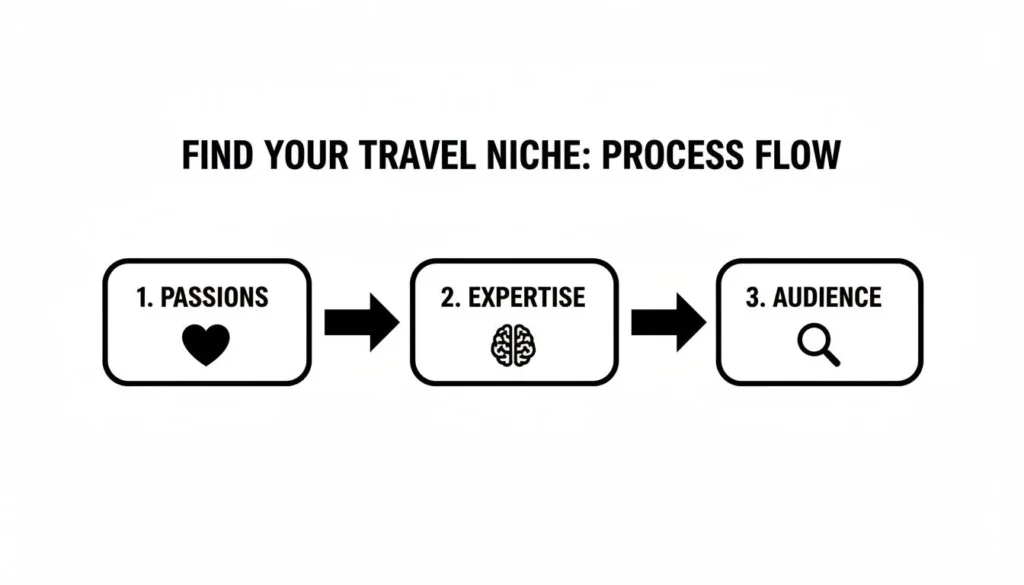
Starting with your passions and expertise and then finding where they intersect with your audience is how you create content that truly connects and ranks.
Structuring Your Post for Maximum Impact
A well-structured post does two things: it keeps readers on the page, and it helps search engines understand your content. People don’t read online; they scan. So breaking up your text with clear headings, short paragraphs, and lots of visuals isn’t just nice—it’s non-negotiable.
Here’s a simple, high-performing framework I use for almost every post:
- A Magnetic Headline: Your title is your first (and often only) chance to earn that click. It has to be compelling and should include your main keyword. “Florence Trip” is boring. “15 Unforgettable Things to Do in Florence (That Aren’t in the Guidebooks)” is a must-click.
- An Engaging Introduction: The first paragraph has to hook them immediately. Start with a relatable mini-story, a surprising statistic, or a direct promise about the problem you’re about to solve for them.
- A Logical Body with Subheadings: Organize your main points with descriptive H2 and H3 subheadings. Use short paragraphs, bullet points, and bold text to make your content scannable and easy to digest.
- A Compelling Conclusion: Quickly summarize the most important takeaways and end with a call to action. Ask a question to spark comments or point them toward another related post on your blog.
This structure acts like a roadmap, guiding your reader through the information in a way that feels effortless and genuinely helpful. When you combine a reader-focused idea with smart keyword targeting and a clean structure, you’re creating content that serves both your audience and your blog’s growth.
Practical SEO for Travel Bloggers
Let’s talk about SEO. If you glaze over at those three letters, I get it. But Search Engine Optimization is the single most powerful tool you have for getting your travel blog in front of people who are actually looking for what you’ve written.
Think of it this way: SEO is the art of speaking Google’s language. It’s not about stuffing keywords or trying to trick an algorithm. It’s about creating genuinely helpful, high-quality stories and guides, then signaling to search engines exactly what they’re about.
Get this right, and you’re not just getting a temporary spike in traffic. You’re building a system that brings a steady stream of curious travelers to your blog, month after month, often for years. You become a trusted source, the go-to guide for your niche.
On-Page SEO: The Essentials for Every Post
On-page SEO simply means all the little tweaks you make directly on your blog posts to help them rank. These are the foundational bits and pieces that act like signposts for Google, telling it, “Hey, this article is about the best street food in Bangkok!”
Making these a habit for every single article you publish is one of the highest-impact things you can do. Consistency is everything.
- Meta Descriptions: You know that little blurb under the headline in Google search results? That’s the meta description. It doesn’t directly affect your rank, but a snappy, enticing description of around 155 characters can be the difference between someone clicking your link or your competitor’s. Make it count.
- Image Alt Text: Alt text is a simple description of what’s in your photos. It’s crucial for accessibility (screen readers use it for visually impaired readers) and for SEO. Instead of leaving a filename like “IMG_4567.jpg,” describe the image: “woman hiking a mountain trail at sunrise in Banff National Park.” This gives Google more context about your content.
- URL Slugs: Keep your URLs (the part of the link after your domain name) short, sweet, and descriptive. A clean URL like
/things-to-do-in-kyotois infinitely better for both people and search engines than a messy, auto-generated one like/2024/07/blog-post-about-my-trip-to-japan-part-1.
Building a Strong Internal Linking Web
Internal linking—the simple act of linking to your own articles within a post—is a secret weapon. It’s so easy to do, yet so many bloggers overlook it. It does two critical jobs for you.
First, it creates a way better experience for your readers. If you’re writing a guide to the best restaurants in Rome, why not link out to your other post about exploring the Trastevere neighborhood? It keeps them on your site longer and gives them more of the valuable information they came for.
Second, it helps Google understand how your content is all connected. When you link from a high-performing article to a brand new one, you’re passing along some of that authority, giving the new post a little boost.
A smart internal linking strategy turns your blog from a random collection of articles into a cohesive, interconnected resource. This signals deep expertise to Google, which is a massive factor in building authority and improving your rankings.
Earning Backlinks to Build Authority
So, on-page SEO is what you control on your own site. Off-page SEO is all about building your reputation across the wider internet. And the king of off-page SEO is the backlink—a link from another website pointing to yours.
Google sees backlinks as votes of confidence. When a major travel publication, a tourism board, or even another respected travel blogger links to your guide, it’s a huge signal that your content is trustworthy and valuable.
So, how do you get these coveted links?
- Create Link-Worthy Content: This is the most important step. You have to create content so good, so unique, or so helpful that other people naturally want to share it. Think ultimate guides, original photography, or a story with a truly unique angle.
- Guest Posting: Offer to write an article for another blog in your travel niche. In return, you’ll almost always get a link back to your own site in your author bio. It gets your name in front of a new audience and bags you a relevant backlink. Win-win.
- Collaborate with Other Bloggers: Team up with other travel writers on a “best of” list or a group guide to a destination. Everyone involved will promote the final piece and link to it, creating a powerful web of backlinks for the whole group.
Building a strong backlink profile is a marathon, not a sprint. But every quality link you earn is another brick in the foundation of your blog’s authority. Combine this with solid on-page SEO, and you’ll be well on your way to climbing the search rankings and finding the audience your travel writing deserves.
Turning Your Travel Passion Into a Profitable Business

Let’s talk about the big one: making money from your travel blog. This is where your passion project starts to feel like a real, sustainable business, and for many, it’s the ultimate dream.
But getting there isn’t about flipping some magic “monetization” switch. It’s a natural progression that builds on the trust and value you’ve already created. The best monetization strategies don’t feel like a hard sell; they feel like an organic extension of the helpful advice you’re already giving.
First thing’s first: you absolutely must build a loyal, engaged audience before you try to earn your first dollar. Trying to monetize a blog with barely any traffic is like setting up a shop in the middle of the desert. You need people to show up before you can sell anything. Focus on consistent traffic and a real community first.
Key Income Streams for Travel Bloggers
Once you’ve got that audience, you can start exploring some proven ways to earn an income. The smartest bloggers don’t put all their eggs in one basket. They build a mix of different income channels, which creates stability and opens the door to more opportunities down the road.
Here are the most common and effective ways to make money from your travel blog:
- Affiliate Marketing: This is the easiest place to start. You earn a commission by recommending gear, hotels, tours, or insurance you actually use and trust.
- Display Advertising: When your traffic hits a certain point (usually 50,000+ monthly sessions for top-tier ad networks like Mediavine), you can earn passive income just by having ads on your site.
- Sponsored Content & Brand Partnerships: This is when brands pay you to create content featuring their destination or product, whether it’s a blog post, social media campaign, or a fully-paid trip.
- Selling Your Own Products: This gives you the most control and the highest profit margins. Think digital products like travel guides, photography presets, detailed itineraries, or even online courses.
The most effective monetization feels like an authentic recommendation from a trusted friend. If you wouldn’t recommend a hotel, a backpack, or a tour to your best friend, you shouldn’t be recommending it to your readers.
Starting with Affiliate Marketing
Affiliate marketing is the perfect entry point. It just makes sense. You’re already telling your readers about the hotel you stayed at, the camera you used to get that amazing shot, and the walking tour you loved. Adding an affiliate link simply makes that recommendation trackable.
For instance, in a post about packing for Southeast Asia, you can link to the exact backpack and packing cubes you swear by. If a reader clicks that link and buys something, you get a small commission at no extra cost to them. It’s a win-win: they get a solid recommendation, and you get compensated for your expertise.
Diversifying Your Income for Long-Term Success
Relying on just one income stream is a recipe for disaster. What happens if a Google algorithm update cuts your ad revenue in half? Or a big brand partnership ends? This is why building multiple revenue channels is so critical for creating a resilient business.
The most successful travel bloggers are masters of this. Some make thousands every month from a smart mix of display ads and affiliate links. Others focus on selling their own high-ticket items, like photo tours or courses, and supplement that with a few long-term sponsorships. A breakdown of travel blogger earnings shows just how powerful this diversified approach is, especially since authentic, first-hand guides bring in high-intent traffic that’s ready to convert.
As your blog grows, so will your opportunities. You might start with a few affiliate links, add display ads once your traffic is solid, and then launch your first digital product a year later.
Every new income stream strengthens your business and gets you closer to making full-time travel blogging your reality. And as you grow, don’t forget the power of talking directly to your audience. We’ve got a whole guide on how to build an email list to help you nurture that crucial relationship.
Common Questions About Travel Blog Writing
Even with the best game plan, stepping into the world of travel blogging can feel like navigating without a map. Let’s tackle some of the most common questions that trip up new bloggers, so you can move forward with confidence.
How Long Should a Travel Blog Post Be?
Honestly? It completely depends on what you’re trying to achieve with that specific article. There’s no magic word count that works for everything, but different lengths are definitely better for different goals.
It’s a common myth that everyone online wants super-short, 600-word articles. Sure, a punchy, provocative post of around 275 words might stir up a lot of comments, but it’s going to have a tough time ranking on Google or getting many shares on social media. That kind of content has its place, but it’s not a growth strategy.
If you want to create something people will actually share, aim for the sweet spot between 600 and 1,500 words. That gives you enough space to write a genuinely helpful how-to guide, a detailed list post, or a captivating personal story that people will want to pass along.
But if your main goal is attracting long-term, organic traffic from search engines, longer is almost always better. The data doesn’t lie: in-depth, authoritative guides of 2,450 words or more consistently dominate the top spots on Google. These cornerstone articles establish you as an expert and can become evergreen assets, bringing new readers to your blog for years to come.
Do I Need to Be a Full-Time Traveler?
Absolutely not. This is probably one of the biggest myths holding people back from starting a travel blog. Many of the most successful bloggers I know have full-time jobs and build incredible content around weekend trips, annual vacations, or just by becoming the ultimate expert on their own local area.
Your authority as a blogger doesn’t come from how many stamps are in your passport. It comes from the quality of your advice and the uniqueness of your perspective. A blog focused on “Epic 3-Day Weekend Guides for Busy Professionals” or “Exploring National Parks Within a Day’s Drive” can be massively successful.
Why? Because your limitations are actually your biggest strengths. They make you relatable to a huge audience facing the same constraints. Authenticity is what matters, not how many days a year you’re on the road.
How Do I Compete with Established Blogs and AI?
You win by being unapologetically human. Big, established blogs have domain authority, and AI can spit out a generic itinerary in seconds. Neither of them has your personal experiences, your unique voice, or your genuine connection to a place.
Here’s how you carve out your space:
- Niche Down, Hard: Don’t try to create the definitive guide to “Italy.” Instead, become the go-to expert for “Hiking the Dolomites with a Dog” or “A Food Lover’s Guide to Bologna’s Hidden Markets.” Specificity is your superpower.
- Tell Real Stories: AI can’t tell the story of getting hilariously lost on the way to a hidden waterfall, the feeling of watching a specific sunset over Santorini, or the taste of a dish from a tiny, family-run trattoria. Your personal narrative is your most powerful weapon.
- Focus on Your Own Visuals: Use your own original, high-quality photos and videos. Authentic images build trust and offer a real perspective that stock photos or AI-generated pictures simply can’t fake.
In a world flooded with generic information, your unique, first-hand perspective is not just a feature—it’s the entire product. Double down on what makes your travel blog writing uniquely yours.
Combine this with solid SEO fundamentals, and you’ll start ranking for specific, long-tail keywords that answer reader questions with a depth and personality that automated content can never match.
What Are the Most Important Skills to Develop?
Beyond just being a decent writer, a few key skills separate the hobbyists from the pros. If you can get a handle on these, you’ll see your growth accelerate significantly.
These are the non-negotiables:
- Storytelling: This isn’t just about writing; it’s the art of weaving your personal experiences into a narrative that hooks readers and makes them feel something.
- SEO: You have to understand the basics of search engine optimization. It’s how people who don’t know you exist will find your amazing content.
- Basic Photography/Videography: You don’t need to be a pro, but clean, compelling visuals make your content more engaging, professional, and shareable.
- Consistency: This is the engine that drives everything. Consistently publishing high-quality articles and promoting them is what builds momentum and turns a passion project into a real business over time.
At maxijournal.com, we champion the art of storytelling across countless subjects, from travel to technology. If you’re ready to share your own unique voice and experiences with a curious audience, explore the publishing opportunities on https://maxijournal.com.
Discover more from Maxi Journal
Subscribe to get the latest posts sent to your email.