Stepping into the kitchen for the first time can feel like learning a new language. The tools seem strange, the recipes are full of unfamiliar terms, and the fear of a culinary disaster is very real. But what if you could bypass the initial stress and jump straight to creating delicious, satisfying meals with confidence? This guide is designed to do just that, serving as your direct roadmap from kitchen novice to capable home cook.
We’ve compiled 10 foundational cooking tips for beginners that cut through the noise, offering clear, actionable advice that professional chefs and seasoned home cooks swear by. This isn’t about memorizing complicated techniques or buying expensive gadgets. Instead, we focus on the core principles that truly matter, providing a solid framework for all your future culinary endeavors.
This comprehensive list will equip you with essential knowledge, covering everything from the importance of reading a recipe thoroughly before you even touch an ingredient to mastering basic knife skills for safety and efficiency. You will learn the fundamentals of heat control, the art of tasting and adjusting flavors as you go, and how to stock a pantry that sets you up for success. We will also demystify food safety, explore simple ingredient substitutions, and, most importantly, teach you how to embrace and learn from the inevitable cooking mistakes.
Forget the intimidation and uncertainty. Each tip is a practical building block designed to empower you. By focusing on these fundamentals, you will not only follow recipes but also begin to understand the why behind them, unlocking your creativity and building a lifelong skill. Let’s begin this flavorful journey together, one simple step at a time.
1. Read the Recipe Completely Before Starting
One of the most foundational yet frequently overlooked cooking tips for beginners is to read a recipe from top to bottom before a single ingredient leaves the pantry. This isn’t just about glancing at the ingredient list; it’s about understanding the entire culinary roadmap ahead of you. This practice, a core component of the French culinary principle mise en place (meaning “everything in its place”), prevents mid-cooking panic and sets you up for a smooth, successful experience.
Why This Simple Step is Crucial
Imagine you’re halfway through making a stew, only to discover you were supposed to marinate the meat for four hours. Or you realize you need a specific tool, like a zester, that you don’t own. Reading the recipe thoroughly helps you anticipate these requirements, ensuring all your ingredients are prepped, tools are at hand, and you understand the timing and sequence of each step. This single action transforms a potentially chaotic process into a controlled, enjoyable one.
Pro Tip: Professional kitchens, like those run by Gordon Ramsay, and prestigious institutions like the Culinary Institute of America, build their entire workflow around this principle. It’s the first lesson taught because it eliminates errors and streamlines cooking.
How to Implement This Tip Effectively
To get the most out of this practice, follow a simple checklist before you start cooking:
- Scan for Unfamiliar Terms: Do you know the difference between “dicing” and “mincing”? Look up any cooking terms you don’t recognize beforehand.
- Check Timings: Note any steps that require significant time, such as marinating, chilling, or slow-roasting. Pay special attention to “active” versus “inactive” time.
- Gather Your Tools: Make sure you have all the necessary pots, pans, bowls, and utensils ready. Preheating your oven should also be one of the first things you do if required.
- Keep it Visible: Print the recipe or keep it open on a tablet. Highlighting critical temperatures and timings can provide a quick reference point while you cook.
2. Master Basic Knife Skills and Safety
Proper knife handling is one of the most empowering cooking tips for beginners, transforming food prep from a chore into a skill. More than just a tool for cutting, a good knife used correctly enhances both the safety and efficiency of your cooking process. Understanding the fundamentals of grip, basic cuts, and knife maintenance builds a foundation of confidence that will serve you in every meal you prepare.
Why This Simple Step is Crucial
A sharp knife is a safe knife. This might sound counterintuitive, but a dull blade requires more pressure to cut, making it more likely to slip and cause an injury. A sharp knife, on the other hand, glides through ingredients with minimal effort, offering greater control and precision. Learning correct hand positioning, like the “claw grip,” protects your fingers and allows you to work faster and more consistently, improving the evenness of your cooking.
Pro Tip: Culinary masters like Thomas Keller and institutions like The Culinary Institute of America emphasize that knife skills are non-negotiable. Many chefs report that practicing these skills can speed up preparation time by 30-40%, a massive efficiency gain for any home cook.
How to Implement This Tip Effectively
To build your knife skills safely and effectively, start with these focused steps:
- Invest in One Good Knife: Forget the large knife block. Start with a single, high-quality 8-inch chef’s knife, which can handle about 90% of kitchen tasks.
- Practice the Claw Grip: Curl the fingers of your non-knife hand into a “claw” and rest them on the ingredient you are cutting. Your knuckles should guide the blade, keeping your fingertips safely tucked away.
- Maintain Your Blade: Use a honing steel regularly to keep the blade’s edge aligned and have it professionally sharpened or use a knife sharpener once or twice a year.
- Stabilize Your Cutting Board: Place a damp paper towel or a non-slip mat under your cutting board to prevent it from sliding around while you work. Mastering foundational techniques is key to progress in any craft; you can explore similar principles in our guide on painting techniques for beginners.
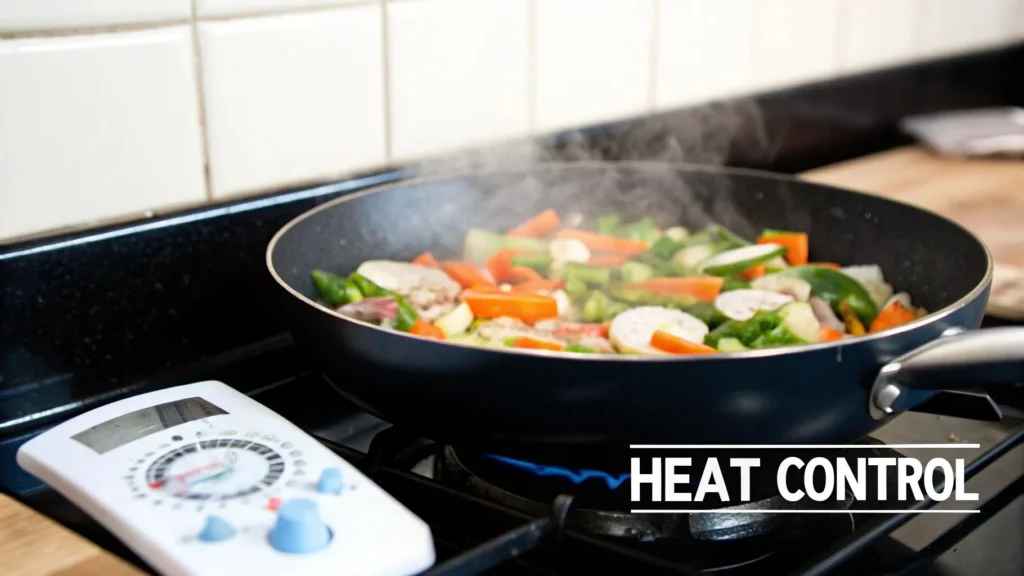
3. Understand Basic Cooking Methods and Heat Control
Beyond following a recipe, one of the most empowering cooking tips for beginners is to grasp the fundamentals of cooking methods and heat control. Understanding why you sauté instead of boil, or roast instead of steam, transforms you from a recipe follower into a true cook. It’s about learning how different types of heat interact with food to create texture, flavor, and color, from the Maillard reaction on a seared steak to the tender breakdown of a slow-braised stew.
Why This Simple Step is Crucial
Each cooking method, whether it’s high-heat sautéing or low-and-slow braising, is a tool designed to achieve a specific outcome. Sautéing with high, direct heat creates a flavorful brown crust, while braising with low, moist heat makes tough cuts of meat fall-apart tender. Without this knowledge, you might accidentally steam your vegetables when you meant to roast them by overcrowding the pan, resulting in a soggy, disappointing dish. Mastering heat control prevents common pitfalls like burnt exteriors with raw interiors or tough, overcooked proteins.
Pro Tip: Food science experts like Harold McGee and culinary educators like Alton Brown have built careers on demystifying these concepts. Their work, along with resources like America’s Test Kitchen and Serious Eats, explains the “why” behind the “how,” making cooking an intentional, predictable science.
How to Implement This Tip Effectively
Start by focusing on a few key methods and learning the visual and sensory cues associated with each:
- Preheat Properly: Always preheat your pan before adding oil and ingredients for sautéing, and fully preheat your oven for roasting. This ensures an immediate, even cook and prevents food from sticking or becoming greasy.
- Don’t Crowd the Pan: When roasting or sautéing, give your ingredients space. Overcrowding traps steam, effectively boiling your food instead of browning it. Cook in batches if necessary.
- Use a Thermometer: An instant-read thermometer is a beginner’s best friend. It removes the guesswork from cooking meat and ensures it is cooked to a safe and delicious temperature every time.
- Start Low, Go Slow: If you’re ever unsure about stovetop heat, start on a lower setting. You can always increase the heat, but you can’t undo a burn. This gives you more control as you learn how your stove behaves.
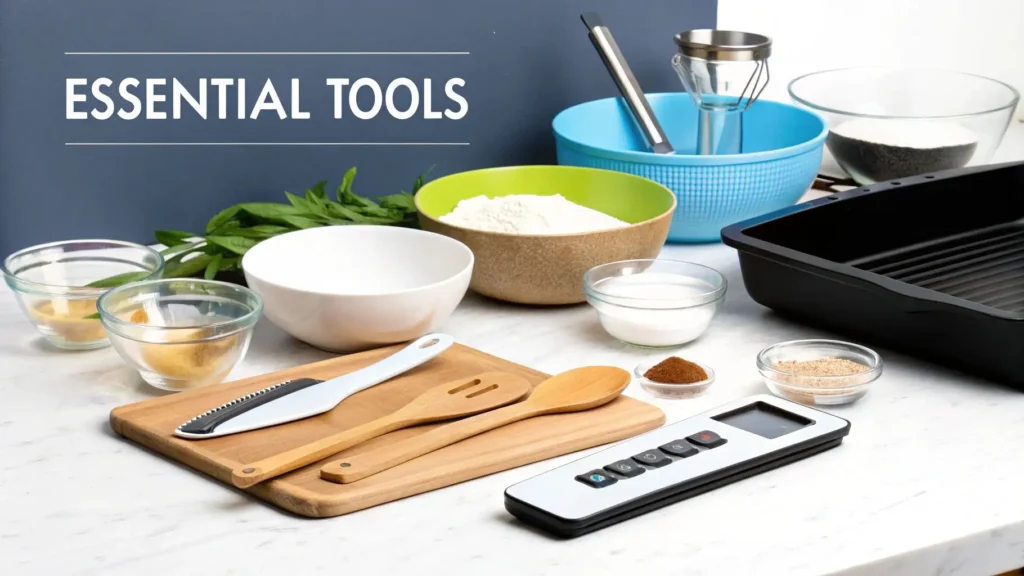
4. Invest in Essential Kitchen Tools and Equipment
You don’t need a kitchen overflowing with single-use gadgets to cook well. In fact, one of the most practical cooking tips for beginners is to focus on a small arsenal of high-quality, versatile tools. Investing in essential equipment makes the physical act of cooking easier, safer, and far more enjoyable, allowing you to focus on technique and flavor rather than struggling with inadequate tools.
Why This Simple Step is Crucial
The right tools can be the difference between a frustrating chore and a creative pleasure. A sharp chef’s knife glides through vegetables with ease, while a dull one can slip and cause injury. A sturdy, heavy-bottomed pan distributes heat evenly, preventing hot spots that burn your food, while a flimsy one will warp and cook inconsistently. These fundamentals form the foundation of your kitchen workflow, covering over 90% of your cooking needs and helping you achieve better results with less effort.
Pro Tip: Organizations like America’s Test Kitchen and Cook’s Illustrated dedicate immense resources to testing and recommending kitchen equipment. Their findings consistently show that a well-made, ergonomic tool from a brand like OXO or a quality All-Clad pan dramatically outperforms cheaper alternatives in both performance and longevity.
How to Implement This Tip Effectively
Start with the basics and expand your collection over time. Prioritize quality over quantity with this simple checklist:
- Start with the “Big Three”: Your first and most important investments should be a quality 8-inch chef’s knife, a large cutting board (wood or plastic), and a versatile 10- or 12-inch stainless steel skillet.
- Acquire the Workhorses: Next, gather mixing bowls, measuring cups and spoons, a silicone spatula, a wooden spoon, and a couple of sturdy sheet pans. These items are used in almost every recipe.
- Consider High-Impact Additions: A reliable instant-read thermometer is invaluable for perfectly cooked meat. A can opener and a set of tongs are also non-negotiable for everyday tasks.
- Shop Smart: You don’t need to buy everything at once. Look for holiday sales or kitchen-essentials sets to get a better value, and build your collection as your skills and culinary interests grow.
5. Learn Proper Food Storage and Food Safety Practices
While mastering techniques and recipes is exciting, one of the most critical cooking tips for beginners involves what happens before and after you cook. Understanding food safety is not just about avoiding illness; it’s about preserving ingredient quality, minimizing waste, and respecting your food. This knowledge protects you and your family, saves money, and ensures your culinary creations are as safe as they are delicious.
Why This Simple Step is Crucial
Food safety practices are the invisible foundation of good cooking. Failing to follow them can lead to foodborne illnesses, which can have serious consequences. A common mistake, like storing raw meat on a shelf above ready-to-eat vegetables, can cause dangerous cross-contamination. Learning the fundamentals, such as the “danger zone” (40°F to 140°F or 4°C to 60°C) where bacteria multiply rapidly, empowers you to handle ingredients with confidence and care.
Pro Tip: The FDA and USDA have established food safety guidelines that are the gold standard for both professional kitchens and home cooks. Programs like ServSafe certify professionals on these principles, highlighting their non-negotiable importance in any culinary setting.
How to Implement This Tip Effectively
Integrate these food safety habits into your kitchen routine to build a strong foundation:
- Mind the Temperature: Keep your refrigerator at or below 40°F (4°C) and your freezer at 0°F (-18°C). Use a kitchen thermometer to verify safe cooking temperatures, especially for meats.
- Prevent Cross-Contamination: Use separate cutting boards, plates, and utensils for raw meat, poultry, seafood, and eggs. Always wash your hands for at least 20 seconds with soap and water after handling these items.
- Store Smarter: Organize your pantry using the FIFO method (First-In, First-Out) to use older items first. Store fresh herbs in a glass of water like a bouquet to extend their life, and keep tomatoes at room temperature for better flavor.
- Label Everything: When you freeze leftovers or ingredients, label the container with the contents and the date. This prevents mystery meals and ensures you use items while they are still at their best quality.
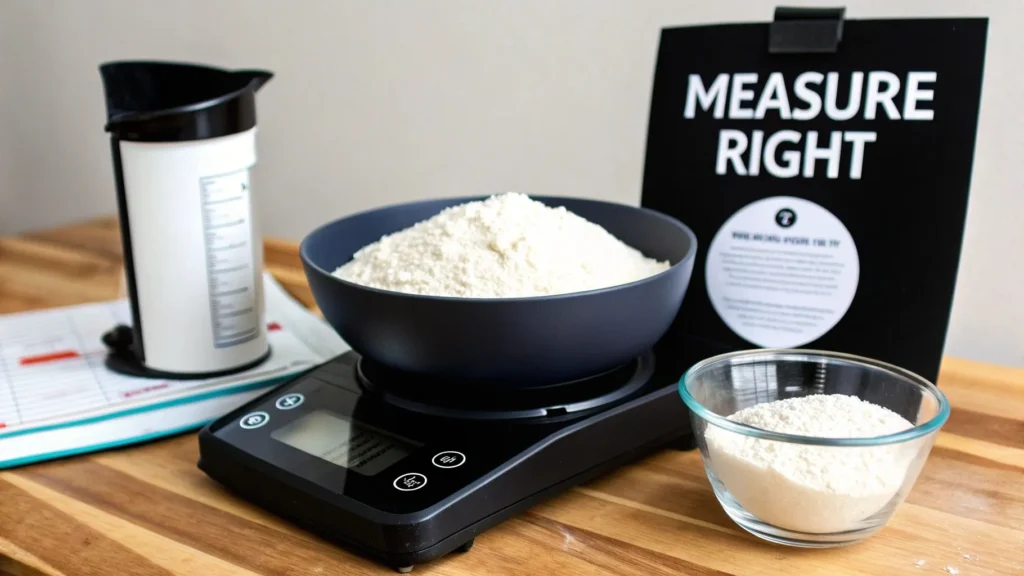
6. Practice Accurate Measuring and Understanding Ingredient Ratios
While a dash of this and a pinch of that can work for experienced chefs, beginners benefit immensely from precision. Accurate measuring is the difference between a fluffy cake and a dense brick, or a perfectly cooked pot of rice and a mushy mess. This tip is about shifting from guesswork to a more scientific approach, understanding that cooking, especially baking, is fundamentally about chemistry.
Why This Simple Step is Crucial
The most common reason beginner baking recipes fail is inaccurate measurement. A cup of flour scooped directly from the bag can weigh up to 30% more than a cup of sifted, leveled flour. This extra flour absorbs moisture, creating dry, tough results. Understanding basic ratios, like the classic 3:1 oil-to-vinegar vinaigrette or the 2:1 water-to-rice ratio, provides a reliable foundation for consistent results every time, empowering you to cook without constantly relying on a recipe.
Pro Tip: Culinary experts at America’s Test Kitchen and King Arthur Baking Company swear by using a digital kitchen scale, measuring ingredients by weight (grams) instead of volume (cups). Weight is an absolute, objective measure, while volume can vary wildly depending on how you pack an ingredient.
How to Implement This Tip Effectively
To build your measurement muscle, focus on these key practices:
- Invest in a Scale: A simple digital kitchen scale is an affordable, game-changing tool. Use it for all your baking needs to ensure your dry ingredient ratios are perfect.
- Master the “Spoon and Level” Method: When using measuring cups for flour, don’t scoop directly. Instead, use a spoon to lightly fill the cup, then use the back of a knife to level it off.
- Learn Key Ratios: Start with simple, foundational ratios. Memorize the 2:1 ratio for cooking rice and grains and the 3:1 ratio for making salad dressings from scratch.
- Use Liquid Measuring Cups: For liquids like water, milk, or oil, use a clear glass or plastic measuring cup with a spout. Read the measurement at eye level for maximum accuracy.
7. Start with Simple Recipes and Build Skills Gradually
While ambition in the kitchen is admirable, attempting a complex dish like beef wellington before mastering the basics can quickly lead to frustration. A key cooking tip for beginners is to embrace simplicity first. By starting with recipes that use few ingredients and straightforward techniques, you build a strong foundation of skills, gain confidence, and develop a positive relationship with cooking. This gradual approach ensures each new recipe is a learning opportunity, not an overwhelming challenge.
Why This Simple Step is Crucial
Jumping into advanced recipes without foundational knowledge is like trying to write a novel before you know the alphabet. Simple recipes, such as scrambled eggs or roasted vegetables, are brilliant for teaching fundamental concepts in a low-stakes environment. You learn crucial skills like heat management, seasoning to taste, and recognizing when food is properly cooked. Successfully creating a delicious meal, no matter how simple, provides the encouragement needed to tackle more complex dishes later on.
Pro Tip: Culinary experts like Julia Child and Samin Nosrat built their teaching philosophies on this very principle. Nosrat’s “Salt, Fat, Acid, Heat” is celebrated because it breaks cooking down to its four core elements, empowering beginners to understand why recipes work, not just how to follow them.
How to Implement This Tip Effectively
To build your skills progressively without getting discouraged, follow this structured approach:
- Choose 3-5 Ingredient Recipes: Start with dishes where each component shines. This helps you understand how individual flavors work together without getting lost in a long ingredient list.
- Master One Technique at a Time: Focus on a single skill per dish. If you’re making roasted chicken, concentrate on getting a crispy skin and juicy interior. For a simple pasta, perfect the sauce consistency.
- Repeat and Refine: Make the same simple recipe two or three times. Repetition builds muscle memory and allows you to experiment with small adjustments, like adding a different herb or adjusting the cooking time.
- Trust Beginner-Focused Sources: Seek out cookbooks, blogs like The Kitchn, and YouTube channels specifically designed for novice cooks. Their recipes are tested to be clear, reliable, and educational.
8. Taste As You Cook and Develop Your Palate
Following a recipe is important, but the single most impactful habit that separates a decent cook from a great one is tasting throughout the cooking process. Many beginners follow ingredient measurements exactly and only taste the final product, but flavor development is a dynamic journey, not a fixed destination. Tasting as you go is how you learn to make food that truly sings, transforming a bland dish into something extraordinary.
Why This Simple Step is Crucial
Tasting allows you to make real-time adjustments and understand how ingredients interact. You’ll discover that a pinch of salt does more than just make food salty; it amplifies every other flavor. A squeeze of lemon can brighten a heavy sauce, and a touch of fat can mellow harsh spices. This iterative process is essential for learning balance and is one of the most valuable cooking tips for beginners looking to move beyond just following instructions to truly understanding food.
Pro Tip: In her seminal book Salt, Fat, Acid, Heat, Samin Nosrat teaches that these four elements are the pillars of good cooking. The only way to master their balance is by tasting constantly and asking yourself what the dish needs: Does it taste flat? Try acid. Does it taste one-dimensional? It probably needs more salt.
How to Implement This Tip Effectively
To build this crucial habit, integrate tasting into every stage of your cooking with a clear strategy:
- Taste at Every Stage: Taste your raw ingredients (when safe), taste after adding salt, taste while it simmers, and taste right before serving. Flavors change dramatically with heat and time.
- Use Clean Spoons: Avoid cross-contamination by using a clean spoon for every taste. Keep a small cup or spoon rest by your stove dedicated to this purpose.
- Adjust Seasoning Gradually: You can always add more salt, but you can’t take it away. Start with less than the recipe calls for, taste, and add more until the flavors pop.
- Develop Your Palate: Learning to identify what a dish needs is a skill, similar to how you would learn to recognize patterns in a new language. Ask yourself: Is it bland (needs salt)? Is it heavy (needs acid like lemon or vinegar)? Is something missing? This active analysis is key.
9. Understand Basic Ingredient Substitutions and Pantry Staples
A well-stocked pantry is a beginner cook’s secret weapon, transforming last-minute meals from a stressful scramble into a creative opportunity. Building a foundation of staple ingredients not only minimizes frequent grocery runs but also empowers you to adapt recipes on the fly. This knowledge is about more than just convenience; it’s about building culinary confidence and flexibility, allowing you to cook what you want with what you have.
Why This Simple Step is Crucial
Nothing derails a recipe faster than a missing ingredient. Instead of abandoning your meal plan, understanding basic substitutions allows you to pivot without sacrificing flavor or texture. This skill saves time, reduces food waste, and prevents unnecessary trips to the store for a single item like sour cream or a specific vinegar. By knowing that Greek yogurt can stand in for sour cream or lemon juice can mimic vinegar in a dressing, you become a more resourceful and resilient cook.
Pro Tip: Culinary experts like Mark Bittman, author of How to Cook Everything, champion the “pantry-first” approach. They teach that a versatile pantry is the core of effective home cooking, enabling spontaneous and delicious meals without rigid adherence to a shopping list.
How to Implement This Tip Effectively
Stocking your pantry and learning substitutions is a gradual process. Start with this simple checklist to build your foundation:
- Build Your Core Pantry: Begin with essentials like olive oil, a neutral oil (like canola), salt, black pepper, garlic powder, onion powder, and paprika. Add canned tomatoes, broth, dried pasta, and rice.
- Learn Key Swaps: Memorize a few common and reliable substitutions. For example, use vegetable broth if a recipe calls for chicken broth, or substitute honey for sugar in some recipes (with adjustments for liquid content).
- Shop Smart: Buy spices from bulk bins to get smaller quantities for less money, allowing you to experiment. When pantry staples like canned beans or flour go on sale, stock up.
- Check Before You Shop: Always review your pantry and fridge before making a grocery list. This simple habit ensures you use what you already have and prevents buying duplicates.
10. Don’t Fear Failure and Learn from Cooking Mistakes
One of the most liberating cooking tips for beginners is to embrace mistakes as part of the journey. Every experienced chef has a history of burnt dishes, failed experiments, and over-salted meals. Viewing these moments not as failures but as valuable lessons transforms cooking from a high-stakes performance into an enjoyable process of discovery and skill development.
Why This Simple Step is Crucial
Adopting a growth mindset in the kitchen accelerates learning far more than a string of successes. A burnt sauce teaches you about heat control more viscerally than any recipe ever could. Over-seasoning a dish provides an instant, unforgettable lesson in tasting as you go. Each mistake is a data point, revealing what went wrong and how to fix it next time. This removes the pressure to be perfect and builds resilience, which is essential for creative and confident cooking.
Pro Tip: Culinary icons like Julia Child famously normalized kitchen mistakes, often with a sense of humor, showing millions that even the masters don’t get it right every time. Her philosophy was that the only real mistake is not learning from the experience.
How to Implement This Tip Effectively
To turn your kitchen mishaps into masterful skills, adopt a structured approach to learning from errors:
- Keep a Cooking Journal: After a dish doesn’t turn out right, jot down what you think went wrong and what you would do differently. Was the oven too hot? Did you substitute an ingredient that changed the chemistry?
- Analyze, Don’t Agonize: Instead of feeling defeated, ask critical questions. Was the pan overcrowded, causing the food to steam instead of sear? Did a sauce break because you added the fat too quickly?
- Rebuild Confidence: After a kitchen disaster, cook a simple, familiar recipe you know you can execute well. This helps reset your confidence and reminds you that one mistake doesn’t define your abilities.
- Embrace a ‘Yet’ Mindset: Just like overcoming writer’s block requires changing your perspective, so does cooking. Instead of thinking, “I can’t make a good sauce,” think, “I can’t make a good sauce yet.” You can learn more about applying a growth mindset to any creative skill.
Comparison of 10 Beginner Cooking Tips
| Tip | Implementation complexity | Resource requirements | Expected outcomes | Ideal use cases | Key advantages |
|---|---|---|---|---|---|
| Read the Recipe Completely Before Starting | Low — planning habit | Time, recipe (print/tablet) | Fewer mistakes; smoother timing | Multi-step or unfamiliar recipes | Prevents surprises; better time management |
| Master Basic Knife Skills and Safety | Medium — practice required | Quality chef’s knife, sharpener, practice time | Faster prep; fewer injuries; uniform cuts | Regular meal prep, presentation-focused dishes | Speed, safety, consistent results |
| Understand Basic Cooking Methods and Heat Control | High — conceptual + practice | Variety of pans, thermometer, time to experiment | Better flavor, controlled doneness, versatility | Protein cookery, adapting recipes, troubleshooting | Foundational control over outcomes; flavor improvement |
| Invest in Essential Kitchen Tools and Equipment | Low–Medium — buying/selecting | Monetary cost, kitchen storage space | Easier cooking; longer-lasting tools; improved results | Setting up a kitchen; expanding capabilities | Efficiency, durability, comfort in prep |
| Learn Proper Food Storage and Food Safety Practices | Low–Medium — habit and organization | Containers, fridge/freezer monitoring, thermometer | Less foodborne illness; reduced waste; cost savings | Meal prep, families, long-term storage | Safety, waste reduction, extended freshness |
| Practice Accurate Measuring and Understanding Ingredient Ratios | Medium — learning precision | Digital scale, measuring cups/spoons, conversion charts | Repeatable recipes; baking success; correct scaling | Baking, recipe scaling, precision cooking | Consistency, predictability, fewer failures |
| Start with Simple Recipes and Build Skills Gradually | Low — disciplined selection | Minimal ingredients; trusted recipe sources | Steady skill growth; increased confidence | Absolute beginners; rebuilding confidence | Reduced overwhelm; systematic progress |
| Taste As You Cook and Develop Your Palate | Low–Medium — ongoing practice | Clean tasting utensils, time to sample | Better-seasoned dishes; intuitive adjustments | Flavor tuning, adapting recipes on the fly | Immediate flavor improvement; intuitive cooking |
| Understand Basic Ingredient Substitutions and Pantry Staples | Low–Medium — knowledge building | Well-stocked pantry, basic staples | Greater flexibility; fewer shopping trips; cost savings | Cooking with missing ingredients; improvisation | Convenience, reduced waste, adaptability |
| Don’t Fear Failure and Learn from Cooking Mistakes | Low — mindset change | Time for practice, optional journal | Faster learning; resilience; willingness to experiment | Skill development, recipe testing, experimentation | Growth mindset; accelerated skill acquisition |
Your Next Steps on the Culinary Path
Embarking on a culinary journey is an exciting venture, and you have now equipped yourself with a foundational map to navigate it. We’ve explored the ten essential pillars that transform a novice into a confident home cook, moving beyond just following instructions to truly understanding the art and science of food. From the simple yet crucial act of reading a recipe thoroughly before you even touch a utensil, to mastering the rhythm of a sharp knife with safe and efficient knife skills, each tip is a stepping stone toward kitchen mastery.
This journey is not about memorizing complex recipes; it’s about internalizing core principles. Understanding the dynamic relationship between heat control and cooking methods is what separates a perfectly seared steak from a tough, grey one. Similarly, knowing why accurate measurement matters in baking versus the more forgiving nature of a stew empowers you to make intelligent decisions on the fly. These are not just rules; they are tools in your creative arsenal.
From Knowledge to Action: Building Your Kitchen Confidence
The true value of these cooking tips for beginners comes alive when you put them into practice. Theoretical knowledge is a great start, but muscle memory and sensory experience are your greatest teachers. The path forward is paved with small, consistent actions that build upon one another, creating a solid foundation of skill and intuition.
To bridge the gap between reading and doing, consider these actionable next steps:
- This Week’s Challenge: Choose one simple recipe you’ve always wanted to try. Before you begin, read it twice, Mise en Place all your ingredients, and focus entirely on one new technique we discussed, whether it’s dicing an onion uniformly or paying close attention to tasting and seasoning at every stage.
- The Palate Development Project: For the next month, make it a point to taste a single ingredient every time you cook. Taste the raw carrot and the cooked carrot. Taste the sauce before adding salt and after. This simple, mindful practice will exponentially develop your palate and your ability to balance flavors.
- Embrace the “Failure” File: Create a small journal or a note on your phone. When a dish doesn’t turn out as planned, don’t just discard it. Write down what you think went wrong. Was the heat too high? Did you substitute an ingredient incorrectly? This file of “failures” will quickly become your most valuable, personalized troubleshooting guide.
Key Takeaway: Cooking is an iterative process. Every meal, whether a resounding success or a learning experience, contributes to your growth. The goal is not instant perfection, but continuous progress and the joy found in the act of creation.
The Lasting Impact of Your Culinary Skills
Learning to cook is about so much more than just feeding yourself. It’s a powerful act of self-reliance, a creative outlet, and a profound way to connect with others. The confidence you build at the stovetop will seep into other areas of your life. Mastering these foundational skills allows you to nourish yourself and your loved ones with wholesome, delicious food, control your budget, and reduce food waste. It’s a skill set that pays dividends for a lifetime, enriching your health, your wallet, and your relationships.
Your kitchen is now your laboratory, your studio, and your sanctuary. Armed with these essential cooking tips for beginners, you have the permission to experiment, the knowledge to succeed, and the resilience to learn from every attempt. The most important ingredient, now and always, is your own curiosity. Keep it simmering.
Ready to explore other passions and master new skills beyond the kitchen? From creative writing to personal finance and technology, maxijournal.com is your resource for in-depth articles and guides designed to fuel your curiosity and support your growth. Discover your next adventure and continue your learning journey with us at maxijournal.com.
Discover more from Maxi Journal
Subscribe to get the latest posts sent to your email.