It’s one of those moments that sends a chill down your spine: your dog starts hacking and brings up a pile of white foam. Your first thought is probably the worst-case scenario. While it can sometimes signal a true medical emergency, the most common reason is usually something less dire, like an irritated airway from kennel cough or even just a bit of digestive upset.
What It Means When Your Dog Coughs Up White Foam
When your dog coughs up that foamy, bubbly substance, you’re typically looking at a mixture of saliva, airway secretions, or stomach fluids. Think of it as a frothy buildup that gets forced out during a harsh cough or a gagging spell. The real challenge isn’t identifying the foam itself, but figuring out why it’s happening.
This guide is here to help you cut through the panic. We’ll walk you through how to tell the difference between a situation you can monitor at home and one that needs an immediate call to your vet.
When to Monitor and When to Act
Let’s be clear: not every foamy cough is a five-alarm fire. A single, isolated episode in a dog that’s otherwise happy and full of energy might just be a passing irritation. But when the coughing won’t stop, or it’s paired with other worrying signs, it’s time to get a professional opinion, and fast.
The most critical takeaway is to observe your dog’s overall behavior, not just the cough. A dog who is still playful and eating normally is in a very different situation than one who is lethargic, struggling to breathe, or in visible distress.
Kennel cough is a frequent offender here. The medical term is canine infectious respiratory disease complex (CIRDC), and it’s essentially a bug that inflames the trachea (the windpipe). This irritation triggers that classic dry, hacking cough that sounds like your dog has something stuck in their throat. Often, these coughing fits end with them spitting up white foam. You can get more details on how kennel cough impacts the respiratory system from the AKC.
To help you sort things out quickly, we’ve put together a quick symptom checker.
Quick Symptom Checker For A Foamy Cough
Use this table to quickly assess your dog’s situation by comparing symptoms associated with non-urgent versus potentially urgent causes of coughing up white foam.
| Symptom | Likely Non-Urgent (Monitor And Call Vet) | Potentially Urgent (Contact Vet Immediately) |
|---|---|---|
| Cough Type | Occasional, dry, “honking” cough | Persistent, uncontrolled, or wet-sounding cough |
| Breathing | Normal breathing between coughing fits | Labored breathing, gasping, rapid breathing, or blue/pale gums |
| Behavior | Bright, alert, playful, and eating/drinking normally | Lethargy, weakness, collapse, pacing, or inability to settle |
| Frequency | A single episode or a few coughs over a day | Worsening cough or coughing fits that increase in frequency/intensity |
| Other Signs | Mild sneezing or runny nose | Vomiting (food/bile), distended belly, fever, or obvious pain |
Remember, this is a guide, not a diagnosis. When in doubt, the safest bet is always to contact your veterinarian.
This flowchart can also give you a visual path to follow, guiding you on whether to keep a close eye on your dog or head straight to the vet.
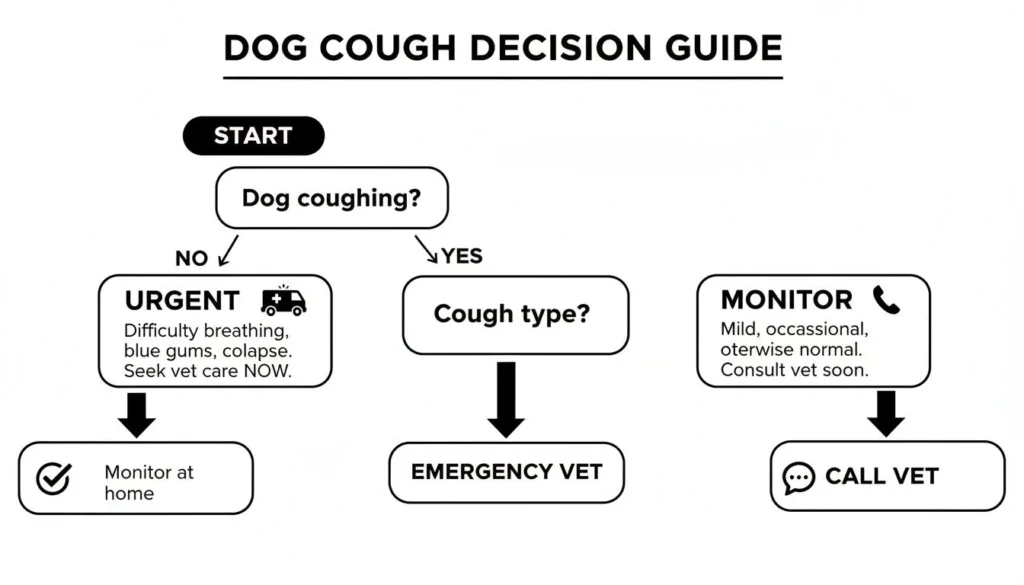
As the chart shows, your response should be based on the type of cough and any other symptoms your dog is showing. It’s all about context.
Common Respiratory Issues That Cause A Foamy Cough

When you see your dog coughing up white foam, it’s natural to think it’s a stomach issue. But surprisingly, the problem is often rooted in the respiratory system. The lungs and airways are meant to be clear, but when they get irritated or infected, the body’s defense system goes into overdrive.
One of these responses is to produce a flood of mucus and fluid. When that fluid gets mixed with air from a harsh, forceful cough, it creates that alarming foamy substance you’re seeing.
Several respiratory conditions can set off this reaction, but one is far and away the most common. Getting to know these illnesses, their unique signs, and how they affect your dog’s airway is the first step toward getting them the right help. Let’s look at the usual suspects behind that foamy cough.
Kennel Cough The Primary Suspect
If you had to place a bet on a single cause for a dog coughing up white foam, kennel cough would be your safest wager. Its medical name is the Canine Infectious Respiratory Disease Complex (CIRDC), but you can think of it as the dog version of a human chest cold—just with a much more dramatic-sounding cough.
Kennel cough is incredibly contagious and spreads like wildfire anywhere dogs hang out together, like dog parks, boarding kennels, and grooming salons.
The main germ behind it, a bacterium called Bordetella bronchiseptica, is an expert at irritating the trachea (windpipe) and larynx (voice box). This inflammation creates a constant, nagging tickle in your dog’s throat.
Imagine having an intense tickle in your own throat that you just can’t scratch, no matter how hard you cough. That’s what a dog with kennel cough feels, leading to those powerful, hacking coughs as they try to get some relief.
These coughing fits are often described as a dry, “honking” sound, almost as if something is stuck. The episode often ends with a big gagging reflex, where your dog spits up a small blob of white, frothy foam. This foam isn’t vomit from the stomach; it’s just saliva and airway fluids whipped up by the violent coughing.
Key Signs of Kennel Cough:
- A strong, persistent, dry “honking” cough.
- Coughing fits often started by excitement, exercise, or even light pressure on the throat from a collar.
- Retching or gagging that brings up white foam after a coughing spell.
- In most mild cases, the dog stays bright and alert with a normal appetite.
Even though it sounds awful, most cases of kennel cough are mild and clear up on their own with some rest, much like a human cold. Still, it’s always smart to see a vet for a proper diagnosis and to make sure it’s not something more serious, especially for puppies, senior dogs, or those with other health problems.
Other Airway Invaders
While kennel cough is the headliner, it’s not the only show in town. Other infections and conditions can also inflame the airways and cause a dog to cough up white foam. These “airway invaders” create an environment where mucus production ramps up, and the body has to work hard to clear it all out.
Think of your dog’s airway as a sensitive pipe. When germs or irritants get in, the lining swells up and pumps out fluid to trap and flush them out. This goopy mix of mucus, saliva, and trapped air is what becomes the foamy discharge you see.
Here are a few other potential respiratory causes to be aware of.
- Bronchitis: This is when the bronchial tubes, the passages carrying air into the lungs, get inflamed. It can be a long-term (chronic) issue or a short-term (acute) one, leading to a nagging cough that can produce phlegm or foam.
- Canine Influenza (Dog Flu): Just like the flu in people, this viral infection causes coughing, sneezing, fever, and low energy. The cough can be wet and might bring up foamy liquid as the body tries to clear the lungs.
- Pneumonia: An infection deep inside the lungs, pneumonia is a much more serious condition. A dog with pneumonia will often have a wet, “gurgly” cough and may bring up phlegm, mucus, or foam. This is almost always paired with other signs of sickness, like fever, trouble breathing, and extreme lethargy.
Telling these conditions apart usually takes a vet’s trained eye. The key for you is to note the type of cough and, most importantly, how your dog is acting overall. A dog with a mild case of kennel cough might be uncomfortable but is usually still acting like a dog. A dog with pneumonia, however, will be visibly sick and needs to see a vet right away.
Is It A Cough Or Is It Vomit?
It’s one of the most common, and confusing, sounds a dog owner will ever hear. That deep, hacking noise—is it a cough coming from the lungs, or is it retching from deep in the belly? The sounds can be almost identical, but figuring out the difference is the first and most critical step.
Getting it right helps point your veterinarian toward the right body system, whether it’s respiratory or digestive. This distinction is the key to a faster, more accurate diagnosis. While many assume white foam automatically means a lung issue, it often originates in the stomach when air gets churned up with stomach acid and saliva.
Identifying True Vomiting From The Stomach
True vomiting is an active, full-body event. It’s a forceful process that starts in the abdomen, not just the throat. You’ll usually get some warning signs first. A dog that’s about to vomit will often start drooling, licking their lips over and over, or pacing around looking anxious.
When the vomiting starts, you’ll see their stomach muscles clench and heave. These are visible, rhythmic contractions as their body works to push out whatever is in the stomach. This might be undigested food, yellowish bile, or if their stomach is empty, just a puddle of white foam.
This often leads us to a very common issue called bilious vomiting syndrome.
Think about what it feels like to have terrible acid reflux on an empty stomach. That burning, nauseous feeling is a lot like what dogs with bilious vomiting syndrome experience. The built-up acid irritates their stomach, and their body’s natural response is to get rid of it.
Besides something more serious like kennel cough, one of the most frequent culprits behind white foam is simply an empty stomach irritating itself. This is bilious vomiting syndrome in a nutshell. It’s especially common in dogs with long gaps between meals, often happening late at night or first thing in the morning. When a dog’s stomach sits empty for hours, acid and bile build up, leading to irritation and that foamy vomit. You can learn more about this in this helpful guide from Pieper Veterinary.
Recognizing A True Cough From The Lungs
A cough is a completely different mechanism. It’s a sudden, explosive burst of air from the lungs meant to clear the airways. Unlike vomiting, you won’t see any of that deep abdominal heaving. All the effort is centered in the chest and throat.
When a respiratory cough produces white foam, it’s usually at the very end of a coughing fit. The dog might make a series of harsh, hacking sounds—often described as a “honking” noise, like something is stuck in their throat. The episode often concludes with one final, forceful gag that brings up a small bit of foamy phlegm. This isn’t stomach contents; it’s simply mucus and saliva from the respiratory tract.
Key Differences at a Glance:
- Abdominal Heaving: You’ll see this with vomiting, but it’s absent in a true cough.
- Preceding Signs: Vomiting is often signaled by drooling and nausea. A cough is usually much more sudden.
- The Sound: Vomiting is a heaving, retching process. Coughing is a sharp, “honking” or hacking sound.
- The Substance: Vomit might contain yellow bile or food. A foamy cough just produces a small amount of frothy saliva or phlegm.
Paying attention to your dog’s diet and feeding schedule can also provide valuable clues. For example, some foods can cause digestive upset while others are perfectly safe. If you’re ever curious about what to add to their diet, you might find our guide on whether dogs can eat cranberries interesting. These small details can help you and your vet connect the dots.
Serious Conditions That Require Emergency Care
While many reasons for a dog producing white foam are minor, there are a few scenarios that are genuine, life-or-death emergencies. This is where seconds truly matter, and knowing how to spot the red flags is a non-negotiable skill for any dog owner. It’s absolutely not the time to “wait and see.”
When symptoms like these appear out of the blue and with such intensity, it’s often because a critical body system is failing. The goal here isn’t to cause alarm, but to prepare you to act fast. If your dog is showing any of the signs we’re about to cover, your one and only move should be to get to an emergency vet. Immediately.
Bloat: A Swift and Silent Danger
One of the most frightening emergencies in all of veterinary medicine is Gastric Dilatation-Volvulus, or GDV. We just call it bloat. In this condition, the stomach rapidly fills with gas and then twists on itself, completely cutting off its own blood supply and trapping everything inside.
Think of it like twisting the neck of an inflated balloon—nothing can get in or out. The pressure builds on the surrounding organs at an alarming rate, and a dog can go into shock within minutes. You’ll see them become frantic and distressed, often trying to vomit but bringing up nothing more than strings of saliva or small bits of white foam.
Bloat is a catastrophic event where the stomach essentially becomes a ticking time bomb. The pain is extreme, and without immediate surgical intervention, the condition is almost always fatal. There is no home remedy for bloat.
Look for these unmissable signs that scream “bloat emergency”:
- A visibly swollen or hard abdomen that feels tight, almost like a drum.
- Frantic, non-productive retching where the dog looks like they’re trying to vomit but can’t.
- Signs of extreme pain: pacing, restlessness, heavy drooling, or adopting a “praying” position (front legs down, rear end up).
- Pale or white gums and rapid, shallow breathing.
Certain breeds are definitely more at risk, especially our large, deep-chested friends like Great Danes, German Shepherds, and Standard Poodles. But make no mistake, bloat can happen to any dog. If you even suspect it, you’re in a race against the clock.
Congestive Heart Failure
When a dog’s heart can no longer pump blood efficiently, it can lead to congestive heart failure (CHF). This breakdown in function causes fluid to back up, and one of the most dangerous places for it to go is the lungs—a condition called pulmonary edema.
As fluid begins to fill the tiny air sacs, there’s less and less room for oxygen. The body’s natural response is to try and clear this fluid by coughing. But this isn’t the dry, honking cough of kennel cough. It’s a wet, gurgly cough that often produces white or even pink-tinged foam. The foam is literally created as air is forced through the fluid in the airways.
A dog heading into congestive heart failure will also show other clear signs of distress:
- Difficulty breathing or gasping for air, which often gets worse when they’re lying down.
- A persistent, wet-sounding cough that seems to ramp up at night or after any exertion.
- Extreme lethargy and a sudden reluctance to move around.
- A swollen belly from fluid building up in the abdomen (known as ascites).
Other Urgent Scenarios
Bloat and heart failure are two of the big ones, but a few other situations can cause foamy discharge and need a vet’s attention right away.
Poisoning
If your dog ingests something toxic—anything from household cleaners and antifreeze to certain plants or human foods like xylitol—it can cause severe gastrointestinal upset, leading to vomiting white foam. Look for other signs like seizures, tremors, disorientation, or collapse.
Foreign Object Obstruction
When a dog swallows something they shouldn’t, like a piece of a toy, a bone fragment, or a sock, it can get stuck. If it’s lodged in the airway, you’ll see choking, frantic pawing at the mouth, and a foamy cough. If the object is stuck further down in the digestive tract, it will usually cause repeated, unproductive vomiting spells.
Rabies
While it’s very rare in vaccinated dogs, rabies is a fatal virus that attacks the nervous system. One of its classic signs is the infamous “frothing at the mouth.” This happens because the virus causes paralysis of the throat muscles, making it difficult to swallow, which leads to excessive, foamy saliva. Any unvaccinated dog showing neurological symptoms and foamy discharge requires extreme caution and immediate professional help.
What To Expect During Your Vet Visit
Making the call and heading to the vet is the right move. But let’s be honest, walking into that clinic, especially when you’re worried sick, can be a nerve-wracking experience. Knowing what the process looks like can take some of that anxiety off your shoulders and help you be the best possible advocate for your dog.
Think of your vet as a detective trying to solve a puzzle. The mission is to figure out what’s causing the white foam, and your observations from home are the most important clues they have to start with.
The Initial Question and Answer Session
The visit will kick off with your vet asking a lot of questions. This isn’t just small talk; they’re building a history and trying to narrow down the huge list of potential causes. The more details you can provide, the faster they can get to the bottom of it.
Be ready to talk about:
- Your Dog’s Full History: Are they up to date on their shots, especially Bordetella? Do they have any other health issues or take any regular medications?
- Recent Activities: Any recent trips to the dog park, groomer, or a boarding kennel? Have they been around any new dogs?
- Dietary Habits: Have you changed their food recently? Is there any chance they raided the trash can or ate something they shouldn’t have?
- The Specifics of the Cough: When did you first notice it? What does it actually sound like—a dry “honking” noise or more of a wet, gurgly cough? Does it get worse with exercise or when they get excited?
- Other Symptoms: Have you seen any other changes? Are they tired, not eating, breathing hard, or just acting “off”? Sometimes, other signs like head shaking can point to a bigger picture. If you’re seeing that, our guide on why a dog keeps shaking their head might offer some useful context.
After getting all this info, your vet will do a thorough physical exam. They’ll listen closely to your dog’s heart and lungs with a stethoscope, check their temperature, and gently press on their belly to check for any pain or abnormalities.
Common Diagnostic Tools and Tests
Depending on what they find during the exam and what your story suggests, your vet will likely recommend a few tests. This is how they get a look inside your dog’s body to confirm their suspicions.
A physical exam and your history provide the “story” of what’s going on. Diagnostic tests are how your vet reads the “chapters” you can’t see, like what’s happening in the lungs or bloodstream.
Here are the most common tests for a dog coughing up white foam:
- Chest X-rays (Radiographs): This is almost always the first and most crucial test. X-rays give the vet a clear picture of the heart, lungs, and airways. They can spot things like an enlarged heart (a classic sign of congestive heart failure), fluid in the lungs (pneumonia), or inflammation of the airways.
- Blood Work: A complete blood count (CBC) and chemistry panel are packed with information. These blood tests can flag signs of infection, inflammation, or issues with major organs like the kidneys and liver. It’s a fantastic way to rule out other underlying diseases that could be contributing to the problem.
- More Advanced Diagnostics: If the initial tests don’t give a clear answer, your vet might need to dig deeper. This could involve an endoscopy, where a tiny camera on a flexible tube is used to look directly inside the airways or stomach, or an ultrasound to get a real-time, detailed look at the heart as it’s beating.
Understanding this step-by-step process—from the initial chat to the physical exam and testing—can help you feel more in control. You’re not just a worried bystander; you’re a key player in getting your dog the right care.
How You Can Help Your Dog At Home
Okay, you’ve been to the vet and they’ve given the all-clear for anything life-threatening. Now what? Your job is to help your pup feel comfortable while they get back on their paws. While the vet’s treatment plan is key, creating a calm, supportive environment at home can make a world of difference, especially if they’re dealing with a nasty cough or throat irritation.
Think about the air in your home. Dry, stuffy air is tough on an already sore throat, and it can make a hacking cough much worse. A simple humidifier, especially in the room where your dog sleeps, can add some much-needed moisture to the air and help soothe their airways. It works just like a steamy shower does for us when we’re feeling under the weather.
Supportive Care and Comfort
Another easy trick? Ditch the collar for a bit. Any kind of pressure on the throat can trigger a coughing spell. Switching to a harness for walks takes the pressure off their trachea entirely, giving that sensitive area a much-needed break.
Rest is also absolutely non-negotiable. Just like us, a dog’s body needs to conserve energy to fight off whatever is ailing them.
- Limit strenuous activity: Keep walks short and potty-focused. No intense games of fetch or trips to the dog park for at least a few days.
- Provide a quiet space: Make sure they have a cozy, quiet spot to rest, away from the hustle and bustle of the household.
- Elevate food and water bowls: This can be a game-changer for some dogs, particularly those dealing with acid reflux or digestive upset, as it helps reduce gagging.
Your vet might also suggest a specific feeding plan. For something like bilious vomiting syndrome—a common cause of that foamy morning vomit—tweaking meal times can work wonders.
Feeding smaller, more frequent meals instead of one or two big ones keeps the stomach from getting completely empty. This simple change can prevent the buildup of irritating stomach acid that often leads to that unpleasant white foam.
Prevention and Long-Term Health
Looking forward, prevention is always the best medicine. If kennel cough was the culprit, get your dog’s Bordetella vaccine updated, especially if they hang out at doggy daycare, the groomer, or boarding facilities. While no vaccine is 100% foolproof, it can dramatically lessen the severity of the illness if your dog is exposed.
It’s tempting to reach for human medicine to ease their symptoms, but this can be dangerous. Never give your dog over-the-counter medication without explicit instructions from your vet. If you’re curious about what’s safe and what isn’t, you can read our guide that answers questions like, can you give a dog Benadryl for mild allergic reactions. But always, always check with a professional first.
Combining your vet’s prescribed care with these simple at-home strategies will help your dog feel better faster and keep future scares at bay.
Frequently Asked Questions From Worried Pet Owners

When your dog is sick, your mind races with questions. It’s completely natural. We’ve put together some quick, straightforward answers to the most common questions we hear from concerned pet owners dealing with a dog coughing up white foam.
Can I Give My Dog Human Cough Medicine?
The short answer is no. You should never give your dog human cough medicine unless a veterinarian specifically tells you to. It’s just too risky.
Many of those over-the-counter products contain ingredients that are harmless for us but highly toxic for dogs. Things like xylitol (a common artificial sweetener) or certain decongestants can lead to a major health crisis, including liver failure or worse. Always let your vet prescribe something made specifically for dogs.
How Long Is Kennel Cough Contagious?
Kennel cough is incredibly contagious, and it hangs around for a while. A dog is generally considered contagious for about two to three weeks after they start showing symptoms. In some cases, it can be even longer.
This means you have to be serious about isolation. Keeping your sick dog away from all other dogs is the only way to prevent an outbreak. Your vet will give you a clear quarantine schedule based on your dog’s specific situation.
It only takes a single nose-to-nose sniff at the park or a shared water bowl to pass kennel cough along. Strict isolation is absolutely essential to protect other dogs in your area.
Is a Single Episode of a Foamy Cough an Emergency?
Usually, a single, one-off cough that brings up a little white foam isn’t an emergency, especially if your dog goes right back to acting normally. It could be from something as simple as drinking water too fast or a tickle in their throat.
However, the game changes if the coughing won’t stop, seems severe, or comes with other worrying signs. You need to call your vet right away if you see any of these red flags:
- Obvious weakness or lethargy
- Gasping or struggling to breathe
- Gums that look pale or bluish
- Clear signs of pain or distress
When it comes to a dog coughing up white foam, context is everything. A single cough from an otherwise happy, energetic dog is one thing. But repeated episodes or any of those other symptoms are a clear sign to get professional help immediately.
At maxijournal.com, we provide clear, reliable information on pet health and a wide range of other topics to help you make informed decisions. Explore more of our guides and articles at https://maxijournal.com.
Discover more from Maxi Journal
Subscribe to get the latest posts sent to your email.