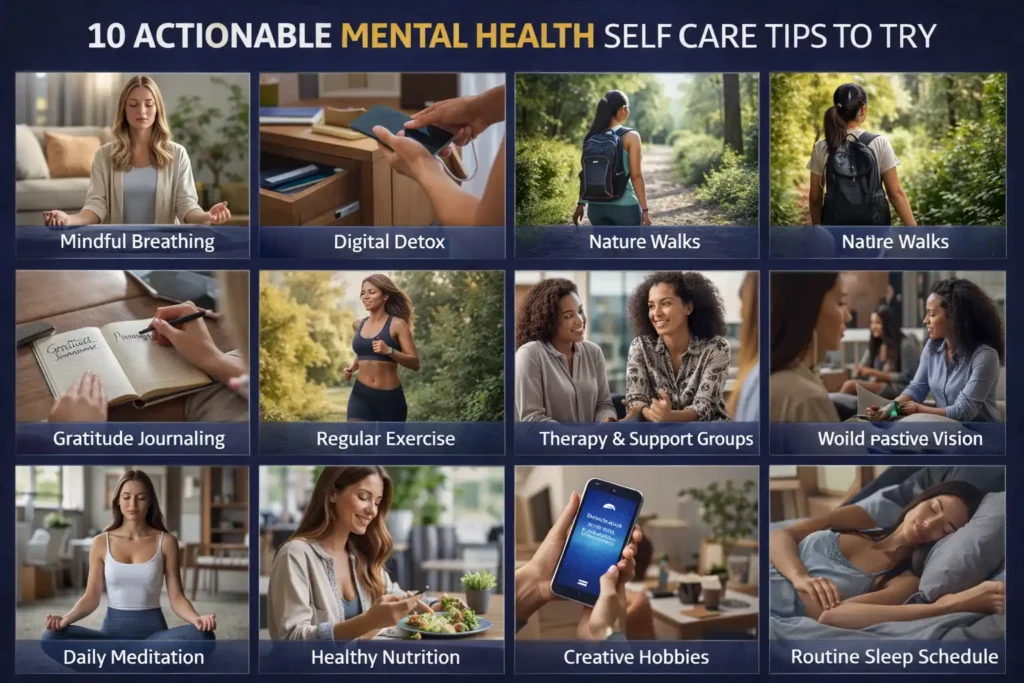
So, what exactly is a health and wellness journal? It’s a dedicated space where you can track and think through your physical, mental, and emotional health. This isn’t just a diary for your feelings; it’s a practical tool for figuring out how your daily choices—what you eat, how you sleep, your thoughts, your activities—really affect your overall wellbeing.
The Real Power of a Health and Wellness Journal

Don’t think of a health journal as a strict set of rules you have to follow. It’s more like your personal command center. It gives you a direct feedback loop between what you do and how you feel, cutting through all the confusing health advice out there.
This simple practice turns abstract goals like “get healthier” into a tangible, daily conversation with yourself.
When you consistently jot things down, you start seeing patterns that were totally invisible before. You finally connect the dots between that 3 PM slump and your lunch choices, or you realize how a quick morning walk completely changes your mood for the rest of the day. It’s all about building a real, conscious relationship with your own body and mind.
From Data to Self-Discovery
A journal isn’t about being perfect. It’s about being aware. The simple act of writing things down is surprisingly powerful, turning raw data into personal insights that actually mean something.
- Gain Clarity on Habits: It lays out your daily routines in black and white, showing you what’s working and what isn’t, without any judgment.
- Identify Triggers: You can pinpoint the exact situations, foods, or even thoughts that lead to stress, kill your energy, or wreck your sleep.
- Celebrate Progress: Noting small wins builds real momentum and keeps you motivated, making it much easier to stick with new, better habits.
- Enhance Self-Compassion: Looking back on your challenges with a bit of kindness helps you understand your struggles instead of just beating yourself up over them.
A health and wellness journal is the ultimate tool for personalized health. It lets you be both the scientist and the subject in the experiment of your own life, discovering what truly makes you thrive.
Building Your Personal Health Blueprint
Ultimately, your journal becomes a health blueprint that is 100% unique to you. General advice might say “eat more vegetables,” but your journal can tell you which vegetables actually make you feel energized and which ones don’t. It shows you what kind of exercise genuinely brings you joy versus what feels like a chore.
This process empowers you to go way beyond generic tips and build a strategy that fits your specific needs and lifestyle. It’s about learning to listen to your body’s signals and responding with smart, compassionate choices.
This is more than just writing. You’re actively creating a healthier, more balanced version of yourself, one day at a time. The real power here is in turning your personal data into personal power.
The Science of Journaling for Your Wellbeing
Keeping a health and wellness journal is more than just a place to jot down thoughts—it’s a scientifically proven practice for improving your physical and mental state. Think of it as a personal lab where you are both the scientist and the subject. By consistently logging your actions, thoughts, and feelings, you start to see the powerful cause-and-effect connections that shape your wellbeing.
This process is known as expressive writing, and it has real, biological effects. Research shows that turning your thoughts into words can help lower cortisol, the body’s main stress hormone. When you get worries out of your head and onto a page, you give your nervous system a chance to calm down.
This calming effect ripples out into other areas of your health. Studies have linked regular journaling to better immune function, fewer stress-related sicknesses, and improved management of chronic conditions. The act of writing itself provides a sense of control, a key ingredient for building psychological resilience.
Clarifying Your Thoughts and Emotions
Ever felt like your head was a storm of jumbled thoughts, only to find clarity after talking it out with someone? Journaling works the same way. The simple act of forming sentences forces your brain to bring order to the chaos.
This process effectively moves anxieties from the emotional, reactive part of your brain (the amygdala) to the more analytical, problem-solving part (the prefrontal cortex). Suddenly, challenges that felt overwhelming start to seem much more manageable.
This mental organization is a powerful tool for self-regulation. Instead of reacting on impulse when you feel stressed or anxious, journaling gives you the space to pause, reflect, and choose a more intentional response. For a deeper look at managing these feelings, check out our guide on how to calm anxiety naturally.
This growing self-awareness is part of a larger trend. The global health and wellness market is projected to swell from $6.78 trillion in 2025 to almost $9.75 trillion by 2032, fueled by a massive shift toward preventive healthcare. This demand is made more urgent by the rise of chronic conditions like obesity, which affects over 1 billion people worldwide, and diabetes, which impacts 422 million. As more people look for personalized health strategies, tools like journals become essential. You can learn more about these trends in this detailed health and wellness market report.
From Aspiration to Achievement
A health and wellness journal is also a fantastic tool for motivation. It helps turn a vague goal like “I want to be healthier” into concrete, actionable steps you can take every day.
Tracking your progress creates a visual record of your hard work and your wins. Seeing how far you’ve come—whether it’s more consistent workouts, better sleep, or just a more positive mindset—builds momentum and makes you believe in your own ability to succeed.
Here’s how a journal keeps you on track with your long-term goals:
- Creates Accountability: Writing down a goal is like making a promise to yourself. Seeing it regularly keeps that promise front and center.
- Identifies Obstacles: Your journal helps you spot what’s getting in your way, so you can come up with strategies to overcome those specific roadblocks.
- Reinforces Small Wins: Celebrating small victories—like choosing a healthy snack or taking a five-minute meditation break—creates a positive feedback loop that motivates you to keep going.
Ultimately, a journal is the bridge connecting your daily actions to your long-term vision. It helps you see that every small choice is a building block toward the healthier, more vibrant life you want to create.
Choosing Your Journal Paper Versus Digital
So, you’re ready to start a health and wellness journal. The first big decision you’ll face is a classic one: old-school paper or a sleek digital app?
There’s no right or wrong answer here—only what fits your lifestyle and what you’ll actually stick with. Your choice boils down to a trade-off between the mindful, tactile experience of writing by hand and the on-the-go convenience of a digital tool. Let’s break down the pros and cons of each to help you figure out which camp you’re in.
The Case for a Paper Journal
There’s a certain magic to a simple paper notebook. The act of putting pen to paper forces you to slow down, disconnect from your screens, and really engage with your thoughts. It’s a quiet ritual that can feel more intentional than just tapping on a keyboard.
This isn’t just a feeling, either. Research suggests that writing by hand activates different parts of your brain, which can actually help with memory and understanding complex ideas. Plus, a blank page is your canvas—you can doodle, create custom charts, or just let your thoughts flow without being boxed in by an app’s design.
- Mindful Disconnection: It’s a screen-free zone, giving you a much-needed break from digital noise and creating a dedicated space for reflection.
- Creative Freedom: You’re in complete control. No templates or required fields to worry about. Your journal can be as structured or as wild as you want it to be.
- Tactile Connection: The physical act of writing can create a stronger, more personal bond with the words on the page, helping you process your feelings more deeply.
This flowchart can give you a quick visual guide to see which path might better suit your style.
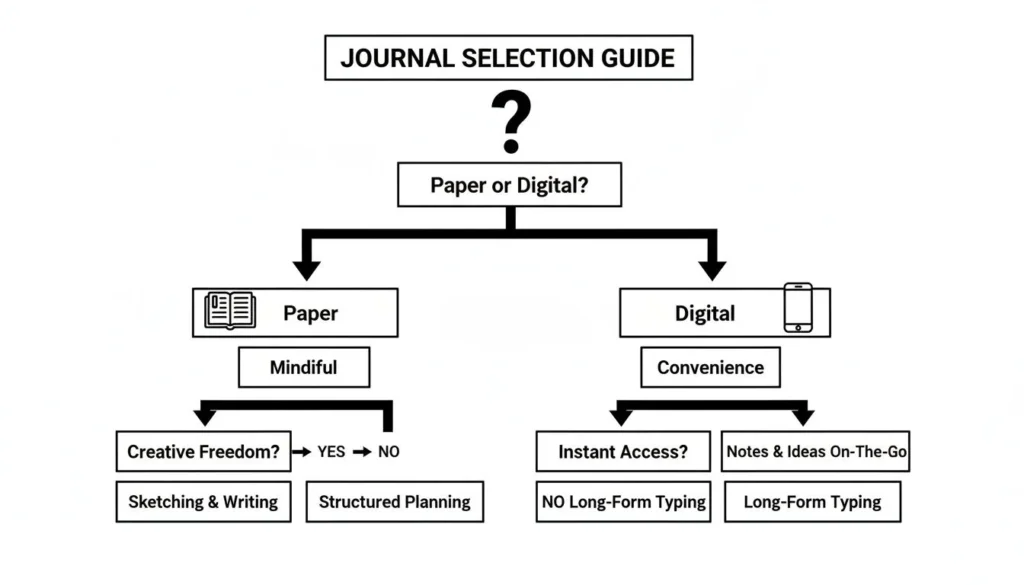
As you can see, it really comes down to a core trade-off. Paper journals are champions of the focused, mindful experience, while digital apps lead with speed and powerful features.
The Power of a Digital Journal
On the other hand, we live in a fast-paced world, and digital health apps offer some serious advantages that a paper notebook just can’t touch. Their biggest selling points are convenience, data analysis, and smart organizational tools.
With a digital journal on your phone, you have your tracking tool with you 24/7. This makes it incredibly easy to log a meal, a mood, or a quick workout note the second it happens, which is absolutely critical for building a consistent habit.
Digital journals turn your entries into searchable, sortable data. Want to see how many times you felt energized after a morning run last month? A quick search gives you an answer in seconds, making it much easier to spot long-term patterns and connections.
Many apps also sync with your wearables, like a smartwatch or fitness tracker. This automatically pulls in hard data like your sleep duration, heart rate, and activity levels, painting a more complete picture of your health without you having to lift a finger. You’ll find that some of the best productivity apps for students and professionals even share some of these smart features with top wellness apps.
Paper vs Digital Health Journals A Comparison
To help you make the call, it’s useful to see the two options laid out side-by-side. Think about which of these features aligns best with your personality, your daily routine, and what you hope to achieve with your journal.
| Feature | Paper Journal | Digital Journal |
|---|---|---|
| Portability | Can be bulky; requires a pen | Always with you on your phone |
| Privacy | Physically secure, but can be lost or found | Password/biometric protected, but data breaches are a risk |
| Convenience | Requires dedicated time and space | Quick and easy to update anywhere, anytime |
| Features | Limited only by your creativity | Search, tags, reminders, charts, and data integration |
| Cost | One-time purchase of a notebook | Free options available, but many require a subscription |
| Mindfulness | Promotes a screen-free, focused experience | Can be distracting with notifications and multitasking |
Ultimately, this isn’t about which option is better on paper (no pun intended). It’s about which tool feels the most natural to you and removes the most friction from your daily life. The best journal is the one that becomes a supportive habit, not another chore on your to-do list.
How to Set Up Your First Health and Wellness Journal

Starting a health and wellness journal can feel like a big project, but the key is to begin with a simple, clear plan. Before you even put pen to paper, take a minute to figure out your personal “why.”
What are you trying to accomplish? Are you looking for better sleep, a calmer mind, a stronger body, or just a clearer picture of what you eat? That core goal is your North Star. It will guide every entry and keep you on track.
Once you know your “why,” you can build a structure around it. Don’t worry about creating the perfect system on day one. The best journals are flexible and evolve with you as you learn what works.
Define Your Core Sections
Think of your journal like a house with different rooms, each with its own purpose. This simple structure keeps your thoughts from becoming a jumbled mess and makes it much easier to spot trends later on.
For a solid foundation, start with these three key sections:
- A Daily Log: This is the heart of your journal. It’s where you’ll capture a quick, factual snapshot of your day.
- A Weekly Review: This is your space for reflection. Once a week, you’ll look back at your daily logs to connect the dots and identify patterns.
- A Goals Section: This is where you’ll outline what you’re working toward. It keeps your long-term ambitions front and center and helps you track progress.
This straightforward three-part system—Log, Review, and Goal—is a powerful and sustainable way to turn daily notes into real health insights.
Crafting Your Daily Log
Your daily log needs to be fast and functional. The simpler it is, the more likely you are to stick with it. You don’t need to write essays; bullet points or a quick rating scale work great.
Consider tracking a few of these core metrics to get started:
- Mood: A simple 1-10 rating or a single word (e.g., “energized,” “anxious,” “calm”).
- Energy Levels: Note any peaks or slumps you felt during the day.
- Sleep: Log how many hours you slept and the quality (e.g., “restful,” “interrupted”).
- Nutrition: A quick list of your main meals and snacks. No need for calorie counting unless that’s a specific goal.
- Physical Activity: Jot down any movement, whether it was a full workout or just a walk.
- Stressors: Note anything that created tension or anxiety.
By capturing these simple data points each day, you are building a personal dataset. Over time, this information becomes the evidence you need to make smarter, more informed decisions about your health.
This kind of personal health literacy is becoming more important than ever. Upcoming wellness trends for 2026 put a heavy focus on emotional repair and mental fitness, making self-assessment tools critical. In a global wellness industry often criticized for misinformation, a personal journal grounds you in your own, verifiable truth. This is particularly relevant as some national wellness markets, like India’s, are growing rapidly, showing a worldwide search for genuine wellbeing. You can explore more on the upcoming wellness trends on the Global Wellness Summit’s website.
Implementing Your Weekly Review
The weekly review is where the real magic happens. This is your time to step back and see the bigger picture your daily logs have been painting. Set aside 15-20 minutes every Sunday to just reflect on the past week.
This isn’t just about summarizing your week; it’s about analyzing it. To get the most out of it, ask yourself a few direct, open-ended questions.
Powerful Weekly Review Questions
- What Worked This Week? Find the actions that led to good outcomes. Did a certain breakfast give you more energy? Did that morning walk boost your mood all day?
- What Didn’t Work? Pinpoint what led to negative results. Did a late-night snack disrupt your sleep? Did skipping a workout leave you feeling sluggish?
- What Was My Biggest Challenge? Acknowledge the main hurdle you ran into.
- What Am I Most Proud Of? Celebrate a win, no matter how small it seems.
- What Is One Thing I Will Change Next Week? Use your findings to set a small, actionable goal for the week ahead.
This simple review process turns your health and wellness journal from a basic diary into a strategic tool. It ensures you’re not just collecting data, but actively using it to build a healthier life.
Powerful Prompts to Kickstart Your Journaling

We’ve all been there. You open your new journal, pen in hand, ready for a moment of reflection, and… nothing. The blank page stares back, and the pressure to write something profound can be paralyzing.
The secret isn’t to wait for a lightning bolt of inspiration. It’s to use a simple tool: the journal prompt. Think of prompts as targeted questions that give your thoughts a clear direction, turning a daunting task into a focused, creative, and genuinely insightful practice.
Having a go-to list of prompts removes the guesswork. It makes building a consistent journaling habit feel effortless. If you find yourself consistently stuck, exploring strategies on how to overcome writer’s block can be a game-changer.
Prompts for Mental and Emotional Wellbeing
Your mental state is the bedrock of your overall health. These prompts are designed to help you check in with your inner world, spot stressors, and find more balance. They’re about honestly acknowledging both the tough stuff and the moments of peace.
- Energy Audit: What drained my energy today, and what replenished it?
- Emotional Check-in: What was the main emotion I felt today? What do I think triggered it?
- Worry Log: If I’m feeling anxious, what specific thought is running through my head? Is there another way to look at this?
- Self-Compassion: How can I speak to myself with more kindness today, especially about a recent mistake?
By regularly exploring your inner landscape, you develop emotional resilience. You learn to recognize patterns in your thinking, giving you the power to consciously shift your mindset from reactive to responsive.
Use these questions to create a private space for total honesty. There are no right or wrong answers here, only your own truth. Simply acknowledging what’s going on inside is a huge step toward mental clarity.
Prompts for Physical Health
Your body is in constant communication with you. A wellness journal is where you learn to listen. These prompts zoom in on the physical side of things—from what you eat and how you move to the quality of your rest.
- Movement Reflection: How did my body feel during my workout today? What part of it did I actually enjoy?
- Nutrition Note: Which meal today made me feel the most energized and satisfied afterward?
- Sleep Quality: What factors might have affected how well (or poorly) I slept last night? (e.g., late-night screen time, stress, room temperature)
- Body Scan: Where am I holding tension or discomfort in my body right now? What could it be telling me?
Tracking these details helps you draw direct lines between your daily habits and how you feel physically. Over time, you’ll start to see exactly what your body needs to feel its best.
Prompts for Gratitude and Positive Reflection
Gratitude isn’t just a nice feeling; it’s a practice that can actively rewire your brain for happiness. Research consistently shows that people who make gratitude a habit experience better sleep, stronger relationships, and even improved heart health. These prompts help you zero in on what’s going right.
- Celebrate a Small Win: What’s one small thing I accomplished today that I can be proud of?
- Acknowledge Kindness: Who showed me kindness today, or what kind act did I witness?
- Appreciate the Simple Things: What is something simple in my immediate environment that brings me a little bit of joy or comfort?
- Future-Forward Gratitude: What is one thing I am genuinely looking forward to tomorrow?
This simple exercise shifts your attention from what you lack to what you have. It’s a remarkably effective way to end your day on a high note, building a solid foundation of contentment and resilience.
Advanced Journaling for Deeper Health Insights
So, you’ve gotten into a good rhythm with daily journaling. That’s a huge step. Now it’s time to go beyond just recording what happened and start using your health and wellness journal to make real, strategic changes to your well-being. This is where you shift from simply collecting data to actually connecting the dots.
Think of it this way: your basic journal is a pile of puzzle pieces. Advanced journaling is the process of putting those pieces together to finally see the whole picture. You’ll move from just noting “felt tired today” to figuring out exactly why you were tired—and what you can do about it.
From Tracking to Visualizing Connections
One of the best ways to start seeing these connections is with data visualization. You don’t need any complicated software; a simple chart drawn in your notebook or a basic spreadsheet gets the job done. The whole point is to visually map your habits against your feelings and results.
Here’s a simple way to start. Create a graph tracking two things over a month:
- X-Axis (Horizontal): The days of the month (1-31).
- Y-Axis (Vertical): A rating scale from 1 (awful) to 10 (great).
- Plot Two Lines: Use one color to plot your daily mood rating and a different color to plot your hours of sleep.
After just a couple of weeks, you’ll start to see patterns jump off the page. Maybe you’ll notice your mood takes a nosedive every time you get less than seven hours of sleep. Seeing it in a graph is so much more powerful than just having a hunch. It’s concrete evidence from your own life telling you what needs to change.
This focus on personal health data is part of a much bigger movement. The global wellness economy has surged to a massive $6.8 trillion as of 2025, with the United States alone accounting for $2.1 trillion. For us at maxijournal.com, this growth shows just how much people want reliable information to navigate their health. You can find more details in the Global Wellness Institute’s latest country-by-country data.
Thematic Journaling and Quarterly Reviews
Another great advanced technique is thematic journaling. Instead of trying to track a dozen different things at once, you dedicate a whole month to one specific area. You could declare a “Mindfulness Month” where every entry centers on your stress levels, meditation practice, and moments of awareness. This focused approach gives you incredibly deep insight into a single part of your life.
Finally, get a quarterly review process on the calendar. Every three months, block out an hour to read back through your entries. This is where you’ll spot the big, slow-moving patterns that you might miss day-to-day.
A quarterly review is like having a strategy meeting with yourself. It’s your time to check in on what’s working, spot the recurring roadblocks, and set smarter goals for the next season.
During your review, ask yourself these three questions:
- What were the main challenges or themes that kept coming up over the last 90 days?
- Which new habits actually stuck and made a difference?
- Looking at these trends, what should be my number one health priority for the next quarter?
Doing this consistently takes your journal from a simple daily log and turns it into a powerful guide for changing your life.
Your Common Journaling Questions Answered
Starting a health and wellness journal usually brings up a handful of practical questions. Getting past these first few hurdles is the key to building a habit that actually lasts. Here are some no-nonsense answers to the most common queries we see.
How Much Time Should I Spend Journaling Each Day?
This is a classic case of quality over quantity. Consistency is far more important than how long you write. When you’re just starting, aim for 5 to 10 minutes a day. You don’t need to write a masterpiece; just jotting down a few notes about your sleep, mood, and one thing you’re grateful for is plenty.
The real goal is to make journaling a sustainable habit, not another chore. As you get into the rhythm, you might find yourself wanting to write more on some days. That’s great, but even a few minutes of focused thought is incredibly effective.
What if I Miss a Day or a Week of Journaling?
Don’t let a missed day throw you off track. Your journal is a tool, not a test you can pass or fail. An all-or-nothing mindset is the biggest enemy of building a consistent practice.
If you miss a day, or even a full week, just pick it back up without any judgment. You’ve got two simple options:
- Start Fresh: Just begin again from today. There’s no need to play catch-up.
- Quick Summary: If you feel like it, briefly write down what you remember from the days you missed.
The most important thing is simply to come back to it. Forgive yourself and move on. Every day is a new chance to check in with yourself.
Think of your journal like a friendly conversation with yourself. You wouldn’t stop talking to a friend forever just because you missed a call. You’d just pick up the phone again when you can.
Is My Health and Wellness Journal Private?
Yes, absolutely. Your journal is your own confidential space. For this to work, you have to be honest, and that requires a sense of security. You are in total control of who sees your entries, if anyone.
How you protect that privacy depends on the format you choose:
- Paper Journal: Keep it somewhere you feel is secure, like a bedside table drawer or in a personal office.
- Digital App: Look for apps that offer solid privacy features like password protection, biometric locks (Face ID or fingerprint), or even end-to-end encryption.
Go with whatever method makes you feel most comfortable being completely open.
What if I Don’t Know What to Write About?
Staring at a blank page is a common problem. This is exactly why prompts are so useful. Instead of waiting for a lightning bolt of inspiration, just give yourself a specific question to answer.
You can always flip back to the “Powerful Prompts” section in this guide for a long list of ideas. Another great strategy is to start by tracking objective data. Just log the “what,” and the “why” often follows naturally. For example, simply list your hours slept, water intake, a 1-10 mood score, and what you ate. This removes the pressure and can spark deeper thoughts without you even trying.
At maxijournal.com, we believe in the power of writing to create a more intentional and healthier life. Explore our curated articles on health, wellness, and personal growth to support your journey. Find your next great read at https://maxijournal.com.
Discover more from Maxi Journal
Subscribe to get the latest posts sent to your email.