Before you even touch a map or book a single room, every great road trip starts with a simple question: What’s the why? Nailing down your core motivation—whether it’s adventure, pure relaxation, or something in between—is the secret to a trip that feels incredible, not just a long drive. This vision sets the pace and shapes every decision you’ll make down the road.
Define Your Road Trip Vision

Think of this as building the foundation of your trip. A clear vision is your North Star, the thing that guides you when you’re faced with the endless choices of routes, stops, and sights. Without it, you risk a disjointed journey that feels more like a collection of random drives than a cohesive adventure.
Start by figuring out what you really want from this experience.
- Are you chasing adventure? Your trip might be built around hiking as many national park trails as you can find or hunting down the most thrilling scenic byways.
- Is relaxation the main goal? Maybe your ideal trip involves quiet coastal towns, long afternoons on a secluded beach, and unhurried dinners.
- Craving cultural immersion? You could plan a route that winds through historic districts, a string of unique museums, or a quest for the best local food across three states.
The answer immediately dictates the pace. An adventure-heavy trip demands more energy and probably more time behind the wheel. A relaxation-focused journey, on the other hand, calls for a slower, more deliberate rhythm. There’s no right answer—only what’s right for you.
Set a Realistic Trip Length and Pace
I’ve seen it a hundred times: the biggest mistake rookie road-trippers make is over-scheduling. The open road has a way of making you feel like you can see and do everything, but that’s a fast track to burnout. You’ll end up spending more time stressed out in the car than actually enjoying the places you came to see.
Be honest with yourself about your driving stamina. How many hours a day can you comfortably sit behind the wheel before it starts to feel like a chore? The National Household Travel Survey found that over 78% of long-distance summer trips are between 50 and 249 miles one-way, which shows most people prefer shorter, more manageable drives. You can see more fascinating travel stats from the Bureau of Transportation Statistics.
Pro Tip: Never trust Google Maps’ driving time estimates blindly. A four-hour drive on the map easily becomes a six-hour journey once you factor in gas, food, bathroom breaks, and that roadside attraction you just had to stop for.
A good rule of thumb is to limit your driving to a comfortable number of hours and, more importantly, schedule “zero-driving” days. These are the days you can really settle in and explore a place without thinking about getting back in the car. If you’re looking for some inspiration, our guide on the best places to travel in the world is a great place to start.
Match Your Trip Style to a Daily Driving Limit
Your travel style directly impacts how much ground you can—or should—cover each day. A deep dive into a single region is a totally different beast than a cross-country marathon.
Here’s a quick reference to help you plan manageable driving days based on your trip’s goals.
Recommended Daily Driving Limits
| Trip Style | Recommended Daily Driving | Focus |
|---|---|---|
| Explorer | 2–4 hours | Deeply exploring one region or city. |
| Balanced | 4–6 hours | Covering ground with plenty of time for stops. |
| Marathon | 6–8+ hours | Getting from Point A to B efficiently. |
Matching your pace to your “why” creates a flexible but solid framework for your trip. This structure is what makes the journey energizing and memorable from the moment you turn the key.
Crafting a Flexible and Fun Itinerary
Alright, you know your destination and your goals. Now for the fun part: turning those dreams into a loose, flexible plan. Forget rigid, minute-by-minute schedules. The best road trip itineraries are more like treasure maps—they guide you to the gold but leave plenty of room for discovering unexpected gems along the way.
Think of your map as an interactive canvas, not just a set of driving directions. Tools like Google Maps have completely changed the game. You’re not just drawing a line from A to B; you’re building a visual story of your entire adventure.
Building Your Interactive Map
My number one trick for staying organized is to create a custom map for every single trip. I use Google My Maps, but any similar tool works. This gives you a bird’s-eye view of your entire journey and helps you see how everything fits together.
First, drop pins for your absolute must-see locations. These are your non-negotiables—the national park you’ve been dying to see, that iconic landmark, or the city at the heart of your trip. These pins form the backbone of your route.
Now, this is where the real magic happens: use layers to categorize everything else.
- Potential Sights: Pin cool viewpoints, quirky roadside attractions, and interesting museums you stumble upon during your research.
- Food and Dining: Mark down those highly-rated restaurants, local coffee shops, or breweries you might want to hit up.
- Essential Stops: This is a lifesaver. Add pins for gas stations (especially in remote areas), grocery stores, and even clean public restrooms.
This layering system creates a rich, interactive guide. When you’re on the road with a free afternoon, you just pull up the map, see what’s nearby, and make a call on the fly. No frantic, last-minute searching.
For a deeper dive into tools that can make this even easier, check out our guide on the best travel apps for planning.
Balancing Structure with Spontaneity
The secret to a great itinerary is knowing when to plan and when to just go with the flow. Your must-see spots give the trip structure, but the best stories often come from the detours you never planned. The trick is to build that flexibility right into your schedule from the start.
Here’s a look at a layered Google Map for a hypothetical trip down the Oregon coast, showing different types of saved spots.
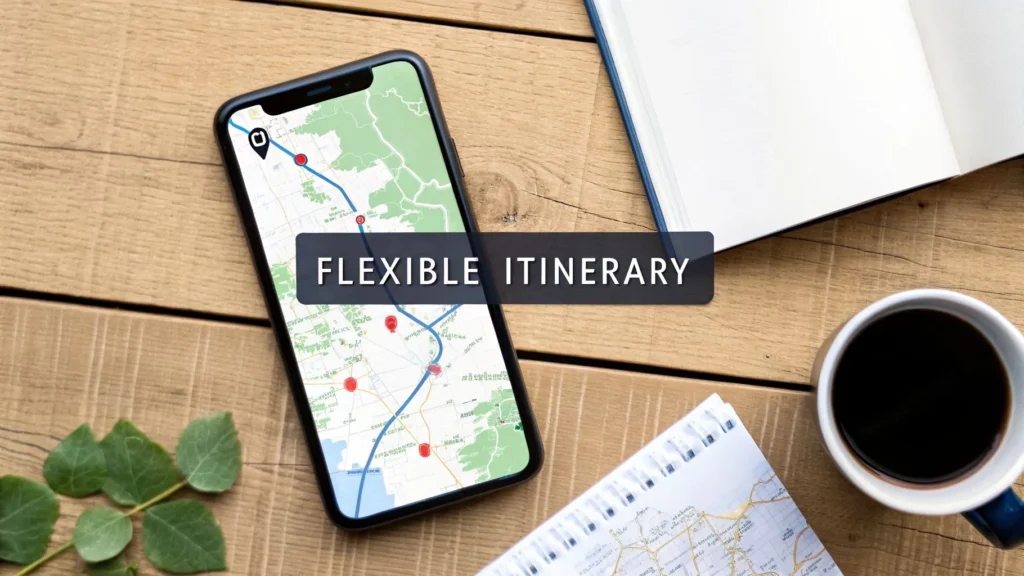
This visual layout helps you spot clusters of activity, making it easy to decide where to spend more time and which stops might be a bit too far out of the way.
One of my go-to strategies is the “Two-Night Rule” for any major destination. Booking two nights in one place guarantees you at least one full, uninterrupted day of exploring without the hassle of packing up and checking out. It keeps the trip from feeling like a constant blur of highways and hotels.
A great itinerary is a framework, not a cage. Its purpose is to reduce stress on the road by doing the heavy lifting beforehand, giving you more time to simply experience the journey. You can always adjust as you go.
For a coastal drive, this might mean having a few beach towns picked out but leaving the exact overnight stops open. For a national park tour, it could mean booking your main campsites but keeping daily hiking plans flexible based on the weather or how you’re feeling.
Finally, always download your maps for offline use. Cell service is notoriously spotty in the most beautiful places. Having your custom map saved directly to your phone is a total game-changer for stress-free navigation, no matter how far off the grid you wander.
Building a Realistic Road Trip Budget
Alright, let’s talk about money. Nothing can kill the vibe of an amazing adventure faster than worrying about your bank account. A solid road trip budget isn’t about pinching every penny—it’s about creating a smart plan so you can spend confidently on what truly matters.
It’s no secret that road trips are booming, mostly because they’re a much more affordable escape than flying. A recent survey found a massive 83% of Americans are planning a driving getaway for summer 2026, and 54% pointed directly at sky-high airfare as the reason. This just proves that with a good budget, the open road is accessible to almost everyone. You can dig into more of the numbers and trends in this deep dive on road trip statistics.
Deconstructing Your Trip Expenses
A great road trip budget really only has four big-ticket categories, plus a fifth one that’s absolutely essential for peace of mind. Don’t just pull numbers out of thin air; doing a little homework now will save you a ton of stress later.
- Fuel: This is your most predictable cost, but it still needs a quick calculation.
- Lodging: Your costs here can be anything from nearly zero to your single biggest expense.
- Food: This is a major cost, but one you have a surprising amount of control over.
- Activities: All the fun stuff! Think park passes, museum tickets, and that weird roadside attraction you can’t miss.
- Contingency Fund: This is your “just-in-case” cash for a flat tire or a spontaneous splurge.
I always use a simple spreadsheet or a budgeting app to keep these five pillars in check. Set your total trip budget first, then start plugging in your estimates for each category.
Estimating Your Core Costs
First up is fuel. Getting a solid estimate is easy with a simple formula:
(Total Trip Miles / Your Car’s MPG) x Average Gas Price Per Gallon = Total Fuel Cost
So, for a 1,500-mile trip in a car that gets 25 MPG, with gas averaging around $3.50 per gallon, your math looks like this: (1500 / 25) * 3.50 = $210. I always recommend rounding that number up just to be safe.
Next, let’s talk lodging. This is where your travel style really comes into play. If you’re a camper, you might spend anywhere from $0 for dispersed camping on public land to maybe $35 for a state park spot. Hotels and motels have a much wider range, from a basic $80 room to $250+ per night in a popular area. Decide if you want the security of booking ahead or the spontaneity of finding places as you go.
Finally, there’s food and activities. Be honest with yourself here. A good starting point is to budget $50-$75 per person, per day for food. You can slash this number by packing a cooler. My go-to strategy is stocking up on breakfast items like yogurt and granola and lunch supplies like bread and sandwich fixings. This saves the bulk of my food budget for incredible local dinners and can’t-miss culinary finds.
A smart road trip budget isn’t about spending less; it’s about spending smart. Prioritize your spending on experiences that align with your trip’s “why” and cut back on the rest.
For activities, look up the entrance fees for any national parks, museums, or tours you have your heart set on. Add those fixed costs to your budget first, then throw in a buffer for spontaneous fun. Your contingency fund should be about 10-15% of your total budget. You might never touch it, but having that cushion provides priceless peace of mind for any unexpected bumps in the road.
Getting Your Vehicle Ready for the Road
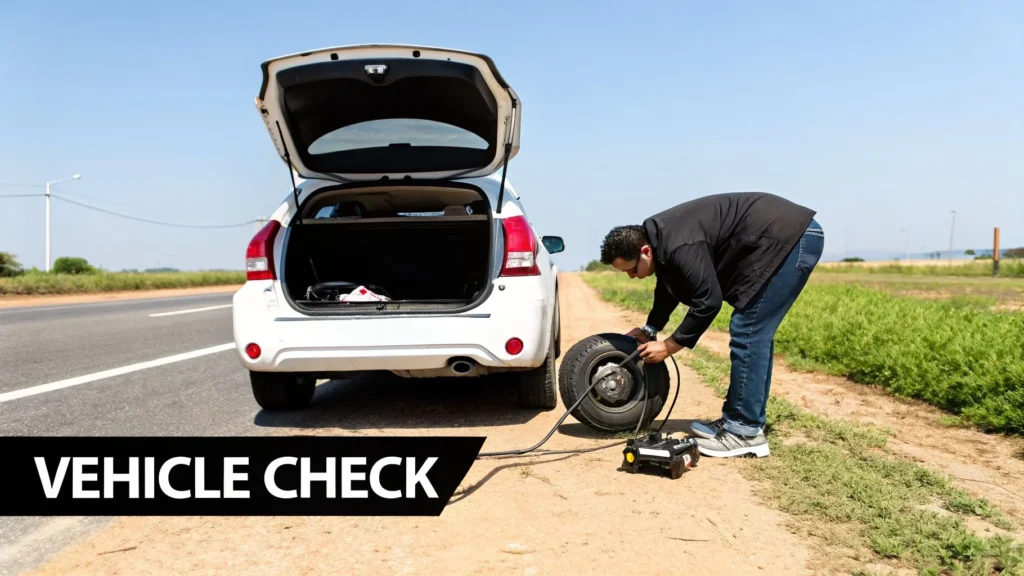
Your car is the unsung hero of any road trip. It’s not just getting you from A to B—it’s your mobile basecamp, your gear hauler, and your ticket to freedom on the open road. Making sure it’s in top shape isn’t just a good idea; it’s the most critical safety prep you’ll do.
A little bit of preventative maintenance now can save you from a huge headache (and a huge bill) later. Think of it as a small investment for a stress-free trip. The best part? You can do most of the essential checks right in your own driveway.
The DIY Pre-Trip Inspection
I never hit the road for a long drive without running through a quick personal inspection. These are the simple, must-do checks that have a massive impact on your car’s reliability and your safety. They only take a few minutes, so don’t be tempted to skip them.
First, focus on the only thing connecting your car to the ground: the tires.
- Tire Pressure: Get a decent pressure gauge and check all four tires while they’re cold (meaning, before you’ve driven for the day). Fill them to the recommended PSI found on the sticker inside your driver’s side door jamb—not the maximum pressure printed on the tire wall.
- Tire Tread: Grab a penny for the classic “penny test.” Stick it in the tread groove with Lincoln’s head pointed down. If you can see the top of his head, your tread is dangerously low, and it’s time for new tires.
- The Spare: Don’t let your spare be an afterthought! Check its pressure too, and confirm you have a working jack and a lug wrench that fits your wheels.
Next, pop the hood to check the fluids. These are the lifeblood of your vehicle. Most reservoirs are transparent with clear ‘MIN’ and ‘MAX’ lines, so it’s easy to see what needs attention. You’ll want to look at the engine oil, coolant (antifreeze), brake fluid, and top off the windshield washer fluid.
When to Call a Professional
While those DIY checks are vital, some jobs are just better left to a trusted mechanic. If you’re embarking on a particularly long journey or heading somewhere remote, booking a professional inspection about two weeks before you leave is a smart move.
This buffer gives the shop plenty of time to order parts if they find something, so you’re not scrambling at the last minute.
A professional look-over isn’t just about catching problems—it’s about buying peace of mind. Knowing an expert has given your brakes and battery a clean bill of health lets you relax and enjoy the adventure.
When you go, ask the mechanic to pay special attention to these systems:
- Brakes: A full, thorough brake inspection is non-negotiable for safety.
- Battery Health: They have tools to test its ability to hold a charge, which can prevent you from getting stranded with a dead battery.
- Belts and Hoses: Have them inspect for any cracks, fraying, or signs of wear.
Assembling Your Roadside Emergency Kit
Even the best-maintained car can run into trouble. A well-stocked emergency kit can turn a trip-ruining disaster into a minor, manageable hiccup. I never pull out of the driveway for a road trip without these items secured in the trunk.
| Category | Essential Items |
|---|---|
| Tire Issues | A portable tire inflator, a tire plug kit, and a reliable jack. |
| Visibility | A powerful headlamp (hands-free is a game-changer), extra batteries, and roadside reflective triangles. |
| Power | A portable jump starter or a solid set of jumper cables. |
| General | A good multi-tool, a basic first-aid kit, work gloves, and of course, duct tape. |
This kit isn’t just for you, either. Having jumper cables or an air compressor on hand means you might just be the hero for another traveler in need. Proper vehicle prep is a cornerstone of how to plan a road trip that’s both safe and unforgettable.
Packing Smart for Your Road Trip
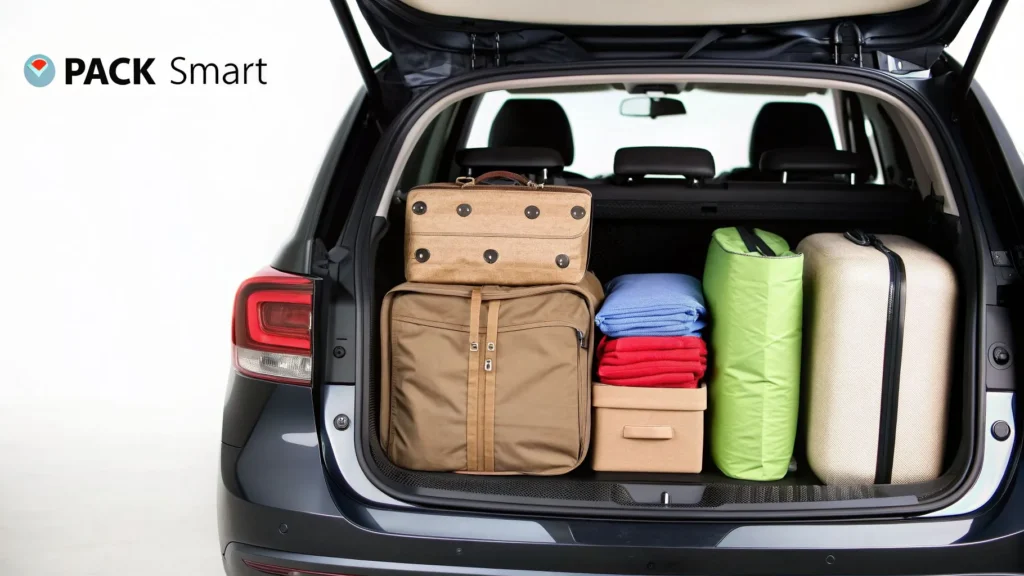
There’s a fine line between being prepared for anything and getting buried in your own stuff. Smart packing isn’t about bringing less—it’s about bringing the right things and organizing them so your car stays a comfortable basecamp, not a chaotic storage unit on wheels.
The goal is to ditch the “what-if” mentality that has you packing three winter coats for a summer trip through the desert. Let’s focus on an intentional, categorized approach that puts what you need right at your fingertips.
Core Packing Strategies
The single best space-saving trick is also the easiest: roll your clothes. Instead of folding, rolling compresses everything and lets you tuck items into every available corner of your bag. This is a game-changer for maximizing trunk space.
Just as important is the ‘Day Bag’ System. This is simply a smaller backpack or tote that lives in the cabin with you, holding all your daily must-haves. No more digging through a massive suitcase at a gas station just to find your sunglasses or a phone charger.
Your day bag should have:
- Tech: Phone, chargers, and a portable power bank.
- Comfort: Sunglasses, a book, and headphones.
- Essentials: Wallet, keys, any daily medication, and a water bottle.
- Quick Refresh: A small kit with lip balm, hand sanitizer, and wet wipes.
This two-part system keeps your immediate needs covered while your main luggage stays neatly stowed until you check in for the night.
Strategic packing isn’t about bringing less; it’s about bringing the right things and organizing them for easy access. Your car should feel like a sanctuary, not a storage unit on wheels.
Break It Down: Packing by Category
Organizing your list into categories is the secret to avoiding that last-minute panic where you realize you forgot all your socks. We break it down into three main groups: Personal Items, In-Car Comfort, and Essential Gear.
Personal Items (The Main Luggage)
This is your suitcase stuff. The key here is layering. This lets you adapt to changing weather without packing a whole new outfit for every possible temperature drop or heat wave.
- Clothing: Stick to versatile pieces you can mix and match. Always include a base layer, a mid-layer like a fleece, and a waterproof or windproof shell.
- Toiletries: Travel-sized containers are your best friend. Sunscreen and insect repellent are non-negotiable.
- Footwear: You need three pairs, minimum: comfortable driving shoes, sturdy walking or hiking shoes, and something more casual for evenings.
In-Car Comfort (The Day Bag and Cooler)
These are the items that make the long hours on the road not just bearable, but enjoyable.
- Snacks and Drinks: A well-stocked cooler with water, your favorite drinks, and healthy snacks saves money and keeps morale high. Think fruit, cheese sticks, and trail mix.
- Entertainment: Download your playlists, podcasts, and audiobooks before you leave. You can’t rely on having cell service in remote areas.
- Napping Essentials: A small travel pillow and a light blanket are gold for any passenger trying to catch some sleep.
Essential Gear (The Trunk)
This final bucket covers everything else, from your roadside emergency kit to any trip-specific equipment you might need. For a deeper dive, our guide on what to pack for long trips has tons of ideas for more extended journeys. Keeping this gear organized is what makes your car a functional and pleasant space for the whole trip.
Printable Packing Checklist
To make things even easier, we’ve put together a comprehensive checklist. Use this as your starting point and customize it for your specific adventure.
| Category | Essential Items | Optional/Trip-Specific |
|---|---|---|
| Documents & Money | Driver’s License, Vehicle Registration, Insurance, Credit/Debit Cards, Cash | National Park Pass, Printed Reservations, Roadside Assistance Card |
| Clothing | Shirts, Pants/Shorts, Underwear, Socks, Pajamas, Jacket (waterproof), Sweater/Fleece | Swimsuit, Formal Wear, Rain Pants, Thermal Layers, Hat/Gloves |
| Footwear | Driving Shoes, Walking/Hiking Shoes, Casual Shoes/Sandals | Water Shoes, Dress Shoes, Slippers |
| Toiletries | Toothbrush/Paste, Deodorant, Soap/Body Wash, Shampoo/Conditioner, Sunscreen, Lip Balm | Skincare Products, Makeup, Hair Styling Tools, Insect Repellent, After-Sun Lotion |
| Health & Safety | First-Aid Kit, Prescription Medications, Pain Relievers, Hand Sanitizer, Face Masks | Allergy Medicine, Motion Sickness Pills, Blister Treatment, Insect Bite Cream |
| Electronics | Phone & Charger, Portable Power Bank, Car Mount for Phone, Charging Cables | Camera, Laptop/Tablet, Headphones, GPS Unit, E-Reader |
| Car Gear | Emergency Roadside Kit, Jumper Cables, Spare Tire & Jack, Ice Scraper (seasonal) | Tire Pressure Gauge, Extra Fuses, Small Toolkit, Snow Chains (seasonal) |
| Food & Drink | Reusable Water Bottle, Cooler, Snacks (nuts, bars, fruit), Coffee/Tea Supplies | Portable Stove/Fuel, Utensils & Plates, Trash Bags, Can Opener |
| Comfort & Misc. | Sunglasses, Small Pillow, Blanket, Day Bag/Backpack, Reusable Shopping Bags | Travel Journal & Pen, Binoculars, Guidebooks/Maps, Games/Cards |
This checklist is your best defense against forgetting something crucial. Print it out, check things off as you pack, and hit the road with confidence.
Common Road Trip Planning Questions
You’ve handled the big picture—the route is mapped and the car is packed. But what about the small, practical details that pop up during the day-to-day of being on the road?
This is where we tackle those common nagging questions. Think of this as the final check-in for your plan, covering everything from surprise tolls to finding a decent bathroom on the fly.
How Can I Find Clean Public Restrooms
Let’s be honest, this is one of the most pressing concerns for any road tripper. The fear of being stuck without a clean option is real, but a little strategy goes a long way.
Your best bet is almost always a large, modern gas station chain. Brands like Buc-ee’s (which is a destination in its own right), Wawa, Sheetz, and Maverik are known for their spacious and exceptionally clean facilities. They’re well-lit and safe, making them a comfortable choice.
Beyond the big gas stations, keep these other reliable spots in mind:
- Grocery Stores: A quick stop to “grab a water bottle” is the perfect reason to use their often well-maintained restrooms.
- Visitor Centers & Rest Areas: Interstate rest areas have seen major improvements, and you can almost always count on state or national park visitor centers being clean.
- Bookstores & Coffee Shops: Chains like Barnes & Noble or Starbucks are dependable options in a pinch.
There are also apps built just for this. iOverlander and The Dyrt are fantastic for finding user-vetted spots, including public restrooms, especially when you venture into more remote areas.
What Is the Best Way to Handle Tolls
Tolls can be a frustrating and surprisingly costly part of a road trip if you aren’t ready for them. They often appear with little warning, and nobody wants to be fumbling for cash while going 70 mph.
The most straightforward solution is an electronic transponder like E-ZPass. This single device covers a massive network of toll roads, mostly in the eastern and central US. You preload it with funds, and it handles the tolls automatically as you drive through.
If you don’t have a transponder, many tollways now use a “pay-by-plate” system. A camera captures your license plate, and a bill is mailed to you. While this seems convenient, it’s usually the most expensive route, often tacking on significant administrative fees.
Pro Tip: Before you leave, check your navigation app’s settings. Both Google Maps and Waze have an “Avoid tolls” option. It might add a little extra driving time, but it can save you real money and hassle, often leading you down more scenic back roads.
Should I Inform My Bank or Credit Card Company
Yes, absolutely. This is a small but critical pre-trip task. Nothing kills the road trip vibe faster than your card being declined at a gas pump in the middle of nowhere because your bank’s fraud system got suspicious.
A quick phone call or a few clicks on your bank’s website to set a “travel notice” is all it takes. You’ll just need to tell them your travel dates and the states you’ll be visiting. This lets their fraud detection systems know those out-of-state charges are legitimate.
While you’re at it, take care of a few other financial details:
- Bring Multiple Payment Options: Never rely on a single card. Carry at least one credit card, one debit card, and a bit of emergency cash.
- Know Your Daily Limits: Be aware of the daily withdrawal and spending limits on your debit card.
- Save Emergency Numbers: Keep the customer service numbers for your bank and credit card companies saved in your phone in case a card is lost or stolen.
How Do I Deal with Spotty Cell Service
It’s an unwritten rule of road trips: the most scenic and memorable places often have the worst cell signal. Losing your navigation or the ability to call someone can be stressful, but you can easily manage it with a little foresight.
Offline maps are non-negotiable. Before you leave an area with Wi-Fi or a good signal, download the maps for the next leg of your journey in Google Maps or your app of choice. This lets your phone’s GPS track your location and give directions even without a data connection.
Another great option is a dedicated GPS unit. It might seem old-school, but a Garmin or TomTom device doesn’t rely on cell towers at all, making it incredibly reliable in the backcountry. For true off-grid adventures, consider a satellite messenger like a Garmin inReach or ZOLEO to send texts or an SOS signal from anywhere.
What’s the Smartest Way to Manage Food on the Road
Eating at restaurants for every meal gets expensive and can leave you feeling sluggish. A good food strategy saves money and keeps your energy up. The real hero of any road trip food plan is a quality cooler.
Start your trip with a well-stocked cooler. Pack it with easy breakfast and lunch items to cut down on stops and daily expenses. This frees up your budget and your time for more interesting local dinners.
Here’s a look at a smart cooler and snack bag setup:
| Category | Cooler Items | Dry Snack Bag Items |
|---|---|---|
| Breakfast | Yogurt, hard-boiled eggs, cream cheese for bagels. | Granola, instant oatmeal packets, muffins. |
| Lunch | Sandwich meat, cheese slices, hummus, pre-cut veggies. | Bread or tortillas, peanut butter, crackers. |
| Snacks | String cheese, fruit like grapes and apples. | Trail mix, protein bars, pretzels, beef jerky. |
| Drinks | Water, iced tea, juice boxes. | Powdered drink mixes to add to water. |
This system lets you eat well, save money, and spend more time exploring. Besides, a sandwich at a scenic overlook is almost always better than another stop at a fast-food joint.
At maxijournal.com, we believe that a great journey is built on smart preparation and a spirit of adventure. Our daily articles cover everything from travel and technology to arts and culture, giving you the inspiration and practical advice you need for your next trip. Explore more ideas and expert tips at https://maxijournal.com.
Discover more from Maxi Journal
Subscribe to get the latest posts sent to your email.