You’ve seen the classic postcard angles. The bridge in low sun, downtown floating above morning fog, Alcatraz ringed by dark water. Getting your own strong aerial view of San Francisco Bay Area scenes is harder than it looks, because the Bay punishes lazy planning. Wind shifts fast, marine haze flattens detail, battery life drops in cold air, and the best composition often disappears if you launch from the first convenient turnout you find.
The good news is that this region rewards preparation. San Francisco has been documented from above for generations. In 1938, Harrison Ryker captured 164 large-format aerial photographs of the city and bay, and those images remain one of the earliest extensive aerial records of San Francisco’s rebuilt urban form after the 1906 earthquake through the David Rumsey Map Collection’s 1938 aerial archive. That same habit still serves photographers now. Scout first. Know your airspace. Arrive earlier than you think you need to. Build a shot list before the props spin.
These seven locations are the ones I’d recommend when someone wants more than a pretty overview. They give you distinct subjects, different technical demands, and real choices about timing, lenses, regulations, and flight discipline.
1. Golden Gate Bridge Overlook – Marin Headlands
You park at the Headlands before sunrise, step out into cold wind, and the bridge is already changing by the minute. Fog can sit low under the deck, the skyline can go soft behind haze, and a launch spot that looked perfect on the map can feel exposed the moment you reach the ridge. That is why Marin Headlands works best as a field position, not just a scenic stop.

Battery Spencer and Hawk Hill are the standard starting points because they give you height, road curves, the full bridge span, and enough angle to hold San Francisco in the background. The mistake is treating either overlook as the finished composition. Walk first. Look for a position where the ridge line or access road gives the frame depth. The stronger image usually includes a land element that explains where the bridge sits, instead of isolating the towers against open water.
Morning is usually the better call here. You get cleaner separation on the bridge structure, fewer parked cars in the frame, and less glare bouncing off the bay. Sunset can work, but only if wind stays manageable and haze does not swallow the skyline. I treat this location as a timing trade-off. Early light gives cleaner files. Late light can give warmer color, but it is less predictable.
For gear, keep the kit disciplined:
- ND filters: Useful for video when bright water and sky push shutter speed too high.
- A moderate wide composition: Start wider than you think you need, then crop if the tower spacing feels cramped.
- Spare batteries kept warm: Cold headland air drains packs faster than many pilots expect.
- A landing plan: Uneven ground, tourists, and gusts make hand-catching riskier than at flatter inland locations.
Field rule: If shrubs and flags are snapping on the overlook, conditions over the drop are worse. Wait, reposition, or stay grounded.
This spot also rewards restraint in the air. Pilots often climb too high and flatten the cliffs, which removes the geography that makes Marin Headlands different from a generic bridge shot. Lower angles often hold more tension between the roadway, headlands, and city. Off-centering one tower usually gives the frame more movement than a perfectly symmetrical composition.
Ground-based shooters have an advantage here too. A longer lens from the overlook can compress the bridge and skyline in a way small-drone wide lenses often cannot. If you are still building your shooting discipline, a practical primer on digital photography basics for better composition and exposure control will help more than chasing extreme altitude.
Check current airspace, park rules, and temporary restrictions before you drive out. The Headlands sit in one of those Bay Area zones where a beautiful viewpoint and a legal launch point are not always the same thing. That is a significant trade-off at Marin. The view is famous. Getting a clean, legal, well-structured frame still takes planning.
2. Twin Peaks – Downtown San Francisco Aerial Vantage
Twin Peaks is where you go when you want the city to read as a complete map instead of a single landmark. The strength here is not one subject. It’s the relationship between downtown, the bay, neighborhoods, and the Pacific edge. That makes it one of the best places to build an aerial view of San Francisco Bay Area imagery that feels geographic rather than iconic.
The summit sits at 922 feet, giving you the highest panoramic city views in San Francisco according to the planning notes for this piece. That height is useful, but it also magnifies every atmospheric problem. Haze, wind vibration, and flat midday contrast all show up quickly.
Lens and timing choices
A wide lens is the obvious move for ground-based shooting from the summit, but wide isn’t enough on its own. The better approach is to shoot a stitched pano with some overlap rather than relying on the most extreme focal length you own. For drone work, give yourself multiple altitude bands and don’t assume the highest legal position is the best composition.
Winter mornings often produce cleaner air. Downtown edges read better, and the bay doesn’t bleach out as fast. If you’re shooting stills from the hill itself, a circular polarizer can help manage glare and pull more shape into the sky.
After you’ve got the obvious skyline shot, rotate south and west. San Francisco’s neighborhood grid, hills, and ocean edge are what make Twin Peaks different from a generic city overlook. If you’re refining your shooting basics, digital photography for beginners is a useful refresher on lens choice and exposure habits.
Crowd and permit reality
This spot gets crowded fast. Parking pressure, people stepping into your launch zone, and random interruptions make dawn a lot easier than any mid-morning session.
The first good frame at Twin Peaks usually comes from patience, not altitude. Wait for the light to define street geometry and building edges.
For commercial work, check local permissions before you treat this like a plug-and-play production site. Twin Peaks looks open, but the operational reality is never as simple as a social clip makes it seem.
3. Alcatraz Island Circumnavigation
The boat has just cleared the city side, the wind is bouncing off the bay, and Alcatraz starts to flatten if you rush the shot. This location rewards discipline. The best aerials keep the island legible as a fortified outpost, with enough surrounding water to preserve its isolation and scale.
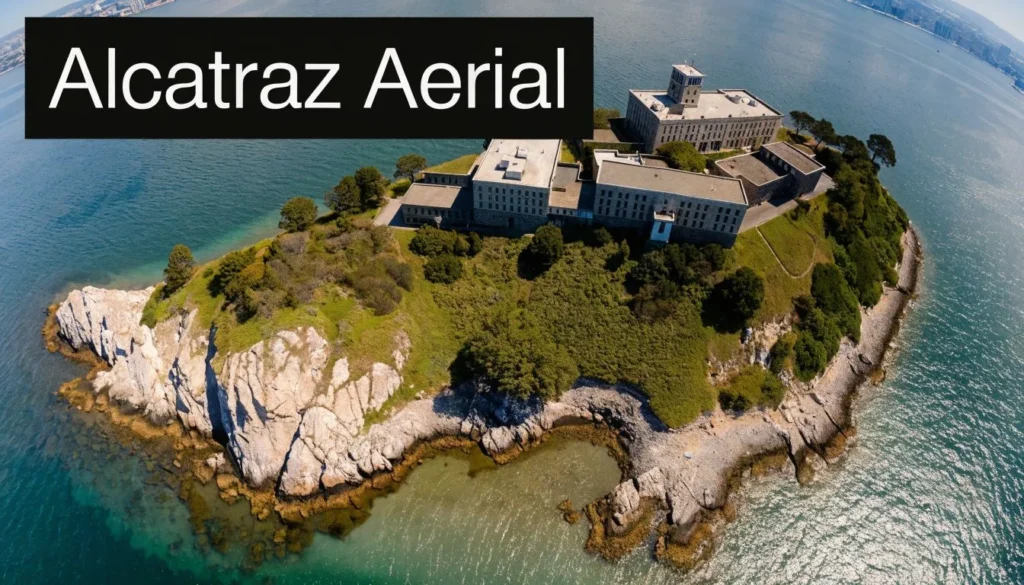
Operationally, this is one of the less forgiving Bay Area subjects. Wind direction shifts quickly around the island. Ferry traffic changes the surface pattern by the minute. Reflected glare off the water can ruin contrast well before the light on the buildings looks harsh. Salt spray also gets on filters and aircraft faster than many pilots expect, especially on longer boat-based sessions.
Treat the assignment like a logistics problem first and a beauty pass second. Check current restrictions before launch, because Alcatraz sits inside a heavily controlled airspace and protected-site environment. For many photographers, the practical solution is not a close drone orbit at all. It is a longer-lens aerial from a legal aircraft position, or a water-based shooting plan that respects distance and traffic.
How to make the frame read
Start with the island’s outline. The seawall, dock edge, parade ground, and main prison block give you the structure. If you crop too tightly, Alcatraz turns into a confusing cluster of pale roofs and concrete. Pull back enough to separate the island from the bay, then decide whether the skyline or bridge belongs in the background. On clear days, one distant reference layer is usually enough.
Angle matters more than drama here. A slightly oblique pass often reads better than a perfect top-down because it preserves the prison massing and shoreline geometry in the same frame. I usually avoid hyperactive orbit moves at this location. They create footage that feels busy and still fails to explain the site.
A few practical habits help:
- Clean gear immediately: Salt residue on filters, propellers, and body seams becomes a maintenance problem fast.
- Time around ferries: Wait for a break in wake lines if you want the island to feel stark and self-contained.
- Watch haze before you commit: Alcatraz can hold up in soft light, but distant skyline detail disappears quickly in dirty air.
- Use moderate focal lengths: Extremely wide views waste the island. Tight telephoto crops strip away the sense of separation.
Why this viewpoint carries weight
Alcatraz photographs best as a historical subject with present-day operational constraints, not just as an iconic landmark. The island’s power in an aerial frame comes from the relationship between confinement, shoreline defenses, and the surrounding water. That relationship is the picture.
For editorial or documentary work, keep that context visible in the composition and in your shot planning. A clean circumnavigation is less about getting closer and more about choosing the side where the island reads clearly, the water is not shredded by traffic, and the background supports the story instead of competing with it.
4. Bay Bridge East Span – Oakland Perspective
You launch from the Oakland side before first light, the port is already active, and the bridge reads less like a postcard subject and more like a working piece of the region. That is why this viewpoint earns a place in a serious Bay Area aerial plan. It gives you structure, traffic, industry, and a cleaner sense of how the bay functions.
The East Span photographs best when you treat it as infrastructure, not scenery. Steel, suspension lines, roadway rhythm, container yards, and ferry or cargo movement all compete for attention. The job is to organize that complexity. I usually build the frame around one clear decision: either the bridge leads the eye west toward San Francisco, or the port and shoreline carry equal weight and the bridge becomes the anchor.
Overcast conditions often improve this location. Soft light holds detail in the bridge surfaces and keeps the water from turning into a sheet of glare. Hard midday sun creates two problems at once. The highlights on steel get brittle, and the reflections below start fighting the composition.
Best compositional approach
A slightly oblique angle usually works better than a straight side profile. It gives the span depth and lets the cable pattern separate cleanly instead of stacking into visual noise. Dead-center symmetry can work, but only when the water is calm and background clutter is limited. Otherwise, the frame feels stiff.
Traffic matters here more than many photographers expect. A tug, ferry, or cargo vessel can give scale and timing to the shot, but random overlap under the bridge can make the lower frame feel crowded fast. Wait for spacing. This is also a good place to keep your footprint light and follow lower-impact travel habits for photo trips, especially if you are cycling through shoreline access points and public launch areas.
Check water glare before you commit to a pass. The bridge can still look good while the reflections underneath ruin the file.
A few field choices help consistently:
- Use moderate focal lengths to compress the cable pattern without flattening the whole span.
- Keep shutter speed high if wind off the water is pushing the aircraft during lateral moves.
- Scout launch and recovery spots carefully. Waterfront access looks easy on a map and often is not.
- Review local airspace and temporary restrictions before the shoot. This corridor deserves careful preflight planning.
Why this viewpoint matters historically
The Bay Bridge has carried the practical identity of the region for generations. From the Oakland side, that history shows up in the frame through transport lanes, industrial shoreline, and the physical link between East Bay and San Francisco. For editorial work, that context gives the image more value than a clean bridge portrait by itself.
Operationally, this area rewards discipline. Choose launch points with clear recovery options, expect wind shifts along the waterfront, and avoid treating the East Span like a casual sunset stop. Good results here come from timing, airspace awareness, and a composition that explains how the bridge fits into the working bay.
5. Point Reyes National Seashore – Northern Bay Perspective
You arrive before sunrise, the bluff is already pushing back with cold wind, and the drone case feels lighter than it should because battery life will not be generous out here. Point Reyes asks for a field plan, not just a pretty-location mindset. For Bay Area aerial work, it gives you something the city viewpoints cannot. Open Pacific energy, fractured headlands, and a northern edge-of-the-region perspective that reads as place, weather, and geology in one frame.
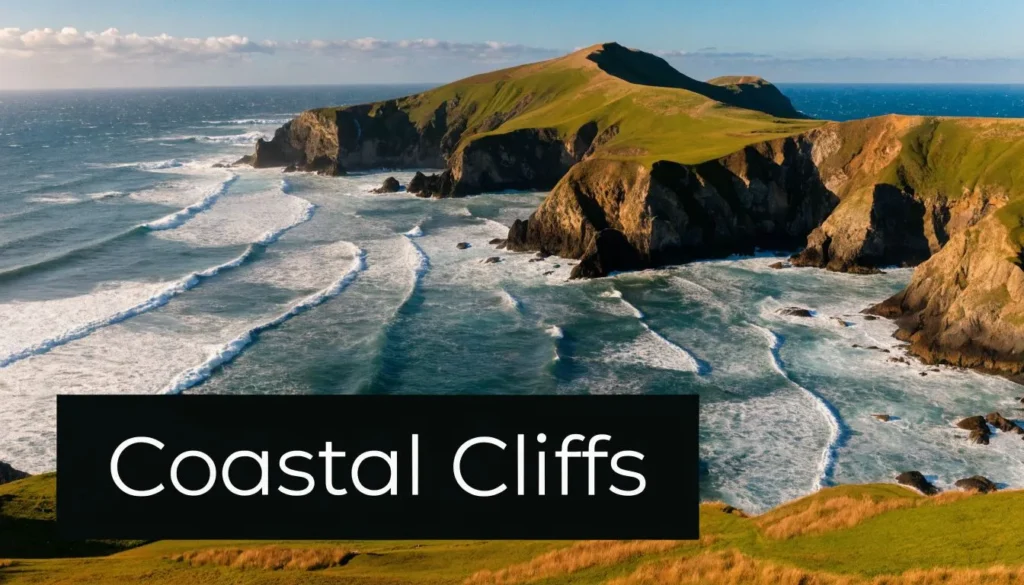
The common mistake is treating this like a scenic filler stop. It works better as a controlled assignment. Strong files here usually depend on one clear subject inside a large scene. Use the Point Reyes Lighthouse, a defined cliff break, a road tracing the bluff, or a surf line wrapping a point. Without that anchor, the frame turns into attractive but generic texture.
Conditions change fast. Wind accelerates near cliff edges, marine haze flattens distant separation, and cold air shortens the working window on each battery. I prefer slow lateral passes or restrained pullbacks instead of aggressive reveal moves. The coast already supplies drama. Camera movement should organize the scene, not compete with it.
A practical setup helps:
- Scout the launch and recovery area on foot first: Uneven ground, grass, and bluff contours matter more here than they do at cleaner urban access points.
- Carry more battery capacity than you think you need: Coastal temperatures and headwinds cut into reserve quickly.
- Fly with a foreground plan: Sea stacks, bluff edges, and fence lines help give scale to the wider coastline.
- Watch shutter speed and horizon discipline: Ocean texture can hide small framing errors until you review the files later.
Regulations matter here more than many visitors expect. Point Reyes National Seashore is not a casual place to assume drone access. Confirm current National Park Service rules, nearby airspace constraints, and any site-specific closures before the trip, then build the day around legal launch options outside restricted areas if your route allows it. That extra planning is part of the job.
This area also responds well to a lower-impact approach on the ground. Long drives between overlooks add time without always improving the angle, so I plan tighter routes and follow lower-impact travel habits for photography trips when working the coast.
What doesn’t work
Marginal wind, rushed battery decisions, and compositions with no focal point waste the location. Point Reyes rewards restraint. Wait for cleaner air, commit to one readable subject, and leave with fewer flights if those flights are controlled.
6. Silicon Valley Corridor – Tech Hub Perspective
You arrive before sunrise, legal takeoff point confirmed, airspace checked, and the scene in front of you is not dramatic in the usual Bay Area sense. It is office parks, freeway ribbons, structured parking, loading areas, planted courtyards, and long bands of reflective glass. That is exactly why this corridor matters. If you want an aerial view of San Francisco Bay Area growth that says business, infrastructure, and regional expansion instead of postcard scenery, this is one of the strongest subjects in the article.
The best frames here describe systems, not brands. Corporate clients may ask for a recognizable campus, but the more useful image usually shows how that campus sits inside the larger corridor. Road hierarchy, roof patterns, transit adjacency, retention ponds, solar canopies, and the spacing between buildings all read well from above. The result feels editorial and current without drifting into logo hunting.
Timing is less forgiving than photographers expect. Midday light turns glass into glare and pale concrete into a flat tonal block, especially in South Bay haze. Early morning gives you lower contrast, cleaner separation between buildings, and longer shadows that help low-rise sites hold shape. On overcast days, I treat the corridor as a geometry assignment and compose tighter, because flat light removes the drama and leaves only structure.
A few subject choices work consistently:
- Campus perimeter views: Edges show how designed office space meets roads, housing, or light industry.
- Pattern-driven compositions: Parking rows, rooftop mechanicals, and walkway grids give the frame order.
- Mixed-use context: Including neighboring parcels helps the image read as Silicon Valley, not a single anonymous building.
- Transit and traffic layers: Rail lines, freeway interchanges, and frontage roads add the movement that static campuses often lack.
Technique matters here more than at scenic overlooks. Reflective façades push exposure in different directions within the same frame, so bracket when the light is changing fast. Keep the camera angle disciplined. Too much downward tilt turns the corridor into a map, while too little can make the horizon hazy and empty. I usually aim for a mid-oblique approach that keeps enough ground pattern for context and enough building face for readability.
This part of the Bay also carries more operational risk than the scenery suggests. Airspace around San Jose, Palo Alto, Moffett, and smaller local airports can change what is practical from one municipality to the next. Some of the most visually appealing campuses sit near sensitive facilities or in places where a legal, low-risk flight is hard to execute. Good judgment matters more than persistence. If the site creates privacy concerns, crowd issues, or airspace pressure, move on and build the story elsewhere in the corridor.
The historical point is straightforward, as noted earlier. From above, this corridor shows the Bay Area’s long shift from orchards and low-density suburbs to a continuous belt of offices, logistics, housing, and transport infrastructure. That broader pattern is the picture.
What doesn’t work
Tight logo-driven shots, high-noon flights, and compositions with no surrounding context usually fall flat. The stronger approach is to show how technology campuses occupy land, connect to roads, and repeat across the valley. That is the tech hub perspective clients and editors can use.
7. Mt. Tamalpais – Marin County Elevated Perspective
You arrive before sunrise, the parking area is quiet, and the ridgeline is already starting to trade clear air for fog. Mt. Tam rewards photographers who can make decisions fast. Wait too long and the Bay disappears. Launch too early and the scene has shape but no separation.
What makes this location different is range. From here, an aerial view of San Francisco Bay Area geography reads as a connected system instead of a collection of landmarks. Ridges lead into headlands, the Bay sits behind them, and the city or ocean becomes the far layer. That structure gives you stronger frames than a single ultra-wide sweep from the summit.
The practical approach is to shoot for depth. Build the frame with a near ridge or tree line, then a secondary landform, then water, then distant urban detail if visibility holds. I usually avoid pointing the camera too far down unless the fog pattern itself is the subject. A moderate oblique angle keeps the mountain’s shape in the frame and prevents the image from turning into a flat topographic study.
Timing matters more here than at many lower Bay Area viewpoints. Pre-dawn through early morning is the working window if you want defined marine layers, side light on the slopes, and cleaner tonal separation. Winter and post-front conditions often produce the best visibility. Unsettled weather can be even better, but only if wind stays manageable and you have enough time to wait for openings.
Battery planning is part of the shot list on Mt. Tam. Cooler air cuts into real flight time, and the mountain often makes you spend one battery scouting and another shooting. Bring more capacity than you would for a city launch, and keep packs warm until you need them. Wind also changes quickly across the ridge, so a drone that feels stable near the ground can work much harder once it clears the launch point.
Regulations need the same attention as composition. Parts of Mt. Tamalpais fall within protected park areas where drone operations may be restricted or prohibited, and rules can differ between state park land, watershed property, and nearby public access points. Check the exact jurisdiction before the shoot, not just the mountain name on a map. This is a place where legal launch location matters as much as viewpoint quality.
Mt. Tam is also stronger as a sequence than a hero shot. Work a set. Start with broad environmental frames, then tighten on fog moving through saddles, road lines tracing the ridge, or a distant city layer appearing through clear air. As noted earlier, this perspective also carries the longer Bay Area story well. From this height, development, shoreline edges, and transport routes read together without forcing the frame around a single landmark.
What usually fails here is the generic panorama. Blue-sky noon light, empty horizons, and straight-out summit shots waste the mountain’s best feature, which is depth created by weather and terrain. Treat Mt. Tam as a timing and layer problem, and the results improve fast.
7 Aerial Perspectives Comparison, San Francisco Bay Area
A Bay Area aerial shoot can fall apart on the wrong assumption. A viewpoint may look straightforward on a map, then turn into a wind problem, an access problem, or an airspace problem on location. Use this comparison table as a field reference. It weighs each spot by shooting difficulty, gear load, likely output, and the kind of assignment it suits.
| Location | Field difficulty | What to bring and plan for | Best visual payoff | Best fit for | Why it earns a spot |
|---|---|---|---|---|---|
| Golden Gate Bridge Overlook – Marin Headlands | Moderate. Short hike, exposed wind, fast weather shifts | Stable drone, ND filters, layered clothing, parking plan near Battery Spencer, current rule check before launch | Classic bridge frames with skyline context, especially in low-angle light | Tourism work, editorial travel, short-form aerial video | Immediate recognition, strong foreground-to-background structure, several workable angles in one area |
| Twin Peaks – Downtown San Francisco Aerial Vantage | Moderate to high. Crowds, gusts, fog, tight urban operating limits | Stabilization support, flexible timing, commercial permissions where required, backup ground compositions | Wide city panoramas, street-grid geometry, weather-driven skyline scenes | Skyline campaigns, city features, time-lapse coverage | Highest major urban overlook, full-circle city read, fast access by car |
| Alcatraz Island Circumnavigation | High. Restricted conditions, distance shooting, boat and ferry traffic to account for | Permit research, shore-based launch planning where legal, long-lens options, salt-safe handling | Historic island coverage with layered bay context, water movement, and skyline relationships | Documentary work, educational pieces, architecture and history stories | Subject is unique, the island carries narrative weight, and the background changes with every orbit angle |
| Bay Bridge East Span – Oakland Perspective | Moderate to high. Sensitive airspace nearby, wind turbulence, active maritime setting | Airspace review, safe shoreline launch point, lens options for structure detail, conservative flight path planning | Cable geometry, traffic rhythm, port activity, and strong east-to-west city context | Infrastructure stories, engineering features, commerce visuals | Cleaner engineering lines than the west span, less tourist congestion, strong Oakland-to-SF storytelling |
| Point Reyes National Seashore – Northern Bay Perspective | High. Long drive, strong wind, rapid weather changes, limited fallback options | Wind-rated aircraft, extra batteries, travel buffer, park rule check, cold-weather prep | Cliffs, surf, headlands, and broad environmental frames with little urban intrusion | Conservation work, landscape assignments, nature films | Raw coastal drama, fewer visual distractions, and strong seasonal variation |
| Silicon Valley Corridor – Tech Hub Perspective | Moderate. Straightforward terrain, but airspace and privacy concerns can stop a plan quickly | FAA airspace check, property permissions where needed, discreet operating setup, longer lens for compressed campus views | Campus patterns, freeway networks, suburban density, and corporate architecture | Business reporting, investor decks, planning coverage, branded corporate content | Clear link between built form and industry identity, especially in early or late light |
| Mt. Tamalpais – Marin County Elevated Perspective | High. Longer access, shifting fog, broad exposure to weather | Hiking logistics, spare batteries, warm pack storage, weather-ready kit, exact jurisdiction check | Regional panoramas tying together bay, ocean, ridgelines, and atmospheric layers | Regional openers, fine art landscapes, large-format prints | Highest natural perch in the set, deep spatial layering, and strong results when weather creates separation |
The practical value here is selection, not volume. Marin Headlands and Twin Peaks produce the fastest iconic frames. Point Reyes and Mt. Tamalpais ask more from the pilot or photographer, but they return stronger atmosphere and depth. Alcatraz, the Bay Bridge East Span, and Silicon Valley work best when the assignment needs story, context, or infrastructure rather than a generic postcard view.
Choose the location based on the brief, then build the flight around the actual constraint. At Twin Peaks, the constraint is usually urban limitation and timing. At Point Reyes, it is weather and access. At Alcatraz and the Bay Bridge, it is regulation first, composition second. That is the difference between a pretty Bay Area aerial and a usable one.
Your Flight Plan for Bay Area Aerials
You arrive before sunrise with a clear bridge shot in mind, then the marine layer slides inland, the wind picks up, and your primary frame is gone. That is a normal Bay Area morning. The photographers who come home with usable aerials are usually the ones who planned for two weather shifts, one access problem, and a backup viewpoint before they left the house.
This region puts an unusual range of subjects inside one working radius. You can shoot suspension bridge geometry, dense street grids, container yards, historic islands, coastal cliffs, suburban sprawl, and ridge-top panoramas in a single assignment window. The challenge is not finding scenery. It is matching the location to the brief, the aircraft, the light, and the rules in force that day.
Start with a real flight plan, even if you are shooting from the ground or a helicopter door rather than flying a drone. Check marine layer forecasts, surface wind, and visibility the night before, then verify again on site. Pull airspace and local restrictions the same morning. Build a shot list with a primary frame, a weather fallback, and a regulation-safe alternative. In practice, that usually matters more than carrying one more lens.
Bay Area aerial work also rewards historical awareness. San Francisco has been photographed from above for generations, from early survey documentation to wartime and postwar records. That matters because the strongest frames often do more than show scale. They show relationships between shoreline, transport corridors, housing patterns, industry, and topography. If the assignment has editorial or documentary value, those connections usually outlast the postcard shot.
Aerial coverage here can also carry reporting value. Heat, shoreline change, port activity, transit build-out, and neighborhood disparity all read clearly from above when the framing is disciplined. Public-facing imagery often sticks to skyline beauty, but some of the most useful work comes from showing how the built environment and natural terrain interact under pressure. That is where a field approach helps. You are not only chasing a pretty view. You are collecting evidence with visual clarity.
Use the locations in this guide as working options, not fixed answers. Some sites are fast and iconic. Others require permits, longer access, or a higher tolerance for wind and changing visibility. Respect the regulations, pack for the conditions, and choose the viewpoint that serves the assignment first. The Bay usually rewards that kind of discipline.
If you like practical guides that mix travel, visual craft, science, and real-world context, visit maxijournal.com for more independent writing across photography, technology, health, business, arts, and tourism.
Discover more from Maxi Journal
Subscribe to get the latest posts sent to your email.