The most popular advice on the best antibacterial soap for body odor starts from the wrong assumption. It assumes odor means you need a stronger germ-killer.
That’s often too simple.
Body odor usually isn’t caused by sweat alone. It happens when skin microbes break down sweat and skin secretions into odor-producing compounds. That distinction matters because a product that wipes out broad swaths of skin bacteria may reduce odor for some people in the short term, yet make skin less stable, more irritated, and sometimes smell worse over time.
A smarter question is this: Should you even use an antibacterial soap at all? For some situations, yes. For many others, a targeted or microbiome-friendlier approach makes more sense.
Early comparison helps clarify the situation.
| Approach | Best use case | Main upside | Main tradeoff |
|---|---|---|---|
| Plain soap | Routine daily washing | Removes sweat, oil, and surface debris without trying to sterilize skin | May not be enough for stubborn odor |
| Antibacterial bar soap with triclocarban | Stronger short-term odor control | Can reduce some odor-causing compounds effectively | Broader microbiome disruption, possible dryness |
| Tea tree body wash | Daily odor-prone skin that tolerates essential oils | Natural antimicrobial action with a different target profile | Can irritate sensitive skin |
| Benzoyl peroxide wash | Targeted underarm odor care | Focused bacterial reduction in high-odor areas | Dryness, fabric bleaching concerns |
| Hypochlorous acid spray | On-the-go odor management | Helps normalize odor-causing bacteria without stripping all flora | Better as a supplement than a full cleanser |
Rethinking Antibacterial Soap and Body Odor
If your first instinct is to buy the harshest soap on the shelf, pause. Stronger isn’t always better for odor.
The core issue is ecological, not just hygienic. Skin hosts many microbes, and only some of them contribute meaningfully to smell. When you attack the whole system with a broad antibacterial product, you may lower odor temporarily, but you also change the balance that helps skin stay calm and resilient.
That’s why the usual product-ranking articles miss the main clinical question. They compare labels, scents, and brand claims without asking whether the antibacterial approach fits the biology of your odor pattern.
Why odor care isn’t the same as infection prevention
People often borrow the logic of medical antisepsis for a cosmetic problem. That’s a mismatch. Most body odor concerns involve underarms, groin folds, feet, or post-workout sweat, not a need to disinfect the body.
A soap can help with odor if it reduces the microbes most involved in that smell. But that doesn’t mean routine full-body antibacterial washing is a good default. In practice, dermatology is moving toward targeted control rather than total bacterial elimination.
Bottom line: The best antibacterial soap for body odor isn’t necessarily the one with the broadest killing power. It’s the one that matches your skin tolerance, odor pattern, and the body area you’re treating.
The more useful way to judge a soap
Instead of asking, “What’s the strongest option?” ask four questions:
- Where is the odor located. Underarms, feet, and skin folds behave differently.
- How often does it happen. Daily baseline odor differs from intense post-exercise odor.
- How reactive is your skin. Sensitive or eczema-prone skin changes the choice.
- Do you need a soap at all. Some people do better with a wash plus a targeted leave-on product.
That framework leads to better decisions than chasing “antibacterial” on the label.
How Your Skin Microbiome Controls Odor
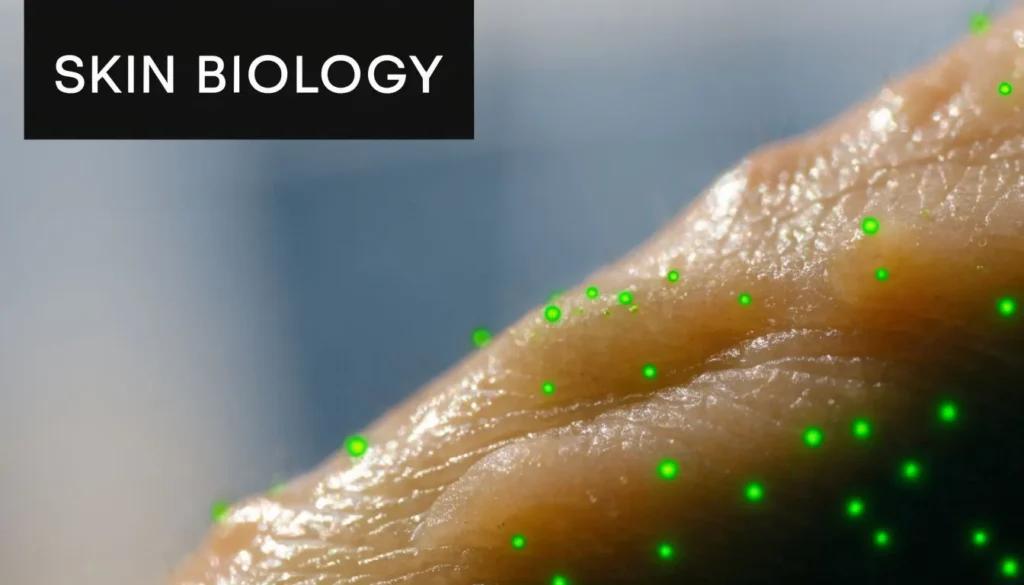
Body odor is less about how much you sweat and more about which microbes are processing that sweat. Eccrine sweat is mostly water and salt, so it has little smell on its own. Odor develops after skin bacteria break down sweat components, skin oils, and cellular debris into volatile compounds.
Your skin microbiome regulates that process. This microbial community includes bacteria, fungi, and other organisms that live on the skin surface and around hair follicles. It also influences skin pH, barrier integrity, and local inflammation, all of which affect whether odor stays mild or becomes persistent.
Soap changes odor in two different ways
Regular soap helps mainly through removal. It lifts sweat residue, oil, dead skin cells, and some surface microbes, which lowers the amount of material available for odor formation. That is often enough for people with mild underarm or post-exercise odor.
Antibacterial soap works differently. It does not just remove debris. It suppresses microbial growth more directly, which can reduce odor faster in some situations, especially in moist areas where bacterial overgrowth is part of the problem. The tradeoff is that broad suppression can disturb organisms that help keep the skin environment stable.
That distinction matters clinically. The goal is not sterile skin. The goal is a skin ecosystem that produces fewer odor molecules.
Why selective control often works better than stronger killing
Different body sites behave differently. Underarms, feet, groin folds, and the chest each have their own humidity, oil production, friction, and resident microbes. A product that helps foot odor may be unnecessarily aggressive for normal trunk skin.
This is one reason dermatologists often prefer targeted approaches over full-body antibacterial washing. A benzoyl peroxide wash, for example, may be useful in localized settings where odor overlaps with folliculitis or truncal breakouts. If that pattern sounds familiar, the treatment logic overlaps with approaches used for body acne treatment. The common thread is reducing bacterial load in high-yield areas rather than trying to disinfect the entire skin surface.
Some microbes contribute more directly to odor. Others compete with those species, occupy the same niches, or help maintain skin conditions that make odor less intense. Remove too much, and you may get short-term freshness with less stability afterward.
Better odor control usually comes from changing the local conditions that favor smell-producing microbes, not from removing every microbe you can.
A practical summary is simple. Regular soap reduces the inputs that feed odor. Antibacterial soap can shift the microbial balance itself. That can be useful, but only when the location, severity, and skin tolerance justify it.
The Hidden Risks of Overusing Antibacterial Soaps
The common mistake is assuming stronger bacterial suppression always means better odor control. On real skin, that logic often breaks down.

Risk one, microbiome disruption and rebound odor
Body odor is not merely a problem of “too many bacteria.” It is often a problem of which microbes dominate, where they grow, and what sweat byproducts they convert into odor molecules. Repeated use of broad antibacterial cleansers can disturb that balance enough to make odor less predictable over time.
That pattern matters clinically. A person may feel cleaner for a few hours, then notice that odor returns quickly, or shifts from mild sweat smell to a sharper, more stubborn scent. In that setting, the next useful question is not “Which stronger antibacterial soap should I buy?” but “Have I been overcorrecting?”
This does not mean every antibacterial wash causes rebound odor. It means prolonged, whole-body use carries a tradeoff that is easy to miss. If your odor is limited to the underarms, feet, or skin folds, treating the entire body with an antibacterial soap can expose low-problem skin to unnecessary disruption.
Risk two, skin barrier damage
The skin barrier and the skin microbiome are linked. If a cleanser strips lipids, increases dryness, or triggers low-grade irritation, skin becomes less tolerant of friction, shaving, sweat, and occlusion. Those are the same conditions that often make odor harder to control.
Patients usually describe this before they describe “bad odor control.” They say the underarms sting after showering. The groin feels tight. The chest gets flaky. Those are not minor side effects. They are signs that the product may be creating a better environment for irritation and a worse one for stable long-term odor management.
This point is especially relevant when odor overlaps with folliculitis, truncal breakouts, or inflamed bumps. In those cases, targeted regimens are often more rational than escalating to stronger whole-body antibacterial washing, which is why treatment logic often overlaps with a guide to body acne treatment.
Clinical caution: If a cleanser leaves your underarms or groin persistently dry, tight, burning, or red, it may be worsening the conditions that allow odor to recur.
Risk three, little proven benefit for routine infection prevention
The public health case for daily antibacterial soap use is weaker than marketing suggests. A 2007 review and subsequent FDA action found insufficient evidence that over-the-counter antibacterial soaps outperform plain soap and water for preventing illness in everyday settings. The Minnesota Department of Health makes the same practical point in its guidance on plain soap versus antibacterial soap.
That distinction matters because odor control and infection prevention are different goals. If someone is using antibacterial soap all over the body mainly because it feels more hygienic, the extra exposure may add irritation without adding meaningful protection.
Antibacterial soaps still have a place. Their use should be strategic, not automatic. They make more sense for short courses, localized problem areas, or situations where a specific ingredient matches a specific pattern of odor and skin tolerance.
A short video can help frame that distinction between cleansing and over-disinfecting.
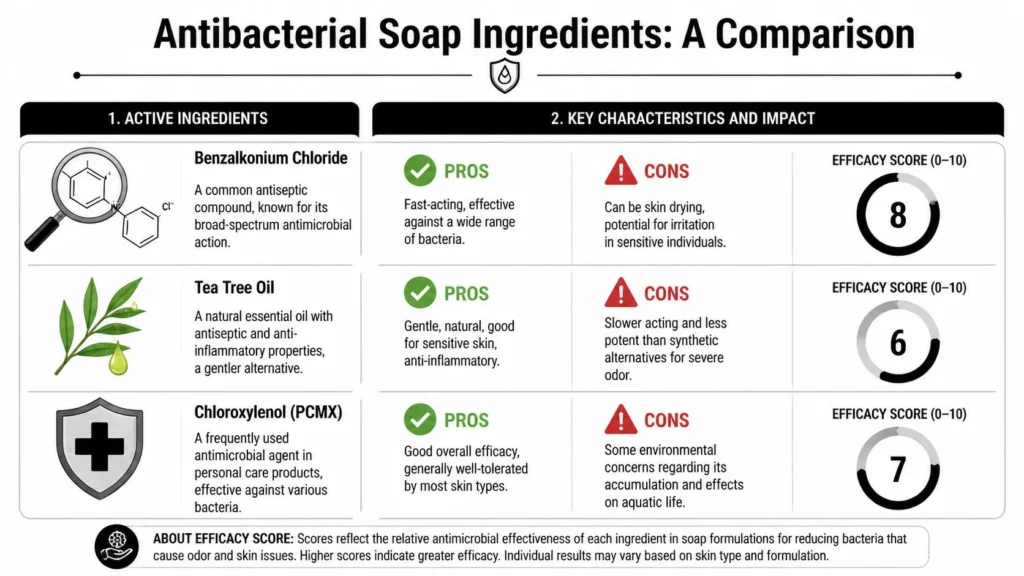
Comparing Antibacterial Soap Ingredients
Ingredient choice matters more than marketing language. “Antibacterial” tells you almost nothing by itself.
What matters is the active agent, what organisms it tends to suppress, how harshly it acts on skin, and whether you’re using it on underarms, feet, groin folds, or the whole body.
| Ingredient | Mechanism | Odor Control Efficacy | Irritation Risk |
|---|---|---|---|
| Triclocarban | Synthetic antibacterial agent that suppresses certain bacteria | Strong lab performance against some odor-related bacterial targets | Moderate, especially with frequent use |
| Tea tree oil | Plant-derived antimicrobial action with anti-inflammatory reputation | Useful for some odor contributors, but with a different target profile | Can be high in sensitive skin |
| Benzalkonium chloride | Broad antiseptic action | Can be effective qualitatively, but irritation concerns matter | Can be irritating for some users |
| Hypochlorous acid | Helps normalize odor-causing bacteria rather than strip all flora | Good as a supportive odor-control approach | Often gentler than traditional antibacterials |
| Benzoyl peroxide | Reduces bacteria in targeted areas such as underarms | Strong practical option for localized odor | Drying, bleaching concerns |
What the best available comparisons actually show
In a lab benchmark, soap with 0.45% triclocarban such as Safeguard reduced odor-causing volatile sulfur compounds by 89% and achieved a 3.8 log reduction of S. hominis. By contrast, a natural body wash with 5% tea tree oil such as Truremedy Naturals showed up to a 95% reduction in Malassezia furfur, highlighting that synthetic and natural products may work well against different odor contributors, as reported in this odor-control benchmark comparing triclocarban and tea tree formulations.
That’s an important nuance. A person with odor driven mostly by bacterial breakdown in the underarms may respond differently than someone whose odor pattern involves yeast-heavy skin folds or feet. The winner isn’t universal. It depends on the microbial target.
How to read the label like a dermatologist
If you’re comparing products in a store or online, focus on these points:
- Look for the active ingredient first. Safeguard Antibacterial Bar Soap and Truremedy Naturals Tea Tree Body Wash may both be sold for odor, but they act through different chemistry and may suit different skin patterns.
- Match the ingredient to the body area. Underarms often tolerate targeted actives better than broad full-body use. Feet may need a different approach than chest or groin folds.
- Respect skin reactivity. Tea tree sounds gentler to many consumers because it’s plant-derived, but “natural” doesn’t mean low-irritation for everyone.
- Be skeptical of the word antibacterial. It doesn’t tell you whether the product is selective, drying, or likely to destabilize your baseline skin flora.
Ingredient-by-ingredient judgment
Triclocarban is the option I’d place in the short-term, high-control category. If someone has severe post-workout odor and wants a bar soap with meaningful lab evidence against odor-linked bacterial output, it has a real case.
Tea tree oil is more conditional. It can be appealing for people who want a natural-leaning wash and who tolerate essential oils well. But it isn’t automatically the safer choice for reactive skin.
Benzalkonium chloride deserves caution. It’s common in antiseptic products and can be effective qualitatively, but many patients with sensitive skin don’t tolerate repeated antiseptic exposure well.
The smartest ingredient choice isn’t the one that kills the most organisms on paper. It’s the one that reduces your odor without turning your skin into a chronic irritation problem.
Choosing the Right Soap for Your Situation
Choosing the wrong soap is often what keeps body odor going. A stronger antibacterial wash can reduce odor for the right person, but for someone with dry or reactive skin, the same product can increase irritation, disrupt the barrier, and leave odor harder to control over time.
Start by identifying the pattern.
If odor is strongest after workouts or builds up fast in the underarms
A triclocarban bar such as Safeguard Antibacterial Bar Soap fits best when you want short-term bacterial reduction in a limited area and your skin generally tolerates stronger cleansers. This use case is narrow but real. Sweat itself has little smell. Odor appears after skin bacteria metabolize sweat components, so reducing bacterial load in the highest-odor zones can help when standard washing has not been enough.
I would reserve this type of soap for underarms, feet, or other specific hotspots rather than using it as an all-over daily wash.
If odor is moderate and you also deal with folliculitis, sweat trapping, or damp skin folds
A tea tree wash such as Truremedy Naturals Tea Tree Body Wash may suit people who want a broader body wash and who have tolerated essential oils before. The appeal here is not that it is “natural.” The practical question is whether your skin handles it well and whether your odor pattern overlaps with areas that stay warm, occluded, or prone to yeast overgrowth.
Patch testing matters. Fragrance sensitivity, prior reactions to botanical products, or a history of stinging with deodorants makes this a less attractive option.
If your skin is dry, reactive, or eczema-prone
This is the group that should be most skeptical of antibacterial labeling. If the barrier is already weak, stronger cleansing often creates the exact conditions that make odor management harder. Inflamed skin can sting, trap sweat differently, and become more reactive to deodorants and fabrics.
A gentler cleanser is usually the better baseline. If you are comparing milder cleansing bases, this overview of the benefits of glycerin soap is useful because humectant-rich soaps tend to strip less aggressively than classic antibacterial bars.
A practical way to choose
Use the least disruptive option that controls the odor you experience.
- Severe, localized odor with sturdy skin: a stronger antibacterial soap can make sense for short, targeted use.
- Moderate odor with otherwise calm skin: a tea tree wash may be reasonable if you tolerate essential oils.
- Dry, itchy, easily inflamed skin: start with a gentle cleanser, then add a targeted odor treatment only where needed.
- Whole-body use: choose this only when there is a clear reason. Underarm odor rarely requires full-body antibacterial washing.
The long-term rule is simple. If a soap reduces odor but leaves the skin tight, shiny, flaky, or more easily irritated, it is probably too aggressive for routine use. For many people, the best antibacterial soap for body odor is the one they use occasionally, not the one they build their entire shower routine around.
Smarter Alternatives to Antibacterial Soap
The best body-odor routine often uses less antibacterial soap, not more. For many people, odor improves more reliably when you treat the high-bacteria areas directly and leave the rest of the skin barrier alone.
Targeted underarm treatment
If odor is concentrated in the underarms, a benzoyl peroxide wash is often a better tool than routine whole-body antibacterial cleansing. It reduces the bacterial load in the area that produces the smell, which makes the intervention more precise and usually easier on the skin overall.
That matters because body odor is usually a local chemistry problem, not a full-body hygiene failure.
A focused wash also gives you more control. You can use it on the underarms for short contact time, rinse thoroughly, and keep the rest of your shower routine gentle. This approach makes the most sense when sweat itself is not the main issue and the odor clearly comes from the armpits.
Midday odor control without harsher washing
Hypochlorous acid body spray fills a different role. It is useful for people who get odor after exercise, commuting, or long workdays and want a reset without another full wash. Instead of repeatedly cleansing the skin, you apply a localized antimicrobial step only when odor starts to return.
Used this way, it can be a practical option between showers, especially on skin that becomes dry or reactive with frequent washing.
Support the barrier if irritation is part of the odor cycle
Some odor problems start with inflamed, over-washed skin. In that situation, stronger cleansing can keep the cycle going. A low-irritation body wash, a well-formulated deodorant, breathable clothing, and simple barrier support may do more than rotating through medicated soaps.
If your skin tends to sting, flush, or feel tight after showering, calming the skin may reduce odor indirectly by making the area less reactive to sweat and friction. Some people also add soothing, non-stripping steps such as rose water skin-care support as part of a gentler routine.
The practical goal is selective control, not maximal bacterial killing. Reduce odor where it starts, and keep the surrounding skin healthy enough that you do not need stronger products more often.
Frequently Asked Questions
How often should I use antibacterial soap for body odor
Use it strategically, not automatically. If you need it, apply it to the highest-odor areas rather than treating your entire body as if it needs disinfection. If your skin starts feeling tight, itchy, or irritated, cut back and return to a gentler cleanser as your baseline.
Is antibacterial soap safe for the groin or face
Those areas are more reactive, so routine use is harder to justify. The face usually does better with products designed for facial skin, and the groin can become irritated quickly from harsh cleansers. If odor is coming from skin folds, targeted management is usually safer than repeated aggressive washing.
Can antibacterial soap help with hyperhidrosis
It can help with the odor associated with sweating, but it doesn’t treat the sweat production itself. Hyperhidrosis is a sweating disorder. If sweating volume is the main problem, soap may improve smell somewhat while leaving the underlying issue untouched.
How quickly should I expect results
If a product suits your odor type, you may notice a change quickly. If it doesn’t fit the biology of your odor, you may get little benefit or a short-lived improvement followed by irritation. The more persistent your odor, the more important it is to think beyond soap alone.
Should I use antibacterial soap every day if I have chronic odor
Usually not as a default whole-body habit. Chronic odor often responds better to a combination of gentle cleansing, selective targeted treatment, breathable clothing, and review of triggers like friction or persistent dampness. If you rely on stronger antibacterial soap every day and your odor keeps returning, that pattern suggests your routine needs rethinking, not intensifying.
Which is better, bar soap or body wash
The format matters less than the active ingredient and your skin tolerance. A bar such as Safeguard may be useful when you want stronger control. A tea tree body wash may fit some users better. A non-antibacterial wash plus a leave-on targeted product may be the best option of all if your skin is sensitive.
What’s the most practical takeaway
Use antibacterial soap like a tool, not like a lifestyle. If you have stubborn odor in specific areas, a focused antibacterial product may help. If your skin is reactive or your odor keeps rebounding, microbiome-friendly alternatives are often the better long-term answer.
If you like evidence-based health writing that stays practical and readable, visit maxijournal.com for more independent commentary across health, science, technology, and everyday questions that deserve clearer answers.
Discover more from Maxi Journal
Subscribe to get the latest posts sent to your email.