What makes a live action disney movie matter now. Is it fidelity to the animated original, the scale of the box office, the novelty of the technology, or the way a film shifts Disney’s creative playbook? Most rankings flatten those questions into a single scorecard. That misses the true story.
Disney’s live-action era isn’t one trend. It’s several overlapping strategies. Some films function as prestige fairy tales. Some are technical proofs of concept. Some test how far the studio can revise beloved characters before nostalgia starts pushing back. Others reveal the limits of the remake model, especially when visual ambition outpaces emotional clarity.
That’s why the best way to assess a live action disney movie isn’t by asking which one is “best” in the abstract. It’s by asking what each title added to the canon. One film may have proven that lavish costume-driven fantasy could still command global interest. Another may have turned virtual production into a mainstream attraction. Another may matter less for consensus acclaim than for showing how Disney could reframe a villain, modernize a heroine, or turn a divisive remake into a long-tail cultural conversation.
The ten films below work as a map of Disney’s modern live-action identity. They track the studio’s movement from classical adaptation to photoreal spectacle, from fairy-tale sincerity to revisionist character work. Some are more successful than others. All are revealing. If you want to understand why this category became such a dominant force in contemporary studio filmmaking, these are the titles that define the argument.
1. Cinderella (2015)
Kenneth Branagh’s Cinderella matters because it established a disciplined version of the remake formula. Instead of chasing irony or aggressively rewriting the source, it treated the fairy tale as something worth staging with seriousness, texture, and restraint. Lily James plays Ella with warmth rather than winked self-awareness, and Cate Blanchett gives Lady Tremaine the kind of controlled theatricality that keeps the film elegant instead of campy.
That balance is the film’s real achievement. Disney didn’t need this remake to be disruptive. It needed it to feel legitimate.
Why it became a template
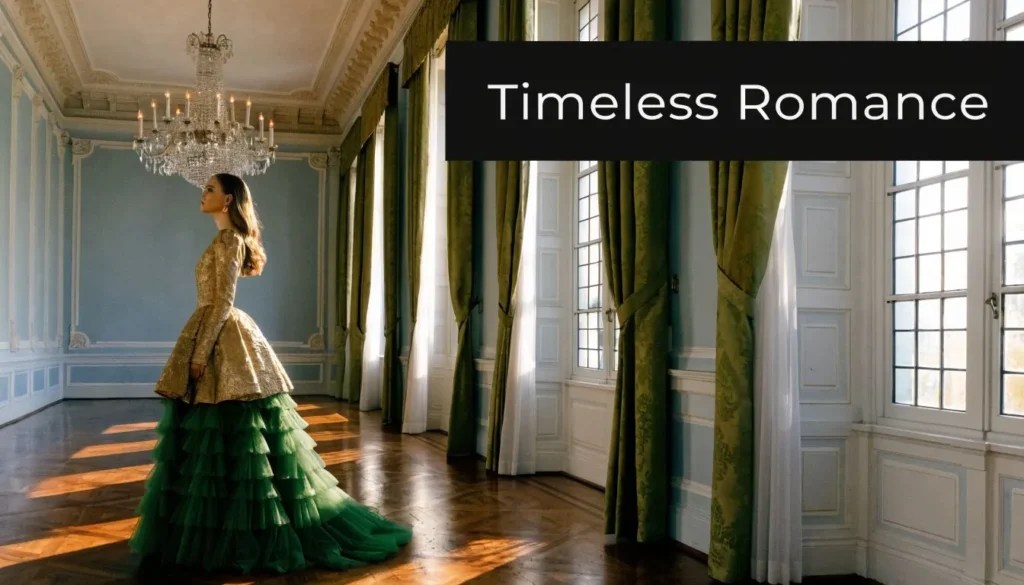
The film’s visual strategy is old-fashioned in the best sense. Costume, color, and architecture carry the emotional burden. Branagh builds a tactile world where the fairy-tale transformation feels earned by atmosphere rather than digital overload. That choice gave Disney a workable model for prestige remakes that still felt accessible to family audiences.
Its larger contribution was strategic. Cinderella showed Disney could make a live action disney movie feel like a polished event without abandoning the emotional simplicity that made the animated films durable in the first place.
Practical rule: Watch Cinderella for production design logic, not just story. It’s one of the clearest examples of Disney using luxury aesthetics to restore fairy-tale sincerity.
For readers who like comparing how critics frame spectacle versus storytelling, strong movie review websites worth following can make this film especially interesting. Reactions often hinge on whether one sees its faithfulness as artistic conviction or as conservatism.
A critic’s eye should stay on how often Branagh narrows the frame after a large visual flourish. The film keeps returning to faces, gestures, and ritual. That’s why it endures. It isn’t trying to reinvent Cinderella. It’s trying to persuade you that the classic version still works when handled with care.
2. The Jungle Book (2016)
What counts as a live action Disney movie when nearly everything on screen is digitally created? Jon Favreau’s The Jungle Book turned that question into the film’s central achievement. Instead of treating visual effects as support, Disney built the remake around a new production method and made that method feel invisible to the audience.
That is why the film matters in Disney’s remake timeline. It did not just revisit a familiar title. It redefined what the studio could plausibly sell as “live action.”
The technological milestone
Favreau and his team constructed a jungle that behaves like a photographed space. Light has weight. Scale shifts with danger. Camera movement guides attention through branches, rivers, and ruins as if the production had access to a physical location rather than a digitally assembled one. The result is more than polished surface realism. It gives the story orientation, which is why the chase scenes and quiet interludes both register clearly.
The film’s historical importance comes from that control. Earlier remakes proved Disney could restage animated classics with expensive craft. The Jungle Book showed the studio could use virtual production to create an immersive world without losing narrative legibility. That lesson directly influenced later releases, as Disney began marketing the technology itself as a key attraction in its photoreal remakes.
Why the craft still holds
Neel Sethi’s performance is the film’s stabilizing force. With only one principal human actor on screen, the movie depends on physical timing, eyelines, and reaction shots to persuade viewers that Mowgli belongs in this environment. Sethi gives the digital world resistance. He is not wandering through effects. He is responding to pressure, fear, and curiosity in ways that make the illusion convincing.
The voice cast helps define tone with unusual precision. Idris Elba’s Shere Khan gives the film its severity, Ben Kingsley makes Bagheera sound disciplined rather than stiff, and Bill Murray’s Baloo introduces relief without turning the movie slack or shapeless. That tonal calibration matters because The Jungle Book is one of the few Disney remakes that understands suspense as part of its identity.
The musical choices are just as calculated. Familiar songs appear sparingly, which keeps the film from becoming a tribute act. Readers interested in how selective music cues can reshape audience memory should look at these great movie soundtracks and what makes them work.
A rewatch makes the film’s design logic even clearer:
- Space carries story information: Safe areas feel enclosed, while exposure usually signals threat.
- Performance comes before realism: The animals work because vocal characterization arrives before viewers judge the texture of fur or foliage.
- Nostalgia is rationed: Disney uses recognizable elements from the 1967 film, but never so often that they dilute tension.
Its larger contribution was strategic and artistic at once. The Jungle Book proved Disney could build a remake on digital illusion and still produce a coherent, emotionally readable adventure. In the studio’s live-action evolution, that made it a turning point rather than a one-off success.
3. Beauty and the Beast (2017)
What does a remake become when Disney stops treating nostalgia as inspiration and starts treating it as institutional memory? Beauty and the Beast answers that question with unusual clarity. The 2017 film is less an act of reinvention than a curatorial project, designed to preserve one of Disney’s most protected animated texts while expanding its physical scale, musical presentation, and character backstory.
That choice shaped both its appeal and its limits.
Emma Watson’s Belle is framed as a modest update rather than a radical rewrite. The film gives her more explicit intelligence, a touch more agency, and a slightly more articulated place within the village, but it does not disrupt the underlying architecture of the 1991 classic. Bill Condon directs with the caution of a steward handling valuable material. The production design, costuming, and digital effects all serve the same goal. Keep the iconography intact, then make it bigger, denser, and more tactile.
Commercially, that strategy worked exactly as Disney hoped, as noted earlier. The film arrived not as an experiment but as a major studio event, and its reception confirmed that audiences would reward faithful large-scale adaptation when the source carried enough cultural prestige.
The more interesting question is why.
Preservation as a blockbuster method
Many remakes justify themselves by changing tone, perspective, or genre emphasis. Beauty and the Beast justifies itself through accumulation. It adds songs, expands mythology, and fills out narrative gaps around the curse and the castle’s inhabitants. Some of those additions strengthen motivation. Others merely increase volume. Either way, the film treats completeness as value.
That helps explain the divided critical response. Viewers who want the animated film’s emotional beats reproduced with ceremonial grandeur often find a great deal to admire. Viewers looking for a sharper interpretive argument tend to see a production so committed to fidelity that it narrows its own imaginative freedom.
The musical dimension is where that tension is easiest to measure. In animation, songs can suspend realism without resistance. In live action, every number has to negotiate performance, digital artifice, and audience memory at once. Readers interested in that balance can compare it with other movie soundtracks that shape story through music. Here, the success of each scene depends on whether the music still advances character rather than functioning as a museum piece.
Its long-term place in Disney’s live-action cycle is larger than its plot. Beauty and the Beast showed that a live action disney movie could operate as prestige preservation, not just adaptation. In strategic terms, it validated the studio’s belief that some remakes were most valuable not when they transformed the canon, but when they reaffirmed it at blockbuster scale.
4. Dumbo (2019)
What happens when Disney gives one of its briefest and simplest animated features to a director whose entire career is built on sadness, outsiders, and visual melancholy? Tim Burton’s Dumbo answers that question by turning a 1941 children’s story into a studio-era parable about entertainment as extraction. The elephant still carries the film’s emotional charge, but Burton shifts attention toward the people and institutions that package wonder for profit.
That choice makes the film a strategic turning point in Disney’s remake cycle.
Earlier remakes often expanded beloved material through scale, fidelity, or musical nostalgia. Dumbo pursues a different goal. It uses the remake format to test whether a recognizable auteur can redirect a Disney property toward themes the original only implied. The result is unusually self-conscious for this series. Circus labor, commercial ownership, and the sale of fantasy become the main subjects.
The mixed response makes sense in that context. As noted earlier, comparative reception analysis of Disney remakes places Dumbo below stronger crowd-pleasers such as Aladdin and The Jungle Book. Burton’s film was never built for the same kind of instant approval. Its pacing is slower, its emotional register is sadder, and its visual design keeps returning to the gap between enchantment and control.
That also explains why the film matters beyond its ranking.
The remake as corporate self-critique
The most revealing element in Dumbo is its interest in who owns spectacle. Burton expands the human story not only to add plot, but to show the systems around the title character. Dumbo becomes both a creature and a commodity, admired for his difference while being managed by people who see that difference as revenue. For a Disney remake, that is a striking idea.
Michael Keaton’s entrepreneur figure sharpens the point. He is less a subtle character than a symbol of industrial appetite, and that lack of subtlety works in the film’s favor. Burton frames him as the endpoint of entertainment logic, where magic survives only if it can be branded, enclosed, and sold back to an audience.
What the film contributes to Disney’s live-action canon
- A director-driven identity: Burton’s authorship is visible in the production design, the emotional tone, and the emphasis on damaged families and exploited performers.
- A stronger thematic departure from the original: Instead of retelling the animated plot at larger scale, the film builds an argument about the business structures surrounding innocence.
- A reminder that remakes can be interpretive, not just preservational: Dumbo treats Disney history as material to revise, not merely preserve.
Its weaknesses are real. The human characters often absorb screen time that could have gone to Dumbo himself, and the script states some of its ideas too plainly. Still, those problems are tied to an ambition that many remakes avoid. Dumbo is one of the few entries in Disney’s live-action run that seems interested in critiquing the machinery that produced it. That contradiction gives the film a sharper cultural afterlife than its box office or review averages might suggest.
5. Aladdin (2019)
What does a remake do when the original is remembered less as a plot machine than as a performance machine? That was the central problem facing Aladdin. The 1992 film moves on comic velocity, musical momentum, and Robin Williams’ improvisational force. A literal recreation would have reduced the remake to comparison. Guy Ritchie avoided that trap by rebuilding the film around a different kind of charisma.
That decision gave the project a clear strategic purpose within Disney’s live-action cycle.
Where Dumbo worked by critique, Aladdin works by calibration. It keeps the broad architecture of the animated film, then adjusts the elements most exposed to failure. Will Smith’s Genie does not imitate Williams’ rapid-fire style. He plays the role through charm, rhythm, and star presence, which makes the character legible on his own terms. The film applies the same logic elsewhere, especially with Jasmine, whose expanded political agency gives the remake a stronger reason to exist beyond recognition value.
Its popular reception matters here. As noted earlier in the article’s comparison of animated originals and remakes, Aladdin performed especially well with audiences. That response fits the filmmaking. This is one of Disney’s most openly crowd-pleasing remakes, less interested in reverence than in pace, color, music, and accessibility.
Three choices explain why the film held together:
- Substitution over imitation: Smith treats adaptation as reinterpretation, not tribute performance.
- Musical staging as spectacle: The film understands that songs such as “Prince Ali” have to function as public events, not just nostalgic callbacks.
- Targeted modernization: Jasmine’s expanded role updates the story’s power structure without dismantling the familiar narrative frame.
That combination makes Aladdin an important midpoint in Disney’s live-action evolution. It showed the studio that a remake did not need technical novelty alone to justify itself. It could succeed by reassigning where the energy comes from. In that sense, Aladdin resembles some entries on this list of best superhero movies ranked. Star image and tonal control often matter as much as fidelity to the source.
The film still has limits. Some of Ritchie’s visual ideas feel less precise than the material requires, and a few comic beats strain for spontaneity. Even so, Aladdin remains one of the clearest examples of Disney treating remake culture as curation rather than duplication. Its contribution to the canon is not purity. It is proof that strategic reinvention can preserve mass appeal.
6. The Lion King (2019)
What does Disney gain when a remake stops adapting an animated classic and starts recreating it with near-photographic precision? The Lion King became the clearest test case in the studio’s remake cycle, because its importance rests less on plot than on method. The film turned familiarity into an event by selling viewers on realism itself as the attraction.
The trailer captures that strategy better than any summary can.
Spectacle versus expressiveness
Jon Favreau extended the virtual-production approach he had refined on The Jungle Book, but here the experiment became more exacting. The environments, animals, and camera movement are designed to resemble nature footage rather than illustrated fantasy. That choice gave Disney a technical milestone and a creative constraint at the same time.
The issue was never whether the craft was impressive. It was whether photoreal animal faces could communicate grief, irony, terror, and joy with the same clarity as hand-drawn animation. Many viewers admired the visual achievement while finding the emotional register comparatively muted. That split response explains why the film remains so debated. It impressed audiences as engineering and unsettled them as performance.
Critical lens: The Lion King functions as Disney’s most revealing stress test of remake logic. It examines how much of an animated film’s emotional design survives once realism becomes the governing rule.
That makes the movie a strategic milestone in Disney’s live-action evolution. Earlier remakes asked how to reinterpret beloved material. The Lion King asked whether replication at a higher technical level could become its own commercial argument. In that sense, it resembles franchise cases in broad rankings of superhero movies across eras, where advances in scale and rendering often reshape audience expectations as much as story does.
Its contribution to the canon is specific. The Lion King set the outer limit of Disney’s remake project by proving that technological fidelity could drive enormous audience interest, even when that same fidelity raised doubts about expressiveness. Few entries in this cycle reveal the studio’s ambitions, and the trade-offs behind them, more clearly.
7. Mulan (2020)
What happens when Disney treats a remake less as a nostalgic replay and more as a test of genre conversion? Mulan is one of the clearest answers in the studio’s live-action cycle. Niki Caro strips away the animated original’s musical structure, comic sidekicks, and breezy pacing, then rebuilds the material as a martial-arts-inflected historical fantasy. That choice gave the film a sharper formal identity than many remakes. It also changed the terms on which audiences judged it.
That shift matters.
A remake redefined by context
Mulan arrived under release conditions that made normal box-office comparisons unreliable, so its place in Disney’s live-action history depends more on strategy and reception than raw grosses. As noted earlier in the article, pandemic disruption distorted the commercial picture across the industry. In this case, the release model became part of the film’s identity, not just its distribution history.
The larger debate centered on adaptation. Disney was not merely updating an animated hit with modern effects. It was testing whether a title strongly associated with songs, humor, and emotional accessibility could survive a pivot toward solemnity, spectacle, and mythic heroism. Some viewers respected that ambition. Others saw the tonal overhaul as evidence that the remake had severed too many ties to the version they valued.
Why Mulan still marks a milestone
Its importance comes from the kind of risk Disney accepted here.
- Genre experiment: The film attempts to convert an animated musical into a live-action war epic with wuxia-inspired movement and heightened visual myth.
- Character recalibration: Mulan is framed less as an improvising underdog and more as an already exceptional figure, which changes the story’s dramatic tension.
- Strategic consequence: The remake exposed a hard truth about the studio’s catalog. Fidelity is not just about plot points. It also includes tone, rhythm, and the audience’s memory of how a story feels.
That is why Mulan remains more instructive than its reputation suggests. It reveals the limits of the remake model from a different angle than Disney’s more commercially dominant entries. Some films in this cycle asked how far technology could go. Mulan asked how far reinterpretation could go before the Disney connection itself started to feel unstable.
8. Cruella (2021)
If Maleficent opened the door to villain revisionism, Cruella refined the form with more confidence and more style. Craig Gillespie sets the film in a fashion world shaped by performance, class aspiration, and punk provocation, then lets Emma Stone build a lead character who is neither fully redeemed nor flattened into pure camp. The result is one of Disney’s liveliest examples of a live-action film that doesn’t depend on replaying the original plot.
It depends on attitude, design, and controlled excess.
Character reinvention through surface
The movie works because surface isn’t superficial here. Costume, hair, and staging all function as argument. Estella and Cruella are separated not by a simple good-to-evil turn, but by competing ideas of authorship and identity. Every public entrance doubles as narrative escalation.
That’s why the film feels more modern than many remakes. It’s less invested in proving fidelity than in proving point of view.
Style is the screenplay’s second language in Cruella. If the costumes stop making sense, the character does too.
Why it marks a strategic turn
Disney learned from Cruella that its live-action future didn’t have to rest entirely on direct remakes of animated features. The film borrows iconography from 101 Dalmatians, but its energy comes from world-building and star performance, not reverent duplication. That distinction matters.
The movie also broadened the definition of what audiences might accept from Disney-branded revisionism:
- Villainy as aspiration and wound: The film invites sympathy without erasing danger.
- Fashion as combat: Wardrobe changes become acts of narrative aggression.
- Brand elasticity: Disney shows it can accommodate glam rock cynicism inside a familiar IP shell.
As cultural positioning, Cruella is one of Disney’s shrewdest live-action plays. It suggests that the company’s strongest reimaginings may come not from replaying remembered scenes, but from extracting a side character and building an entirely new emotional weather system around her.
9. The Little Mermaid (2023)
Rob Marshall’s The Little Mermaid occupies a different place in Disney’s remake cycle because its importance extends beyond adaptation mechanics. The film became a major site of public conversation around casting, representation, and the meaning of preserving a classic in a changing popular culture. Halle Bailey’s Ariel arrived with intense scrutiny before many viewers saw a single full scene, which means the movie entered the culture already carrying symbolic weight.
That context shapes how the film should be read.
More than a remake test
The most useful way to assess The Little Mermaid is to separate two questions. First, does it translate the animated fantasy into convincing live-action form? Second, what does its reception reveal about Disney’s role as a curator of shared childhood myth? The second question may matter more.
The underwater world demands heavy digital mediation, and that creates the usual challenge for these remakes. The more realism enters the frame, the more carefully the filmmakers have to preserve whimsy, rhythm, and emotional legibility. Marshall approaches that by emphasizing performance and musicality over strict naturalism.
Why the film remains culturally central
Whatever one thinks of specific design choices, the film confirmed that Disney’s flagship remakes still operate as cultural flashpoints. They aren’t just entertainment products. They’re public arguments about ownership, memory, and who gets centered inside canonical stories.
A close reading should track:
- Bailey’s performance as anchor: Ariel has to generate sincerity inside an effects-heavy environment.
- Representation and canon: The casting conversation became part of the film’s meaning, not background noise.
- Modern adaptation pressure: The movie must honor nostalgia while answering contemporary expectations of visibility and interpretation.
As a live action disney movie, The Little Mermaid isn’t just another remake. It’s a reminder that Disney properties now function as contested cultural inheritance. Every creative decision echoes beyond the frame.
10. Maleficent (2014)
Maleficent deserves its place near the end of this list because, strategically, it belongs near the beginning of the modern wave. Instead of remaking Sleeping Beauty, Disney rebuilt the story around its villain and asked audiences to reconsider a character long coded as pure menace. Angelina Jolie’s performance gave the experiment authority. She doesn’t soften Maleficent into harmlessness. She makes her pain legible enough that cruelty becomes part of a larger emotional structure.
That repositioning changed Disney’s live-action playbook.
The film that made revisionism viable
Before photoreal remakes became dominant, Maleficent showed Disney another path. The company could use familiar iconography while shifting moral emphasis and narrative allegiance. That move had obvious commercial and creative value. It allowed Disney to exploit recognition without being trapped by full scene-for-scene comparison.
The film’s design is central to that success. Jolie’s silhouette, horned headdress, and severe facial architecture do the work of instant mythmaking. This isn’t realism. It’s icon restoration.
Why it still matters
The deeper significance of Maleficent lies in how it reframed villainy as a marketable emotional center. Later projects would push that logic in different directions, but this film established the mainstream viability of asking viewers to empathize with the once-feared figure.
Three elements explain its staying power:
- Mythic star casting: Jolie brings movie-star gravity that turns a brand extension into an event.
- Narrative inversion: The familiar fairy tale becomes a story about injury, betrayal, and rewritten motherhood.
- Strategic flexibility: Disney learns that adaptation can mean argument, not just repetition.
Maleficent is one of the key reasons the live action disney movie category became broader than remake discourse usually admits. It opened a lane for reinterpretation, and Disney has been testing variations of that lane ever since.
10 Live-Action Disney Films Comparison
| Film | Implementation complexity | Resource requirements | Expected outcomes | Ideal use cases | Key advantages |
|---|---|---|---|---|---|
| Cinderella (2015) | Moderate, practical effects, period staging | Extensive costume work, real locations, art direction | Visually driven family appeal; award recognition | Fashion/costume studies; classic adaptation analysis | Oscar-winning costumes; timeless visual spectacle |
| The Jungle Book (2016) | Very high, virtual cinematography, full CG environments | Heavy VFX pipeline, real-time rendering, expert VFX team | Technical breakthrough; strong box office and VFX awards | Film technology and VFX innovation case studies | Pioneered virtual cinematography; photoreal animals |
| Beauty and the Beast (2017) | High, blend of practical sets, CGI and musical staging | Large production design, costumes, music production | Major commercial success; nostalgic audience reach | Production design, musical adaptation, costume study | Lavish production; strong costume and set design |
| Dumbo (2019) | Moderate-high, stylized auteuric production with VFX | Distinctive production design, practical sets, VFX | Mixed reviews; moderate box office | Auteur studies; production design and tone analysis | Unique visual style; imaginative production design |
| Aladdin (2019) | Moderate, action-oriented direction and musical elements | Choreography, star talent, sets and VFX | High commercial returns; modernized reinterpretation | Star-driven adaptation studies; choreography analysis | Charismatic lead performance; updated female agency |
| The Lion King (2019) | Very high, photoreal virtual production and VR tools | Top-tier VFX, virtual production pipeline, notable voice cast | Massive box office; industry-wide tech influence | Virtual production and photoreal rendering research | Technological milestone; immersive photoreal visuals |
| Mulan (2020) | High, wuxia choreography and large-scale action | Martial-arts coordinators, stunt teams, location shoots, VFX | Mixed reception; streaming-first business impact | Action choreography and cultural representation studies | Strong action sequences; notable Asian representation |
| Cruella (2021) | Moderate, period fashion-driven production | Intensive costume design, art direction, star performance | Critical praise for design; awards recognition | Fashion and character-origin narrative analysis | Award-winning costume design; strong lead performances |
| The Little Mermaid (2023) | High, advanced underwater VFX and musical staging | Complex underwater VFX, music production, inclusive casting | Solid box office; public discourse on casting and effects | Underwater VFX techniques; representation studies | Acclaimed lead vocals; modernized themes and visuals |
| Maleficent (2014) | High, prosthetics, dark fantasy VFX and world-building | Makeup/prosthetics, VFX, strong lead actor | Significant box office; spawned sequel and trend | Antihero reinterpretation and makeup/costume study | Iconic lead performance; influential villain origin model |
The Enduring Magic of Disney’s Real-World Fantasies
Disney’s live-action cycle has lasted because it doesn’t do just one thing. These films revive animated landmarks, but they also function as tests of industrial strategy. Cinderella proved that sincerity and craft could make a remake feel prestigious rather than cynical. The Jungle Book and The Lion King pushed virtual production into the center of blockbuster conversation. Beauty and the Beast showed that a familiar musical could become a theatrical event on an enormous scale. Aladdin demonstrated that star recalibration can matter more than strict fidelity.
The weaker or more divisive entries are just as instructive. Dumbo shows what happens when an auteur’s melancholy sensibility rubs against Disney’s crowd-pleasing machinery. Mulan reveals how difficult it is to translate a beloved animated identity into a more solemn genre framework. The Little Mermaid reminds us that Disney remakes now arrive as cultural debates as much as films. The audience isn’t only judging craft. It’s judging stewardship.
That’s why simple rankings often fail this category. A live action disney movie isn’t merely trying to entertain. It’s also trying to solve a problem. How do you preserve a myth while modernizing it? How do you use cutting-edge digital tools without draining away personality? How do you reshape old characters for contemporary viewers without making the whole enterprise feel defensive or overcorrected?
The most successful films on this list answer those questions with confidence. The most interesting ones answer them imperfectly, but reveal the tensions that define Disney’s modern brand. Even the commercial triumphs carry creative risk. Photoreal animals may impress and still divide opinion. Lavish reverence may thrill one viewer and feel overdetermined to another. Villain-centered revisionism may open fresh emotional space while loosening the moral clarity that made the original tale iconic.
That’s the enduring fascination of this cycle. Disney’s real-world fantasies aren’t replacing the animated canon. They’re interpreting it, stress-testing it, and sometimes arguing with it. For viewers, that means the best approach isn’t to ask whether these films should exist. They clearly do, and audiences have repeatedly shown up for them. The better question is what each one reveals about Disney’s evolving sense of itself.
Seen that way, these ten films form a cinematic map. They chart where Disney has been most confident, most inventive, most conflicted, and most ambitious. The magic isn’t confined to animation anymore. It now lives in costume workshops, motion-capture stages, digital jungles, revisionist scripts, and performances that try to carry decades of memory into a new form.
If you enjoy this kind of evidence-based film analysis, cultural criticism, and accessible writing on entertainment, fashion, technology, and more, explore maxijournal.com for fresh daily commentary and opportunities to discover or contribute thoughtful independent publishing.
Discover more from Maxi Journal
Subscribe to get the latest posts sent to your email.