You’re probably doing what most readers do now. You see a wellness claim in your feed, open a mainstream article, skim a study summary, then wonder whether you’ve learned anything useful. The problem isn’t access. It’s triage. Health and wellness news is everywhere, but the quality, depth, and audience fit vary wildly.
That matters more now because wellness isn’t a fringe topic anymore. The Global Wellness Institute says the global wellness economy reached $6.8 trillion in 2024, which helps explain why so many publishers, brands, and commentators now compete for your attention. If you want a better filter for studies, one practical companion is the three pass method for papers. It gives you a way to inspect the underlying research when a headline feels too clean.
The smarter move isn’t to find one perfect outlet. It’s to match the source to your goal. Some publications are best for policy and cost, some for biotech and drug pipelines, and some for plain-English consumer guidance you can use this week.
1. maxijournal.com
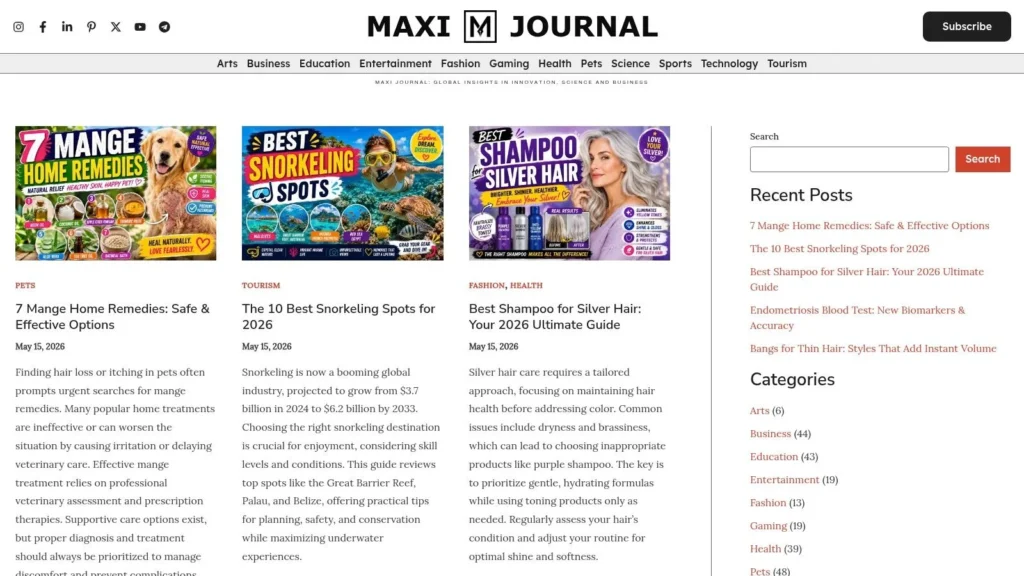
A reader who wants one outlet for diagnostics, lifestyle shifts, consumer health, and adjacent culture coverage will get more use from Maxi Journal than from a narrowly medical newsroom. Its role in this list is specific. It is the broad-interest option for people who want readable health coverage without committing to a policy publication or a clinician-focused trade site.
That breadth is the main appeal. Maxi Journal publishes across health, science, technology, business, travel, pets, arts, and entertainment, which mirrors how wellness now shows up in daily life. Readers rarely encounter health as an isolated beat. They encounter it through products, routines, services, aesthetics, aging, and practical questions about what a new test or trend means.
Best for: general readers who want range and speed
Maxi Journal works best as an entry point. The articles are typically framed for non-specialists, so the site is useful for topic discovery, early orientation, and plain-language summaries before you verify a claim elsewhere. A good example is its plain-English explainer on a new blood test for endometriosis, which shows the publication’s consumer-first editorial style.
That makes Maxi Journal a strong fit for readers asking, “Where should I start?” rather than, “Where can I get the industry’s most technical reporting?”
Mini-review
- Niche: Broad consumer health and wellness within a larger general-interest magazine
- Best audience: Everyday readers, early-stage researchers, and freelance contributors looking for accessible editorial formats
- Editorial strength: Readability, topic variety, and regular publishing cadence
- Credibility profile: Useful for orientation and trend tracking, but weaker than specialist outlets on institutional authority and medical scrutiny
- Use it for: Surfacing topics, comparing consumer-facing narratives, and building a shortlist of issues to examine more closely
One practical advantage is discoverability. Because health coverage sits alongside other lifestyle and culture verticals, Maxi Journal can help readers notice connections that specialist outlets often ignore. That matters if your interests cut across nutrition, beauty, travel wellness, pet health, or home routines. For a source-finder like this list, that cross-category range is a real distinction, not just a branding choice.
The tradeoff is clear. Maxi Journal does not present itself as a peer-reviewed medical source, and it lacks the institutional reporting infrastructure that strengthens outlets such as KFF Health News or STAT. Readers should treat it as a starting point for understanding a topic, not the final authority on treatment decisions, safety claims, or clinical evidence.
Use Maxi Journal if you want breadth, accessibility, and frequent updates in one place. Cross-check any high-stakes medical claim with primary research, a specialist newsroom, or a licensed clinician.
2. KFF Health News
KFF Health News is the source for readers who care less about “morning routine” content and more about why insurance, hospitals, public health agencies, and lawmakers shape what care costs and who gets it. It has a nonprofit newsroom model, and that shows up in the reporting priorities.
When a wellness headline has a policy shadow behind it, seek insight here. Coverage of prescription drugs, Medicaid, Medicare, medical debt, and state-level healthcare systems gives stories structural context that consumer sites often skip.
Where KFF is unusually strong
Many health outlets tell you what’s changing. KFF Health News is better at showing who changed it, who benefits, and who absorbs the downside. That makes it useful for policy professionals, journalists, advocates, and readers trying to understand the healthcare system rather than just the latest consumer trend.
Its explainers and recurring series also help with one persistent reader problem: translating abstract policy into lived consequences. If a story about diagnostics catches your attention, a consumer-facing explainer such as this endometriosis blood test article can work as a bridge, but KFF is where you go to understand reimbursement, access, and system incentives.
KFF Health News is less about self-optimization and more about the rules, costs, and institutions behind care.
That focus does mean less daily advice on nutrition, fitness, or mindfulness. If you want service journalism about sleep habits, it isn’t the best fit. If you want reporting that treats healthcare as a system with budgets, regulation, and tradeoffs, it’s one of the best sources available.
Visit KFF Health News.
3. STAT
STAT is for readers who need health and wellness news at the point where science, money, regulation, and competition collide. Its sweet spot is not broad lifestyle coverage. It’s the business and research machinery behind medicine, biotech, pharma, and life sciences.
That makes it especially useful when a headline involves drug approvals, clinical development, AI in medicine, or biotech financing. Mainstream summaries often flatten those stories into a “breakthrough” frame. STAT usually restores the missing context.
Best for industry-aware reading
STAT’s strongest asset is specialization. The newsroom tracks biotech and pharma with enough granularity to help you distinguish between a promising development and a commercial narrative. Its premium layer, STAT+, adds further depth for professional audiences who need exclusive reporting, newsletters, and data-oriented tools.
For scientifically curious readers, pairing a mainstream study summary with a deeper backgrounder can sharpen judgment. If you’re trying to build that habit, a broad explainer on recent discoveries in neuroscience can orient you before you move into more technical industry coverage.
- Use STAT when FDA action matters: It’s strong on approval decisions, trial developments, and commercial implications.
- Use STAT when business context matters: Venture funding, biotech strategy, and pharma competition are central strengths.
- Expect a paywall on the best material: The most valuable analysis often sits inside STAT+.
The tradeoff is accessibility. If you’re a casual reader looking for plain-language health guidance, STAT can feel dense and expensive for occasional use. But if your work or curiosity lives near medicine, research, or biotech investing, it’s one of the few outlets that consistently treats those stories with the necessary seriousness.
Visit STAT.
4. Healthline Health News
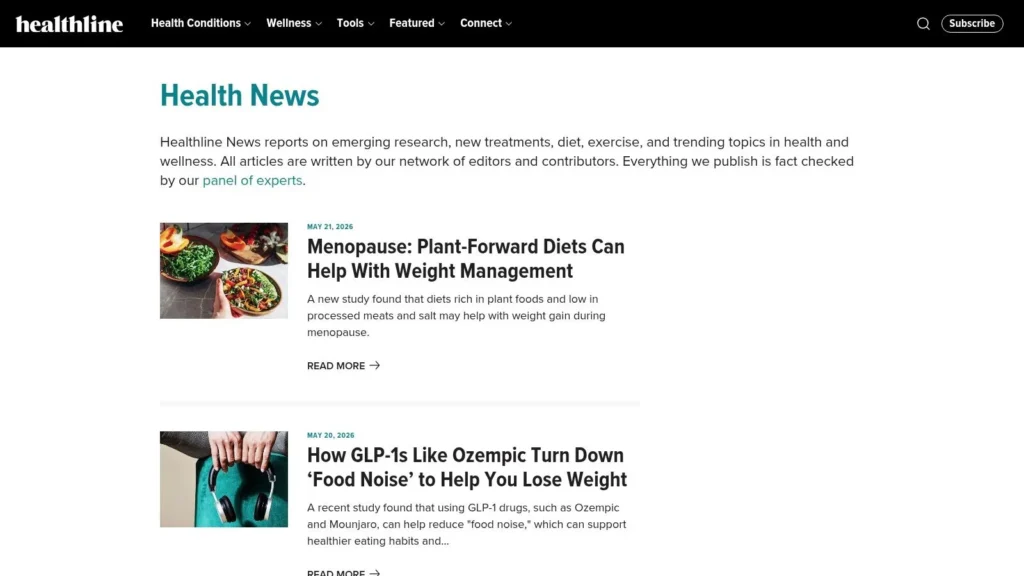
Healthline is what many readers need most days. Not a policy briefing. Not an investor-grade biotech scoop. Just a clear answer to what a new study may mean for sleep, nutrition, mental health, or treatment options.
Its editorial style is consumer-first and highly navigable. If you want approachable health and wellness news that doesn’t require a professional background, Healthline is one of the strongest picks on this list.
Why consumers keep returning
Healthline does two things well. First, it translates complex medical topics into plain language. Second, it organizes information in a way that lets readers move from news into broader condition or wellness education without leaving the site ecosystem.
That matters because many readers aren’t asking only “does it work?” A 2024 analysis of online medical news found that article conclusions were often accurate, but reporting frequently lacked context on conflicts of interest, study limitations, and inferential statistics, which weakens reader judgment about evidence quality in the published medical news analysis. Healthline’s consumer orientation doesn’t solve that problem entirely, but it generally meets readers where they are better than specialist outlets do.
If you’re reading for immediate personal relevance, clarity often beats comprehensiveness.
Healthline is less useful when you want the political economy behind care delivery or the commercial logic of a biotech story. But for everyday readers trying to make sense of conditions, treatments, wellness trends, and new studies without getting lost in jargon, it’s a reliable front-door publication.
Visit Healthline Health News.
5. WebMD Health News Center
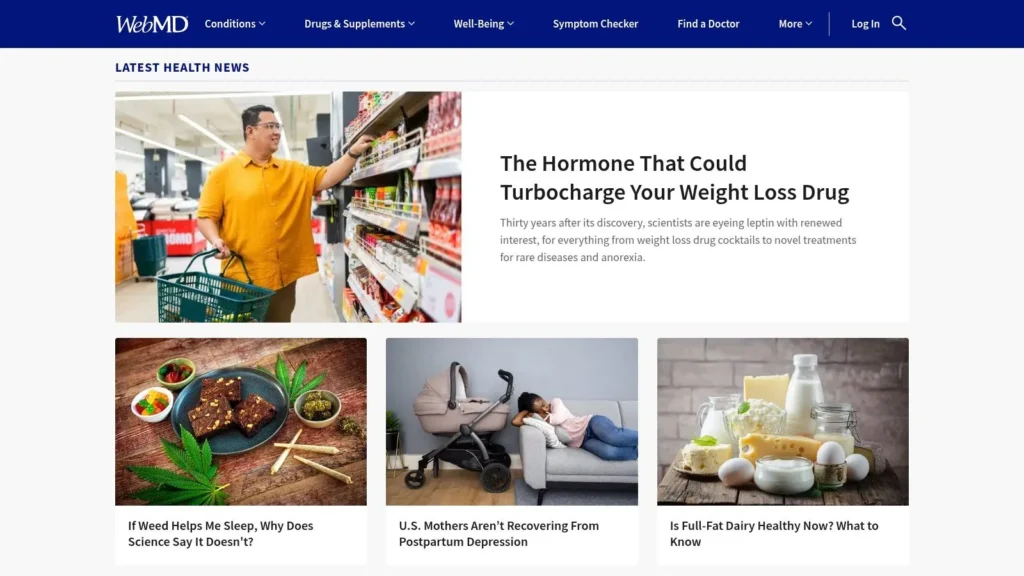
WebMD remains one of the most recognizable consumer health brands for a reason. It covers a very wide field, publishes frequent updates, and gives readers multiple ways to browse by condition, body system, or current headline.
Its strength is familiarity plus infrastructure. Readers who want a mainstream entry point into health and wellness news often benefit from that combination, especially when they’re following condition-specific updates over time rather than one-off viral trends.
A practical mainstream default
WebMD works well as a monitoring source. You can scan the latest news, then branch into heart health, mental health, or treatment-specific pages depending on the issue. It also publishes editorial, corrections, and sponsorship policies, which is useful in a category where trust often depends on visible process rather than tone alone.
- For broad coverage: WebMD is useful when you want many topics in one place.
- For condition tracking: Specialty pages make it easier to follow recurring issues.
- For transparency-minded readers: Formal policy pages help readers judge the editorial environment.
The downside is that the ad-supported experience can feel crowded, and story depth varies. Some articles serve as efficient updates. Others may feel too brief if you want policy detail or research nuance. Still, as a mainstream scanning tool, WebMD does an important job. It gives general audiences a stable place to start before they decide whether a story deserves deeper investigation.
Visit WebMD Health News Center.
6. MedPage Today
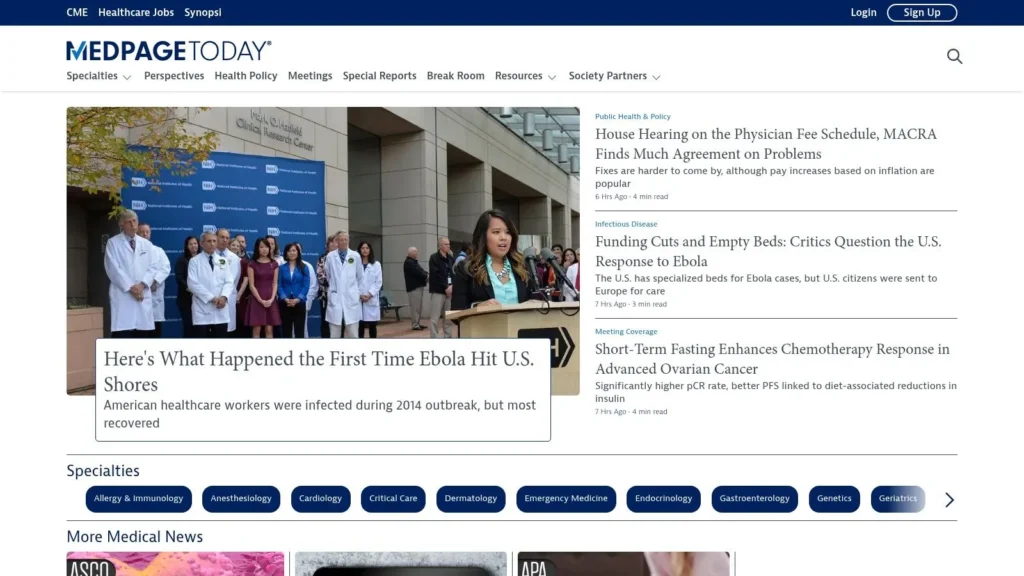
MedPage Today is the best fit here for readers who want clinician-level verification. It isn’t designed like a lifestyle publication, and that’s exactly the point. When wellness stories start leaning on conference presentations, guideline shifts, or specialty-specific findings, MedPage Today can help you see how medical professionals are likely to interpret them.
Its reporting from medical meetings is particularly useful. Conference coverage often shapes media cycles before broader consensus settles, so having a clinician-facing source in your toolkit can prevent overreaction to early findings.
Best for cross-checking hype
If a consumer article presents a trend as settled, MedPage Today is a good place to test that confidence. You’ll often get more detail on limitations, specialty debate, and how findings fit into existing practice. Some content requires free registration, but for medically literate readers that’s usually a reasonable trade.
Reality check: A finding can be newsworthy without being ready for everyday decision-making.
This is not the easiest site for a casual reader. The tone is more professional, the navigation assumes some subject familiarity, and the emphasis is on medicine rather than general lifestyle advice. But that makes it unusually valuable as a second-source publication. Use it after reading a consumer article, not instead of one, and your understanding usually improves.
Visit MedPage Today.
7. The New York Times Well
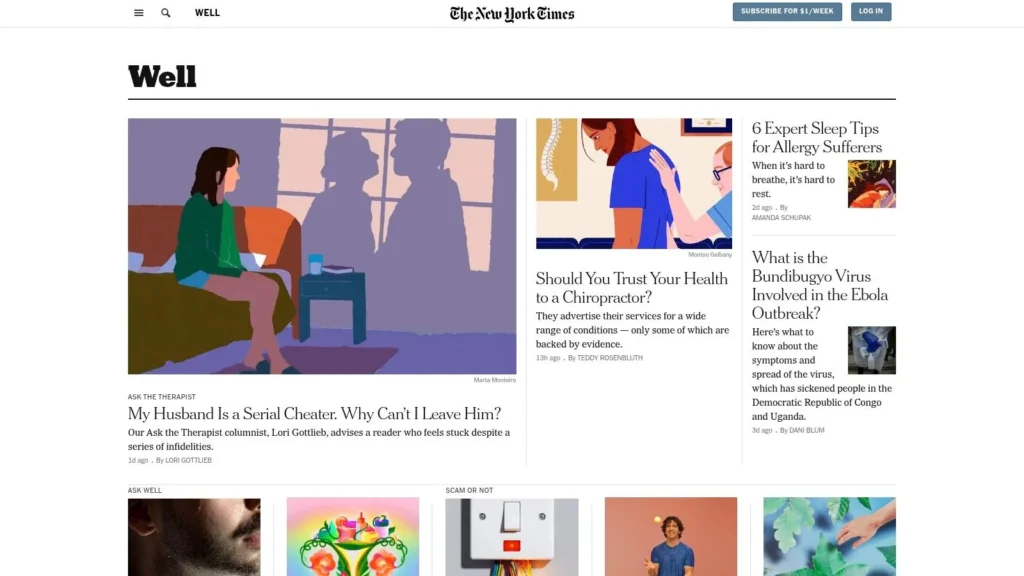
You read a headline about sleep, scrolling between work messages and a half-finished grocery list, and the question isn’t whether the topic matters. It is which outlet can turn health research into advice you can use that same day. The New York Times Well is built for that moment.
Among the sources on this list, Well serves the broadest general-interest audience. Its niche is service journalism shaped by reporting and edited for readability. Coverage usually centers on exercise, nutrition, mental health, relationships, and everyday behavior. That makes it a better match for readers who want interpretation and application, not policy reporting or industry intelligence.
Best for practical wellness coverage with strong editorial packaging
Well is strongest when a reader wants help translating a health topic into a personal decision. Articles often start with a familiar problem, then bring in research, expert input, and realistic limits on what the evidence does and does not support. That structure suits consumers who are less interested in medical minutiae and more interested in whether a trend, habit, or claim deserves attention.
Its credibility comes less from specialization than from editorial process and institutional standards. That is an important distinction. A specialty outlet such as STAT may beat it on biotech or clinical nuance, and KFF Health News will usually be stronger on health systems and policy consequences. Well fills a different role in a personal information toolkit. It helps readers sort daily wellness advice from noise without requiring professional background knowledge.
The tradeoff is access. The paywall can make routine use harder than free consumer outlets such as Healthline or WebMD.
Use Well if your priority is high-quality consumer framing. Use other outlets on this list to verify narrower claims in policy, medicine, or industry.
- Best for: General readers who want polished, evidence-aware wellness reporting
- Primary strength: Turning research and expert commentary into usable daily guidance
- Primary limitation: Paywalled access and less depth on policy, clinical debate, or health industry news
Visit The New York Times Well.
Top 7 Health & Wellness News Outlets Compared
| Outlet | Implementation complexity | Resource requirements | Expected outcomes | Ideal use cases | Key advantages |
|---|---|---|---|---|---|
| MaxiJournal.com | Low, web-first, free access, no paywall | Minimal, browser access; contributor options available | Broad, approachable coverage and frequent updates across many topics | Casual readers, travelers, pet owners, hobbyists, aspiring contributors | Wide interdisciplinary coverage, steady cadence, contributor-friendly |
| KFF Health News | Low, free nonprofit newsroom | Minimal, free access; republishing allowed with attribution | In-depth, policy‑grounded reporting with national & state context | Journalists, policy researchers, policymakers, educators | Credible nonprofit reporting, strong policy/state focus, republishable |
| STAT | Medium, mix of free reporting and paid STAT+ tier | Higher for full access, STAT+ subscription for data tools and newsletters | Fast, authoritative industry news and specialized analysis | Biotech/pharma professionals, researchers, investors | Industry-leading biotech/pharma coverage, premium data tools and scoops |
| Healthline – Health News | Low, consumer-focused, free access | Minimal, free access; medically reviewed content | Plain‑language summaries and practical wellness guidance | General consumers seeking vetted health and wellness info | Medically reviewed, easy to digest, consumer tools and guides |
| WebMD – Health News Center | Low, broad consumer portal, free/ad-supported | Minimal, free access; ad-supported experience | Wide topical coverage and condition‑specific summaries | Mainstream audiences seeking general health updates | Extensive topic libraries, transparent editorial policies |
| MedPage Today | Medium, clinician-oriented site; some registration required | Moderate, free registration for some features; CME access may require signup | Clinician-level reporting, conference coverage, CME opportunities | Healthcare professionals, clinicians verifying medical trends | Strong clinical depth, timely specialty coverage, CME-linked content |
| The New York Times – Well | Medium–High, mix of free and metered/paywalled content | Higher for full access, NYT subscription for many articles/newsletters | Research-based, actionable service journalism and habit guidance | Consumers seeking authoritative, practical wellness advice | High editorial standards, actionable service pieces, curated newsletter |
Building Your Personal Health Information Toolkit
You check your phone before work and see three very different stories: a supplement trend on social media, a report on hospital costs, and coverage of a newly approved drug. One reading habit will not handle all three well. The better approach is to build a small set of sources based on the kind of question you need answered.
That is the primary use of this list. It works as a source-finder, helping readers match a topic to the outlet most likely to cover it with the right level of depth, skepticism, and context.
A practical setup looks like this:
- Everyday symptoms, prevention, and plain-language explainers: Healthline Health News or WebMD Health News Center
- Insurance, public health systems, hospital finance, and policy effects: KFF Health News
- Biotech pipelines, drug development, regulation, and industry signals: STAT
- Clinical reaction, specialist coverage, and medical meeting updates: MedPage Today
- Behavior change, wellness habits, and research-based service journalism: The New York Times Well
- Lifestyle-oriented coverage that intersects with health and daily living: Maxi Journal
The categories matter because “health and wellness news” is not one beat. It includes consumer advice, medical research, healthcare business, public policy, and habit formation. An outlet that is useful for choosing a cold remedy may be poorly suited to explaining trial endpoints or the budget impact of a Medicare policy change.
That is why source matching improves judgment.
Healthline and WebMD are usually the fastest way to get oriented on a symptom, condition, or basic wellness question. KFF Health News is stronger when the story turns on access, affordability, insurers, hospitals, or government programs. STAT and MedPage Today add value when the headline depends on scientific design, specialist interpretation, or regulatory nuance. The New York Times Well is often most useful when the reader wants practical guidance shaped by reporting rather than by product promotion.
Cross-checking also changes the quality of the conclusion. A consumer outlet may summarize what a new study found. A clinician or industry publication is more likely to explain limitations, conflicts of interest, and whether the finding is likely to change practice. That distinction often separates a meaningful development from a temporary spike in attention.
For readers building supplement routines or self-directed wellness plans, even a practical consumer resource like VitzAi’s guide to vitamin stacking is better used as one input within a broader reading system.
The goal is simple: choose the source that fits the question. That habit gives policy readers, clinicians, and everyday consumers a more reliable way to sort useful health information from noise.
Discover more from Maxi Journal
Subscribe to get the latest posts sent to your email.